
Vibratory Fluid Bed Dryer Air Flow and Heat Balance: Is Capacity Limited by Heat or Humidity? (Worked Example)
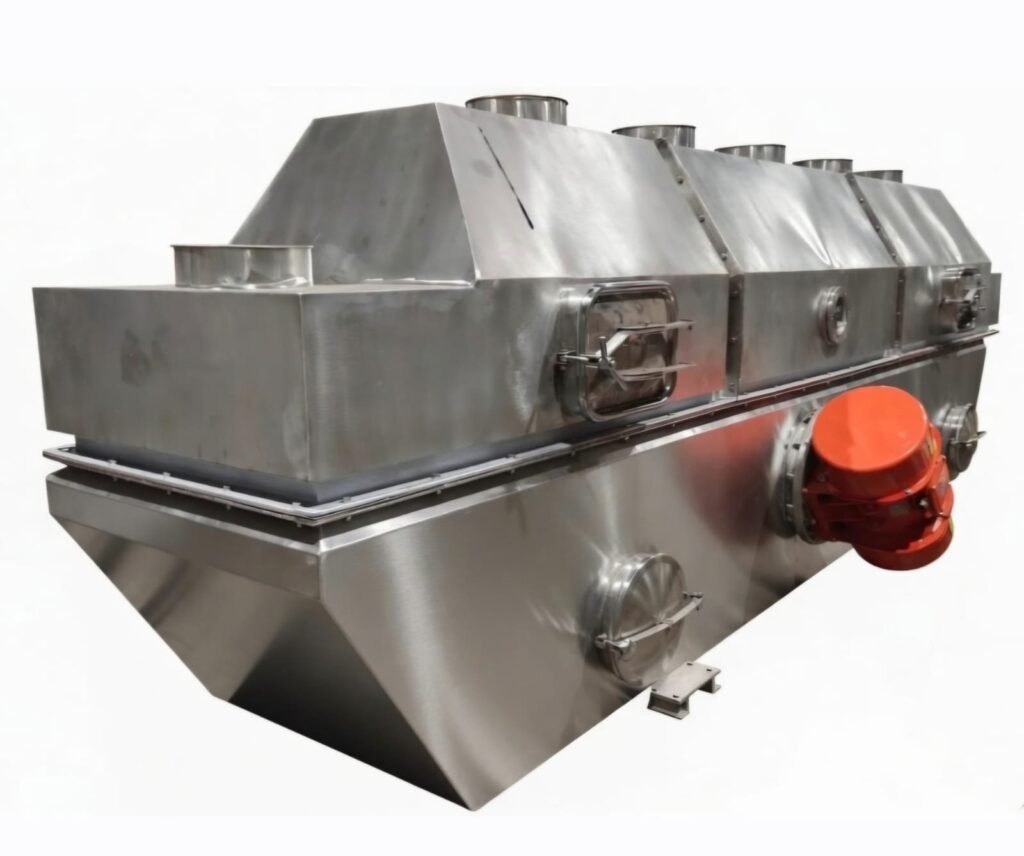
Short answer: In a vibratory fluid bed dryer, fluidisation sets the air volume: bed area multiplied by the chosen air velocity. Capacity is then limited either by the heat that air can carry in, or by the moisture it can carry out. In the worked example below, heat is the limit, so inlet temperature and […]
Fluid Bed Dryer Air Velocity Calculation: Minimum Fluidisation, Terminal Velocity and Bed Area
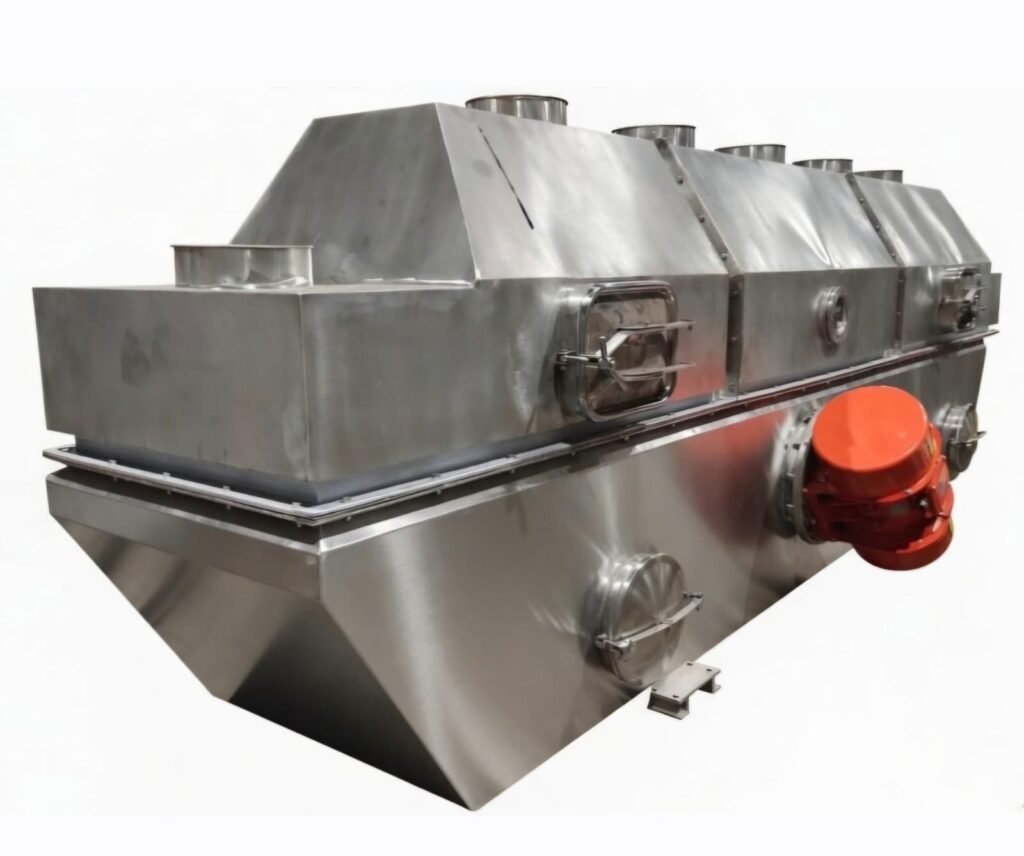
Short answer: Fluid bed dryer air velocity must sit above the minimum fluidisation velocity of the particles and below the terminal velocity of the smallest particles you want to keep. Estimate the first with the Wen and Yu correlation and the second with a drag correlation, then check that the air needed for drying gives […]
How to Size a Belt Dryer: Belt Area, Bed Depth, Residence Time and Airflow (Worked Example)
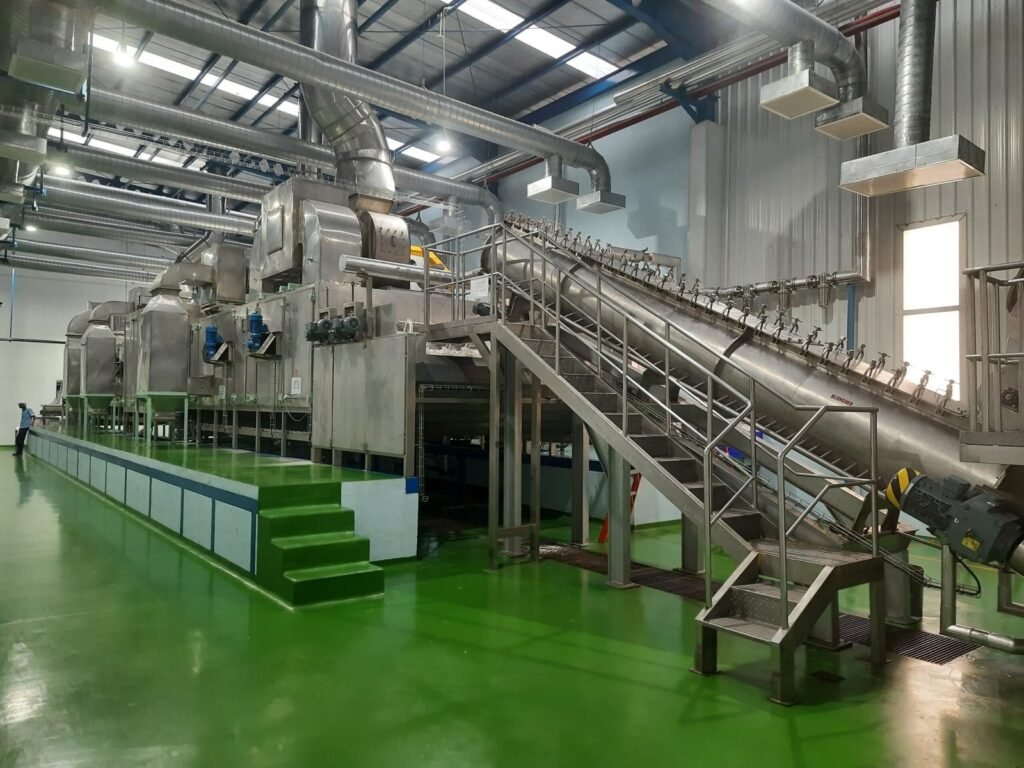
Short answer: To size a belt dryer, run a mass balance to find the water to evaporate, take drying time from trials on your material, and divide the material held on the belt (feed rate × residence time) by the allowable bed loading in kg/m². That gives effective belt area. Width, length and speed follow; […]