
Short answer: Wet brewer’s spent grain (BSG) is best dried in two steps: press or centrifuge it first, then dry the pressed cake in a continuous dryer chosen for the end use. For animal feed or fuel, a robust rotary drum dryer is the usual starting point. For food-grade flour or protein ingredients, a gentler continuous belt or low-temperature system is worth testing, because reviews report that conventional hot-air drying can compromise nutrient and sensory quality. A drum dryer suits spent-grain slurry once the solids have been separated into a pumpable stream. The real selection variables are how much water the press removes, the quality the buyer expects and how fast the grain arrives, because fresh spent grain starts to spoil within days.
This guide is for brewery owners, feed and ingredient processors and project consultants who want to turn wet spent grain into a stable, saleable product. Genex Tech Industries LLP (GTI Group) designs continuous dryers for by-products of this kind. Process fit for your own grain must always be confirmed by trials. The sections below separate wet-feed, product and evaporation figures and use wet-basis moisture unless stated otherwise.
Why spent grain must be dried quickly
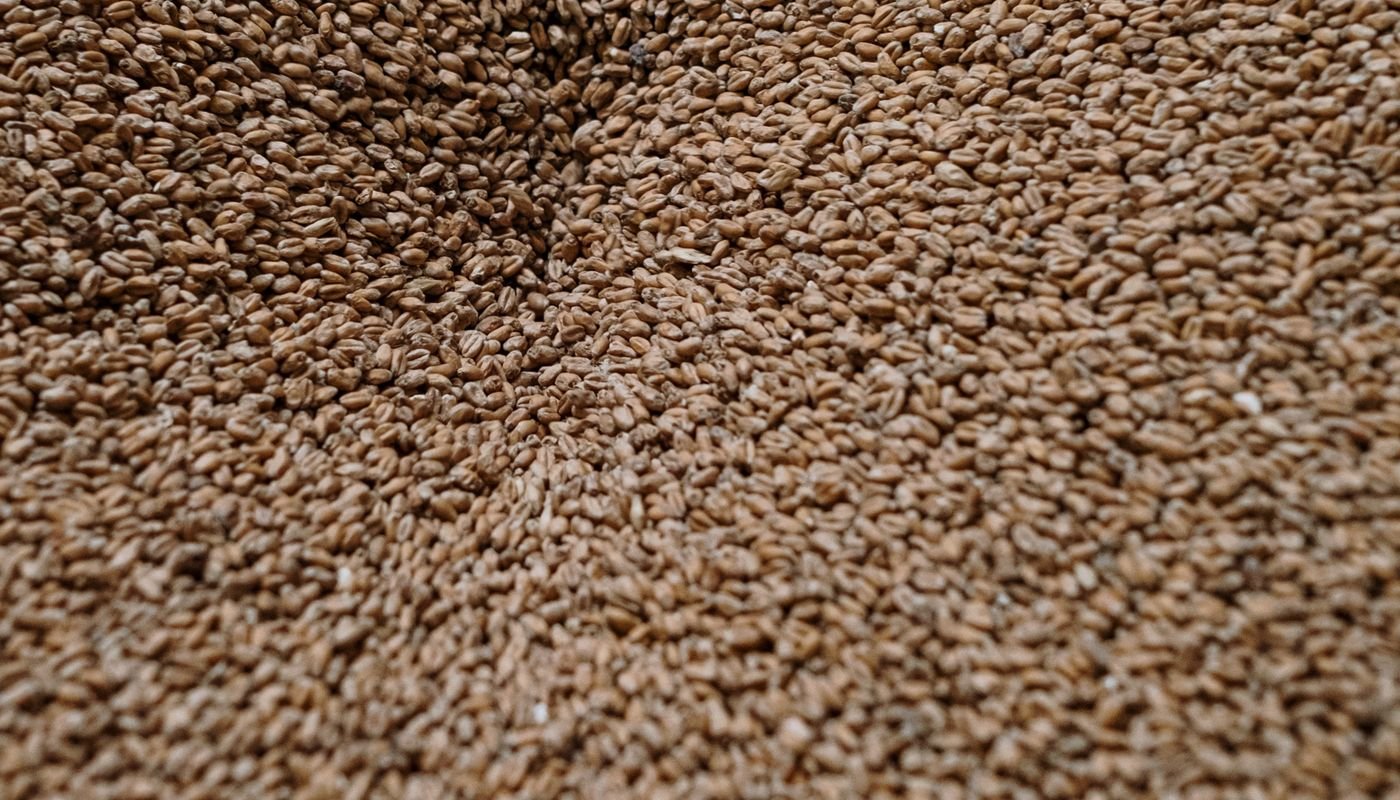
Reviews describe fresh BSG as 70–85% moisture on a wet basis, with a high water activity that makes it vulnerable to microbial and biochemical degradation (Drying techniques for the valorization of brewer’s spent grains, 2025 review). One laboratory study measured 77.35% wet-basis moisture and a water activity of 0.99 in fresh grain (Sustainability 2020). A review of repurposing routes reports a shelf life of only 7–10 days in warm climates and about 20 kg of spent grain per hectolitre of beer brewed (MDPI review).
Dry material is stable once its water activity is below about 0.6, a threshold reported in a comparison of hot-air and infrared drying (ScienceDirect study). In practice that means a final moisture in the single digits, with the exact target set by your buyer’s specification and storage conditions.
Composition matters for dryer choice. The dry matter is mostly lignocellulosic fibre, with reported protein contents of roughly 18–30% depending on the grain bill and brewing process (MDPI review). Protein and residual sugars make the grain prone to browning and, at high temperature, scorching.
Step one: remove water mechanically before you dry
Thermal drying is the costly step, so many breweries use a two-step route in which the grain is first pressed below about 60% moisture and then dried to below about 10% (CABI Agriculture and Bioscience review).
Illustrative mass balance (not a guarantee, not a quotation). Take 1,000 kg of fresh BSG at 77% wet-basis moisture.
- Dry solids: 1,000 × 0.23 = 230 kg.
- In dry-basis terms, 77% wet basis is 0.77 ÷ 0.23 ≈ 3.35 kg water per kg dry solids.
- Dried to 8% wet basis, the product mass is 230 ÷ 0.92 = 250 kg.
- Without pressing, evaporation is 1,000 − 250 = 750 kg of water.
- If a press first lowers moisture to 60% wet basis (1.5 kg/kg dry basis), the pressed cake weighs 230 ÷ 0.40 = 575 kg, and evaporation falls to 575 − 250 = 325 kg.
In this example pressing removes 425 kg of water mechanically and cuts the thermal evaporation load by about 57%. Even the latent heat alone, roughly 2.26 MJ per kg of water at 100 °C (NIST Chemistry WebBook), shows the effect: about 735 MJ for 325 kg against about 1,695 MJ for 750 kg, before any dryer losses. Real thermal demand is higher. Electrical energy for press, fans and conveyors is separate and should be tracked separately, as explained in our dryer energy audit guide.
The rule that follows: size the dryer on the evaporation rate of the pressed cake, not on the tonnes of wet grain leaving the brewhouse. Our guide to calculating dryer capacity and evaporation load shows the method.
Match the dryer to the end use
| End use | Typical priority | Dryer types to evaluate | Watch-outs |
|---|---|---|---|
| Animal feed or feed ingredient | Low cost per tonne, robustness, stable moisture | Rotary drum dryer | Scorching at the discharge end, dust, variable feed lumps |
| Food-grade flour, fibre or protein ingredient | Colour, flavour, hygiene, low temperature | Continuous band or mesh belt dryer, heat pump dryer | Bed depth, even loading, sticky cake, longer drying time |
| Extracted protein or concentrated spent-grain slurry | Converting a pumpable stream to flakes or powder | Drum dryer | Needs a separated, flowing slurry rather than pressed cake |
| Fuel or soil conditioner | Cheap moisture reduction | Rotary or paddle dryer | Odour, exhaust treatment, heat source cost |
GTI’s drum dryer page lists spent-grain slurry among its applications, and the rotary, belt and paddle pages cover the other routes. A listing is not proof that every grain suits every machine, so confirm the fit with your own samples.
Rotary drum dryers
The CABI review notes that the traditional route for drying BSG is direct rotary drum drying. Cascading flights lift the cake into hot gas, which tolerates lumpy, variable feed. The risks are overheating of fine, protein-rich particles and exhaust-dust handling. Keep gas temperatures and discharge moisture under control, and read our rotary dryer maintenance checklist when budgeting upkeep.
Belt and low-temperature systems
For food uses, the 2025 review reports that freeze-drying preserves nutrients best, followed by superheated-steam and vacuum-microwave drying, while refractance window, intermittent infrared and impact drying preserved colour, odour and texture, and conventional hot-air drying compromised nutrient content and sensory quality. Those findings come from laboratory and pilot work. GTI does not claim a specific retention result. If food-grade quality is the goal, compare a multi-zone belt dryer, a heat pump dryer and, for thin pumpable films, a refractance window dryer in a trial. The CABI review also notes that oven drying below about 60 °C avoids unpleasant flavours and the risk of burnt grain, so a temperature ceiling for the product is a design input.
Drum dryers for slurry
If you extract or separate a concentrated slurry, a steam-heated drum applies a thin film, dries it in seconds to tens of seconds and scrapes it off as flakes. This is a different feed state from pressed cake, so decide early which stream you are drying.
Feed preparation and arrival pattern
- Dewatering: target the lowest moisture the press delivers reliably. Every point of moisture removed mechanically reduces the thermal load.
- Lump control: pressed cake forms clumps. A feeder or crumbler that breaks lumps gives even loading and drying.
- Arrival and buffer: grain arrives in batches from the brew schedule. Design storage and feed so that grain does not wait for days in warm weather.
- Food safety: a published study notes that using spent grain as a food ingredient requires drying plus meeting minimum pasteurisation conditions, so check this with your food-safety adviser.
- Dust: dried grain, flour and feed dusts are combustible. OSHA lists flour, grain, starch and feed among materials that can be explosible in dust form (OSHA combustible dust overview). See our dryer fire and dust explosion prevention guide.
Cost drivers to compare between quotations
- Evaporation load after pressing, not wet-feed tonnage.
- Final moisture and water-activity target.
- Heating source: see steam, thermic fluid, gas or biomass heat.
- Material of construction and hygiene level for food use.
- Exhaust, odour and dust control.
- Downstream milling and packing if you sell flour. Foodtech Projects lists hammer mill machinery for size reduction.
- Operating pattern: a brewery producing grain five days a week needs buffer storage or flexible dryer turndown.
For similar wet by-products, see our guide to cassava pulp, corn fibre and potato pulp dryers and the DDGS dryer guide. Spent grain differs in its much shorter shelf life and in the food-ingredient quality expectations described above.
Trial checklist before you buy
- Send representative pressed cake from several brews, with its moisture and the press settings used.
- Define the product: feed, flour or protein ingredient, with the target moisture or water activity.
- Ask for drying curves at two or three temperatures and bed depths.
- Check colour, odour and lumps in the dried product.
- Record exhaust moisture and dust for sizing the air system.
- Read why pilot testing reduces risk.
Agricultural by-product projects are covered on our animal feed and agro drying page and our homepage lists the full dryer range.
Frequently asked questions
What moisture does brewer’s spent grain have?
Fresh spent grain is commonly reported at 70–85% wet-basis moisture. One study measured 77.35% with a water activity of 0.99.
Can I dry spent grain without pressing it first?
Yes, but the dryer must then evaporate much more water. In the illustrative example above, pressing to 60% reduced evaporation from 750 kg to 325 kg per 1,000 kg of fresh grain.
Which dryer is best for spent grain?
There is no single best dryer. A rotary drum dryer is the traditional route for feed-quality grain, while food-grade ingredients may justify a belt or low-temperature system. A drum dryer fits spent-grain slurry. Trials decide.
What final moisture is needed?
Reviews cite shelf stability below water activity 0.6 and moisture below about 10%. Set the exact target with your buyer and storage plan.
Does hot-air drying damage spent grain?
The 2025 review reports that conventional hot-air drying compromised nutrient content and sensory quality compared with gentler methods. Results depend on temperature, time and product use.
Talk to GTI about drying spent grain
For assistance with dryer selection, processing requirements or a project-specific quotation for brewer’s spent grain, contact Genex Tech Industries LLP (GTI Group).
Email: mktg@gtidryers.com
Call or WhatsApp: +91-93300 77417
Website: https://gtidryers.com/
Please share your material, required wet-feed capacity, initial and target moisture, available heating source and installation location.