
Short answer: Wet filter cake usually cannot go onto a belt dryer as a solid slab, because hot air cannot pass through it. It is first preformed, typically extruded into short strands or granules, so the bed becomes permeable. Strand diameter, bed depth and the cake’s starting moisture then decide belt area, drying time and energy.
Last updated: 23 November 2026
This guide is for process engineers and buyers of pigments, dyes, agrochemicals, catalysts and other chemical products that leave a filter press, centrifuge or vacuum filter as a wet cake and need continuous belt drying. It explains why preforming matters, how to choose the shape, and how the cake’s moisture and the strand size change the belt dryer design. All numbers in the worked examples are illustrative inputs, not GTI performance data and not a design for any real plant.
Why can’t wet filter cake go straight onto a belt dryer?
A through-circulation belt dryer works by blowing hot air through a bed of product lying on a perforated or mesh belt. A slab of wet cake has almost no open channels, so air flows over the surface instead of through the layer. Only the top skin dries, a crust can form, and the inside stays wet. The cake can also fall through a mesh belt, stick to it or smear along the belt, depending on how soft and cohesive it is.
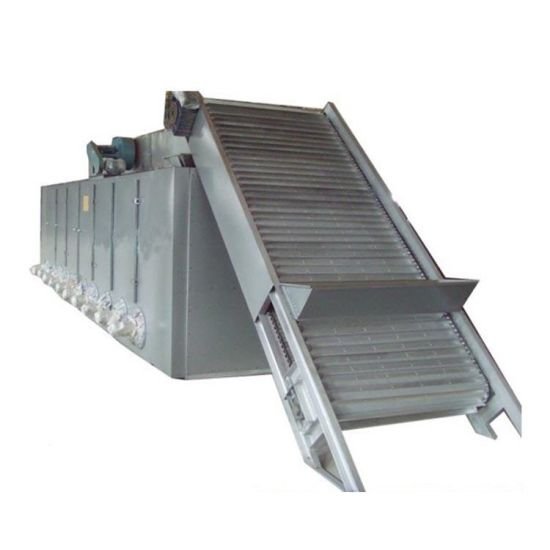
Preforming solves this by turning the cake into discrete pieces, such as cylindrical strands or small granules, that pack into a bed with gaps between them. Air then reaches most of the surface area, and each piece is thin enough for internal moisture to travel to the surface in a reasonable time. GTI’s mesh belt dryers and continuous band dryers are multi-zone machines in which air temperature, airflow and belt speed are set zone by zone, but they still rely on a permeable bed being delivered to the belt.
What is filter cake preforming?
Filter cake preforming is the mechanical shaping of a wet, paste-like cake into pieces that suit a dryer, normally immediately before the dryer feed. In practice this is done by pressing the cake through a perforated plate or die so that it leaves as strands, or by granulating it into rounded pieces. The shaping equipment is a separate unit upstream of the belt dryer, and its choice depends on how plastic, sticky or brittle the cake is.
Cake behaviour varies widely between materials and even between batches of the same material. Some cakes extrude cleanly into firm strands. Others are thixotropic (they soften when worked and then stiffen), are too wet to hold shape, or are so dry and crumbly that they break into fines. A test on a sample of your real cake, with the intended die size, is the only dependable way to find out.
A related approach is to granulate and dry the cake at the same time, so that granulation and drying are one step. A study in Chemical Engineering & Technology on simultaneous granulation and drying of filter cake describes this route as an alternative to separate wet granulation and drying. It reports that, compared with drying followed by mechanical compaction, the combined route needs one step and gives more spherical, less attrition-sensitive particles. It is a different dryer concept from a belt dryer, so treat it as an option to compare, not as a variation of belt drying.
How does filter cake moisture affect belt dryer size and energy?
The wetter the cake, the more water the dryer must evaporate for every tonne of dry solids. Cake moisture is therefore the cheapest lever on dryer size and fuel use, and it is set upstream by the filter or centrifuge. A published study in Drying Technology on filter cake cracking and consolidation shows why this matters: when a cake cracks during air-blowing, gas bypasses through the cracks and residual moisture rises. The authors report that compacting the cake before desaturation prevents cracking and, when cracking is suppressed, dewatering was faster than for the non-consolidated cake.
Worked example (illustrative inputs): a dryer line must produce a product with 2% moisture (wet basis) from 1,000 kg/h of dry solids. Compare a cake at 50% moisture (wet basis) with one at 40%. Keep wet feed, dried product and evaporation separate:
| Quantity | Cake at 50% wet basis | Cake at 40% wet basis |
|---|---|---|
| Dry solids | 1,000 kg/h | 1,000 kg/h |
| Wet feed | 1,000 ÷ 0.50 = 2,000 kg/h | 1,000 ÷ 0.60 = 1,667 kg/h |
| Dried product at 2% | 1,000 ÷ 0.98 = 1,020 kg/h | 1,020 kg/h |
| Water to evaporate | 2,000 − 1,020 = 980 kg/h | 1,667 − 1,020 = 647 kg/h |
Going from 50% to 40% cake moisture removes about 333 kg/h of evaporation, roughly one third less. At about 2.26 MJ/kg for the latent heat of vaporisation of water near 100 °C (steam-table data such as the NIST Chemistry WebBook), that is about 750 MJ/h, or around 210 kW of thermal energy, before sensible heat and losses. This is thermal energy, separate from the electrical energy used by fans, belt drives and the preforming unit. Our guides on dryer capacity and evaporation load and on running a dryer energy audit explain how to keep these quantities apart.
How does strand diameter change drying time and bed design?
Smaller pieces dry faster because moisture has a shorter distance to travel, and a bed of smaller pieces has more surface area for the same volume. Two simple geometric facts help:
- For a long cylinder, surface area per unit volume is 4 ÷ diameter. A 3 mm strand has twice the surface area per unit volume of a 6 mm strand.
- When internal diffusion limits drying, the characteristic diffusion time scales with the square of the thickness, so halving the diameter cuts that time to about one quarter. Real cakes also shrink, crack or bind water in different ways, so use this only as a direction of travel and confirm it in a drying trial. The Handbook of Industrial Drying covers diffusion-controlled drying and conveyor dryer design in detail.
Finer strands are not automatically better. They pack tighter, which raises air pressure drop through the bed, they make more fines when they break, and a very small die gives lower extruder throughput. Longer strands pack with more open space but are slower to dry through their thickness. Designers therefore choose a diameter that gives acceptable drying time, bed permeability and strand strength together.
A laboratory study in Drying Technology on extruded feed pellets in fixed beds illustrates the interplay. It found drying governed mainly by airflow direction, air temperature and bed depth. Alternating the airflow direction gave moisture non-uniformity of 2% against 7% for one-way flow at 15 cm depth after 33 minutes, though it slowed drying at 20 cm. Pressure drop rose with airflow rate and fell with moisture content and bed depth. These were feed pellets, not filter cake, so the numbers do not transfer to your product, but the lesson does: bed depth and airflow pattern need to be tested with your own extrudate.
How is belt area worked out for preformed cake?
Once the strand size is chosen, belt area is found as for any belt dryer: material held on the belt divided by bed loading. Our guide to belt dryer sizing gives the full method.
Worked example (illustrative inputs, assumed trial result): wet extrudate feed 1,667 kg/h, wet bulk density of the extrudate bed 600 kg/m³, bed depth 0.08 m, and a trial that shows the product reaches target moisture in 60 minutes at the chosen air conditions.
| Quantity | Calculation | Result |
|---|---|---|
| Bed loading | 600 × 0.08 | 48 kg/m² |
| Material on belt | 1,667 × (60 ÷ 60) | 1,667 kg |
| Effective belt area | 1,667 ÷ 48 | 34.7 m² |
If the cake had instead arrived at 50% moisture, the wet feed would be 2,000 kg/h and, with the same trial time and loading, the effective area would be 41.7 m². Treat this as a demonstration of the mechanism only. A wetter cake usually changes the drying time as well, and the trial must say by how much. Real designs add margin and non-drying sections such as feed, transitions and cooling.
When is a belt dryer the wrong choice for filter cake?
Belt drying suits cakes that can be preformed into stable pieces and tolerate warm air for a long residence time. It is a poor fit when:
- the cake is so sticky or soft that it will not hold a strand shape, or smears on the belt;
- the product must be a fine, free-flowing powder rather than strands, in which case a flash dryer or paddle dryer may suit better;
- the feed is a pumpable slurry or solution, where spray drying is the usual route;
- the material is combustible, solvent-wet or dust-explosive, which needs a specific safety design (see our dryer fire and dust explosion checklist).
Our article on the best dryer for sticky filter cakes, pastes and high-moisture slurries compares the main options, and the pilot plant testing guide explains how to test preforming and drying together.
What should you check before specifying a belt dryer for preformed cake?
- Cake moisture, wet and dry basis, and its variation between batches.
- Whether the cake extrudes into firm strands on a test die, and the diameter and length range that holds together.
- Strand strength on the belt: breakage creates fines that fall through the mesh or are carried into the exhaust.
- Required product form and final moisture, including any limit on fines.
- Drying time at the intended bed depth from a trial on your own extrudate.
- Heat source, maximum safe product temperature and any solvent, dust or odour hazards.
- Cleaning and changeover needs between colours or grades, particularly for pigments and dyes.
- Who supplies and integrates the preforming unit, so the scope is clear in each quotation.
Frequently asked questions
Do all belt dryers need preformed feed?
No. Granules, flakes, chips, slices and pellets are already permeable and can be spread on the belt directly. Preforming is needed for paste-like feeds such as filter cakes that would otherwise form an airtight layer.
What shapes can wet cake be preformed into for belt drying?
Typically cylindrical strands from a perforated plate or die, or granules from a granulating step. Which works depends on the cake’s plasticity, stickiness and strength, so it is decided on a sample of your cake.
Does lower cake moisture always shorten drying time?
It reduces the water to evaporate, which cuts energy and usually belt area, but the effect on drying time must be confirmed in a trial, because cake structure and shaping behaviour can change with moisture.
Can GTI supply the extruder as well as the belt dryer?
Please ask. The scope of any preforming unit should be stated in the project quotation, and we do not assume it here. Share your cake sample details when you enquire.
Is a mesh belt or a solid belt better for extruded cake?
Mesh or perforated belts allow air to flow through the bed, which is the point of through-circulation drying. Choice of belt type depends on strand size, fines and cleaning, so confirm it in trials.
Discuss your filter cake drying project with GTI
For assistance with dryer selection, filter cake preforming and belt drying, processing requirements or a project-specific quotation, contact Genex Tech Industries LLP (GTI Group).
Email: mktg@gtidryers.com
Call or WhatsApp: +91-93300 77417
Website: https://gtidryers.com/
Please share your material, required wet-feed capacity, initial and target moisture, available heating source and installation location.