
How GTI Dryers Fits into the Complete Coconut Processing Value Chain
Coconut is more than a tropical fruit. It is a complete industrial raw material capable of becoming food ingredients, oils, powders, beverages, animal-feed materials, fibres, coir products and other value-added products.
On World Coconut Day, it is worth looking beyond the coconut itself and understanding the technology ecosystem that converts raw coconuts into commercially valuable products.
From dehusking and deshelling to drying, milk extraction, oil recovery, powder production, water processing, fibre recovery and final packaging, every stage can influence product quality, production efficiency and commercial value.
This is where GTI Dryers and the wider GTI coconut-processing engineering ecosystem fit into the industry.
GTI develops and supplies coconut-processing machinery, industrial drying systems and turnkey processing solutions for products including desiccated coconut, virgin coconut oil, coconut milk, coconut milk powder, coconut water, copra, coconut fibre, coir-related products and other value-added coconut products.
World Coconut Day: Celebrating an Entire Industry, Not Just a Crop
World Coconut Day is observed annually on 2 September to highlight the economic and social importance of coconut and the communities and industries connected to it. The International Coconut Community notes that coconut cultivation spans more than 90 countries and that coconut products reach markets around the world.
The modern coconut industry is increasingly moving from raw-material trading toward:
Value Addition → Product Diversification → Advanced Processing → Better Utilization → Global Markets
This transition creates opportunities for manufacturers to extract more value from each coconut.
A single coconut can contribute to several product streams, depending on the variety, maturity, processing route and market requirement.
Potential coconut product categories include:
- Desiccated coconut
- High-fat desiccated coconut
- Low-fat desiccated coconut
- Coconut milk
- Coconut cream
- Coconut milk powder
- Coconut water
- Coconut water powder
- Virgin coconut oil
- Coconut paring oil
- Copra
- Coconut flour
- Coconut chips
- Coconut flakes
- Coconut threads
- Coconut fibre
- Coir-related products
- Coir pith
- Coconut-based food ingredients
- Coconut-based specialty products
GTI’s coconut-processing portfolio covers many of these product categories through integrated machinery and turnkey solutions.
The Complete Coconut Processing Journey
A coconut-processing plant is not simply a collection of individual machines.
A successful plant connects multiple stages into a coordinated production system.
A simplified value chain can be understood as:
Fresh Coconut
↓
Dehusking / Deshelling
↓
Paring / Washing
↓
Cutting / Grating / Preparation
↓
Product-Specific Processing
↓
Drying / Dehydration / Concentration
↓
Oil / Milk / Water / Powder / Fibre Processing
↓
Cooling / Sieving / Filtration
↓
Packaging
↓
Finished Coconut Product
The exact route changes according to the final product.
A desiccated coconut plant does not follow the same technology route as a virgin coconut oil plant, while coconut milk powder requires a very different drying approach from coconut fibre.
This is why process engineering and technology selection are critical in modern coconut processing.
Stage 1: Raw Coconut Handling and Preparation
The journey begins with the raw coconut.
Depending on the final product, the initial stages can involve:
- Dehusking
- Deshelling
- Paring
- Washing
- Cutting
- Grating
- Size reduction
- Separation
- Raw-material inspection
GTI’s coconut-processing solutions include machinery for breaking, paring, washing and preparation before downstream processing. Its coconut milk processing line, for example, integrates breaking, paring and washing with subsequent extraction and processing systems.
Why preparation matters
The quality of the final product depends partly on how consistently the raw material enters the processing line.
Poor preparation can affect:
- Product recovery
- Hygiene
- Extraction efficiency
- Drying behaviour
- Product consistency
- Equipment performance
Therefore, coconut processing begins long before the dryer.
Stage 2: Coconut Grating and Size Reduction
After preparation, coconut kernel can be reduced to a suitable form for the intended product.
Grating and size reduction can be important for:
- Desiccated coconut
- Coconut milk extraction
- Coconut cream
- Coconut oil processing
- Coconut flour
- Other coconut ingredients
For coconut milk production, GTI describes a grating and pressing-based extraction system designed to recover coconut milk from prepared coconut kernel.
The correct mechanical preparation can help create a more consistent feed for subsequent processing.
Stage 3: Coconut Milk and Coconut Cream Processing
Coconut milk and coconut cream represent one of the most important value-added segments of the coconut industry.
GTI’s coconut milk processing systems include equipment for:
- Coconut preparation
- Milk extraction
- Filtration
- Chilling
- Pasteurization
- Homogenization
- Cream separation
- Filling and packaging
These systems can be configured for liquid coconut milk, coconut cream and related food applications.
This creates a pathway from:
Fresh Coconut → Coconut Kernel → Coconut Milk/Cream → Packaged Product
But there is another major opportunity:
Fresh Coconut → Coconut Milk → Dehydration → Coconut Milk Powder
Stage 4: Coconut Milk Powder – Turning a Liquid Ingredient into a Value-Added Powder
Coconut milk powder provides a convenient dry ingredient format for food manufacturers.
It can be used in applications such as:
- Plant-based beverages
- Bakery products
- Confectionery
- Instant food formulations
- Sauces
- Ready-to-eat foods
- Dairy alternatives
- Food ingredient blends
- Nutraceutical and specialty food applications
GTI’s published coconut milk powder solution uses industrial drying technology to convert coconut milk into a stable powder suitable for food and ingredient applications.
GTI also has specialized experience with advanced dehydration technologies for coconut-based applications, making drying a particularly important part of its coconut-processing engineering capability.
Stage 5: Drying – Where GTI Dryers Becomes Especially Important
Drying is one of the most critical operations in coconut processing.
It can influence:
- Moisture content
- Shelf life
- Product texture
- Colour
- Aroma
- Flowability
- Microbial stability
- Storage behaviour
- Packaging requirements
- Energy consumption
- Overall production economics
Different coconut products require different drying technologies.
There is no universal “coconut dryer.”
The correct dryer depends on:
- Product form
- Moisture level
- Fat content
- Particle size
- Thermal sensitivity
- Desired final moisture
- Production capacity
- Final product specification
- Available utilities
- Plant configuration
This is where GTI’s multi-technology approach becomes valuable.
GTI Dryers for Desiccated Coconut
Desiccated coconut is one of the most established value-added coconut products.
After the coconut kernel is prepared and processed into the required form, controlled drying is necessary to achieve the target product characteristics.
GTI’s coconut-processing portfolio includes Band/Apron Dryers and Fluid Bed Dryers for desiccated coconut applications.
Band Dryer for Coconut
A band dryer can provide continuous drying across controlled drying zones.
For desiccated coconut, the system can be engineered around:
- Uniform product distribution
- Controlled moisture reduction
- Continuous operation
- Hygienic construction
- Product-quality requirements
GTI specifically describes its band dryer as an industrial drying system for high-fat desiccated coconut applications.

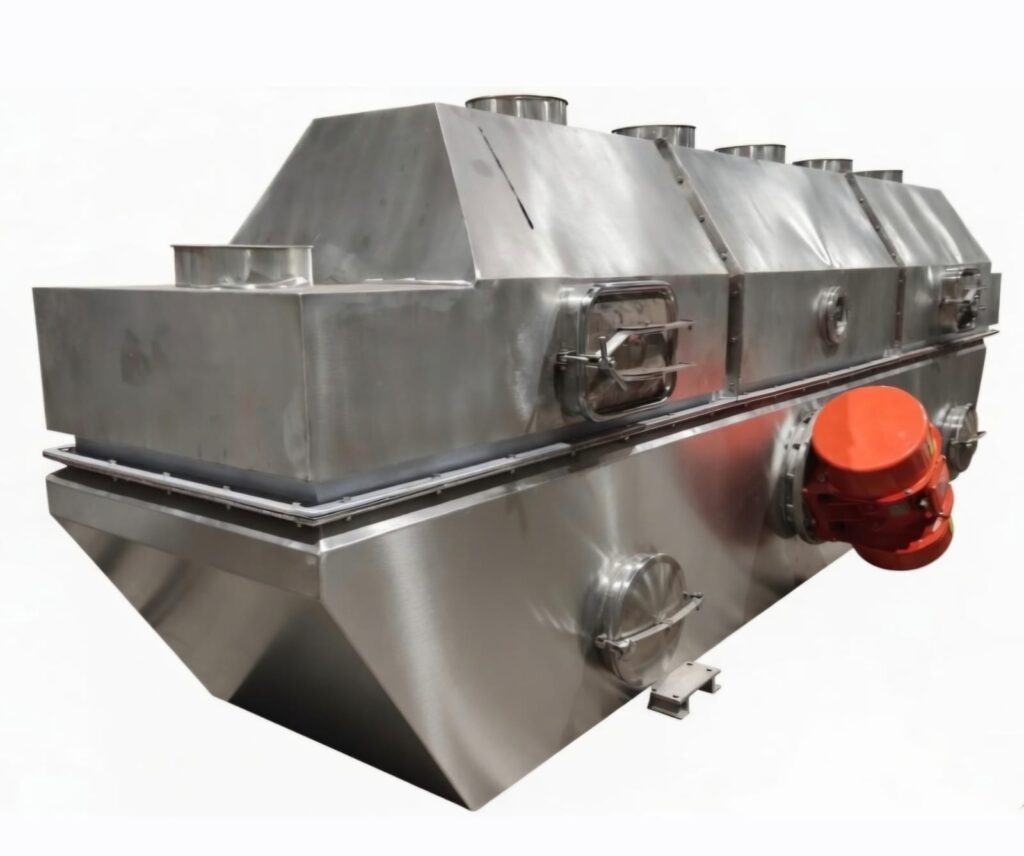
Vibratory Fluid Bed Dryer for Coconut
Fluidized-bed technology provides another important drying platform for coconut processing.
GTI’s Vibratory Fluid Bed Dryer is positioned for applications including:
- High-fat desiccated coconut
- Low-fat desiccated coconut
The vibratory movement helps convey the product while hot air passes through the product bed, supporting uniform drying and reducing the risk of agglomeration.
For manufacturers, the attraction of this technology can include:
- Continuous operation
- Uniform drying
- Controlled product handling
- Improved flowability
- Integration with automated processing lines
Combination Drying Systems for Coconut
Some coconut applications may benefit from combining different drying technologies.
For example:
Primary Drying → Fluid Bed Drying → Cooling
or
Band Drying → Fluid Bed Conditioning → Cooling
The exact configuration depends on the product and process requirements.
This is where multi-stage and hybrid drying engineering becomes important.
Instead of asking:
“Which dryer should we buy?”
a coconut processor should ask:
“What complete drying route gives us the required product quality, capacity and operating economics?”
That is a process-engineering question.
Coconut Water: From Extraction to Value-Added Products
Coconut water is another major value-added coconut stream.
Fresh coconut water can be processed for:
- Bottled coconut water
- Concentrated coconut water
- Coconut water powder
- Beverage ingredients
- Functional beverage applications
GTI’s coconut-processing portfolio includes coconut water extraction and coconut water powder processing solutions.
For liquid-to-powder applications, drying technology becomes a critical engineering stage.
GTI’s spray-drying technology is designed for liquid coconut products including coconut water and coconut milk, with powder recovery and handling systems integrated into the overall process.
Virgin Coconut Oil: Extracting More Value from Coconut
Coconut can also become a high-value oil product.
Virgin Coconut Oil, or VCO, is an important value-added coconut product used across:
- Food
- Nutraceuticals
- Wellness
- Personal care
- Cosmetics
GTI’s coconut-processing portfolio includes Virgin Coconut Oil processing plants and VCO powder processing systems.
This illustrates an important concept in coconut processing:
The same raw material can support completely different product businesses depending on the processing technology.
Coconut Paring: Turning a By-Product into Value
Coconut processing also generates parings—the brown skin removed from coconut kernel.
Instead of treating this material simply as waste, it can be processed for additional value.
GTI’s coconut paring oil machinery is designed for oil recovery from coconut parings, with the resulting streams including coconut oil and oil cake.
This supports a broader waste-to-value philosophy:
Primary Product + Secondary Product + By-Product Recovery = Higher Resource Utilization
For modern coconut businesses, maximizing the value extracted from the raw coconut can be just as important as increasing production capacity.
Coconut Fibre, Coir and Other Non-Food Products
The coconut industry extends beyond food.
Coconut husk and other fibrous fractions can contribute to:
- Coconut fibre
- Coir products
- Coir pith
- Biomass-related applications
- Other industrial products
GTI’s coconut-processing portfolio includes coconut fibre and coir-related processing solutions.
This creates the concept of a more complete coconut utilization model, where different portions of the coconut can be directed toward different value-added products.
The Coconut Processing Value Chain
The complete opportunity can therefore be visualized as:
RAW COCONUT
↓
PRIMARY PROCESSING
Dehusking → Deshelling → Paring → Washing
↓
KERNEL PROCESSING
Cutting → Grating → Preparation
↓
PRODUCT-SPECIFIC ROUTES
Desiccated Coconut
→ Drying → Cooling → Sieving → Packing
Coconut Milk
→ Extraction → Filtration → Homogenization → Pasteurization → Packaging
Coconut Milk Powder
→ Milk Processing → Concentration/Preparation → Drying → Powder Handling → Packaging
Virgin Coconut Oil
→ Kernel Processing → Oil Extraction → Filtration → Purification → Packaging
Coconut Water
→ Extraction → Filtration → Processing → Packaging / Powder Production
Coconut Paring Oil
→ Paring Collection → Drying → Oil Extraction → Filtration
Coconut Fibre / Coir
→ Husk/Fibre Processing → Separation → Cleaning → Drying/Handling → Finished Product
This is why coconut processing should be considered an integrated industrial ecosystem, not simply a single-machine application.
Where GTI Fits into the Coconut Industry
GTI’s role can span multiple levels of the value chain.
1. Raw Material Preparation
GTI supplies machinery for coconut preparation and handling.
2. Product Extraction
GTI provides coconut milk, coconut water and oil-processing systems.
3. Industrial Drying
This is one of GTI’s core engineering strengths.
Its coconut portfolio includes:
- Band Dryers
- Vibratory Fluid Bed Dryers
- Combination Fluid Bed Dryers
- Spray Dryers
- Other customized dehydration systems
4. Powder Processing
GTI supports coconut milk powder, coconut water powder, VCO powder and desiccated coconut processing.
5. By-Product Utilization
GTI provides machinery for areas such as coconut paring oil and coconut fibre processing.
6. Packaging
Packaging systems can be integrated into complete processing projects.
7. Complete Turnkey Plants
GTI’s published turnkey scope includes:
Feasibility → Process Engineering → Plant Layout → Machinery Manufacturing → Installation → Commissioning → Automation → Training → After-Sales Support.
This is an important distinction.
GTI is not limited to selling a dryer.
It can participate in designing the wider processing ecosystem around the customer’s coconut product.
Why Drying Technology Can Determine the Success of a Coconut Product
Two manufacturers may start with the same coconut but produce different commercial outcomes.
The difference can come from:
- Raw-material quality
- Extraction efficiency
- Processing conditions
- Drying technology
- Moisture control
- Product handling
- Hygiene
- Automation
- Packaging
- Energy consumption
- Process integration
A poorly selected dryer can create:
- Uneven moisture
- Product degradation
- Excessive energy consumption
- Poor flowability
- Sticking or agglomeration
- Production bottlenecks
- Difficult cleaning
- Higher operating costs
A properly engineered drying system can become an important part of a consistent production line.
That is why dryer selection should be part of process engineering from the beginning—not an afterthought.
From India to Global Coconut Markets
The coconut industry is inherently global.
Major coconut-producing and processing regions include:
- India
- Indonesia
- Philippines
- Vietnam
- Thailand
- Sri Lanka
- Malaysia
- Brazil
- Africa
- Latin America
- Pacific island nations
GTI’s coconut-processing business reports international project experience across markets including Sri Lanka, Vietnam, Philippines, Thailand and other coconut-producing regions.
Its published company profile also describes its focus on international coconut-processing projects and export-oriented engineering.
This makes GTI relevant not only to Indian coconut processors but also to businesses seeking coconut processing machinery and turnkey plants from India for international projects.
Why a Turnkey Coconut Processing Approach Matters
Building a coconut-processing plant by purchasing unrelated machines from multiple suppliers can create integration challenges.
A turnkey approach can provide a more coordinated engineering responsibility across:
- Process design
- Equipment selection
- Plant layout
- Utilities
- Material flow
- Automation
- Drying
- Product handling
- Packaging
- Installation
- Commissioning
GTI’s Coconut Projects division positions itself around this integrated model, describing its offering as a complete processing ecosystem from raw-material handling to final packaging.
For investors and manufacturers establishing a new plant, this can simplify project coordination.
What Coconut Businesses Should Consider Before Buying Machinery
Before selecting a coconut processing machine or dryer, manufacturers should define:
Raw Material
- Coconut variety
- Maturity
- Moisture
- Kernel condition
- Seasonal variation
Product
- Desired final product
- Moisture specification
- Particle size
- Fat content
- Colour
- Texture
- Shelf-life requirements
Capacity
- Raw coconut input
- Product output
- Operating hours
- Future expansion
Utilities
- Steam
- Electricity
- Thermal energy
- Water
- Compressed air
Market
- Domestic market
- Export market
- Food-service market
- Ingredient market
- Retail market
Hygiene and Compliance
- Food-grade construction
- Cleaning requirements
- Automation
- Export-market requirements
These parameters determine whether the project requires a band dryer, fluid bed dryer, spray dryer, extraction system, complete coconut milk line, VCO plant or an integrated multi-product processing plant.
GTI’s Vision for the Future of Coconut Processing
The next generation of coconut businesses will increasingly focus on:
Higher Value + Better Utilization + Product Diversification + Energy Efficiency + Automation + Global Quality
Instead of selling only raw coconut, manufacturers can develop a portfolio of products.
For example:
Coconut → Desiccated Coconut
Coconut → Coconut Milk → Coconut Milk Powder
Coconut → Coconut Water → Coconut Water Powder
Coconut → Kernel → Virgin Coconut Oil
Coconut → Parings → Paring Oil
Coconut → Husk → Fibre / Coir Products
This diversified approach can help manufacturers create multiple revenue streams from the same agricultural resource.
GTI Dryers: Engineering the Drying Stage of the Coconut Value Chain
For GTI Dryers, coconut is not simply another food-processing application.
It represents a complete engineering segment where drying, extraction, separation, oil processing, powder processing, product handling and packaging need to work together.
From a high-fat desiccated coconut dryer to a coconut milk powder drying system, the technology requirement changes according to the product.
GTI’s experience across multiple dryer technologies allows it to approach these applications from a process-engineering perspective.
The goal is not simply:
“Supply a dryer.”
The goal is:
“Develop the right drying and processing solution for the coconut product, capacity and market.”
A World Coconut Day Message from GTI
On World Coconut Day, the coconut industry deserves to be viewed as more than agriculture.
It is a global network connecting:
Farmers → Processors → Equipment Manufacturers → Food Companies → Ingredient Manufacturers → Exporters → Consumers
Technology connects these stages.
Better processing can create better products.
Better drying can create better stability and consistency.
Better utilization can reduce waste.
Better engineering can help manufacturers move from commodity products toward higher-value ingredients.
And better integration can help coconut-processing businesses compete in global markets.
From the coconut tree to the finished product, every stage matters.
GTI Dryers and GTI’s coconut-processing engineering ecosystem are built to support that journey—from coconut preparation and extraction to drying, powder processing, product handling and complete turnkey plant solutions.
Planning a Coconut Processing Plant?
Whether you are planning:
- A Desiccated Coconut Powder Plant
- A Coconut Milk Processing Plant
- A Coconut Milk Powder Plant
- A Virgin Coconut Oil Plant
- A Coconut Water Processing Plant
- A Coconut Water Powder Plant
- A Coconut Fibre Processing Plant
- A Coconut Paring Oil Plant
- A Multi-Product Coconut Processing Plant
- A New Coconut Drying System
- An Expansion or modernization project
GTI can evaluate the product, capacity, process requirements and desired market before recommending the appropriate technology.
Talk to GTI about your Coconut Processing Project
Share your:
Raw material → Product → Capacity → Final specification → Plant location → Utility availability
and GTI’s engineering team can evaluate the appropriate processing and drying solution.
GTI Dryers — Engineered Drying Solutions from India for Global Coconut Industries.