
Sticky powder and chamber wall deposits are among the most common and costly operating problems in industrial spray dryers. They reduce effective capacity, increase cleaning frequency, create residual-moisture variation and can force higher operating temperatures that damage heat-sensitive products.
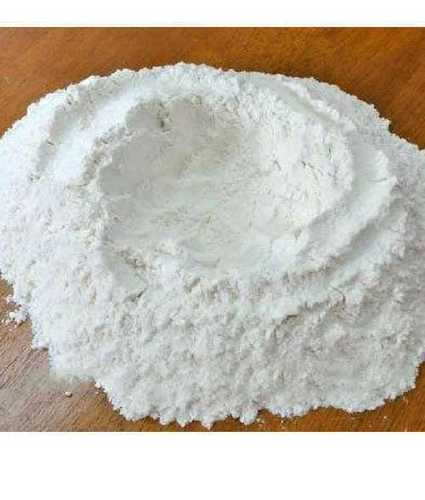
From a process-engineering perspective these symptoms are rarely random. They usually result from a combination of feed properties, atomisation quality, temperature and moisture profile inside the chamber, and the physical design of the dryer. This guide outlines the main causes and the practical responses GTI Dryers evaluates when supporting plants that face these issues.
1. What Operators Typically Observe
- Powder sticks to chamber walls, cone or ducting and builds into layers
- Product discharged is soft, tacky or cakes quickly in bags or silos
- Frequent manual or CIP cleaning is required to maintain throughput
- Residual moisture is higher than specification or varies between batches
- Fines recovery drops or cyclones/bag filters load more rapidly
- Attempts to raise inlet temperature reduce deposits temporarily but harm product quality
These symptoms point to particles that are still in a sticky intermediate moisture or temperature state when they contact surfaces or each other.
2. Primary Causes of Sticky Powder and Wall Deposits
A. Feed Composition and Stickiness Window
Many food extracts, dairy concentrates, herbal extracts, sugars, organic chemicals and detergent slurries pass through a temperature–moisture region where the particle surface becomes thermoplastic or hygroscopic. If droplets or particles remain in that region too long, or contact walls while still sticky, deposits form.
What to check
- Solids content and viscosity of the feed
- Presence of sugars, organic acids, proteins or other sticky components
- Glass-transition or sticky-point behaviour of the formulation (where known)
B. Inadequate or Uneven Atomisation
Large or poorly distributed droplets dry slowly. Their surfaces remain wet or sticky longer, increasing the chance of wall contact and inter-particle bridging.
What to check
- Atomiser type (rotary vs pressure/two-fluid nozzle) and condition
- Feed pressure, flow rate and viscosity stability
- Evidence of nozzle wear, blockage or uneven spray pattern
C. Temperature and Moisture Profile Inside the Chamber
If the outlet temperature is too low relative to the evaporation load, residual moisture stays high. If the profile forces particles through the sticky zone near the wall, deposits increase. Simply raising inlet temperature without addressing residence time or solids content often moves the problem rather than solving it.
What to check
- Inlet and outlet gas temperatures and their stability
- Measured residual moisture of free powder versus deposited material
- Whether product temperature (not only gas temperature) is known
D. Chamber Design and Airflow Patterns
Dead zones, poor air distribution, insufficient wall sweeping or an undersized chamber relative to the evaporation duty allow wet particles to reach surfaces.
What to check
- Location of deposits (upper cylinder, cone, outlet duct, cyclone inlet)
- Condition of any air-sweep or wall-cooling systems
- Evidence of short-circuiting or uneven gas flow
E. Feed That Should Not Be Spray-Dried
Non-pumpable filter cakes that have been heavily diluted solely to feed a spray dryer often produce high evaporation loads, fine sticky particles and chronic deposits. In these cases the root problem is technology selection, not operating parameters.
3. Practical Diagnostic Sequence
- Record exact location and appearance of deposits (wet, glassy, powdery, layered).
- Measure residual moisture of free-flowing product and of deposited material.
- Verify feed solids content, viscosity and day-to-day consistency.
- Inspect atomiser performance and spray pattern.
- Map inlet/outlet temperatures and, if possible, estimate product temperature.
- Review recent changes in feed formulation, capacity or set-points.
- Assess whether the feed is a true pumpable slurry or a diluted cake.
4. Solutions GTI Evaluates
| Observed problem | Typical first responses | When deeper change is needed |
|---|---|---|
| Wall deposits in chamber or cone | Improve atomisation; raise solids if viscosity allows; adjust outlet temperature; restore air-sweep or wall cooling | Chamber geometry or airflow redesign; secondary fluid-bed finishing |
| Sticky, high-moisture powder | Increase evaporation driving force carefully; improve droplet size distribution; stabilise feed | Formulation change (carriers, anti-stick aids); multi-stage drying |
| Rapid build-up after short runs | Clean and restore atomiser; check for feed contamination or viscosity spikes | Review whether spray drying is the correct technology for the feed |
| Deposits only at high capacity | Evaporation load exceeds design; air distribution inadequate | Capacity re-rating or larger/ properly designed system |
| Chronic deposits with diluted cake feed | — | Evaluate spin-flash, paddle or other cake-capable dryers instead of continued dilution |
Secondary fluid-bed drying or agglomeration stages are frequently added after the spray chamber to finish residual moisture, cool the powder and improve flowability without forcing the primary chamber into an aggressive temperature regime.
5. When Spray Drying Is the Wrong Tool
GTI’s consistent position is that spray dryers require a genuinely pumpable feed. If the natural process stream is a sticky filter cake or paste, diluting it with large volumes of water to make it sprayable usually increases energy consumption and deposit risk. In those cases spin-flash, paddle or other contact/dispersion technologies should be evaluated first.
Spray drying remains the correct choice when:
- The process is designed around a stable liquid, solution or slurry
- Particle morphology from atomisation is required
- Continuous liquid-to-powder conversion is the process objective
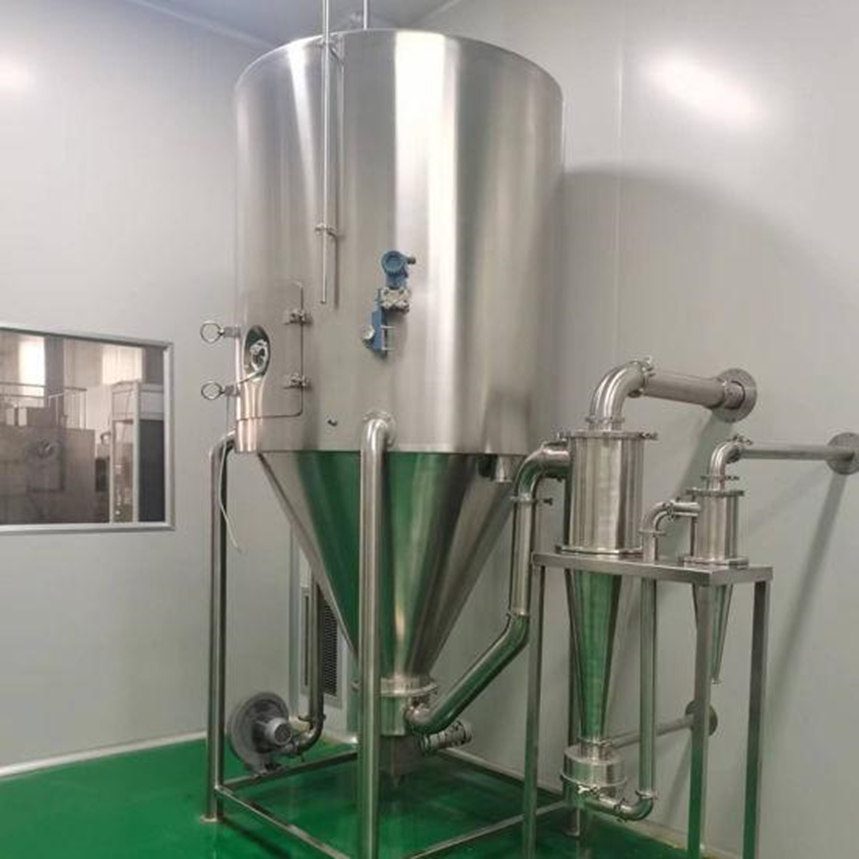
6. Data Needed for a Useful Assessment
- Product name and approximate composition (especially sugars, proteins, organics)
- Feed solids content and viscosity range
- Current inlet/outlet temperatures and residual-moisture results
- Description and location of deposits
- Atomiser type and any recent changes
- Whether the feed is a natural slurry or a diluted cake
- Capacity and cleaning frequency
Geographic Note
Sticky powder and wall-deposit problems appear in spray-dryer installations worldwide — dairy and coffee plants, herbal-extract facilities, chemical and detergent producers, and specialty powder manufacturers. In India the same physical mechanisms apply; local factors such as high ambient humidity, variable feed solids from seasonal raw materials and energy cost simply make the economic impact of deposits more visible. Diagnosis still begins with feed behaviour, atomisation and the temperature–moisture profile inside the chamber.
How GTI Dryers Approaches These Problems
GTI Dryers designs spray drying systems and complementary fluid-bed finishing stages for food, chemical and extract applications. When plants report sticky powder or wall deposits, the engineering approach is:
- Treat the symptom as information about feed properties and process conditions, not as a reason to raise temperature indiscriminately
- Verify that the feed is appropriate for spray drying
- Optimise atomisation, solids content and temperature profile where the technology is correct
- Recommend secondary finishing or an alternative dryer family when the feed is fundamentally a sticky cake or the deposit problem is structural
- Support process-data review so that changes are based on measured residual moisture, product temperature and deposit behaviour
Most sticky-powder and wall-deposit problems can be reduced once the relationship between feed, droplet formation and the sticky zone is understood and controlled.
Frequently Asked Questions
Why does raising inlet temperature sometimes reduce deposits only temporarily?
It can move particles through the sticky zone faster, but it does not remove the underlying cause (large droplets, low solids, or a formulation that remains sticky). Higher temperature may also damage product quality.
Can wall deposits be completely eliminated?
In many products a low level of deposit is managed by design (air-sweep, wall cooling, periodic cleaning). Chronic heavy build-up usually indicates a correctable process or technology mismatch.
Is a secondary fluid bed always necessary?
Not always, but it is frequently the most practical way to finish residual moisture and cool powder without forcing the spray chamber into an aggressive regime.
When should I consider a different dryer instead of more spray-dryer tuning?
When the feed is essentially a non-pumpable cake that is being diluted only to feed the spray dryer, or when deposit and quality problems persist after atomisation and temperature profile have been optimised.
Next Step
If your spray dryer is producing sticky powder or accumulating wall deposits, share the product type, feed solids, temperature set-points and a description of the deposits. GTI can help diagnose the likely causes and recommend operational or equipment changes.
Request a spray-dryer sticky-powder / wall-deposit assessment with your process data.
Contact the GTI Technical Team:
Website: gtidryers.com
Email: mktg@gtidryers.com
Phone / WhatsApp: +91 9330077417