
In water-treatment chemical manufacturing, removing moisture is only one part of the production challenge. A coagulant recovered from a chemical process may form a sticky cake. Precipitated silica may retain substantial liquid and develop a difficult-to-handle filter cake. A functional inorganic additive may require a carefully controlled final moisture, particle structure or bulk density to perform consistently in its end application.

When these materials reach the drying stage, the wrong equipment can lead to uneven moisture, agglomeration, powder loss, wall deposits, corrosion, excessive energy consumption and inconsistent product quality.
GTI Dryers evaluates industrial drying solutions around the material’s chemistry, feed condition and required finished-product properties. This is particularly important for specialty inorganic chemicals used in water treatment, precipitation processes, functional additives and related industrial applications.
This guide takes a production-problem approach to dryer selection, helping chemical manufacturers identify the information needed to assess a suitable system for their material.
1. Start With the Problem at the Dryer Inlet
Before choosing equipment, establish what the material looks like when it enters the drying stage. The chemical’s name alone is not enough to select a dryer.
| Feed entering the drying process | Typical production challenge | What to assess first |
| Pumpable coagulant solution | Converting a liquid feed into a recoverable powder | Feed chemistry, concentration, atomization and final product specification |
| Coagulant crystals or granules | Residual moisture, caking or inconsistent product temperature | Particle size, moisture distribution and thermal stability |
| Precipitated silica slurry or wet cake | High retained moisture, stickiness and powder recovery | Cake structure, solids concentration, surface properties and feeding behaviour |
| Metal hydroxide or other inorganic precipitate | Poor permeability, agglomeration and difficult discharge | Mechanical dewatering, cohesion, thermal behaviour and final chemical form |
| Functional inorganic additive | Maintaining powder characteristics and product performance | Particle morphology, bulk density, moisture, purity and end-use requirements |
| Hygroscopic inorganic powder | Moisture pickup during processing or storage | Drying endpoint, cooling conditions, packaging and storage environment |
The first commercial question is therefore not simply, “What is the capacity of the dryer?” It is, “What must the material become, and what prevents the current process from achieving it consistently?”
2. Water-Treatment Coagulants: Drying Depends on the Exact Chemistry
Coagulants are used in water and wastewater treatment to help destabilize suspended particles and support separation processes. Commercial products may be supplied as liquids, solutions, crystals, powders or other formulated forms.
Different coagulants have different chemical and thermal properties. A dryer suitable for one material should not automatically be specified for another.
Aluminium-based coagulants
Aluminium sulfate and other aluminium-based coagulant products may be encountered in water-treatment chemical manufacturing. Depending on the production route, the feed entering the drying stage could be a solution, concentrated liquid, crystals or a wet solid.
The key questions include:
- Is the target product a dry salt, powder or another form?
- Does the material contain free moisture or have a defined hydration state?
- Can the feed be atomized, or is it already a solid?
- What are the product’s corrosivity and material-compatibility requirements?
- Must the final product meet a specific purity, solubility or moisture specification?
Spray drying may be considered for a suitable liquid feed that must be converted into powder. A suitable solids dryer may be evaluated for existing crystals or granules. The final choice requires confirmation of the product chemistry and process route.
Iron-based coagulants
Iron-based coagulants, including selected ferric and ferrous salts, may also require drying in manufacturing or recovery processes.
Their behaviour depends on the exact compound, oxidation state, concentration, impurities and feed condition. Some iron salts have hydrate forms whose composition can change with thermal exposure.
A process assessment should distinguish between removing surface moisture and deliberately changing the chemical form. Corrosion resistance, product purity, moisture specification and any risk of unwanted chemical transformation should be established before finalizing the dryer.
Other coagulant and water-treatment chemical products
Specialty formulations and related inorganic treatment chemicals may include different salts, blended products and precipitated compounds. Some are manufactured as liquids, while others are recovered as solids from a process.
The equipment decision should be based on the actual product rather than assuming that all coagulants require spray drying.
Important distinction: Drying a coagulant for commercial sale is not the same duty as thermally drying sludge generated by a water-treatment plant. Sludge drying requires a separate assessment of solids content, contaminants, handling and the intended recovery or disposal route.
3. Precipitated Silica: Why Filter-Cake Behaviour Matters
Precipitated silica is used in applications such as rubber reinforcement, functional fillers, coatings, specialty materials and other industrial formulations. Its performance can depend on properties beyond final moisture alone.
The wet material may arrive as a slurry, gel-like precipitate or filter cake. After drying, the product may need to meet specifications for moisture, surface area, pore structure, oil absorption, bulk density, particle size or dispersibility.
Research on sodium-silicate-based precipitated silica shows that drying technique can influence the material’s physical and textural properties, including surface area and pore characteristics.
The main silica-drying challenges
High retained moisture: Fine precipitated structures can retain liquid, making the upstream filtration and drying stages closely connected.
Sticky or cohesive feed: A wet cake may not feed uniformly into equipment designed for free-flowing granules.
Changes in powder properties: The drying route may influence agglomeration, pore structure, bulk density and other characteristics relevant to the final application.
Dust and product recovery: Fine powders can create collection, handling and containment challenges.
Abrasive material handling: Depending on the feed, solids concentration and equipment design, wear may need to be considered in atomization, conveying and separation components.
Which drying routes should be evaluated?
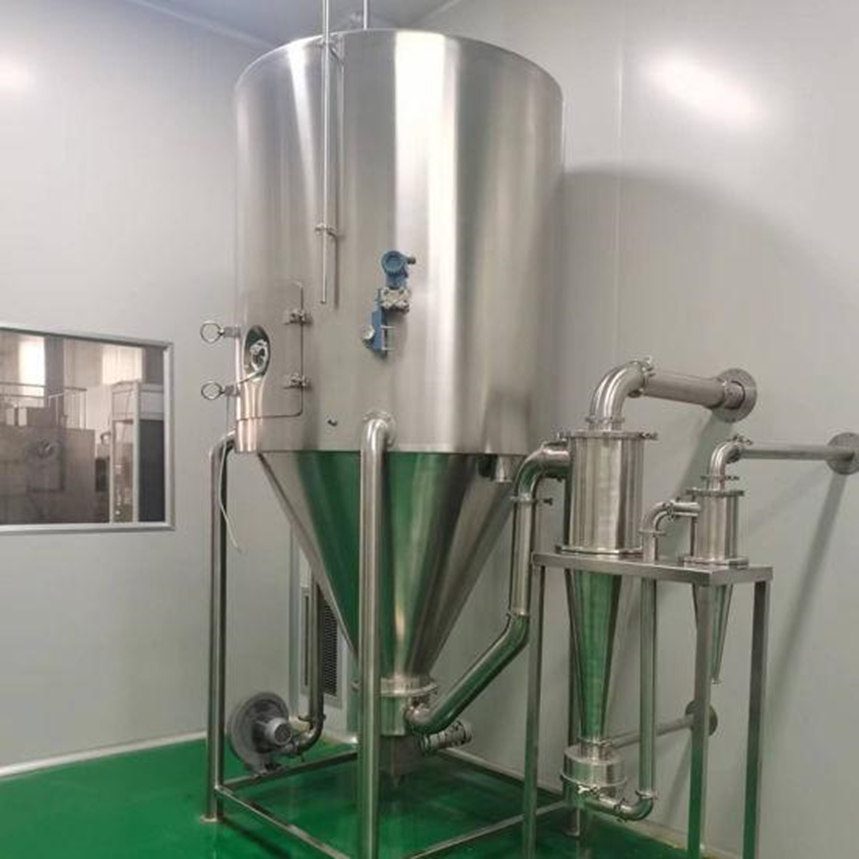
- Spray drying: For a suitable pumpable silica slurry or other liquid feed that must be converted into powder.
- Spin-flash or flash drying: For suitable wet cakes or pastes that can be mechanically dispersed and conveyed through the drying system.
- Fluid-bed drying: For suitable particles or granules, including products requiring further drying or conditioning after formation.
- Indirect drying: For selected cohesive materials where enclosed processing or indirect heat transfer is appropriate.
These options are not interchangeable. The correct route depends on the physical condition of the feed and the properties that must be preserved in the finished silica.
For a manufacturer, the objective is not simply to achieve a low moisture reading. It is to produce a consistent material that meets its downstream performance requirements.
4. Specialty Inorganic Functional Additives: Drying for End-Use Performance
Many inorganic products are sold as functional additives rather than basic bulk chemicals. Their value may depend on surface properties, porosity, particle structure, dispersibility, absorption behaviour or consistency during blending and formulation.
This category may include selected precipitated inorganic compounds, specialty silica products, mineral-based functional powders and other process-specific inorganic materials.
Because the category is broad, the dryer should be selected around the exact compound and target specification.
Product characteristics to establish
| Product requirement | Why it matters during dryer selection |
| Final moisture | Influences storage stability, handling and downstream formulation |
| Surface area or pore structure | May be affected by the drying route and thermal history |
| Bulk density | Influences packaging, conveying and formulation |
| Particle size distribution | Affects flow, dust generation and product consistency |
| Agglomeration behaviour | Can influence discharge, handling and downstream dispersion |
| Chemical purity | May restrict product-contact materials and cleaning procedures |
| Surface functionality | May be sensitive to changes during processing |
| Dispersibility | Can influence the performance of the powder in its final application |
Not every attribute applies to every product. The manufacturer’s specification should identify which characteristics are critical and which can vary within an acceptable range.
5. Choosing the Right Dryer: Match the Technology to the Feed
The following comparison is an initial screening guide for the application review.
| Drying technology | Feed condition to evaluate | Potential role | Key consideration |
| Spray dryer | Pumpable solution, suspension or slurry | Liquid-to-powder conversion | Atomization, feed solids, stickiness and powder collection |
| Spin-flash dryer | Suitable wet cake, paste or cohesive solid | Dispersing and drying wet material | Cake behaviour, mechanical dispersion, particle recovery and product properties |
| Fluid-bed dryer | Suitable free-flowing particles or granules | Controlled drying and potentially cooling | Particle size, density, fluidization and fines |
| Vibratory fluid-bed dryer | Suitable particulate solids | Controlled particle movement and drying | Material flow behaviour and particle strength |
| Rotary dryer | Suitable robust solids or granules | Continuous drying of appropriate bulk solids | Product movement, attrition, heat exposure and agglomeration |
| Paddle or other indirect dryer | Selected cohesive, pasty or wet solids | Indirect drying in an appropriate configuration | Heat transfer, product contact, corrosion and discharge behaviour |
The equipment selection should also account for upstream filtration, feed preparation, conveying, dust collection, cooling, storage and packaging. A dryer that works well in isolation may still perform poorly if it receives an inconsistent or unsuitable feed.
6. Solve the Most Common Production Problems
Problem: The product remains wet even when the dryer is operating continuously
Possible causes include inconsistent incoming moisture, uneven feeding, insufficient effective drying capacity or unsuitable contact between the material and drying medium.
What to investigate: Measure feed moisture and feed rate, establish the actual evaporation load, and examine whether the material is distributed and processed consistently.
Problem: Precipitated silica forms hard agglomerates
Agglomeration may be influenced by the wet cake’s structure, local moisture, feed preparation, drying conditions and particle interactions.
What to investigate: Characterize the feed, review its mechanical dispersion and assess the effect of the drying route on the final powder structure.
Problem: Powder recovery is lower than expected
Fine particles, chamber deposits, poor separation or unsuitable collection conditions may contribute to product loss.
What to investigate: Review atomization or feed dispersion, airflow, chamber behaviour, cyclone and filter performance, and the location of material losses.
Problem: The dried product no longer meets its functional specification
Drying can affect some material properties in addition to moisture. A product may meet its moisture target yet fail its required surface, density or dispersion specification.
What to investigate: Define the critical quality attributes before selecting the process. Where the effect of drying is uncertain, material testing or pilot trials may be necessary.
Problem: Corrosion and maintenance costs are increasing
Chemical composition, concentration, temperature, abrasion and cleaning conditions all influence material compatibility.
What to investigate: Review the actual feed chemistry and operating conditions before specifying stainless steel, special alloys, coatings, liners, seals or other contact materials.
Problem: Energy consumption is high
A large evaporation load, excessive incoming liquid, poor heat integration or an unsuitable process configuration may increase energy demand.
What to investigate: Evaluate upstream dewatering, heat recovery where appropriate, insulation, process controls and the complete mass and energy balance.
7. A Better Way to Specify a Dryer for Water-Treatment Chemicals
A quotation request is more useful when it describes the process duty rather than naming a machine in advance.
Step 1: Identify the exact material
Provide the chemical name, grade, composition where available and relevant safety information. For a precipitate or formulated coagulant, describe the manufacturing or recovery process.
Step 2: Describe the feed condition
State whether the feed is a pumpable liquid, slurry, wet cake, paste, crystals or granules. Include feed solids, moisture and viscosity where applicable.
Step 3: Define the required product
Specify the desired form, final moisture, particle size, bulk density and any critical functional properties. For specialty silica, identify the properties that determine its end-use performance.
Step 4: Quantify the production requirement
Provide the expected feed rate, operating hours, batch or continuous operation requirements and any known variability in feed composition or moisture.
Step 5: Review utilities and site conditions
Identify available heat sources, utilities, installation constraints, exhaust requirements, dust-control needs and relevant environmental or safety requirements.
Step 6: Validate uncertain material behaviour
If the material is sticky, cohesive, highly variable or sensitive to thermal exposure, testing may help establish the appropriate process route and reduce scale-up uncertainty.
This sequence helps the engineering team identify the likely equipment options and the additional information required before making a technical recommendation.
8. Upstream Dewatering, Dust Collection and Storage Must Be Part of the Design
The performance of a drying system depends on more than the chamber itself.
Upstream dewatering
Filter presses, centrifuges and other solid-liquid separation equipment can reduce the liquid entering the dryer. The extent of feasible mechanical dewatering depends on the material’s filtration behaviour and process constraints.
Reducing the incoming liquid load may lower the thermal evaporation requirement, but this benefit should be evaluated using actual process data.
Dust collection and product recovery
Spray-dried and mechanically dispersed powders may require suitable cyclones, filters or other separation equipment. The selection depends on particle size, powder properties, exhaust conditions and applicable safety requirements.
Exhaust handling
Water-based feeds may still require consideration of chemical vapours, fine particulate matter or other process-specific emissions. Exhaust treatment should be based on the feed chemistry and applicable requirements.
Cooling and packaging
A product may absorb moisture after leaving the dryer if cooling, conveying, storage or packaging conditions are unsuitable. For moisture-sensitive products, the full route from dryer discharge to sealed packaging should be assessed.
9. Why GTI Dryers for Specialty Inorganic Drying Applications?
GTI Dryers, from Genex Tech Industries LLP, provides industrial drying equipment and customized drying solutions for chemical and process industries. Its technology portfolio includes spray, fluidized-bed, rotary, flash, paddle and other drying systems, selected according to application requirements. Explore GTI’s industrial drying solutions.
For water-treatment chemicals, precipitated silica and functional inorganic products, the starting point is to determine the actual feed-to-product requirement.
The engineering assessment should establish:
- Whether the material enters as a liquid, wet cake or formed solid.
- Which product characteristics must be preserved.
- How much moisture must be removed.
- Whether upstream dewatering or feed conditioning is required.
- What collection, exhaust handling and product-contact materials are appropriate.
- Whether testing is needed to confirm the proposed process.
The objective is to identify an appropriate drying route for the specific application—not to prescribe the same dryer for every inorganic chemical.
GTI Dryers — Engineered Drying Solutions from India for Global Industries.
For a technical discussion, visit GTI Dryers and share your material, feed condition, production rate and required finished-product specifications.
10. Frequently Asked Questions
Which dryer is suitable for water-treatment coagulants?
The answer depends on the exact coagulant and whether the feed is a liquid, crystal, granule or wet solid. Spray drying may be evaluated for suitable pumpable liquid feeds, while other drying systems may be appropriate for formed solids. Chemical compatibility and product specifications must be confirmed.
Can precipitated silica be spray-dried?
Spray drying can be evaluated for suitable precipitated silica slurries. The process must be assessed against the required surface properties, pore structure, bulk density, particle characteristics and moisture specification. Research shows that drying technique can influence the physicochemical properties of precipitated silica.
Is a spin-flash dryer suitable for precipitated silica?
A spin-flash dryer may be considered for a suitable wet silica cake that can be mechanically dispersed and processed through the system. Feed cohesion, solids concentration, product quality and collection requirements must be assessed before selecting the equipment.
How can manufacturers reduce the energy required to dry inorganic chemicals?
Start by quantifying the evaporation load and reviewing upstream dewatering. Depending on the application, opportunities may include improved feed consistency, appropriate heat recovery, insulation and better process control. Actual savings require a process-specific assessment.
Why is final moisture not enough to define precipitated silica quality?
Moisture is only one product characteristic. Depending on the application, surface area, pore structure, bulk density, particle size and dispersibility may also be critical. The dryer should be evaluated against the full product specification.
Can the same dryer process different coagulants or specialty inorganic products?
Potentially, but only where the materials and process requirements are compatible. Differences in chemistry, corrosivity, hydration, particle behaviour, contamination limits and cleaning requirements may restrict the range of products that can be processed on the same system.
What information should I send to a dryer manufacturer?
Provide the material name, feed form, feed rate, initial moisture or solids content, target final moisture, critical product properties, available utilities and installation location. Share known safety and corrosion requirements as well.
Does drying water-treatment sludge use the same process as drying coagulants?
Not necessarily. Coagulant manufacture and sludge processing are different duties. Sludge may contain a variable mixture of solids, retained water and contaminants, so its dewatering, thermal treatment and final handling require a separate assessment.
Conclusion: Engineer the Drying Process Around the Product
Water-treatment coagulants, precipitated silica and specialty inorganic functional additives can present very different drying challenges. A suitable system must account for the feed condition, moisture-removal requirement, chemical compatibility, powder properties and the quality requirements of the finished product.
For manufacturers, the best starting point is to identify the actual production bottleneck, characterize the material and assess the complete process—from dewatering and drying to collection, cooling and storage.
Looking for a dryer for coagulants, precipitated silica or specialty inorganic chemicals? Contact GTI Dryers with your material details and production targets to begin an application-specific assessment.