
Uganda’s Tea Industry Is Entering a Value-Addition Conversation
Uganda has a substantial tea-processing and export industry, but the market opportunity is no longer limited to simply producing more bulk black tea.
According to Uganda’s Ministry of Agriculture, Animal Industry and Fisheries (MAAIF), national tea production was 60,463 tonnes in FY 2024/25, down from 70,180 tonnes in FY 2023/24. The same government statistical publication identifies MAAIF and the Uganda Tea Association as sources for the production figures.
At the same time, Uganda’s tea industry is looking at ways to improve market access, quality, processing efficiency and value addition. Recent industry discussions have highlighted the country’s heavy dependence on bulk exports through the Mombasa auction and the need to establish more direct connections with international buyers.
This creates an important equipment opportunity for Ugandan tea factories:
better drying is not simply about removing moisture — it is about controlling the final product that reaches the market.
For a factory handling conventional CTC black tea, a Vibratory Fluidised Bed Dryer (VFBD) can provide continuous and controlled drying of tea particles.
For processors developing orthodox or specialty products, a Combination Fluid Bed Dryer can provide multi-stage process control.
For green-tea production, controlled combination drying can help manage moisture removal while protecting the desired colour, aroma and product characteristics.
GTI Dryers combines these technologies into customized industrial drying systems designed around product characteristics, production capacity and process requirements.
Uganda Tea Dryer Market at a Glance
Uganda is already an export-oriented tea market.
WITS/UN Comtrade data shows that Uganda exported approximately 59.86 million kg of tea worth US$56.16 million in 2024 under HS 0902.
Black and partly fermented tea represented the dominant identifiable tea export stream. In 2024, Uganda exported approximately 53.50 million kg of black/partly fermented tea valued at US$50.17 million. Kenya alone accounted for approximately 47.37 million kg of that trade, followed by South Sudan at about 5.25 million kg.
This export pattern is particularly relevant when considering drying equipment.
The dryer installed in a Ugandan tea factory may ultimately be producing tea destined for:
- Kenya
- South Sudan
- Pakistan
- China
- Egypt
- UAE
- Sudan
- India
- Oman
- Other international markets
For example, WITS data shows Uganda’s 2024 tea exports across all tea categories included Pakistan, China, the EU, Kenya and Egypt among important importing markets.
Therefore, a Uganda-focused tea dryer project should be evaluated not only around factory capacity, but also around the type of tea being produced and the target export market.
What Are CTC, Orthodox and Green Tea Called in Uganda?
Uganda’s Constitution specifies English as the official language and Swahili as the second official language. Uganda also has many indigenous languages, so it would be inaccurate to describe Swahili as Uganda’s sole national language.
Local terminology
| English / Industry Term | Swahili SEO Term | Recommended Usage |
| Tea | Chai | Tea / Chai |
| Green Tea | Chai ya Kijani | Green Tea (Chai ya Kijani) |
| Black Tea | Chai Nyeusi | Black Tea (Chai Nyeusi) |
| CTC Tea | Chai Nyeusi ya CTC | CTC Tea (Chai Nyeusi ya CTC) |
| Orthodox Tea | Chai ya Orthodox / Chai ya Majani ya Orthodox | Orthodox Tea / Orthodox Leaf Tea |
| Tea Dryer | Kikaushio cha Chai | Tea Dryer / Kikaushio cha Chai |
| Tea Processing | Usindikaji wa Chai | Tea Processing / Usindikaji wa Chai |
| Tea Factory | Kiwanda cha Chai | Tea Factory / Kiwanda cha Chai |
The term chai is the standard Swahili word for tea, while chai ya kijani is used for green tea.
For technical B2B SEO, however, GTI should retain terms such as CTC Tea, VFBD, Orthodox Tea and Combination Fluid Bed Dryer alongside the Swahili terminology.
This creates keyword coverage without making the technical content unnatural.
Why Uganda Needs More Than One Tea Drying Technology
A common mistake when planning tea-processing equipment is assuming that one dryer technology will work equally well for every tea category.
Uganda’s dominant tea business is closely associated with black CTC tea, while the country’s value-addition discussion is increasingly relevant to specialty, packaged and differentiated products.
The processing objective changes depending on the product.
CTC Tea
CTC processing produces relatively small tea particles. Drying therefore requires controlled air distribution, particle movement, residence time and moisture removal.
Recommended technology:
Vibratory Fluidised Bed Dryer (VFBD)
Orthodox Tea
Orthodox processing preserves more recognizable leaf structure and requires careful control of drying conditions.
Recommended technology:
Combination Fluid Bed Dryer
Green Tea
Green tea requires a different drying strategy because the objective is to stabilize the processed leaf while maintaining desirable colour, aroma and product characteristics.
Recommended technology:
Combination Fluid Bed Dryer
GTI’s tea-drying portfolio includes fluid bed, vibro-fluid bed, conveyor/band, tray and rotary drying technologies, with technology selection based on tea type and process requirements.
1. CTC Tea Dryer Machine in Uganda – Why VFBD Fits High-Throughput Processing
Uganda’s black tea export business makes CTC drying particularly important.
WITS data shows that Uganda exported more than 53.49 million kg of black and partly fermented tea in 2024, with Kenya taking the majority of this trade.
For factories producing large quantities of CTC tea, drying must provide:
- Consistent moisture removal
- Uniform heat transfer
- Controlled residence time
- Continuous product movement
- Reduced risk of over-drying
- Consistent final moisture
- Efficient handling of small tea particles
- Continuous operation
A Vibratory Fluidised Bed Dryer combines vibration with controlled airflow.
Wet tea is distributed over the vibrating perforated bed while heated air passes through the material. Fluidisation improves heat and mass transfer, while vibration assists product movement through the dryer. Moisture-laden air is removed through the exhaust and dust-collection system.
Why Ugandan CTC factories may consider VFBD
A VFBD can be configured for:
- Continuous drying
- Multi-zone temperature control
- Adjustable vibration
- Controlled airflow
- PLC automation
- SCADA integration
- Steam heating
- Hot-air generation
- Thermic-fluid heating
- Electric heating
GTI designs VFBD systems according to the product characteristics, moisture content, production capacity and required process conditions rather than using a single standard machine configuration.
Uganda SEO terms:
CTC Tea Dryer Uganda | CTC Tea Drying Machine | VFBD Tea Dryer Uganda | Vibratory Fluid Bed Dryer Uganda | Chai Nyeusi ya CTC | CTC Tea Processing Machine
2. Orthodox Tea Dryer Machine in Uganda – Combination Fluid Bed Technology
Uganda’s tea industry has historically been heavily concentrated around conventional black tea, but value addition is becoming an increasingly important industry discussion.
A 2026 report on Uganda’s tea sector specifically highlighted the limited position of specialty markets, including Orthodox tea, and described value addition as an opportunity for improving competitiveness and farmer returns.
That creates a potential equipment requirement for processors that want to move beyond commodity-style bulk production.
Orthodox tea requires careful handling because the leaf form and product characteristics are important to the finished tea.
A Combination Fluid Bed Dryer can be engineered as a multi-stage drying system where different drying zones provide controlled conditions during the process.
Potential advantages for an Orthodox tea processing line
- Controlled drying profile
- Multi-stage moisture reduction
- Adjustable airflow
- Temperature-zone control
- Improved residence-time management
- Gentle product handling
- Integration with existing processing equipment
- Automation options
- Flexible capacity configuration
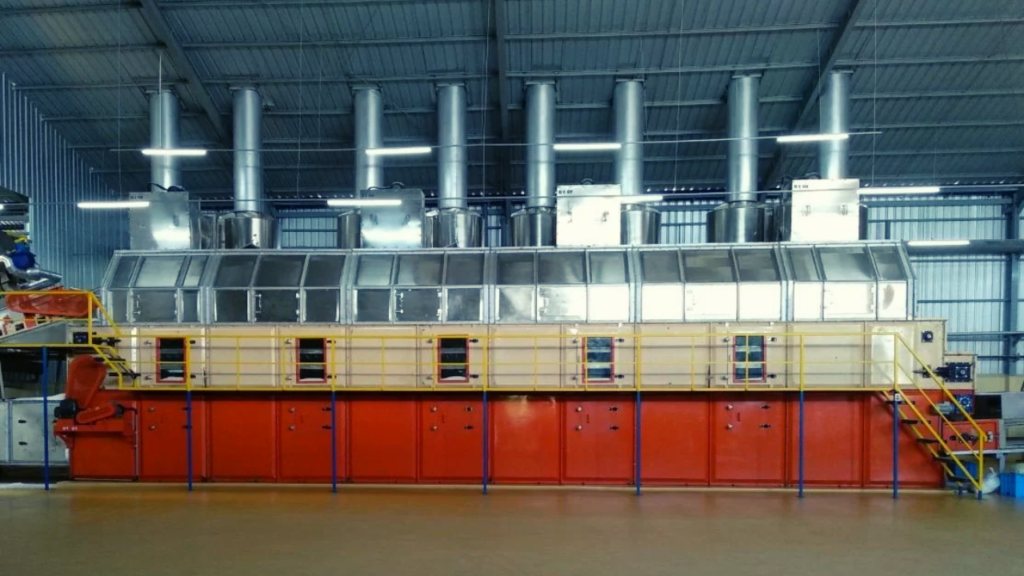
For an export-oriented factory, the purpose is not simply to install an “Orthodox dryer.”
The objective is to develop a drying system around:
leaf characteristics → feed moisture → production capacity → drying profile → final moisture → target market.
This is particularly important when a factory is moving from conventional bulk tea toward specialty or premium tea products.
Uganda terms:
Orthodox Tea Dryer Uganda | Orthodox Tea Processing Machine | Orthodox Tea Dryer Manufacturer | Orthodox Leaf Tea Dryer | Chai ya Orthodox | Chai ya Majani ya Orthodox
3. Green Tea Dryer in Uganda – Combination Fluid Bed Dryer
Green tea represents a smaller export category for Uganda than black tea, but it can be strategically important for product diversification.
WITS data for 2024 records Uganda’s exports of green tea, excluding immediate-pack products, at approximately 123,328 kg valued at US$198,450. The main destinations included Kenya, South Sudan and China.
This is considerably smaller than Uganda’s black-tea export volume.
That difference is precisely why green tea should be viewed as a diversification and value-addition opportunity, rather than as the country’s dominant tea stream.
Green tea drying requires controlled conditions because excessive or poorly controlled drying can affect the final appearance and sensory characteristics.
GTI’s green tea drying systems are designed for controlled moisture removal, uniform airflow and customized temperature management. The company’s combination dryer concept provides multi-stage drying and process control for larger-scale green-tea production.
Combination Fluid Bed Dryer for Ugandan Green Tea
A customized system can incorporate:
- Multi-stage drying
- Controlled airflow
- Temperature-zone management
- Uniform product movement
- Energy-efficient airflow design
- Automated process control
- Integration with upstream tea-processing equipment
- Integration with downstream sorting and packaging
For Uganda, this technology can be relevant to factories looking to develop specialty tea, packaged tea, differentiated tea products and export-oriented green-tea lines.
Uganda terms:
Green Tea Dryer Uganda | Green Tea Drying Machine | Green Tea Processing Equipment | Combination Fluid Bed Dryer Uganda | Chai ya Kijani | Green Tea Processing Machine Uganda
Uganda’s Tea Market Creates Three Different Equipment Opportunities
Instead of treating the three tea categories as competing products, a tea machinery manufacturer can position them as three different production pathways.
| Tea category | Typical processing objective | Dryer technology | Uganda opportunity |
| CTC Black Tea | High-throughput continuous drying | VFBD | Existing bulk/export tea production |
| Orthodox Tea | Controlled drying of leaf-style specialty tea | Combination Fluid Bed Dryer | Value addition and specialty products |
| Green Tea | Controlled drying with quality preservation | Combination Fluid Bed Dryer | Product diversification and specialty/export markets |
This approach also allows a Ugandan factory to consider future expansion rather than purchasing equipment only for today’s production mix.
Where Is Uganda’s Tea Industry Concentrated?
A Uganda-focused tea equipment page should also reflect the country’s tea-producing regions.
Tea activity is associated with areas including:
- Fort Portal / Kabarole
- Bushenyi
- Kanungu
- Kisoro
- Kabale
- Kigezi
- Hoima
- Other tea-growing areas across western and southwestern Uganda
Recent reporting on the Ugandan tea sector specifically identifies Bushenyi, Kanungu, Kisoro and Kabale in discussions around tea farming and value addition.
Government records have also documented tea factory development in areas including Kabale, Kisoro, Kanungu, Zombo and Mityana.
This provides useful local GEO signals for searches such as:
- Tea Dryer Manufacturer in Kampala
- Tea Dryer Supplier Uganda
- Tea Processing Equipment in Fort Portal
- CTC Tea Dryer in Kabarole
- Tea Factory Equipment in Bushenyi
- Tea Dryer for Kanungu Tea Factory
- Tea Processing Machinery in Kabale
- Green Tea Dryer Uganda
- Orthodox Tea Processing Equipment Uganda
Uganda’s Export Market Makes Drying Consistency Important
Uganda’s tea business is strongly export-oriented.
Recent reporting from the Uganda Tea Association indicates that approximately 90% of Uganda’s tea has consistently been absorbed through the Mombasa auction, while the industry is looking to develop more direct relationships with international buyers.
This means processing consistency can become increasingly important as Ugandan producers seek differentiated market opportunities.
A modern drying system can help processors establish more controlled production parameters around:
temperature → airflow → residence time → moisture → particle movement → final product consistency.
The objective is not to claim that a dryer alone determines tea quality. Raw-leaf quality, plucking standards, withering, rolling/CTC processing, oxidation, sorting, storage and packaging all influence the final product.
Drying is one critical stage within that complete processing chain.
From Bulk Tea to Value-Added Tea: Where Equipment Creates Opportunity
Uganda’s recent tea-sector discussions increasingly emphasize value addition.
A June 2026 report described new initiatives in Kigezi involving blended, herbal, masala and packaged tea products targeting local and export markets. The same report noted that Uganda’s limited domestic consumption and dependence on bulk exports have constrained value capture.
This creates several potential equipment requirements.
Conventional CTC Factory
Need: High-capacity continuous drying
Technology: VFBD
Specialty / Orthodox Factory
Need: Controlled drying with flexible process stages
Technology: Combination Fluid Bed Dryer
Green Tea Processing Unit
Need: Controlled drying and moisture management
Technology: Combination Fluid Bed Dryer
Blended & Value-Added Tea Factory
Depending on the product, the plant may require additional drying technologies for:
- Tea granules
- Herbal ingredients
- Spices
- Tea blends
- Premixes
- Extracts
- Instant tea products
GTI’s wider tea-drying portfolio includes fluid bed, band, vibro-fluid bed, tray and spray-drying technologies for different tea products and applications.
What Should a Ugandan Tea Factory Check Before Buying a Dryer?
The correct dryer cannot be selected from the tea name alone.
Before equipment selection, a factory should define:
1. Tea type
CTC, Orthodox, Green or another specialty tea.
2. Feed moisture
The incoming material moisture determines the required drying duty.
3. Production capacity
For example, kg/hour or tonnes/day.
4. Required final moisture
The target must be established according to the specific product and quality specification.
5. Product characteristics
Particle size, bulk density, leaf structure and flowability affect dryer design.
6. Heating source
Steam, thermic fluid, hot-air generator, biomass, electric or another available energy source.
7. Automation requirement
Manual, semi-automatic, PLC or SCADA-based control.
8. Available plant space
The dryer must be integrated into the existing factory layout.
9. Dust and exhaust management
Tea drying systems require suitable air handling and dust-management arrangements.
10. Future expansion
A factory planning to add Orthodox, Green Tea or specialty products should consider whether the drying system can be expanded or integrated with future lines.
Why Choose a Customized Tea Dryer Instead of a Standard Machine?
Tea factories do not all operate under the same conditions.
A machine designed for one factory may not be suitable for another because of differences in:
- Tea variety
- Green-leaf quality
- Feed moisture
- Production volume
- Product size
- Desired final moisture
- Energy availability
- Factory layout
- Automation level
- Export specifications
GTI Dryers approaches industrial tea drying as an engineering project rather than simply supplying a standard machine.
Its tea-drying scope can include:
Process Design → Dryer Selection → Engineering → Manufacturing → Installation → Commissioning → Automation → Operator Training → After-Sales Support
GTI’s tea-drying systems are designed with control of temperature, airflow, moisture content, drying time and residence time as key process parameters.
Why GTI Dryers for Tea Processing Projects in Uganda?
GTI Dryers designs and manufactures industrial drying systems for different tea-processing applications.
For Uganda, the technology can be configured around three primary requirements:
CTC Tea
VFBD / Vibratory Fluidised Bed Dryer
Designed for continuous handling, controlled airflow, uniform heat transfer and moisture management.
Orthodox Tea
Combination Fluid Bed Dryer
Designed for controlled, multi-stage drying suited to specialty and leaf-style tea processing.
Green Tea
Combination Fluid Bed Dryer
Designed around controlled drying conditions, uniform moisture reduction and product-quality requirements.
The final dryer configuration is engineered according to the actual product and process data rather than assuming that one specification works for every tea factory.
Who in Uganda Should Contact a Tea Dryer Manufacturer?
This Uganda-focused tea drying solution can be relevant to:
- Existing CTC tea factories
- New tea-processing plants
- Tea estates
- Tea farmer cooperatives
- Tea processors
- Specialty tea producers
- Orthodox tea manufacturers
- Green tea processors
- Tea exporters
- Value-added tea manufacturers
- Tea-blending companies
- Investors establishing new tea-processing lines
- Existing factories upgrading old dryers
- Companies expanding production capacity
- EPC and process-engineering companies
Whether the requirement is a CTC Tea VFBD, Orthodox Tea Combination Fluid Bed Dryer or Green Tea Combination Fluid Bed Dryer, the correct configuration should be developed around the actual process requirement.
Frequently Asked Questions – Tea Dryers in Uganda
Which dryer is suitable for CTC tea in Uganda?
A Vibratory Fluidised Bed Dryer (VFBD) can be suitable for continuous drying of CTC tea, subject to product and process characteristics. It combines controlled hot-air flow with vibration to support product movement and heat/mass transfer.
Which dryer is suitable for Orthodox tea?
A customized Combination Fluid Bed Dryer can be considered for Orthodox tea where controlled and multi-stage drying is required.
Which dryer is suitable for green tea?
A Combination Fluid Bed Dryer can be designed for controlled green-tea drying, with process conditions selected according to the specific tea and required product characteristics.
Is Uganda a significant tea-producing country?
Yes. Uganda produced approximately 60,463 tonnes of tea in FY 2024/25, according to the latest MAAIF statistical publication available in the cited source.
How much tea did Uganda export in 2024?
WITS/UN Comtrade records Uganda’s 2024 tea exports at approximately 59.86 million kg valued at US$56.16 million under HS 0902.
What are the major tea export markets connected to Uganda?
Uganda’s tea trade includes markets such as Kenya, South Sudan, Pakistan, China, Egypt, the EU and others. For black/partly fermented tea specifically, Kenya was by far the largest destination in Uganda’s 2024 WITS data.
What is green tea called in Swahili?
Green tea is commonly expressed as Chai ya Kijani.
What is CTC tea called in Swahili?
For local SEO, Chai Nyeusi ya CTC is a useful descriptive term for CTC black tea. The technical industry term CTC Tea should remain alongside it.
What is Orthodox tea called in Swahili?
For localized content, Chai ya Orthodox or Chai ya Majani ya Orthodox can be used alongside the established technical term Orthodox Tea.
Get a Customized Tea Dryer Solution for Uganda
Whether your project is a high-capacity CTC tea factory, a new Orthodox tea processing line, a green tea production unit, or a value-addition project, dryer selection should begin with the actual tea-processing requirements.
GTI Dryers can support tea-processing projects with customized drying-system engineering based on:
Tea Type + Feed Moisture + Production Capacity + Drying Profile + Final Moisture + Heating Source + Automation + Plant Layout
For Uganda’s tea industry, the focus is not simply on installing a dryer.
It is about building a controlled drying process that fits the factory, product and target market.
Request a Tea Dryer Consultation from GTI Dryers
Looking for:
- CTC Tea VFBD in Uganda?
- Vibratory Fluid Bed Dryer for a Ugandan tea factory?
- Orthodox Tea Dryer?
- Green Tea Combination Fluid Bed Dryer?
- Tea-processing machinery for a new plant?
- Dryer upgrade or replacement?
- Customized tea drying system?
Share your tea type, production capacity, feed moisture, required final moisture and heating source with the GTI engineering team to discuss the appropriate drying configuration.
GTI Dryers — Engineered Drying Solutions from India for Global Tea Industries.