
High-Altitude Industrial Tea Drying for Burundi’s High-Quality Processing Sector
Burundi’s tea sector is famous for producing high-elevation, premium-quality teas with vibrant liquors and brisk flavor profiles. Spanning key high-altitude tea-growing zones such as Kayanza, Ngozi, Muramvya, Gitega, and Bururi, the country’s tea industry relies heavily on both state-managed factories and smallholder cooperatives through the Office du Thé du Burundi (OTB).
Due to Burundi’s unique microclimates, cold mountain air, and high leaf-moisture content, tea processors face critical processing challenges. The core issue for factory directors is no longer just processing leaf—it is maintaining export-level standards:
- How can a factory achieve precise, uniform final moisture despite varying ambient weather conditions?
- How can drying throughput be synchronized with peak green-leaf intake during harvest seasons?
- What strategies can be implemented to minimize thermal energy consumption and fuel costs?
- How do processors protect the delicate flavor attributes, liquor color, and leaf appearance during thermal treatment?
- Can processing equipment be adapted for value-added specialty, Orthodox, or Green tea lines alongside traditional CTC production?
Modern, engineered thermal processing equipment provides the answer. GTI Dryers designs and builds customized industrial drying systems tailored for Burundi’s tea industry:
- CTC Tea Processing: Vibratory Fluid Bed Dryer (VFBD)
- Orthodox Tea Processing: Combination Fluid Bed Dryer
- Green Tea Processing: Multi-Stage Combination Fluid Bed Dryer
The selection of drying equipment depends on the specific product type, target feed rates, initial moisture levels, thermal sensitivity, particle size, and available plant space.
Burundi Tea Industry: A High-Value Export Market
Tea is one of Burundi’s primary agricultural export earners, serving as a pillar for rural employment and foreign exchange.
Burundian High-Altitude Green Leaf
               │
   ┌───────────┴───────────┐
   ▼                       ▼
CTC Black Tea        Specialty & Value-Added
 (Core Output)      (Orthodox & Green Tea)
   │                       │
   ▼                       ▼
Vibratory Fluid     Combination Fluid
   Bed Dryer            Bed Dryer
   (VFBD)           (Multi-Zone Control)
With continuous investments in factory rehabilitation, smallholder capacity building, and quality enhancement initiatives, Burundi is modernizing its processing infrastructure. Replacing aging, energy-inefficient conventional dryers with advanced fluidization systems helps processors improve yield and quality while cutting production costs.
Equipment requirements in Burundi focus on:
Thermal Efficiency + Factory Modernization + Moisture Consistency + Product Diversification
Regional Equipment Requirements Across Burundi’s Tea Clusters
To serve Burundi’s localized tea production zones effectively, thermal engineering solutions must address the geographical demands of key administrative provinces and tea hubs.
Northern Highlands (Kayanza & Ngozi)
Kayanza and Ngozi form the heartland of Burundian tea production, renowned for high elevation and exceptional leaf quality.
- Localized Search Targets: Tea dryer manufacturer Kayanza, Tea processing equipment Kayanza, Industrial tea dryer Ngozi, VFBD tea dryer Northern Burundi.
Central & Southern Ridge (Muramvya, Gitega & Bururi)
The central tea-growing belt requires reliable thermal processing machinery capable of handling fluctuating harvests.
- Localized Search Targets: Tea dryer Muramvya, Tea factory machinery Gitega, Industrial tea dryer Bururi, Tea drying machine Central Burundi.
Commercial Hubs (Bujumbura)
Factory logistics, equipment imports, spare parts, and technology upgrades are coordinated through Bujumbura.
- Localized Search Targets: Tea processing equipment supplier Bujumbura, Industrial tea dryer Burundi, Tea factory machinery Bujumbura.
Factors Driving the Demand for Advanced Tea Dryers in Burundi
                  ┌─────────────────────────────────────────┐
                  │ Key Drivers for Dryer Modernization     │
                  └────────────────────┬────────────────────┘
                                       │
         ┌─────────────────────────────┼─────────────────────────────┐
         ▼                             ▼                             ▼
┌─────────────────┐           ┌─────────────────┐           ┌─────────────────┐
│ Infrastructure  │           │   Smallholder   │           │ Precision Control│
│ Modernization   │           │ Leaf Management │           │   for Exports   │
└─────────────────┘           └─────────────────┘           └─────────────────┘
1. Modernization of Existing Processing Infrastructure
Many tea factories in Burundi are upgrading aging equipment to improve operational reliability, reduce downtime, minimize wood fuel/biomass consumption, and eliminate dark or scorched tea particles caused by inconsistent hot-air beds.
2. Timely Processing of Smallholder Harvests
Thousands of smallholder farmers supply fresh leaf to central tea factories. Quick processing prevents leaf deterioration, making efficient dryer throughput essential to preserve crop quality.
3. Stringent Export Market Standards
Burundian teas are sold through the Mombasa International Tea Auction and direct international contracts. Achieving stable moisture levels (typically 2.5% to 3.5%) prevents moisture regain during long transport routes and preserves shelf life.
Technology Overview: Matching Equipment to Tea Processing Types
| Tea Type | GTI Drying Technology | Primary Objective |
| CTC Tea | Vibratory Fluid Bed Dryer (VFBD) | Continuous, uniform drying with precise moisture control |
| Orthodox Tea | Combination Fluid Bed Dryer | Staged temperature zones to preserve rolled leaf structure |
| Green Tea | Combination Fluid Bed Dryer | Controlled thermal deactivation and uniform moisture removal |
CTC Tea Drying Systems in Burundi: Vibratory Fluid Bed Dryer (VFBD)
CTC (Crush, Tear, Curl) tea processing dominates Burundian production. After fermentation/oxidation, wet CTC tea requires rapid, uniform drying to lock in liquor density and appearance.
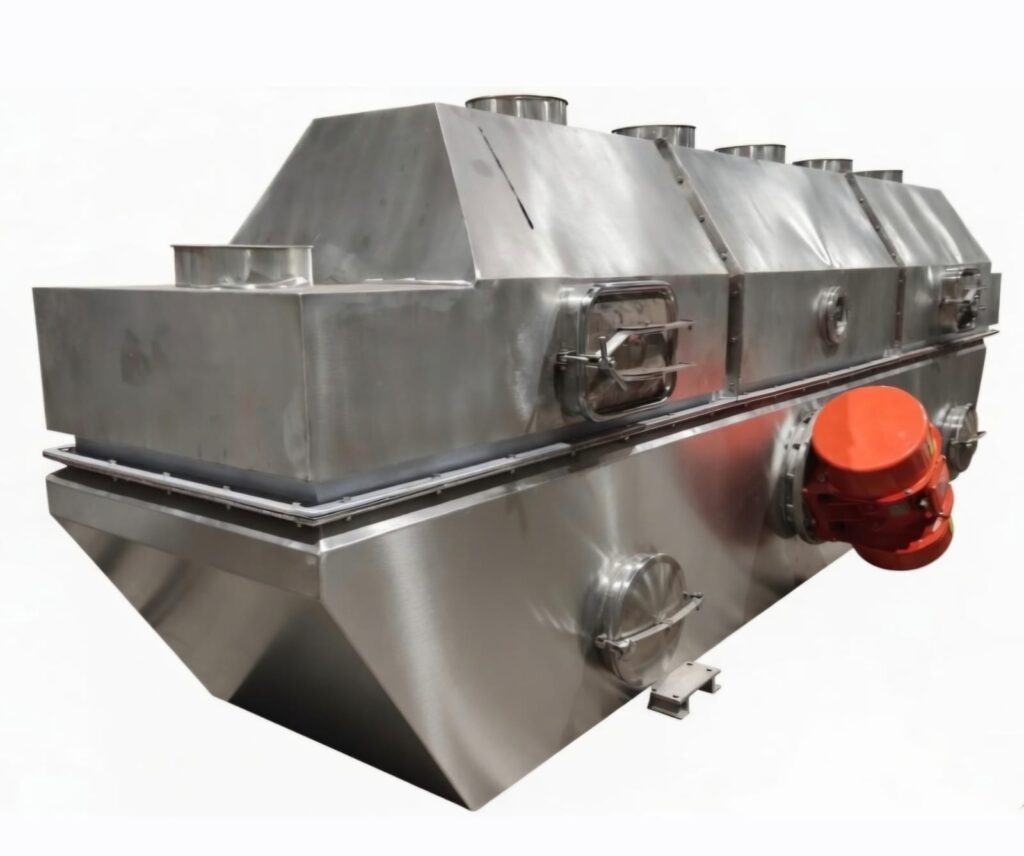
GTI’s Vibratory Fluid Bed Dryer (VFBD) integrates mechanical vibration with pressurized hot airflow, suspending tea particles in a fluid bed for fast, consistent moisture evaporation.
Fresh Green Leaf
       │
       ▼
Withering & Maceration (CTC)
       │
       ▼
Controlled Oxidation / Fermentation
       │
       ▼
VFBD Processing Chamber (Vibration + Fluidized Hot Air)
       │
       ▼
Integrated Cooling & Sifting
       │
       ▼
Grading & Packaging
Key Advantages of VFBD Systems for CTC Tea:
- Uniform Fluidization: Prevents dead zones, burning, or unevenly dried tea clusters.
- Preserved Appearance: Gentle fluidization protects grain size and prevents particle degradation.
- Energy Savings: Heat-transfer design optimizes thermal consumption per kilogram of evaporated water.
- Adjustable Residence Time: Variable vibration frequency and bed depth control allow operators to adjust processing times for different leaf conditions.
Orthodox Tea Drying Systems: Combination Fluid Bed Dryer
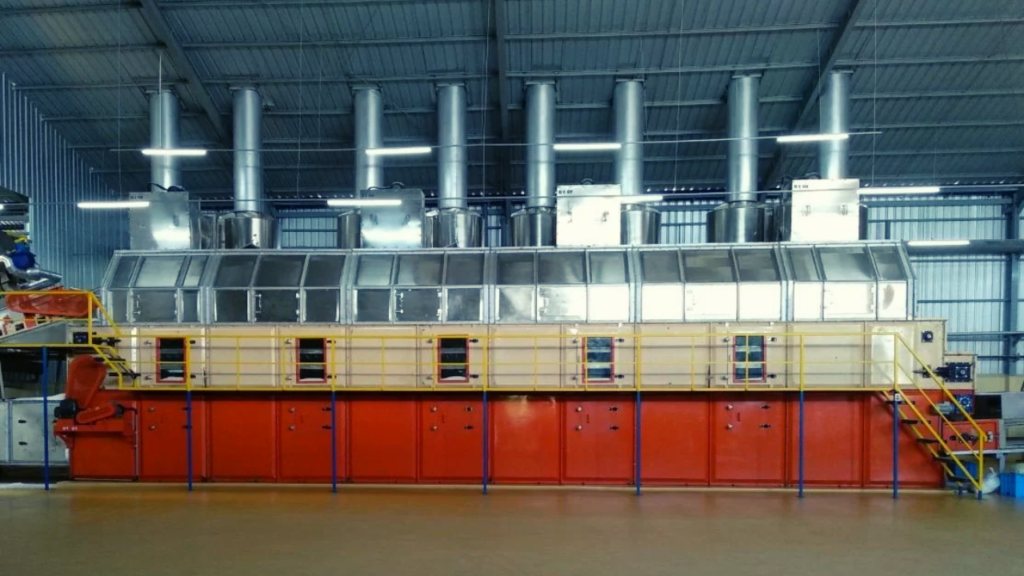
Orthodox tea processing focuses on maintaining intact leaf structures, twisted styles, and subtle flavor profiles. Traditional drying methods can break fragile leaves or apply heat unevenly.
GTI’s Combination Fluid Bed Dryer uses a multi-zone temperature configuration:
- Initial High-Heat Stage: Rapidly reduces surface moisture to stop oxidation without scorching the leaf.
- Intermediate Fluidized Stage: Gently evaporates internal moisture from rolled leaves.
- Final Stabilization Stage: Ensures even final moisture distribution throughout the leaf body.
Green Tea Processing & Drying Systems in Burundi
As tea factories explore product diversification to target premium export markets, Green Tea processing presents an attractive opportunity.
Unlike black tea, green tea production skips oxidation and begins with enzyme deactivation (fixation/steaming). Drying must be carefully managed to preserve green leaf color, natural antioxidants, and delicate aromas.
Features of GTI Green Tea Drying Systems:
- Staged Thermal Management: Prevents leaf yellowing or burning.
- Airflow Optimization: Ensures consistent moisture removal across varying particle densities.
- High Efficiency: Configured for low energy consumption during continuous operation.
Technical Considerations for Specifying a Tea Dryer
Before purchasing an industrial tea drying plant, factory engineers should review several critical operational parameters:
┌─────────────────────────────────────────────────────────────────┐
│                      Technical Input Criteria                   │
├───────────────────────────────┬─────────────────────────────────┤
│ Operational Inputs            │ Design & Mechanical Factors     │
├───────────────────────────────┼─────────────────────────────────┤
│ • Product Type (CTC/Green/Orth)│ • Air Velocity & Bed Depth      │
│ • Processing Capacity (kg/hr) │ • Energy Source (Biomass/Steam) │
│ • Initial & Target Moisture   │ • Material (Food-Grade Stainless)│
│ • Elevation & Ambient Humidity│ • Automation (PLC/HMI Controls) │
└───────────────────────────────┴─────────────────────────────────┘
- Feed Rate & Water Evaporation Capacity: Determined by peak leaf intake measured in kilograms per hour.
- Initial & Target Moisture: Fresh fermented leaf enters the dryer at roughly 55%–65% moisture and must exit at 2.5%–3.5%.
- Heat Source: Systems can be integrated with steam heat exchangers, direct/indirect thermic fluid heaters, biomass furnaces, or hybrid fuel systems.
- Altitude Compensation: High-elevation installations (1,500m to 2,300m above sea level) require precise airflow calculations due to lower air density.
Kirundi & Local Language Terminology
Including local terminology helps connect technical specifications with local operational contexts across Burundi:
| English Term | Kirundi Equivalent / Local Term | Technical Context |
| Tea | Icyayi | Primary agricultural crop |
| Tea Dryer | Icyuma cyo kwagura icyayi | Industrial thermal equipment |
| Tea Drying Machine | Mashini yo kwagura icyayi | Processing plant machinery |
| Tea Processing | Gutunganya icyayi | Value-addition steps |
| Green Tea | Icyayi cy’icyatsi | Unfermented tea product |
| Tea Factory | Uruganda rw’icyayi | Industrial processing facility |
Scope of Supply for Burundian Tea Projects
GTI Dryers delivers complete turnkey thermal systems tailored for Burundian tea factories:
- Engineering & System Design: Capacity calculations, altitude adjustments, and custom plant layouts.
- Manufacturing: High-grade stainless steel drying beds, vibrating frames, and heat exchangers.
- Air Handling Systems: Centrifugal supply fans, exhaust fans, and cyclone dust collection units.
- Automation: PLC/HMI control panels for direct temperature, bed speed, and airflow management.
- Installation & Commissioning Support: Field supervision, system balancing, and operator training.
Frequently Asked Questions (FAQs)
Which dryer is best suited for CTC black tea factories in Burundi?
A Vibratory Fluid Bed Dryer (VFBD) is the standard choice for CTC processing. It provides uniform fluidization, continuous operation, and precise moisture reduction while preserving tea granule quality.
How does high elevation in regions like Kayanza impact dryer sizing?
High altitudes mean lower air density. GTI engineers adjust fan volumes, burner configurations, and bed areas to maintain optimal heat transfer and fluidization efficiency at elevated altitudes.
Can a single dryer process both CTC and Green Tea?
While possible with multi-mode fluid bed dryers, dedicated drying systems are recommended. CTC and Green Tea have different particle densities, moisture profiles, and temperature limits.
What heating sources can be used with GTI Tea Dryers in Burundi?
GTI systems can be adapted to various thermal plants, including biomass furnaces (wood pellets/chips), steam boilers, thermic fluid heaters, and direct/indirect burners.
Request a Technical Proposal for Burundi
Upgrading an existing plant, expanding processing capacity, or setting up a new tea factory in Burundi? Contact GTI Dryers to discuss your technical requirements.
Required Information for Custom Proposals:
- Tea Type: CTC / Orthodox / Green Tea
- Required Output/Input Capacity: kg/hr
- Initial & Target Moisture: %
- Factory Location: Kayanza, Ngozi, Muramvya, Gitega, Bururi, or other
- Thermal Energy Source: Wood/Biomass, Steam, Gas, or Oil
- Project Type: Modernization, Expansion, or New Installation
Engineered in India. Built for Burundi’s High-Altitude Tea Sector.
Get in touch with GTI Dryers today for custom equipment design and technical consultation.