
Industrial drying is one of the most energy-intensive operations in many manufacturing processes. Conventional hot-air dryers continuously heat and circulate air while a large quantity of humid exhaust air leaves the system. For applications where energy recovery, oxygen reduction, emissions control or process integration are important, Superheated Steam Drying (SSD) offers an alternative approach.
A superheated steam dryer uses steam heated above its saturation temperature as the drying medium. Instead of continuously replacing the drying gas with fresh air, the process can operate in a closed or substantially recirculating loop, allowing part of the generated steam to be recovered and reused.
This makes superheated steam drying particularly interesting for selected applications involving food products, biomass, sludge, pulp, fibres, chemicals and other industrial materials.
However, it is not automatically the right solution for every product. Dryer selection should be based on moisture content, product temperature limits, drying kinetics, material behaviour, required capacity, available utilities and the potential value of heat recovery.
GTI Dryers designs industrial drying systems according to the product and process requirement, helping manufacturers evaluate whether superheated steam, hot air, indirect drying, fluidised bed, belt, rotary, paddle or a hybrid configuration is technically appropriate.
What Is a Superheated Steam Dryer?
A superheated steam dryer is an industrial drying system in which superheated steam is used as the primary drying medium instead of conventional hot air.
Superheated steam is steam heated above its saturation temperature at the operating pressure. When it comes into contact with a wet product, heat is transferred to the material and moisture evaporates.
The resulting vapour becomes part of the circulating steam stream.
A typical system can include:
- Steam generation or supply system
- Superheater
- Drying chamber
- Circulation fan
- Heat exchanger or heater
- Vapour separation and condensation system
- Moisture/temperature control
- Product feeding and discharge system
- Condensate recovery
- PLC/HMI-based automation
The exact arrangement depends on the product, dryer configuration and plant integration requirements.
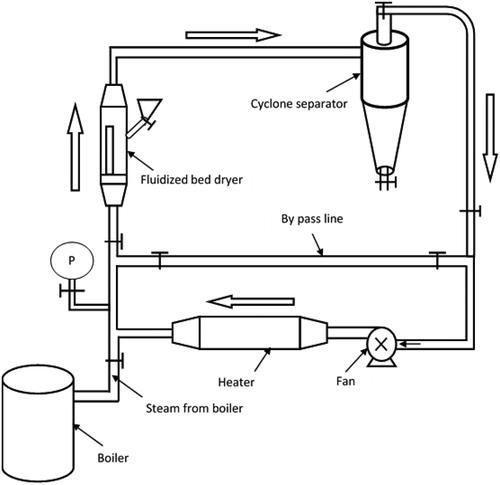
How Does Superheated Steam Drying Work?
The basic process can be understood in five stages.
1. Steam Generation
Steam is supplied from a suitable utility or generated as part of the drying system.
2. Superheating
The steam is heated beyond its saturation temperature to create the required drying medium.
3. Closed-Loop Circulation
The superheated steam circulates through the drying chamber and transfers heat to the wet product.
4. Moisture Evaporation
Heat supplied by the steam causes water within the material to evaporate.
The evaporated moisture becomes part of the steam/vapour stream.
5. Recovery and Recirculation
A portion of the steam can be recirculated. Depending on the process, excess steam can be condensed for heat recovery or integrated into another useful heat-recovery route.
This closed-loop concept is one of the main engineering differences between superheated steam drying and conventional once-through hot-air drying. Research literature describes SSD systems using recirculated steam, with excess steam potentially recovered for further heat utilisation.
Why Use Superheated Steam Instead of Hot Air?
The biggest reason is process integration and energy recovery, not simply faster drying.
Conventional hot-air drying usually involves:
Fresh air → heating → drying → humid exhaust → discharge
Superheated steam drying can be arranged more like:
Steam → superheating → drying → moisture evaporation → steam recovery → recirculation
This creates opportunities for:
- Reduced fresh-air requirement
- Heat recovery from exhaust steam
- Reduced thermal losses
- Lower oxygen exposure
- Enclosed process operation
- Potential reduction in odour or volatile emissions
- Integration with existing steam utilities
- Better utilisation of evaporated moisture
The actual energy benefit depends strongly on the dryer configuration, operating conditions, heat-recovery system, moisture load and plant utilities. It should therefore be calculated for each project rather than promised as a universal percentage.
Closed-Loop Drying: The Core Advantage
One of the most important features of superheated steam drying is the ability to operate with recirculated steam.
In a conventional hot-air dryer, humid exhaust air contains sensible and latent heat that may be difficult or costly to recover.
In an appropriately designed steam drying system, the exhaust stream can be condensed or otherwise integrated into the heat-recovery system.
This creates an opportunity to recover energy that would otherwise leave the drying process.
Closed-loop concept
Steam generation
↓
Superheating
↓
Drying chamber
↓
Moisture evaporation
↓
Steam/vapour separation
↓
Heat recovery / condensation
↓
Steam recirculation
↓
Drying chamber
The result is a drying architecture designed around energy circulation rather than continuous energy rejection.
Oxygen Reduction and Product Protection
Another important characteristic of steam-based drying is the reduced dependence on oxygen-containing drying air.
For certain products, limiting oxygen exposure can help reduce oxidation-related quality changes.
This can be particularly relevant for:
- Certain food ingredients
- Biomass materials
- Organic products
- Oxidation-sensitive materials
- Selected chemical products
- Products where colour or volatile components are important
However, reduced oxidation does not mean that every product will automatically have better quality.
Product temperature, residence time, steam conditions, moisture migration and material chemistry remain critical.
The suitability of SSD should therefore be confirmed through process testing.
Superheated Steam Drying for Food Processing
Food drying is one of the areas where superheated steam has received considerable research attention.
Potential applications include:
- Vegetables
- Fruits
- Potato products
- Grains
- Pulses
- Food ingredients
- Starch products
- Plant-based materials
- Selected protein products
- Food powders
- Agricultural products
Research has reported superheated-steam drying studies involving products such as potato, apple, banana, rice, soybean, fish, meat, vegetables and other food materials. Product quality outcomes depend strongly on operating conditions and product characteristics.
Potential food-processing benefits
A properly engineered system may provide:
- Controlled moisture removal
- Reduced oxidative exposure
- Enclosed processing
- Potential heat recovery
- Controlled temperature
- Consistent drying conditions
- Potentially improved rehydration characteristics for selected products
For food applications, hygienic construction, cleaning requirements, material of construction and contamination control must be considered during equipment design.
Superheated Steam Dryer for Biomass
Biomass drying can require substantial thermal energy because many biomass feedstocks enter the process with high moisture.
Potential applications include:
- Sawdust
- Wood chips
- Agricultural residues
- Bagasse
- Straw
- Biomass fibres
- Pulp and fibrous materials
- Biomass fuels
- Selected biofuel feedstocks
Reducing biomass moisture can improve downstream handling, storage and fuel utilisation.
For biomass plants, superheated steam drying becomes particularly interesting where:
- Steam is already available
- Waste heat is available
- Closed-loop processing is desirable
- Oxygen exposure needs to be controlled
- Moisture recovery has value
- Heat integration with another process is possible
However, the dryer must be matched to the particle size, bulk density, stickiness, feed variability and required final moisture.
Superheated Steam Drying for Sludge
Superheated steam drying has also been studied for sludge and industrial residues.
Potential materials include:
- Industrial sludge
- Selected wastewater-treatment residues
- Paint sludge
- Pulp and paper residues
- Organic processing residues
- High-moisture industrial solids
For sludge applications, the objective is generally not simply “drying.”
The complete system may need to address:
Dewatering → Drying → Vapour management → Condensation → Odour control → Cooling → Storage or downstream recovery
Mechanical dewatering should normally be considered before thermal drying because removing free water mechanically can reduce the thermal evaporation load.
Research on superheated steam drying has specifically examined industrial materials including industrial pulp and paint sludge, demonstrating the relevance of the technology beyond conventional food drying.
Superheated Steam Dryers for Industrial Materials
The technology can also be considered for selected industrial solids and process materials.
Potential areas include:
Chemicals
- Chemical intermediates
- Selected organic solids
- Process residues
- Specialty materials
Pulp and Fibres
- Pulp
- Fibrous residues
- Paper-related materials
Biomass and Bioenergy
- Biomass fuels
- Agricultural residues
- Wood-based materials
Minerals and Industrial Solids
- Selected mineral products
- Industrial powders
- Granular materials
Environmental Applications
- Industrial sludge
- Organic residues
- Selected waste-derived materials
Not every material is suitable for direct contact with steam. Chemical compatibility, reaction behaviour, product temperature, contamination requirements and downstream processing must be evaluated.
When Does Superheated Steam Drying Make Engineering Sense?
This is the most important question for a prospective buyer.
SSD deserves serious consideration when one or more of the following conditions exist:
1. Steam Is Already Available
If the plant already operates a steam utility system, integration may be more attractive.
2. Heat Recovery Has High Value
Where large quantities of evaporation energy are otherwise lost, steam recovery can become an important part of the economic calculation.
3. Oxygen Exposure Is Undesirable
Steam provides a different process environment from conventional air drying.
4. The Product Can Tolerate the Required Steam Temperature
The product’s thermal stability must be evaluated before selecting the process.
5. The Plant Needs an Enclosed Drying Process
Closed-loop operation can help reduce direct release of humid drying gas.
6. Process Integration Is Possible
A plant may be able to integrate steam drying with:
- Boiler systems
- Waste heat
- CHP systems
- Evaporation
- Condensation
- Other steam-consuming processes
7. The Moisture Load Is Large
High evaporation duty can make heat recovery more valuable.
When Superheated Steam May NOT Be the Best Choice
A technically responsible dryer manufacturer should also explain when not to use the technology.
Superheated steam may not be appropriate when:
- The product is highly sensitive to the required temperature
- Steam contact causes undesirable reactions
- Steam contamination is unacceptable
- The process has no practical steam source
- The heat-recovery opportunity is too small
- The product requires a completely different drying mechanism
- Capital cost cannot be justified by operating savings
- The material behaves poorly in the selected dryer configuration
For some low-temperature or highly heat-sensitive products, vacuum drying, freeze drying, heat-pump drying or another controlled low-temperature technology may be more appropriate.
For free-flowing products, fluidised-bed or flash drying may be preferable.
For sticky sludge or wet cakes, indirect paddle or other contact-drying technologies may offer a more suitable mechanical configuration.
The drying medium and dryer mechanism should therefore be selected together.
Superheated Steam Dryer Configurations
Superheated steam is a drying medium rather than one single mechanical dryer design.
It can potentially be integrated with different dryer configurations depending on the product.
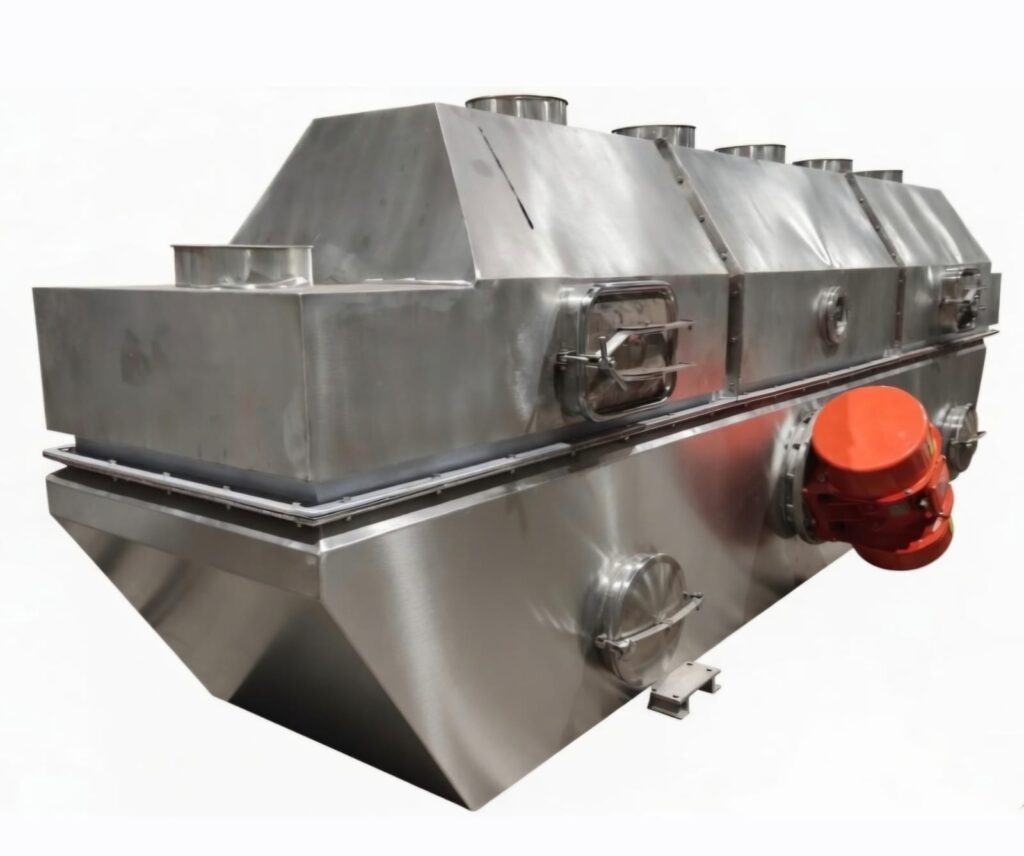
Superheated Steam Fluidised Bed Dryer
Suitable for appropriately sized free-flowing particles where fluidisation is technically feasible.
Potential applications:
- Granules
- Food particles
- Selected biomass particles
- Chemical solids
Superheated Steam Flash Dryer
Suitable for appropriately dispersed fine or particulate materials requiring rapid drying.
Superheated Steam Rotary Dryer
Can be considered for selected bulk solids and biomass materials where rotary handling is appropriate.
Superheated Steam Conveyor/Belt Dryer
Potentially suitable for materials requiring controlled residence time and gentle conveying.
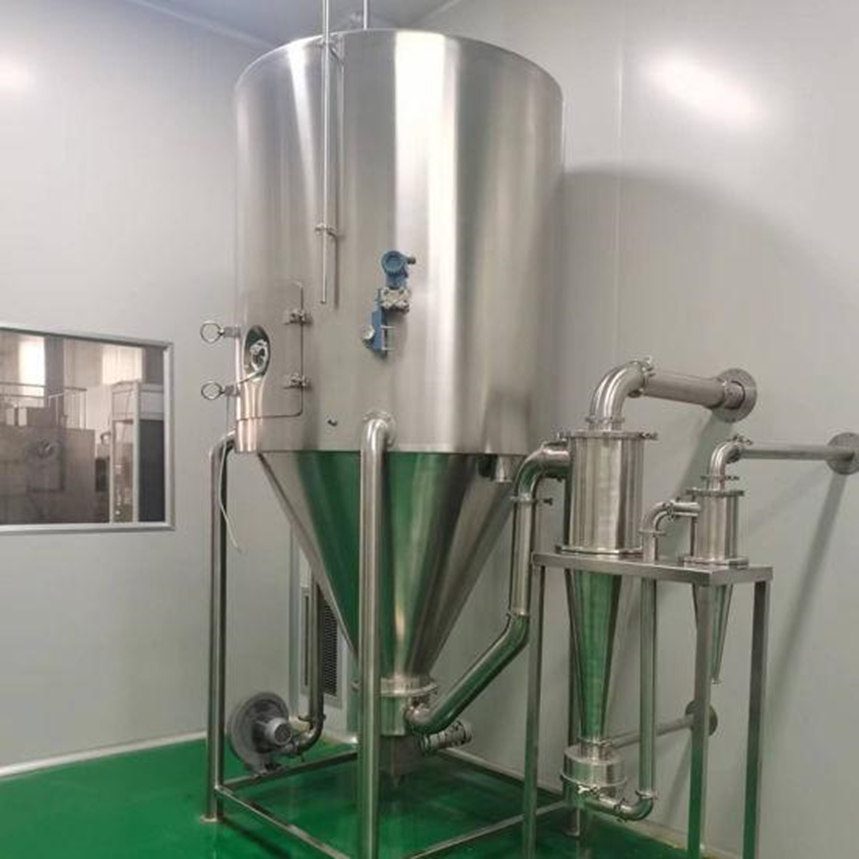
Superheated Steam Spray Drying
Superheated steam has also been investigated as an alternative drying medium in spray drying, particularly where energy recovery and steam integration are valuable. Research indicates potential energy benefits, but commercial feasibility depends heavily on process configuration and material requirements.
Superheated Steam vs Hot-Air Drying
| Parameter | Hot-Air Drying | Superheated Steam Drying |
|---|---|---|
| Drying medium | Heated air | Superheated steam |
| Oxygen exposure | Relatively high | Can be significantly reduced |
| Operation | Often once-through/recirculated air | Closed-loop steam recirculation possible |
| Heat recovery | Possible but humid exhaust can be challenging | Steam condensation can facilitate heat recovery |
| Exhaust | Humid air | Steam/vapour stream |
| Product oxidation | Product dependent | Potentially reduced oxygen exposure |
| Steam utility | Not essential | Often important |
| Process integration | Moderate to high | Potentially high |
| Capital complexity | Application dependent | Can be higher |
| Best selection basis | Product + energy + airflow | Product + steam + heat recovery + process integration |
Which is more energy efficient?
There is no universal winner for every industrial application.
Superheated steam can offer strong energy-efficiency potential because evaporated moisture and exhaust steam can be recovered or reused in an appropriately integrated system. Research reviews identify energy recovery as a central advantage of SSD.
But the actual plant energy consumption depends on:
- Initial moisture
- Final moisture
- Evaporation load
- Steam conditions
- Dryer efficiency
- Heat losses
- Heat-recovery efficiency
- Feed temperature
- Product temperature
- Residence time
- Insulation
- Condensation system
- Steam generation efficiency
Therefore, the correct question is not:
“Is superheated steam always more efficient?”
It is:
“Can the plant recover and reuse enough thermal energy to justify a superheated-steam drying system for this particular product?”
Energy Recovery: Where the Economics Can Change
A superheated steam dryer should be evaluated as part of the complete thermal system, not as an isolated machine.
Potential energy-recovery routes include:
Condensate Recovery
Recovered condensate can potentially be returned to the steam system depending on water quality and plant design.
Exhaust Steam Recovery
Excess steam can potentially be used elsewhere in the process.
Heat Exchanger Integration
Recovered heat can preheat:
- Feed material
- Process water
- Combustion air
- Boiler feedwater
- Other plant streams
Waste Heat Integration
Existing waste heat sources may potentially be integrated into the drying system.
The best configuration depends on the plant’s overall energy balance.
Design Parameters GTI Evaluates
A superheated steam drying system should not be sized only from production capacity.
GTI’s engineering evaluation can consider:
Product Data
- Product name
- Physical form
- Bulk density
- Particle size
- Initial moisture
- Target final moisture
- Moisture-binding characteristics
- Thermal sensitivity
- Stickiness
- Flowability
Process Data
- Feed rate
- Required production capacity
- Operating hours
- Required residence time
- Product temperature limit
- Drying atmosphere
- Steam availability
- Steam pressure
- Steam temperature
- Heat source
- Heat-recovery opportunities
Plant Data
- Available space
- Utilities
- Existing boiler system
- Waste heat sources
- Electrical supply
- Exhaust/condensation requirements
- Automation requirements
- Material of construction
- Hygiene requirements
Why Moisture Behaviour Matters
Two products with identical initial moisture can require completely different dryers.
Water may exist as:
- Surface moisture
- Capillary moisture
- Bound moisture
- Structural moisture
As drying progresses, the rate of moisture migration can change.
Therefore, laboratory or pilot testing can be valuable when:
- The product is new
- Drying kinetics are unknown
- Product quality is critical
- Energy consumption must be accurately estimated
- Heat recovery is central to the business case
- The feed material varies significantly
Superheated Steam Dryer for Heat-Sensitive Products
Superheated steam should not automatically be described as a low-temperature technology.
The process still involves heat transfer and the product temperature must be controlled according to the material.
For sensitive products, engineers may need to evaluate:
- Steam temperature
- Product temperature
- Residence time
- Moisture level
- Pressure
- Heat-transfer rate
- Product quality
- Nutrient or active-component retention
- Colour
- Aroma
- Texture
Research has reported positive quality characteristics for some food materials under specific SSD conditions, but the result is product- and process-dependent.
Vapour Management Is Critical
One mistake in dryer selection is to focus only on the drying chamber.
A complete SSD plant may require:
- Vapour ducts
- Cyclones or separators where applicable
- Condensers
- Demisters
- Heat exchangers
- Non-condensable gas handling
- Odour-control equipment
- Pressure control
- Safety systems
For sludge, biomass and organic materials, vapour composition should be assessed because volatile compounds may be released during drying.
The condensation and treatment system should therefore be designed together with the dryer.
Automation and Process Control
Modern superheated steam systems can be integrated with PLC/HMI or SCADA controls.
Important monitored parameters may include:
- Steam temperature
- Product temperature
- Pressure
- Circulation flow
- Feed rate
- Exhaust/recirculation flow
- Condensate temperature
- Moisture
- Residence time
- Fan speed
- Heater duty
Automated control helps maintain stable drying conditions when product moisture or feed rate changes.
GTI’s broader industrial drying systems can incorporate process automation, airflow control and application-specific process monitoring.
Safety Considerations
Steam-based systems require proper mechanical and process safety engineering.
Depending on the design, considerations may include:
- Pressure-rated components
- Steam-system safety
- Temperature protection
- Pressure relief
- Interlocks
- Emergency shutdown
- Insulation
- Condensate management
- Rotating equipment protection
- Material compatibility
- Electrical safety
- Dust and combustible-material assessment
For biomass and organic materials, the complete process should be assessed for fire, dust and ignition risks even when oxygen concentration is reduced.
Superheated Steam Dryer vs Other Industrial Dryers
| Dryer Technology | Typical Strength | Suitable Situations |
|---|---|---|
| Superheated Steam Dryer | Closed-loop steam + heat recovery potential | Steam-integrated, energy-intensive drying |
| Hot-Air Belt Dryer | Flexible continuous drying | Food, biomass, herbs, agricultural materials |
| Rotary Dryer | Robust bulk-solids handling | Biomass, minerals, chemicals |
| Paddle Dryer | Indirect drying of difficult wet materials | Sludge, wet cakes, pastes |
| Fluidised Bed Dryer | Efficient particle drying | Free-flowing granules/powders |
| Flash Dryer | Rapid drying | Fine dispersed materials |
| Vacuum Dryer | Lower-temperature operation | Heat-sensitive materials |
| Heat Pump Dryer | Low-temperature energy-efficient drying | Food, herbs, sensitive products |
| Freeze Dryer | High-quality preservation | High-value heat-sensitive products |
GTI’s current industrial dryer portfolio includes technologies such as belt, flash, heat-pump, paddle, rotary, spray and fluidised-bed dryers, allowing the final recommendation to be based on the actual process rather than forcing every application into one dryer technology.
How GTI Dryers Approaches a Superheated Steam Project
A successful industrial dryer project begins with process evaluation.
GTI Dryers can evaluate the requirement around:
Step 1 — Product Characterisation
Understand moisture, particle size, bulk density, flowability and thermal sensitivity.
Step 2 — Drying Objective
Define:
- Feed moisture
- Final moisture
- Production capacity
- Product temperature
- Required residence time
Step 3 — Energy Evaluation
Assess:
- Steam availability
- Heat source
- Waste heat
- Condensation
- Heat-recovery potential
Step 4 — Dryer Configuration
Determine whether the application is better suited to:
- Belt/conveyor
- Rotary
- Fluidised bed
- Flash
- Contact dryer
- Hybrid configuration
Step 5 — Pilot / Process Validation
Where required, testing can help establish drying kinetics, product quality and energy requirements.
Step 6 — Complete System Design
The project can then progress toward:
- Dryer sizing
- Thermal calculations
- Heat-recovery design
- Vapour handling
- Automation
- Layout
- Manufacturing
- Installation
- Commissioning
This application-driven approach aligns with GTI’s stated practice of selecting drying technology according to material type, moisture, heat sensitivity, capacity, residence time, energy source and product-quality requirements.
What Information Should You Send for a Superheated Steam Dryer Quote?
To receive a meaningful technical proposal, provide:
1. Product:
What material needs to be dried?
2. Feed rate:
How many kg/h or tonnes/h?
3. Initial moisture:
What is the moisture percentage entering the dryer?
4. Final moisture:
What moisture level is required?
5. Product temperature limit:
What is the maximum acceptable product temperature?
6. Material form:
Powder, granule, fibre, cake, slurry, flakes, biomass or sludge?
7. Available steam:
Steam pressure, temperature and available capacity.
8. Heat source:
Boiler, waste heat, thermal oil, electric or another source.
9. Operating hours:
Batch, continuous, 8-hour, 16-hour or 24-hour operation.
10. Location:
Country and plant location for utility and environmental considerations.
The more complete the process data, the more accurately the dryer configuration and energy balance can be evaluated.
Global Applications of Superheated Steam Drying
Superheated steam drying can be evaluated for industries across:
- India
- Southeast Asia
- Indonesia
- Malaysia
- Thailand
- Vietnam
- Europe
- Germany
- United Kingdom
- United States
- Canada
- Australia
- Middle East
- Africa
- Latin America
Potential global applications include:
Food processing | Biomass | Pulp & paper | Chemicals | Industrial residues | Sludge | Agricultural products | Bioenergy
The final dryer configuration should always be adapted to local utilities, environmental requirements, product specifications and plant conditions.
Why Choose GTI Dryers?
GTI Dryers, part of Genex Tech Industries, designs industrial drying systems for food, chemical, pharmaceutical, biomass, mineral and waste-processing applications.
The company’s current portfolio includes belt, flash, heat-pump, mesh, paddle, refractance-window, rotary, spray and fluidised-bed drying technologies.
For a superheated steam project, the objective should be to identify whether steam-based drying provides a genuine process and energy advantage.
GTI can support the evaluation through:
- Product and moisture assessment
- Dryer technology selection
- Thermal calculations
- Heat-load estimation
- Energy-integration assessment
- Dryer sizing
- Process engineering
- Automation
- Plant integration
- Installation and commissioning support
- Technical consultation
The goal is not simply to sell a dryer. It is to develop the drying system that fits the product, production target and energy strategy.
Frequently Asked Questions
What is a superheated steam dryer?
A superheated steam dryer uses steam heated above its saturation temperature as the drying medium. The steam transfers heat to the wet material and can be recirculated in a closed-loop process.
Is superheated steam drying more energy efficient than hot-air drying?
It can be, particularly when steam recirculation and heat recovery are effectively integrated. Actual energy performance depends on the product, dryer configuration, steam conditions and plant heat balance.
Is superheated steam drying suitable for food?
It can be suitable for selected food products. Food quality, temperature, residence time, hygiene and product-specific drying kinetics must be evaluated before selecting the system.
Can superheated steam dry biomass?
Yes, selected biomass materials can be evaluated for steam-based drying. Particle size, moisture, bulk density, feed behaviour and required final moisture are important design parameters.
Can it be used for sludge?
Superheated steam drying has been studied for industrial sludge and other high-moisture materials. The complete system should include appropriate vapour, condensation and odour-management considerations.
Does a superheated steam dryer require a boiler?
Not necessarily in every configuration, but a suitable steam source or steam-generation system is normally required. The most appropriate arrangement depends on the plant’s existing utilities.
Does superheated steam eliminate oxygen completely?
Not necessarily. A properly designed closed-loop system can significantly reduce oxygen exposure compared with conventional air drying, but the actual oxygen concentration depends on system design, leakage, purge requirements and operating conditions.
Can existing dryers be converted to superheated steam?
Some dryer configurations may be adaptable, but conversion feasibility depends on equipment construction, seals, circulation system, heat exchangers, pressure conditions, vapour handling and material behaviour.
Is superheated steam suitable for every industrial product?
No. Dryer selection should be based on product properties, thermal sensitivity, moisture-binding behaviour, required capacity, steam availability, energy economics and downstream requirements.
What information does GTI need to design a system?
At minimum, GTI should receive the product description, feed rate, initial and final moisture, product temperature limit, physical form, available steam/energy source and required operating conditions.
Conclusion
Superheated Steam Drying is best viewed as an energy-integration technology as much as a drying technology.
Its key opportunity lies in combining:
Closed-loop steam circulation + controlled heat transfer + reduced oxygen exposure + moisture recovery + heat recovery
For plants with suitable steam utilities, substantial evaporation loads and opportunities for process integration, SSD can be an interesting alternative to conventional hot-air drying.
For other applications, a belt, rotary, paddle, fluidised-bed, flash, vacuum, heat-pump or hybrid dryer may provide a more practical solution.
That is why the correct industrial dryer should be selected through product testing, drying-kinetics evaluation, thermal calculations and total process economics rather than by comparing machine prices alone.
Need a Superheated Steam Drying System?
Share your product, capacity, initial moisture, final moisture, product temperature limit and available steam conditions with GTI Dryers.
Our engineering team can evaluate the drying requirement and determine whether a superheated steam, conventional, indirect or hybrid drying system is technically suitable for your process.
GTI Dryers — Engineered Drying Solutions from India for Global Industries.