
Sulphate of potash (SOP, potassium sulphate, K₂SO₄) is a premium chloride-free potash fertilizer and industrial salt. After crystallisation and solid–liquid separation, wet crystals or centrifuge cake must be dried to a specified residual moisture so the product remains free-flowing for screening, blending and bagging.
This page is written for buyers evaluating a sulphate of potash dryer manufacturer: process requirements, technology choices and what to verify before purchase.
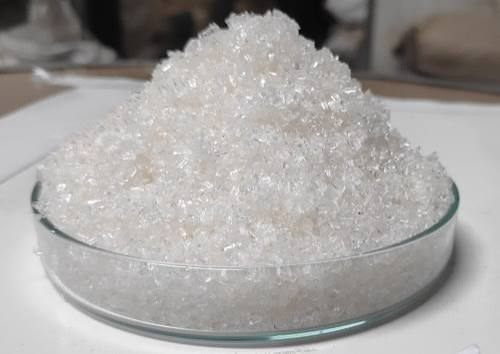
Quick answer: SOP drying is typically continuous drying of crystalline cake. Rotary dryers are widely used for industrial tonnages; fluid bed systems suit free-flowing crystal feeds that fluidise well. Size the dryer on evaporation load from real centrifuge moisture, set a clear residual-moisture target, and design for dust and caking control.
1. What an SOP Dryer Must Achieve
| Requirement | Plant impact |
|---|---|
| Target residual moisture | Prevents caking in storage and bags; meets customer specs |
| Continuous capacity | Keeps crystalliser and centrifuge from becoming the bottleneck |
| Free-flowing product | Reliable screening, blending, bulk handling |
| Controlled fines | Less dust loss and cleaner exhaust |
| Energy discipline | Drying is a major utility cost in the SOP train |
| Integration | Fits cooler, elevator, screens and packing |
2. Feed Forms in SOP Production
| Feed | Typical source | Drying notes |
|---|---|---|
| Centrifuge cake | Most common | Moisture depends on crystal size and machine performance |
| Filter cake | Some flowsheets | May be wetter; confirm handling |
| Washed crystals | After mother-liquor displacement | Surface moisture + residual liquor |
| Damp granules | After compaction / granulation lines | Finish drying of SOP granules (different duty) |
Always state whether you are drying crystalline SOP or granular SOP — particle form changes dryer selection.
3. Process Challenges Specific to SOP
Variable centrifuge moisture
Small changes in crystal size or wash efficiency change inlet moisture and can overload a dryer sized on optimistic lab data. Design on a moisture range, including peak.
Caking
Residual moisture + humidity + compaction in silos causes lumps. Dryer control must be paired with cooling, storage and packaging practice.
Dust
Fine crystals generate dust in dryers and conveyors. Specify separation (cyclone/bag filter) and sealing.
Product purity and colour
Process impurities and overheating can affect appearance. Keep product temperature within your quality window.
Corrosion and materials
Sulphate salts with residual process liquors can be corrosive when wet. Select contact materials for the real liquor chemistry, not only “dry K₂SO₄.”
4. Dryer Technologies for Sulphate of Potash
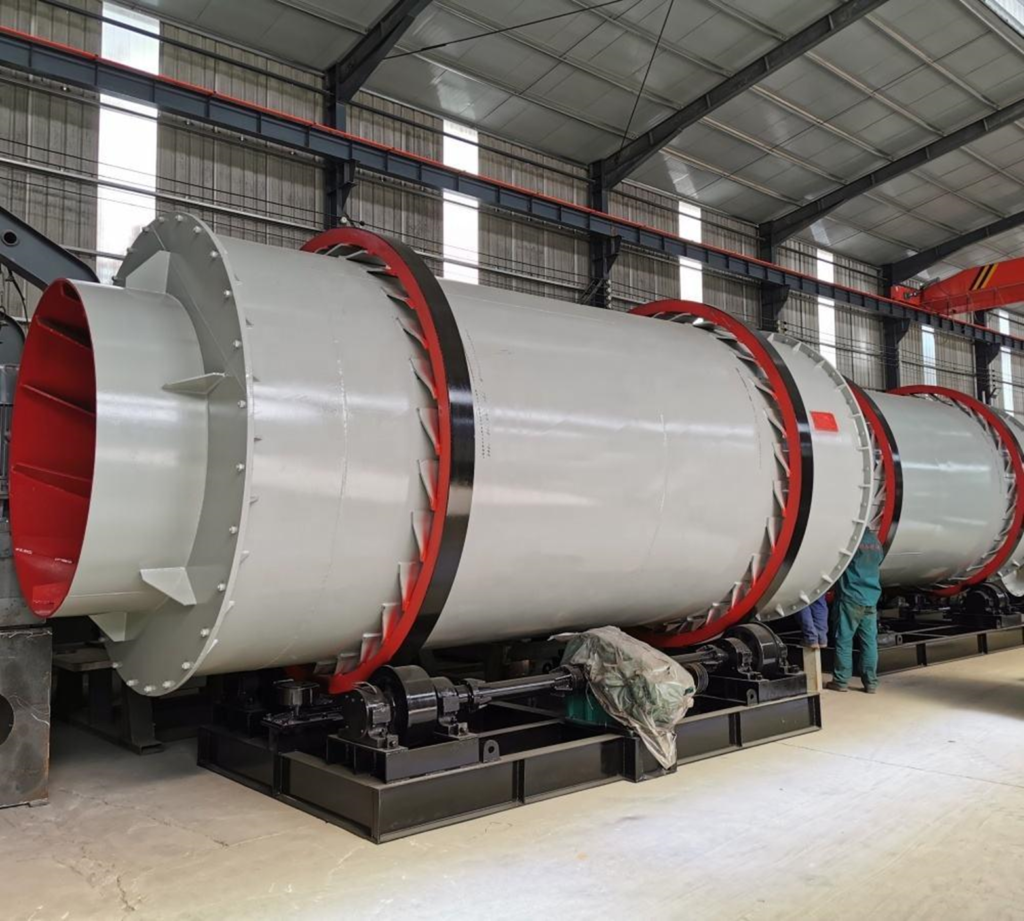
Rotary dryers (common industrial choice)
- Fit: High continuous capacity crystalline cake
- Strengths: Robust, proven on fertilizer salts, flexible residence time
- Design focus: Flights, co-current/counter-current, seals, discharge moisture control, dust pickup
- Direct vs indirect: Direct where process gas contact is acceptable; indirect when purity or gas constraints require isolation
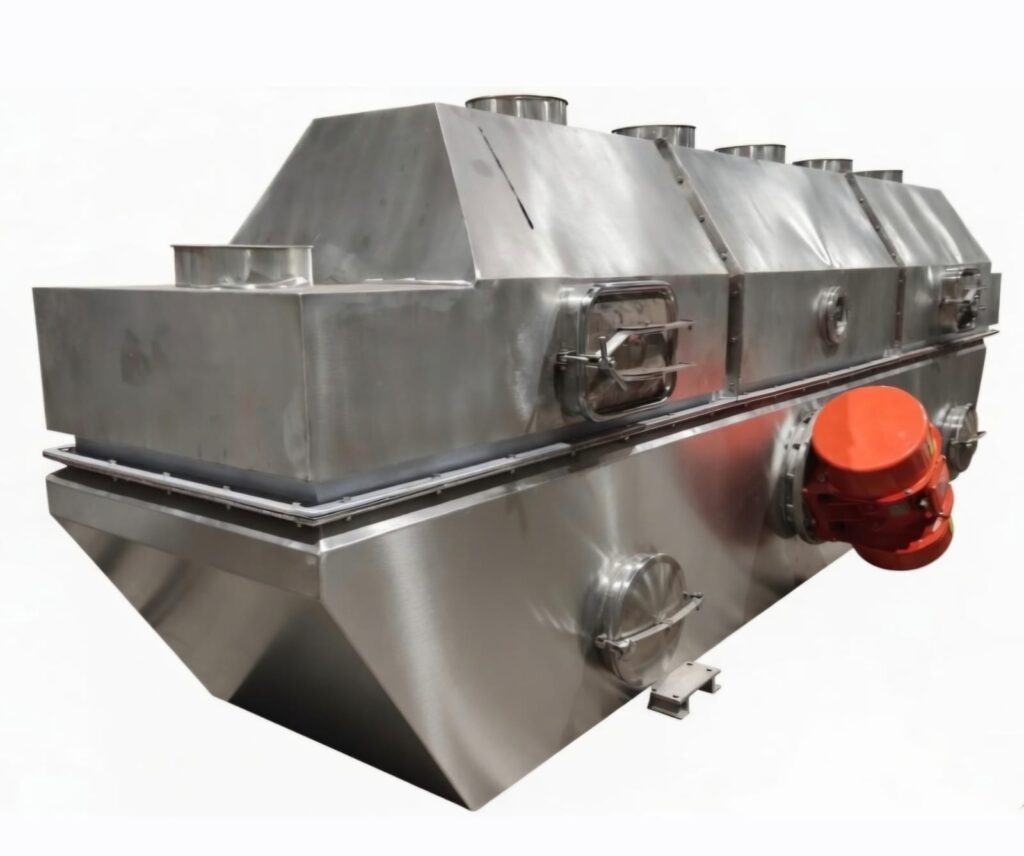
Fluid bed / vibratory fluid bed
- Fit: Free-flowing crystals or granules that fluidise cleanly
- Strengths: Good heat transfer and moisture uniformity
- Limits: Sticky high-moisture cake may channel or defluidise without conditioning
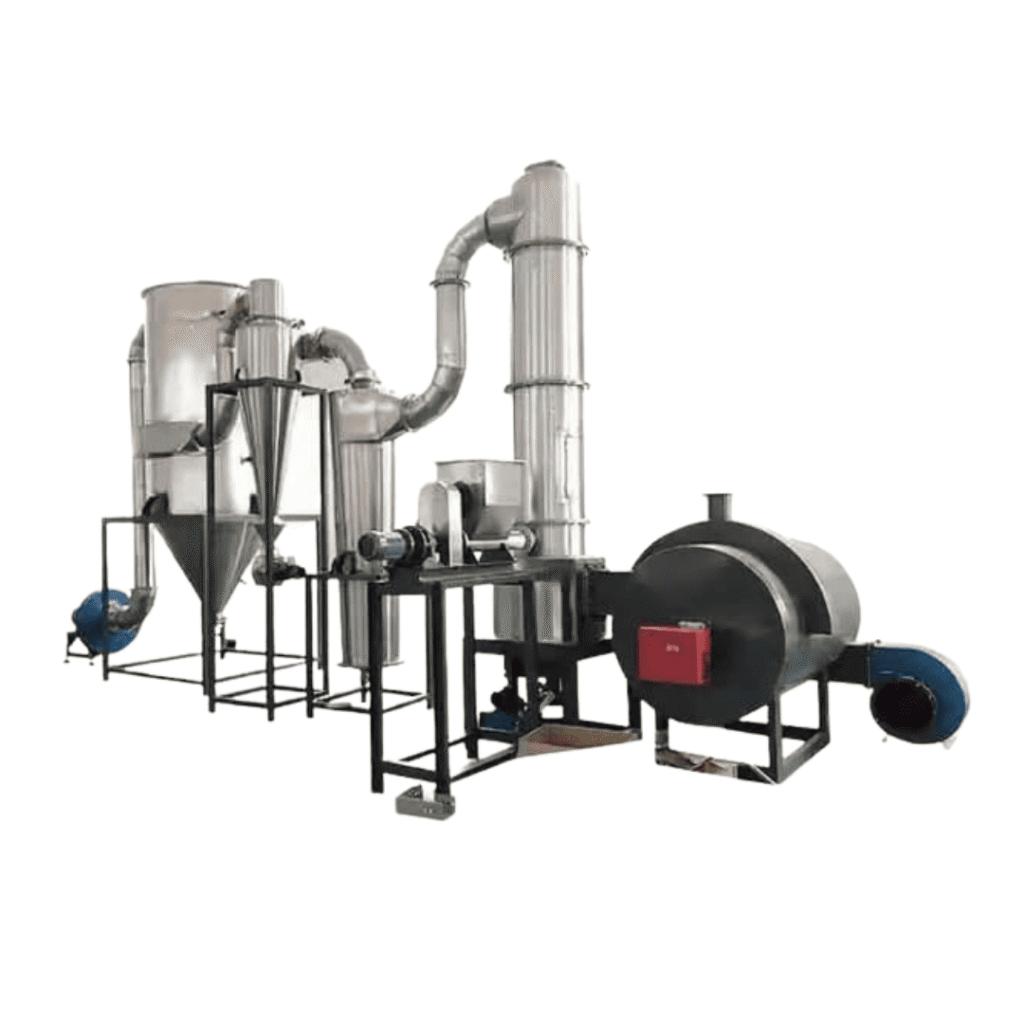
Flash / spin-flash
- Fit: More dispersible moist solids or cake needing mechanical dispersion
- Limits: Evaluate crystal breakage and fines generation against product specs
Cooler integration
Many SOP lines use drying + cooling so product enters storage below a temperature that promotes caking or bag damage. Discuss dryer and cooler as one handling system.
5. Problem–Solution Map
| Problem | Likely cause | Direction |
|---|---|---|
| Wet product / high residual moisture | Undersized evaporation, short residence, wetter cake than design | Recalculate load; check centrifuge |
| Caking in silo or bags | Moisture above spec, hot product packed, humid air | Tighter moisture; cooling; packaging |
| Lumps discharging from dryer | Sticky intermediate zone, poor agitation | Temperature/flight or fluidization review |
| High dust losses | Velocity, over-drying, weak separation | Airflow and filter design |
| Capacity short in peak campaign | Sized on average, not peak moisture × rate | Redesign basis on peak evaporation |
| High fuel use | Over-drying, leakage, excess air | Moisture discipline; seal maintenance |
6. How Buyers Should Calculate Capacity
Evaporation load (wet basis):W=F×100−MfMi−Mf
- W = kg water/h
- F = wet feed kg/h
- Mi = inlet moisture %
- Mf = outlet moisture %
Example logic: if cake rate and moisture rise together in peak season, W rises sharply — that peak sizes the dryer and the heat source.
7. RFQ Checklist for SOP Dryer Manufacturers
- Product form — crystals or granules
- Feed moisture range (centrifuge/filter data)
- Target residual moisture + test method
- Capacity continuous and peak (state wet or dry basis)
- Particle size distribution
- Bulk density targets if specified
- Heat source (gas, steam, coal, hot air generator)
- Direct vs indirect preference
- Dust emission limits
- Need for integrated cooler, screens, conveying
- Materials of construction requirements
8. Evaluating a Sulphate of Potash Dryer Manufacturer
| Check | Why it matters |
|---|---|
| Uses your moisture range in the design basis | Prevents chronic undersizing |
| Experience with fertilizer / inorganic salts | Relevant reference behaviour |
| Clear rotary or fluid-bed rationale | Technology matched to feed |
| Dust collection in scope discussion | Operable plant |
| Documented assumptions | Fair bid comparison |
| After-sales for continuous duty | Campaign reliability |
Red flags: Single “kg/h” number with no moisture basis; ignores peak centrifuge conditions; no dust or cooling discussion.
9. Energy Levers That Protect Margin
- Improve upstream dewatering (every % moisture in cake is dryer fuel)
- Enforce residual-moisture targets — do not over-dry
- Maintain seals, insulation and clean heat-transfer surfaces
- Stabilise feed rate from centrifuge hoppers
- Evaluate recovery only where exhaust conditions make sense
10. How GTI Dryers Supports SOP Drying Projects
GTI Dryers designs and manufactures continuous dryers for inorganic chemicals and fertilizer-related solids, including rotary, fluid bed/VFBD and related systems.
For sulphate of potash applications we:
- Size from real evaporation load (peak and normal)
- Select rotary or fluid-bed configuration from crystal behaviour
- Address dust recovery and integration with cooling/handling
- Provide assumption-based proposals for transparent comparison
Geographic Note
SOP is produced via Mannheim, sulphate reaction, salt-lake and other routes globally. Dryer design principles remain the same; fuel type, emission rules and ambient humidity differ by region. Indian fabrication supports domestic fertilizer projects and export equipment supply with appropriate documentation.
Frequently Asked Questions
What dryer is most used for sulphate of potash?
Continuous rotary dryers are common for crystalline SOP cake at industrial scale. Fluid beds are used when particles fluidise well.
What residual moisture should SOP have?
Follow your product specification and market requirements. Put the numeric target in the RFQ.
Why does SOP cake after drying?
Moisture above target, product packed hot, or humid storage/air ingress. Control dryer exit moisture and cooling.
How do I compare manufacturer quotes?
Same feed moisture range, capacity basis, residual moisture, heat source and scope (including dust equipment).
What data should I send GTI?
Cake moisture range, target moisture, capacity, crystal size, heat source and whether cooling is included.
Next Step
If you need a sulphate of potash dryer manufacturer for a new SOP line or a capacity upgrade, share your centrifuge moisture and production rate. GTI will assess rotary or fluid-bed drying options and provide a process-based proposal.
Request a sulphate of potash (SOP) drying assessment with your process data.
Contact the GTI Technical Team:
Website: gtidryers.com
Email: mktg@gtidryers.com
Phone / WhatsApp: +91 9330077417