
Spray Dryer Mexico: Supporting the Growth of Food, Beverage, Pharmaceutical & Nearshoring Manufacturing
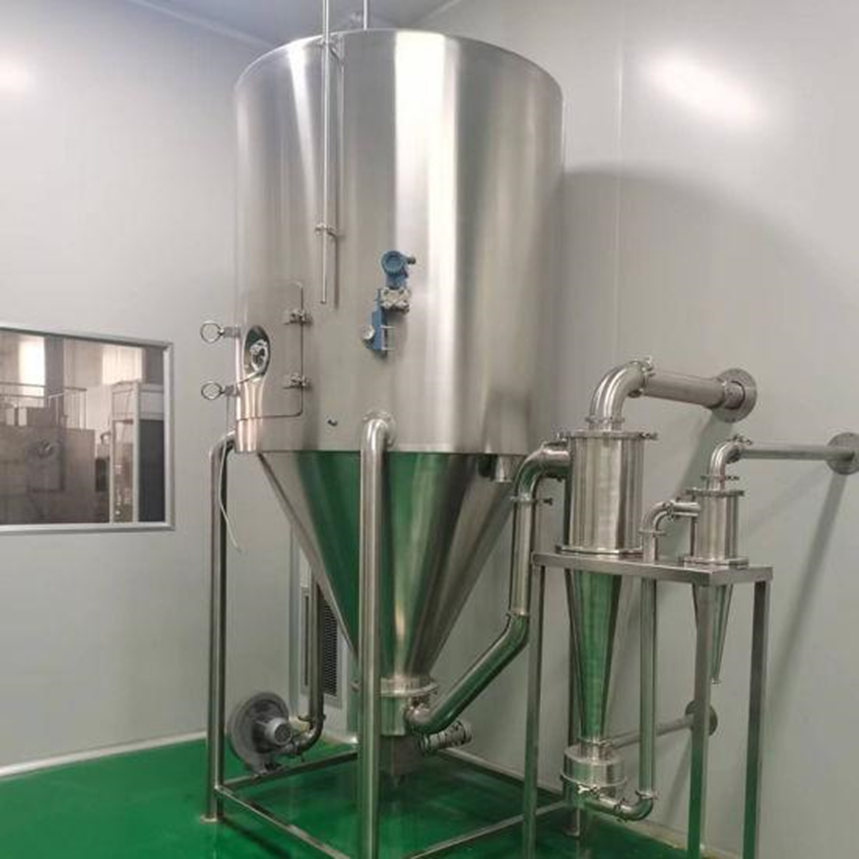
Mexico is becoming an increasingly important manufacturing and processing hub for industries supplying both the domestic market and North American customers. The country’s expanding food processing, instant beverage, dairy, pharmaceutical, specialty chemical and industrial manufacturing sectors are creating demand for reliable technologies that can convert liquid feeds, emulsions and slurries into stable, free-flowing powders.
One of the most important technologies for this type of processing is the industrial spray dryer.
A spray Dryer provides continuous conversion of liquid or pumpable feed into powder through controlled atomization and hot-air drying. This makes the technology particularly relevant to Mexican manufacturers producing instant drinks, food ingredients, dairy powders, pharmaceutical materials and specialty chemical products.
For companies investing in new production capacity or expanding manufacturing operations through nearshoring, selecting the correct spray drying system can influence product quality, energy consumption, production capacity and overall operating economics.
Why Is Spray Drying Important for Mexican Industry?
Mexico’s manufacturing landscape combines large domestic consumption with strong integration into North American supply chains.
This creates demand for drying systems capable of delivering:
- Consistent powder quality
- Controlled residual moisture
- Uniform particle characteristics
- High production capacity
- Hygienic processing
- Energy-efficient operation
- Repeatable drying conditions
- Scalable production
- Reliable continuous operation
For liquid-based products, conventional drying methods may require multiple processing stages. A properly engineered spray drying system can combine atomization and rapid moisture removal into a continuous operation.
The result can be a powder that is easier to handle, package, transport, store and formulate.
Key Mexican Industries Driving Spray Dryer Demand
1. Food Processing & Food Ingredients
Mexico has a large and diverse food-processing sector, creating applications for spray drying across ingredients and formulated products.
Potential applications include:
- Food ingredient powders
- Flavor ingredients
- Fruit-based formulations
- Starch-based products
- Protein ingredients
- Functional food ingredients
- Seasoning components
- Liquid food concentrates
For food manufacturers, the dryer must be designed around product sensitivity, required moisture, particle properties and hygienic requirements.
2. Instant Beverages & Powdered Drinks
One of the strongest application areas for spray drying in Mexico is the production of instant beverages and powdered drink ingredients.
Liquid extracts and concentrated formulations can be converted into convenient powders for:
- Instant coffee
- Beverage mixes
- Tea-based products
- Cocoa and chocolate beverages
- Flavored drink powders
- Nutritional beverages
Spray drying allows manufacturers to engineer powder characteristics such as moisture, bulk density, particle size and flowability according to the final application.
For Mexican producers serving domestic and North American markets, consistent powder quality is particularly important.
3. Dairy & Milk-Based Products
Dairy processing is another important spray-drying application.
Depending on the feed and product specification, spray dryers can be considered for:
- Milk powders
- Whey-based products
- Dairy ingredients
- Protein concentrates
- Cream-based formulations
- Nutritional powders
Hygienic design, cleanability, controlled temperatures and appropriate material selection are critical considerations when engineering a food or dairy spray dryer in Mexico.
4. Pharmaceutical Manufacturing
Mexico’s pharmaceutical manufacturing ecosystem creates demand for controlled drying technologies for suitable liquid formulations and pharmaceutical ingredients.
Spray drying may be evaluated for:
- Pharmaceutical intermediates
- Excipients
- Nutraceutical ingredients
- Functional powders
- Formulated products
- Specialty pharmaceutical materials
Pharmaceutical applications require considerably greater attention to containment, hygienic construction, cleaning, temperature control and process validation than many conventional industrial applications.
The dryer configuration should therefore be developed around the specific material and applicable manufacturing requirements.
5. Specialty Chemicals & Industrial Formulations
Spray dryers are also suitable for converting certain chemical solutions, emulsions and slurries into controlled powders.
Applications may include:
- Specialty chemicals
- Detergent ingredients
- Pigments
- Ceramic materials
- Chemical intermediates
- Functional additives
- Industrial formulations
The appropriate atomization system, chamber design, air temperature and collection system depend heavily on the feed properties and desired powder characteristics.
Why Nearshoring Is Increasing the Need for Advanced Drying Equipment
Mexico’s geographic position makes it an important manufacturing location for companies supplying North American markets.
As companies establish or expand production closer to major customers, new facilities may require complete processing infrastructure—including:
Raw Material Handling → Liquid Processing → Concentration → Spray Drying → Powder Collection → Packaging
For new plants, this creates an opportunity to design the drying system around the complete production process rather than simply replacing an existing machine.
A customized industrial spray dryer for Mexico can be engineered around:
- Required production capacity
- Feed concentration
- Initial and final moisture
- Product temperature sensitivity
- Powder particle size
- Bulk density
- Available utilities
- Heat source
- Factory footprint
- Automation requirements
How an Industrial Spray Dryer Works
A simplified spray drying process is:
Liquid Feed
↓
Feed Pump
↓
Atomization
↓
Hot-Air Contact
↓
Rapid Moisture Evaporation
↓
Powder Separation
↓
Cyclone / Bag Filter
↓
Finished Powder
The feed is atomized into fine droplets, dramatically increasing the surface area available for moisture evaporation.
The drying air removes moisture rapidly while the dried particles are separated from the exhaust stream.
The actual operating conditions depend on the material and target powder specifications.
Choosing the Right Spray Dryer for a Mexican Processing Plant
There is no single spray dryer configuration suitable for every application.
Before selecting a system, manufacturers should evaluate:
Feed Characteristics
- Feed viscosity
- Solids concentration
- Temperature
- pH
- Stickiness
- Heat sensitivity
- Flowability
Product Requirements
- Final moisture
- Particle size
- Bulk density
- Solubility
- Flowability
- Color
- Thermal stability
Plant Requirements
- Production capacity
- Available floor space
- Heat source
- Energy cost
- Automation level
- Cleaning requirements
- Environmental controls
This information allows the dryer configuration to be designed around the actual production requirement.
Spray Dryer Energy Efficiency: What Mexican Manufacturers Should Consider
Energy consumption is one of the most important operating-cost factors in spray drying because large quantities of water must be evaporated.
Modern spray drying systems can therefore incorporate strategies such as:
Heat Recovery
Recovering usable energy from exhaust streams where technically practical.
Optimized Airflow
Matching air volume and temperature to the actual drying requirement.
Efficient Atomization
Selecting an appropriate atomizer can influence droplet size, drying performance and energy utilization.
Insulated Drying Chambers
Proper insulation reduces unnecessary heat losses.
Automated Process Control
PLC and SCADA-based control can help maintain stable operating conditions.
Efficient Heat Sources
Depending on the plant, systems may be designed around steam, natural gas, LPG, thermal systems, electricity or other available heat sources.
Important: Actual energy savings should be established through material-specific drying calculations and process testing rather than assumed percentages.
Spray Dryer vs Other Industrial Dryers
The right dryer depends on the physical form of the feed.
| Dryer | Typical Feed | Common Applications |
| Spray Dryer | Liquid / slurry | Dairy, food, beverages, pharma, chemicals |
| Rotary Dryer | Bulk wet solids | Minerals, biomass, fertilizers |
| Flash Dryer | Wet dispersed solids | Starch, chemicals, filter cake |
| Band Dryer | Wet solids / slices / granules | Food, biomass, herbs |
| Fluid Bed Dryer | Free-flowing particles | Granules, chemicals, pharma |
| Paddle Dryer | Sticky / pasty materials | Sludge, chemicals, filter cake |
This distinction is important because spray drying is primarily a liquid-to-powder technology, while rotary, band, flash and fluid bed dryers are generally selected for different feed forms and process requirements.
Where Can GTI Dryers Support Mexican Manufacturers?
GTI Dryers can develop customized industrial drying solutions based on the material, production capacity and required final product.
Potential applications include:
Food Processing → Instant Beverages → Dairy → Pharmaceuticals → Nutraceuticals → Specialty Chemicals → Industrial Powders
The focus should not simply be on supplying a standard machine.
The objective is to determine:
What is the feed?
How much water must be removed?
What powder characteristics are required?
What capacity is required?
What heat source is available?
What energy and operating conditions are expected?
These parameters form the basis of an appropriate spray-drying solution.
Pilot Testing Before Commercial Spray Dryer Investment
For manufacturers entering new product categories or establishing new production lines in Mexico, pilot testing can significantly reduce technical uncertainty.
A material-specific trial can help evaluate:
- Drying performance
- Final moisture
- Powder characteristics
- Particle size
- Product recovery
- Thermal behavior
- Energy requirements
- Operating parameters
Pilot results can then support the engineering of a larger commercial spray drying system.
Drying Calculations for Mexico Spray Dryer Projects
Before selecting equipment, GTI Dryers can evaluate the fundamental drying parameters:
Feed Capacity
→ Initial Moisture
→ Feed Solids
→ Final Moisture
→ Water Evaporation Rate
→ Heat Requirement
→ Airflow Requirement
→ Dryer Capacity
→ Energy Requirement
This engineering approach helps manufacturers compare equipment options based on actual process requirements rather than machine size alone.
GEO Search Focus: Spray Dryer Mexico & Major Industrial Hubs
For companies searching locally, spray-drying requirements can emerge from major manufacturing regions including:
Mexico City & State of Mexico
Food processing, pharmaceuticals, chemicals and consumer-product manufacturing.
Jalisco
Food, beverages, pharmaceuticals and industrial processing.
Nuevo León
Industrial manufacturing and chemical processing, particularly around Monterrey.
Querétaro
Advanced manufacturing, food processing and pharmaceutical-related industries.
Guanajuato
Food, chemical and manufacturing operations.
Puebla
Food, beverage, chemical and industrial manufacturing.
Veracruz
Food processing, agricultural products and chemical-related industries.
These regional searches create opportunities for terms such as:
- Spray dryer manufacturer Mexico
- Industrial spray dryer supplier Mexico
- Spray drying equipment Mexico
- Food spray dryer Mexico
- Dairy spray dryer Mexico
- Pharmaceutical spray dryer Mexico
- Spray dryer supplier Monterrey
- Industrial dryer manufacturer Guadalajara
- Spray drying system Mexico City
Frequently Asked Questions About Spray Dryers in Mexico
What is a spray dryer used for?
A spray dryer converts suitable liquid feeds, solutions, emulsions or slurries into powders through atomization and controlled hot-air drying.
Which industries use spray dryers in Mexico?
Major applications include food processing, dairy, instant beverages, pharmaceuticals, nutraceuticals and specialty chemicals.
Is a spray dryer suitable for instant beverages?
Yes. Spray drying can be used for suitable instant beverage formulations, including coffee, tea, cocoa and powdered drink ingredients.
How do I choose a spray dryer capacity?
Capacity should be calculated from feed rate, solids concentration, initial moisture, target final moisture and required water evaporation rate rather than simply selecting a nominal dryer size.
Can GTI Dryers provide pilot testing?
Yes. Material-specific testing can be used to evaluate drying performance and help establish commercial dryer parameters.
Looking for a Spray Dryer Manufacturer in Mexico?
Mexico’s expanding food processing, instant beverage, dairy, pharmaceutical and specialty chemical industries are creating opportunities for advanced powder-processing technologies.
For manufacturers investing in new capacity, upgrading existing production lines or establishing nearshoring facilities for North American markets, the right spray drying system can become a critical part of the production process.
GTI Dryers provides custom industrial drying solutions based on feed characteristics, required capacity, final product specifications and available utilities.
Planning a spray drying project in Mexico?
Share your material, feed rate, initial moisture, desired final moisture and required production capacity with GTI Dryers to begin a preliminary technical evaluation, drying calculation and pilot-testing discussion.
GTI Dryers — Engineered Industrial Drying Solutions for Mexico and Global Processing Industries.