Spray Dryer New Zealand: Engineering High-Capacity Powder Drying for the Global Dairy Industry
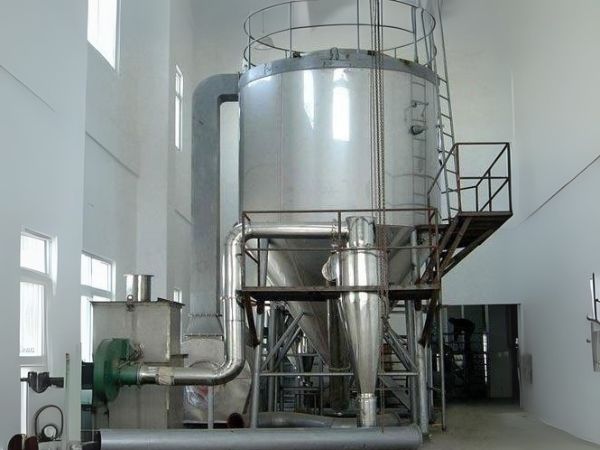
New Zealand represents one of the world’s most important dairy-processing and dairy-export markets. Its economy is strongly connected to the international food and dairy trade, creating demand for large-scale technologies capable of processing milk and other liquid dairy feeds into stable, export-ready powders.
For this reason, industrial spray drying is a critical technology in New Zealand’s dairy-processing infrastructure.
The country’s major dairy products include whole milk powder, skim milk powder, infant formula, whey and other protein products, all of which require highly controlled processing and drying conditions. New Zealand’s Ministry for Primary Industries identifies dairy as the country’s biggest export earner, while current government forecasts put dairy export revenue at a record NZ$28.6 billion for the year to June 2026.
This makes Spray Dryer New Zealand a particularly valuable commercial search term for dairy processors, engineering companies, project developers and manufacturers planning new powder-production capacity.
Why New Zealand Is a Major Market for Industrial Spray Dryers
New Zealand’s dairy model is different from many conventional food-processing markets.
A significant proportion of dairy production is ultimately destined for international customers. Consequently, processing plants need drying systems that can operate at large throughput, high availability and consistent product quality.
A typical dairy powder process can involve:
Raw Milk
↓
Separation / Standardization
↓
Concentration
↓
Spray Drying
↓
Powder Separation
↓
Fluid Bed / Cooling
↓
Final Powder
↓
Packaging & Export
The spray dryer is therefore not simply a piece of thermal equipment—it can be one of the central processing stages in a high-capacity dairy powder plant.
New Zealand’s Dairy Export Economy Creates Strong Spray-Drying Demand
The scale of New Zealand’s dairy industry is particularly relevant when evaluating the market for industrial drying equipment.
Government data for June 2026 shows that exports of milk powder, butter and cheese reached NZ$2.052 billion for that month, with milk powder exports alone at NZ$890 million. Preparations of milk, cereals, flour and starch—including infant formula—also recorded substantial growth.
DairyNZ data similarly identifies whole milk powder as the largest dairy export product by value, while protein products such as whey and related dairy proteins have become increasingly significant.
This product mix creates several important applications for industrial spray drying.
1. Whole Milk Powder Spray Drying
Whole milk powder is one of the most important products in New Zealand’s dairy-processing industry.
Spray drying converts concentrated milk into a stable powder while allowing manufacturers to control important characteristics such as:
- Moisture content
- Particle size
- Bulk density
- Flowability
- Solubility
- Powder temperature
- Product recovery
For large dairy plants, spray dryer design must also consider continuous operation, energy consumption, powder recovery and downstream handling.
A properly engineered system can integrate spray drying with powder separation, fluid-bed processing and heat-recovery technologies.
2. Infant Formula Spray Dryers
Infant formula represents a particularly demanding application because the product requires tightly controlled processing and export compliance.
New Zealand’s Ministry for Primary Industries specifically identifies milk powder and infant formula as regulated dairy products, with additional requirements applying to infant formula manufacturers and exporters.
A spray drying system for infant nutrition may therefore need to address:
- Hygienic construction
- Controlled drying conditions
- Product contamination prevention
- Powder recovery
- Cleaning requirements
- Temperature control
- Traceability
- Process monitoring
The final system must be engineered around the product, plant requirements and applicable regulatory/export requirements rather than using a generic dryer configuration.
3. Whey Protein & Dairy Protein Spray Drying
New Zealand’s dairy industry is increasingly diversified beyond traditional milk powder.
Protein products—including whey and other dairy proteins—represent a major value-added category.
Spray drying can be considered for suitable liquid protein feeds to produce powders with controlled:
Particle Size + Moisture + Bulk Density + Solubility + Flowability
Potential applications include:
- Whey protein concentrates
- Whey-based ingredients
- Dairy protein powders
- Nutritional ingredients
- Functional dairy ingredients
The feed concentration, viscosity and thermal sensitivity must be evaluated before selecting the atomization and drying configuration.
4. Skim Milk Powder & Dairy Ingredients
Spray drying is also central to the production of various dairy ingredients.
Potential products include:
- Skim milk powder
- Milk protein ingredients
- Dairy solids
- Nutritional powders
- Specialty milk powders
- Functional dairy ingredients
For these applications, the drying system can be designed around specific powder specifications rather than simply maximizing evaporation capacity.
What Makes a New Zealand Dairy Spray Dryer Different?
The requirements of a large export-oriented dairy facility can differ significantly from those of a small food-processing plant.
A commercial dairy spray dryer in New Zealand may need to address:
High Throughput
Large quantities of concentrated dairy feed may need to be processed continuously.
Hygienic Design
Dairy and infant nutrition applications demand appropriate sanitary design and cleaning strategies.
Powder Quality
The dryer must help achieve consistent moisture, particle size and powder properties.
Energy Efficiency
Evaporating water requires substantial thermal energy, making heat utilization an important part of system design.
Continuous Availability
Unplanned downtime can have a significant economic impact on large-scale production.
Export Requirements
New Zealand dairy products are exported to multiple international markets, meaning processing systems must support the manufacturer’s applicable food-safety and export requirements. MPI states that dairy exports must meet New Zealand legislation and applicable food standards, while destination-market requirements can also apply.
Energy Efficiency: The Key Opportunity in Dairy Spray Drying
Spray drying can be energy intensive because the process requires evaporation of large quantities of water.
For New Zealand dairy processors, energy optimization should therefore be considered at the system level.
Potential strategies include:
Heat Recovery
Recovering usable heat from exhaust air where technically and economically practical.
Optimized Airflow
Matching drying-air volume to the feed rate and moisture-removal requirement.
Multi-Stage Drying
Combining spray drying with suitable downstream fluid-bed drying or cooling can help optimize the overall powder-processing process.
Efficient Atomization
Atomization influences droplet size, drying rate and final powder characteristics.
Thermal Insulation
Proper insulation helps minimize unnecessary heat losses.
Automated Control
PLC/SCADA systems can monitor and regulate:
- Inlet temperature
- Outlet temperature
- Feed rate
- Airflow
- Atomizer conditions
- Exhaust conditions
- Product temperature
Actual energy consumption and potential savings should be established through material-specific calculations and testing, rather than relying on generic percentage claims.
Spray Dryer vs Other Industrial Dryers for New Zealand
Choosing the correct dryer depends primarily on the physical form and characteristics of the feed.
| Dryer Technology | Typical Feed | New Zealand Applications |
| Spray Dryer | Liquid / slurry | Milk powder, infant formula, whey, food ingredients |
| Fluid Bed Dryer | Free-flowing particles | Powder conditioning, cooling, granules |
| Rotary Dryer | Wet bulk solids | Biomass, minerals, industrial solids |
| Flash Dryer | Dispersible wet solids | Starch, chemicals, selected process solids |
| Band Dryer | Wet solids / particles | Food, herbs, agricultural products |
| Paddle Dryer | Sticky / pasty feed | Sludge, chemicals, specialty solids |
For New Zealand’s large-scale dairy powder sector, spray drying is particularly important because the starting material is generally a concentrated liquid rather than a wet bulk solid.
How to Calculate Spray Dryer Capacity for a New Zealand Dairy Plant
The correct capacity should be calculated from the actual process conditions.
A preliminary calculation follows:
Feed Rate
→ Feed Solids
→ Initial Moisture
→ Target Final Moisture
→ Water Evaporation
→ Heat Duty
→ Drying-Air Requirement
→ Spray Dryer Capacity
Important input parameters include:
- Milk/feed flow rate
- Total solids
- Feed temperature
- Concentration before drying
- Final powder moisture
- Product temperature limits
- Required powder properties
- Available heat source
This approach allows the dryer to be engineered around the actual dairy process rather than selecting equipment based only on nominal evaporation figures.
New Zealand Locations with Strong Dairy-Processing Relevance
Dairy-processing regions such as:
Waikato
A major dairy-processing region with strong relevance to milk processing and dairy manufacturing.
Canterbury
Important for agriculture, food processing and dairy-related manufacturing.
Taranaki
A significant dairy-producing region with associated processing infrastructure.
Southland
Strong agricultural and dairy-processing activity.
Auckland
An important commercial, logistics and food-manufacturing centre.
Waikato & Hamilton
Particularly relevant for dairy technology, processing and industrial engineering searches.
This creates high-intent search opportunities such as:
- Spray dryer manufacturer New Zealand
- Dairy spray dryer New Zealand
- Milk powder spray dryer New Zealand
- Infant formula spray dryer New Zealand
- Whey protein spray dryer New Zealand
- Industrial spray drying equipment Auckland
- Dairy drying equipment Hamilton
- Spray dryer supplier New Zealand
- Milk powder drying system New Zealand
Regulatory & Quality Considerations for New Zealand Dairy Drying
For a market as export-oriented as New Zealand, dryer selection should consider more than thermal performance.
Dairy processors need to consider applicable:
- New Zealand food regulations
- MPI requirements
- Dairy export requirements
- Food safety systems
- Destination-market requirements
- Hygiene and sanitation requirements
- Traceability requirements
MPI notes that dairy exports—including milk powder and infant formula—are subject to New Zealand legislation and food standards, while destination markets may impose additional requirements.
Therefore, the spray dryer should be engineered as part of the complete hygienic processing system.
Why Pilot Testing Matters Before Installing a Large Spray Dryer
For high-capacity dairy projects, pilot testing can help reduce technical uncertainty before commercial-scale investment.
GTI Dryers can evaluate material-specific parameters such as:
Feed Properties → Atomization → Drying Conditions → Moisture → Powder Characteristics → Recovery → Energy Requirement
Pilot testing can help establish:
- Drying performance
- Powder moisture
- Particle size
- Bulk density
- Product recovery
- Thermal sensitivity
- Operating conditions
This information can then support commercial spray dryer engineering.
Why GTI Dryers Is Targeting the New Zealand Market
New Zealand’s combination of large-scale dairy processing, export-oriented powder production and growing value-added protein categories makes it an important market for advanced spray drying technology.
GTI Dryers can support manufacturers looking for customized drying solutions for:
Milk Powder | Infant Formula | Whey Protein | Dairy Ingredients | Food Powders | Nutraceuticals | Specialty Products
Rather than treating every dairy product identically, the dryer configuration can be developed around the material’s:
- Feed concentration
- Viscosity
- Thermal sensitivity
- Required moisture
- Particle size
- Production capacity
- Powder handling characteristics
Frequently Asked Questions
What is a spray dryer used for in the New Zealand dairy industry?
Spray dryers are used to convert suitable concentrated liquid dairy feeds into stable powders such as milk powders, dairy ingredients, infant nutrition products and protein powders.
Why is spray drying important for milk powder production?
It enables continuous conversion of concentrated liquid feed into powder while allowing manufacturers to control important characteristics such as moisture, particle size and bulk density.
Can spray dryers be used for whey protein?
Yes. Suitable whey and dairy-protein feeds can be spray dried, subject to feed characteristics and the desired final powder specification.
What capacity spray dryer does a dairy plant need?
Capacity depends on feed flow rate, solids concentration, initial moisture, final moisture and required water evaporation. A detailed drying calculation is preferable to selecting a standard machine size.
Does GTI Dryers provide customized spray drying systems?
Yes. GTI Dryers can develop drying solutions based on the customer’s material, capacity, final product specifications and available utilities.
New Zealand: A High-Value Market for Advanced Spray Drying
New Zealand’s dairy industry provides a particularly strong application environment for industrial spray dryers.
The country’s dairy export performance remains substantial, with the government forecasting NZ$28.6 billion in dairy export revenue for the year to June 2026. Current trade data also shows strong export values for milk powder and infant-formula-related products.
For manufacturers producing whole milk powder, skim milk powder, infant formula, whey protein and specialized dairy ingredients, drying technology directly influences production efficiency and powder quality.
Planning a Spray Dryer Project in New Zealand?
GTI Dryers can evaluate your feed material, solids concentration, production capacity, target moisture and powder requirements to develop a preliminary spray-drying solution.
Request a drying calculation and discuss your New Zealand spray dryer requirement with GTI Dryers.