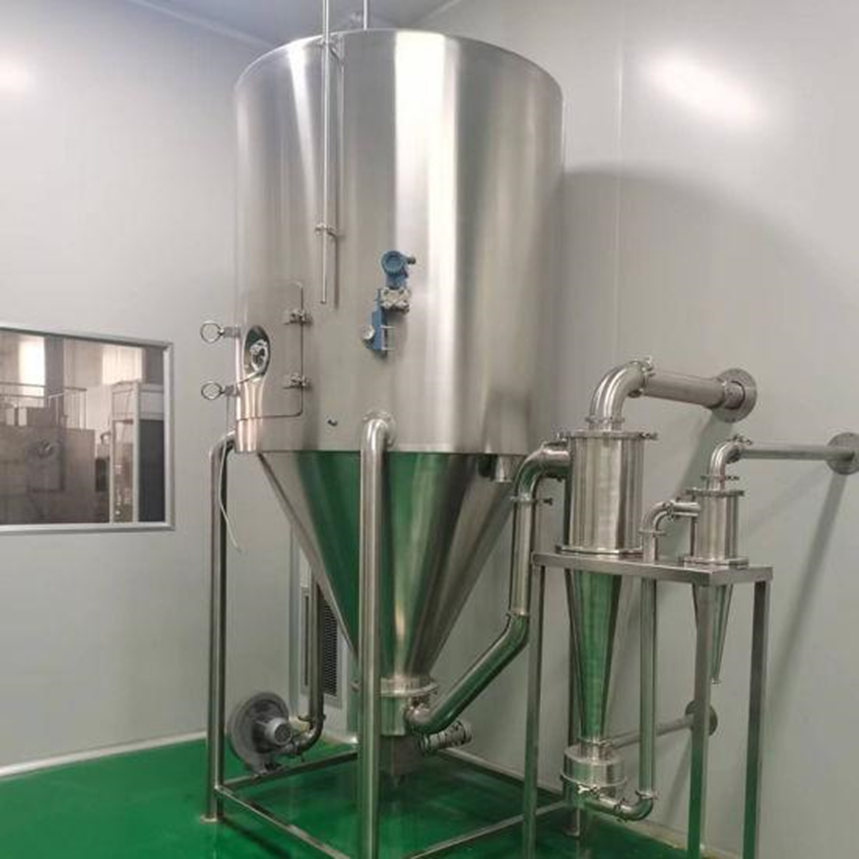
Why South Korea Is Becoming an Important Market for Advanced Spray Dryers
South Korea is one of Asia’s most technology-intensive manufacturing economies, with major industrial strengths in advanced materials, batteries, chemicals, pharmaceuticals, biotechnology and food processing.
This creates a different type of opportunity for spray dryer manufacturers.
Rather than demand being driven only by conventional food and dairy applications, South Korean industries increasingly require precision drying, particle engineering, controlled powder characteristics and highly automated processing systems.
Market research also identifies food and dairy, pharmaceutical and biotechnology, chemicals, ceramics/minerals and environmental processing among the major application segments for spray dryers in South Korea.
For GTI Dryers, this makes Spray Dryer South Korea a high-value GEO and B2B search opportunity.
Four Industries Creating Strong Spray Dryer Opportunities in South Korea
Instead of looking at South Korea as a conventional food-processing market, it is useful to understand its demand through four major industrial segments.
1. Advanced Battery Materials
South Korea’s battery ecosystem creates opportunities for specialized drying technologies used in the processing of precursor materials, chemical slurries and advanced functional powders.
Spray drying can be evaluated where a liquid feed, solution, suspension or slurry needs to be transformed into controlled particles or powder.
Potential considerations include:
- Particle size distribution
- Powder morphology
- Residual moisture
- Bulk density
- Feed concentration
- Thermal sensitivity
- Material recovery
- Atmosphere control
For battery-material projects, the spray dryer should be designed around the chemistry and downstream process rather than using a standard food-grade configuration.
Typical process concept:
Chemical Solution / Slurry → Atomization → Controlled Drying → Powder Collection → Further Processing
This application area is particularly attractive because South Korean manufacturers place strong emphasis on process consistency, automation and advanced material quality.
2. Chemical Manufacturing & Specialty Chemicals
South Korea has a highly developed chemical manufacturing base, creating demand for industrial drying systems capable of handling specialized liquid and slurry feeds.
Spray dryers can be considered for suitable:
- Specialty chemicals
- Catalysts
- Pigments
- Ceramic materials
- Detergent ingredients
- Chemical intermediates
- Functional additives
- Industrial formulations
The appropriate technology can vary considerably depending on whether the material is:
Heat-sensitive → Hygroscopic → Sticky → Abrasive → Solvent-based → Water-based
For solvent-containing materials, closed-loop or semi-closed configurations may be evaluated where appropriate for containment and solvent recovery. Market research indicates increasing interest in closed and semi-closed spray-drying configurations for pharmaceutical and chemical applications.
3. Functional Foods & Nutraceutical Powders
South Korea’s sophisticated consumer market has created strong interest in functional foods, health ingredients and nutritional products.
Spray drying is particularly useful when manufacturers need to convert suitable liquid formulations into stable powders while controlling characteristics such as:
- Moisture
- Particle size
- Flowability
- Bulk density
- Solubility
- Powder morphology
Potential applications include:
- Functional food ingredients
- Nutraceutical ingredients
- Protein powders
- Botanical extracts
- Encapsulated ingredients
- Flavor ingredients
- Beverage powders
- Health-food formulations
Spray drying is widely used for particle formation from liquid feedstocks where final powder characteristics need to be carefully controlled.
4. Biopharmaceutical R&D & Pharmaceutical Processing
South Korea’s pharmaceutical and biotechnology sector provides another high-value application for advanced spray drying.
Spray drying is increasingly relevant to pharmaceutical development because it can be used for particle engineering and specialized formulations, including applications involving amorphous solid dispersions, biologics and dry-powder delivery technologies.
Potential applications include:
- Pharmaceutical intermediates
- Excipients
- Nutraceutical formulations
- Dry-powder formulations
- Biopharmaceutical research
- Drug-delivery development
- Specialty pharmaceutical ingredients
Pharmaceutical projects require much more than basic drying performance.
The system may need to address:
Containment → Cleanability → Controlled Processing → Documentation → Automation → Product Recovery
For solvent or potent-material applications, closed-loop systems and containment strategies may also be considered depending on the process.
What Type of Spray Dryer Does South Korea Need?
There is no single “best spray dryer” for every Korean application.
The configuration should be selected according to the feed and final powder specification.
Rotary Atomizer Spray Dryer
Suitable for applications where controlled atomization and large-scale continuous processing are required.
Nozzle Atomization Spray Dryer
Can provide controlled droplet formation for suitable food, pharmaceutical and chemical applications.
Centrifugal Atomizer System
Useful where atomization flexibility and controlled particle formation are important.
Open-Cycle Spray Dryer
Typically considered for suitable water-based feeds where exhaust handling requirements permit.
Closed-Loop Spray Dryer
Particularly relevant for certain solvent-based, pharmaceutical and chemical applications where containment and solvent recovery are required.
Semi-Closed Spray Dryer
Can provide an intermediate configuration for selected applications requiring greater control over the drying atmosphere.
The final configuration should be established from material testing and process engineering.
Why Energy Efficiency Matters for South Korean Spray Drying Projects
Spray drying requires substantial thermal energy because moisture must be evaporated from the feed.
For high-capacity Korean manufacturing plants, reducing operating cost therefore requires looking beyond the dryer chamber itself.
GTI Dryers can evaluate:
Heat Recovery
Recovering usable thermal energy from exhaust streams where practical.
Airflow Optimization
Matching airflow and temperature to the required evaporation load.
Efficient Atomization
Optimizing droplet size can influence drying performance and powder quality.
Thermal Insulation
Reducing heat losses from chambers, ducts and hot surfaces.
Automated Control
PLC/SCADA systems can regulate:
- Feed rate
- Inlet temperature
- Outlet temperature
- Airflow
- Atomization
- Product temperature
- Exhaust conditions
Waste-Heat Integration
For suitable industrial facilities, available waste heat may be evaluated as part of the overall drying-energy strategy.
Actual energy consumption and savings should always be established through material-specific drying calculations rather than generic percentage claims.
Spray Dryer Selection: Start With the Material
For Korean battery, chemical, pharmaceutical and food projects, the material should be analyzed before equipment selection.
Feed Analysis
Determine:
- Moisture content
- Solids concentration
- Viscosity
- Density
- Particle characteristics
- Stickiness
- Thermal sensitivity
- Solvent/water content
Product Analysis
Define:
- Final moisture
- Particle size
- Bulk density
- Morphology
- Flowability
- Solubility
- Thermal stability
Plant Analysis
Evaluate:
- Production capacity
- Available heat source
- Utility costs
- Floor space
- Automation requirements
- Exhaust-treatment requirements
- Cleaning requirements
This creates the engineering basis for selecting the correct spray dryer.
How to Calculate Spray Dryer Capacity
A preliminary capacity calculation can be structured as:
Feed Rate
→ Feed Solids
→ Initial Moisture
→ Final Moisture
→ Water Evaporation Rate
→ Heat Duty
→ Air Requirement
→ Spray Dryer Capacity
For example, simply knowing that a plant needs “1 tonne per hour” is not enough.
The dryer designer also needs to know:
- Is the feed 20% solids or 60% solids?
- What is the target final moisture?
- Is the product heat sensitive?
- What particle size is required?
- Is the feed water-based or solvent-based?
These factors can dramatically influence the required dryer configuration.
Spray Dryer vs Fluid Bed Dryer vs Flash Dryer
South Korean projects often involve several drying stages, so choosing the technology based on feed form is important.
| Spray Dryer | Liquid / slurry | Food, chemicals, pharma, battery-related materials |
| Fluid Bed Dryer | Free-flowing particles | Pharma, chemicals, food ingredients |
| Flash Dryer | Dispersible wet solids | Chemicals, starch, process materials |
| Rotary Dryer | Bulk wet solids | Minerals, biomass, chemicals |
| Band Dryer | Wet solids / particles | Food, biomass, specialty products |
| Paddle Dryer | Sticky / pasty materials | Chemicals, sludge, specialty solids |
In some projects, spray drying followed by fluid-bed drying/cooling can be considered to achieve the desired final powder characteristics.
South Korean Locations to Target for Spray Dryer Searches
For local B2B search visibility, GTI Dryers should build content around major industrial and technology hubs.
Seoul
Relevant for pharmaceutical companies, biotechnology, food businesses, R&D organizations and corporate procurement.
Search intent:
- Spray dryer supplier Seoul
- Pharmaceutical spray dryer Seoul
- Industrial drying equipment Seoul
Incheon
Important for manufacturing, logistics, pharmaceuticals and industrial processing.
Search intent:
- Industrial spray dryer Incheon
- Spray drying equipment Korea
Gyeonggi Province
A major manufacturing and technology region surrounding Seoul, relevant to chemicals, pharmaceuticals, electronics and advanced manufacturing.
Daejeon
Important for R&D, biotechnology and advanced technology organizations.
Ulsan
Strong chemical and heavy-industrial relevance.
Busan
Important industrial, manufacturing and logistics centre.
Chungcheong Region
Relevant to advanced materials, chemicals, pharmaceuticals and high-tech manufacturing.
Searches such as:
- Spray Dryer South Korea
- Industrial Spray Dryer Korea
- Spray Dryer Manufacturer South Korea
- Spray Dryer Supplier Korea
- Pharmaceutical Spray Dryer Korea
- Battery Material Spray Dryer Korea
- Chemical Spray Dryer South Korea
- Functional Food Spray Dryer Korea
- Industrial Drying Equipment Seoul
- Spray Drying System Gyeonggi
- Pharmaceutical Dryer Daejeon
- Chemical Dryer Ulsan
Regulatory & Quality Considerations
For pharmaceutical, food and biotechnology applications, equipment selection must consider applicable Korean regulatory requirements and the plant’s intended export markets.
Pharmaceutical equipment may need to support GMP-oriented manufacturing, cleaning validation, containment and process documentation. South Korea’s Ministry of Food and Drug Safety (MFDS) is the country’s key pharmaceutical and food-safety regulator.
Food applications similarly require appropriate hygienic design, material selection and cleanability.
For advanced chemical and battery-material projects, additional considerations may include:
- Dust control
- Explosion-risk assessment
- Solvent handling
- Exhaust treatment
- Containment
- Worker safety
- Environmental compliance
The exact requirements depend on the material and facility.
Pilot Testing: The Best Starting Point for a New Spray Dryer Project
When a manufacturer is developing a new powder or changing its production process, laboratory or pilot testing can provide valuable engineering data before investing in a full-scale dryer.
GTI Dryers can evaluate:
Feed Properties
↓
Atomization
↓
Drying Conditions
↓
Powder Recovery
↓
Final Moisture
↓
Particle Characteristics
↓
Energy Requirement
Pilot testing is particularly valuable for battery materials, pharmaceutical formulations, functional ingredients and specialty chemicals, where small changes in drying conditions can influence the final product.
Drying Calculations for South Korean Industrial Projects
Before preparing a commercial proposal, GTI Dryers can assess:
Material
What is being dried?
Feed
What is the feed concentration and flow rate?
Moisture
How much water or solvent must be removed?
Product
What final moisture and particle properties are required?
Energy
What heat source and utilities are available?
Capacity
What hourly and annual production is required?
Economics
What is the expected operating cost and production value?
This converts a general request for a “spray dryer in South Korea” into a technically defined drying project.
Why GTI Dryers Can Be a Technology Partner for South Korea
South Korean buyers typically require more than equipment supply. They need a drying solution that can be integrated into an existing or new manufacturing process.
GTI Dryers can develop customized solutions for:
Battery Materials | Specialty Chemicals | Functional Foods | Nutraceuticals | Pharmaceuticals | Biotechnology | Food Ingredients
The system can be engineered around:
- Feed properties
- Production capacity
- Powder specifications
- Energy source
- Automation
- Hygienic requirements
- Exhaust treatment
- Material recovery
- Plant layout
For high-value applications, pilot testing + drying calculations + customized engineering provide a stronger basis for equipment selection than standard machine specifications alone.
Frequently Asked Questions About Spray Dryers in South Korea
What industries use spray dryers in South Korea?
Major application areas include food and dairy processing, pharmaceuticals, biotechnology, chemicals, advanced materials and functional food ingredients.
Can spray dryers be used for battery materials?
Spray drying can be evaluated for suitable liquid feeds, suspensions and precursor formulations used in advanced-material processing. The exact dryer design depends on the chemistry, particle specification and downstream process.
Is spray drying suitable for pharmaceutical applications?
Yes. Spray drying is used in pharmaceutical development and manufacturing for applications including particle engineering and certain drug-delivery formulations.
What spray dryer is best for functional food ingredients?
The appropriate configuration depends on feed viscosity, solids concentration, thermal sensitivity and required powder characteristics. No single configuration is universally best.
How much does an industrial spray dryer cost in South Korea?
Pricing depends heavily on capacity, atomization technology, materials of construction, automation, containment, heat source and whether an open, semi-closed or closed-loop system is required. A project-specific quotation is more meaningful than a generic price range.
Can GTI Dryers provide pilot testing?
Yes. Pilot testing can be used to evaluate drying performance, powder characteristics and operating parameters before commercial-scale equipment selection.
South Korea: From Conventional Drying to Precision Powder Engineering
South Korea’s spray dryer opportunity is increasingly connected to high-value manufacturing rather than conventional drying alone.
The combination of:
Advanced Battery Materials
- Specialty Chemicals
- Functional Foods
- Biopharmaceutical R&D
- Smart Manufacturing
creates demand for spray drying systems capable of delivering precision, repeatability, energy efficiency and controlled powder characteristics.
Industry research also points toward increasing demand for energy-efficient systems, advanced process control and closed-loop configurations in pharmaceutical and chemical applications.
For GTI Dryers, this represents an opportunity to position itself not simply as a spray dryer manufacturer, but as an industrial drying technology partner for South Korean manufacturers.
Planning a Spray Dryer Project in South Korea?
Whether your project involves battery materials, specialty chemicals, functional foods, nutraceuticals, pharmaceuticals or biotechnology, GTI Dryers can evaluate your:
Material → Feed Rate → Solids Concentration → Moisture → Required Powder → Heat Source → Production Capacity
and develop a preliminary drying concept.
Contact GTI Dryers for a material-specific drying calculation, pilot-testing discussion and customized spray dryer proposal for the South Korean market.