
Food Processing Machinery, Industrial Dryers & Turnkey Solutions for Global Food Manufacturers
SIAL Paris 2026 brings together food manufacturers, ingredient companies, distributors, retailers, technology providers and food-industry professionals from around the world.

Scheduled for 17–21 October 2026 at Paris Nord Villepinte, France, SIAL Paris is positioned as a major international meeting point for the global food industry. The 2026 edition is expected to bring together thousands of exhibitors and professionals from more than 130 countries, making it an important platform for discovering food innovations, processing requirements and emerging business opportunities.
Against this global food-processing backdrop, GTI Dryers / Genex Tech Industries and its international agents are connecting with food-processing businesses and industry professionals to understand the technologies and process challenges shaping modern food manufacturing.
GTI’s focus extends beyond supplying an individual machine.
Its engineering portfolio covers industrial food dryers, dehydration systems, powder-processing technologies, coconut-processing equipment and complete or customized food-processing solutions.
This makes SIAL Paris particularly relevant to GTI’s approach:
Understand the product. Understand the processing challenge. Then engineer the appropriate drying and processing solution.
Why SIAL Paris 2026 Matters to Food Processing Technology
Modern food manufacturing is facing several simultaneous challenges:
- Increasing demand for shelf-stable foods
- Growth of food ingredients and powders
- Expansion of plant-based products
- Demand for convenient food formats
- Greater interest in energy-efficient processing
- Higher expectations for food safety and hygiene
- Increasing global food trade
- Product quality and consistency requirements
- Demand for automated processing
- Reduction of food losses
- Better utilization of agricultural raw materials
- Development of value-added food products
SIAL Paris brings these challenges together under one international food-industry platform.
The event’s official information highlights its role in connecting producers, distributors, importers, exporters, startups and food-industry professionals and in showcasing innovations across the global food value chain.
For a company like GTI Dryers, this creates an opportunity to understand what food manufacturers actually need from industrial drying and food-processing technology.
GTI Dryers at SIAL Paris 2026: More Than an Exhibition Visit
GTI’s agents visiting SIAL Paris 2026 is not simply about attending a food exhibition.
It is an opportunity to connect the food market with process engineering.
Food manufacturers may have products such as:
Fruit → Vegetable → Spice → Dairy → Protein → Starch → Coconut → Beverage → Food Ingredient → Plant-Based Product
But each product behaves differently during processing.
A manufacturer may ask:
- How can we reduce moisture?
- How can we improve product stability?
- How can we convert a liquid into powder?
- How can we increase production capacity?
- How can we reduce drying energy?
- How can we improve moisture uniformity?
- How can we prevent thermal degradation?
- How can we handle sticky materials?
- How can we integrate drying with cooling?
- How can we automate the process?
- How can we develop a complete processing line?
These are process-engineering questions, not simply equipment-buying questions.
This is where GTI Dryers fits into the conversation.
From Food Raw Material to Finished Product
A modern food-processing plant can involve multiple stages:
Raw Material
↓
Cleaning & Sorting
↓
Washing / Preparation
↓
Cutting / Grinding / Grating
↓
Blanching / Cooking / Extraction
↓
Concentration / Separation
↓
Drying / Dehydration
↓
Cooling
↓
Sieving / Milling / Classification
↓
Blending / Granulation
↓
Packaging
↓
Finished Food Product
Drying may therefore be one stage within a much larger production system.
GTI’s Food Tech Projects platform demonstrates this broader approach through projects covering desiccated coconut processing, complete coconut processing and turnkey juice processing, among others.
Why Industrial Drying Is Critical in Food Processing
Water is one of the most important factors affecting food stability.
Excess moisture can contribute to:
- Microbial growth
- Reduced storage stability
- Texture changes
- Caking
- Product deterioration
- Difficult transportation
- Higher storage costs
- Shorter usable life
Industrial drying reduces moisture in a controlled manner so that the final product can meet the required specification.
However, drying is not simply heating a product until water disappears.
Food drying involves controlling the relationship between:
Temperature + Airflow + Humidity + Residence Time + Product Thickness + Moisture + Product Characteristics
GTI states that dryer selection depends on material type, moisture content, heat sensitivity, capacity, residence time, energy source and product-quality requirements.
This is why the correct dryer must be selected according to the product.
Food Drying Technology: One Product Does Not Mean One Dryer
Different food materials require different drying technologies.
GTI’s industrial dryer portfolio includes:
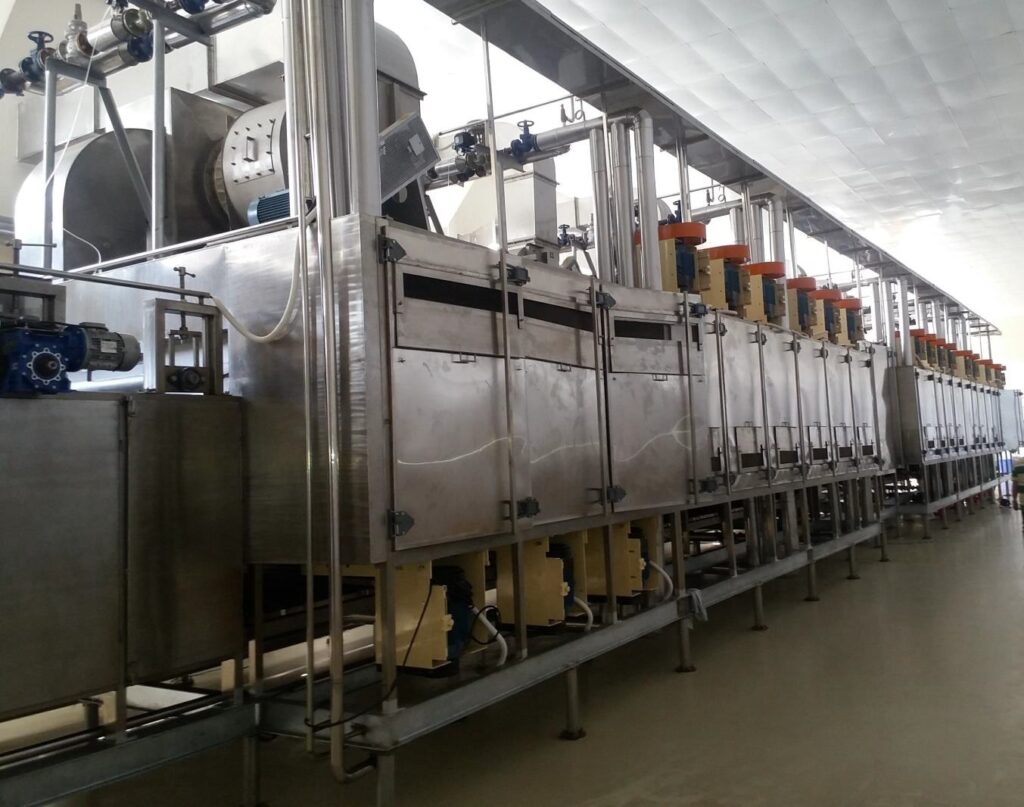
- Band / Belt Dryer
- Mesh Belt Dryer
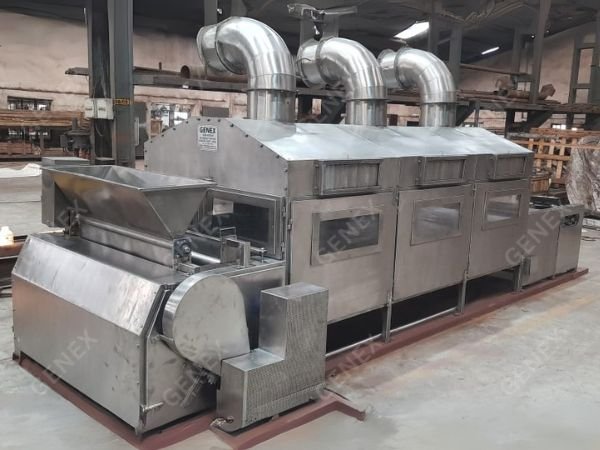
- Combination Fluid Bed Dryer
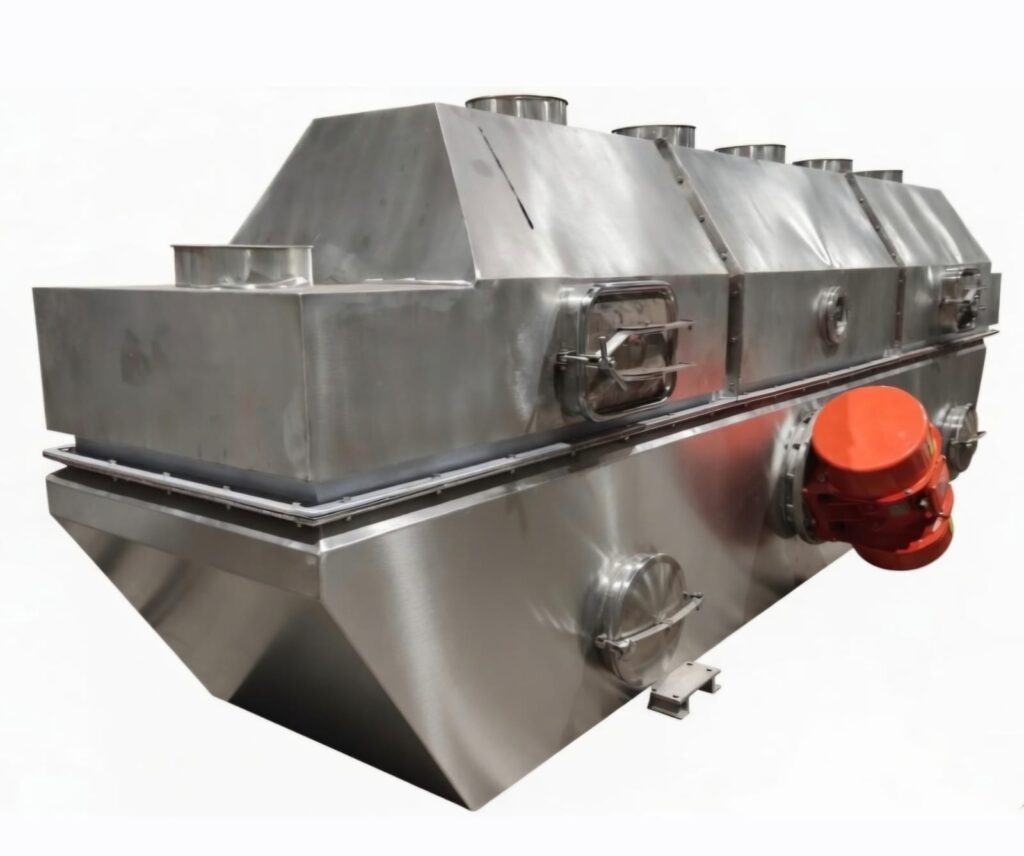
- Vibratory Fluidised Bed Dryer
- Spray Dryer
- Flash Dryer
- Refractance Window Dryer
- Rotary Drum Dryer
- Paddle Dryer
- Heat Pump Dryer
- Customized multi-stage drying systems
The technology selection depends on the material and final product.
For example:
| Food Product | Potential Drying Technology |
| Fruits & vegetables | Band/Belt, heat-pump or other suitable systems |
| Spices & herbs | Band/Belt, fluid bed or application-specific systems |
| Desiccated coconut | Band/Belt, fluid bed or combination systems |
| Milk & dairy ingredients | Spray + fluid bed systems |
| Food powders | Spray, flash or fluid-bed systems depending on feed |
| Starch | Flash, ring or fluid-bed systems |
| Coconut milk | Spray or specialized dehydration systems |
| Coconut cream | RWD, spray or other suitable technology |
| Fruit pulp/puree | RWD, spray or other suitable system |
| Granules | Fluid bed / combination drying |
| Sticky food materials | Paddle, vacuum or specialized systems |
| Heat-sensitive ingredients | Vacuum, RWD, heat-pump or other application-specific systems |
These are technology-selection examples, not universal rules. Final selection requires actual feed and product data.
Band Dryer for Continuous Food Dehydration
A Band Dryer, also called a belt or apron dryer in some applications, is a continuous drying system in which product travels through controlled drying zones.
It can be particularly useful for products that can be distributed as a layer on a moving belt.
Potential applications include:
- Fruits
- Vegetables
- Herbs
- Spices
- Coconut
- Agricultural products
- Food ingredients
- Biomass-derived food materials
GTI’s band-dryer information describes multi-zone drying, controlled airflow and continuous industrial operation.
Typical problem it addresses
Problem: Batch drying creates inconsistent production or limits throughput.
Potential solution: Continuous multi-zone drying with controlled product residence time.
Fluid Bed Dryer for Food Ingredients
Fluid bed technology is particularly relevant where the product is particulate or can be processed as a suitable granular or powder bed.
Air passes through the product to create fluidization, promoting heat and mass transfer.
Potential food applications include:
- Food powders
- Granules
- Starch
- Dairy ingredients
- Desiccated coconut
- Protein ingredients
- Instant food products
- Specialty food ingredients
GTI also offers Vibratory Fluidised Bed Dryers and Combination Fluid Bed Dryers.
Problem it can address
Problem: Uneven drying or poor powder/granule handling.
Potential solution: Controlled fluidization combined with suitable airflow, residence time and product movement.
Combination Fluid Bed Dryer for Multi-Stage Food Processing
Some food products benefit from more than one drying stage.
GTI’s combination fluid-bed systems can combine different drying arrangements within one system.
For desiccated coconut applications, Food Tech Projects describes combination fluid-bed technology incorporating tray and fluidized-bed drying, together with moisture control and dust collection.
This type of engineering becomes useful when manufacturers need to address several requirements simultaneously:
- Initial moisture removal
- Final moisture control
- Uniform drying
- Product handling
- Cooling
- Dust management
The exact configuration depends on the product.
Spray Dryer: Turning Liquid Food into Powder
One of the most important technologies in modern food-ingredient manufacturing is the Spray Dryer.
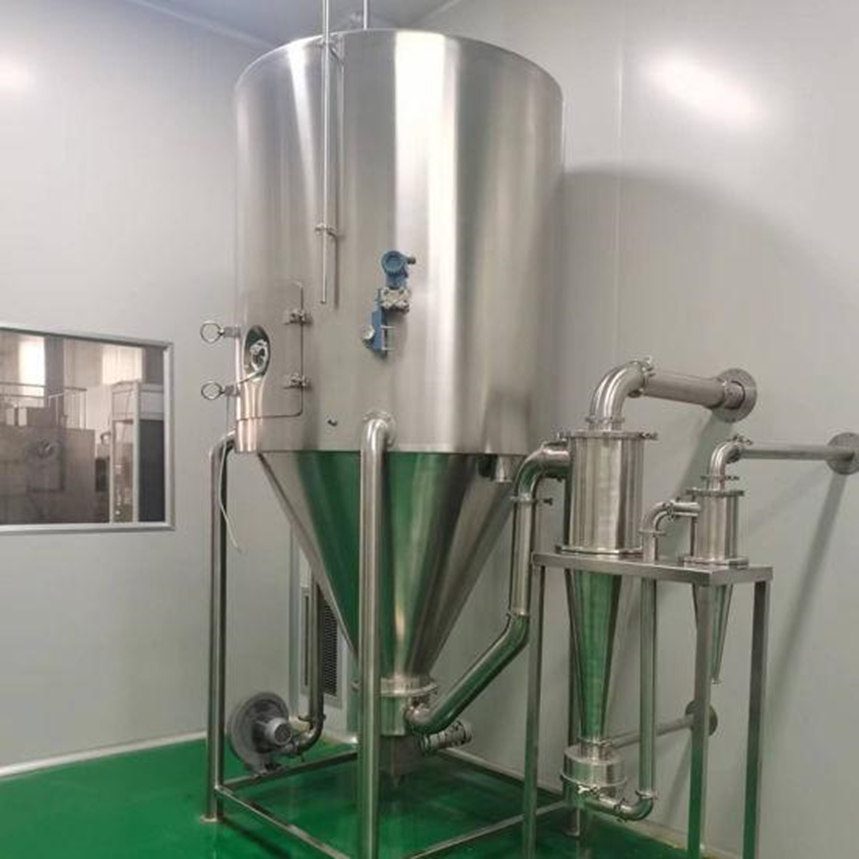
Spray drying is widely used when a liquid or pumpable feed needs to be converted into a dry powder.
Potential food applications include:
- Milk
- Whey
- Dairy ingredients
- Plant proteins
- Fruit extracts
- Food flavours
- Coconut milk
- Coconut water
- Food ingredients
- Nutraceutical ingredients
- Specialty formulations
GTI’s food-drying portfolio specifically includes spray drying for food powder applications.
Typical problem
Liquid feed cannot be conveniently stored, transported or dosed as a liquid.
Processing objective
Convert suitable liquid feed into a manageable dry powder.
Powder properties such as particle size, bulk density, flowability, solubility and moisture can be important depending on the application.
Flash Dryer for Food Powders and Starch
Flash drying uses a high-velocity gas stream to rapidly dry suitable wet particulate or dispersed materials.
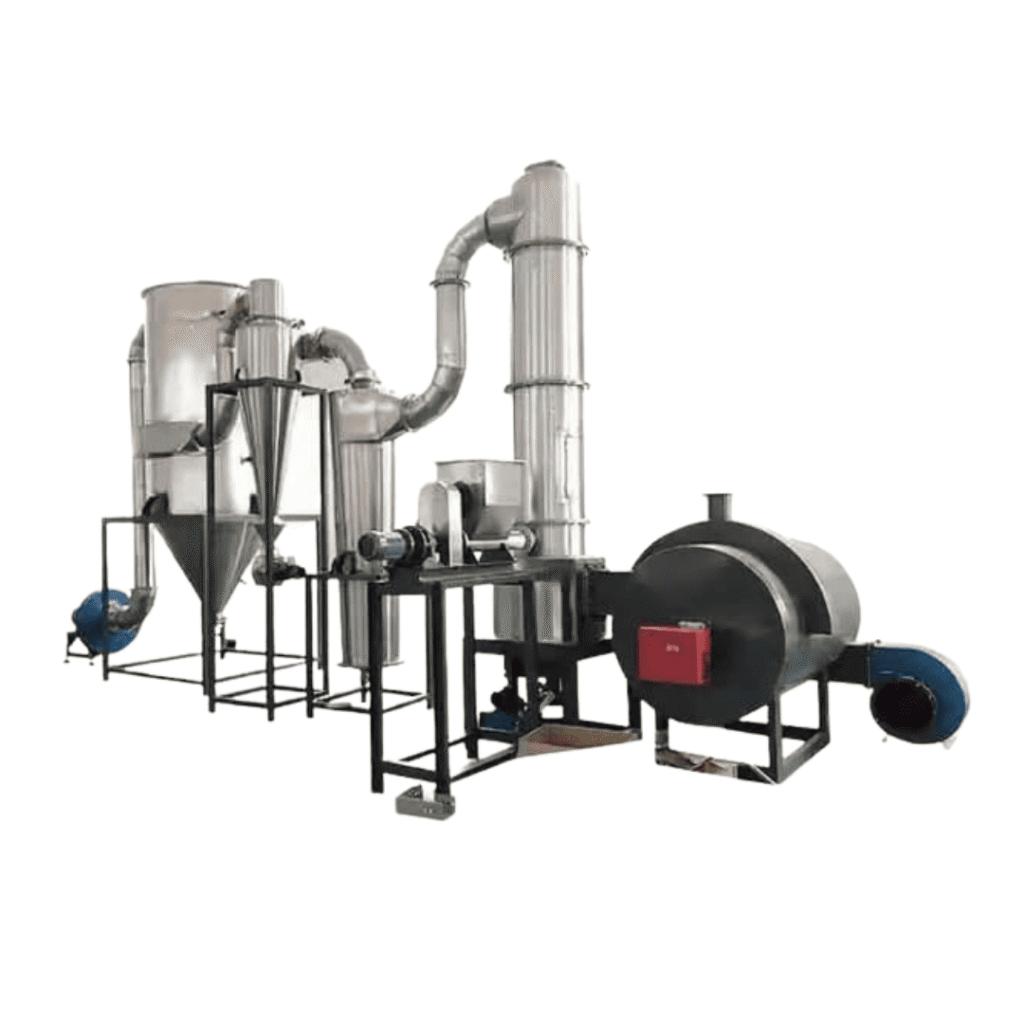
It can be considered for:
- Starch
- Modified starch
- Food powders
- Fine particulate materials
- Wet cake
- Chemical-food ingredients
- Heat-sensitive particulate materials where short exposure is advantageous
The major engineering characteristic is short residence time.
This can be useful when the product should not remain exposed to elevated drying conditions for long periods.
GTI’s industrial dryer portfolio includes flash dryers for food, chemical and other applications.
Refractance Window Dryer for Heat-Sensitive Food Products
The Refractance Window Dryer (RWD) is another specialized technology in GTI’s portfolio.
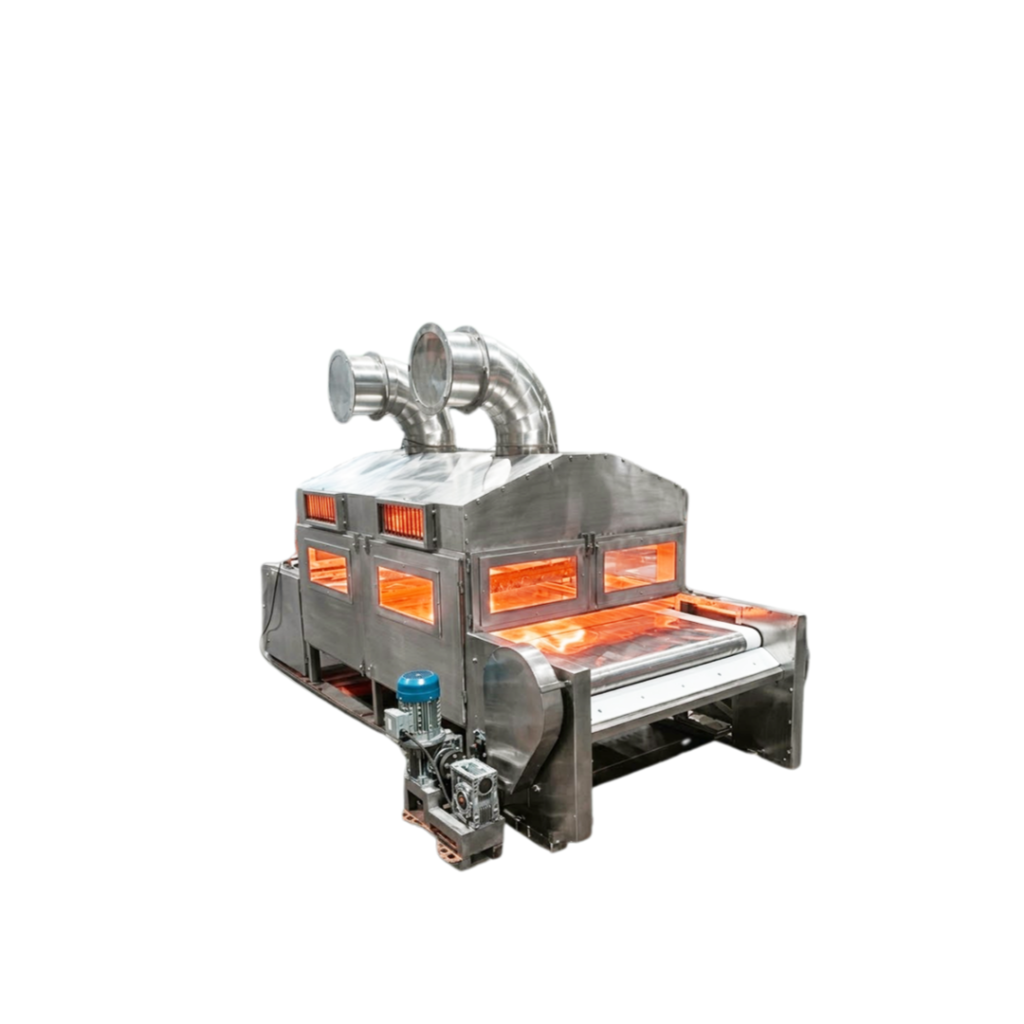
It is particularly relevant to liquid or semi-liquid food materials where controlled thin-layer drying can be advantageous.
Potential applications include:
- Fruit purees
- Vegetable purees
- Food extracts
- Coconut-based liquids
- Heat-sensitive ingredients
- Specialty food products
GTI lists Refractance Window Dryers as part of its industrial drying range.
The important point for food manufacturers is that RWD should not be treated as a universal replacement for spray drying, freeze drying or belt drying.
Product characteristics determine suitability.
Rotary Drum Dryer for Robust Food Materials
Rotary dryers are generally associated with robust bulk materials that can tolerate mechanical movement and the selected thermal conditions.
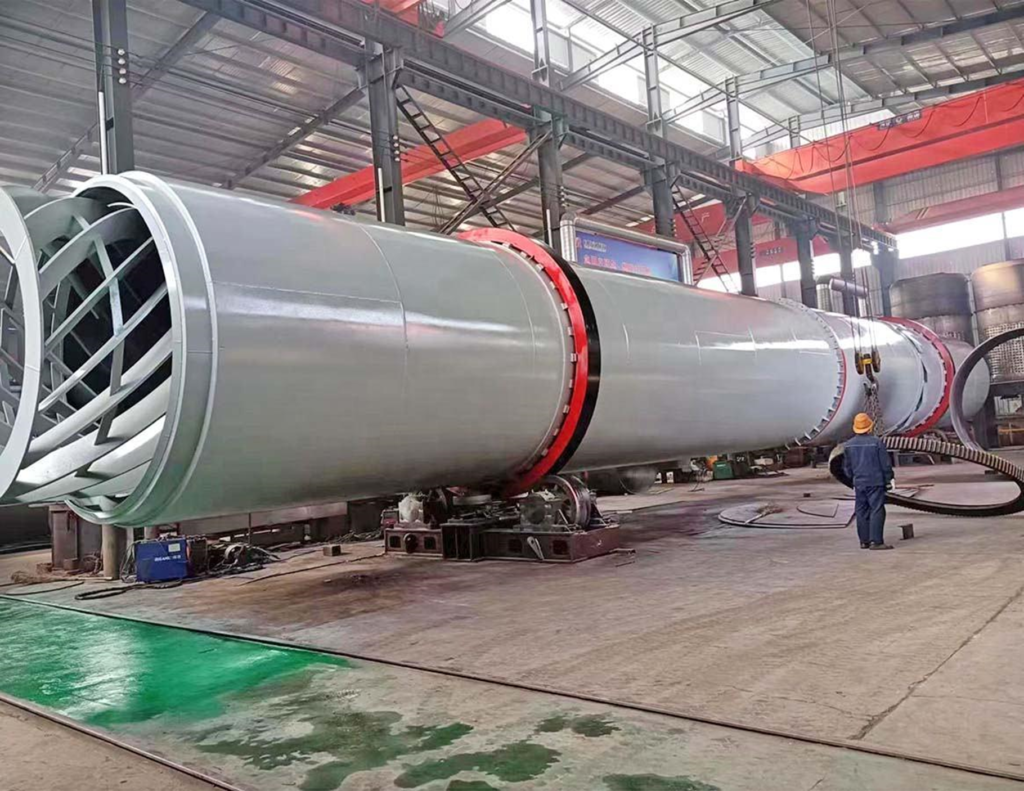
Potential food/agro applications may include:
- Agricultural products
- Food ingredients
- Granular materials
- Certain starch and biomass-related products
The technology can provide continuous processing and relatively robust material handling.
However, fragile or highly heat-sensitive food products may require another technology.
This is why GTI’s engineering approach starts with the product rather than automatically recommending a rotary dryer.
Paddle Dryer for Specialized Food Materials
Paddle dryers use indirect heat transfer and mechanical agitation.

They can be considered where products are:
- Sticky
- Pastelike
- Wet
- Difficult to fluidize
- Sensitive to direct hot-gas contact
Potential applications extend across food, chemicals, sludge and specialty materials.
The important point is that not every food product should be fluidized or conveyed on a belt.
Sometimes a different heat-transfer mechanism is necessary.
Heat Pump Drying for Food Products
Heat pump drying is another technology relevant to food dehydration where controlled low-temperature operation and energy management are priorities.
Potential applications can include:
- Fruits
- Vegetables
- Herbs
- Spices
- Specialty food products
- Heat-sensitive agricultural materials
Heat-pump systems can be particularly interesting when manufacturers want to recover and reuse thermal energy within a controlled drying environment.
The actual energy advantage depends on product moisture load, operating conditions, ambient conditions and system design.
Hybrid and Multi-Stage Food Drying Systems
The future of industrial food drying is not necessarily about choosing one dryer.
In many industrial processes, combining technologies can create a more controlled process.
Examples include:
Spray Dryer + Fluid Bed
Liquid Feed → Spray Drying → Final Drying → Cooling
Useful for selected dairy, food and specialty powder applications.
Band Dryer + Fluid Bed
Wet Food Material → Band Drying → Fluid Bed Conditioning/Cooling
Potentially useful for selected vegetables, coconut and food ingredients.
Flash Dryer + Fluid Bed
Wet Particulate → Rapid Drying → Final Moisture Conditioning
Potentially useful for starch and other suitable particulate materials.
RWD + Secondary Drying
Liquid/Semi-Liquid Feed → RWD → Secondary Conditioning
Potentially relevant to specialized food products.
Heat Pump + Conventional Drying
Controlled Low-Temperature Drying → Final Moisture Adjustment
Potentially useful for selected heat-sensitive foods.
The correct process route must be established from product and production data.
Food Processing Problems GTI Can Help Address
A food manufacturer rarely starts with the question:
“I need a Band Dryer.”
More commonly, the problem sounds like:
“Our product is not drying uniformly.”
Possible engineering considerations:
- Product distribution
- Airflow
- Belt loading
- Drying-zone control
- Residence time
- Moisture monitoring
“Our powder is becoming sticky.”
Possible considerations:
- Feed solids
- Product temperature
- Glass-transition behaviour
- Air humidity
- Particle characteristics
- Drying profile
“Our production capacity is too low.”
Possible considerations:
- Dryer capacity
- Feed preparation
- Residence time
- Heat-transfer area
- Airflow
- Multi-stage drying
“We need to convert a liquid into powder.”
Potential technologies:
- Spray Dryer
- RWD
- Other application-specific dehydration systems
“Our product is heat-sensitive.”
Potential technologies may include:
- Refractance Window Dryer
- Vacuum drying
- Heat-pump drying
- Carefully designed low-temperature systems
“Our product is sticky and cannot be fluidized.”
Potential alternatives may include:
- Paddle Dryer
- Belt/film-based systems
- Specialized contact drying
- Hybrid configurations
The answer is therefore not always another machine.
The answer is process engineering.
Food Processing Applications Covered by GTI Dryers
GTI’s food-drying capabilities extend across a broad range of food sectors.
Potential applications include:
- Mango
- Banana
- Apple
- Berries
- Tropical fruits
- Fruit pieces
- Fruit purees
- Fruit powders
GTI’s food-drying portfolio specifically identifies fruit drying and fruit powder applications.
Industrial dehydration systems can be used for:
- Onion
- Garlic
- Carrot
- Potato
- Peas
- Vegetable slices
- Vegetable ingredients
Drying conditions need to be engineered around the product to maintain desired quality.
Spice drying requires careful management because excessive thermal exposure can affect aroma, colour and volatile compounds.
Applications can include:
- Turmeric
- Ginger
- Chilli
- Coriander
- Cumin
- Herbs
- Spice blends
GTI’s food-drying systems specifically cover these spice applications.
Dairy processing is one of the most established areas for industrial powder drying.
Applications can include:
- Milk powder
- Whey
- Lactose
- Dairy ingredients
- Protein-rich dairy materials
Spray drying and fluid-bed processing can form part of an integrated powder production route.
Plant-Based Proteins
The plant-protein market creates increasing demand for controlled drying.
Potential materials include:
- Soy protein
- Pea protein
- Plant protein concentrates
- Nutritional powders
GTI lists protein powder drying among its food-drying applications.
Starch is another important industrial food ingredient.
Applications can include:
- Corn starch
- Potato starch
- Cassava starch
- Modified starch
- Food ingredient powders
Flash, fluid-bed and other drying technologies can be evaluated according to the feed and product requirements.
Coconut represents a particularly important segment within GTI’s food-processing portfolio.
Potential products include:
- Desiccated coconut
- Coconut milk
- Coconut cream
- Coconut milk powder
- Coconut water
- Coconut water powder
- Virgin coconut oil
- Coconut-based ingredients
Food Tech Projects’ published projects include a complete turnkey coconut processing project and a high-quality desiccated coconut powder line.
GTI’s coconut-related drying systems include band and combination fluid-bed technologies.
Seafood and Protein-Rich Materials
Food-processing plants working with protein-rich materials may require carefully controlled drying systems.
The appropriate technology depends on:
- Fat content
- Protein characteristics
- Moisture
- Product form
- Temperature sensitivity
- Final application
The dryer should therefore be selected only after understanding the material.
Food Powders: Drying Is Only the Beginning
Producing a food powder requires more than removing water.
Manufacturers may need to consider:
Drying → Cooling → Sieving → Milling → Blending → Storage → Packaging
Powder properties can include:
- Moisture
- Particle size
- Bulk density
- Flowability
- Solubility
- Dispersibility
- Hygroscopicity
- Caking tendency
This is why GTI’s approach can extend beyond the drying chamber toward complete food-processing and powder-handling systems.
Food Safety and Hygienic Design
Food-processing equipment must be designed around hygiene and cleanability requirements.
Important considerations can include:
- Food-grade contact surfaces
- Stainless-steel construction
- Accessible cleaning areas
- Controlled product-contact zones
- Dust management
- Air filtration
- Process isolation
- Automation
- Hygienic material handling
GTI describes its food drying systems as using hygienic construction, controlled drying conditions, automation and scalable production configurations.
Final hygienic design requirements should always be established according to the product, plant, market and applicable regulations.
Energy Efficiency in Food Drying
Drying can be one of the most energy-intensive stages of food processing.
Energy performance depends on many variables:
- Initial moisture
- Final moisture
- Evaporation load
- Product temperature
- Drying air temperature
- Airflow
- Exhaust conditions
- Heat recovery
- Insulation
- Residence time
- Heat source
- Ambient conditions
- System integration
Therefore, there is no universal percentage of energy savings that can responsibly be promised without project-specific data.
GTI’s systems are designed around thermal efficiency, airflow management and process control, with the final performance dependent on the application and engineering design.
Automation and Industry 4.0 for Food Processing
Modern food-processing plants increasingly require automated control.
A drying system may monitor and control:
- Temperature
- Airflow
- Product feed
- Belt speed
- Residence time
- Humidity
- Pressure
- Fan operation
- Heater operation
- Moisture-related process variables
GTI lists PLC/SCADA automation among the features of its industrial dryer systems.
Automation can help operators achieve more consistent processing and integrate drying into larger production lines.
Dust Collection and Powder Handling
Food powder production creates another engineering challenge: dust.
Depending on the product, the system may require:
- Cyclones
- Bag filters
- Dust collectors
- Powder recovery
- Conveying
- Sieving
- Cooling
- Controlled discharge
GTI’s published coconut-processing systems, for example, include dust-collection arrangements in combination dryer applications.
The final dust-management and safety design should be based on the actual powder properties and plant requirements.
How to Select the Right Food Dryer
Before purchasing a dryer, a food manufacturer should prepare a basic process specification.
Feed Information
- Product name
- Physical form
- Initial moisture
- Solids content
- Fat content
- Particle size
- Feed temperature
- Feed viscosity
Product Information
- Desired final moisture
- Particle size
- Powder or solid form
- Colour requirements
- Aroma requirements
- Solubility
- Flowability
- Storage requirements
Production Information
- Feed rate
- Product output
- Operating hours
- Batch or continuous production
- Future expansion
Utility Information
- Steam
- Gas
- Electricity
- Biomass
- Heat pump
- Available cooling water
- Compressed air
Plant Information
- Available floor area
- Building height
- Existing equipment
- Automation level
- Cleaning requirements
- Environmental controls
This information allows the engineering team to evaluate the appropriate technology.
Why GTI Dryers Is Relevant to Global Food Manufacturers
GTI Dryers’ portfolio is broader than a single dryer category.
It includes:
→ Band Dryer
→ Mesh Belt Dryer
→ Fluid Bed Dryer
→ Combination Fluid Bed Dryer
→ Spray Dryer
→ Flash Dryer
→ Refractance Window Dryer
→ Rotary Dryer
→ Paddle Dryer
→ Heat Pump Dryer
→ Coconut Processing
→ Fruit Processing
→ Vegetable Dehydration
→ Spice Processing
→ Dairy & Protein Drying
→ Starch Processing
→ Food Ingredient Processing
Project Engineering
→ Process Design
→ Equipment Selection
→ Plant Layout
→ Manufacturing
→ Automation
→ Installation
→ Commissioning
→ Training
→ After-Sales Support
GTI describes itself as an industrial dryer manufacturer and turnkey drying-solutions provider serving food, pharmaceutical, chemical and process industries.
Food Tech Projects similarly presents complete food-processing machinery and turnkey project capabilities.
GTI’s Role After SIAL Paris 2026
The value of an international exhibition does not end when the exhibition closes.
The more important stage begins afterward:
Exhibition Meeting → Technical Discussion → Product Evaluation → Process Study → Technology Selection → Engineering → Project Execution
A food manufacturer may meet GTI’s agents at or around SIAL Paris and subsequently approach the engineering team with a specific problem.
That problem could be:
- New food product development
- Dryer replacement
- Capacity expansion
- Energy optimization
- Powder production
- Coconut processing
- Fruit dehydration
- Spice drying
- Dairy powder production
- Plant-based protein drying
- Starch processing
- Complete turnkey plant development
GTI’s role is to translate that requirement into an appropriate process and equipment solution.
From Exhibition Conversation to Industrial Solution
Consider a manufacturer producing fruit puree.
The requirement may be:
“We need to convert this puree into a stable ingredient.”
The engineering discussion then becomes:
What is the feed?
→ What is its viscosity?
What is the final product?
→ Powder, flakes, granules or another form?
What quality characteristics matter?
→ Colour, flavour, nutrients, solubility?
What is the production capacity?
→ kg/hr or tonnes/day?
What is the available energy?
→ Steam, gas, electricity, biomass or heat pump?
What technology fits?
→ RWD, spray, belt, vacuum or another system?
This is the difference between equipment selling and process engineering.
Global Food Processing Problems GTI Can Discuss
Food manufacturers from Europe, Asia, Africa, the Middle East and the Americas can approach GTI for discussions around:
Drying Capacity
“We need more production.”
Product Quality
“Our existing dryer is affecting colour, aroma or texture.”
Moisture Uniformity
“Our final product does not have consistent moisture.”
Energy Consumption
“Our drying cost is too high.”
Powder Production
“We need to convert a liquid feed into powder.”
Heat Sensitivity
“Our product cannot tolerate aggressive thermal exposure.”
Sticky Feed
“Our product cannot be easily fluidized.”
Process Integration
“We need to connect drying with upstream and downstream equipment.”
New Product Development
“We are developing a new food ingredient.”
Complete Plant
“We need a turnkey food-processing solution.”
These are precisely the kinds of requirements for which application-specific engineering becomes more valuable than a standard machine catalogue.
SIAL Paris 2026 and the Future of Food Processing
SIAL Paris 2026 is expected to showcase the technologies, products and business models shaping the future of food.
The official event information highlights areas including food innovation, global sourcing, new products, sustainability and changing consumer expectations.
For food-processing equipment manufacturers, these trends translate into engineering requirements:
More Convenience
→ More powders, extracts and shelf-stable ingredients.
More Plant-Based Products
→ More protein and plant-based ingredient processing.
More Global Distribution
→ Greater need for stable, transportable food products.
More Product Innovation
→ More specialized drying requirements.
More Energy Awareness
→ Better heat recovery and process optimization.
More Automation
→ Greater demand for PLC/SCADA-controlled systems.
More Value Addition
→ Greater conversion of agricultural materials into high-value ingredients.
GTI Dryers: Engineering the Future of Food Dehydration
The global food industry does not need only more dryers.
It needs better drying decisions.
A food manufacturer may need:
or
or
or
or
or
A Hybrid Multi-Stage Drying System
But the correct answer depends on the product.
GTI’s strength is the ability to work across multiple drying technologies and evaluate the appropriate solution according to the application.
That makes GTI relevant to food manufacturers looking for:
Food Drying + Powder Processing + Dehydration + Process Engineering + Turnkey Solutions
Planning to Meet GTI Around SIAL Paris 2026?
If you are a:
- Food manufacturer
- Food ingredient producer
- Coconut processor
- Dairy processor
- Plant-protein manufacturer
- Spice processor
- Fruit processor
- Vegetable processor
- Starch manufacturer
- Powder manufacturer
- Beverage manufacturer
- Food-processing investor
- EPC/project company
- International food-processing equipment buyer
and you are looking for an industrial food dryer, food dehydration system or complete processing solution, GTI’s engineering team can discuss your application.
Bring Your Processing Problem
You don’t need to arrive with the name of a dryer.
Bring:
Your Product + Moisture + Capacity + Desired Final Product + Production Challenge
GTI can help evaluate the appropriate technological direction.
Conclusion: From SIAL Paris to the Right Food Processing Solution
SIAL Paris 2026 represents an important meeting point for the global food industry.
For GTI Dryers and its agents, participation around the event is an opportunity to connect with food manufacturers, understand emerging processing challenges and introduce the engineering capabilities available from India to global food businesses.
But the real objective is not simply:
“Meet us at an exhibition.”
It is:
“Bring us your food-processing challenge.”
Whether the requirement is:
Food Drying
Fruit & Vegetable Dehydration
Spice Drying
Dairy Powder
Plant Protein
Food Ingredients
Starch
Coconut Processing
Liquid-to-Powder Conversion
Heat-Sensitive Food Dehydration
Powder Conditioning
Hybrid Drying
Energy Optimization
or
Complete Turnkey Food Processing
GTI Dryers can evaluate the application from a process-engineering perspective.
From Raw Material to Finished Food Product
GTI Dryers — Industrial Food Drying, Dehydration & Process Engineering Solutions from India for Global Food Industries.
Discuss your food-processing project with GTI.