
Ring Dryer Manufacturers in India for Starch, Chemicals, Food Powders & Fine Materials
A Ring Dryer is a continuous pneumatic drying system designed for rapid moisture removal from wet, partially dried, or powder-form materials while controlling particle residence time through internal classification and recirculation.
Unlike a conventional single-pass flash dryer, a ring dryer can separate particles according to their drying condition. Finer and sufficiently dried particles can leave the system, while heavier or wetter particles are returned for additional drying.
This makes ring drying particularly relevant to applications where manufacturers need:
- Rapid continuous drying
- Controlled final moisture
- Short thermal exposure
- Consistent powder quality
- Internal recycling of under-dried particles
- High production throughput
- Better handling of variable feed conditions
- Integration with milling, cooling and powder collection systems
Ring dryers are widely associated with applications involving starches, fibres, proteins, food and feed powders and selected chemical or mineral materials. Specialist suppliers describe ring drying as an extension of flash drying using an internal classifier to recirculate semi-dried particles.
GTI Dryers approaches ring-drying projects from the feed material, moisture-removal requirement, product-quality target and complete process-line perspective, rather than selecting a dryer only from the material name.
What Is a Ring Dryer?
A ring dryer is a pneumatic drying system with a circulating drying-air/product loop and classification section.
The wet feed is introduced into a high-velocity hot-air stream. The particles are dispersed and transported through the drying circuit while moisture evaporates rapidly.
An internal classifier then separates the material according to its drying condition.
The basic concept is:
Wet Feed → Feed Conditioning → Hot-Air Mixing → Pneumatic Drying → Internal Classification → Dry Product Separation → Wet/Heavy Particle Recirculation → Additional Drying → Product Collection
The key difference from a conventional flash dryer is the recirculation mechanism.
A flash dryer normally operates primarily as a single-pass pneumatic dryer, whereas a ring dryer can provide multiple drying passes for particles that require additional residence time.
How Does a Ring Dryer Work?
A typical ring drying process consists of several interconnected stages.
1. Feed Preparation
The incoming material may require:
- Mechanical dewatering
- Size reduction
- Disintegration
- Mixing
- Preconditioning
- Feed-rate control
Feed preparation is particularly important when the material contains lumps, sticky agglomerates or variable moisture.
2. Hot-Air Generation
Drying air is heated using a suitable energy source such as:
- Steam
- Thermal oil
- Natural gas
- Biogas
- Hot gases
- Waste heat
- Electrical heating
The actual heating arrangement depends on the product, plant utilities, emissions requirements and process design.
3. Feed Introduction
The wet material is introduced into the high-velocity drying-air stream.
For difficult feeds, a disintegrator or conditioning system may be used to break down agglomerates and increase the exposed surface area.
4. Rapid Pneumatic Drying
The particles travel with the hot air through the drying circuit.
Because the particles are dispersed in the gas stream, moisture can be removed rapidly.
5. Internal Classification
This is one of the most important features of a ring dryer.
The classifier separates particles based on characteristics such as particle size, density and drying condition.
Drier/lighter particles can proceed toward product collection while heavier or wetter particles are returned to the drying loop.
6. Recirculation
Under-dried particles are circulated back through the system for additional drying.
This provides a form of automatic residence-time control.
7. Product Separation
The dried product is separated from the drying air using equipment such as:
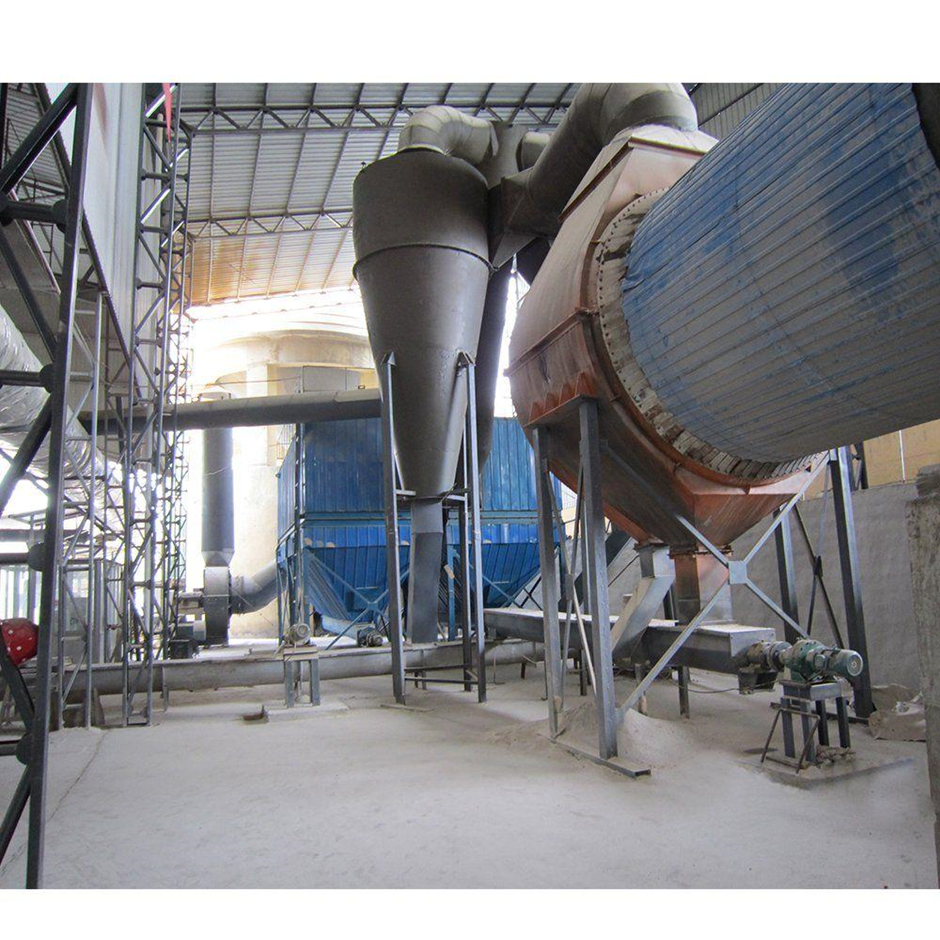
- Cyclones
- Multistage cyclones
- Bag filters
- Cyclone + bag filter combinations
- Other dust/product collection arrangements
The appropriate arrangement depends on product characteristics, particle size and emission requirements.
Ring Dryer Process Flow
Wet Feed
↓
Feed Preparation / Mechanical Dewatering
↓
Disintegrator / Feed Conditioner
↓
Hot-Air Generator
↓
High-Velocity Pneumatic Drying
↓
Ring / Circulating Drying Loop
↓
Internal Classifier
↙ ↘
Wet/Heavy Particles Dry Product
↓ ↓
Recirculation Cyclone / Bag Filter
↓ ↓
Additional Drying Product Collection
↓
Cooling / Milling / Sifting / Packaging
The final process configuration is selected according to the product and required powder properties.
Why Choose a Ring Dryer?
A ring dryer becomes attractive when a conventional flash dryer does not provide enough control over particle residence time or when the process benefits from internal product recirculation.
Major advantages include:
Rapid Drying
High-velocity pneumatic transport provides intensive contact between the drying medium and dispersed particles.
Short Thermal Exposure
The product can experience relatively short individual drying passes, which can be useful for products where prolonged exposure to elevated temperature is undesirable.
Internal Product Recirculation
Under-dried material can be returned to the drying circuit instead of leaving the system prematurely.
Controlled Final Moisture
The classification and recirculation principle can help maintain more consistent drying when feed characteristics vary.
Continuous Operation
Ring dryers are designed for continuous industrial processing rather than batch-by-batch drying.
Suitable for Powder and Particulate Materials
The technology is particularly relevant to materials that can be pneumatically conveyed and appropriately dispersed.
Integration with Complete Processing Lines
A ring dryer can be integrated with:
- Dewatering
- Disintegration
- Milling
- Cooling
- Cyclone separation
- Bag filtration
- Product conveying
- Automated control systems
Specialist ring-dryer suppliers specifically describe complete systems incorporating feed preparation, drying, milling/cooling and product collection.
Ring Dryer Applications
Ring drying is particularly useful for materials where rapid pneumatic drying and controlled particle residence time are important.
1. Starch Drying
Starch is one of the important application areas for pneumatic and ring drying technologies.
Potential applications include:
- Corn starch
- Wheat starch
- Potato starch
- Tapioca/cassava starch
- Rice starch
- Modified starch
- Pregelatinized starch
- Starch derivatives
Ring drying can be considered where the process requires rapid moisture removal and controlled product quality.
2. Modified Starch
Modified starches can have significantly different drying characteristics from native starch.
Important design parameters may include:
- Feed solids
- Moisture
- Viscosity
- Particle characteristics
- Product temperature
- Required final moisture
- Degree of modification
- Residence-time requirement
The dryer should therefore be engineered around the specific modified-starch process rather than treating all starch products identically.
3. Food Powders
Potential food applications include:
- Cereal ingredients
- Protein ingredients
- Food powders
- Fibres
- Vegetable-derived powders
- Selected grain products
- Food-processing intermediates
Ring-dryer systems are used in food and ingredient processing where rapid continuous drying and product-quality control are important.
4. Protein and Fibre Materials
Certain protein and fibrous products can present challenging drying characteristics.
Ring-dryer technology is used for selected:
- Gluten
- Protein ingredients
- Fibres
- Plant-derived materials
- Food/feed ingredients
Specialist suppliers specifically identify starch, fibres and proteins such as gluten as ring-dryer applications.
5. Chemical Powders
Depending on chemical properties and process requirements, ring or pneumatic drying may be considered for:
- Fine chemicals
- Chemical intermediates
- Pigments
- Selected salts
- Specialty chemical powders
- Polymer-related materials
- Industrial chemical solids
Chemical compatibility, dust characteristics, solvent content, thermal sensitivity and safety requirements must be evaluated before selecting the dryer.
6. Mineral Materials
Selected mineral products can also be processed using pneumatic/ring drying systems where the feed can be suitably dispersed and conveyed.
Potential applications include:
- Fine mineral powders
- Mineral concentrates
- Pigments
- Fillers
- Selected inorganic materials
For abrasive materials, construction materials and wear protection need particular attention.
Ring Dryer vs Flash Dryer
Ring dryers and flash dryers are closely related pneumatic technologies, but they are not identical.
| Parameter | Ring Dryer | Flash Dryer |
| Drying principle | Pneumatic drying with recirculation | Mainly single-pass pneumatic drying |
| Internal classifier | Typically incorporated | May not be incorporated |
| Product recirculation | Yes, for under-dried fraction | Generally limited/absent |
| Residence-time control | Higher degree of control | Primarily determined by conveying/drying path |
| Drying passes | Multiple possible | Primarily single pass |
| Process flexibility | Useful for variable drying behaviour | Strong for rapid surface-moisture removal |
| Complexity | Higher | Generally simpler |
| Best fit | Products needing controlled additional drying | Rapid drying of suitable dispersed feeds |
Ring drying is commonly described as an extension of flash drying in which a classifier enables semi-dried solids to circulate for additional drying.
Important: Ring drying is not automatically “better” than flash drying. The correct selection depends on the feed, moisture load, product properties, required final moisture and process economics.
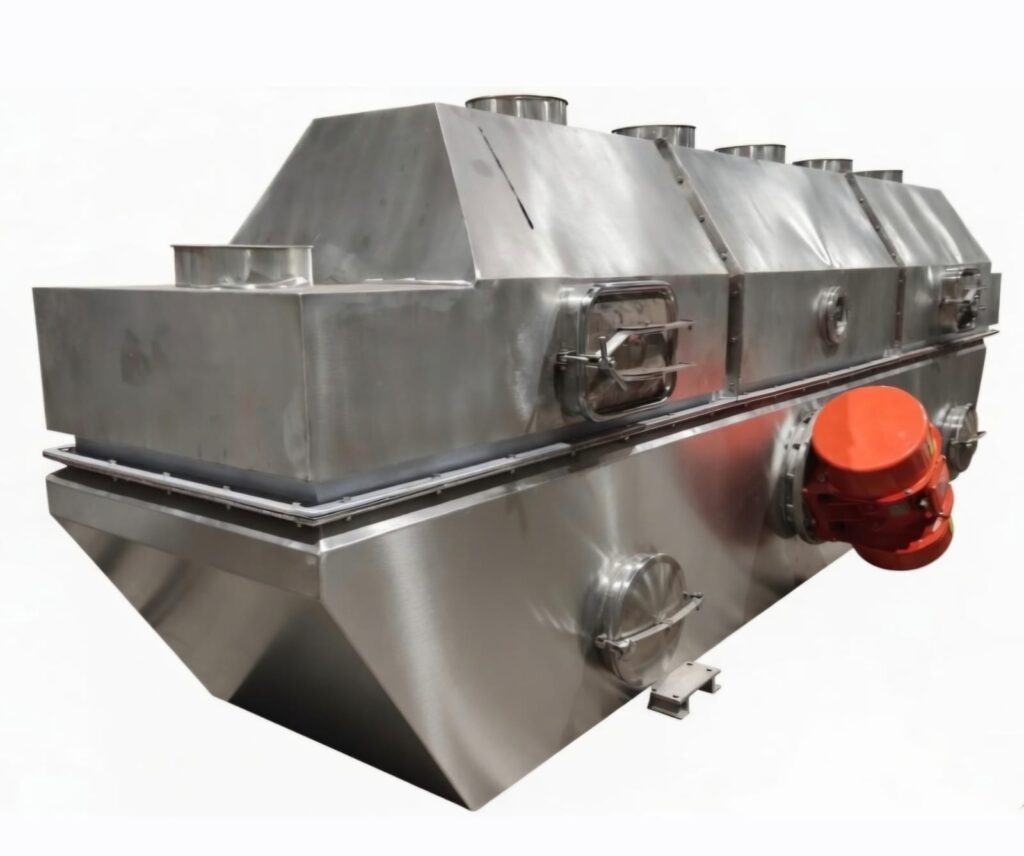
Ring Dryer vs Fluid Bed Dryer
Fluid bed dryers and ring dryers can both be used for powders and particulate materials, but their operating principles are different.
Ring Dryer
Uses high-velocity pneumatic transport and classification.
Fluid Bed Dryer
Uses controlled upward gas flow to fluidize a bed of particles.
A fluid bed may be attractive when precise final moisture control, cooling, agglomeration or finishing is required for suitable free-flowing particles.
A ring dryer may be considered when rapid pneumatic drying and internal recirculation are more appropriate.
In some production lines, different technologies can also be combined.
For example:
Ring/Flash Drying → Fluid Bed Finishing → Cooling → Packaging
The correct configuration depends on the required final moisture, particle properties and product temperature.
Ring Dryer vs Spray Dryer
These technologies address different feed conditions.
Spray Dryer
Generally converts a liquid/slurry feed into powder through atomization into a hot drying gas.
Ring Dryer
Generally handles a wet or particulate feed that can be dispersed and pneumatically transported.
Therefore:
Liquid slurry → Spray Dryer may be appropriate
Wet cake / particulate / preconditioned feed → Ring or Flash Dryer may be considered
The decision should be based on feed rheology, solids concentration, required particle size, product morphology and final moisture—not simply the product name.
What Materials Can a Ring Dryer Handle?
A ring dryer should not be selected solely because a material appears on an application list.
The engineering assessment should consider:
- Initial moisture
- Final moisture
- Feed solids
- Particle size
- Bulk density
- Stickiness
- Cohesiveness
- Thermal sensitivity
- Feed temperature
- Product temperature limit
- Hygroscopicity
- Air-entrainment behaviour
- Abrasiveness
- Chemical compatibility
- Required production capacity
A material that dries successfully in one plant may require a different configuration when its feed moisture, particle size, solids concentration or production rate changes.
Key Ring Dryer Design Parameters
A commercial ring-dryer project should be engineered around measurable process data.
Feed Parameters
Provide:
- Wet-feed capacity
- Initial moisture %
- Feed solids %
- Feed temperature
- Particle size
- Bulk density
- Viscosity, where applicable
- Stickiness
- Feed consistency
Product Parameters
Define:
- Required final moisture
- Product temperature
- Particle-size requirement
- Bulk density
- Flowability
- Colour requirement
- Thermal exposure limit
- Packaging temperature
Process Parameters
The design may involve:
- Drying-air temperature
- Airflow
- Air velocity
- Pressure
- Residence time
- Recirculation ratio
- Classifier settings
- Feed rate
- Heat source
- Exhaust conditions
These parameters should be established through process engineering and, where necessary, testing rather than copied from a generic catalogue specification.
What Determines Ring Dryer Capacity?
Ring dryer capacity is not simply determined by the nameplate size.
The actual drying duty depends on the amount of water that must be evaporated and the energy required to achieve the specified final product condition.
For example, a plant may have:
Wet feed = 1,000 kg/h
Initial moisture = 40%
Therefore:
Water in feed = 400 kg/h
If the required final moisture is 5%, the approximate final product mass and evaporation requirement must be calculated using a mass balance.
This is why a ring dryer quotation should never be based only on:
“I need a 1-ton-per-hour dryer.”
The engineering team needs to know 1 ton/hour of what feed, at what moisture, to what final moisture?
How to Improve Ring Dryer Energy Efficiency
Energy consumption is strongly influenced by the evaporation duty and the way the complete drying system is designed.
Potential energy-efficiency measures include:
Heat Recovery
Recovering usable heat from exhaust streams where process conditions permit.
Proper Feed Dewatering
Removing water mechanically before thermal drying can substantially reduce the thermal load.
Insulation
Proper insulation reduces heat loss from ducts, vessels and hot-air systems.
Airflow Optimization
Excessive airflow can increase fan and heating requirements.
Controlled Recirculation
Internal recycling should be designed to provide the necessary drying performance without creating unnecessary circulation loads.
Heat-Source Selection
Steam, thermal oil, gas, biomass-derived heat, waste heat and electrical heating may have different operating economics depending on site conditions.
Automation
PLC/SCADA-based control can help monitor:
- Feed rate
- Air temperature
- Product temperature
- Pressure
- Fan operation
- Moisture-related process variables
- Heater performance
GTI’s broader industrial-dryer platform emphasizes process-specific design, energy efficiency, automation and integration according to material and process requirements.
Common Ring Dryer Problems and How to Solve Them
Problem 1: Final Moisture Is Too High
Possible causes:
- Excessive feed rate
- High inlet moisture
- Insufficient drying temperature
- Incorrect airflow
- Poor feed dispersion
- Inadequate residence time
- Classifier settings not optimized
Solution: Review the complete material and air-side balance rather than simply increasing temperature.
Problem 2: Product Is Overheated
Possible causes:
- Excessive inlet temperature
- Low feed rate
- Incorrect residence-time distribution
- Insufficient recirculation
- Poor temperature control
Solution: Evaluate inlet/outlet temperatures, solids loading, airflow and product residence time.
Problem 3: Wet Product Reaches the Collection System
Possible causes:
- Poor classification
- Feed variability
- Inadequate dispersion
- Excessive feed rate
- Insufficient drying capacity
Solution: Review classifier operation and feed conditioning.
Problem 4: Sticky Material Deposits in the Dryer
Possible causes:
- Feed entering with unsuitable moisture/consistency
- Inadequate disintegration
- Poor particle dispersion
- Product temperature entering a sticky range
- Incorrect air velocity
Solution: Feed conditioning and process-temperature optimization may be required.
Problem 5: Excessive Dust
Potential causes include:
- Excessive particle breakage
- High air velocity
- Incorrect classification
- Inappropriate collection-system design
Solution: Review particle characteristics, classifier settings, air velocity and cyclone/filter configuration.
Ring Dryer Feed Preparation Is Critical
One of the most overlooked factors in ring-dryer performance is feed preparation.
A dryer cannot compensate indefinitely for poor feed conditioning.
Depending on the material, the upstream system may include:
Dewatering → Cake Breaking → Disintegration → Controlled Feeding → Ring Dryer
For wet cakes or cohesive materials, proper dispersion is particularly important because the drying air must contact a sufficiently exposed particle surface.
Specialist ring-dryer systems can incorporate feed preparation, disintegration and downstream milling/cooling as part of the complete drying line.
Product Collection and Dust Control
After drying, the product must be separated from the process air.
Depending on the application, the system may incorporate:
- Cyclone separator
- Multi-stage cyclone
- Bag filter
- Cyclone + bag filter
- Product recovery system
- Exhaust treatment
- Dust-control equipment
The selection depends on:
- Particle size
- Product value
- Dust loading
- Emission limits
- Airflow
- Product recovery requirements
- Explosion/safety assessment
For combustible powders, appropriate process-safety engineering is essential.
Ring Dryer Safety Considerations
Industrial powder drying systems require proper safety assessment.
Depending on the material, the engineering review may consider:
- Dust explosibility
- Ignition sources
- Static electricity
- Hot-surface protection
- Pressure relief
- Explosion venting/suppression
- Inerting requirements
- Fire detection
- Temperature monitoring
- Interlocks
- Emergency shutdown
- Electrical-area classification
These requirements are material-specific and should be established through appropriate process-safety evaluation rather than assumed to be identical for every powder.
Ring Dryer Automation
A modern industrial ring dryer can be integrated with centralized automation.
Potential monitoring points include:
- Feed rate
- Hot-air temperature
- Outlet-air temperature
- Product temperature
- Fan speed
- System pressure
- Differential pressure
- Classifier operation
- Heater operation
- Filter differential pressure
- Alarm conditions
Optional PLC/SCADA integration can help operators monitor the complete drying process and maintain repeatable production conditions.
Ring Dryer for Starch: What Should a Buyer Check?
For a starch-processing project, the following information is especially important:
- Type of starch
- Native or modified starch
- Feed moisture
- Feed solids
- Production capacity
- Required final moisture
- Particle-size specification
- Product temperature limit
- Feed consistency
- Required product form
- Available heat source
- Operating hours
- Site location
- Automation requirement
- Dust/emission requirements
For modified starch, additional information about the modification process and desired functional properties can be important.
Ring Dryer for Chemical Powders: What Should a Buyer Check?
Chemical applications require additional engineering information.
Provide:
- Chemical name
- Composition
- Moisture/solvent content
- Feed form
- Particle size
- Bulk density
- Thermal sensitivity
- Corrosiveness
- Abrasiveness
- Solvent properties
- Required final moisture
- Product temperature limit
- Hazard classification, where applicable
- Required containment level
- Exhaust-treatment requirements
This allows the dryer, materials of construction and safety systems to be selected appropriately.
Ring Dryer for Food Powders: What Should a Buyer Check?
For food ingredients, the design may need to address:
- Hygienic construction
- Product-contact material
- Cleaning requirements
- Cross-contamination control
- Product temperature
- Moisture uniformity
- Product residence time
- Dust control
- Food-grade process requirements
- Downstream cooling
- Packaging temperature
Where the product is heat-sensitive, the complete temperature profile is more important than simply specifying a high or low inlet-air temperature.
When Should You Consider a Ring Dryer?
A ring dryer may be worth evaluating when your process requires:
✔ Continuous pneumatic drying
✔ Rapid moisture removal
✔ Controlled residence time
✔ Internal recirculation
✔ Drying of suitable wet cakes or particulate materials
✔ Consistent final moisture
✔ Integration with milling/cooling
✔ High industrial throughput
✔ Automated process control
It may not be the right choice when:
- The feed is a dilute liquid requiring atomization
- The product cannot be pneumatically conveyed
- The material is unsuitable for high-velocity gas transport
- Extremely low-temperature drying is required
- A batch vacuum process is necessary
- Particle morphology requires a different drying mechanism
In such cases, spray, vacuum, paddle, belt, fluid-bed or other drying technologies may be more appropriate.
Ring Dryer Selection Guide
| Process Requirement | Technology to Evaluate |
| Wet particulate/cake requiring rapid pneumatic drying | Ring / Flash Dryer |
| Internal recirculation required | Ring Dryer |
| Simple single-pass rapid drying | Flash Dryer |
| Liquid/slurry → powder | Spray Dryer |
| Free-flowing powder finishing | Fluid Bed Dryer |
| Low-temperature vacuum drying | Vacuum Dryer |
| Sticky/pasty material | Paddle / specialized dryer |
| Large continuous surface drying | Belt/Band Dryer |
| High-throughput robust granular material | Rotary Dryer |
The table is a screening guide, not a final technology recommendation. Final selection should be based on feed testing and process calculations.
Pilot Testing and Process Validation
For difficult materials, pilot testing can be one of the most valuable stages before purchasing a production-scale ring dryer.
Testing can help establish:
- Drying rate
- Required air temperature
- Product temperature
- Feed dispersion
- Residence-time behaviour
- Final moisture
- Particle characteristics
- Energy requirement
- Classification behaviour
- Product recovery
This is especially important for new products, modified starches, specialty chemicals and variable feeds.
A laboratory or pilot result should then be translated into an industrial design using appropriate scale-up methodology.
Why a Generic Ring Dryer Is Not Enough
Two companies may both manufacture “starch powder,” but their processes can be completely different.
For example:
Plant A
- Feed moisture: 30%
- High solids
- Stable feed
- 2,000 kg/h
Plant B
- Feed moisture: 50%
- Sticky feed
- Variable solids
- 5,000 kg/h
They should not automatically receive the same dryer configuration.
An engineered drying system should be designed around:
Feed → Moisture Load → Drying Kinetics → Air System → Classification → Product Quality → Collection → Energy → Safety
This process-based approach is what turns a dryer purchase into a production solution.
Why Choose GTI Dryers for Ring Dryer Projects?
GTI Dryers develops customized industrial drying solutions for food, chemical, pharmaceutical and process industries.
For a ring-drying project, the engineering approach should focus on the complete process rather than the dryer vessel alone.
GTI’s current industrial-dryer platform covers multiple drying technologies and emphasizes selection according to material type, moisture content, heat sensitivity, required capacity, drying/residence time and available energy source.
This allows a project to be evaluated against alternative technologies where appropriate, including:
- Flash Dryer
- Vibratory Fluidised Bed Dryer
- Spray Dryer
- Band/Belt Dryer
- Paddle Dryer
- Rotary Drum Dryer
- Combination drying systems
The objective is to identify the process configuration that matches the actual product and production requirement.
Engineered in India. Designed for Global Food, Starch, Chemical & Process Industries.
What Information Should You Send GTI for a Ring Dryer Quotation?
To receive a meaningful technical proposal, provide as much of the following information as possible:
Product Information
- Product name
- Product composition
- Feed form
- Particle size
- Bulk density
- Stickiness
- Thermal sensitivity
Moisture Information
- Initial moisture %
- Target final moisture %
- Moisture basis — wet or dry basis
- Moisture variability
Production Information
- Feed capacity — kg/h or tonnes/day
- Operating hours/day
- Number of shifts
- Continuous or batch requirement
Process Information
- Feed temperature
- Desired product temperature
- Available heat source
- Available steam pressure, if applicable
- Available electrical power
- Existing dewatering equipment
- Existing milling/cooling equipment
Site Information
- Country
- Plant location
- Available floor space
- Building height
- Utility availability
- Installation requirements
Quality & Safety
- Required particle size
- Product colour requirements
- Dust-control requirements
- Hygienic requirements
- Explosion-risk information
- Emission requirements
This information allows the engineering team to evaluate dryer type, capacity, airflow, heat duty, classification, product collection and auxiliary equipment together.
Ring Dryer Manufacturers in India for Global Applications
Indian industrial dryer manufacturing can support projects for domestic plants as well as export-oriented installations.
For international projects, buyers should evaluate:
- Process design capability
- Manufacturing quality
- Material-of-construction options
- Automation
- Documentation
- Installation support
- Commissioning
- Spare parts
- After-sales technical support
- Export packaging and logistics
- Applicable international standards
GTI Dryers positions its broader industrial-drying business around customized drying systems and turnkey project execution for global industries.
Frequently Asked Questions
What is a Ring Dryer?
A ring dryer is a pneumatic drying system that uses high-velocity drying air together with an internal classification and recirculation loop to provide additional drying of particles that are not sufficiently dry.
What is the difference between a ring dryer and flash dryer?
A ring dryer extends the flash-drying concept by incorporating internal classification and recirculation, allowing selected particles to receive additional drying passes.
Is a ring dryer suitable for starch?
Yes, ring and pneumatic drying technologies are used for selected starch applications, including modified starch and other starch-derived materials. Suitability depends on the specific feed and required product properties.
Can ring dryers handle modified starch?
They can be considered for modified starch where the feed can be appropriately conditioned and pneumatically transported. The modification process, moisture, stickiness and required product properties should be evaluated during design.
Can a ring dryer be used for chemicals?
Yes, selected chemical powders and intermediates can be processed using pneumatic/ring drying systems, subject to chemical compatibility, thermal behaviour, dust characteristics and safety requirements.
Is a ring dryer suitable for food powders?
It can be suitable for selected food, protein, fibre and ingredient powders. Hygienic design and product-temperature control should be considered for food applications.
What determines ring dryer capacity?
Capacity depends on feed rate, initial moisture, final moisture, solids content, drying kinetics, product properties and required operating conditions. Therefore, capacity should be calculated from the actual evaporation duty rather than only the wet-feed tonnage.
Does a ring dryer recycle wet material?
Yes. A major feature of ring drying is internal classification that can return heavier or semi-dried particles for additional drying.
Can a ring dryer be combined with a fluid bed?
Yes. Depending on the product, a pneumatic/ring dryer may be combined with downstream fluid-bed finishing or cooling to achieve the required final moisture and product temperature.
Is a ring dryer suitable for heat-sensitive materials?
It can be suitable for selected heat-sensitive products because pneumatic drying can provide short thermal exposure, but suitability depends on the product’s actual temperature sensitivity and drying kinetics.
How can I select the right ring dryer?
Start with the material and process data: feed capacity, initial moisture, final moisture, solids, particle size, temperature sensitivity, bulk density, stickiness, heat source and required product quality. These parameters should then be used for process calculations and, where required, pilot testing.
Get a Ring Dryer Designed Around Your Process
If you are evaluating a Ring Dryer for starch, modified starch, food powders, chemicals, fine powders, proteins, fibres or mineral materials, do not select the machine only by capacity.
Send GTI Dryers:
Product + Feed Moisture + Feed Capacity + Target Moisture + Solids + Particle Size + Product Temperature Limit + Heat Source + Application + Plant Location
The engineering team can then evaluate the appropriate ring-drying configuration, feed preparation, hot-air system, classifier, recirculation loop, cyclone/bag-filter arrangement, cooling, milling and automation requirements.
GTI Dryers — Engineered Drying Solutions from India for Global Industries.