Protein: From Human Evolution to Modern Nutrition
Protein has always been one of the most essential nutrients for human life. Long before modern food science, early humans relied on protein-rich foods to support growth, brain development, muscle strength, and survival. As civilization advanced, protein remained a cornerstone of human health, contributing to tissue repair, immune function, hormone production, and overall physical performance.
Today, protein is no longer associated only with athletes or bodybuilders. It has become an essential part of daily nutrition for children, adults, senior citizens, healthcare patients, and fitness enthusiasts alike.
The growing awareness of healthy lifestyles, preventive healthcare, and balanced nutrition has dramatically increased global demand for protein-rich products.
This transformation has made protein manufacturing one of the fastest-growing sectors in the food and nutraceutical industries.
The Global Rise of the Protein Economy
The world is experiencing a significant shift toward healthier eating habits. Consumers are actively seeking products that support muscle development, weight management, immunity, and active lifestyles.
Major drivers behind this demand include:
- Increasing health awareness
- Rapid growth of fitness culture
- Expansion of sports nutrition
- Rise of vegan and plant-based diets
- Higher disposable incomes
- Aging populations requiring nutritional support
- Growing demand for functional foods
- Expansion of clinical nutrition products
- Convenience foods with high protein content
From protein shakes and nutrition bars to infant formulas and medical nutrition products, protein ingredients have become a vital part of the modern food ecosystem.
Gym Culture & Bodybuilding: Driving the Demand for Protein Powders
Over the last decade, gym memberships, fitness centers, home workouts, and professional sports have expanded rapidly across the world.
Millions of young consumers now include protein supplements in their daily routines to support:
- Muscle growth
- Strength development
- Faster recovery
- Weight management
- Athletic performance
- Healthy aging
The popularity of bodybuilding, endurance sports, CrossFit, yoga, and wellness lifestyles has significantly increased demand for high-quality protein powders.
As manufacturers strive to meet this demand, advanced drying technologies have become essential for producing consistent, safe, and export-quality protein ingredients.
Why Protein Powder Manufacturing Requires Advanced Drying Technology
Fresh protein concentrates contain significant moisture, making them highly susceptible to:
- Microbial growth
- Product spoilage
- Nutrient degradation
- Reduced shelf life
- Transportation challenges
- Poor storage stability
Drying removes excess moisture while preserving the nutritional value and functional properties of the protein.
A well-designed drying process helps manufacturers produce powders with:
- Excellent solubility
- Uniform particle size
- Better flowability
- Improved shelf life
- Consistent quality
- Enhanced packaging stability
This is why drying is one of the most critical stages in protein powder production.
What Are Protein Powder Drying Systems?
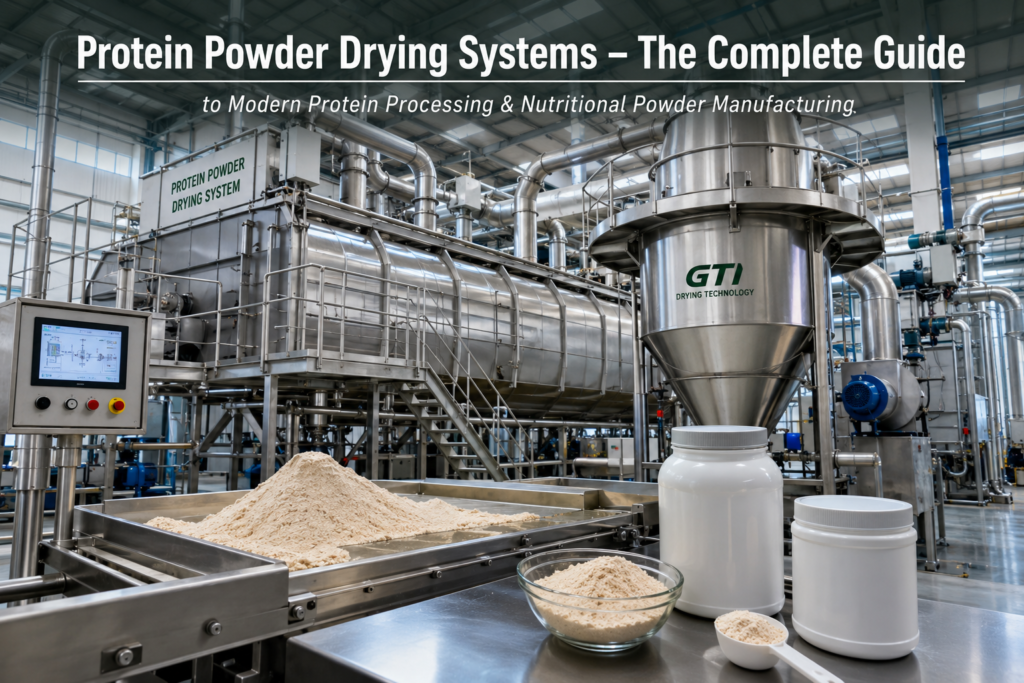
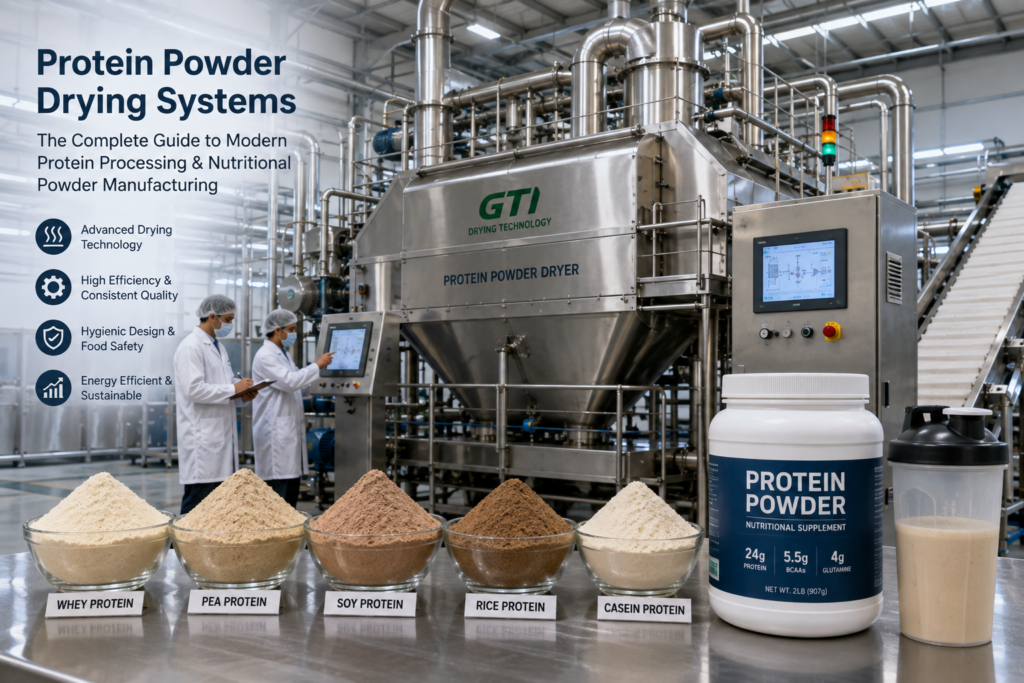
Protein Powder Drying Systems are engineered processing solutions designed to convert liquid protein concentrates, protein slurries, or moist protein materials into stable, free-flowing powders with controlled moisture content.
These systems are used for manufacturing:
- Whey Protein Concentrate (WPC)
- Whey Protein Isolate (WPI)
- Milk Protein Concentrate (MPC)
- Casein Protein
- Soy Protein
- Pea Protein
- Rice Protein
- Egg Protein
- Collagen Protein
- Plant-Based Protein Ingredients
- Nutraceutical Protein Blends
The objective is not simply moisture removal but preserving nutritional quality, functionality, taste, color, and processing consistency.
Why Moisture Control Is Critical
Moisture directly affects the quality and performance of protein powders.
Excess moisture can cause:
- Microbial contamination
- Powder caking
- Reduced flowability
- Nutrient degradation
- Shorter shelf life
- Packaging failures
Proper moisture control helps maintain:
- Protein functionality
- Nutritional integrity
- Powder stability
- Product safety
- Export-quality standards
- Consumer satisfaction
At GTI Dryers, moisture management is achieved through carefully engineered drying parameters, ensuring reliable and repeatable production.
The Protein Powder Manufacturing Process
Although production methods vary depending on the protein source, a typical manufacturing process includes:
Raw Material Preparation
Protein sources may include:
- Milk
- Whey
- Soybeans
- Peas
- Rice
- Eggs
- Collagen
- Other plant proteins
Protein Extraction
The protein is separated and concentrated using advanced filtration or processing technologies.
Concentration
Excess water is removed to achieve the desired solids content before drying.
Drying
The concentrated protein is converted into a stable powder through carefully controlled drying technology.
Cooling
The dried powder is cooled to maintain quality and prevent moisture absorption.
Sieving
Particle size is standardized to improve product consistency.
Packaging
The finished product is packed under hygienic conditions to preserve quality throughout storage and transportation.
The Science Behind Protein Drying
Unlike many industrial materials, proteins are highly sensitive to heat.
Excessive temperatures may cause:
- Protein denaturation
- Reduced solubility
- Color changes
- Flavor deterioration
- Loss of nutritional functionality
Therefore, protein drying requires precise control of:
- Temperature
- Airflow
- Residence time
- Humidity
- Particle movement
Every process parameter influences the final product quality.
Hygienic Engineering for Food-Grade Production
Protein powders are consumed directly by humans, making hygiene one of the highest priorities.
Modern production facilities incorporate:
- Food-grade stainless steel construction
- Hygienic weld finishes
- Smooth internal surfaces
- Easy-clean equipment
- CIP (Clean-in-Place) compatibility
- Dust-controlled environments
- Automated sanitation systems
GTI Dryers designs drying systems that support hygienic production while meeting international food processing standards.
Protein Sources Processed in Modern Drying Plants
Advanced drying technologies are used for a wide range of protein ingredients.
Dairy Proteins
- Whey Protein
- Milk Protein
- Casein
Plant Proteins
- Soy Protein
- Pea Protein
- Rice Protein
- Oat Protein
- Chickpea Protein
Animal Proteins
- Egg Protein
- Collagen Protein
- Gelatin-Based Ingredients
Specialty Proteins
- Fermentation-Derived Proteins
- Functional Protein Ingredients
- Customized Nutritional Blends
Each material requires specific process conditions to maintain its nutritional and functional characteristics.
Why Protein Powder Production Continues to Grow Worldwide
The protein industry continues to expand due to several long-term trends:
- Rising health consciousness
- Growing sports nutrition market
- Expansion of functional foods
- Increasing demand for plant-based diets
- Medical nutrition applications
- Infant nutrition products
- Healthy aging population
- Higher global protein consumption
This sustained growth creates increasing demand for advanced drying technologies capable of producing safe, consistent, and high-quality protein powders.
Why Manufacturers Choose GTI Dryers
At GTI Dryers, we understand that protein manufacturing is not only about drying—it is about preserving nutritional value, ensuring food safety, and delivering consistent product quality.
Our engineering expertise helps manufacturers achieve:
- Uniform moisture control
- High product consistency
- Hygienic production
- Energy-efficient operation
- Reliable continuous processing
- Customized plant solutions
- Long equipment life
- Export-quality manufacturing standards
Every drying solution is engineered according to the specific characteristics of the protein, production capacity, and customer requirements.
Engineering the Perfect Protein Powder
Producing a high-quality protein powder is far more complex than simply removing moisture from a liquid or slurry. The drying stage determines the powder’s nutritional value, solubility, particle size, flowability, color, taste, shelf life, and storage stability.
Even minor variations in drying temperature, airflow, residence time, or humidity can significantly affect the final product.
Modern protein processing therefore requires a combination of food science, thermal engineering, process automation, and hygienic equipment design.
At GTI Dryers, every drying solution is engineered to deliver maximum efficiency while preserving the delicate functional properties of protein ingredients.
Why Drying Is the Most Critical Stage in Protein Processing
After protein extraction and concentration, the product still contains a high percentage of moisture.
Without proper drying, manufacturers face challenges such as:
- Microbial growth
- Product spoilage
- Reduced shelf life
- Transportation difficulties
- Powder caking
- Nutrient degradation
- Packaging instability
Proper drying transforms concentrated protein into a stable, free-flowing powder suitable for global distribution.
Understanding Moisture in Protein Products
Not all moisture behaves the same during drying. Engineers classify moisture into different forms to optimize the drying process.
Surface Moisture
Water attached to the outer surface of particles.
Characteristics:
- Easy to remove
- Requires less energy
- First stage of drying
Capillary Moisture
Water trapped inside microscopic pores.
Characteristics:
- Requires controlled heat transfer
- Influences drying time
- Affects powder structure
Bound Moisture
Water chemically associated with protein molecules.
Characteristics:
- Most difficult to remove
- Requires precise process control
- Determines final product quality
Understanding these moisture types allows engineers to design highly efficient drying systems.
Heat Transfer in Protein Drying
Heat transfer is the driving force behind moisture evaporation. In food applications, it must be carefully controlled to avoid damaging heat-sensitive proteins.
Three heat transfer mechanisms are commonly used.
Convection
Heat is transferred through heated air.
Advantages:
- Uniform drying
- Continuous operation
- High production capacity
Most commonly used in Spray Dryers and Fluid Bed Dryers.
Conduction
Heat transfers through direct contact with heated surfaces.
Advantages:
- Precise temperature control
- High thermal efficiency
- Reduced energy losses
Often applied in specialized indirect drying applications.
Radiation
Thermal radiation supplements other heating mechanisms in selected industrial systems.
Although less common for protein processing, it contributes to overall heat transfer efficiency.
Protein Denaturation: The Engineering Challenge
Proteins are highly sensitive biological molecules.
If exposed to excessive temperatures, they may undergo denaturation, causing:
- Reduced nutritional quality
- Lower solubility
- Texture changes
- Flavor deterioration
- Functional property loss
GTI Dryers carefully controls process temperatures to protect protein integrity throughout the drying cycle.
Process Parameters That Influence Product Quality
Drying Temperature
Temperature affects:
- Nutritional preservation
- Powder color
- Solubility
- Product stability
Optimized temperatures ensure efficient drying without damaging sensitive proteins.
Airflow Design
Uniform airflow prevents:
- Uneven drying
- Local overheating
- Powder degradation
- Product inconsistency
Advanced airflow engineering improves both efficiency and quality.
Residence Time
Residence time determines how long the product remains inside the dryer.
Too short:
- Excess moisture
Too long:
- Heat damage
- Increased energy consumption
GTI Dryers optimizes residence time for every product formulation.
Relative Humidity
Controlled humidity improves:
- Drying efficiency
- Powder quality
- Product stability
- Moisture consistency
Particle Size Distribution
Uniform particle size provides:
- Better mixing
- Improved packaging
- Consistent dissolution
- Attractive product appearance
Drying Technologies Used in Protein Powder Manufacturing
Different protein products require different drying technologies based on production capacity, functionality, and quality requirements.
Spray Dryers
Ideal For
- Whey Protein
- Milk Protein
- Plant Proteins
- Nutritional Ingredients
Advantages
- Excellent powder quality
- Continuous production
- High throughput
- Uniform particle formation
- Superior solubility
- Export-quality products
Spray drying remains one of the most widely used technologies in protein manufacturing.
Fluid Bed Dryers
Often integrated after spray drying.
Applications include:
- Final moisture adjustment
- Powder cooling
- Agglomeration
- Product conditioning
Advantages:
- Uniform moisture reduction
- Improved flowability
- Better instantization
Belt Dryers
Suitable for:
- Protein-rich food ingredients
- Specialty nutritional products
- Heat-sensitive materials
Benefits:
- Gentle drying
- Continuous operation
- Energy efficiency
Vacuum Dryers
Ideal for:
- Heat-sensitive formulations
- Specialty proteins
- High-value ingredients
Advantages:
- Low-temperature drying
- Better nutrient retention
- Reduced oxidation
Freeze Dryers
Used for premium nutritional products requiring exceptional quality preservation.
Advantages:
- Excellent nutrient retention
- Superior product quality
- Long shelf life
Although highly effective, freeze drying involves higher capital and operating costs compared to conventional drying methods.
Hygienic Engineering in Protein Manufacturing
Food safety is one of the most important aspects of protein production.
Modern drying systems are designed according to hygienic engineering principles.
Key features include:
- Food-grade stainless steel construction
- Sanitary welds
- Smooth internal finishes
- Hygienic seals
- Minimal dead zones
- Easy accessibility
- Automated cleaning systems
- CIP (Clean-in-Place)
- Optional SIP (Sterilize-in-Place)
These features help manufacturers maintain high standards of hygiene and reduce contamination risks.
Food Safety Standards
Protein processing facilities typically operate under internationally recognized quality systems such as:
- HACCP (Hazard Analysis and Critical Control Points)
- GMP (Good Manufacturing Practices)
- ISO 22000 Food Safety Management
- FSSC 22000
- FDA-compliant manufacturing practices (where applicable)
- EHEDG hygienic design principles
GTI Dryers designs systems that support compliance with customer-specific regulatory and quality requirements.
Energy Efficiency in Protein Drying
Energy represents a major operational cost in protein manufacturing.
GTI Dryers incorporates energy-saving features including:
- Heat recovery systems
- Air recirculation
- High-efficiency burners
- Optimized insulation
- Intelligent airflow management
- Variable Frequency Drives (VFD)
- Automated temperature control
These technologies reduce fuel consumption while maintaining product quality.
Automation & Smart Manufacturing
Modern protein processing plants increasingly rely on automation for consistent quality.
Typical automation features include:
- PLC-based control
- SCADA integration
- HMI touchscreens
- Real-time moisture monitoring
- Temperature control
- Pressure monitoring
- Batch recording
- Alarm systems
- Production analytics
- Remote diagnostics
Automation improves product consistency, traceability, and production efficiency while reducing manual intervention.
Common Challenges in Protein Powder Manufacturing
Moisture Variation
Problem:
Inconsistent drying causes quality fluctuations.
Solution:
Continuous moisture monitoring and automated process adjustments.
Powder Caking
Problem:
Excess moisture causes clumping during storage.
Solution:
Accurate moisture control and efficient cooling.
Reduced Solubility
Problem:
Improper drying damages protein functionality.
Solution:
Careful temperature and residence time optimization.
Dust Generation
Problem:
Fine powders create handling and safety challenges.
Solution:
Closed conveying systems, cyclones, bag filters, and dust collection units.
High Energy Consumption
Problem:
Drying operations increase production costs.
Solution:
Heat recovery, optimized airflow, insulation, and intelligent process control.
Why Engineering Customization Matters
Every protein formulation behaves differently during drying.
GTI Dryers customizes each solution based on:
- Protein source
- Initial moisture content
- Final moisture target
- Product functionality
- Capacity requirements
- Utility availability
- Hygienic standards
- Future expansion plans
This customized engineering approach delivers:
- Consistent product quality
- Higher production efficiency
- Lower operating costs
- Reduced product loss
- Longer equipment life
- Reliable long-term performance
Protein: Fueling the Future of Human Health
Protein has always been one of the most important nutrients in human evolution. It supports muscle growth, tissue repair, hormone production, enzyme activity, immune function, and overall body development. From infancy to old age, every stage of life depends on adequate protein intake.
In today’s world, protein is no longer viewed only as a dietary requirement—it has become a central component of preventive healthcare, active lifestyles, clinical nutrition, and performance-based diets. The increasing awareness of nutrition has transformed protein into one of the fastest-growing sectors of the global food industry.
This rapid expansion has also created greater demand for advanced drying technologies that can preserve nutritional quality while enabling large-scale, hygienic, and efficient manufacturing.
The Global Protein Revolution
The global protein market has evolved far beyond traditional dairy products.
Consumers now seek protein-rich products in almost every food category, including:
- Sports nutrition supplements
- Ready-to-drink protein beverages
- Functional foods
- Infant nutrition
- Clinical nutrition
- Meal replacement products
- Healthy snacks
- Bakery products
- Dairy alternatives
- Plant-based beverages
Manufacturers are continuously developing innovative protein formulations to meet changing consumer preferences, making reliable drying technology more important than ever.
The Rise of Fitness, Gym Culture & Sports Nutrition
Over the past decade, the popularity of fitness has grown dramatically across the world.
Millions of people now actively participate in:
- Strength training
- Bodybuilding
- CrossFit
- Running
- Cycling
- Yoga
- Professional sports
- Recreational fitness
Protein supplementation has become a routine part of these lifestyles because it supports:
- Muscle recovery
- Lean muscle growth
- Physical endurance
- Healthy metabolism
- Weight management
- Overall wellness
This demand has encouraged manufacturers to increase production capacity while maintaining strict quality standards, creating opportunities for advanced protein processing technologies.
Beyond Bodybuilding: Protein Is Essential for Everyone
Although protein powders are often associated with athletes, their applications extend far beyond sports nutrition.
Protein ingredients are widely used in:
Clinical Nutrition
Hospitals and healthcare providers use protein-enriched products for patients recovering from surgery, illness, or malnutrition.
Infant Nutrition
Specially formulated protein ingredients support healthy growth and development during early childhood.
Healthy Aging
Older adults require adequate protein to help maintain muscle mass and mobility.
Functional Foods
Manufacturers enrich cereals, bakery products, beverages, snacks, and dairy products with protein to improve nutritional value.
Plant-Based Nutrition
The rapid growth of vegan and vegetarian diets has increased demand for high-quality plant proteins derived from peas, soy, rice, oats, and other sustainable sources.
Protein Sources Used in Modern Manufacturing
Advanced processing technologies support a wide variety of protein ingredients.
Dairy Proteins
- Whey Protein Concentrate (WPC)
- Whey Protein Isolate (WPI)
- Milk Protein Concentrate (MPC)
- Casein
Plant-Based Proteins
- Soy Protein
- Pea Protein
- Rice Protein
- Oat Protein
- Chickpea Protein
- Faba Bean Protein
- Lentil Protein
Animal-Based Proteins
- Egg Protein
- Collagen Protein
- Gelatin Protein
Emerging Alternative Proteins
The food industry is rapidly exploring new protein sources, including:
- Fermentation-derived proteins
- Algae proteins
- Precision-fermented ingredients
- Single-cell proteins
- Insect-derived proteins (where permitted)
These innovations require flexible and efficient drying technologies to preserve nutritional and functional properties.
Industries That Depend on Protein Processing
Protein powders are used across a wide range of industries.
Food Manufacturing
For protein-enriched foods, bakery products, snacks, and beverages.
Dairy Industry
Production of whey, milk protein, and nutritional dairy ingredients.
Nutraceutical Industry
Manufacturing dietary supplements, wellness products, and protein blends.
Pharmaceutical Industry
Protein ingredients are incorporated into specialized nutritional formulations and medical nutrition products.
Sports Nutrition Industry
Production of protein supplements, meal replacements, and recovery products.
Animal Nutrition
High-protein ingredients are also used in premium pet food and specialized livestock feed formulations.
Sustainability Is Shaping the Future of Protein Manufacturing
Consumers increasingly expect nutritious products to be produced responsibly.
Manufacturers are focusing on:
- Reducing food waste
- Lowering energy consumption
- Improving resource efficiency
- Sustainable sourcing
- Eco-friendly manufacturing
- Carbon footprint reduction
- Water conservation
Modern drying technologies contribute by improving thermal efficiency, minimizing product loss, and supporting continuous production with optimized energy use.
GTI Dryers designs systems that help manufacturers improve productivity while supporting long-term sustainability goals.
Global Markets Driving Protein Demand
Demand for protein ingredients continues to grow across every major region.
North America
One of the world’s largest markets for sports nutrition, dairy proteins, and functional foods.
Europe
Strong demand for plant-based proteins, clean-label products, and sustainable food manufacturing.
Asia-Pacific
Rapid urbanization, growing middle-class populations, and increasing health awareness are driving significant investments in protein production.
Major growth markets include:
- India
- China
- Japan
- South Korea
- Indonesia
- Thailand
- Vietnam
- Malaysia
Middle East & Africa
Growing demand for nutritional products, food security, and premium protein ingredients.
Latin America
Expanding dairy industries and increasing interest in plant-based nutrition continue to support protein processing investments.
How Protein Processing Equipment Is Known Around the World
Food manufacturers and ingredient producers often search using different terminology depending on the country or region. Instead of translating an entire website, GTI Dryers incorporates these localized search expressions naturally into technical resources, FAQs, image descriptions, and supporting content to improve international discoverability.
| Country / Region | Common Industry Search Term |
| 🇺🇸 United States | Protein Powder Manufacturing Equipment |
| 🇨🇦 Canada | Protein Processing Plant |
| 🇬🇧 United Kingdom | Protein Powder Production System |
| 🇩🇪 Germany | Proteinpulver-Trocknungsanlage |
| 🇫🇷 France | Système de séchage des protéines alimentaires |
| 🇪🇸 Spain | Sistema de secado para proteínas en polvo |
| 🇮🇹 Italy | Impianto di essiccazione per proteine |
| 🇳🇱 Netherlands | Eiwitpoeder verwerkingsinstallatie |
| 🇵🇱 Poland | Linia do produkcji białka w proszku |
| 🇮🇳 India | Protein Powder Manufacturing Plant |
| 🇮🇩 Indonesia | Mesin Pengering Protein Bubuk |
| 🇻🇳 Vietnam | Hệ thống sấy bột protein |
| 🇹🇭 Thailand | เครื่องอบแห้งโปรตีนผง |
| 🇯🇵 Japan | プロテインパウダー乾燥システム |
| 🇰🇷 South Korea | 단백질 분말 건조 시스템 |
| 🇨🇳 China | 蛋白粉干燥设备 |
| 🇦🇪 Middle East | معدات تصنيع وتجفيف مسحوق البروتين |
Why Global Manufacturers Choose GTI Dryers
Food manufacturers require more than drying equipment—they need a reliable engineering partner capable of delivering hygienic, energy-efficient, and scalable production systems.
GTI Dryers supports customers through:
- Customized process engineering
- Food-grade system design
- Hygienic stainless-steel construction
- Energy-efficient thermal solutions
- Intelligent automation
- Continuous production technology
- Turnkey project execution
- Installation and commissioning support
- Operator training
- Preventive maintenance services
- Long-term technical assistance
Every solution is tailored to the customer’s product characteristics, production capacity, regulatory requirements, and future expansion plans.
Innovation Driving the Future of Protein Processing
The future of protein manufacturing will be shaped by innovation, digitalization, and sustainability.
Emerging trends include:
- AI-assisted process optimization
- Smart moisture monitoring
- Industry 4.0 integration
- Predictive maintenance
- Digital production monitoring
- Heat recovery systems
- Low-carbon manufacturing
- Sustainable packaging integration
- Automation-driven quality control
- Expansion of alternative protein processing
GTI Dryers continues to invest in engineering innovation to help manufacturers remain competitive in an evolving global food industry.
Engineering Excellence Behind High-Quality Protein Powder Production
The success of any protein powder manufacturing plant depends not only on the quality of the raw materials but also on the efficiency of the drying process. Drying is the stage where liquid or concentrated protein is transformed into a stable, free-flowing powder while preserving its nutritional value, solubility, taste, functionality, and shelf life.
Unlike many industrial products, proteins are highly sensitive to heat. Excessive temperatures, uneven airflow, or poor process control can reduce product quality and negatively affect customer satisfaction. Therefore, designing a drying system requires a combination of food science, thermal engineering, automation, and hygienic manufacturing practices.
At GTI Dryers, every drying solution is engineered around the customer’s product characteristics, production goals, and food safety requirements.
Key Engineering Factors in Protein Powder Drying
Every protein ingredient behaves differently during drying. Selecting the right process begins with understanding the material’s physical and thermal properties.
Material Characteristics
Engineers evaluate several important parameters:
- Initial moisture content
- Final moisture target
- Protein concentration
- Particle size
- Bulk density
- Flowability
- Thermal sensitivity
- Solubility requirements
- Hygroscopicity
- Product viscosity
These factors influence dryer selection, operating conditions, and overall plant performance.
Importance of Heat Transfer in Protein Processing
Heat transfer is the foundation of every drying system. However, protein ingredients require gentle and controlled heating to maintain their nutritional and functional characteristics.
The primary heat transfer methods include:
Convection
Heated air transfers energy to the product.
Benefits:
- Uniform moisture removal
- Continuous production
- High throughput
- Excellent powder quality
Convection is widely used in Spray Dryers and Fluid Bed Dryers.
Conduction
Heat is transferred through heated metal surfaces.
Benefits:
- Controlled heat application
- Reduced product degradation
- High thermal efficiency
Used in specialized applications involving heat-sensitive formulations.
Combined Heat Transfer
Many modern systems combine multiple heat transfer mechanisms to improve efficiency while protecting product quality.
Moisture Migration During Drying
Understanding moisture movement helps engineers optimize drying efficiency.
Surface Moisture
The first moisture removed during drying.
Characteristics:
- Easy to evaporate
- Low energy requirement
Internal Moisture
Water trapped within protein particles.
Requires:
- Controlled airflow
- Balanced temperature
- Proper residence time
Bound Moisture
Strongly associated with protein molecules.
Removing excessive bound moisture can affect product functionality, so careful control is essential.
Process Parameters That Influence Powder Quality
Drying Temperature
Proper temperature selection preserves:
- Protein functionality
- Nutritional value
- Flavor
- Color
- Solubility
Higher temperatures may increase productivity but can also damage sensitive proteins.
Residence Time
The amount of time the product remains inside the dryer directly impacts moisture content and product quality.
Optimized residence time ensures:
- Uniform drying
- Reduced energy consumption
- Consistent product characteristics
Airflow Engineering
Proper airflow provides:
- Uniform temperature distribution
- Efficient moisture removal
- Lower energy usage
- Reduced product degradation
Humidity Control
Maintaining controlled humidity improves:
- Drying efficiency
- Powder stability
- Final moisture consistency
Particle Size Control
Uniform particle size improves:
- Flowability
- Mixing performance
- Packaging efficiency
- Consumer acceptance
Dryers Used in Protein Powder Manufacturing
Different protein products require different drying technologies depending on their composition, production volume, and quality requirements.
Spray Dryer
Best Suited For
- Whey Protein
- Milk Protein
- Soy Protein
- Pea Protein
- Rice Protein
- Nutritional Ingredients
Advantages
- Continuous production
- High production capacity
- Excellent solubility
- Uniform particle formation
- Consistent powder quality
- Hygienic processing
Spray Dryers remain the preferred technology for most commercial protein powder manufacturing plants.
Fluid Bed Dryer
Fluid Bed Dryers are commonly used after spray drying for:
- Final moisture adjustment
- Cooling
- Agglomeration
- Powder conditioning
Benefits
- Uniform drying
- Better instantization
- Improved powder flowability
- Enhanced product stability
Belt Dryer
Suitable for:
- Heat-sensitive food ingredients
- Protein-rich food materials
- Specialty nutritional products
Advantages include:
- Gentle drying
- Continuous operation
- Excellent energy efficiency
- Minimal product degradation
Vacuum Dryer
Recommended for:
- Specialty proteins
- High-value ingredients
- Temperature-sensitive formulations
Advantages:
- Low-temperature drying
- Improved nutrient preservation
- Reduced oxidation
- High product quality
Freeze Dryer
Used for premium nutritional products requiring maximum quality preservation.
Benefits:
- Excellent nutrient retention
- Superior product structure
- Extended shelf life
Although more expensive, freeze drying is ideal for premium applications.
Hygienic Design for Food-Grade Manufacturing
Protein powders are consumed directly by humans, making hygiene one of the most critical design considerations.
GTI Dryers incorporates hygienic engineering features such as:
- Food-grade stainless steel (SS304/SS316)
- Smooth internal surfaces
- Hygienic welding
- Sanitary piping
- CIP (Clean-in-Place)
- Optional SIP (Sterilize-in-Place)
- Dust-controlled design
- Easy maintenance access
- Low product hold-up
- Contamination-resistant construction
These features help manufacturers maintain product safety and regulatory compliance.
Automation & Industry 4.0
Modern protein processing plants increasingly rely on intelligent automation.
Typical systems include:
- PLC Control Systems
- SCADA Integration
- HMI Touchscreen Interfaces
- Automated Recipe Management
- Moisture Sensors
- Temperature Monitoring
- Pressure Sensors
- Data Logging
- Batch Traceability
- Remote Diagnostics
Automation improves consistency, reduces operator error, and supports quality assurance.
Energy-Efficient Protein Manufacturing
Energy represents one of the largest operating costs in drying.
GTI Dryers integrates several technologies to reduce energy consumption.
Heat Recovery
Reuses waste heat from exhaust air.
Air Recirculation
Improves thermal efficiency while reducing fuel usage.
High-Efficiency Burners
Provide stable heat with lower fuel consumption.
Thermal Insulation
Reduces heat loss throughout the system.
Variable Frequency Drives (VFD)
Optimize fan and motor performance based on production demand.
Common Challenges in Protein Drying
Protein Denaturation
Problem
High temperatures reduce protein functionality.
Solution
Carefully controlled temperature profiles and optimized airflow.
Powder Caking
Problem
High moisture causes lump formation.
Solution
Accurate moisture control and efficient cooling systems.
Poor Solubility
Problem
Incorrect drying conditions reduce powder dispersibility.
Solution
Controlled residence time and optimized drying parameters.
Dust Generation
Problem
Fine powders create handling and safety concerns.
Solution
Cyclones, bag filters, enclosed conveying systems, and dust collection equipment.
Product Loss
Problem
Powder accumulation inside equipment reduces yield.
Solution
Optimized airflow design, smooth product contact surfaces, and efficient powder recovery systems.
Food Safety & Quality Standards
Protein manufacturing facilities often comply with internationally recognized standards, including:
- HACCP (Hazard Analysis and Critical Control Points)
- GMP (Good Manufacturing Practices)
- ISO 22000 Food Safety Management
- FSSC 22000
- FDA Guidelines (where applicable)
- EHEDG Hygienic Design Principles
GTI Dryers designs systems that support customers in meeting these quality and food safety expectations.
Maintenance Strategies for Long-Term Performance
Preventive maintenance helps maintain consistent production and reduce unexpected downtime.
Daily
- Inspect process temperatures
- Check airflow
- Monitor moisture readings
- Verify control systems
Weekly
- Clean filters
- Inspect seals
- Lubricate moving parts
- Check sensors
Monthly
- Inspect burners
- Test automation systems
- Verify calibration
- Review safety systems
Annually
- Complete equipment inspection
- Performance validation
- Preventive component replacement
- System optimization
Why Customized Engineering Matters
No two protein products behave exactly alike.
GTI Dryers customizes every solution based on:
- Protein source
- Product formulation
- Moisture characteristics
- Production capacity
- Utility availability
- Hygiene requirements
- Automation preferences
- Future expansion plans
This engineering-first approach delivers:
- Consistent powder quality
- Higher production efficiency
- Lower operating costs
- Better energy utilization
- Improved food safety
- Reliable long-term operation
Future Trends in Protein Powder Manufacturing
The protein industry continues to evolve with new technologies and consumer expectations.
Emerging trends include:
- AI-assisted process optimization
- Smart moisture control
- Digital Twin technology
- Industry 4.0 integration
- Sustainable manufacturing
- Carbon footprint reduction
- Alternative protein processing
- Plant-based nutrition expansion
- Precision fermentation
- Intelligent predictive maintenance
GTI Dryers continuously invests in research, innovation, and engineering excellence to provide future-ready drying solutions that help food manufacturers remain competitive in the rapidly growing global protein industry.
Why Global Protein Manufacturers Choose GTI Dryers
The global protein industry is expanding at an unprecedented pace. Consumers are demanding safer, cleaner, healthier, and more functional protein products, while manufacturers are expected to increase production without compromising nutritional quality or food safety.
Meeting these expectations requires more than purchasing drying equipment—it requires a reliable engineering partner capable of designing an efficient, hygienic, and future-ready production system.
At GTI Dryers, we combine engineering expertise, food processing knowledge, and advanced drying technology to help manufacturers produce consistent, export-quality protein powders with maximum operational efficiency.
Whether you manufacture whey protein, plant proteins, collagen, soy protein, pea protein, rice protein, or customized nutritional blends, our solutions are designed to support long-term growth and global competitiveness.
Complete Turnkey Protein Processing Solutions
GTI Dryers offers comprehensive turnkey solutions, managing every stage of your project from concept to commercial production.
Our services include:
- Process consultation
- Product feasibility study
- Material testing
- Pilot plant trials
- Dryer selection
- Process engineering
- Equipment manufacturing
- Utility planning
- Factory Acceptance Test (FAT)
- Installation supervision
- Site Acceptance Test (SAT)
- Commissioning
- Performance validation
- Operator training
- Preventive maintenance planning
- Long-term technical support
With a single engineering partner, customers benefit from streamlined project execution and consistent quality.
Our Engineering-First Philosophy
Every protein product has unique processing characteristics. Instead of offering standard equipment, GTI Dryers develops customized solutions based on scientific analysis and process engineering.
Our design process considers:
Product Characteristics
- Protein source
- Moisture content
- Heat sensitivity
- Solubility requirements
- Particle size
- Flowability
- Bulk density
Production Goals
- Daily capacity
- Future expansion
- Product portfolio
- Automation level
- Utility availability
Quality Objectives
- Nutritional preservation
- Hygienic processing
- Consistent powder quality
- Export-ready production
This customized engineering approach helps maximize product quality and operational efficiency.
Protein Products We Help Process
GTI Dryers designs solutions for a wide variety of protein ingredients.
Dairy Proteins
- Whey Protein Concentrate (WPC)
- Whey Protein Isolate (WPI)
- Milk Protein Concentrate (MPC)
- Casein
Plant Proteins
- Soy Protein
- Pea Protein
- Rice Protein
- Oat Protein
- Chickpea Protein
- Faba Bean Protein
Animal-Based Proteins
- Egg Protein
- Collagen Protein
- Gelatin Protein
Functional & Specialty Proteins
- Nutraceutical blends
- Medical nutrition ingredients
- High-protein food ingredients
- Functional food formulations
Industries We Serve
Our solutions support manufacturers across multiple industries.
Sports Nutrition
Protein supplements, recovery products, and meal replacement powders.
Dairy Processing
Production of whey protein, milk proteins, and nutritional dairy ingredients.
Functional Food Manufacturing
Protein-enriched bakery, beverages, cereals, and healthy snacks.
Nutraceutical Industry
Dietary supplements and wellness formulations.
Pharmaceutical Nutrition
Medical nutrition products and specialized dietary formulations.
Plant-Based Food Industry
Alternative protein manufacturing for vegan and vegetarian products.
Why Hygiene Is at the Core of Our Design
Food safety is one of the most critical aspects of protein manufacturing.
GTI Dryers incorporates hygienic engineering features including:
- Food-grade stainless steel construction
- Sanitary weld finishes
- CIP (Clean-in-Place)
- Optional SIP (Sterilize-in-Place)
- Smooth internal surfaces
- Dust-controlled production
- Easy maintenance access
- Hygienic product handling
These features support compliance with international food manufacturing standards while reducing contamination risks.
Smart Automation for Modern Manufacturing
Our drying systems can be integrated with intelligent automation technologies that improve production efficiency and traceability.
Features include:
- PLC Control Systems
- SCADA Integration
- HMI Touchscreen Interfaces
- Automated Recipe Management
- Real-Time Moisture Monitoring
- Temperature & Pressure Sensors
- Batch Traceability
- Production Data Logging
- Alarm Management
- Remote Diagnostics
Automation helps manufacturers maintain consistent quality while reducing manual intervention.
Sustainability Through Better Engineering
Efficient protein manufacturing is not only about increasing production—it is also about reducing environmental impact.
GTI Dryers focuses on:
- Lower energy consumption
- Heat recovery systems
- Air recirculation
- Reduced product losses
- Efficient thermal design
- Optimized airflow
- Long equipment life
- Reduced maintenance requirements
These features contribute to more sustainable and cost-effective manufacturing operations.
Buyer’s Guide: How to Choose the Right Protein Drying System
Selecting the right drying technology requires more than comparing equipment specifications.
Consider the Following Factors
Product Characteristics
- Protein source
- Heat sensitivity
- Moisture content
- Solubility requirements
Production Capacity
- Daily output
- Future expansion
- Product variety
Utility Availability
- Steam
- Natural gas
- Thermal oil
- Electricity
Food Safety
- Hygienic design
- Cleaning requirements
- Regulatory compliance
Automation
- PLC control
- SCADA integration
- Data recording
- Remote monitoring
Choosing a system designed specifically for your product helps improve productivity, reduce operating costs, and ensure consistent product quality.
Why GTI Dryers Stands Apart
Customers choose GTI Dryers because we deliver more than equipment—we provide complete process engineering solutions.
Our Key Advantages
- Customized Process Engineering
- Food-Grade Hygienic Design
- Turnkey Project Execution
- Energy-Efficient Systems
- Intelligent Automation
- High-Quality Manufacturing
- Experienced Engineering Team
- Reliable Technical Support
- Scalable Production Solutions
- Long-Term Customer Partnership
Every project is developed with a focus on quality, efficiency, sustainability, and customer success.
Frequently Asked Questions (FAQ)
1. What types of proteins can be processed?
Whey, milk, soy, pea, rice, oat, egg, collagen, plant proteins, and customized nutritional formulations.
2. Which dryer is commonly used for protein powder production?
Spray Dryers are widely used for commercial protein powder production, often combined with Fluid Bed Dryers for cooling and final moisture adjustment. Other technologies may be selected depending on product characteristics.
3. How does drying affect protein quality?
Proper drying helps preserve nutritional value, solubility, flavor, functionality, and shelf life.
4. Can GTI Dryers provide customized systems?
Yes. Every solution is engineered according to the customer’s product, production capacity, utilities, and quality requirements.
5. Do you provide turnkey projects?
Yes. We manage the complete project, including engineering, manufacturing, installation, commissioning, and technical support.
6. Are your systems suitable for export-oriented food manufacturing?
Yes. Our hygienic designs support high-quality production suitable for domestic and international markets.
7. Do your systems support automation?
Yes. PLC, SCADA, HMI, remote monitoring, and production data logging can be integrated based on customer requirements.
8. How can energy consumption be reduced?
Through optimized airflow, heat recovery, advanced insulation, intelligent controls, and efficient thermal design.
Partner with GTI Dryers for Advanced Protein Processing
The demand for protein-rich foods, sports nutrition products, and functional ingredients continues to grow worldwide. Manufacturers need processing systems that preserve nutritional value, ensure food safety, improve energy efficiency, and deliver consistent product quality.
GTI Dryers combines advanced engineering, hygienic design, and customized drying technology to help businesses build reliable and scalable protein processing facilities. Whether you are expanding an existing production line or establishing a new manufacturing plant, our solutions are designed to maximize productivity, reduce operating costs, and support long-term business growth.
With comprehensive engineering support, turnkey execution, intelligent automation, and a commitment to innovation, GTI Dryers is your trusted global partner for modern protein processing and drying solutions—helping you deliver premium-quality protein products to markets around the world.