Paddle Dryer USA: A High-Efficiency Solution for Sludge, Chemicals & Industrial Solids
The demand for advanced industrial drying systems in the United States is closely connected to wastewater treatment, specialty chemical manufacturing, food ingredients, pharmaceuticals, environmental processing and industrial waste management.
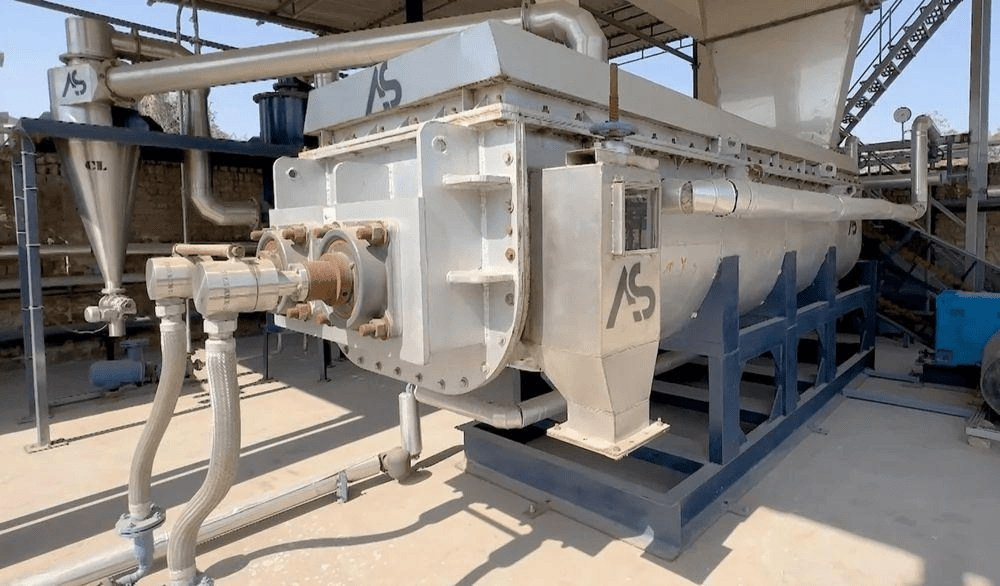
Among the technologies available for difficult-to-handle materials, the industrial paddle dryer has an important role because it can provide controlled, indirect heat transfer for wet, sticky and pasty solids.
For applications where direct hot-gas contact is undesirable, indirect paddle dryers and vacuum paddle dryers can offer an alternative approach to conventional direct drying.
The U.S. wastewater sector is particularly relevant. The U.S. EPA reports that approximately 4 million dry metric tons of sewage sludge were generated in 2024 by facilities covered in its reporting requirements, with material managed through land application, incineration, landfill and other routes.
This creates an important opportunity for technologies that can reduce moisture, improve solids handling and support downstream utilization or disposal.
For an Indian industrial dryer manufacturer such as GTI Dryers, the U.S. market represents an important international opportunity for customized paddle drying, sludge drying and industrial solids-drying systems.
Why Is the Paddle Dryer Market Important in the USA?
U.S. industrial plants increasingly need to manage materials that are difficult to dry using conventional hot-air systems.
Typical challenges include:
- High-moisture wastewater sludge
- Sticky chemical filter cakes
- Pharmaceutical intermediates
- Food-processing residues
- Specialty chemicals
- Industrial by-products
- Organic solids
- Biomass and biosolids
- Materials requiring controlled-temperature drying
A Paddle Dryer uses indirect heat transfer. Heat can be supplied through heated paddles, shafts and/or the surrounding dryer shell, depending on the equipment configuration.
This makes the technology particularly interesting where the process requires:
Wet Feed → Controlled Heat Transfer → Moisture Evaporation → Dry Solids → Disposal / Recovery / Reuse
The U.S. EPA identifies heat drying as a technology for evaporating water from wastewater solids using either direct or indirect dryers and notes that heat drying can be used to produce Class A biosolids when the applicable process requirements are met.
Where Are Paddle Dryers Used in the United States?
The U.S. market is not limited to municipal wastewater.
1. Municipal Wastewater & Biosolids
One of the strongest application areas is municipal sludge drying.
Wastewater treatment plants may need to process:
- Primary sludge
- Secondary sludge
- Digested sludge
- Dewatered biosolids
- Filter-press cake
- Centrifuge cake
Thermal drying can substantially reduce the water content of sludge, improving transportation, storage and downstream handling.
The EPA lists heat drying among the technologies available to sewage-sludge managers.
2. Industrial Wastewater & ETP Sludge
Industrial facilities can generate sludge with very different characteristics from municipal biosolids.
Potential applications include:
- Chemical ETP sludge
- Pharmaceutical sludge
- Textile sludge
- Food-processing sludge
- Paper-industry sludge
- Specialty chemical residues
- Industrial filter cakes
A paddle dryer can be considered where the material is sticky, pasty, difficult to convey or requires enclosed indirect drying.
Chemical manufacturers may use paddle drying for:
- Chemical filter cakes
- Pigments
- Dyes
- Salts
- Crystalline products
- Organic intermediates
- Specialty chemicals
The ability to control heat-transfer conditions is particularly important when product quality or thermal sensitivity limits the usable drying temperature.
Suitable food and food-industry materials may include:
- Food-processing residues
- Starch-based materials
- Protein ingredients
- Concentrated solids
- Agricultural by-products
For food applications, the dryer construction, materials of construction, hygienic design and process conditions must be selected according to the specific product and applicable requirements.
5. Pharmaceutical & Fine Chemical Processing
Vacuum paddle dryers can be considered for certain pharmaceutical and fine-chemical materials where low-temperature drying, solvent recovery or controlled atmospheric conditions are important.
The final configuration should be established through material testing and process engineering rather than selecting equipment solely from the product name.
Indirect Paddle Dryer vs Vacuum Paddle Dryer
Choosing between an indirect paddle dryer and a vacuum paddle dryer depends primarily on the material and process objective.
| Requirement | Indirect Paddle Dryer | Vacuum Paddle Dryer |
| Wet sludge | Excellent candidate | Possible |
| Sticky filter cake | Suitable | Suitable |
| Chemical solids | Suitable | Suitable |
| Heat-sensitive materials | Depends on product | Strong candidate |
| Low-temperature drying | Limited by operating conditions | Better suited |
| Solvent recovery | Application dependent | Strong candidate |
| Atmospheric drying | Yes | No |
| Vacuum operation | No | Yes |
| Pharmaceutical applications | Selected applications | Strong candidate |
Vacuum operation can reduce the boiling temperature of volatile components, which can be useful for temperature-sensitive materials.
Why Paddle Dryers Can Be Attractive for U.S. Sludge Management
The economics of sludge treatment are influenced by:
Moisture → Transportation → Disposal → Energy → Handling → Final Product
The more water transported with sludge, the more material has to be handled downstream.
Thermal drying can therefore provide benefits such as:
- Lower water content
- Reduced sludge volume
- Easier transportation
- Improved storage characteristics
- Better handling
- Potential fuel value after appropriate processing
- Potential resource recovery
- Reduced dependence on certain disposal routes
However, 70–85% mass reduction should not be treated as a universal guarantee. Actual reduction depends on the initial moisture, target final moisture, organic/mineral content and downstream requirements.
For example, reducing a dewatered sludge from 70% moisture to 10% moisture produces a very different mass reduction from drying sludge from 80% to 30%.
That is why material-specific drying calculations are essential before selecting a commercial dryer.
How Much Can a Paddle Dryer Reduce Sludge Mass?
A simplified calculation can be used to estimate the theoretical reduction.
Suppose:
1,000 kg wet sludge contains 70% moisture.
That means:
- Water = 700 kg
- Dry solids = 300 kg
If the final product is dried to 10% moisture, the final product mass would be approximately:
300 ÷ 0.90 = 333 kg
Therefore:
1,000 kg → approximately 333 kg
The mass reduction is approximately 66.7%.
This illustrates why the actual reduction depends heavily on initial and final moisture.
For a specific U.S. wastewater project, GTI Dryers can calculate:
Feed Rate → Initial Moisture → Target Moisture → Water Evaporation → Heat Duty → Dryer Capacity → Energy Requirement
Paddle Dryer Energy Efficiency: What Should U.S. Buyers Evaluate?
Energy is one of the most important operating-cost factors in thermal sludge drying.
A modern system can be engineered around:
Indirect Heat Transfer
Indirect drying can reduce direct contact between the product and combustion gases. EPA documentation notes that indirect dryers can produce less noncondensable gas and dust than direct dryers and can be advantageous for certain applications.
Heat Recovery
Potential heat recovery from exhaust streams can reduce the overall thermal requirement where technically and economically practical.
Optimized Residence Time
Proper residence time prevents unnecessary overheating and excessive energy consumption.
Variable-Speed Drives
VFD-controlled drives can help regulate:
- Paddle rotation
- Feed system
- Exhaust system
- Fans
- Material residence time
Thermal Insulation
Proper insulation of the dryer shell, ducts and associated hot surfaces helps reduce avoidable heat losses.
Heat Source Flexibility
Depending on the project, systems may be engineered around:
- Steam
- Thermal oil
- Hot water
- Natural gas
- LPG
- Electricity
- Waste heat
- Other available plant heat sources
How to Calculate Paddle Dryer Capacity
Capacity should not be determined simply from the wet feed rate.
A preliminary calculation should consider:
Wet Feed Rate (kg/h)
↓
Initial Moisture (%)
↓
Final Moisture (%)
↓
Water Evaporation (kg/h)
↓
Required Heat Duty
↓
Residence Time
↓
Heat Transfer Area
↓
Paddle Dryer Capacity
For example, a plant processing 5,000 kg/h of wet sludge cannot be sized accurately without knowing the moisture content.
Two materials with the same feed rate can require completely different dryer sizes because their evaporation loads may be very different.
What Makes GTI Dryers Relevant to the U.S. Paddle Dryer Market?
GTI Dryers approaches industrial drying as an engineering problem rather than simply an equipment purchase.
As an Indian manufacturer serving international industrial markets, GTI Dryers can develop customized systems according to:
- Feed characteristics
- Moisture content
- Required evaporation
- Final moisture
- Thermal sensitivity
- Throughput
- Available heat source
- Material compatibility
- Automation requirements
- Installation conditions
Potential equipment configurations include:
Indirect Paddle Dryer | Vacuum Paddle Dryer | Rotary Dryer | Flash Dryer | Fluid Bed Dryer | Band Dryer | Mesh Belt Dryer
The correct technology depends on the material.
Pilot Testing: The Best Way to Reduce Dryer Selection Risk
A major mistake in industrial drying projects is selecting a dryer based only on theoretical capacity.
Sludge and chemical materials can behave very differently during drying.
A pilot trial can help evaluate:
- Drying rate
- Moisture reduction
- Product temperature
- Stickiness
- Material discharge
- Energy consumption
- Final product characteristics
- Residence time
For difficult U.S. industrial applications, pilot testing can provide valuable technical information before commercial-scale investment.
Why Choose an Indian Paddle Dryer Manufacturer for a U.S. Project?
U.S. buyers evaluating overseas industrial dryer manufacturers should look beyond equipment price.
Important considerations include:
Engineering Capability
Can the manufacturer calculate evaporation load, heat duty and dryer capacity based on actual feed data?
Material Testing
Can the manufacturer test the customer’s sludge, filter cake or chemical material?
Customization
Can the paddle dryer be customized for moisture, throughput, temperature and heat source?
International Project Support
Can the manufacturer support documentation, shipping, installation and commissioning requirements for an international project?
After-Sales Support
Are technical assistance, spare parts and troubleshooting available after installation?
For GTI Dryers, the objective is to develop a project-specific drying solution rather than a generic machine.
Paddle Dryer USA: High-Intent Buyer Questions
What is a paddle dryer used for?
A paddle dryer is an indirectly heated industrial dryer used for suitable wet, sticky, pasty, granular or filter-cake materials. Applications can include wastewater sludge, chemicals, food ingredients and industrial by-products.
Is a paddle dryer suitable for wastewater sludge?
Yes, depending on the sludge characteristics. Feed moisture, solids concentration, stickiness, particle behavior and target final moisture should be evaluated before selecting the dryer.
What is the difference between a paddle dryer and a rotary dryer?
A paddle dryer generally provides indirect heat transfer and is particularly useful for certain sticky, pasty or enclosed-process applications. Rotary dryers are widely used for continuous bulk-solid drying and can be configured for direct or indirect operation depending on the design.
Can a paddle dryer operate under vacuum?
Yes. A vacuum paddle dryer is specifically designed for applications where vacuum drying is beneficial, including some heat-sensitive or solvent-containing materials.
How much does a paddle dryer cost in the USA?
There is no single standard price. Cost depends on feed rate, evaporation capacity, material of construction, heating system, vacuum requirement, automation, condensation/off-gas handling and project scope.
The correct approach is to calculate the dryer based on the actual material rather than selecting equipment from price alone.
Why the U.S. Market Is an Opportunity for GTI Dryers
The United States has a substantial wastewater and industrial processing ecosystem, while sludge-management requirements create ongoing demand for technologies that can improve handling and downstream processing.
EPA data shows that sewage sludge continues to be managed through multiple pathways including land application, landfill and incineration.
At the same time, U.S. technical guidance recognizes heat drying as an established approach for wastewater solids, with both direct and indirect technologies used depending on the application.
This creates an opportunity for engineered industrial paddle dryers, vacuum dryers and other thermal drying technologies where the economics and material characteristics support their use.
GTI Dryers: Indian Engineering for Global Industrial Drying
GTI Dryers is positioned to support international customers looking for custom industrial drying systems from India.
For U.S. customers, the project can begin with basic material information:
Material Name
Wet Feed Rate
Initial Moisture
Required Final Moisture
Available Heat Source
Operating Hours/Day
Desired Production Capacity
From these parameters, the engineering process can move toward:
Material Evaluation → Drying Calculation → Pilot Testing → Dryer Selection → Engineering → Manufacturing → Installation & Commissioning
Looking for a Paddle Dryer Manufacturer for the USA?
If your U.S. facility requires an industrial paddle dryer, indirect paddle dryer, vacuum paddle dryer or sludge drying system, selecting the right technology starts with understanding the material and calculating the actual evaporation requirement.
GTI Dryers can evaluate applications involving:
Municipal Sludge | Industrial ETP Sludge | Chemical Filter Cake | Specialty Chemicals | Food Ingredients | Pharmaceutical Materials | Biomass | Industrial By-Products
Request a Preliminary Drying Evaluation
Share your:
- Material specification
- Feed moisture
- Final moisture requirement
- Feed capacity
- Operating hours
- Available heat source
- Application details
GTI Dryers can then develop a preliminary drying calculation and technology recommendation for your application.
From India to the USA, the goal is simple: engineer the right dryer for the material, not simply sell a machine.