
Ore Drying Is a Process-Control Decision — Not Simply Moisture Removal
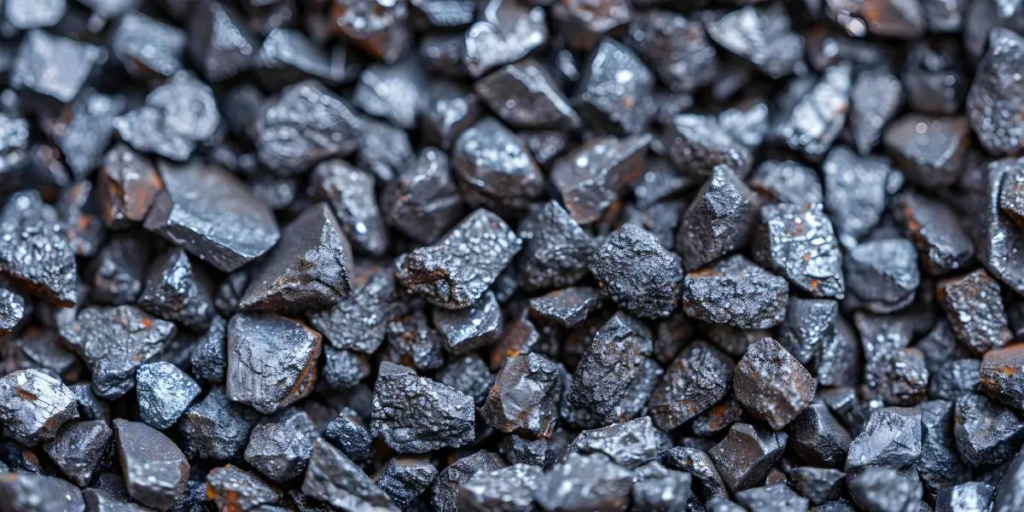
In mining and mineral processing, moisture can become a significant process variable.
An ore or concentrate may pass through:
Mining → Crushing → Grinding → Beneficiation → Washing → Dewatering → Drying → Pelletizing / Smelting / Refining / Transport
At several points in this chain, uncontrolled moisture can affect:
- Material handling
- Screening
- Conveying
- Storage
- Pelletizing
- Furnace or smelter feed
- Thermal efficiency
- Transportation economics
- Product specifications
- Downstream processing
For high-volume mineral operations, the drying system therefore needs to be engineered around the ore characteristics and the next processing step.
GTI Dryers designs industrial ore and mineral-concentrate drying systems for iron ore, copper, bauxite, manganese, nickel, lithium minerals and other processed ores, with equipment selection based on feed moisture, capacity, particle size, bulk density, product temperature and downstream requirements.
GTI’s mineral drying portfolio specifically includes ore-drying applications such as iron ore, bauxite and other mineral materials, while its rotary dryer systems are designed for high-throughput mineral processing.
The Real Value of Ore Drying
A mining company does not install a dryer simply because the material contains water.
The business case usually comes from what happens after drying.
For example:
Iron Ore
Wet Concentrate → Drying → Pelletizing / Agglomeration → Blast Furnace / DRI
Copper
Concentrate → Drying → Smelting / Further Metallurgical Processing
Bauxite
Washed Bauxite → Moisture Reduction → Alumina Refining
Manganese
Manganese Ore → Drying → Beneficiation / Alloy Production / Transport
Lithium
Spodumene / Mineral Concentrate → Drying → Calcination / Chemical Conversion
Therefore, the correct dryer is the one that supports the economics and technical requirements of the entire mineral-processing route.
Why Moisture Control Matters in Mineral Concentrates
Mineral concentrates are often produced after crushing, grinding, flotation, washing, magnetic separation or other beneficiation processes.
These operations can introduce or retain water.
The resulting material may need to be dewatered and dried before further processing.
Excess Moisture Can Create Problems
Depending on the material and plant, excessive moisture can contribute to:
- Poor flowability
- Conveyor loading problems
- Material sticking
- Increased transport weight
- Reduced furnace efficiency
- Difficult feeding
- Storage issues
- Pelletizing variability
- Higher thermal demand downstream
For export concentrates, moisture can also become a commercial consideration because the shipment contains both valuable mineral and water.
The target moisture should therefore be determined from the receiving plant, transport specification and process requirement rather than applying one universal value to all ores.
Iron Ore: The Core Application for High-Capacity Ore Dryers
Iron ore is one of the world’s most important bulk mineral commodities.
Iron ore is processed into forms such as:
- Lump ore
- Fines
- Concentrate
- Pellet feed
- Pellets
- Sinter feed
Drying requirements differ between these forms.
For GTI, one of the most commercially important applications is iron ore concentrate and fine-material drying before pelletizing, agglomeration or further processing.
USGS maintains dedicated global iron-ore production and statistics because of the commodity’s scale and importance to the steel industry.
Iron Ore Concentrate Dryer
A typical beneficiation route can be represented as:
Run-of-Mine Ore
↓
Crushing
↓
Grinding
↓
Beneficiation
↓
Concentration
↓
Dewatering
↓
IRON ORE CONCENTRATE DRYER
↓
Pelletizing / Agglomeration / Other Processing
The dryer can therefore become a critical interface between wet beneficiation and dry downstream processing.
Why Iron Ore Concentrate Drying Requires Heavy-Duty Equipment
Iron ore concentrate can be:
- Fine
- Dense
- Abrasive
- High-throughput
- Variable in moisture
- Dust-generating
A commercial system therefore needs to consider:
Abrasion Resistance
Iron-bearing mineral particles can cause significant wear.
High Throughput
Large mining operations can require continuous processing at very high capacities.
Fine Particle Handling
Fine concentrates can increase dust loading and exhaust-system requirements.
Uniform Moisture Reduction
Uneven drying can affect downstream feed quality.
Thermal Efficiency
At large capacities, even small differences in specific energy consumption can influence operating costs.
Iron Ore Drying Before Pelletizing
Pelletizing converts fine iron ore concentrate into agglomerated pellets suitable for downstream ironmaking.
The drying requirement depends on the pelletizing process and where the thermal treatment occurs.
A simplified route is:
Iron Ore Concentrate
→ Moisture Conditioning
→ Pellet Formation
→ Drying
→ Preheating
→ Induration
→ Finished Pellets
GTI’s role may be particularly relevant where a separate mineral drying stage is required before the downstream process.
The actual process architecture should be established from the pellet plant’s feed specifications and thermal balance.
Iron Ore Drying for Transport
Moisture can also be important when concentrates are moved from:
Mine → Beneficiation Plant → Port → Steel Plant / Smelter
Reducing unnecessary free moisture can improve handling and transport economics, subject to the applicable product and shipping specifications.
This creates commercial opportunities for mine-site dryers, beneficiation-plant dryers and port-side concentrate drying systems.
Copper Concentrate Drying
Copper is another major application where controlled moisture can be important before metallurgical processing.
Copper concentrates are commonly produced through beneficiation processes such as crushing, grinding and flotation.
A simplified route is:
Copper Ore
→ Crushing
→ Grinding
→ Flotation
→ Copper Concentrate
→ Dewatering
→ Drying
→ Smelting / Further Metallurgical Processing
The copper-concentrate dryer must be designed around:
- Concentrate moisture
- Throughput
- Particle size
- Sulfur-containing material characteristics
- Product temperature
- Dust control
- Downstream smelter requirements
Copper Concentrate Dryer for Smelter Feed
A copper smelter generally requires controlled feed characteristics.
The dryer therefore needs to be treated as part of the concentrate-preparation system, rather than as an isolated machine.
Commercially Important Design Inputs
Feed rate
How many tonnes per hour?
Initial moisture
How much water remains after filtration?
Target moisture
What does the smelter require?
Particle size
How fine is the concentrate?
Heat source
What thermal energy is available?
Gas handling
What exhaust and dust-management system is required?
Product temperature
What temperature is acceptable at discharge?
These factors determine the appropriate dryer configuration.
Bauxite Drying
Bauxite is the primary ore used for alumina production.
USGS states that approximately 85% of global bauxite production is used as feed for alumina production through the Bayer process.
A simplified chain is:
Bauxite Mining
→ Crushing / Washing
→ Beneficiation where applicable
→ Moisture Reduction
→ Alumina Refining
→ Aluminum Production
Depending on the process, moisture control can be relevant to:
- Transport
- Crushing
- Handling
- Stockpiling
- Refinery feed
- Thermal balance
Bauxite is therefore another important application for high-capacity mineral dryers.
Bauxite Dryer – What Makes the Application Different?
Unlike a simple granular mineral, bauxite can vary considerably in:
- Moisture
- Particle size
- Clay content
- Bulk density
- Mineralogy
The dryer therefore needs to be selected from actual material data.
GTI can evaluate rotary or specialized drying systems according to the feed characteristics and required downstream condition.
Manganese Ore Drying
Manganese is closely connected to the steel industry.
USGS’s 2026 Mineral Commodity Summaries identifies South Africa, Gabon, Ghana and Australia as the leading manganese-ore-producing countries in 2025, on a manganese-content basis. It also notes that manganese consumption closely follows the steel industry.
Manganese ore can be processed for:
- Ferroalloy production
- Steelmaking
- Beneficiation
- Chemical applications
- Battery-related materials
A manganese drying system can be positioned between beneficiation and downstream metallurgical processing.
Lithium & Battery Mineral Drying
The mineral-processing market is expanding beyond traditional bulk ores.
Battery-material projects increasingly involve minerals and concentrates such as:
- Spodumene
- Lithium-bearing ores
- Nickel concentrates
- Cobalt-bearing materials
- Manganese materials
- Graphite
- Rare-earth concentrates
GTI’s mineral thermal-processing portfolio specifically includes lithium minerals, rare-earth concentrates, bauxite and metal concentrates, with drying, dehydration and other thermal-processing stages considered according to the process.
Lithium Processing Example
A simplified spodumene route may involve:
Lithium Ore
→ Crushing
→ Grinding
→ Beneficiation
→ Spodumene Concentrate
→ Drying
→ Calcination / Conversion
→ Lithium Chemical Product
Here, drying and calcination must be treated as separate process functions unless a specific integrated thermal process calls for otherwise.
Why Battery-Mineral Drying Is Different
Battery minerals can have much tighter requirements concerning:
- Purity
- Contamination
- Particle size
- Product chemistry
- Temperature
- Oxidation
- Residence time
Therefore, a standard bulk rotary dryer may not automatically be the correct solution.
Depending on the mineral, GTI can evaluate:
- Rotary dryers
- Flash dryers
- Fluidized-bed dryers
- Belt dryers
- Pneumatic drying systems
- Specialized thermal-processing equipment
Dryer Technology: Choose the Process Before Choosing the Machine
One of the most important principles for mineral drying is:
Do not select the dryer only from the material name.
“Iron ore” can mean:
- Lump ore
- Fine ore
- Concentrate
- Pellet feed
- Filter cake
Similarly, “copper” can mean:
- Crushed ore
- Flotation concentrate
- Fine concentrate
- Intermediate material
Each can require a different process arrangement.
GTI Technology Selection
Best considered for:
- High tonnage
- Bulk minerals
- Granular ores
- Abrasive materials
- Continuous operation
GTI identifies rotary dryers as its primary high-throughput mineral drying technology for materials including iron ore, copper ore, bauxite, manganese ore and mineral concentrates.
Potentially useful for:
- Fine mineral powders
- Fine concentrates
- Rapid drying
- Materials that can be dispersed into a hot gas stream
Can be considered for suitable particle-size distributions where fluidization is technically appropriate.
Can be considered for materials requiring controlled residence time and gentler handling.
Specialized Thermal Systems
For battery minerals, concentrates or materials requiring controlled atmospheres, thermal processing may extend beyond conventional drying.
The GTI Mineral Dryer Design Approach
Instead of asking:
“Which dryer is cheapest?”
GTI’s engineering approach starts with:
What happens to the material before and after the dryer?
This changes the design conversation.
Before the Dryer
- Mining
- Crushing
- Grinding
- Washing
- Flotation
- Magnetic separation
- Filtration
- Dewatering
Inside the Dryer
- Heat transfer
- Airflow
- Residence time
- Moisture evaporation
- Particle movement
- Dust entrainment
- Temperature control
After the Dryer
- Pelletizing
- Smelting
- Calcination
- Refining
- Storage
- Transport
- Export
This complete process perspective is particularly important for large mining projects.
High-Tonnage Rotary Ore Dryer
For large-scale mining operations, rotary dryers remain one of the strongest equipment options for bulk mineral drying.
GTI rotary dryers are designed for:
- Continuous operation
- High throughput
- Abrasive materials
- Variable particle sizes
- Large evaporation duties
- Mineral processing environments
The actual dryer dimensions and thermal configuration are calculated from:
Feed Rate + Moisture Load + Particle Size + Bulk Density + Inlet Conditions + Final Moisture + Heat Source
rather than from capacity alone.
Moisture Control Before Smelting
For concentrates going to a smelter or metallurgical furnace, moisture can affect the thermal balance of the process.
Water requires energy to heat and evaporate.
Therefore, unnecessary moisture entering a high-temperature metallurgical process can increase the thermal burden.
This is why concentrate drying can be commercially important for:
- Copper smelters
- Nickel processing
- Ferroalloy plants
- Manganese processing
- Other metallurgical operations
The final moisture target should always come from the receiving process specification.
Drying for Pelletizing & Agglomeration
Ore concentrates often need controlled physical conditions before agglomeration.
A drying system can be used to manage moisture before:
- Pelletizing
- Briquetting
- Sintering
- Agglomeration
However, moisture conditioning is process-specific.
The goal is not always “maximum dryness.”
In some agglomeration processes, controlled moisture is intentionally maintained.
Therefore, the dryer must be designed around the required moisture window, not simply the lowest achievable moisture.
Drying for Mineral Transport & Export
International mineral trade creates another important application.
A typical export chain can be:
Mine
→ Beneficiation
→ Concentrate
→ Dewatering
→ Drying
→ Stockyard
→ Port
→ International Shipment
Moisture reduction can support:
- Better material handling
- Reduced free-water content
- Improved storage
- More consistent loading
- Compliance with receiving specifications
For export projects, GTI can design the dryer around the customer’s shipping and receiving specifications.
Where Are Ore Dryers Most Needed?
This is where the opportunity becomes significantly stronger.
Instead of trying to rank only for:
“Ore Dryer Manufacturer”
GTI should target:
Ore + Dryer + Mineral + Location + Process
For example:
- Iron Ore Dryer Australia
- Iron Ore Concentrate Dryer Brazil
- Iron Ore Dryer India
- Copper Concentrate Dryer Chile
- Copper Dryer Peru
- Bauxite Dryer Guinea
- Bauxite Dryer Australia
- Manganese Dryer South Africa
- Manganese Ore Dryer Gabon
- Lithium Mineral Dryer Australia
- Spodumene Dryer Australia
- Battery Mineral Dryer Canada
These queries connect GTI’s equipment directly with real mining markets.
01 — Australia
Australia is one of the strongest global markets for mineral drying.
USGS identifies Australia as the world’s leading producer of iron ore by contained iron and also a leading producer of lithium and bauxite.
This makes Australia highly relevant for:
- Iron ore dryers
- Iron ore concentrate dryers
- Bauxite dryers
- Lithium mineral dryers
- Spodumene dryers
- Manganese dryers
High-Value Australian Targets
Iron Ore Dryer Western Australia
Iron Ore Concentrate Dryer Pilbara
Mineral Dryer Perth
Bauxite Dryer Australia
Lithium Dryer Western Australia
Spodumene Dryer Australia
Mining Dryer Manufacturer Australia
For GTI, Australia should be positioned as a high-capacity, engineering-intensive mining market, not a low-cost equipment market.
02 — Brazil
Brazil is a major global mineral-processing market.
USGS reported Brazil as the world’s second-ranked iron-ore producer in 2024, accounting for approximately 17% of global production. Its iron ore production was concentrated in Pará and Minas Gerais systems.
Major Targets
Iron Ore Dryer Brazil
Iron Ore Concentrate Dryer Brazil
Mineral Dryer Minas Gerais
Iron Ore Dryer Pará
Rotary Ore Dryer Brazil
Mining Dryer Manufacturer Brazil
Brazil is especially attractive for GTI’s iron-ore drying content because the mining and steel ecosystem creates strong demand for high-throughput mineral-processing equipment.
03 — India
India is an important market for:
- Iron ore
- Manganese
- Bauxite
- Copper
- Mineral concentrates
- Pellet plants
- Steel production
For GTI, India offers the additional advantage of proximity to both mining operations and mineral-processing plants.
High-Value Indian Regions
Odisha
Strong opportunity around:
- Iron ore
- Beneficiation
- Pellet plants
- Steel
- Manganese
Iron Ore Dryer Odisha
Iron Ore Concentrate Dryer Odisha
Pellet Plant Dryer Odisha
Mineral Dryer Odisha
Chhattisgarh
Potential applications:
- Iron ore
- Steel
- Pelletizing
- Mineral processing
Iron Ore Dryer Chhattisgarh
Ore Dryer Bhilai
Iron Concentrate Dryer Chhattisgarh
Karnataka
Particularly relevant to iron ore and mineral processing.
Iron Ore Dryer Karnataka
Ore Dryer Ballari
Mineral Concentrate Dryer Karnataka
Goa
A historically important iron-ore mining and export region.
Iron Ore Dryer Goa
Iron Ore Concentrate Dryer Goa
Jharkhand
Strong connection with:
- Iron ore
- Steel
- Mineral processing
Iron Ore Dryer Jharkhand
Mineral Dryer Jamshedpur
04 — Chile
Chile is one of the strongest copper markets globally.
USGS reports that in 2024 Chile produced approximately 5.5 million tonnes of copper concentrates and solvent-extraction output, with the Antofagasta Region accounting for approximately 57% of the country’s total.
That makes Antofagasta a particularly valuable GEO target.
Commercial Keywords
Copper Concentrate Dryer Chile
Copper Dryer Antofagasta
Rotary Copper Concentrate Dryer Chile
Mineral Dryer Chile
Copper Processing Dryer Antofagasta
For Chile, GTI’s content should emphasize:
High-altitude mining + abrasive concentrate + high capacity + energy efficiency + dust management.
05 — Peru
Peru is another major copper and polymetallic mining market.
Potential applications include:
- Copper concentrate
- Zinc concentrate
- Lead concentrate
- Silver-bearing concentrates
- Polymetallic minerals
Copper Concentrate Dryer Peru
Mineral Concentrate Dryer Peru
Rotary Ore Dryer Peru
Mining Dryer Manufacturer Peru
06 — Guinea
Guinea is particularly important for bauxite.
USGS reports that Guinea was the world’s leading bauxite producer in 2024, accounting for approximately 33.2% of global output, excluding U.S. production. Its bauxite and alumina exports went principally to China, with additional exports to Europe, India and other markets.
Commercial Keywords
Bauxite Dryer Guinea
Bauxite Drying System Guinea
Rotary Bauxite Dryer Guinea
Mineral Dryer Conakry
Bauxite Processing Dryer Africa
This is a strong opportunity because the country is not only a mining location but also part of an international bauxite-to-alumina supply chain.
07 — South Africa
South Africa is particularly important for:
- Manganese
- Iron ore
- Chrome
- Platinum-group minerals
- Other metallurgical materials
USGS identifies South Africa as the leading manganese producer in 2025 on a contained-manganese basis.
High-Value Keywords
Manganese Ore Dryer South Africa
Manganese Concentrate Dryer South Africa
Mineral Dryer South Africa
Rotary Ore Dryer South Africa
Mining Dryer Manufacturer South Africa
08 — Gabon
Gabon is an important manganese market.
USGS identifies Gabon as the world’s second-ranked manganese producer in 2024, accounting for approximately 25% of global production. The Moanda mining region is particularly important.
Manganese Dryer Gabon
Manganese Ore Dryer Moanda
Rotary Manganese Dryer Gabon
Mineral Concentrate Dryer Africa
09 — China
China is strategically important not only because of mining, but because of its enormous mineral-processing and refining ecosystem.
USGS research on China’s mineral industry identifies extensive mining and processing infrastructure across commodities including copper, bauxite/alumina, cobalt and other critical minerals.
Potential keywords:
Ore Dryer China
Mineral Concentrate Dryer China
Copper Concentrate Dryer China
Bauxite Dryer China
Battery Mineral Dryer China
10 — Lithium & Battery Mineral Regions
For future-focused GTI, battery minerals should be treated as a separate commercial cluster inside the ore-drying pillar.
Important markets include:
Australia
Strong for lithium and spodumene.
Chile
Strong for lithium resources and battery-material supply chains.
Brazil
An emerging lithium producer; USGS reported Brazil as the sixth-ranked lithium producer in 2024.
Canada
Relevant for lithium, nickel, cobalt and other critical minerals.
China
Extremely important for mineral processing and downstream battery-material manufacturing.
SEO Opportunities
Lithium Mineral Dryer
Spodumene Dryer
Lithium Concentrate Dryer
Battery Mineral Dryer
Lithium Dryer Australia
Spodumene Dryer Western Australia
Lithium Dryer Brazil
Ore & Mineral Concentrate Dryer Manufacturer
↓
Iron Ore Cluster
Iron Ore Dryer → Iron Ore Concentrate Dryer → Pellet Plant Dryer
↓
Copper Cluster
Copper Concentrate Dryer → Copper Ore Dryer
↓
Bauxite Cluster
Bauxite Dryer → Alumina Feed Drying
↓
Manganese Cluster
Manganese Ore Dryer → Manganese Concentrate Dryer
↓
Battery Minerals Cluster
Lithium Dryer → Spodumene Dryer → Nickel Concentrate Dryer → Battery Mineral Dryer
This structure creates much stronger topical authority than trying to make one page rank for every mineral keyword.
GTI’s Ore Drying Technology Portfolio
GTI can evaluate several drying technologies depending on the material.
Rotary Dryers
For:
- Iron ore
- Copper ore/concentrate
- Bauxite
- Manganese
- Bulk mineral materials
Flash Dryers
For:
- Fine mineral powders
- Fine concentrates
- Rapid moisture removal
Fluidized Bed Dryers
For suitable granular or particulate materials where fluidization is appropriate.
Belt Dryers
For applications requiring controlled residence time and specific material handling.
Specialized Mineral Thermal Systems
For:
- Lithium minerals
- Rare-earth concentrates
- Metal concentrates
- Calcination
- Dehydration
- Roasting
- Other thermal-processing requirements
GTI’s current mineral thermal-processing portfolio includes drying, calcination, roasting, dehydration and related thermal functions for mineral and metal-processing applications.
What Makes GTI Different?
We Don’t Size an Ore Dryer from TPH Alone
Two plants may both process 100 TPH but require completely different dryers.
Why?
Because the thermal duty depends on:
100 TPH × Moisture Load × Required Moisture Reduction
The physical design then depends on:
- Particle size
- Bulk density
- Residence time
- Heat-transfer characteristics
- Abrasion
- Dust loading
- Temperature limits
This is why GTI approaches ore drying through process engineering.
GTI’s Project Engineering Checklist
Before recommending a commercial dryer, GTI evaluates:
Material
- Ore type
- Concentrate type
- Chemical composition
- Mineralogy
- Particle size
Moisture
- Feed moisture
- Required final moisture
- Moisture basis
- Moisture variability
Production
- TPH
- Operating hours/day
- Annual production
- Continuous/batch operation
Thermal Conditions
- Feed temperature
- Product temperature limit
- Heat source
- Fuel type
- Waste heat availability
Mechanical Properties
- Bulk density
- Abrasion
- Stickiness
- Dust generation
- Flowability
Downstream Requirement
- Smelting
- Pelletizing
- Refining
- Calcination
- Transport
- Storage
- Export
What Should You Send GTI for a Mineral Dryer Proposal?
For a preliminary technical-commercial evaluation, provide:
1. Material name
Iron ore / copper concentrate / bauxite / manganese / lithium / other.
2. Feed capacity
TPH or kg/hr.
3. Initial moisture
Percentage on a clearly specified basis.
4. Required final moisture
Target outlet moisture.
5. Particle size
Micron / mesh / mm.
6. Bulk density
kg/m³.
7. Feed temperature
°C.
8. Product temperature limit
°C.
9. Heat source
Gas / biomass / coal / diesel / electric / waste heat / other.
10. Operating hours
Hours/day and days/year.
11. Dust/emission requirements
Existing or required dust-collection system.
12. Installation location
Country + mining/industrial region.
13. Downstream process
Pelletizing / smelting / refining / transport / storage.
Why This Data Matters
Consider two projects:
Project A
50 TPH iron ore concentrate
20% moisture → 5% moisture
Project B
50 TPH lithium concentrate
10% moisture → 1% moisture
The capacity is identical.
But the dryer cannot simply be identical.
The materials may have very different:
- Thermal characteristics
- Particle size
- Product-temperature limits
- Dust behaviour
- Purity requirements
- Equipment materials
- Process risks
This is why GTI’s mineral dryer proposals are application-specific.
Frequently Asked Questions
What is an ore dryer?
An ore dryer is an industrial drying system designed to remove moisture from mined, beneficiated or concentrated mineral materials before downstream processing, storage or transport.
What type of dryer is used for iron ore?
Rotary dryers are commonly considered for high-throughput iron ore and mineral applications. Fine concentrates may also require specialized drying technologies depending on particle size and process conditions. GTI’s mineral-drying portfolio includes rotary and other drying technologies for ore applications.
Can GTI manufacture an iron ore concentrate dryer?
Yes. GTI can engineer customized iron ore concentrate drying systems based on feed moisture, capacity, particle size, target moisture and downstream requirements.
Can a rotary dryer handle abrasive ore?
Rotary dryers can be engineered for abrasive mineral materials. Wear protection, material of construction, flights and operating conditions should be selected according to the specific ore.
Why is concentrate moisture important before smelting?
Excess free moisture can increase the thermal burden of a high-temperature metallurgical process and may also affect feed handling. The acceptable moisture level should be established from the receiving smelter’s process specification.
Can GTI dry copper concentrate?
Yes. Copper concentrate drying can be evaluated using rotary or specialized systems depending on concentrate characteristics, capacity, moisture and smelter requirements.
Can bauxite be dried?
Yes. Bauxite can be processed using industrial drying systems where moisture reduction is required by the downstream handling or refining process. Bauxite is primarily used as feed for alumina production through the Bayer process.
Can manganese ore be dried?
Yes. Manganese ore and concentrates can be evaluated for industrial drying before beneficiation, alloy production, transport or other downstream processing.
Can lithium minerals be dried?
Yes. Lithium-bearing minerals and concentrates can require drying as part of mineral beneficiation or downstream conversion. However, lithium projects often require tighter control of purity, temperature and process atmosphere than conventional bulk mineral drying.
Is drying the same as calcination?
No. Drying primarily removes free moisture, while calcination intentionally changes the material through controlled thermal decomposition or dehydration. Some mineral-processing plants use both operations in sequence.
What is the best dryer for mineral concentrates?
There is no universal best dryer. Rotary dryers are strong candidates for many high-tonnage bulk mineral applications, while flash, fluidized-bed, belt or specialized thermal systems may be more appropriate for specific fine or temperature-sensitive concentrates.
Build Your Mineral Drying System Around the Process
A successful mineral dryer is not defined only by:
TPH
It is defined by:
TPH + Moisture + Particle Size + Temperature + Abrasion + Downstream Process
Whether the requirement is:
Iron Ore → Copper Concentrate → Bauxite → Manganese → Nickel → Lithium → Rare-Earth Concentrates
GTI Dryers can evaluate the material and develop a drying configuration around the actual process requirement.
From high-capacity rotary dryers to specialized mineral thermal-processing systems, GTI focuses on controlled moisture removal, reliable operation, energy-conscious design and integration with the customer’s existing mineral-processing plant.
Planning an Ore or Concentrate Drying Project?
Send GTI:
Material + TPH + Initial Moisture + Final Moisture + Particle Size + Heat Source + Downstream Process
to begin a project-specific technical evaluation.
GTI Dryers
Industrial Mineral & Ore Drying Solutions from India for Global Mining Industries
Engineered in India. Designed for the World.
Request Your Customized Ore Dryer Proposal