
Onion powder and garlic powder are high-volume seasoning ingredients used in processed foods, snacks, sauces, ready meals and spice blends. Commercial production almost always follows a multi-stage route:
Fresh onion or garlic → Peeling / cleaning → Slicing → (Pre-treatment) → Multi-stage drying → Cooling → Milling / grinding → Sieving → Packaging
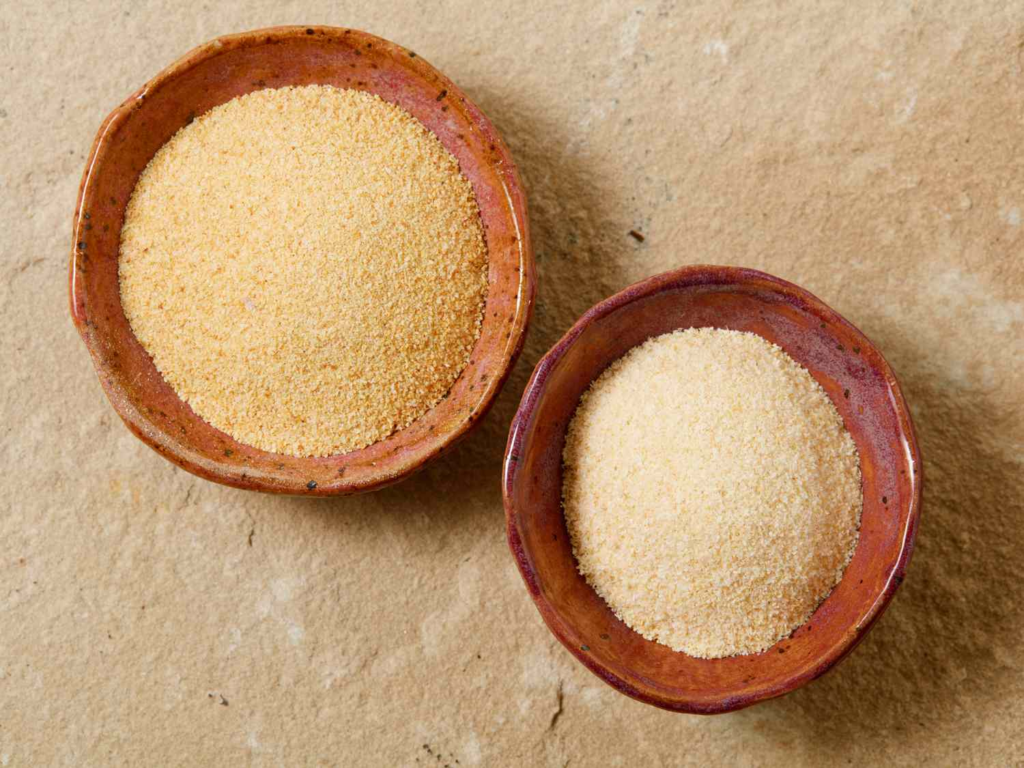
The drying step is the process bottleneck that determines colour, flavour retention, residual moisture and the quality of the final powder. This page focuses on the engineering integration of multi-stage (multi-zone) dryers within onion and garlic powder lines, extending GTI’s existing spice and onion drying content into powder-specific process guidance.
Why Multi-Stage Drying Matters for Powder Quality
Onion and garlic slices enter the dryer at high moisture (typically 80 %+). If drying is too aggressive, the surface seals, internal moisture remains trapped, and the product browns or loses pungency. If drying is too slow or uneven, residual moisture varies across the bed, leading to:
- Colour darkening or scorching
- Loss of characteristic flavour and aroma compounds
- Soft or leathery centres that resist grinding
- High residual moisture that causes caking in the powder or short shelf life
- Excessive fines or uneven particle size after milling
A properly designed multi-stage dryer solves these problems by applying different temperature and airflow conditions in successive zones, matching the changing moisture and temperature sensitivity of the product as it dries.
Typical Multi-Stage Process Flow for Powder Lines
- Pre-treatment – Peeling, washing, slicing to controlled thickness (commonly 2–5 mm), optional blanching or surface dewatering
- Multi-stage drying – Continuous belt/band or mesh-belt dryer with multiple temperature/airflow zones
- Cooling – Rapid reduction of product temperature to stop residual drying and protect quality
- Milling / grinding – Conversion of dry flakes or granules into powder of the required mesh
- Sieving and packing – Particle-size control and packaging under controlled humidity
The dryer must deliver flakes or pieces at a residual moisture low enough for efficient grinding (often ≤6 % and frequently targeted lower) while preserving the sensory attributes that customers expect in the finished powder.
Multi-Stage Dryer Technologies Used in Onion & Garlic Powder Lines
Continuous Multi-Layer / Multi-Zone Belt (Band / Mesh-Belt) Dryer
The most common industrial solution for sliced onion and garlic. Product travels on one or more perforated or mesh belts through successive zones.

Key design features for powder-line duty
- Independent temperature and airflow control in each zone
- Progressive reduction of temperature as moisture falls (high initial evaporation → gentle final drying)
- Controlled residence time via belt speed
- Hygienic construction (food-grade stainless steel)
- Integration with upstream slicers and downstream coolers/mills
Typical zoning logic (illustrative)
- Zone 1: Higher temperature for rapid surface-moisture removal
- Intermediate zones: Balanced heat and airflow for internal moisture diffusion
- Final zone(s): Lower temperature to finish drying without scorching or flavour loss
Supporting or Alternative Configurations
- Single-pass or multi-pass belt systems sized to capacity
- Fluid-bed finishing stages for free-flowing granules before milling (less common for primary slice drying)
- Tray or cabinet dryers for small-scale or specialty batches
The continuous multi-zone belt dryer remains the core technology for industrial onion and garlic powder lines because it combines capacity, process control and product quality.
Critical Process Variables
| Variable | Why it matters | Design implication |
|---|---|---|
| Slice thickness | Controls drying time and risk of case-hardening | Tight control at the slicer; uniform feed to the dryer |
| Zone temperatures | Determines colour, flavour retention and final moisture | Progressive temperature profile; product temperature monitoring |
| Residence time | Cumulative thermal exposure | Belt speed and number of passes matched to moisture curve |
| Residual moisture at dryer exit | Affects grinding efficiency and powder stability | Target typically ≤6 % (often lower); verified by sampling |
| Airflow and humidity | Drives evaporation rate and uniformity | Balanced supply and exhaust; possible recirculation with humidity control |
| Cooling after drying | Stops residual heat damage and moisture migration | Immediate cooling before milling or storage |
Common Problems and Engineering Responses
| Problem | Typical causes | Practical response |
|---|---|---|
| Browning or dark colour | Excessive temperature in later zones or too long residence time | Lower final-zone temperature; shorten residence time; improve airflow uniformity |
| Residual moisture variation | Uneven bed loading or poor zone control | Improve spreader/feeder; verify zone sensors and airflow balance |
| Soft centres / leathery pieces | Case-hardening from too-high initial temperature | Reduce first-zone temperature; ensure adequate airflow through the bed |
| Flavour / pungency loss | Over-drying or high product temperature | Optimise temperature curve; avoid unnecessary over-drying |
| Poor grinding performance | Residual moisture still too high or uneven | Tighten residual-moisture target; add cooling and moisture verification before mill |
| High energy use | Excessive air volume or poor heat recovery | Optimise air recirculation and insulation; match capacity to actual evaporation load |
Key Data Required for Line Assessment
- Raw material (onion variety or garlic type)
- Target product (flakes only, granules, or powder mesh size)
- Slice thickness range
- Inlet moisture after slicing / pre-treatment
- Target residual moisture before milling
- Required throughput (fresh input or dry output basis)
- Colour and flavour retention expectations
- Available heat source and utilities
- Hygiene / food-safety requirements
Geographic Considerations & Market Evaluation
- India — One of the world’s largest onion and garlic producers and a major dehydrated-spice exporter; strong demand for continuous multi-stage lines that deliver export-grade colour and residual moisture.
- China, Southeast Asia & other major producers — High-volume flake and powder production; emphasis on capacity, energy efficiency and consistent quality.
- Europe & North America — Focus on food-safety compliance, colour stability and documented process control for seasoning and ingredient markets.
GTI evaluates projects from the actual slice characteristics, residual-moisture target and powder specification rather than applying a single standard dryer.
How GTI Dryers Approaches Onion & Garlic Powder Line Integration
GTI Dryers designs industrial multi-stage belt and related drying systems for spice and vegetable dehydration, including onion and garlic applications. For powder lines the engineering approach is:
- Treat drying as the quality-critical link between slicing and milling
- Design multi-zone temperature and airflow profiles that protect colour and flavour
- Integrate upstream pre-treatment and downstream cooling / transfer to the mill
- Support process-data review and capacity matching to the full powder line
This page extends GTI’s existing onion and spice drying content by focusing specifically on the multi-stage dryer integration required for consistent onion powder and garlic powder production.
Frequently Asked Questions
What residual moisture is needed before grinding onion or garlic into powder?
Most industrial lines target ≤6 % residual moisture in the dried flakes or pieces; many aim lower to ensure free-flowing powder and good storage stability. The exact specification depends on the product and packaging.
Why use multiple temperature zones?
Early zones remove free surface moisture quickly; later zones finish drying at lower temperature to avoid browning and flavour loss. A single high temperature throughout damages quality.
Can the same dryer produce both flakes and powder-grade material?
Yes. The dryer produces the dried intermediate (flakes or pieces). Downstream milling and sieving determine whether the final product is sold as flakes, granules or powder.
Is a belt dryer better than a tray dryer for powder lines?
For continuous industrial capacities, multi-stage belt/band dryers offer better uniformity, higher throughput and easier integration with slicing and milling. Tray dryers remain useful for smaller or specialty batches.
What information does GTI need for a quotation?
Raw material, slice thickness, target residual moisture, capacity and whether the end product is flakes, granules or powder.
Contact the GTI Technical Team:
Website: gtidryers.com
Email: mktg@gtidryers.com
Phone / WhatsApp: +91 9330077417