
Magnesium chloride hexahydrate (MgCl₂·6H₂O, bischofite) is not a simple “wet solid.” It is a crystalline hydrate that is strongly hygroscopic, can pass through sticky or molten intermediate states on heating, and — if pushed too far in ordinary hot air — undergoes hydrolysis that forms basic magnesium compounds and releases HCl.
Buyers searching for a magnesium chloride hexahydrate dryer manufacturer need equipment and process design that match the target product (retain hexahydrate, move to tetra/dihydrate, or approach anhydrous) and the purity limits of the downstream use.
Quick answer: Drying MgCl₂·6H₂O is multi-step dehydration under controlled temperature and gas atmosphere. Early water can often be removed with carefully controlled convective systems (e.g. staged fluid bed); deep dehydration toward anhydrous MgCl₂ typically requires specialised conditions (including HCl-rich atmospheres or indirect chemical routes) to limit hydrolysis. Specify the target hydrate and impurity limits before selecting a dryer.
1. What You Are Really Asking the Dryer to Do
| Objective | Process nature | Typical challenge |
|---|---|---|
| Dry surface moisture on hexahydrate crystals | Conventional drying | Caking, humidity control, packaging |
| Partial dehydration (e.g. toward tetra or dihydrate) | Stepwise thermal dehydration | Softening/melting, particle sticking, temperature windows |
| Deep dehydration / anhydrous MgCl₂ | High-temperature dehydration + hydrolysis control | MgOHCl / MgO formation, HCl handling, materials of construction |
These are different duties. A manufacturer who only quotes “kg/h dryer” without the target composition is not solving your problem.
2. Material Behaviour Buyers Must Respect
Hygroscopicity
MgCl₂ hydrates pick up moisture from air. Storage, conveying and packaging must be designed with the dryer — or product reverts.
Multi-step dehydration
Literature and industrial practice describe progressive loss of water of crystallisation (hexahydrate → lower hydrates). Temperature windows depend on heating rate, particle size and water-vapour pressure in the gas phase.
Softening / melting
Hexahydrate can form intermediate molten or highly plastic phases during heating. That drives wall buildup, agglomeration and uneven residence time in the wrong equipment.
Hydrolysis (critical)
At higher severity, dehydration competes with hydrolysis pathways that produce magnesium hydroxychloride / oxide species and HCl. For electrolytic magnesium or high-purity anhydrous MgCl₂, hydrolysis control is often the dominant design constraint — sometimes requiring HCl-containing process gas or alternative chemical dehydration routes, not only “more heat.”
3. Technology Options (Matched to Duty)
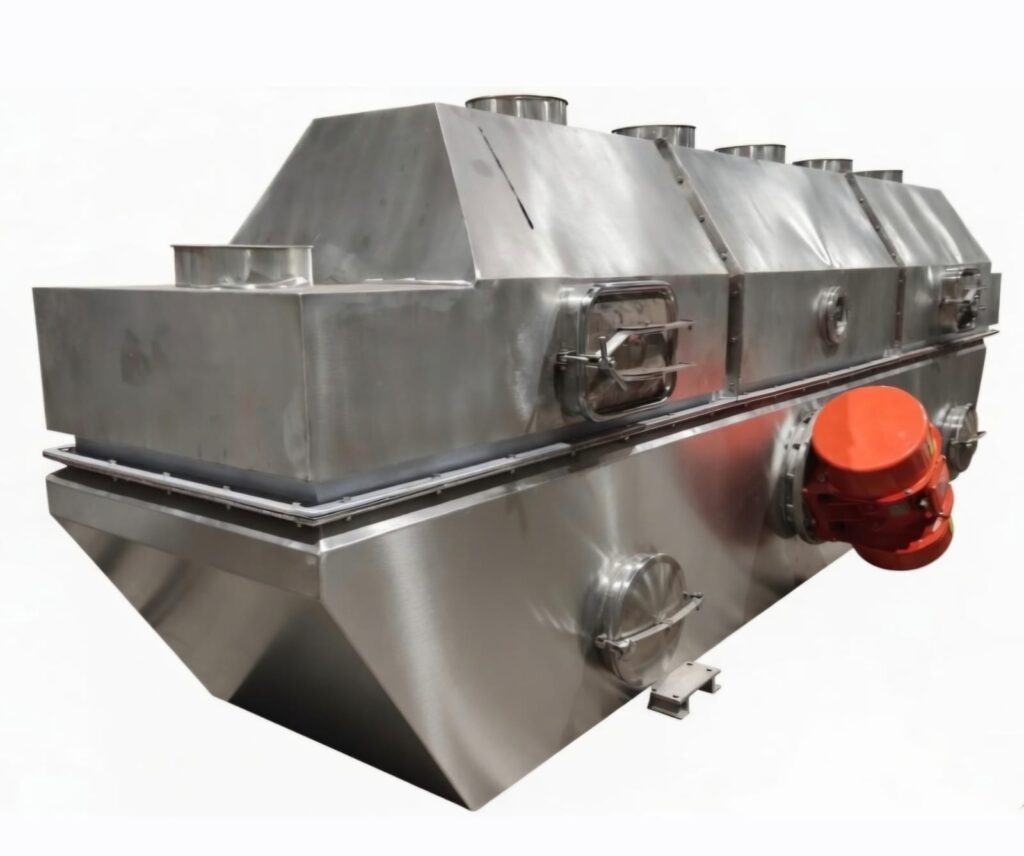
Fluid bed / multi-stage fluid bed
- Often used for: Controlled dehydration of particulate hydrates or prills toward lower hydrate states
- Why: Good gas–solid contact; temperature can be staged
- Watch: Agglomeration if particles soften; gas humidity; corrosion if HCl forms
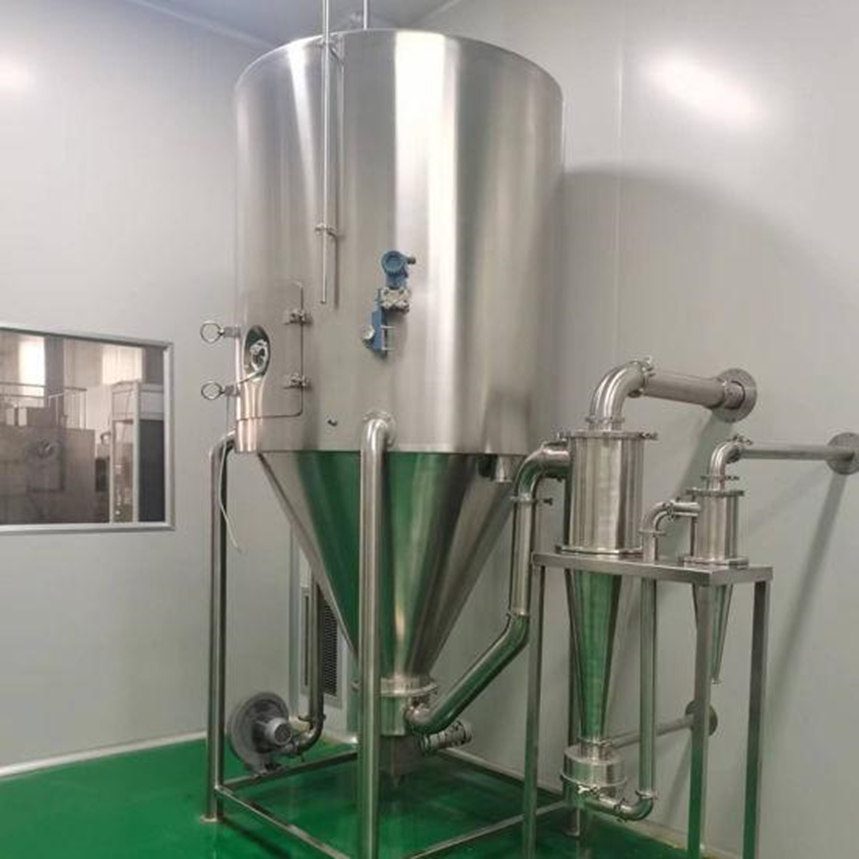
Spray drying (from brine / solution)
- Often used for: Converting concentrated MgCl₂ solutions into solid hydrate particles
- Why: Direct liquid-to-solid route
- Watch: Particle moisture/hydrate form, wall deposits, downstream dehydration still may be required
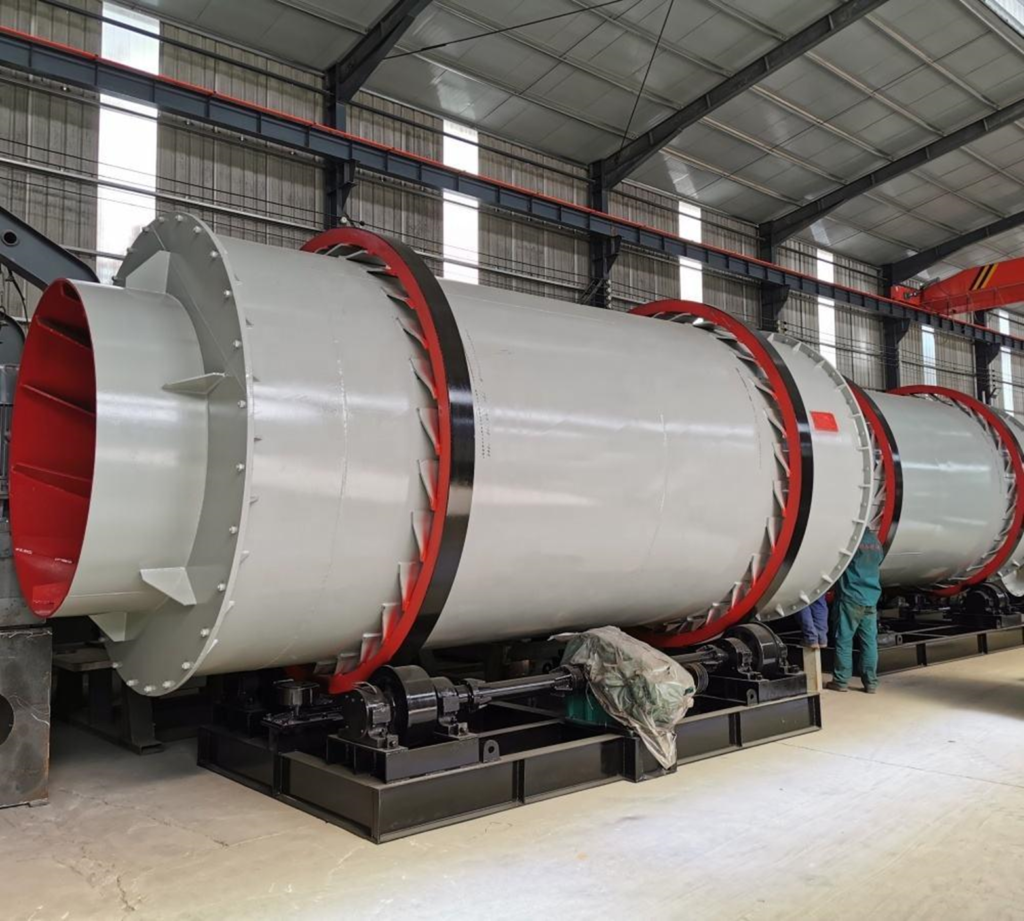
Rotary dryers
- Possible for: Robust bulk solids at defined temperature
- Watch: Stickiness during intermediate phases; less ideal when tight gas-atmosphere control is required
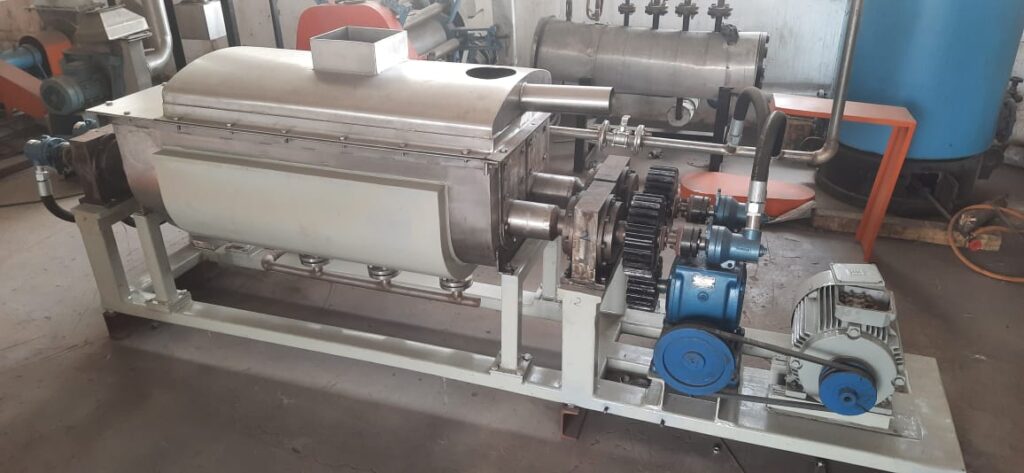
Contact / paddle-type systems
- Possible for: Pastes or sticky intermediates with indirect heat
- Watch: Torque, corrosion, vapour handling
Specialised deep-dehydration systems
- HCl-protected thermal dehydration, multi-stage fluid beds with controlled gas chemistry, or indirect routes (e.g. carnallite-type intermediates) appear in magnesium metallurgy literature when anhydrous purity is mandatory
- These are process plants, not generic dryers — scope and safety design differ sharply
GTI’s role: Engineered continuous drying systems (fluid bed, rotary, spray-related and contact principles as applicable) for inorganic salt and hydrate duties where convective or contact drying fits the specified target. Deep anhydrous MgCl₂ flowsheets with HCl atmospheres require specialised process engineering — we help clarify duty boundaries and suitable equipment families.
4. Problem–Solution Map
| Problem | Likely cause | Direction |
|---|---|---|
| Product cakes in dryer or silo | Hygroscopic pickup; intermediate sticky phase | Humidity control, temperature profile, packaging |
| Wall buildup / blockage | Softening or local melt | Lower local temperature, better agitation/dispersion, staged profile |
| High MgOHCl / MgO in product | Hydrolysis at excessive severity in air | Lower temperature target, shorter time, or HCl-controlled / alternative process |
| Corroded ducts and fans | HCl and moist salts | Materials selection, condensate management |
| Off-spec residual water | Wrong stage temperatures or residence time | Redefine target hydrate; pilot profile |
| Rehydration after dryer | Ambient exposure | Closed conveying, dry air blanketing, proper packs |
5. What to Tell a Dryer Manufacturer (RFQ Checklist)
- Feed identity — MgCl₂·6H₂O crystals, slurry, brine, prills?
- Target product — hexahydrate (surface-dry only), MgCl₂·4H₂O, MgCl₂·2H₂O, or anhydrous intent
- Purity limits — especially MgO / MgOHCl / free H₂O if relevant
- Capacity — continuous kg/h (state basis)
- Particle size after crystallisation or prilling
- Allowed temperature / gas atmosphere (air vs conditioned / HCl-bearing — only if your process requires it)
- Corrosion and emission constraints
- Upstream crystalliser / evaporator and downstream storage
- Pilot willingness — strongly recommended for hydrate duties
6. Safety, Corrosion and Environment
- Moist magnesium chloride systems are corrosive to many steels; specify materials after reviewing chloride + temperature + possible HCl
- If hydrolysis generates HCl, emission control and worker exposure must be designed deliberately
- Dust and hygroscopic deposits create housekeeping and electrical issues
- Do not improvise “open hot air, highest temperature” trials on large batches without vapour and materials planning
7. How to Evaluate a Magnesium Chloride Hexahydrate Dryer Manufacturer
| Criterion | What good looks like |
|---|---|
| Asks for target hydrate / purity | Not only “dry MgCl₂” |
| Discusses hydrolysis risk | Shows chemical process understanding |
| Proposes staged temperature | Matches multi-step dehydration |
| Addresses stickiness / melting | Feed system and geometry suited to intermediate phases |
| Materials & exhaust concept | Realistic for chlorides |
| Pilot or reference path | Similar inorganic hydrates or salts |
| Clear scope | Dryer vs full dehydration plant |
Red flags: One standard rotary quote with no hydrate discussion; guaranteed anhydrous purity from simple air drying alone; no corrosion or HCl narrative when deep dehydration is requested.
8. How GTI Dryers Can Help
GTI Dryers designs and manufactures industrial drying systems for chemicals and inorganic materials, including configurations based on fluid bed, rotary, flash/spin-flash and related continuous principles.
For magnesium chloride hexahydrate projects we:
- Clarify whether the duty is surface drying, partial dehydration or deep anhydrous production
- Match dryer family to feed form and temperature constraints
- Flag when the requirement moves into specialised HCl-atmosphere or metallurgical dehydration territory
- Support process-data-based proposals and trial planning for suitable scopes
Geographic Note
MgCl₂·6H₂O is linked to salt-lake and brine operations in China, the Middle East, and other regions, and to downstream magnesium and chemical uses globally. Indian engineering partners can support equipment design, fabrication and export documentation; process chemistry for high-purity anhydrous product must still follow the purity specification of the end use.
Frequently Asked Questions
Can a normal hot-air dryer produce anhydrous MgCl₂ from hexahydrate?
Simple hot-air drying is generally limited by hydrolysis as severity increases. High-purity anhydrous product usually needs controlled atmospheres or alternative process routes. Define purity targets first.
What is the biggest operating risk?
Softening/sticking in intermediate states and hydrolysis at high temperature in air — both damage operability and product quality.
Is fluid bed suitable for MgCl₂ hydrates?
Often evaluated for particulate feeds and staged dehydration, provided agglomeration and gas chemistry are controlled. Confirm with particle size and target hydrate data.
What should I send for an assessment?
Feed form, target composition (which hydrate or anhydrous), capacity, particle size, purity limits and any gas-atmosphere requirements.
Next Step
If you need a magnesium chloride hexahydrate dryer manufacturer partner, share your target product specification and capacity. GTI will review whether a continuous drying system fits your dehydration stage or whether the duty requires a specialised deep-dehydration flowsheet — with assumptions stated clearly.
Request a magnesium chloride hexahydrate drying assessment with your process data.
Contact the GTI Technical Team:
Website: gtidryers.com
Email: mktg@gtidryers.com
Phone / WhatsApp: +91 9330077417