
Limestone Drying Systems for Cement Plants, Calcium Carbonate & Mineral Processing
Limestone is one of the most important mineral raw materials used in cement manufacturing. It is primarily composed of calcium carbonate (CaCO₃) and supplies most of the calcium required in Portland cement production. Limestone is also widely used in lime manufacturing, calcium carbonate processing, construction materials, steel, chemicals and other mineral-based industries.
In cement plants, limestone is generally extracted from quarries, crushed and prepared as part of the raw-material mix before grinding and further processing. When the feed contains significant moisture, industrial drying can become an important process step because excessive moisture can affect material handling, grinding efficiency, mill capacity and overall process stability.
GTI Dryers designs and manufactures industrial drying systems for limestone, calcium carbonate, marl and other mineral materials, with rotary dryers being one of the key technologies considered for high-throughput bulk mineral applications. GTI’s mineral drying systems are designed for cement, mining, mineral processing and industrial material applications.
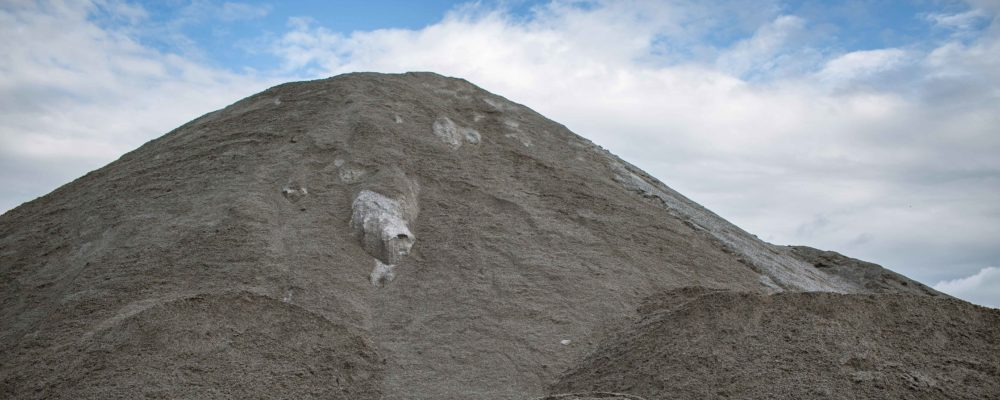
Why Is Limestone Dried Before Cement Processing?
Quarried limestone does not always arrive at the processing stage with a consistently low moisture level. Rainfall, quarry conditions, material geology, washing, stockpiling and the presence of clay-rich or marl components can influence moisture.
Excess moisture can create several processing challenges:
- Reduced grinding efficiency
- Higher energy requirements during grinding
- Material sticking and flow problems
- Reduced mill throughput
- Moisture variation in the raw-material feed
- Difficulties in conveying and handling
- Increased risk of process instability
- Additional thermal load later in the process
For this reason, cement and mineral-processing plants may use drying systems when the incoming material moisture and process configuration justify dedicated moisture removal.
The actual required outlet moisture should not be treated as a universal number. It depends on the cement process, grinding system, feed composition, climate, mill configuration and downstream requirements.
Limestone Moisture & Drying Requirements
Limestone moisture can vary substantially depending on quarry conditions and material type.
A practical project evaluation should consider:
| Parameter | Typical Project Consideration |
| Feed material | Limestone / marl / calcium carbonate-containing mineral |
| Initial moisture | Project-specific; can be several percent or higher |
| Final moisture | Determined by downstream grinding/process requirements |
| Particle size | Quarry/crushed/granulated/powder |
| Feed rate | Major factor in dryer sizing |
| Material temperature | Determines permissible drying conditions |
| Bulk density | Important for heat and mass transfer |
| Required residence time | Depends on moisture removal |
| Heating source | Hot gas, waste heat, gas, biomass, etc. |
| Material composition | CaCO₃, clay, MgO, silica and other components |
| Plant capacity | Determines dryer dimensions and configuration |
Important: The commonly quoted 5–15%+ feed moisture and <0.5–5% outlet moisture should be treated as indicative ranges, not guaranteed specifications for every limestone application. GTI Dryer sizing should be based on actual laboratory or plant data.
Where Is Limestone Used?
Limestone is not limited to cement manufacturing. Its applications extend across several major industrial sectors.
1. Cement Manufacturing
Cement is the most important application for limestone in the context of large-volume mineral processing.
Limestone supplies the calcium component required for clinker formation. USGS describes limestone as the primary raw material for cement/clinker manufacturing and notes that the majority of calcium in Portland cement raw-material mixes is supplied by limestone.
Typical process route:
Quarry → Crushing → Pre-Blending → Drying if Required → Raw Grinding → Homogenization → Preheating → Clinkerization → Cement Grinding
A limestone drying system is therefore primarily positioned upstream of grinding or within an integrated raw-material preparation system, depending on the plant design.
2. Calcium Carbonate Processing
Limestone is also an important source material for calcium carbonate products.
Depending on the process, calcium carbonate is used in:
- Plastics
- Paints and coatings
- Paper
- Rubber
- Construction materials
- Adhesives and sealants
- Chemical industries
- Animal feed and other applications
GTI Dryers’ mineral drying portfolio includes limestone powder and calcium carbonate among materials that may require controlled industrial moisture removal.
For fine calcium carbonate products, the appropriate dryer may differ from a high-throughput quarry limestone dryer.
3. Lime Manufacturing
Limestone is calcined to produce quicklime (CaO), releasing CO₂ during calcination.
Depending on the plant configuration, moisture removal before processing may be considered to improve feed preparation and thermal efficiency.
4. Steel & Metallurgical Applications
Limestone and lime are used in metallurgical processes, including applications associated with steelmaking and impurity control.
The required material properties and moisture specifications depend heavily on the specific process.
5. Chemical & Industrial Minerals
Limestone and calcium carbonate are used as raw materials or functional minerals in various chemical and industrial applications.
Drying may be required after:
- Washing
- Beneficiation
- Grinding
- Classification
- Slurry processing
- Precipitation
- Filtration
Why Rotary Dryers Are Widely Considered for Limestone
For large-volume mineral materials, rotary dryers are a major industrial drying technology because they can handle continuous high-throughput operation and relatively robust bulk solids.
GTI Dryers identifies rotary dryers as suitable for large-scale mineral powder drying, including limestone, gypsum and ore powders.
A typical rotary drying process is:
Wet Limestone → Feeding → Rotary Drum → Hot Gas Contact → Moisture Evaporation → Dust Separation → Dried Limestone
Depending on the material and plant design, rotary dryers may use direct or indirect heating arrangements.
How Does a Limestone Rotary Dryer Work?
A limestone rotary dryer generally consists of a rotating cylindrical drum through which the material moves continuously.
As the drum rotates:
- Wet limestone enters the dryer.
- Internal flights lift and distribute the material.
- Hot drying gas contacts the material.
- Heat transfers to the limestone.
- Moisture evaporates from the material.
- Moist exhaust gas leaves the dryer.
- Dried limestone exits at the discharge end.
- Dust-collection equipment separates entrained fines where required.
The internal flight design, drum dimensions, gas velocity, residence time and temperature profile are engineered according to the material and production requirement.
Direct vs Indirect Limestone Drying
Direct Rotary Dryer
In direct drying, heated gas comes into contact with the limestone.
Advantages can include:
- High throughput
- Simple process arrangement
- Strong heat transfer
- Suitable for bulk mineral materials
- Continuous operation
This configuration is commonly considered for robust mineral materials where direct contact with the drying gas is acceptable.
Indirect Dryer
In indirect drying, heat is transferred through a separating surface rather than directly mixing the product with combustion gases.
This may be considered when:
- Product contamination must be minimized
- Specific heating conditions are required
- The material has special process constraints
- The heating medium needs to remain separated from the product
The appropriate configuration should be selected after reviewing the actual limestone composition and process requirements.
Limestone Dryer Selection: What Should a Cement Plant Consider?
Choosing a limestone dryer only by capacity can result in an inefficient process.
A proper engineering assessment should consider:
1. Limestone Moisture
Determine both the average and maximum feed moisture.
2. Production Capacity
Large cement plants may require very high continuous throughput.
3. Particle Size
Coarse quarry material, crushed limestone and fine mineral powder have different drying characteristics.
4. Final Moisture
The target should be based on the requirements of the downstream grinding and process system.
5. Heating Source
Potential heat sources include:
- Hot gases
- Waste heat
- Natural gas
- Biomass
- Steam
- Thermal oil
- Other suitable plant heat sources
6. Dust Loading
Fine limestone can generate significant dust, requiring appropriate cyclones, bag filters or other dust-management equipment.
7. Abrasion
Mineral materials can be abrasive. Material-contact components and internal flight design should therefore be selected accordingly.
8. Energy Efficiency
Heat recovery, insulation, airflow optimization and appropriate burner/heater selection can influence operating costs.
Where Is Limestone Drying Most Important? —
Limestone drying demand is strongly connected to where cement and mineral-processing industries are concentrated and where suitable limestone deposits support large-scale production.
This makes geographic targeting particularly important for limestone dryer manufacturers.
Limestone & Cement Industry in India
India is one of the most important markets for limestone-based cement manufacturing.
Limestone resources are distributed across multiple Indian states, while major cement production capacity is concentrated in states including Rajasthan, Andhra Pradesh, Karnataka, Madhya Pradesh, Tamil Nadu, Gujarat, Chhattisgarh and Telangana. A recent sector report identifies Rajasthan, Andhra Pradesh, Karnataka, Madhya Pradesh and Tamil Nadu among India’s leading states by cement production capacity.
Rajasthan is particularly important. The Rajasthan Department of Mines & Geology reports cement-grade limestone in 25 of the state’s 33 districts and identifies districts including Chittorgarh, Nagaur, Jaisalmer, Pali, Jhunjhunu, Sirohi, Ajmer, Banswara and Udaipur as important cement-grade limestone areas.
Important Indian Locations for Limestone & Cement
Rajasthan
- Chittorgarh
- Nagaur
- Jaisalmer
- Pali
- Jhunjhunu
- Sirohi
- Ajmer
- Udaipur
Andhra Pradesh
- Kurnool
- Guntur
- Kadapa
- Other limestone-producing belts
Karnataka
- Major limestone and cement-producing regions across the state
Gujarat
- Kutch
- Junagadh
- Bhavnagar
Madhya Pradesh
- Satna
- Rewa
- Katni and surrounding cement/mineral belts
Chhattisgarh
- Raipur region
- Baloda Bazar
- Other major cement clusters
Telangana
- Nalgonda
- Suryapet and surrounding cement belt
Limestone Dryer Opportunities in China
China has a large cement and mineral-processing industry, making it an important potential market for industrial limestone drying systems.
Potential demand centers include major cement-producing provinces and regions where limestone quarrying and cement clinker production are concentrated.
For China , relevant search phrases include:
- Limestone dryer manufacturer China
- Rotary dryer for limestone China
- Cement plant rotary dryer China
- Limestone drying equipment
- Mineral drying system China
- Industrial rotary dryer manufacturer
For GTI Dryers, the opportunity is not simply to target “China” but to target cement clusters, EPC companies, mineral-processing companies and equipment procurement teams.
Limestone Dryer Market in Southeast Asia
Southeast Asia offers opportunities in countries with growing cement, construction-material and mineral-processing industries.
Important markets to investigate include:
Indonesia
Large cement manufacturing and mineral-processing sector.
Vietnam
Significant cement manufacturing and limestone resources.
Thailand
Established cement and industrial-mineral industries.
Philippines
Growing construction-material and cement demand.
Malaysia
Cement, construction materials and mineral-processing applications.
For these markets, GTI Dryers can target searches such as:
“limestone dryer manufacturer Indonesia,” “cement plant dryer Vietnam,” “rotary dryer Thailand,” “limestone drying equipment Malaysia,” and similar country-specific searches.
Limestone Dryer Opportunities in the Middle East
The Middle East is another important geographic market for cement, lime and mineral-processing equipment.
Countries such as:
- Saudi Arabia
- United Arab Emirates
- Oman
- Jordan
- Egypt
- Qatar
have established or developing cement, construction-material and mineral-processing industries.
In these markets, the dryer opportunity can be connected to:
- Cement plants
- Lime plants
- Mineral-processing facilities
- Calcium carbonate plants
- Quarry operations
- Construction-material manufacturers
GTI Dryers can position itself around custom-engineered industrial drying systems manufactured in India for international projects.
Limestone Dryer Market in Europe
European limestone and cement operations generally place strong emphasis on:
- Energy efficiency
- Heat recovery
- Process automation
- Dust control
- Emissions management
- Equipment reliability
- Plant integration
For Europe, GTI Dryers should emphasize engineering, process optimization, automation, energy integration and customized design, rather than competing only on equipment price.
Potential markets include:
- Germany
- Italy
- Spain
- France
- Poland
- Greece
- Türkiye
- Eastern European cement-producing regions
Limestone Dryer Market in the United States
Limestone is widely used in the United States for cement, aggregate, lime and other industrial applications. USGS notes that limestone is widespread but that some regions have limited local supplies, making transportation and local quarry availability important factors.
Potential applications for industrial drying include:
- Cement raw materials
- Limestone powder
- Calcium carbonate
- Mineral processing
- Lime production
- Industrial minerals
For the US market, GTI Dryers should focus around custom engineering, high-capacity mineral drying, energy efficiency, automation, dust management and total project cost.
Limestone Drying in Africa
Africa is also an emerging opportunity for cement and mineral-processing equipment.
Potential target markets include:
- Nigeria
- Egypt
- Algeria
- Morocco
- Kenya
- Tanzania
- South Africa
- Ethiopia
Growing infrastructure development and cement capacity can create demand for equipment associated with limestone preparation and mineral processing.
GTI Dryers Limestone Drying Solutions
GTI Dryers provides industrial drying solutions for limestone, calcium carbonate, mineral powders and other bulk industrial materials.
GTI’s mineral drying systems are designed for applications where moisture must be controlled before further processing, grinding, storage, transportation or industrial use.
Depending on the application, GTI Dryers can evaluate:
- Rotary dryers
- Flash dryers
- Fluidized-bed dryers
- Paddle dryers
- Belt/band dryers
- Other customized drying configurations
The final technology selection depends on the material properties and process requirements.
Why Choose GTI Dryers for Limestone Drying?
For a limestone or cement plant, the dryer is not an isolated machine. It must work as part of the complete material-handling and grinding process.
GTI Dryers focuses on:
Process-Based Design
Dryer selection based on actual material and operating conditions.
High-Capacity Industrial Processing
Solutions designed for continuous industrial applications.
Customized Engineering
Dryer dimensions, heating arrangement, airflow and material-contact components can be engineered according to the project.
Energy Optimization
Potential integration of waste heat and suitable heat sources.
Automation
PLC, HMI, VFD and instrumentation can be incorporated where required.
Dust Management
Dryer systems can be integrated with suitable cyclone, bag-filter and exhaust arrangements.
Global Project Capability
Engineering and manufacturing from India for customers across international markets.
Limestone Dryer: Project Data Required for Quotation
For accurate dryer selection and sizing, a cement or mineral-processing company should provide:
- Material name and composition
- Initial moisture %
- Required final moisture %
- Feed rate in kg/h or TPH
- Feed particle size
- Bulk density
- Feed temperature
- Required outlet temperature
- Available heat source
- Operating hours per day
- Required continuous/batch operation
- Available installation area
- Material of construction requirements
- Dust/emission-control requirements
For difficult or variable materials, sample testing and drying trials can provide better confidence before final equipment sizing.
Frequently Asked Questions About Limestone Dryers
What is a limestone dryer?
A limestone dryer is an industrial drying system designed to reduce moisture in limestone before grinding, processing, storage or other downstream applications.
Which dryer is commonly used for limestone?
For high-volume bulk limestone applications, rotary dryers are commonly considered because they are designed for continuous processing of large quantities of mineral material. Other technologies may be appropriate for finer or differently processed limestone.
Can a rotary dryer dry limestone?
Yes. Rotary dryers can be engineered for continuous limestone drying, with dryer size and configuration determined by feed moisture, capacity, particle size, heat source and required final moisture.
Is limestone used in cement manufacturing?
Yes. Limestone is the principal calcium-bearing raw material for Portland cement clinker production.
Why does limestone need to be dried before grinding?
Excess moisture can negatively affect material flow and grinding performance. Drying may therefore be required when the incoming limestone moisture is too high for the selected grinding/process configuration.
Can GTI Dryers manufacture a limestone rotary dryer?
Yes. GTI Dryers develops customized rotary and other industrial drying systems for limestone and mineral-processing applications.
Does GTI Dryers supply limestone dryers outside India?
GTI Dryers is positioned to provide engineered industrial drying solutions for international applications, subject to project requirements, specifications and commercial feasibility.
Conclusion: Limestone Drying as a Critical Mineral-Processing Application
Limestone is a high-volume, globally important mineral raw material, particularly for cement manufacturing. Its use extends into lime, calcium carbonate, steel, chemical and other mineral-based industries.
Because limestone moisture varies with geology, quarry conditions, climate, washing and material handling, the need for drying and the required outlet moisture must be established on a project-specific basis.
For large-volume cement and mineral-processing operations, rotary drying technology can provide a robust continuous approach to moisture reduction, while other drying technologies may be appropriate for finer powders, slurries or specialized calcium carbonate applications.
With strong limestone and cement industries across India, China, Southeast Asia, the Middle East, Europe, Africa and North America, limestone drying represents a significant global opportunity for industrial dryer manufacturers.
GTI Dryers — Engineered Industrial Drying Solutions for Limestone, Minerals, Cement and Global Process Industries.