
Inorganic Salt Dryer Manufacturer India
A chemical plant can complete precipitation, crystallization and filtration successfully, yet still face a difficult production problem: the recovered material may contain too much moisture, form hard agglomerates, lose its required crystal structure or become difficult to handle during storage and packaging.
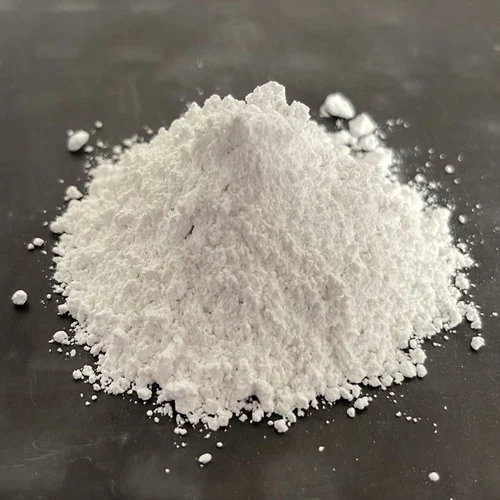
This challenge is common across selected inorganic salts, metal sulfates, specialty sodium and potassium compounds, and metal hydroxide precipitates. Materials such as copper sulfate, iron sulfate, selected potassium salts, nickel hydroxide, copper hydroxide and other inorganic precipitates can require carefully engineered drying after filtration or separation.
The right dryer depends on what the material is, how it leaves the upstream process, and what the final product must become. A free-flowing salt crystal, a wet filter cake and a gelatinous metal hydroxide precipitate do not necessarily need the same equipment.
GTI Dryers evaluates industrial drying requirements around feed characteristics, moisture-removal duty, product quality, material compatibility and production objectives. This page explains how chemical manufacturers can diagnose their drying challenges and identify an appropriate technology for further engineering assessment.
1. The Real Problem Begins After Filtration
In many inorganic chemical processes, the dryer receives material from a centrifuge, filter press, vacuum filter or another solid-liquid separation system. The material may look like a solid, but its drying behaviour depends on how the liquid is retained and how the particles are structured.
Consider three different feed conditions:
<box gap={3}> <row align=start gap={3}> <AsyncImage query=”blue copper sulfate pentahydrate crystals industrial chemical close up” aspectRatio=”4:5″ maxWidth=”112px” /> <box flex=”1″ gap={1}> **Crystalline inorganic salts**
Copper sulfate, iron sulfate and selected sodium or potassium salts may enter as crystals or granules with surface moisture and, depending on the product, a defined water-of-crystallization requirement. <text color="secondary" size="sm">Main concern: remove the required moisture without unintentionally changing the specified hydrate form, crystal quality or purity.</text></box></row> <divider color=”subtle” /> <row align=start gap={3}> <AsyncImage query=”industrial chemical filter cake wet crystalline inorganic salt material” aspectRatio=”4:5″ maxWidth=”112px” /> <box flex=”1″ gap={1}> **Wet salt cakes and precipitated solids**
Filter cakes can contain interstitial liquid, fine particles and agglomerates. Their moisture content and permeability may vary across batches. <text color="secondary" size="sm">Main concern: achieve uniform drying without excessive lump formation, product loss or unnecessary energy consumption.</text></box></row> <divider color=”subtle” /> <row align=start gap={3}> <AsyncImage query=”wet metal hydroxide precipitation sludge laboratory industrial chemical precipitate” aspectRatio=”4:5″ maxWidth=”112px” /> <box flex=”1″ gap={1}> **Metal hydroxides and fine chemical precipitates**
Hydroxides such as nickel hydroxide, copper hydroxide and other precipitated metal compounds may retain substantial liquid and behave as cohesive or gelatinous solids. <text color="secondary" size="sm">Main concern: determine whether mechanical dewatering, conditioning, indirect drying or another suitable process is needed before final drying.</text></box></row> </box>
These materials cannot be treated as one universal “chemical powder” application. Their physical structure, chemistry and final product specifications determine the appropriate drying route.
2. Materials That May Require Specialized Inorganic Chemical Drying
Copper sulfate dryer applications
Copper sulfate is used in industrial chemical processing, agriculture, mineral processing and other applications. Copper sulfate pentahydrate is a hydrated crystalline compound, so drying must be specified according to the required final form.
If the product must remain copper sulfate pentahydrate, removing surface or free moisture is different from deliberately removing water of crystallization. The distinction matters because copper sulfate hydrates undergo stepwise dehydration, and temperature, water-vapour conditions and exposure time influence the resulting hydrate phases.
A suitable drying assessment should consider:
- Whether the feed consists of crystals, granules or a wet cake.
- The required hydrate form and allowable loss on drying.
- Crystal size, attrition and fines generation.
- Surface moisture versus chemically bound water.
- Corrosion compatibility and product-contact materials.
- Product recovery, storage conditions and moisture reabsorption.
A dryer intended for surface-moisture removal should not automatically be specified for producing anhydrous copper sulfate. These are different process objectives.
Iron sulfate dryer applications
Iron sulfate may be generated or processed in chemical manufacturing, metal treatment, water treatment and mineral-processing operations.
The feed may contain iron sulfate heptahydrate, other hydrate forms, wet crystals or material recovered from a process stream. Each has different implications for moisture removal and product stability.
Published research documents the stepwise dehydration of iron(II) sulfate heptahydrate. Industrial process design must therefore distinguish between drying the external liquid on crystals and changing the hydrate composition of the salt
Important assessment points include:
- The identity and oxidation state of the iron compound.
- Required hydrate form and final moisture specification.
- Crystal or cake condition entering the dryer.
- Sensitivity to temperature and atmospheric moisture.
- Potential agglomeration and material-handling issues.
- Corrosion resistance and downstream product requirements.
For certain iron sulfate processes, the target may be a lower hydrate rather than a fully anhydrous salt. The specification must be established before selecting the equipment.
Sodium and potassium salts beyond standard bulk chemicals
Specialty sodium and potassium compounds may be recovered through crystallization, precipitation, filtration or other chemical operations. Depending on the material, examples may include selected phosphates, sulfates, carbonates, chlorides and other process-specific salts.
The correct dryer cannot be determined from the cation alone. A sodium salt and a potassium salt may differ significantly in solubility, crystal behaviour, moisture sensitivity and thermal stability.
The engineering review should establish:
- Exact chemical identity and purity.
- Whether the product is hydrated or anhydrous.
- Crystal size distribution and mechanical strength.
- Presence of mother liquor or other dissolved impurities.
- Tendency to cake or reabsorb moisture.
- Required final moisture and downstream handling conditions.
For products outside standard bulk-inorganic applications, material-specific assessment is especially important. The objective is to select a process that meets the product specification, not simply to maximize evaporation rate.
Metal hydroxides and inorganic precipitates
Metal hydroxides may form during precipitation, neutralization, hydrometallurgical processing, catalyst preparation or chemical recovery. Depending on the process, the recovered solids may include nickel hydroxide, copper hydroxide, zinc hydroxide, aluminium hydroxide, iron hydroxides or mixed-metal precipitates.
These materials can behave very differently from crystalline salts. Some precipitates form fine, compressible cakes that retain liquid and resist air penetration. Others can agglomerate or change chemically if subjected to inappropriate thermal conditions.
The drying assessment should cover:
- Chemical composition and precipitate structure.
- Cake moisture after filtration or centrifugation.
- Particle size, cohesion and permeability.
- Whether the material can be safely conditioned or granulated.
- Required final moisture and chemical phase.
- Potential oxidation, decomposition or other transformations.
- Dust control, corrosion and downstream recovery requirements.
Drying must not be confused with calcination. Drying removes moisture under defined conditions; calcination deliberately induces thermal or chemical changes. If a process requires conversion of a hydroxide into an oxide, that is a different duty requiring its own process specification.
3. Which Dryer Is Suitable for Your Salt or Precipitate?
Selecting equipment should begin with the physical state of the feed rather than the chemical name alone.
| Dryer or process option | Potential application | Key limitation to evaluate |
| Fluid bed dryer | Suitable free-flowing crystals, granules and conditioned particles | Requires particles with suitable size, density and fluidization behaviour |
| Vibratory fluid bed dryer (VFBD) | Suitable particulate solids that benefit from controlled conveying and fluidization | Cohesive, gelatinous or very fine wet feeds may require conditioning or another route |
| Rotary dryer | Robust salts, granules or suitable bulk solids | May be unsuitable for fragile crystals or sticky, cohesive cakes without appropriate design |
| Paddle or other indirect dryer | Selected cohesive, pasty or wet chemical feeds that are compatible with indirect drying | Requires assessment of heat transfer, product contact, mixing and discharge behaviour |
| Spray dryer | Suitable pumpable liquid feeds that must be converted into powder | Not a direct replacement for drying an existing filter cake; atomization and product formation must be feasible |
| Mechanical dewatering plus thermal drying | Wet precipitates or filter cakes with substantial retained liquid | Requires assessment of the upstream dewatering stage and the characteristics of the resulting cake |
These are preliminary screening options, not universal recommendations. Final selection may also involve conditioning, granulation, classification, cooling or more than one drying stage.
Fluid bed drying for suitable salt crystals
A fluid bed dryer passes a controlled gas stream through a bed of particles, transferring heat and removing moisture. When the material is sufficiently free-flowing, fluidization can support relatively uniform contact between the gas and the solids.
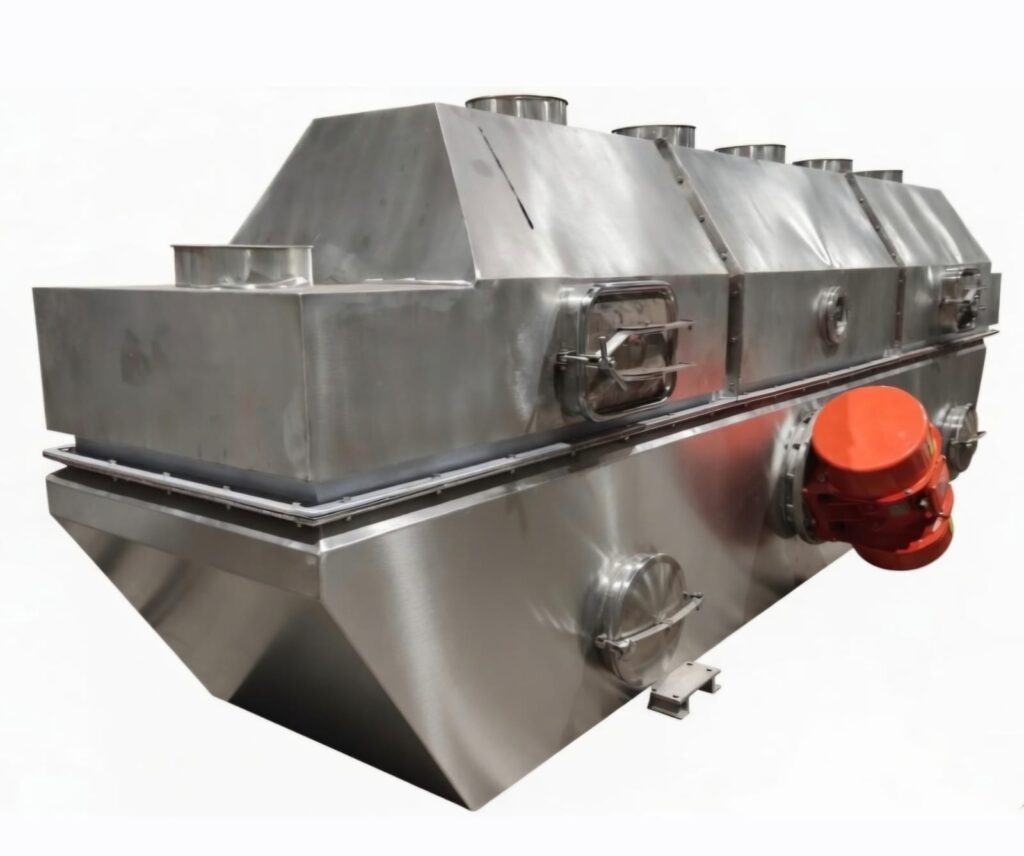
It may be worth evaluating for suitable crystalline salts and granules where the required product properties can be maintained.
The assessment should cover particle size, bulk density, attrition, fines, inlet moisture, target hydrate form and exhaust handling. If the feed is a cohesive filter cake, it may need to be mechanically broken, conditioned or processed through a different technology first.
Rotary drying for robust inorganic solids
Rotary dryers may be considered for robust salts, granules and other bulk solids where the material can tolerate the required movement and heat exposure.
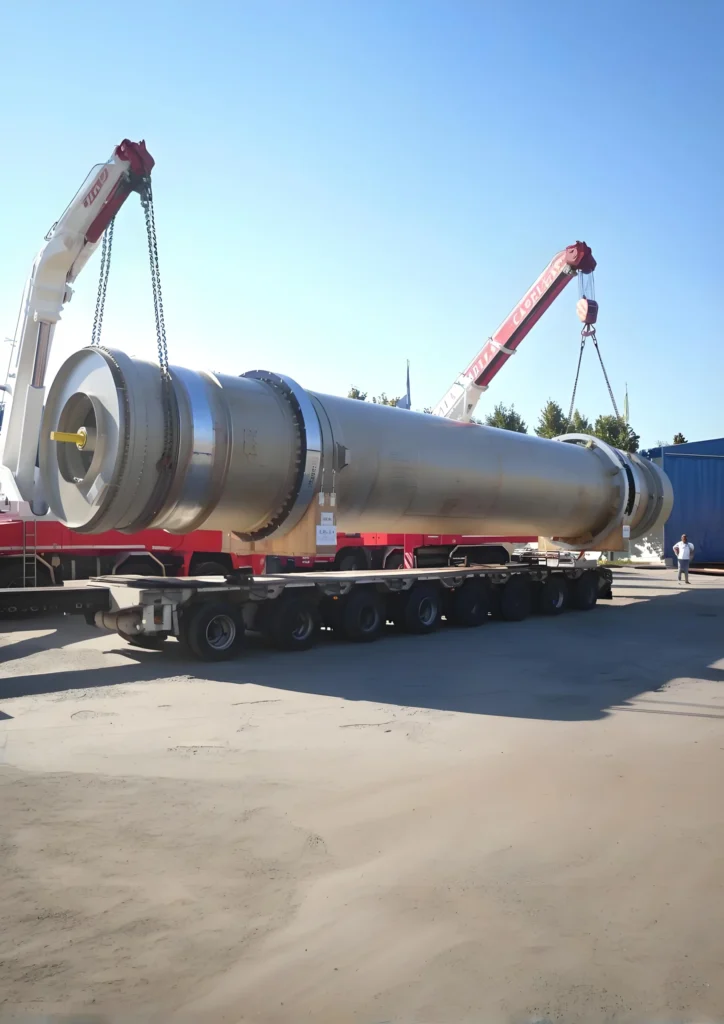
The feed must be evaluated for its tendency to cake, adhere to surfaces, fracture or undergo unwanted chemical changes. A rotary dryer should not be selected solely because the process has a high throughput requirement.
Indirect drying for selected wet cakes
Indirect dryers transfer heat through heated surfaces rather than relying solely on direct contact with hot drying gas. Paddle dryers are one possible option for suitable pastes, cakes and cohesive materials.
Potential advantages to evaluate include reduced process-gas requirements and suitability for enclosed processing. Actual performance depends on the material’s rheology, heat-transfer characteristics, discharge behaviour and required final moisture.
Indirect drying is not automatically the best option for every precipitate. Some cakes require upstream dewatering, conditioning or a different mechanical arrangement.
Spray drying when the feed is liquid
If the chemical process produces a pumpable solution or suspension and the desired output is powder, spray drying may be assessed.
This is a different duty from drying crystals or filter cakes. The engineering review must establish whether the feed can be atomized, whether the target compound can withstand the drying conditions, and how powder collection and exhaust management will be handled.
4. Common Drying Problems—and What to Investigate
| Production symptom | Possible cause | Engineering response |
| Moisture varies between batches | Inconsistent cake moisture, feed rate or particle distribution | Characterize feed variability and review drying capacity and control |
| Hard lumps after drying | Agglomeration, sticky surfaces or poor feed distribution | Examine cake preparation, particle behaviour and dryer configuration |
| Crystals break or produce excessive fines | Excessive mechanical stress or unsuitable conveying | Evaluate handling, fluidization, agitation and discharge |
| Product changes colour or composition | Unwanted dehydration, oxidation or thermal reaction | Define chemical-phase requirements and review the thermal profile |
| Salt cakes during storage | Residual moisture, humidity exposure or hygroscopic behaviour | Check final moisture specification, cooling, packaging and storage |
| Metal hydroxide remains difficult to dry | High retained liquid, fine particles or poor cake permeability | Review mechanical dewatering, conditioning and thermal-drying options |
| High energy consumption | Excessive evaporation load, poor heat integration or unsuitable process conditions | Establish a mass and energy balance and evaluate heat recovery |
| Corrosion or maintenance issues | Incompatible materials, abrasive solids or chemical exposure | Review wetted materials, liners, seals and operating environment |
| Product recovery is low | Dust carryover, fines, deposits or unsuitable separation | Assess collection equipment, exhaust flow and product losses |
These symptoms can have several causes. Correct diagnosis should be based on material testing, operating data and the complete process rather than a single equipment adjustment.
5. The Most Important Distinction: Free Moisture vs Water of Crystallization
For hydrated inorganic salts, a moisture specification needs careful interpretation.
Free or surface moisture is liquid present on particle surfaces, between crystals or within the pores of a wet cake.
Water of crystallization is incorporated into the crystalline structure of a hydrate. Removing it can change the chemical form and product properties.
For example, copper sulfate pentahydrate and copper sulfate monohydrate are not interchangeable product specifications. Similarly, iron sulfate may be supplied or processed in different hydrate forms. Research on these compounds shows that dehydration can occur in stages rather than as a single simple moisture-removal event.
Before specifying a dryer, confirm whether the required target is:
- Removal of external liquid only.
- A specified loss on drying.
- A defined hydrate composition.
- A defined residual-moisture level plus a chemical-purity requirement.
- A deliberate chemical conversion requiring a separate thermal process.
This distinction directly influences the process conditions, instrumentation and product testing needed.
6. How to Reduce Drying Costs Without Compromising Product Quality
The most effective energy-saving opportunity may occur before the material enters the dryer.
Improve upstream dewatering
If the feed is a wet filter cake, investigate whether the centrifuge, filter press or other separation stage can reduce the incoming liquid load within acceptable product and operating constraints.
Removing more liquid mechanically can reduce the amount of water that must be evaporated thermally. The actual benefit depends on the material and the available separation technology.
Match the dryer to the feed
A free-flowing crystal and a cohesive precipitate have different heat- and mass-transfer characteristics. Selecting equipment around the real feed can reduce the risk of excessive residence time, unstable operation and product handling problems.
Avoid unnecessary dehydration
For hydrated salts, the target chemical form must be specified. If the product only requires removal of surface moisture, a process intended to produce a lower hydrate could be inappropriate and energy-intensive.
Evaluate heat recovery and insulation
Depending on the process, opportunities may include exhaust-heat recovery, insulation, improved control and integration with available heat sources. These options should be assessed against corrosion, contamination, humidity and product-quality requirements.
Measure product quality—not just outlet moisture
A dryer should be assessed against the complete product specification. Final moisture alone may not indicate whether crystal size, hydrate form, purity, flowability or other critical attributes have been maintained.
7. Corrosion, Dust and Process Safety
Inorganic chemical drying systems must be designed around the actual chemical environment.
Materials such as metal sulfates, chlorides, hydroxides and mixed precipitates may differ in corrosivity, abrasiveness, dust characteristics and compatibility with equipment materials. The choice of stainless steel, special alloys, coatings, seals or liners should be based on the chemical composition, concentration, temperature and other operating conditions—not a generic assumption that one material suits all salts.
The project assessment should also consider:
- Dust collection and occupational exposure controls.
- Potentially hazardous metals and chemical-specific handling procedures.
- Exhaust-air treatment where required.
- Safe maintenance and cleaning access.
- Moisture protection during cooling, storage and packaging.
- Any applicable environmental and process-safety requirements.
For metal-bearing precipitates, recovery, reuse or disposal routes depend on composition and applicable regulations. Drying does not by itself establish that a material is safe for reuse or disposal.
8. A Practical Dryer Selection Checklist for Chemical Manufacturers
Before requesting a quotation, prepare the following information where available.
<box border radius=”xl” padding={4} gap={3}> <title size=”lg”>Dryer application brief</title> <text color=”secondary” size=”sm”>Use this checklist to organize the information needed for an initial technical review.</text> {@body const checklist = [ “Exact chemical name, formula and grade”, “Feed form: crystals, granules, filter cake, paste or precipitate”, “Feed rate and operating hours”, “Initial moisture and how it is measured”, “Required final moisture or hydrate specification”, “Particle size, bulk density and flow behaviour”, “Chemical purity and other product-quality limits”, “Thermal sensitivity and known decomposition or oxidation risks”, “Upstream equipment and available mechanical dewatering”, “Available heat source, utilities and installation location”, “Exhaust, dust collection and environmental requirements”, “Packaging, storage and downstream processing requirements” ]} {@body const [checkedItems, setCheckedItems] = DIL.useState([])} <text color=”secondary” size=”sm”>{checkedItems.length} of {checklist.length} items prepared</text> {#each checklist as item} <checkbox key={item} checked={checkedItems.includes(item)} onChange={(checked) => setCheckedItems(old => checked ? […old, item] : old.filter(x => x !== item))} lineThrough={false}>{item}</checkbox> {/each} <button block onClick={() => GenUI.copy(checklist.map((item) => `${checkedItems.includes(item) ? “[x]” : “[ ]”} ${item}`).join(“\n”))} variant=”outline”>Copy checklist</button> </box>
If some information is unavailable, provide the best available process description and explain what still needs to be measured. Laboratory or pilot testing may be appropriate when the material’s drying behaviour or hydrate stability is uncertain.
9. How GTI Dryers Can Support an Inorganic Salt Drying Project
GTI Dryers provides industrial drying solutions across chemical and process-industry applications. For additional inorganic salts, metal sulfates and precipitated metal compounds, the first step is an application review to establish the required feed-to-product process.
Depending on the application, the engineering assessment may consider fluid bed, vibratory fluid bed, rotary, indirect or other suitable drying arrangements. The final configuration should follow the material’s properties and product specification rather than a predetermined machine choice.
A useful initial enquiry should explain:
- What chemical is being processed?
- Does it enter the dryer as crystals, granules, wet cake or a precipitate?
- What is the current moisture content?
- What final moisture or hydrate form is required?
- What is the target production capacity?
- Are purity, crystal integrity or particle-size limits critical?
- Is mechanical dewatering already installed?
With these details, the technical team can determine what additional information is needed to assess the process and identify a suitable equipment route.
GTI Dryers — Engineered Drying Solutions from India for Global Industries.
For an application-specific discussion, visit GTI Dryers and share your chemical name, feed condition, required output and production objectives.
10. Frequently Asked Questions
Which dryer is suitable for copper sulfate?
The choice depends on whether the feed is a wet cake, crystals or granules and whether the target is surface-moisture removal or a specified hydrate form. A fluid bed, rotary or another suitable system may be evaluated for the actual feed. Producing a lower hydrate or anhydrous material requires a distinct process specification.
Can iron sulfate be dried in an industrial fluid bed dryer?
A fluid bed may be suitable for iron sulfate particles with appropriate size, density and fluidization behaviour. The required hydrate form, particle attrition, feed moisture and thermal behaviour must be assessed before specifying the equipment.
How should a metal hydroxide filter cake be dried?
Begin by characterizing the cake and reviewing the upstream dewatering process. Depending on its cohesion, liquid retention and thermal behaviour, options may include improved mechanical dewatering followed by indirect drying or another suitable thermal system.
Is a rotary dryer suitable for all inorganic salts?
No. Suitability depends on the feed’s mechanical strength, stickiness, particle size, moisture, thermal behaviour and final product requirements. Fragile crystals or cohesive precipitates may require a different approach.
What is the difference between drying and calcination?
Drying primarily removes moisture under defined conditions. Calcination intentionally produces a thermal or chemical transformation. For example, converting a metal hydroxide into an oxide may require a different process from simply reducing its retained moisture.
Why does a dried salt become lumpy during storage?
Possible causes include residual moisture, moisture absorption from ambient air, temperature changes and particle interactions. The investigation should cover the specified final moisture, cooling, packaging and storage environment.
Can one dryer process several inorganic salts?
Potentially, if the materials are compatible with the same process configuration and product-contact requirements. However, different salts can have different hydrate stability, corrosivity, particle behaviour and contamination limits. Changeover and cleaning requirements must also be considered.
What information is required for a chemical dryer quotation?
Provide the chemical identity, feed form, feed rate, initial moisture, target final moisture or hydrate form, particle properties, thermal constraints, utilities and installation location. Additional material testing may be necessary before performance can be specified.
Conclusion: Solve the Feed Problem Before Selecting the Dryer
Copper sulfate, iron sulfate, specialty sodium and potassium salts, and metal hydroxide precipitates may all require industrial drying, but their process needs can differ substantially.
The most reliable approach is to define the chemical form, characterize the feed, quantify the moisture-removal requirement and select equipment around the required final product. This is especially important when crystal integrity, hydrate composition, purity or difficult wet-cake behaviour affects the commercial value of the material.
Need a drying solution for an inorganic salt or metal hydroxide precipitate? Contact GTI Dryers with your material details and production targets to begin an application-specific assessment.