
When conventional distillation reaches its limit, how can a chemical or biofuel plant remove the remaining water from a solvent?
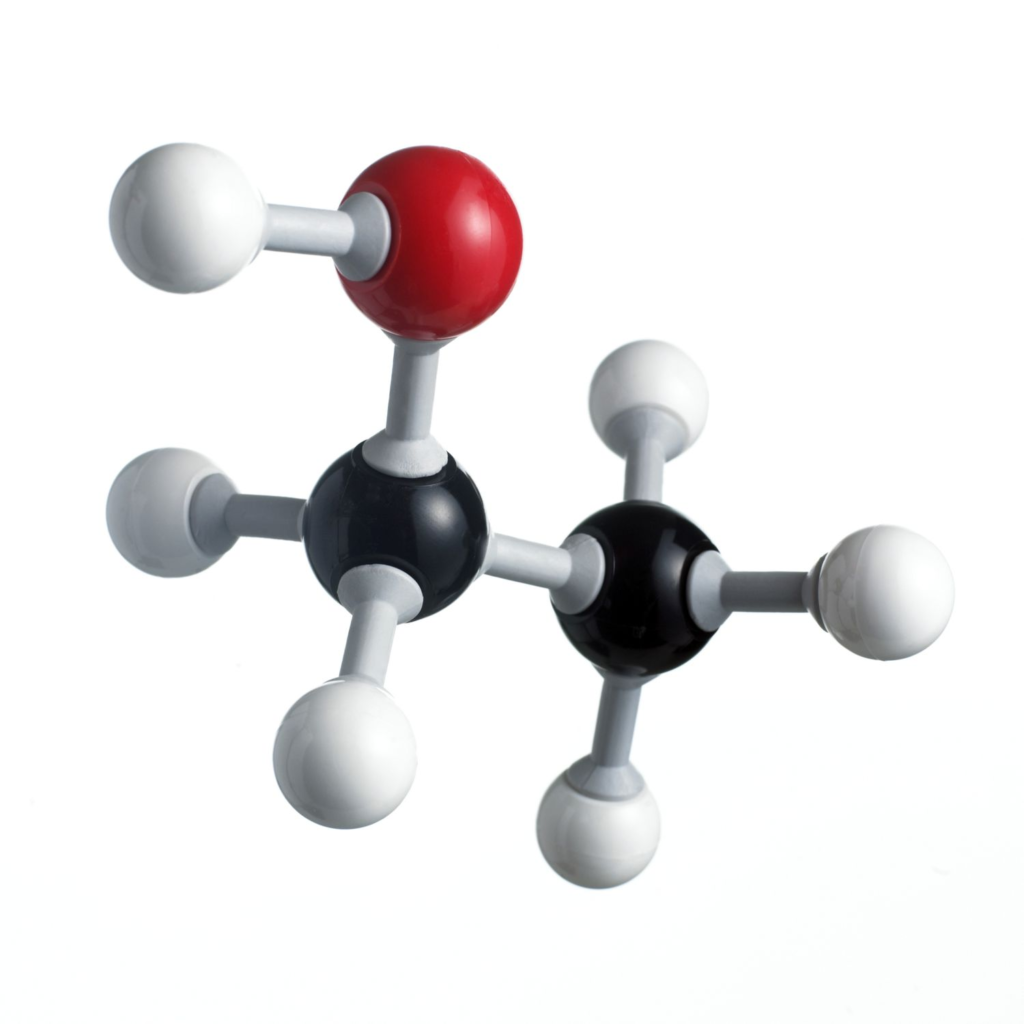
For ethanol producers, pharmaceutical manufacturers and specialty chemical companies, moisture is more than a routine process variable. Even small amounts of residual water can affect product specifications, downstream reactions, solvent reuse and suitability for a particular application.
Fuel ethanol production is a prominent example. Conventional distillation approaches the ethanol–water azeotrope, making further separation by ordinary distillation alone impractical. Molecular-sieve adsorption is an established method for removing additional water and producing anhydrous ethanol.
Other solvents may also require deep dehydration, but the appropriate method depends on the solvent’s chemistry, initial water content, required purity and operating conditions.
This guide explains how industrial solvent dehydration works, when molecular-sieve systems should be evaluated, what can go wrong, and what buyers should establish before investing in a new dehydration plant or upgrading an existing process.
1. The Real Problem: Removing the Last Fraction of Water
In many solvent-processing operations, the challenge is not removing bulk water. It is achieving a low, consistently controlled residual-water concentration without compromising solvent recovery, purity or process economics.
A plant may already have distillation, condensation, filtration and solvent-recovery equipment, yet the product may still fail its final moisture specification.
Common reasons include:
- Distillation limitations: The solvent–water system may approach an azeotropic or other practical separation limit.
- Variable feed moisture: Changes in upstream operation affect the water load entering the dehydration unit.
- Adsorbent saturation: A molecular-sieve bed gradually loses available adsorption capacity during operation.
- Poor regeneration: Incomplete removal of adsorbed water reduces the capacity available for the next cycle.
- Contamination: Dissolved or entrained impurities may interfere with adsorption, product purity or adsorbent life.
- Inadequate measurement: A product may appear dry but still fail a specification based on measured water content.
- Unplanned downtime: Regeneration, maintenance or unexpected breakthrough may interrupt production.
The correct solution starts by identifying the actual limitation: separation equilibrium, adsorbent performance, process contamination, regeneration, measurement or another source of water.
2. What Is a Molecular-Sieve Dehydration System?
A molecular-sieve dehydration system uses a porous adsorbent—commonly a suitable zeolite—to selectively adsorb water from a liquid or vapour stream.
Molecular sieves contain pores of defined dimensions. The adsorbent grade is selected according to the target water-removal duty, solvent properties and process conditions.
An industrial system typically includes:
- One or more adsorption vessels containing the selected molecular sieve.
- Feed-conditioning equipment where required.
- Valves and piping to direct the process stream.
- A regeneration arrangement appropriate to the selected process.
- Heating, cooling, vacuum or purge equipment where required by the design.
- Instrumentation for pressure, temperature, flow and operating-cycle control.
- Product collection and any necessary condensation or recovery equipment.
- Suitable safeguards for the solvent and operating environment.
The complete system is more than a vessel filled with adsorbent. Its performance depends on bed design, feed distribution, adsorption capacity, cycle management, regeneration and the quality of the incoming stream.
How the process works
<list marker=”number” gap={2}> <list-item>**Feed preparation:** The incoming solvent is assessed for water content, impurities, temperature, pressure and physical state. Upstream conditioning is included where needed.</list-item> <list-item>**Adsorption:** The feed passes through the molecular-sieve bed, where the selected adsorbent captures water while the solvent continues through the system.</list-item> <list-item>**Product verification:** The dehydrated solvent is monitored against the required water-content and purity specifications.</list-item> <list-item>**Regeneration:** The water-loaded adsorbent is regenerated using the method specified for the system, restoring usable adsorption capacity.</list-item> <list-item>**Cycle changeover:** In a multi-vessel arrangement, beds move between adsorption, regeneration and any necessary cooling or repressurization steps to support the required operating continuity.</list-item> </list>
The exact sequence depends on whether the unit uses pressure-swing adsorption, vacuum-assisted regeneration, thermal regeneration or another engineered configuration.
3. Ethanol Dehydration: Producing Anhydrous and Fuel-Grade Ethanol
Ethanol dehydration is one of the most established industrial applications of molecular-sieve adsorption.
After fermentation and recovery, ethanol is generally concentrated through distillation. As the ethanol–water mixture approaches its azeotropic composition, ordinary distillation alone cannot economically deliver every required anhydrous specification. Adsorption provides another separation step.
Typical process arrangement
Fermentation or ethanol feed → distillation and rectification → feed conditioning or superheating, where required → molecular-sieve dehydration → product cooling and collection → quality verification
The actual process arrangement varies by plant design and the selected adsorption technology.
Why molecular sieves are used
For a suitably designed ethanol-dehydration system, the molecular sieve preferentially adsorbs water from the ethanol stream. The adsorbent’s pore structure and operating conditions are selected to support water removal while limiting unwanted solvent adsorption.
Pressure-swing adsorption is a well-established option for industrial ethanol dehydration. Some systems use a vapour-phase feed and multiple vessels to coordinate adsorption and regeneration.
Common ethanol plant problems
| Problem | What should be investigated |
| Product water content exceeds specification | Feed water load, breakthrough, bed condition, cycle timing and product sampling |
| Product quality fluctuates | Feed variation, valve sequencing, pressure and temperature control |
| Regeneration takes longer than expected | Regeneration conditions, heating or purge performance, and adsorbent loading |
| Product recovery is lower than expected | Solvent losses in regeneration, condensation and recovery arrangements |
| Pressure drop increases | Bed settling, adsorbent attrition, fines, contamination or flow distribution |
| Operating costs increase | Regeneration energy, vapour handling, solvent losses, cycle duration and adsorbent replacement |
These symptoms can have multiple causes. The remedy should be based on process measurements and equipment inspection rather than automatically increasing regeneration temperature or shortening the adsorption cycle.
Fuel ethanol is not the same as every high-purity ethanol application
Fuel ethanol, industrial ethanol, pharmaceutical ethanol and electronic or analytical-grade solvents may have different product specifications and regulatory requirements.
Anhydrous ethanol describes a low-water product; it does not automatically establish suitability for every end use. Final acceptance depends on the applicable specification, including any requirements for impurities, denaturants, contaminants and intended use.
4. Methanol, Acetonitrile and Acetone: Why Solvent-Specific Design Matters
Molecular-sieve dehydration is not limited to ethanol, but each solvent must be evaluated individually. A suitable adsorbent for one solvent cannot automatically be transferred to another.
Methanol dehydration
Methanol may require moisture removal for chemical processing, solvent recovery or other applications with a defined water specification. Molecular-sieve systems are used for selected methanol-dehydration duties, with the adsorbent and process configuration chosen for the required separation.
Important evaluation points include:
- Incoming water concentration and variation.
- Required final water content.
- Possible co-adsorption of methanol.
- Impurity accumulation and adsorbent ageing.
- Regeneration conditions and recovery of methanol from the regeneration stream.
Methanol can affect molecular-sieve performance under some operating conditions, so feed composition and adsorbent compatibility deserve particular attention. <Cite refs={[“turn796513search6″,”turn796513search17”]}/>
Acetonitrile dehydration
Acetonitrile is used in chemical synthesis, analytical laboratories and other specialized applications. Where very low water content is required, the dehydration method must preserve the solvent’s required chemical and purity specifications.
A suitable molecular sieve may be considered, but the selection must account for solvent–adsorbent interactions, contaminants and the target specification.
For high-purity or electronic-grade applications, the design should also address potential contamination from equipment surfaces, seals, piping, filtration components and the handling environment. A low water reading alone does not establish electronic-grade purity.
Acetone dehydration
Acetone requires particular caution. Its chemical behaviour can be affected by contact with some adsorbent surfaces, and some molecular-sieve conditions can promote unwanted reactions. Consequently, a general-purpose molecular-sieve design should not be assumed suitable for acetone without compatibility testing and a review by qualified process engineers.
The preferred method must be established from the intended process, solvent chemistry, impurity profile and required product specification. Depending on the duty, a different adsorption medium or another separation method may be more appropriate.
Other alcohols and specialty solvents
Isopropanol and other solvents may also require dehydration. The appropriate approach depends on whether the objective is bulk water removal, deep dehydration, solvent recovery or meeting a high-purity specification.
The engineering principle is simple: select the dehydration method for the actual solvent and required final product—not merely because the process involves moisture.
5. Pressure-Swing vs Temperature-Swing Adsorption
Pressure-swing adsorption (PSA) and temperature-swing adsorption (TSA) are different approaches to restoring adsorbent capacity. Neither should be selected without considering the solvent, adsorbent, feed condition, regeneration requirement and plant utilities.
| Selection factor | Pressure-swing adsorption | Temperature-swing adsorption |
| Main regeneration principle | Changes in pressure, often combined with purge or other process steps | Changes in temperature, usually with an appropriate regeneration stream |
| Common design consideration | Pressure cycling, vessel sequencing, purge and recovery | Heating and cooling duty, regeneration time and thermal management |
| Potential advantages | Can support cyclic operation without a separate full thermal-regeneration step in suitable configurations | Can suit duties where thermal regeneration is appropriate for the adsorbent and process |
| Key limitation | Performance depends on pressure conditions, feed state, adsorption capacity and cycle design | Requires suitable thermal stability, energy supply and effective cooling before reuse |
| Typical engineering questions | Can the desired water specification be achieved at the available operating pressure? | Can regeneration restore sufficient working capacity without harming the adsorbent or product? |
Ethanol dehydration commonly uses PSA-type molecular-sieve systems, while other adsorption arrangements may use thermal or vacuum-assisted regeneration. The terms should not be treated as interchangeable: some industrial systems combine pressure changes, heating, purge gas and other steps.
How to decide
Before choosing the configuration, establish:
- Required product water content and solvent recovery.
- Feed composition, flow rate and operating pressure.
- Adsorbent working capacity under actual conditions.
- Regeneration energy and cycle duration.
- Availability of steam, electricity, cooling and other utilities.
- Expected adsorbent life and replacement cost.
- Recovery or treatment of solvent-containing regeneration streams.
- Required production continuity and maintenance strategy.
The preferred option is the one that meets the product specification reliably over the complete operating cycle—not merely the one with the lowest initial equipment cost.
6. Why Dehydration Systems Fail to Meet Their Target
A molecular-sieve unit can appear to be operating normally while the product gradually approaches its moisture limit. Troubleshooting should identify whether the problem originates in the feed, adsorbent, regeneration system or process controls.
Early breakthrough
Possible causes: Higher-than-design inlet moisture, excessive flow, insufficient working capacity, channeling or a deteriorated adsorbent.
What to check: Inlet and outlet water trends, flow distribution, pressure drop, cycle duration and the adsorbent’s condition.
Incomplete regeneration
Possible causes: Inadequate heating, purge or vacuum performance; insufficient regeneration time; or an unsuitable regeneration sequence.
What to check: Actual regeneration conditions, temperature profile, purge flow, condensate or recovered water, and the condition of valves and instruments.
Solvent losses
Possible causes: Solvent carried into the regeneration stream, ineffective condensation or recovery, or unsuitable cycle sequencing.
What to check: Material balance, regeneration outlet composition, recovery equipment and the system’s operating sequence.
Contamination and adsorbent degradation
Possible causes: Unwanted components in the feed, fouling, liquid carryover, adsorbent attrition or unsuitable operating conditions.
What to check: Feed pretreatment, filtration, impurity analysis, bed pressure drop, product contamination and adsorbent service history.
Inconsistent product testing
Possible causes: Sampling errors, moisture pickup during storage or transfer, unsuitable measurement methods, or inconsistent analytical procedures.
What to check: Sampling location, sample handling, laboratory method, calibration and the time between sampling and testing.
For low-water-content solvents, analytical methods such as Karl Fischer titration may be appropriate, depending on the solvent and required specification. The test method and reporting basis should be agreed before acceptance criteria are finalized.
7. Design Factors That Determine Product Quality and Operating Cost
A high-performance dehydration unit must be engineered around the complete process rather than only the adsorption vessel.
Feed quality and pretreatment
The feed should be characterized for water content, temperature, suspended matter and relevant impurities. Pretreatment may be required to protect the adsorbent or prevent downstream contamination.
Adsorbent selection and bed sizing
Adsorbent type, bead size, working capacity, mechanical strength and compatibility with the solvent influence the design. Bed sizing must account for the water load, cycle time, mass-transfer behaviour and desired outlet specification.
Regeneration and recovery
The system must restore enough working capacity to sustain the required operation. Regeneration conditions should be selected using the adsorbent supplier’s data and process-specific engineering, not generic temperature or pressure values.
Where regeneration streams contain solvent, suitable recovery, condensation or treatment may be required.
Materials and cleanliness
Product-contact materials should be compatible with the solvent and intended purity. For sensitive applications, the design may require controlled surface finishes, suitable seals, cleaning procedures and contamination-control measures.
Automation and instrumentation
Controls should coordinate adsorption, regeneration, changeover and any required cooling or repressurization. Alarms and interlocks should reflect the specific hazards and operating limits of the process.
Energy and total cost of ownership
Compare the complete operating cost, including:
- Regeneration heat and electricity.
- Vacuum, compression or purge requirements.
- Solvent recovery and treatment.
- Adsorbent replacement and maintenance.
- Product losses and off-spec material.
- Planned downtime and cleaning.
- Analytical testing and quality assurance.
Energy efficiency should be evaluated across the full operating cycle. A design with low energy use in one phase may still have higher overall costs if it loses solvent or requires frequent regeneration.
8. Safety Considerations for Anhydrous Solvents
Ethanol, methanol, acetone and acetonitrile have distinct hazards. Depending on the solvent and operating conditions, the process may involve flammable vapours, toxic exposure, static electricity, pressure, vacuum or elevated temperatures.
A solvent-dehydration project should include a product-specific hazard review covering:
- Suitable electrical equipment and hazardous-area classification.
- Ignition-source control and static grounding or bonding.
- Pressure-vessel, vacuum and piping design.
- Ventilation, vapour containment and recovery.
- Pressure relief and required protective systems.
- Safe regeneration, shutdown and maintenance procedures.
- Detection, interlocks and emergency response arrangements.
- Applicable environmental, occupational and process-safety requirements.
The protection strategy must be developed by qualified engineers for the actual solvent, plant layout and operating conditions. A molecular-sieve system is not inherently safe simply because adsorption is the separation method.
9. How to Select an Industrial Solvent-Dehydration System Supplier
For procurement teams, comparing suppliers only by vessel dimensions or nominal throughput can hide important differences in process performance and project scope.
Use this checklist when evaluating an industrial solvent-dehydration project.
| Evaluation area | Questions to ask |
| Product specification | What water content and other purity requirements must be achieved? |
| Feed data | What are the inlet water concentration, solvent composition, flow and operating conditions? |
| Process basis | Is adsorption appropriate, or should another separation method be considered? |
| Adsorbent | What grade is proposed, and what evidence supports its compatibility and working capacity? |
| Cycle design | How are adsorption, regeneration, changeover and recovery coordinated? |
| Solvent recovery | How are solvent losses and regeneration-stream emissions managed? |
| Materials | Are product-contact materials compatible with the solvent and purity requirements? |
| Controls and safety | What instruments, interlocks and safeguards are included? |
| Performance guarantee | What feed conditions, test methods and operating conditions define acceptance? |
| Lifecycle costs | What are the expected utilities, maintenance needs, adsorbent replacement and downtime? |
| Project scope | Are engineering, vessels, valves, instruments, installation, commissioning and testing included? |
A technically sound supplier should be able to explain the design basis, assumptions, limitations and performance-verification method.
10. Where GTI Dryers Fits in Industrial Drying Projects
GTI Dryers, from Genex Tech Industries LLP, supplies industrial drying equipment and engineered drying solutions for process industries. Its published equipment portfolio includes technologies such as spray, fluidized-bed, rotary, flash and paddle dryers.
However, molecular-sieve solvent dehydration is a specialized adsorption process, distinct from conventional thermal drying equipment. A prospective buyer should confirm that the required adsorption technology, solvent-handling design and associated process engineering fall within the supplier’s actual project scope.
For a new or upgraded solvent-processing line, the initial engineering discussion should establish:
- Whether the main requirement is bulk moisture removal or deep solvent dehydration.
- Whether the solvent–water system can be handled by adsorption or needs another separation method.
- Whether the project concerns a standalone unit or an integrated process line.
- Which utilities, containment measures and recovery systems are required.
- Which performance parameters must be demonstrated during commissioning.
This approach helps buyers identify the appropriate engineering scope before requesting a quotation and reduces the risk of purchasing equipment that does not match the actual separation duty.
11. Request a Technical Review for Your Solvent-Dehydration Project
If your plant needs anhydrous ethanol, dry methanol, low-moisture acetonitrile or another high-purity solvent, begin with the product specification and the current process limitation.
Prepare the following information for a preliminary technical assessment:
- Solvent name and grade.
- Feed flow rate and operating hours.
- Inlet water content and measurement method.
- Required final water content and applicable product standard.
- Other impurities or contaminants.
- Feed temperature, pressure and physical state.
- Current process route, including distillation and existing drying or adsorption stages.
- Required product recovery and acceptable solvent loss.
- Available steam, electricity, cooling, vacuum or purge utilities.
- Safety and containment requirements.
- Plant location and proposed project timeline.
- Whether the project is a new installation, an upgrade or troubleshooting of an existing unit.
This information helps determine whether molecular-sieve adsorption is suitable, which process configuration deserves further evaluation, and what engineering data are needed before equipment sizing.
Planning a solvent-dehydration project?
Contact GTI Dryers to discuss your broader industrial drying or process-equipment requirements and confirm the appropriate project scope.
- Website: https://gtidryers.com/
- Email: mktg@gtidryers.com
- Phone: +91-9330077417
GTI Dryers — Engineered Drying Solutions from India for Global Industries.
12. Frequently Asked Questions
What is a molecular-sieve dehydration unit?
It is an adsorption system that uses a suitable porous adsorbent to remove water from a gas or liquid stream. Industrial units typically combine adsorption vessels, valves, instrumentation and a regeneration arrangement.
Why is molecular-sieve dehydration used after ethanol distillation?
Ethanol–water mixtures approach an azeotropic composition during conventional distillation, limiting further separation by ordinary distillation alone. Molecular-sieve adsorption provides an additional dehydration step for producing anhydrous ethanol. <Cite refs={[“turn796513search3″,”turn796513search7”]}/>
What is the difference between PSA and TSA?
PSA relies on pressure changes to support adsorption and regeneration, while TSA uses temperature changes. Industrial configurations may also incorporate vacuum, purge streams or combined operating steps, depending on the application.
Can molecular sieves dry methanol?
Yes, molecular-sieve dehydration is used for selected methanol applications. The adsorbent, process conditions and regeneration strategy must be evaluated for the feed composition and target moisture specification. <Cite refs={[“turn796513search2″,”turn796513search17”]}/>
Can the same molecular-sieve system handle ethanol, methanol, acetonitrile and acetone?
Not automatically. Solvent compatibility, co-adsorption, possible chemical reactions, contamination and regeneration requirements differ. Each solvent requires an application-specific assessment.
How do I know if a molecular-sieve bed is saturated?
Signs can include rising outlet moisture, shortened adsorption cycles or a change in operating behaviour. The diagnosis should use measured water content, process conditions and the bed’s service history.
How can a plant reduce regeneration costs?
Review the water load entering the unit, adsorbent working capacity, cycle design, regeneration effectiveness, heat losses and solvent recovery. Any proposed savings should be validated against the complete process and product specification.
Is a dry solvent automatically pharmaceutical-grade or electronic-grade?
No. Low water content is only one quality parameter. Other impurities, trace contaminants, material compatibility, handling and applicable industry standards must also be satisfied.
What data are needed for a solvent-dehydration quotation?
At minimum, provide solvent identity, feed flow, inlet and target water content, other impurities, operating conditions, required product specification, available utilities and safety requirements.
Does GTI Dryers manufacture molecular-sieve dehydration units?
GTI’s published portfolio covers industrial drying equipment and related process solutions. Molecular-sieve adsorption is a specialized solvent-dehydration duty, so buyers should confirm the precise technology, engineering and supply scope directly with GTI before treating it as a standard product offering.
Conclusion: Design for the Required Water Specification
Anhydrous and high-purity solvent production requires more than removing visible moisture. It depends on the separation method, adsorbent compatibility, feed quality, regeneration performance, solvent recovery and accurate verification of the finished product.
For ethanol plants, molecular-sieve adsorption is an established route beyond the conventional distillation limit. For methanol, acetonitrile, acetone and other solvents, the correct process must be selected according to the individual solvent’s chemistry and purity requirements.
The best investment begins with a clear process basis: what enters the unit, how much water must be removed, what the product must meet, and how the system will operate over repeated cycles.
By establishing these requirements before equipment selection, buyers can compare technologies and suppliers on process suitability, verified performance and total operating cost—not simply the initial purchase price.