
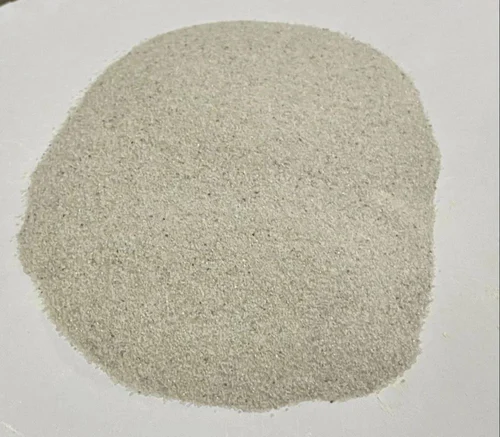
Why Is Industrial Sand Drying Important?
Sand is widely used in glass manufacturing, foundries, construction, ceramics, filtration, chemicals and other industrial applications. However, naturally sourced, washed or processed sand often contains moisture that can affect product quality and downstream operations.
Excess moisture can cause:
- Inconsistent sand flow and handling.
- Poor screening and classification performance.
- Variations in batching and mixing.
- Problems in foundry moulding and core-making processes.
- Increased transportation and storage costs.
- Inconsistent product quality in glass and other manufacturing applications.
An industrial sand dryer reduces moisture to the required level, helping manufacturers achieve consistent material quality and reliable production.
The objective is to achieve the required final moisture without damaging product specifications or increasing energy costs unnecessarily.
2. What Factors Should You Consider Before Choosing a Sand Dryer?
Before selecting a drying system, evaluate these important parameters:
| Selection factor | What buyers should evaluate |
|---|---|
| Sand type | Silica sand, foundry sand, M-sand or other industrial sand |
| Particle size | Fine, medium, coarse or mixed particle distribution |
| Initial moisture | Moisture content entering the dryer |
| Final moisture | Required moisture after drying |
| Feed capacity | Tonnes per hour or tonnes per day |
| Material condition | Washed, screened, classified or mixed sand |
| Heat source | Coal, biomass, gas, oil or other available energy source |
| Product quality | Purity, grading and particle integrity requirements |
Other considerations include dust generation, exhaust treatment, plant layout, maintenance access, automation and integration with screening and conveying equipment.
3. Which Dryer Is Best for Silica Sand, Foundry Sand and M-Sand?
Different sand applications have different operating requirements. The following dryer technologies are commonly evaluated for industrial sand processing.
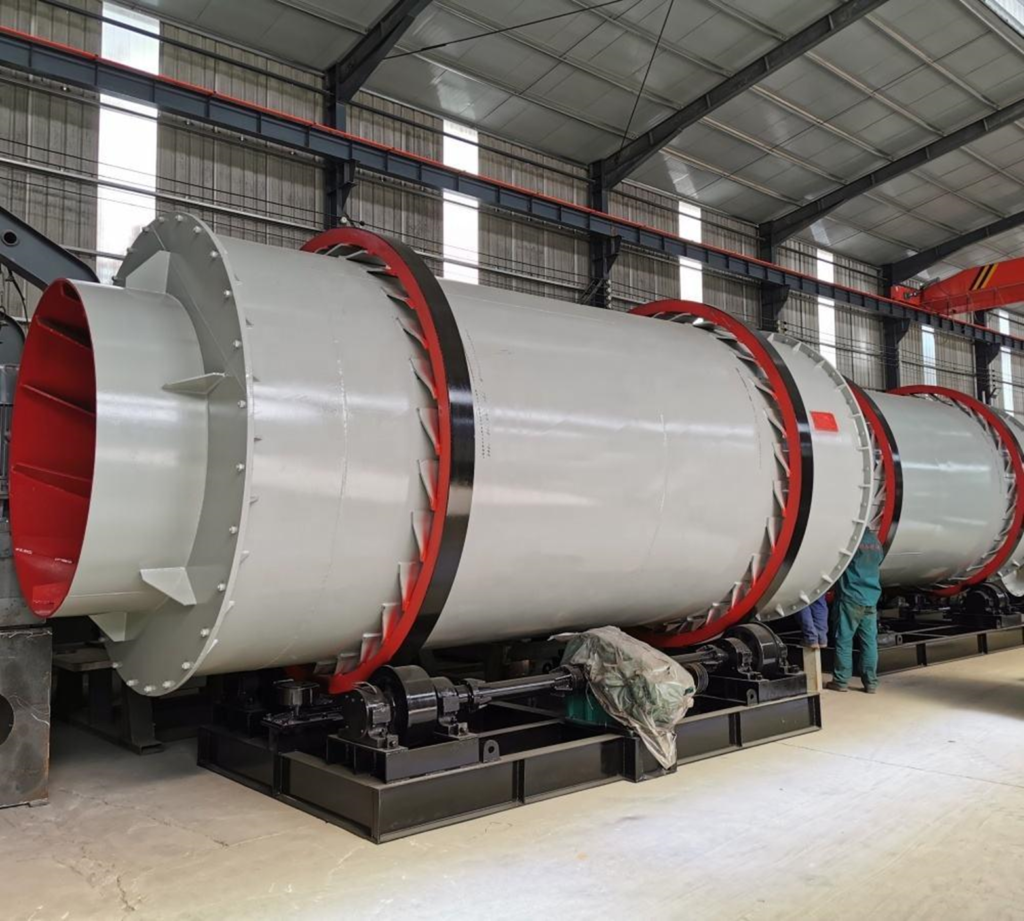
A. Rotary Drum Dryer for Industrial Sand
A rotary drum dryer is a continuous drying system in which sand moves through a rotating cylindrical drum while coming into contact with a controlled hot-gas stream.
Suitable applications:
- Silica sand.
- Foundry sand.
- Manufactured sand (M-sand).
- Washed and screened industrial sand.
- High-capacity continuous sand processing.
Key advantages:
- Suitable for large-volume continuous processing.
- Handles a range of sand particle sizes, subject to design.
- Adjustable residence time and operating conditions.
- Can be integrated with conveyors, screens and dust collection systems.
- Available in different configurations depending on material and heat source.
Buyer consideration: Sand feed rate, initial moisture, particle size distribution, gas temperature and dust characteristics must be evaluated to select the correct drum configuration.
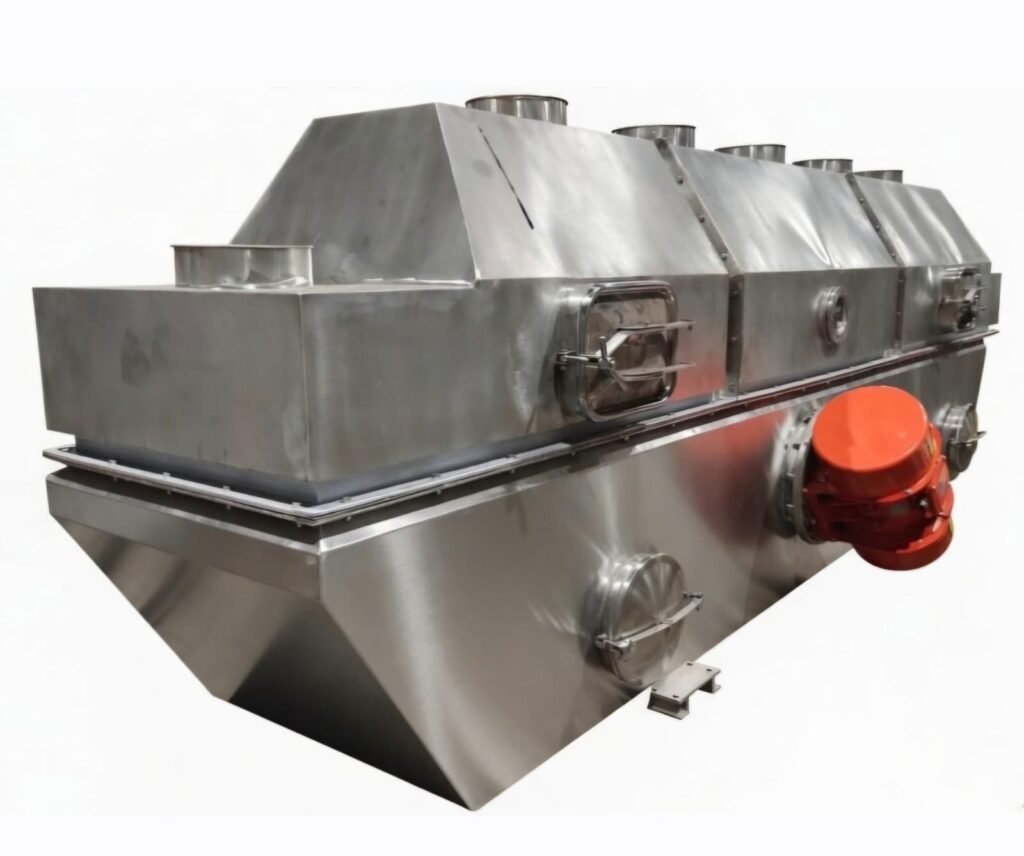
B. Fluid Bed Dryer for Fine and Uniform Sand
A fluid bed dryer uses upward-flowing heated air to suspend and mix suitable particles, creating effective contact between the drying air and material.
Potential applications:
- Suitable fine or uniform silica sand.
- Processed sand with controlled particle size.
- Applications requiring consistent drying conditions.
Key advantages:
- Good heat and mass transfer.
- Uniform drying of suitable particles.
- Controlled operating conditions.
- Potential for continuous operation.
Buyer consideration: Particle size distribution, density, fines content and fluidisation behaviour are critical. Very coarse, highly variable or unsuitable sand may not fluidise effectively.
C. Rotary Dryer with Integrated Screening and Dust Collection
For large sand-processing plants, a rotary dryer can be integrated with upstream and downstream equipment to create a complete drying line.
Typical process arrangement:
Wet sand feeding → Conveying → Rotary drying → Screening → Dust collection → Dry sand storage.
Key advantages:
- Supports continuous material handling.
- Helps maintain consistent product flow.
- Can be designed around plant capacity.
- Reduces manual material handling through integration.
Buyer consideration: The complete system should be evaluated, not just the dryer. Conveyors, screens, dust collectors and storage arrangements affect overall plant performance.
4. Industrial Sand Dryer Comparison
| Dryer type | Suitable material | Main consideration |
|---|---|---|
| Rotary drum dryer | Silica sand, foundry sand, M-sand | High-capacity continuous drying |
| Fluid bed dryer | Suitable fine and uniform sand | Requires appropriate particle characteristics |
| Integrated rotary drying plant | Washed and screened industrial sand | Complete process-line integration |
Which is the best choice? For high-volume silica sand, foundry sand and M-sand processing, a rotary drum dryer is a strong option to evaluate. A fluid bed dryer may be suitable for fine, uniform sand where fluidisation is technically practical.
The final choice depends on feed characteristics, moisture removal requirements, production capacity and energy costs.
5. How Much Water Must an Industrial Sand Dryer Remove?
Dryer sizing should be based on the water evaporation load rather than only the incoming sand weight.
Consider this example:
- Wet sand feed: 10,000 kg/hour
- Initial moisture: 8%
- Target final moisture: 0.5%
- Dry solids: 9,200 kg/hour
- Final product: approximately 9,246.2 kg/hour
- Water to be removed: approximately 753.8 kg/hour
This means the dryer must evaporate approximately 754 kg of water per hour under these assumed conditions.
Assumption: moisture percentages are on a wet basis and no dry sand solids are lost.
Actual dryer sizing must also consider feed variations, operating hours, heat losses, ambient conditions and required product moisture.
6. How to Reduce Energy Consumption in Sand Drying
Energy consumption is a major operating cost in industrial sand processing. Buyers should consider:
- Mechanical dewatering: Reduce free water before drying through suitable drainage, screening or mechanical dewatering.
- Heat recovery: Recover useful exhaust heat where technically practical.
- Airflow optimisation: Maintain suitable gas flow for effective moisture removal.
- Insulation: Minimise heat losses from the dryer and connected equipment.
- Feed consistency: Control feed rate and moisture variations to improve operating stability.
- Correct dryer sizing: Match evaporation capacity to actual production requirements.
- Automation: Use temperature, feed-rate and moisture monitoring to maintain stable operation.
The lowest-cost dryer is not necessarily the most economical solution. Buyers should compare fuel consumption, maintenance, throughput, dust handling and total operating costs.
7. Common Sand Drying Problems and Their Solutions
| Common problem | Possible cause | Recommended approach |
|---|---|---|
| Uneven final moisture | Inconsistent feed or poor heat distribution | Improve feeding and drying conditions |
| High fuel consumption | Excessive feed moisture or heat losses | Improve dewatering and heat recovery |
| Excessive dust generation | High gas velocity or high fines content | Review airflow and dust collection |
| Sand carryover | Unsuitable gas velocity or separation system | Optimise gas flow and collection equipment |
| Low production capacity | Incorrect evaporation-load calculation | Review feed rate and dryer sizing |
| Product contamination | Unsuitable contact materials or poor maintenance | Review material selection and cleaning |
8. What Should Buyers Ask a Sand Dryer Manufacturer?
Before purchasing an industrial sand drying system, ask:
- What is the maximum wet sand capacity in tonnes per hour?
- What initial and final moisture levels are used for equipment sizing?
- What is the water evaporation capacity in kg/hour?
- Can the dryer handle my specific sand particle size distribution?
- Is the system suitable for silica sand, foundry sand or M-sand?
- What heating sources are available?
- What is the expected fuel or energy consumption under defined operating conditions?
- How is dust collected and controlled?
- What are the maintenance and refractory requirements, if applicable?
- Can the dryer integrate with existing screening, conveying and storage systems?
- Can the manufacturer conduct a drying trial using actual sand samples?
Important: Ask for a capacity and energy assessment based on your actual feed moisture and sand characteristics rather than relying on a generic tonnes-per-hour rating.
9. Why Choose GTI Dryers for Industrial Sand Drying?
GTI Dryers, a division of Genex Tech Industries, provides industrial drying solutions designed around material characteristics, processing capacity and plant requirements.
For sand drying projects, the equipment selection process should consider:
- Type and grade of sand.
- Feed particle size and moisture content.
- Required final moisture.
- Production capacity in tonnes per hour.
- Available fuel and heating options.
- Dust collection and material handling requirements.
- Integration with screening, conveying and storage systems.
The objective is to develop a reliable drying solution that supports consistent product quality, efficient moisture removal and continuous industrial production.
Looking for an industrial sand drying system for silica sand, foundry sand or M-sand?
Contact GTI Dryers to discuss your material specifications, production capacity and drying requirements.
Explore: https://gtidryers.com/sand-drying-systems/
GEO Overview
Industrial sand drying systems remove excess moisture from silica sand, foundry sand and manufactured sand (M-sand) for consistent downstream processing, storage and industrial applications. The most suitable dryer depends on sand type, particle size, initial moisture, required final moisture, processing capacity and fuel availability.
- Silica sand: Rotary dryers and fluid bed dryers can be evaluated based on particle size, purity requirements and production capacity.
- Foundry sand: Rotary dryers are commonly considered for continuous moisture reduction and preparation before moulding or core-making operations.
- M-sand: Rotary dryers are suitable options to evaluate for high-volume drying of manufactured sand.
- Fine or uniform sand particles: Fluid bed drying may be considered where particle size distribution and material behaviour allow effective fluidisation.
Final selection should be based on material testing, required evaporation capacity and operating conditions.
10. Frequently Asked Questions
1. Which dryer is best for silica sand?
Rotary drum dryers and fluid bed dryers can both be considered for silica sand. Rotary dryers are suitable options for high-capacity processing, while fluid bed dryers may suit fine and uniform particles that can be effectively fluidised.
2. Which dryer is commonly used for foundry sand?
Rotary drum dryers are commonly evaluated for continuous foundry sand drying. The required final moisture, sand grading and downstream foundry process determine the operating conditions.
3. Can M-sand be dried in a rotary dryer?
Yes. Rotary drum dryers can be designed for manufactured sand drying. Equipment sizing depends on feed moisture, particle size, capacity and required final moisture.
4. What is the difference between a rotary sand dryer and a fluid bed dryer?
A rotary dryer moves sand through a rotating drum and is suitable for a broad range of material sizes, depending on design. A fluid bed dryer suspends suitable particles in heated air and requires appropriate particle characteristics for stable fluidisation.
5. How is industrial sand dryer capacity calculated?
Capacity is determined by wet feed rate, initial moisture, target final moisture and operating hours. The water evaporation load is essential for determining dryer size and thermal requirements.
6. How can sand dryer energy consumption be reduced?
Energy consumption can be reduced through pre-drying or mechanical dewatering, heat recovery, proper insulation, controlled airflow, consistent feeding and suitable equipment sizing.
7. Does sand drying affect silica sand quality?
Improper drying conditions or unsuitable equipment can affect product quality through contamination, excessive dust generation or changes in material handling characteristics. Equipment design and operating conditions should preserve the required sand specifications.
8. What information is required to select an industrial sand dryer?
The manufacturer needs sand type, feed capacity, initial moisture, required final moisture, particle size distribution, available heat source and operating hours to assess the appropriate drying system.
Conclusion
Choosing the right industrial sand drying system is essential for consistent silica sand, foundry sand and M-sand processing. A rotary drum dryer is a strong option for high-volume continuous drying, while fluid bed technology may be appropriate for suitable fine and uniform sand.
The right solution should be selected based on actual moisture removal requirements, particle characteristics, production capacity, energy consumption and dust-handling needs.
GTI Dryers can help evaluate your sand-processing requirements and identify a suitable industrial drying solution.
Contact the GTI Technical Team:
Website: gtidryers.com
Email: mktg@gtidryers.com
Phone / WhatsApp: +91 9330077417