Rotary Dryer South Africa for High-Capacity Industrial Drying
South Africa’s strong mining, mineral-processing, chemical, fertilizer, agriculture and biomass sectors create a continuous need for reliable bulk-material drying.
The country’s mineral industry includes platinum-group metals, manganese, iron ore, chromite, gold, coal, silica, limestone, dolomite and other industrial minerals, making moisture control an important consideration across multiple processing stages.
For high-throughput applications, an industrial rotary dryer can provide continuous moisture removal while handling large quantities of bulk solids.
GTI Dryers designs custom-engineered Rotary Drum Dryers according to material characteristics, initial and final moisture, production capacity, heat source and required drying conditions.
The objective is not simply to supply a drum—it is to develop a drying system that achieves the required capacity, moisture reduction, energy performance and operational reliability.
Why Rotary Dryers Are Important for South African Industries
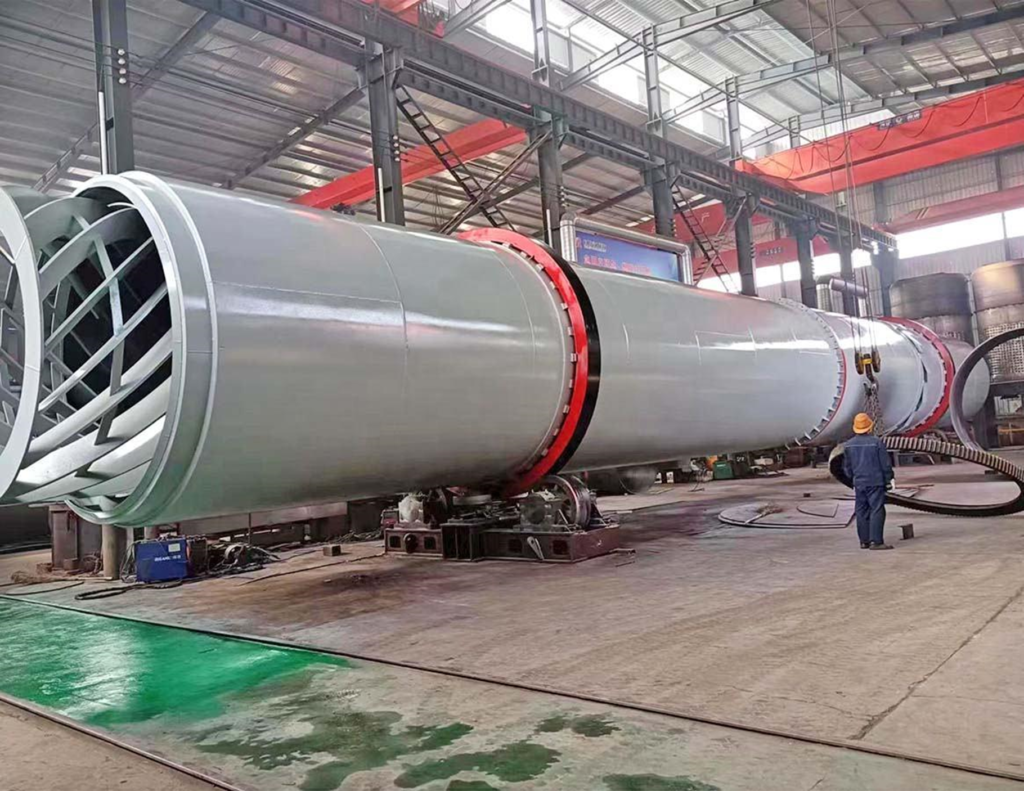
A Rotary Dryer uses a rotating cylindrical drum with internal flights that lift and cascade material through a controlled hot-gas stream. The continuous movement increases contact between the material and drying air, allowing moisture to evaporate as the product travels through the drum.
This makes rotary dryers particularly suitable for:
- Mining and mineral processing
- Sand drying
- Coal and biomass
- Fertilizer production
- Chemical processing
- Agricultural products
- Industrial waste and sludge
- Construction minerals
- Bulk solids
For South African mining and mineral applications, robust construction, dust control, fuel flexibility and continuous operation can be particularly important.
Rotary Dryer Applications in South Africa
1. Mining & Mineral Processing
South Africa’s mineral diversity makes this one of the strongest application areas for rotary drying.
Potential materials include:
- Iron ore
- Manganese
- Chromite
- Platinum-group mineral concentrates
- Gold-bearing materials
- Coal
- Silica sand
- Limestone
- Dolomite
- Clay
- Vermiculite
- Industrial minerals
Rotary dryers can be integrated into mineral-processing lines where moisture needs to be reduced before screening, grinding, separation, storage, blending or transportation.
For mineral concentrates, dryer design must account for factors such as abrasiveness, particle size, feed moisture and required final moisture.
South Africa’s agricultural and forestry activities generate biomass materials that may require moisture reduction before further processing.
Applications can include:
- Sawdust
- Wood chips
- Agricultural residues
- Bagasse
- Biomass fuel
- Coffee husk
- Plant residues
- RDF and selected waste-derived fuels
Reducing moisture can improve the suitability of biomass for pelletizing, briquetting, combustion or downstream processing.
Rotary Dryer vs Belt Dryer for Biomass
For high-throughput, robust biomass applications, rotary dryers can be advantageous because they handle bulk materials continuously and tolerate variations in particle size.
A belt dryer, however, may be preferable when the material requires gentler handling, lower drying temperatures, longer residence time or precise multi-zone drying.
The correct choice depends on the material, moisture level, thermal sensitivity, throughput and available heat source.
Rotary dryers can be used for suitable bulk chemical and fertilizer materials where continuous drying is required.
Applications may include:
- Fertilizer granules
- Chemical crystals
- Industrial salts
- Mineral-based products
- Chemical intermediates
- Bulk powders
- Specialty materials
Flight design, airflow and residence time can be customized according to the physical characteristics of the product.
4. Sand & Construction Materials
South African construction and industrial-material processing plants may require drying of:
- Silica sand
- Foundry sand
- Limestone
- Gypsum
- Aggregates
- Clay
- Other mineral-based materials
For sand drying, the dryer must be sized according to feed moisture, particle size distribution, required production rate and target final moisture.
How Much Does a Rotary Dryer Cost in South Africa?
There is no fixed price for an industrial rotary dryer.
The project cost depends on:
- Dryer capacity
- Drum diameter and length
- Initial moisture
- Final moisture
- Material type
- Evaporation requirement
- Heating system
- Fuel type
- Construction material
- Dust-collection system
- Automation level
- Feed and discharge equipment
- Installation requirements
A small biomass dryer and a high-capacity mineral concentrate dryer can have completely different engineering and auxiliary-equipment requirements.
The best way to estimate rotary dryer cost is to first calculate the actual drying requirement.
GTI Dryers can evaluate the process data and develop a customized technical proposal rather than offering a generic catalogue price.
How to Calculate Rotary Dryer Capacity
Rotary dryer capacity should not be determined only from the desired tonnes per hour.
The calculation begins with the water evaporation requirement.
Basic concept:
Water Evaporation = Feed Water − Product Water
For example, if a plant processes:
10 TPH wet feed at 20% moisture
and requires:
5% final moisture
the amount of water that must be removed needs to be calculated before determining the dryer size and thermal requirement.
The final dryer design also considers:
- Feed rate
- Initial moisture
- Target moisture
- Material specific heat
- Drying temperature
- Ambient conditions
- Residence time
- Airflow
- Heat-transfer coefficient
- Drum geometry
- Flight design
- Heat losses
GTI Dryers uses these parameters to develop application-specific drying calculations.
Rotary Dryer Energy Consumption: How to Reduce Operating Costs
Energy consumption is one of the most important considerations when selecting a rotary dryer.
A poorly designed system can lose energy through:
- Excess exhaust air
- Poor insulation
- Incorrect airflow
- Inefficient combustion
- Inadequate flight design
- Excessive heat losses
- Incorrect residence time
Energy optimization can involve:
Heat Recovery
Recovering usable thermal energy from exhaust streams where technically feasible.
Optimized Airflow
Matching airflow to the actual evaporation requirement.
Efficient Flight Design
Improving material cascading and gas-solid contact.
Insulation
Reducing heat loss from the dryer shell and associated equipment.
Variable-Speed Drives
Controlling fans and drives according to operating requirements.
Appropriate Heat Source
Depending on plant conditions, systems may use natural gas, LPG, biomass, steam, thermal oil, electricity or other suitable sources.
Actual energy savings should be calculated from the specific material and operating conditions rather than assumed as a standard percentage.
What Is the Best Rotary Dryer for Wet Minerals?
There is no single “best” rotary dryer for every mineral.
For wet minerals, concentrates, sand and abrasive materials, the dryer should be engineered around:
- Abrasiveness
- Bulk density
- Particle size
- Initial moisture
- Final moisture
- Required throughput
- Product temperature
- Residence time
- Dust generation
- Heat source
Heavy-duty construction and appropriately designed flights can be important for abrasive mineral applications.
For very fine or highly heat-sensitive materials, however, a flash, indirect or another specialized drying technology may be more appropriate than a conventional direct rotary dryer.
That is why GTI Dryers evaluates the material before recommending the technology.
Rotary Dryer Maintenance Checklist
Regular maintenance can help maintain dryer performance and reduce unexpected downtime.
Daily / Routine Checks
- Inspect bearings
- Check unusual vibration or noise
- Monitor dryer temperature
- Inspect burner operation
- Check exhaust airflow
- Monitor product moisture
Weekly / Scheduled Checks
- Inspect drive components
- Check rollers and tyres
- Inspect seals
- Check flights for wear
- Examine feed and discharge points
- Inspect dust-collection equipment
Periodic Maintenance
- Check drum alignment
- Inspect shell condition
- Inspect refractory/insulation where applicable
- Examine burner and combustion system
- Check gearbox and lubrication
- Inspect electrical and instrumentation systems
For mining environments, abrasion and dust management deserve particular attention.
Rotary Dryer vs Other Industrial Dryers
The right technology depends on the material.
| Material / Requirement | Dryer to Consider |
| High-volume minerals | Rotary Dryer |
| Wet sand | Rotary Dryer |
| Biomass | Rotary / Belt Dryer |
| Fertilizer granules | Rotary / Fluid Bed Dryer |
| Fine wet powder | Flash Dryer |
| Liquid feed | Spray Dryer |
| Heat-sensitive material | Vacuum / Indirect Dryer |
| Free-flowing granules | Fluid Bed Dryer |
| Sticky material | Paddle Dryer |
This application-based approach is important because a rotary dryer is highly versatile, but it is not automatically the best dryer for every product.
Why Choose GTI Dryers for Rotary Dryer Projects in South Africa?
GTI Dryers focuses on customized industrial drying systems rather than one-size-fits-all equipment.
Our Rotary Drum Dryer solutions can be engineered with:
- Customized drum dimensions
- Process-specific flight design
- Direct or indirect heating
- Multiple fuel options
- Cyclone and bag-filter systems
- PLC/HMI automation
- VFD control
- Temperature and moisture monitoring
- Feed and discharge systems
- Heat-recovery options
GTI’s existing rotary-dryer portfolio covers mining, minerals, fertilizers, chemicals, food, agriculture, biomass, waste and other bulk-solid applications.
For mineral drying specifically, GTI also identifies rotary dryers as a high-throughput option for materials such as limestone, gypsum and ore powders.
Rotary Dryer South Africa: Locations & Industrial Hubs
GTI Dryers can target industrial search intent across major South African regions, including:
Gauteng: Johannesburg, Pretoria, Ekurhuleni
Mpumalanga: Secunda, Witbank/eMalahleni
Limpopo: Polokwane and mining regions
Northern Cape: Kimberley, Kathu and mineral-processing areas
North West: Rustenburg and surrounding mining regions
KwaZulu-Natal: Durban and industrial corridors
Western Cape: Cape Town and surrounding industrial areas
searches such as:
- Rotary dryer Johannesburg
- Rotary dryer Gauteng
- Rotary dryer Mpumalanga
- Rotary dryer Limpopo
- Rotary dryer Northern Cape
- Rotary dryer Rustenburg
- Rotary dryer South Africa
- Industrial dryer supplier South Africa
Frequently Asked Questions
What is a rotary dryer used for?
Rotary dryers are continuous drying systems used for suitable bulk solids including minerals, sand, biomass, fertilizers, chemicals and agricultural materials.
Is a rotary dryer suitable for mining in South Africa?
Yes. Rotary dryers are widely suited to high-throughput bulk mineral applications, provided the dryer is properly designed for the material’s abrasiveness, moisture, particle size and required capacity. South African industry sources specifically identify rotary dryers as suitable for mineral drying.
How do I select a rotary dryer?
Start with the material, feed rate, initial moisture, target moisture, particle size, temperature limits and available heat source. These parameters determine the required evaporation duty and dryer configuration.
Can GTI Dryers customize a rotary dryer?
Yes. GTI states that its rotary drum dryers are engineered according to material characteristics, production requirements and process conditions.
Can rotary dryers reduce energy consumption?
Energy performance depends on the complete system. Proper airflow, flight design, insulation, combustion control, heat recovery and operating conditions can all influence energy consumption.
Need a Rotary Dryer for South Africa?
If your South African plant is processing minerals, sand, biomass, fertilizers, chemicals, coal, agricultural materials or other bulk solids, selecting the correct rotary dryer begins with accurate process data.
Send GTI Dryers:
Material + Feed Rate + Initial Moisture + Target Moisture + Particle Size + Available Heat Source + Operating Hours
Our engineering team can evaluate:
Evaporation Load → Dryer Capacity → Thermal Requirement → Airflow → Dryer Configuration → Energy Requirement
Talk to GTI Dryers
Looking for a Rotary Dryer Manufacturer for South Africa?
GTI Dryers provides custom-engineered Industrial Rotary Drum Dryers for mining, minerals, biomass, chemicals, fertilizers, sand and bulk solids.
Request a drying calculation and discuss your South African rotary dryer application with GTI Dryers.