
Industrial Magnesium Carbonate Drying: A Practical Guide for Process Engineers and Plant Buyers
Industrial magnesium carbonate drying is the controlled removal of moisture from precipitated magnesium carbonate or basic magnesium carbonate filter cake to achieve the required product moisture, flowability, bulk density and downstream process performance. The best dryer depends on inlet moisture, stickiness, composition, production rate, final particle-size requirements, available utilities and the maximum acceptable product temperature.
For many plants processing high-moisture, cohesive filter cake, a multi-zone continuous mesh belt dryer is worth evaluating because it can accept a formed wet layer and provide staged drying with controlled airflow. A spin-flash dryer may be a better fit where rapid dispersion and fine powder production are priorities. Neither option should be selected from a generic specification alone: representative sample testing and a drying-curve study are important before final equipment sizing.
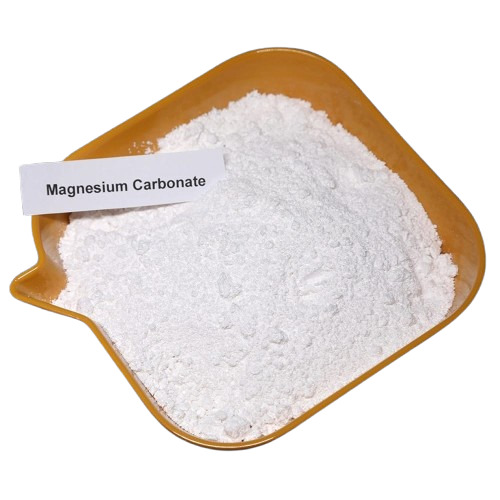
This guide explains the process, compares common industrial dryer types, identifies operating problems and gives buyers a practical checklist for requesting a technically meaningful proposal from a dryer manufacturer.
Quick Answer: Which Dryer Is Suitable for Magnesium Carbonate?
A multi-zone mesh belt dryer is often a strong candidate for high-moisture, cohesive magnesium carbonate filter cake when controlled continuous drying and staged temperature management matter. A spin-flash dryer is also worth assessing when the feed can be consistently dispersed and rapid drying with internal de-agglomeration is needed. Rotary, paddle and fluid bed dryers may suit specific feed forms or process constraints, but their suitability must be verified against the actual material.
Base selection on feed testing, target moisture, product-temperature limits, particle-size and bulk-density specifications, energy use, dust collection, maintenance access and total installed cost—not simply the lowest quoted equipment price.
1. Understanding Magnesium Carbonate and Its Feed Behaviour
Industrial magnesium carbonate may be supplied as anhydrous magnesium carbonate or, in many precipitation processes, as basic magnesium carbonate containing hydroxide and water of hydration. Basic magnesium carbonate is not always represented by one fixed formula: composition and physical behaviour can vary with precipitation temperature, pH, concentration, ageing and washing conditions. This variability affects drying kinetics and final powder properties.
After precipitation and solid–liquid separation, the material commonly reaches the dryer as a wet filter cake. Depending on filtration and precipitate morphology, the cake can be cohesive, sticky and difficult to feed evenly. Fine particles may form dense lumps or a low-permeability layer, preventing uniform airflow and causing wet pockets.
A good dryer design starts with the real feed rather than the chemical name alone. Buyers should provide a representative sample and report normal and worst-case feed rate, moisture range, temperature, cake consistency, washing history and batch variation.
2. Why Drying Conditions Matter
Drying affects more than residual moisture. It can influence powder flow, agglomeration, bulk density, milling behaviour, packaging performance and suitability for the customer’s application. Excessive or uneven heating may alter the material’s composition, while insufficient drying can lead to caking, poor storage stability or downstream processing difficulties.
Do not use a single universal decomposition temperature as the design limit. Basic magnesium carbonate composition, heating rate, sample size and atmosphere influence thermal behaviour. Published thermal-analysis research describes multi-stage changes during heating and confirms that behaviour varies with material and test conditions. Establish the safe operating window for the specific grade through laboratory thermal analysis and product-quality testing.
Distinguish hot-air temperature from actual product temperature. They are not the same. A high inlet-air temperature does not automatically mean the material reaches that temperature, but product temperature must still be measured or reliably validated. Confirm any proposed operating range against the product specification and thermal-analysis results.
3. Upstream Process: Filtration Determines Dryer Performance
The drying system is connected to precipitation, ageing, washing and filtration. A filter cake with excessive moisture places a larger evaporation load on the dryer; a cake with poor permeability may require a thinner bed, improved distribution or mechanical conditioning before drying. Improving filtration can sometimes reduce evaporation duty and operating cost more effectively than increasing dryer capacity. Evaluate the filter and dryer as one process system.
What buyers should check before sizing a dryer
Feed rate in kg/h, including peak and turndown conditions.
Inlet moisture on a clearly stated wet-basis or dry-basis measurement.
Cake temperature, stickiness, particle/agglomerate size and permeability.
Whether the cake can be spread as a uniform layer or needs crushing, extrusion or conditioning.
Target final moisture and how it will be measured.
Product limits for bulk density, particle size, colour, purity and grade-specific requirements.
4. Industrial Dryer Options for Magnesium Carbonate
| Dryer type | Potential advantages | Main watch-outs | Often worth evaluating when |
| Multi-zone mesh belt | Continuous operation; staged zones; controllable residence time and airflow; suitable for formed wet cake. | Bed distribution, belt fouling, air permeability and footprint need careful design. | Feed is cohesive filter cake and controlled continuous drying is required. |
| Spin-flash | Rapid drying; rotor disperses wet agglomerates; compact system. | Feed consistency and dust handling are important; higher gas rates may apply. | Fine powder and rapid de-agglomeration are priorities. |
| Rotary | Robust for granular, durable feed; continuous technology. | Attrition and product-temperature control may be concerns for fine or sensitive grades. | Feed is granular or conditioned and tolerates mechanical handling. |
| Fluid bed | Good heat and mass transfer after material fluidises. | Sticky high-moisture cake may not fluidise without pre-drying or conditioning. | Feed is free-flowing or a pre-drying step is installed. |
| Paddle/contact | Indirect heating and potentially lower process-gas volume. | Build-up, cleaning and heat transfer need material trials. | Indirect drying is desirable and material behaves acceptably under agitation. |
| Spray dryer | Can produce powder directly from suitable pumpable slurry. | May be energy-intensive when process already produces filter cake. | Upstream feed is a stable slurry and slurry drying is justified. |
5. How a Multi-Zone Mesh Belt Dryer Works
A continuous mesh belt dryer spreads wet cake on a perforated moving belt and passes it through multiple controlled drying zones. Heated air circulates through or across the material, and belt speed determines residence time. The equipment may include a feed-distribution system, zone-specific fans and heaters, exhaust control, dust collection and product cooling.
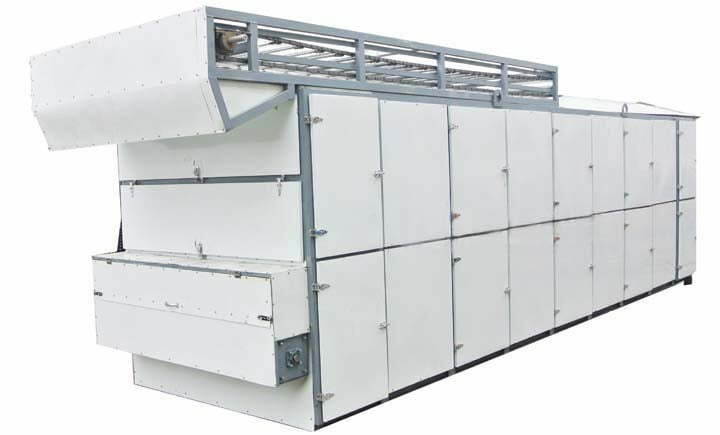
Feed preparation and spreading: a suitable feeder or cake-conditioning device delivers a consistent layer across the belt.
Initial moisture removal: early zones remove readily available surface moisture while avoiding a layer that blocks airflow.
Intermediate drying: airflow, temperature and residence time are adjusted as the cake becomes less sticky and moisture transport changes.
Final drying: later zones remove remaining moisture under conditions established by product testing.
Cooling and discharge: product is cooled as needed before milling, classification, storage or packaging.
Exhaust and dust management: appropriate collection equipment manages entrained fines and helps maintain a cleaner operating area.
Belt width: 1.2–3.0 m or wider for large capacities
Number of zones: 4–10 or more, depending on evaporation load and required residence time
Bed depth: 20–80 mm (shallower beds improve uniformity for sticky cakes; deeper beds increase capacity)
Air velocity through the bed: 0.5–2.5 m/s
Zone air temperatures: 90–160 °C inlet, with product temperature limited to <140–150 °C
Residence time: 20–90 minutes, adjustable by belt speed
Heating medium: low- or medium-pressure steam (most common for clean operation) or thermal oil
Airflow can be arranged as through-flow (preferred for permeable cakes) or a combination of through-flow and over-bed. Partial recirculation of exhaust air recovers heat and reduces fresh-air heating load. Exhaust is filtered by bag filters or, where required, wet scrubbers.
Zone count, belt width, bed depth, air velocity and residence time should be determined from evaporation load and drying trials. Generic ranges can support preliminary discussion, but they are not a final design specification. The cake may need a shallower layer, different belt mesh, anti-stick measures or dedicated cleaning arrangements.
For magnesium carbonate the zoning strategy is critical. The first one or two zones operate at higher temperature and velocity to drive off free surface water rapidly. Intermediate zones reduce temperature as the cake dries and becomes less sticky. The final zones run under milder conditions to remove residual free moisture without approaching decomposition temperatures. Optional final cooling zones bring the product below 40–50 °C before discharge, reducing the risk of re-humidification or thermal stress in packaging.
6. Mesh Belt vs Spin-Flash: How to Choose
The practical decision is usually about feed behaviour and the product required. A mesh belt dryer supports staged drying of a spread layer and may suit a large continuous evaporation load. A spin-flash dryer uses mechanical dispersion and hot gas to dry and de-agglomerate material in a shorter residence time. It can suit fine powder production, but stable feeding and appropriate dust collection are important.
Evaluate a mesh belt concept when cake can be spread in a controlled bed and staged drying is valuable.
Evaluate spin-flash when feed can be dispersed consistently and rapid drying/de-agglomeration is needed.
Consider pre-conditioning or a combined process if cake is too sticky for stable belt loading or too inconsistent for reliable flash feeding.
Compare feeders, exhaust treatment, fans, heating, cooling, mills, controls, maintenance and space—not just the dryer body.
A pilot trial is the most defensible way to compare technologies. Use representative material and agreed product-quality tests wherever practical.
Comprehensive Dryer Technology Comparison
No single dryer is universally optimal for magnesium carbonate. Selection depends on feed moisture, cake stickiness, required capacity, final particle-size distribution, purity grade, available utilities and plant layout.
6.1 Multi-zone continuous mesh belt dryer
Excellent for high-moisture cohesive filter cakes. The cake is spread in a controlled layer on a perforated or stainless-steel mesh belt that travels through successive temperature and airflow zones. Early zones remove free water rapidly; later zones finish drying under milder conditions. Residence time is adjustable by belt speed and number of zones. Steam or thermal-oil heating provides clean, controllable heat. Through-flow air improves mass transfer compared with over-bed airflow. Large evaporation capacity is achievable with proper belt area and recirculation. Product temperature is easily limited. The technology is continuous, integrates well with upstream cake feeders and downstream coolers or mills, and is widely used for precipitated inorganic cakes.
Spin-flash (roto-flash) dryer
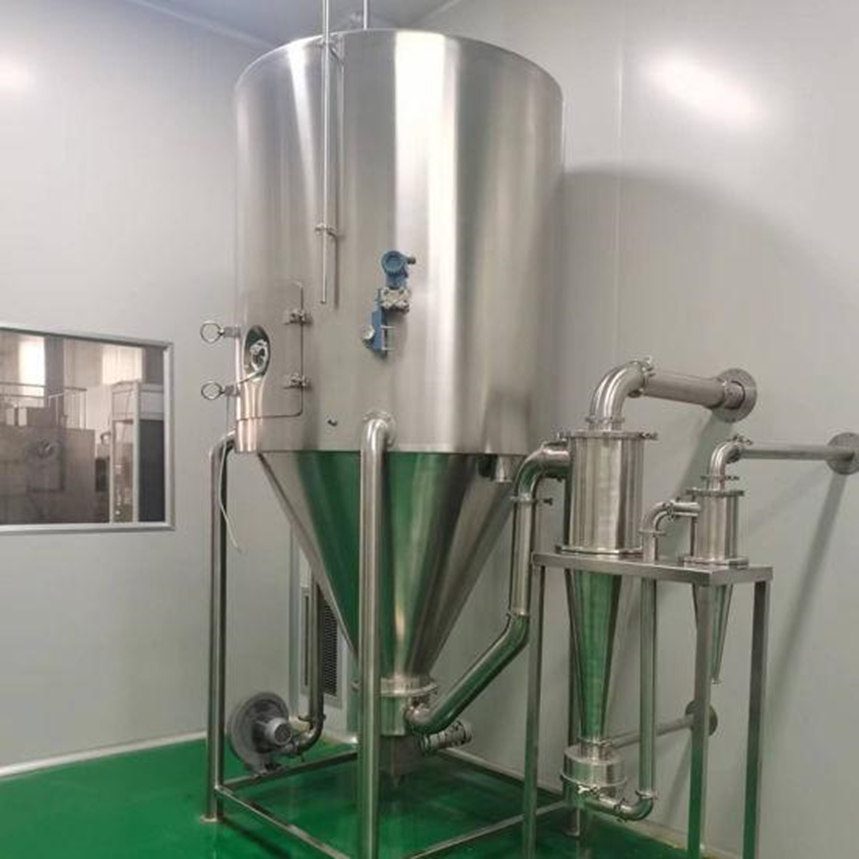
Strong alternative when the final product must be a fine, well-dispersed powder and the cake is extremely sticky. A high-speed rotor mechanically breaks agglomerates while hot gas evaporates moisture in a short residence time. Classification occurs inside the dryer. Footprint is compact and start-up is rapid. Product temperature can still be controlled, but gas rates are higher and the system is more sensitive to feed consistency. Suitable for many basic magnesium carbonate cakes, especially when particle-size control is important.
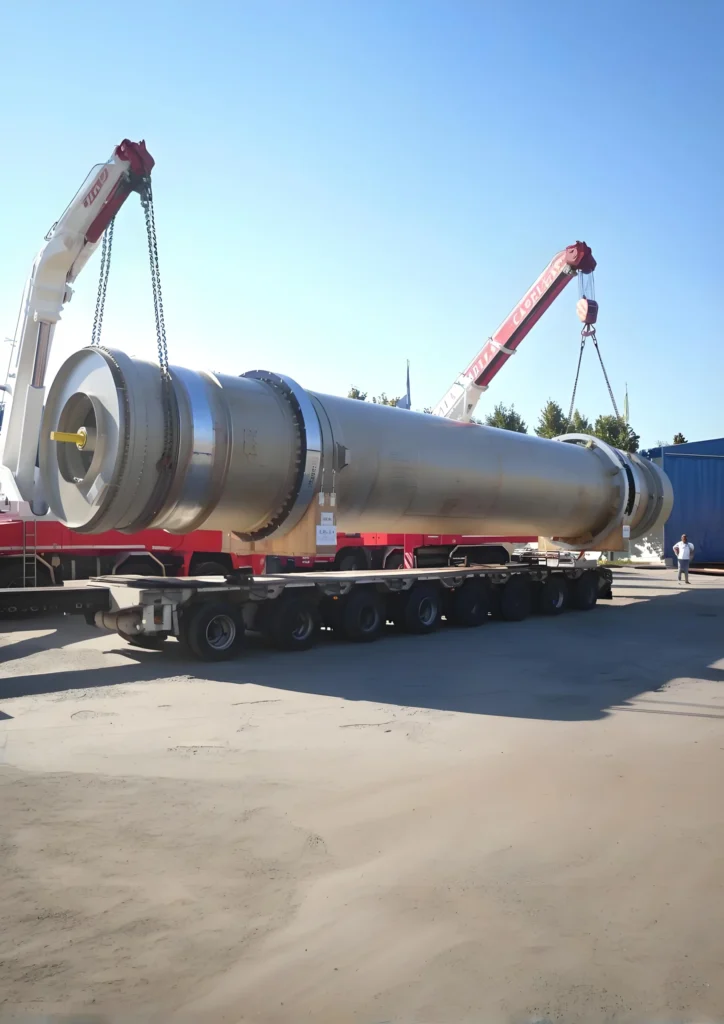
Rotary dryer (direct or indirect)
Useful for higher-throughput mineral streams or when the feed is already granular. Longer residence time and greater mechanical action can be advantageous for robust materials but increase the risk of over-grinding fine precipitated powders and make precise product-temperature control more difficult. Less common for high-purity or pharmaceutical-grade magnesium carbonate cakes.
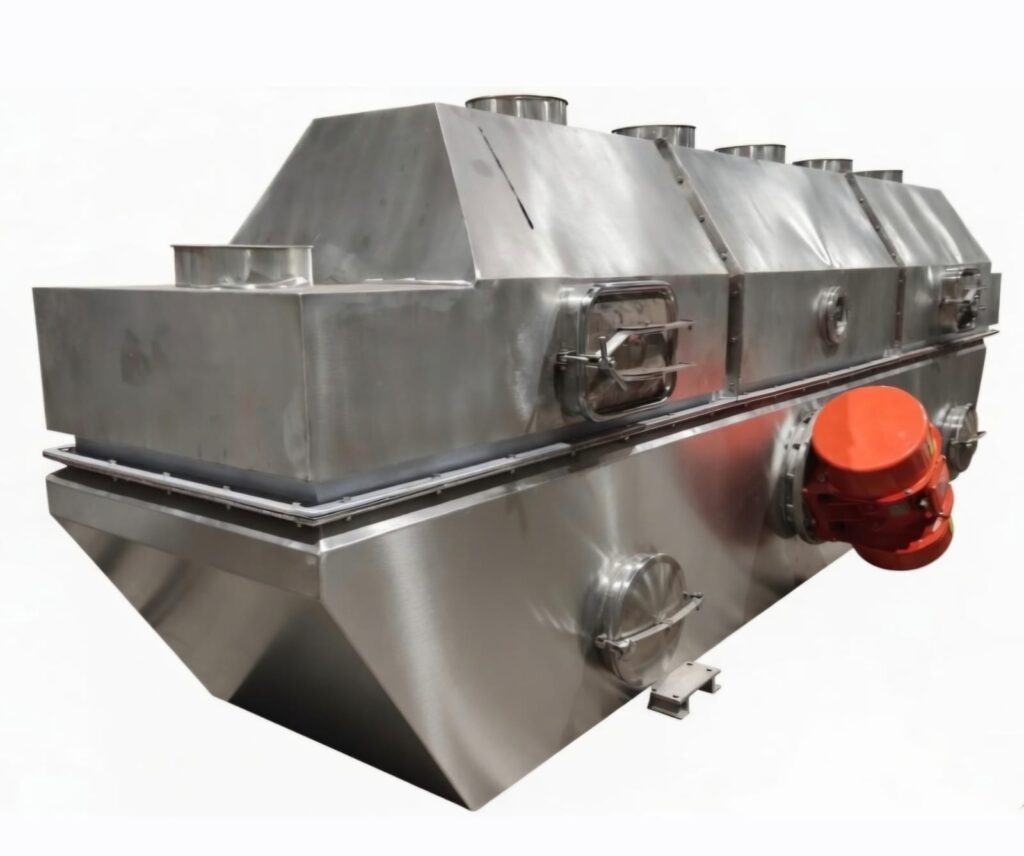
High thermal efficiency and excellent temperature uniformity once the material fluidises. High-moisture cohesive cakes do not fluidise until substantial free water has been removed, so a fluid bed is normally used only after a pre-dryer or for free-flowing crystalline feeds.
Paddle or contact dryers
Indirect heating with low gas volume. Can be evaluated for heat-sensitive or solvent-containing duties, but mechanical agitation and wall-build-up behaviour of sticky cakes must be tested carefully.

Requires the material to remain a pumpable slurry. Rarely used for magnesium carbonate because the upstream process already produces a filter cake and spray drying of dilute slurries is energy-intensive.
For the majority of plants that discharge a filter cake, the practical choice narrows to multi-zone mesh belt or spin-flash systems. Capacity, final bulk density specification, dust-handling preferences and utility availability usually decide between them.
7. Illustrative Mass Balance: Estimate the Water to Remove
The following calculation is an engineering illustration, not a performance guarantee. Assume 4,000 kg/h of wet cake containing 89% moisture on a wet basis, with a target final moisture of 2% wet basis.
Dry solids in feed = 4,000 × (1 − 0.89) = 440 kg/h.
Final product rate = 440 ÷ (1 − 0.02) ≈ 449 kg/h.
Water evaporated = 4,000 − 449 ≈ 3,551 kg/h.
This example shows why inlet moisture matters: the dryer must evaporate approximately 3.55 tonnes of water per hour to produce about 449 kg/h of final product under these assumptions. If actual feed moisture, dry-solids recovery or target moisture changes, the balance changes too.
Do not use a simplified latent-heat calculation as a complete utility guarantee. Actual heat demand also depends on feed and product temperatures, bound-water behaviour, exhaust conditions, heat losses, air recirculation, leakage and operating schedule. A vendor’s energy estimate should clearly state assumptions and be validated with representative trials.
8. Energy Efficiency and Operating Cost
The main energy drivers are water evaporated, incoming-air temperature and humidity, exhaust losses, air recirculation, insulation, fan pressure drop and cake distribution. The lowest-cost design is not necessarily the lowest-price purchase: a dryer that creates wet product, needs repeated cleaning or consumes excessive steam can cost more over its operating life.
Questions to ask the equipment supplier
What evaporation rate is proposed, and what feed conditions does it assume?
What is estimated steam or thermal-oil demand per kilogram of water evaporated?
What electrical load is expected for fans, belt drive, feeders and dust collection?
What exhaust temperature and humidity are expected at the design point?
Is heat recovery or partial air recirculation appropriate for this material?
What cleaning frequency, belt life and routine maintenance are expected?
Which figures are estimates and which are contractual guarantees?
Compare offers on a consistent basis: same feed rate, inlet moisture, final moisture, operating hours, utility prices and product-quality requirements. Request the mass balance, heat balance and utility list with the proposal.
9. Process Control, Product Quality and Dust Handling
A reliable drying line should monitor variables that affect consistency and safe operation. Depending on design, these may include zone air temperature, product temperature, belt speed, feed rate, bed depth, exhaust humidity, fan status and pressure drop across the bed. A changing pressure drop can indicate changes in loading, permeability or build-up.
Final moisture should be verified using a suitable agreed test method. If an online analyser is used, correlate it with laboratory results for the specific product. Where required by grade, quality checks may include bulk density, particle-size distribution, chemical composition, loss on drying and applicable purity limits.
Magnesium carbonate powder can create airborne dust. The system should include appropriate containment and collection, safe cleaning access and a site-specific assessment of combustible-dust and explosion risks. Do not assume a dust hazard is absent because the material is inorganic; assess the actual powder, contaminants, particle size and process conditions with qualified safety personnel.
10. Common Drying Problems and Practical Remedies
| Problem | Possible causes | What to investigate |
| Wet spots or inconsistent moisture | Uneven feed layer, excessive bed depth, blocked airflow, variable inlet moisture. | Check distribution, bed depth, pressure drop, airflow balance and sampling method. |
| Sticky cake or build-up | High residual moisture, poor conditioning, unsuitable belt mesh or inadequate cleaning. | Review feed rheology, layer formation, belt selection, residence time and cleaning access. |
| High energy consumption | Excess water in feed, exhaust losses, poor insulation, air leakage or unsuitable set-points. | Audit inlet moisture, exhaust conditions, recirculation, leakage and measured utility use. |
| Dust carry-over | High air velocity, friable product, poor separation or inadequate collection. | Review airflow, fines generation, collection equipment and housekeeping. |
| Product too warm at packaging | Insufficient cooling or high discharge temperature. | Assess cooling duty, conveying time and packaging requirements. |
| Variable bulk density or particle size | Feed variability, agglomeration, excessive mechanical action or inconsistent drying. | Compare incoming cake, dryer settings and downstream milling data. |
| Belt tracking or wear | Alignment, tension, loading or material abrasion. | Inspect tracking, tension, support rollers, loading symmetry and maintenance. |
Troubleshooting should begin with measured operating data and representative samples. Changing temperature alone may not solve a problem caused by uneven loading, poor filtration or restricted airflow.
11. What Information Is Needed for a Reliable Dryer Quotation?
To avoid a generic proposal, provide the dryer manufacturer with as much of the following as possible:
Material name and grade: basic or anhydrous magnesium carbonate, known composition and additives.
Minimum, normal and maximum wet-feed rate in kg/h.
Inlet moisture and target final moisture, including measurement basis.
Representative wet-cake sample, photographs and notes on stickiness or lump formation.
Product temperature limit and any thermal-analysis or quality data.
Required particle size, bulk density, colour, purity and downstream requirements.
Available steam pressure, thermal oil, electricity, cooling water and compressed air.
Site location, ambient conditions, floor space and layout constraints.
Dust collection, emissions, hygiene, construction-material and safety requirements.
Expected operating hours, automation needs, cleaning practices and future capacity plans.
A technically complete proposal should explain the selected concept, design basis, mass and energy balance, utility consumption, scope of supply, exclusions, operating window, instrumentation, dust handling and test or guarantee conditions. If key feed data is missing, assumptions and outstanding information should be listed clearly.
12. Frequently Asked Questions
What is the best dryer for magnesium carbonate filter cake?
There is no single best dryer for every grade. A multi-zone mesh belt dryer is a strong candidate for high-moisture cohesive cake that can be spread evenly; a spin-flash dryer may suit material needing rapid dispersion and fine powder production. Test the actual cake before selecting equipment.
What final moisture can an industrial magnesium carbonate dryer achieve?
The target depends on grade, customer specification, storage conditions and test method. Some applications may specify around 1–2% free moisture, but this is not a universal standard. Confirm the exact limit with the buyer and validate it through trials.
Can magnesium carbonate be dried in a rotary dryer?
It may be possible for suitable granular or conditioned feeds. For sticky high-moisture cake or grades sensitive to attrition and product-temperature variation, compare rotary drying with belt and spin-flash options through testing.
Why is a wet filter cake difficult to dry?
Fine particles and sticky cake can form dense lumps or layers that restrict airflow. Uneven bed depth and inconsistent feeding worsen the problem. Cake conditioning, even distribution, suitable bed depth and controlled airflow can improve performance.
Does a higher inlet-air temperature always improve drying?
No. Temperature may increase drying rate in some conditions, but product temperature, composition, quality and energy use must also be considered. Establish the operating window through material-specific testing.
How can a plant reduce magnesium carbonate drying energy costs?
Measure feed moisture and evaporation load first. Improve upstream filtration where practical, minimise air leakage, optimise bed depth and airflow, assess heat recovery or recirculation, maintain insulation and compare actual utilities against the design basis.
Is pilot testing necessary before buying a dryer?
Pilot testing is strongly recommended when cake stickiness, drying kinetics, product quality or utility consumption is uncertain. It helps establish achievable moisture, residence time, bed loading, temperature limits and a defensible equipment size.
What should be included in a magnesium carbonate dryer quotation?
Request the design basis, feed and product specifications, mass and energy balance, estimated utilities, scope of supply, instrumentation, dust collection, construction materials, assumptions, exclusions, testing plan and any performance guarantees with test conditions.
Can a mesh belt dryer be customised for magnesium carbonate?
A mesh belt system can be engineered around feed behaviour, evaporation load, residence time, airflow, heating medium, belt mesh, construction materials, cooling and dust collection. Final configuration and performance depend on testing and site requirements.
13. Conclusion: Select the Dryer Around the Material, Not a Catalogue Number
Successful industrial magnesium carbonate drying depends on controlling moisture removal while protecting required product properties. Upstream filtration, cake consistency, bed formation, airflow, residence time, product temperature, dust collection and cooling all influence final performance.
For high-moisture cohesive filter cake, a multi-zone mesh belt dryer is often worth evaluating because it offers staged continuous drying and adjustable residence time. A spin-flash system can be a suitable alternative where rapid dispersion and fine powder characteristics are central requirements. The right choice should be supported by sample testing, a clear design basis and a transparent mass and energy balance.
GTI Dryers designs industrial drying systems for process applications and can assess a magnesium carbonate duty based on material, capacity, moisture targets, temperature constraints and available utilities. Share your process data and a representative sample to start a technical evaluation and determine which drying concept deserves a closer look.
Contact the GTI Technical Team:
Website: gtidryers.com
Email: mktg@gtidryers.com
Phone / WhatsApp: +91 9330077417