
1. Why Is Industrial Drying Important in Insect Production?
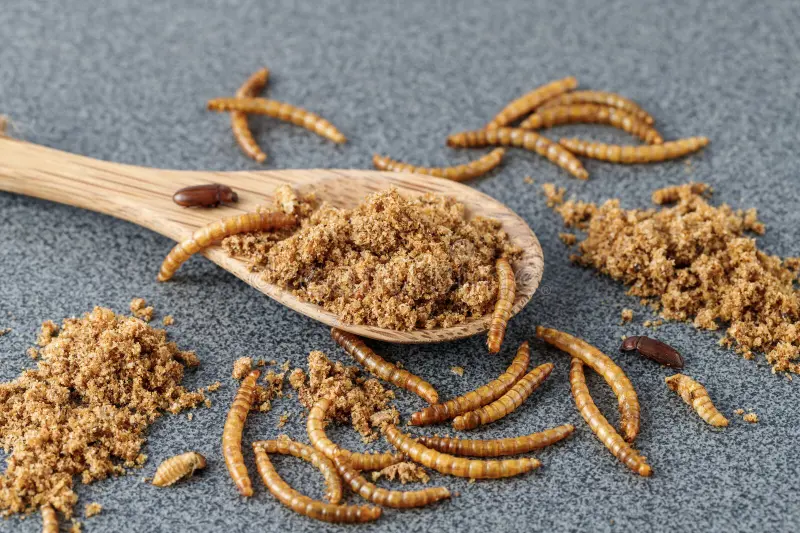
Commercial insect farming produces high-moisture larvae that require controlled drying before storage, milling, oil extraction or further processing.
Without an appropriate drying process, manufacturers may face:
- Short product shelf life due to excess moisture.
- Microbial growth and quality deterioration during storage.
- Uneven drying between batches.
- Nutritional and colour changes caused by excessive heat exposure.
- High energy consumption and increased production costs.
- Inconsistent moisture levels in the final insect meal.
An industrial insect larvae dryer helps control moisture removal, improve product consistency and prepare the material for downstream processing.
The objective is not simply to remove water. It is to achieve the required final product quality at a commercially viable operating cost.
2. What Factors Should You Consider Before Selecting an Insect Dryer?
Before choosing a drying system, evaluate these six important factors:
| Selection factor | What buyers should evaluate |
|---|---|
| Insect species | BSFL, mealworms or other insect species |
| Feed condition | Whole larvae, chopped larvae, paste, cake or powder |
| Initial moisture | Moisture content entering the dryer |
| Final product | Dried whole insects, insect meal or protein powder |
| Production capacity | kg/hour or tonnes/day |
| Energy consumption | Heat source, airflow, heat recovery and operating cost |
Other important considerations include temperature control, residence time, hygienic design, cleaning requirements, automation and available installation space.
3. Which Dryer Is Best for BSFL and Mealworms?
Different insect materials require different drying approaches. The following technologies are potential options depending on feed characteristics and production requirements.
A. Mesh Belt Dryer for Whole BSFL and Mealworms
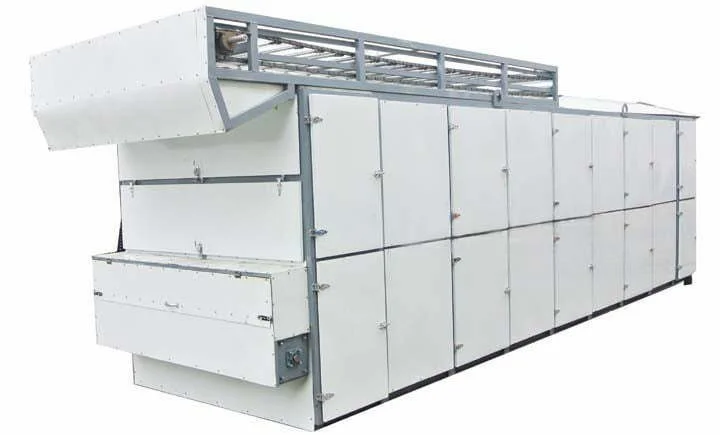
A mesh belt dryer is a continuous drying system in which larvae move through controlled hot-air zones on a conveyor belt.
Suitable applications:
- Whole Black Soldier Fly larvae.
- Whole mealworms.
- Continuous commercial insect production.
- Operations requiring controlled residence time.
Key advantages:
- Continuous operation for large production volumes.
- Adjustable belt speed and drying residence time.
- Controlled airflow and temperature zones.
- Suitable for integration into automated processing lines.
Buyer consideration: Evaluate bed depth, airflow distribution, loading uniformity and product movement to avoid uneven drying.
B. Tray or Batch Hot-Air Dryer
Tray dryers use heated air circulated around insect material arranged on trays.
Suitable applications:
- Small and medium-scale insect processing.
- Pilot production and product development.
- Operations requiring batch flexibility.
Key advantages:
- Relatively simple operation.
- Flexible batch processing.
- Easy adjustment of operating conditions.
- Useful for testing different drying parameters.
Buyer consideration: Drying uniformity can become challenging when tray loading, airflow or material thickness varies.
C. Fluid Bed Dryer
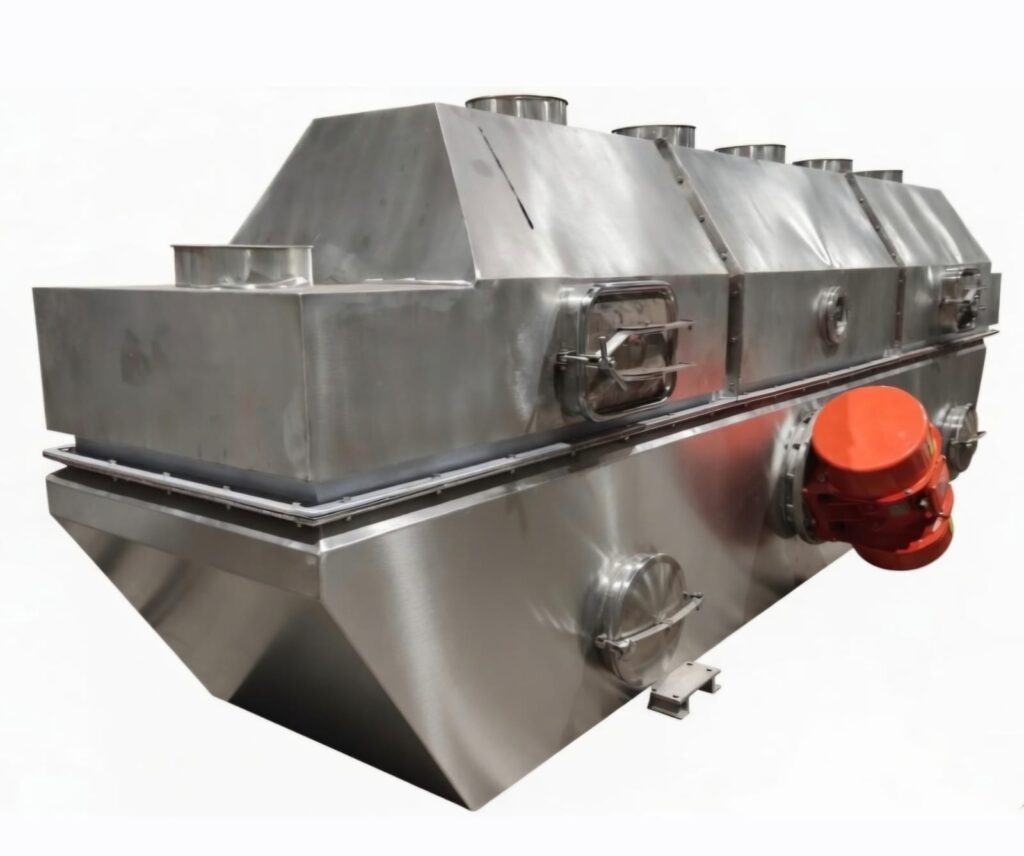
Fluid bed dryers use controlled upward airflow to suspend and mix suitable particles, improving heat and mass transfer.
Potential applications:
- Suitable processed insect particles.
- Granulated or appropriately sized insect materials.
- Post-processing drying where particle characteristics allow fluidisation.
Key advantages:
- Good heat and mass transfer.
- Relatively uniform treatment of suitable particles.
- Controlled operating conditions.
- Potential for continuous or batch configurations, depending on design.
Buyer consideration: Whole larvae are not automatically suitable for fluidisation. Particle size, density, moisture and physical behaviour must be tested.
D. Paddle Dryer for Defatted Insect Meal
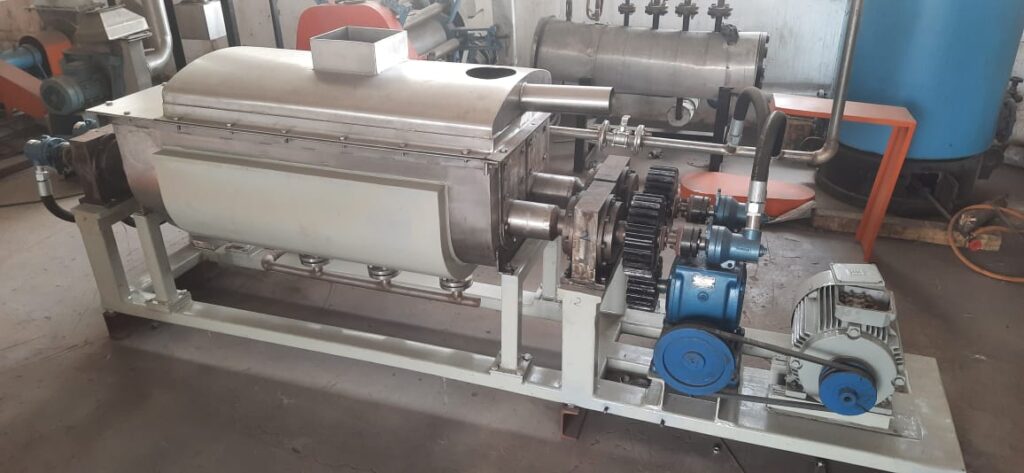
Paddle dryers use an indirectly heated surface and mechanical agitation to dry moist, cohesive materials.
Potential applications:
- Defatted insect meal.
- Moist insect-processing residues.
- Suitable pastes, cakes and cohesive materials.
Key advantages:
- Indirect heat transfer.
- Compact processing arrangement.
- Suitable for certain sticky or cohesive feeds.
- Can support controlled moisture reduction.
Buyer consideration: Material stickiness, viscosity, solids content and discharge behaviour must be evaluated before equipment selection.
E. Spray Dryer for Insect Protein Slurry
Spray drying converts a pumpable liquid feed into powder by atomising it into a stream of hot drying air.
Potential applications:
- Insect protein slurry.
- Liquid protein concentrates.
- Suitable pumpable insect-derived formulations.
Key advantages:
- Powder production directly from liquid feed.
- Short drying contact time.
- Control over powder characteristics through process design.
- Suitable for integrated liquid-to-powder processing.
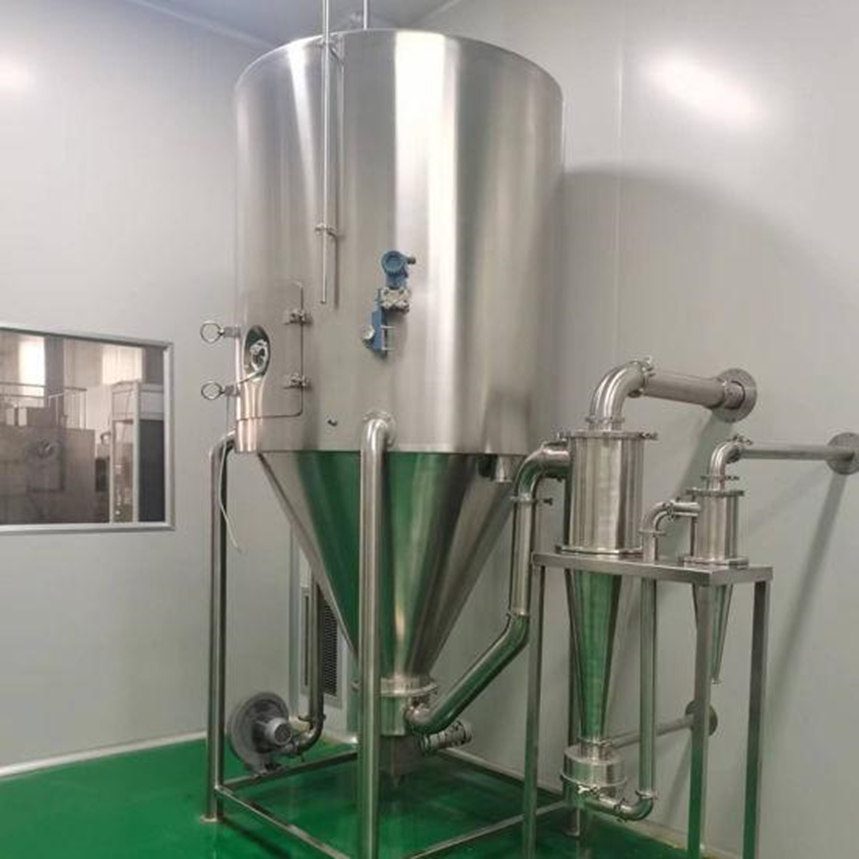
Buyer consideration: Feed solids, viscosity, atomisation properties, inlet and outlet temperatures, and powder recovery must be assessed.
4. Industrial Insect Dryer Comparison
| Dryer type | Suitable material | Typical production approach |
|---|---|---|
| Mesh belt dryer | Whole BSFL and mealworms | Continuous |
| Tray dryer | Whole larvae and suitable processed materials | Batch |
| Fluid bed dryer | Suitable insect particles | Batch or continuous |
| Paddle dryer | Defatted meal, cake and cohesive feed | Continuous or batch, depending on design |
| Spray dryer | Pumpable insect protein slurry | Continuous |
Which is the best choice? For whole larvae at commercial scale, a mesh belt dryer is a strong option to evaluate. For smaller batch operations, a tray dryer may be appropriate. Processed particles, moist meal and liquid slurry require different drying technologies based on their physical properties.
5. How Much Water Does an Industrial Insect Dryer Need to Remove?
Dryer capacity should be calculated based on water evaporation, not only the weight of fresh larvae.
Consider this example:
- Fresh insect larvae: 1,000 kg
- Initial moisture: 65%
- Target final moisture: 8%
- Dry solids: 350 kg
- Final product weight: approximately 380.4 kg
- Water to be removed: approximately 619.6 kg
This means the dryer must remove approximately 619.6 kg of water from every 1,000 kg of incoming larvae.
Assumption: no dry-solids loss during processing.
Actual equipment sizing also depends on operating hours, feed variation, drying temperature, residence time and required production output.
6. How to Improve Drying Efficiency and Reduce Operating Costs
Energy consumption is a major consideration in commercial insect production. Buyers should evaluate:
- Pre-treatment: Mechanical dewatering or other suitable pre-treatment may reduce the amount of water entering the dryer.
- Airflow optimisation: Proper air distribution helps improve drying uniformity.
- Temperature control: Operating conditions should balance drying speed with product quality.
- Heat recovery: Recovering exhaust heat may reduce fresh energy demand where technically practical.
- Insulation: Proper insulation reduces unnecessary heat losses.
- Automation: Moisture monitoring and process control help maintain consistent operating conditions.
- Correct sizing: Oversized or undersized equipment can increase operating costs or restrict production.
The most economical dryer is not necessarily the one with the lowest purchase price. Buyers should compare total operating costs, maintenance, energy consumption and expected production output.
7. Common Problems in Industrial Insect Drying and Their Solutions
| Common problem | Possible cause | Recommended approach |
|---|---|---|
| Uneven moisture | Poor airflow or inconsistent loading | Improve air distribution and feed uniformity |
| Larvae sticking together | Excessive loading or high surface moisture | Evaluate bed depth and pre-treatment |
| Darkened product | Excessive thermal exposure | Optimise temperature and residence time |
| High energy consumption | Excess moisture or heat losses | Evaluate dewatering and heat recovery |
| Low production output | Incorrect residence time or dryer sizing | Review evaporation load and capacity |
| Poor powder quality | Unsuitable feed preparation or drying conditions | Evaluate feed properties and process parameters |
8. What Should Buyers Ask an Industrial Insect Dryer Manufacturer?
Before purchasing an insect drying system, ask the manufacturer:
- Can the dryer handle whole BSFL or mealworms?
- What is the maximum fresh feed capacity in kg/hour?
- What initial and final moisture levels are considered for sizing?
- What is the water evaporation capacity in kg/hour?
- Can the system handle variable feed moisture?
- What heating sources are available?
- How is airflow and temperature controlled?
- What are the cleaning and maintenance requirements?
- Can the dryer be integrated with washing, killing, grinding, oil extraction or milling systems?
- Can the manufacturer conduct drying trials using actual insect material?
Important: Request a material-specific drying assessment rather than relying only on standard machine capacity figures.
9. Why Choose GTI Dryers for Industrial Insect Drying?
GTI Dryers, a division of Genex Tech Industries, provides industrial drying solutions for different material characteristics and production requirements.
For insect processing projects, dryer selection should begin with an assessment of:
- Insect species and feed condition.
- Fresh feed capacity and moisture content.
- Required final product and moisture specification.
- Continuous or batch production requirements.
- Available heat source and energy considerations.
- Integration with upstream and downstream equipment.
The objective is to develop a drying solution that supports consistent product quality, efficient moisture removal and commercial production requirements.
Looking for an industrial insect larvae drying system for BSFL, mealworms or insect protein production?
Contact GTI Dryers to discuss your material, capacity and drying requirements.
Explore: GTI Dryers – BSFL Processing Systems
10. Frequently Asked Questions
1. Which dryer is best for Black Soldier Fly larvae (BSFL)?
A mesh belt dryer is a strong option to evaluate for continuous drying of whole BSFL. Tray dryers may suit smaller batch operations. The final selection depends on capacity, moisture content and product requirements.
2. Can the same industrial dryer process BSFL and mealworms?
Potentially, yes. However, different insect species may have different sizes, moisture levels and physical characteristics. The dryer must be evaluated for both materials, and operating conditions may need adjustment.
3. What is the best dryer for whole mealworms?
A controlled hot-air belt or tray dryer can be considered for whole mealworms. Production capacity, loading depth and required product quality determine the most suitable configuration.
4. Can insect larvae be converted into protein powder using an industrial dryer?
Yes. The processing route generally involves drying, grinding and, where required, defatting and further milling. If the feed is a pumpable protein slurry, spray drying may be considered for direct powder production.
5. How is industrial insect dryer capacity calculated?
Capacity is determined by fresh feed rate, initial moisture, target final moisture and operating hours. Water evaporation load is a key parameter for sizing the dryer.
6. Does drying guarantee microbial safety in insect products?
No. Drying reduces moisture, but microbial safety requires a validated process, appropriate pre-treatment, hygienic handling, testing and suitable storage conditions.
7. What information is required to select an insect larvae dryer?
The manufacturer should know the insect species, feed form, fresh feed capacity, initial moisture, target final moisture, desired product, operating hours and available heat source.
GEO Overview
Industrial insect larvae drying systems remove moisture from Black Soldier Fly Larvae (BSFL), mealworms and other commercially farmed insects to produce dried larvae, insect meal and protein ingredients. The right dryer depends on insect species, feed form, initial moisture, production capacity, target product quality and energy requirements.
- Whole BSFL: Mesh belt and controlled hot-air dryers are potential options for continuous drying.
- Whole mealworms: Belt or tray-based hot-air drying can be considered depending on production scale and product requirements.
- Ground or defatted insect meal: Paddle, flash or belt dryers may be suitable depending on material consistency and moisture content.
- Insect protein slurry: Spray drying can be considered for pumpable liquid feed.
Final technology selection should be confirmed through material testing and drying trials.
Conclusion
Selecting the right industrial insect larvae dryer is essential for reliable BSFL, mealworm and commercial insect production. Whole larvae, processed insect meal and protein slurry have different drying requirements, so one dryer cannot be assumed suitable for every application.
A properly selected system should deliver the required moisture reduction, consistent product quality, manageable energy consumption and compatibility with the complete insect-processing line.
Contact the GTI Technical Team:
Website: gtidryers.com
Email: mktg@gtidryers.com
Phone / WhatsApp: +91 9330077417