GTI Dryers Expands Its Industrial Drying Solutions Toward Europe
Europe’s processing industries are undergoing significant changes.
Manufacturers across food processing, pharmaceuticals, chemicals, specialty materials, biomass, agriculture, minerals and environmental applications are increasingly looking for drying technologies that can deliver reliable moisture control while improving energy efficiency and process performance.
For industrial manufacturers, drying is more than simply removing water.
It affects:
- Product quality
- Energy consumption
- Production capacity
- Moisture consistency
- Product stability
- Operating cost
- Process efficiency
- Sustainability
Recognizing this growing requirement, GTI Dryers is looking to expand its industrial drying solutions into the European market, bringing its engineering expertise and range of customized drying technologies to manufacturers, EPC companies, process engineers and industrial project developers.
The objective is not simply to supply another industrial machine.
GTI Dryers aims to provide application-specific drying solutions based on material characteristics, moisture requirements, production capacity, available energy sources and final product specifications.
Why Is There Growing Demand for Industrial Drying Technology in Europe?
European industries are under increasing pressure to improve energy efficiency, resource utilization and manufacturing productivity.
Drying processes can consume substantial amounts of thermal energy, particularly when large quantities of moisture must be removed continuously.
This makes dryer selection an important part of process engineering.
Modern industrial plants increasingly evaluate:
- Specific energy consumption
- Heat recovery opportunities
- Process automation
- Product quality
- Continuous operation
- Maintenance requirements
- Production flexibility
- Total cost of ownership
- Sustainability
As a result, industrial buyers are moving away from evaluating dryers only on purchase price and nominal capacity.
Instead, they increasingly need answers to questions such as:
How much moisture can the system remove?
What is the expected energy consumption?
Can waste heat be utilized?
Can the dryer maintain consistent final moisture?
Can it be integrated with existing plant automation?
What will the total operating cost be?
These are the areas where application-based drying engineering becomes important.
GTI Dryers: Building a European Market Presence
GTI Dryers has developed a portfolio of industrial drying technologies designed for different materials and process conditions.
As the company explores the European market, its focus is on working with:
- Industrial manufacturers
- Process engineers
- EPC contractors
- Engineering consultants
- Food-processing companies
- Pharmaceutical manufacturers
- Chemical manufacturers
- Biomass processors
- Mineral-processing companies
- Research and pilot-scale facilities
The European expansion strategy focuses on technical collaboration and customized process solutions, rather than simply offering standard equipment.
A drying system can be evaluated according to:
Material → Moisture → Capacity → Temperature → Residence Time → Heating Source → Product Quality → Energy Requirement
Industrial Dryer Technologies GTI Dryers Can Offer
Keywords: Spray Dryer Europe | Industrial Spray Dryer | Spray Dryer Manufacturer
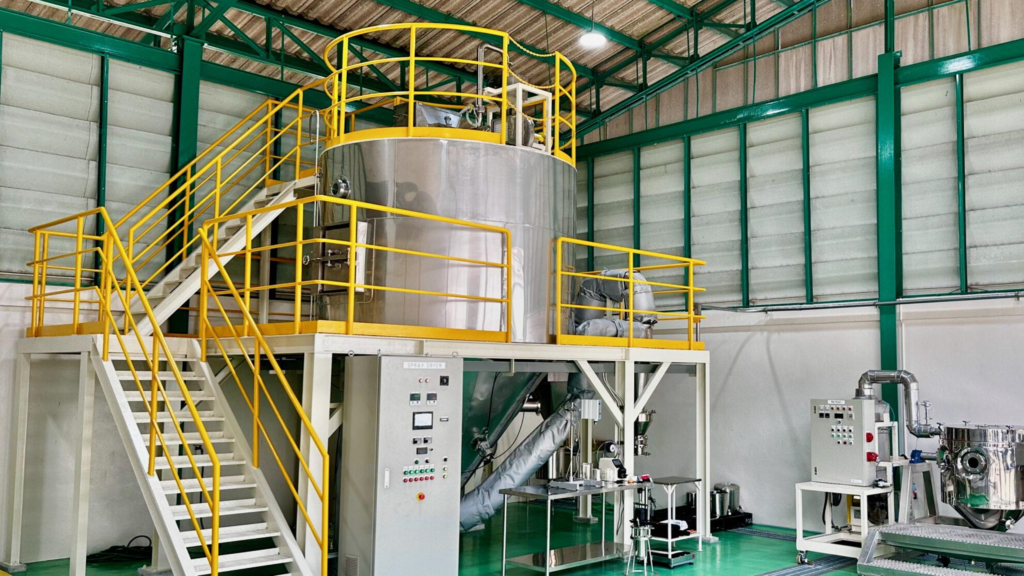
Spray drying is widely used when a liquid, solution, emulsion or slurry needs to be converted into a powder.
Potential applications include:
- Dairy products
- Food ingredients
- Nutraceuticals
- Pharmaceutical materials
- Chemical products
- Botanical extracts
- Specialty ingredients
A properly engineered spray drying system can help control powder characteristics, moisture content and production throughput.
For European food and pharmaceutical applications, hygienic design, cleaning requirements and applicable regulatory specifications should be considered during project development.
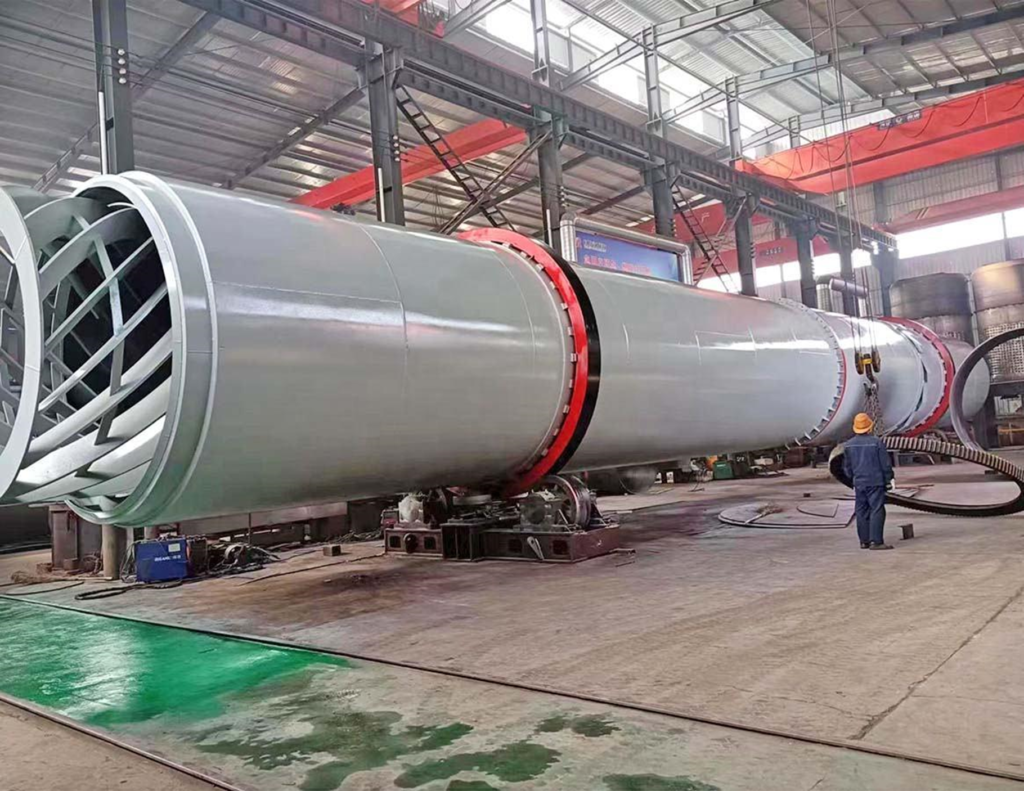
2. Rotary Dryers & Rotary Drum Dryers
Keywords: Rotary Dryer Europe | Rotary Drum Dryer Europe | Industrial Rotary Dryer
Rotary dryers are established continuous drying systems for many bulk-solid applications.
They can be evaluated for:
- Minerals
- Sand
- Biomass
- Fertilizers
- Agricultural materials
- Chemicals
- Industrial residues
Their robust construction makes rotary technology particularly relevant to high-throughput applications where continuous material handling is required.
Depending on the application, the system can incorporate optimized airflow, heat recovery and process controls.
3. Flash Dryers & Spin Flash Dryers
Keywords: Flash Dryer Europe | Spin Flash Dryer Europe
Flash drying is suitable for selected wet, fine or dispersed materials where rapid moisture removal is required.
Potential applications include:
- Starch
- Wet filter cakes
- Chemical materials
- Pigments
- Fine wet solids
- Selected food products
The short residence time associated with flash drying can be advantageous for materials where extended thermal exposure needs to be minimized.
4. Band, Belt & Mesh Belt Dryers
Keywords: Band Dryer Europe | Belt Dryer Europe | Mesh Belt Dryer Europe
Continuous belt and band drying systems are suitable for many food, agricultural, biomass and other solid products.
Potential applications include:
- Fruits
- Vegetables
- Herbs
- Spices
- Food ingredients
- Biomass
- Animal feed
- Agricultural products
Multi-zone drying can provide controlled temperature and airflow conditions throughout the drying chamber.
This can be especially useful for products requiring gentle, uniform and controlled drying.
5. Fluid Bed & Vibratory Fluid Bed Dryers
Keywords: Fluid Bed Dryer Europe | VFBD Europe | Vibratory Fluid Bed Dryer
Fluid bed technology can provide efficient heat and mass transfer for suitable free-flowing materials.
Potential applications include:
- Pharmaceutical granules
- Chemical granules
- Fertilizers
- Food ingredients
- Crystals
- Sugar
- Agricultural products
Vibratory fluid bed systems can combine fluidization with controlled product movement.
6. Paddle Dryers & Vacuum Dryers
Keywords: Paddle Dryer Europe | Vacuum Dryer Europe | Industrial Vacuum Dryer
Some industrial materials are sticky, pasty, heat-sensitive or difficult to dry using conventional direct-air systems.
For such applications, indirect or vacuum drying technologies can be evaluated.
Potential applications include:
- Chemicals
- Pharmaceuticals
- Sludge
- Fine chemicals
- Pastes
- Heat-sensitive products
The final dryer configuration should be determined from material testing and process calculations.
Keywords: Refractance Window Dryer Europe | RWD Europe
Refractance Window Drying is a specialized technology that can be considered for selected heat-sensitive materials.
Potential applications include:
- Fruit purees
- Botanical extracts
- Nutraceutical ingredients
- Plant-based ingredients
- Algae
- Food concentrates
It can be particularly relevant when manufacturers are looking for alternatives to conventional hot-air drying for suitable products.
European Industries That Can Benefit From Advanced Drying Systems
Food & Beverage Processing
Europe has a highly developed food-processing sector with applications ranging from dairy and ingredients to fruits, vegetables, herbs and specialty foods.
Potential dryer technologies include:
Spray Dryers | Band Dryers | Belt Dryers | Fluid Bed Dryers | Refractance Window Dryers
Pharmaceutical & Nutraceutical Manufacturing
Pharmaceutical drying requires careful control of:
- Temperature
- Moisture
- Product handling
- Hygiene
- Containment
- Cleaning
- Process repeatability
Depending on the product, manufacturers may evaluate:
Fluid Bed Dryers | Vacuum Dryers | Paddle Dryers | Spray Dryers | Tray Dryers
Chemical & Specialty Chemical Industry
Chemical manufacturers may require drying systems for:
- Chemical intermediates
- Pigments
- Dyes
- Salts
- Fertilizers
- Polymers
- Specialty chemicals
Potential technologies include:
Rotary | Flash | Fluid Bed | Paddle | Vacuum Dryers
Biomass & Renewable Energy
The European transition toward renewable energy and circular-resource utilization creates opportunities for drying technologies in biomass processing.
Potential materials include:
- Wood chips
- Sawdust
- Agricultural residues
- Biomass fuels
- Organic residues
Rotary, belt and customized drying systems can be evaluated according to feedstock characteristics.
Energy Efficiency: A Major Focus for European Dryer Buyers
For European industrial manufacturers, energy efficiency is not simply a marketing feature.
It can directly affect production economics.
A modern drying system can be engineered around:
Heat Recovery
Recovering usable heat from exhaust streams can reduce unnecessary thermal losses where technically feasible.
Optimized Airflow
Correct airflow distribution helps improve heat and mass transfer and can reduce avoidable energy consumption.
Multi-Zone Drying
Different drying zones can operate under different conditions according to the product’s drying curve.
Variable Frequency Drives
Fans and other rotating equipment can be controlled according to process requirements.
Insulation
Appropriate thermal insulation can reduce heat loss from the dryer enclosure and connected equipment.
Waste Heat Integration
Where suitable waste heat is available from another plant process, it may be evaluated as a potential heat source.
Actual energy consumption and savings must be established through project-specific calculations rather than generic percentage claims.
Industrial Dryer ROI: Looking Beyond Equipment Price
For European manufacturers, the most important financial question is often not:
“What is the price of the dryer?”
It is:
“What is the total cost of drying over the equipment’s operating life?”
A dryer ROI assessment can consider:
- Equipment investment
- Thermal energy consumption
- Electricity consumption
- Production capacity
- Operating hours
- Maintenance
- Product losses
- Labor requirements
- Heat recovery
- Expected production increase
A simplified project evaluation can follow:
Water Evaporation → Energy Requirement → Utility Cost → Production Cost → Product Output → Operating Savings → ROI
This allows buyers to compare different drying technologies on a more meaningful basis.
Pilot Testing Before European Dryer Investment
Industrial drying behavior can vary significantly from one material to another.
Two materials with similar moisture content may behave very differently during drying.
That is why pilot testing can be valuable before committing to a full-scale drying system.
GTI Dryers can evaluate suitable materials through pilot testing to help establish:
- Drying behavior
- Final moisture
- Product temperature
- Residence time
- Product quality
- Energy requirement
- Approximate capacity
Pilot testing is particularly useful for:
- New products
- High-value materials
- Heat-sensitive materials
- Pharmaceuticals
- Specialty chemicals
- Food ingredients
- Botanical products
From Laboratory Data to Commercial Equipment
A pilot study can help bridge the gap between laboratory experiments and industrial-scale equipment selection.
The objective is to reduce uncertainty before final equipment sizing.
Drying Calculations for European Industrial Projects
Before recommending a dryer, GTI Dryers can evaluate key process parameters such as:
Feed Information
- Material
- Feed rate
- Initial moisture
- Final moisture
- Bulk density
- Particle size
Process Requirements
- Required production
- Operating hours
- Product temperature
- Residence time
- Final product specifications
Energy Information
- Steam
- Natural gas
- LPG
- Thermal oil
- Electricity
- Biomass
- Available waste heat
The resulting engineering assessment can help establish the drying capacity, water evaporation rate, heating requirement and estimated energy consumption.
GTI Dryers’ European Market Focus
GTI Dryers is looking to build relationships with industrial customers and engineering partners across European markets including:
Germany
Strong industrial sectors include:
Chemicals | Pharmaceuticals | Food | Engineering | Specialty Materials
Italy
Potential applications include:
Food Processing | Chemicals | Pharmaceuticals | Agriculture | Manufacturing
France
Potential applications include:
Food | Pharmaceuticals | Chemicals | Agriculture | Environmental Processing
Spain
Potential applications include:
Food | Agriculture | Minerals | Chemicals | Biomass
Netherlands
Potential applications include:
Food Ingredients | Chemicals | Biomass | Specialty Processing
Poland
Potential applications include:
Food | Chemicals | Pharmaceuticals | Agriculture | Manufacturing
United Kingdom
Potential applications include:
Food | Pharmaceuticals | Chemicals | Nutraceuticals | Environmental Applications
The objective is to build long-term technical and commercial relationships with European customers, consultants and EPC organizations.
Why European Companies Should Evaluate GTI Dryers
Application-Based Engineering
GTI Dryers focuses on selecting technology based on the customer’s material and process requirements.
Multiple Dryer Technologies
The portfolio includes:
Spray | Rotary | Flash | Band | Belt | Fluid Bed | Paddle | Vacuum | Refractance Window
Pilot Testing
Testing can help validate drying behavior before commercial-scale investment.
Drying Calculations
Engineering calculations can establish expected moisture removal, capacity and energy requirements.
Customized Solutions
Drying systems can be adapted to specific production and plant requirements.
International Project Capability
For European projects, equipment supply and project execution requirements can be evaluated according to the customer’s technical specifications, applicable standards and logistics requirements.
What European Buyers Should Consider Before Selecting an Industrial Dryer
Choosing an industrial dryer supplier should go beyond comparing quotations.
European buyers should evaluate:
1. Dryer Technology
Is the proposed technology actually appropriate for the material?
2. Energy Consumption
What is the expected specific energy requirement?
3. Product Quality
Can the dryer achieve the required final moisture without damaging the product?
4. Pilot Testing
Can the supplier validate the process before full-scale investment?
5. Automation
Can the dryer integrate with the plant’s existing control architecture?
6. Maintenance
Are critical components accessible and serviceable?
7. Compliance
Can the equipment be designed and documented according to the applicable requirements of the destination market and application?
8. Total Cost of Ownership
What will the dryer cost to operate over its useful life?
Industrial Dryer Selection Guide for European Industries
| Application | Dryer Technologies to Evaluate |
| Dairy powder | Spray Dryer |
| Food ingredients | Spray / Fluid Bed Dryer |
| Fruits & vegetables | Band / Belt Dryer |
| Herbs & spices | Band / Belt Dryer |
| Pharmaceuticals | Fluid Bed / Vacuum / Spray Dryer |
| Chemical products | Rotary / Flash / Fluid Bed / Paddle |
| Fertilizers | Rotary / Fluid Bed Dryer |
| Minerals | Rotary Dryer |
| Sand | Rotary Dryer |
| Biomass | Rotary / Belt Dryer |
| Sludge | Paddle / Belt / Rotary Dryer |
| Botanical extracts | Spray / RWD / Vacuum Dryer |
| Heat-sensitive food products | RWD / Band / Vacuum Dryer |
Final technology selection should be based on material-specific testing and engineering calculations.
Frequently Asked Questions About Industrial Dryers in Europe
Is GTI Dryers entering the European market?
GTI Dryers is looking to expand its industrial drying solutions and establish stronger commercial and technical relationships in the European market.
What industrial dryers does GTI Dryers offer?
GTI’s drying technology portfolio includes:
Spray Dryers, Rotary Dryers, Flash Dryers, Band Dryers, Belt Dryers, Fluid Bed Dryers, Paddle Dryers, Vacuum Dryers and Refractance Window Dryers.
Which industries can use industrial dryers?
Industrial drying systems can be evaluated for:
- Food
- Dairy
- Pharmaceuticals
- Chemicals
- Minerals
- Fertilizers
- Biomass
- Agriculture
- Environmental applications
Can GTI Dryers provide pilot testing?
Material-specific pilot testing can be considered to evaluate drying behavior, product quality, capacity and energy requirements.
Can GTI calculate dryer energy consumption?
Yes. Dryer calculations can be developed from material moisture, throughput, final moisture, heating source and operating conditions.
Does GTI provide customized industrial dryers?
Yes. Industrial drying systems can be evaluated and configured according to the specific process and material requirements.
Looking for an Industrial Dryer Supplier for Europe?
If your company is planning a new drying line, replacing an inefficient dryer or expanding production, selecting the right technology early can significantly reduce process uncertainty.
GTI Dryers is looking to work with:
European manufacturers | EPC contractors | Engineering consultants | Process companies | Industrial distributors | Research organizations
for applications involving:
Food | Dairy | Pharmaceuticals | Chemicals | Minerals | Biomass | Agriculture | Specialty Materials
Start With Your Material
Send GTI Dryers:
Material + Initial Moisture + Final Moisture + Feed Rate + Required Capacity + Heating Source + Product Temperature + Plant Location
Our engineering team can then evaluate the appropriate drying technology and provide a drying calculation and preliminary technical proposal.
GTI Dryers — Expanding Industrial Drying Solutions Toward Europe
Spray Dryer | Rotary Dryer | Flash Dryer | Band Dryer | Fluid Bed Dryer | Paddle Dryer | Vacuum Dryer | Refractance Window Dryer
Talk to GTI Dryers about your European industrial drying project and explore a customized drying solution based on your material, capacity and energy requirements.