Industrial Dryers for Africa
Africa is experiencing rapid industrial development across mining, minerals, agro-processing, food manufacturing, chemicals, fertilizers, pharmaceuticals and environmental management.
The expansion of manufacturing and value-added processing is increasing the need for reliable industrial drying systems that can transform wet raw materials into stable, usable and higher-value products.
From mineral-processing plants in South Africa, Zambia and other mining regions to cocoa and coffee processing in West and East Africa, and pharmaceutical and chemical manufacturing in North Africa, industrial drying is an important process for controlling moisture, improving product stability and supporting efficient production.
Industrial dryers can help manufacturers address:
- Moisture reduction
- Product stabilization
- Shelf-life improvement
- Continuous production
- Powder production
- Mineral processing
- Agricultural processing
- Chemical processing
- Pharmaceutical manufacturing
- Sludge management
However, selecting an industrial dryer in Africa is not simply about choosing a machine with the required capacity.
The right system needs to consider local operating conditions, product characteristics, available energy sources, production capacity, moisture evaporation and the required final product quality.
Why Industrial Drying Is Important for African Industries
Many raw materials entering African processing plants contain significant amounts of moisture.
Moisture may come from:
- Agricultural harvesting
- Washing
- Extraction
- Filtration
- Mineral processing
- Chemical reactions
- Wastewater treatment
If this moisture is not controlled effectively, manufacturers can experience:
- Higher transportation costs
- Reduced storage stability
- Product quality variation
- Microbial growth in susceptible products
- Production bottlenecks
- Higher energy consumption
- Difficulty meeting customer specifications
A properly designed industrial dryer provides controlled moisture removal through a combination of:
Feed Rate → Heating → Airflow → Residence Time → Moisture Evaporation → Final Moisture
The goal is to achieve the required final moisture while maintaining product quality and controlling energy consumption.
Industrial Dryer Manufacturer for Africa
African industries operate across highly different environments.
A mineral-processing facility may require a heavy-duty rotary dryer, while a pharmaceutical manufacturer may require a hygienic vacuum or spray drying system.
Similarly, a cocoa processor may need a continuous band dryer, while a fertilizer plant may benefit from fluid bed drying.
GTI Dryers provides industrial drying technologies that can be evaluated for applications across:
- Mining
- Minerals
- Agro-processing
- Food
- Cocoa
- Coffee
- Cassava
- Maize
- Chemicals
- Fertilizers
- Pharmaceuticals
- Nutraceuticals
- Wastewater sludge
- Biomass
The appropriate dryer configuration can be developed based on:
- Raw material
- Initial moisture
- Final moisture
- Production capacity
- Particle size
- Bulk density
- Product temperature limitations
- Stickiness
- Flowability
- Required residence time
- Available heating source
- Plant conditions
African Industrial Markets
Africa is a highly diverse industrial market with multiple major business languages.
For industrial equipment searches, buyers may use English, French, Arabic or Portuguese depending on their country and region.
English Industrial Dryer Searches
Important commercial keywords include:
- Industrial dryer Africa
- Industrial dryer manufacturer South Africa
- Industrial dryer suppliers Nigeria
- Industrial drying equipment Kenya
- Industrial dryer Egypt
- Industrial dryer Ghana
- Industrial dryer Morocco
- Rotary dryer Africa
- Spray dryer Africa
- Band dryer Africa
- Industrial food dryer Africa
French Industrial Dryer Keywords
Francophone African markets represent important industrial and manufacturing opportunities.
Relevant French search terms include:
- Sécheur industriel Afrique
- Fabricant de sécheurs industriels
- Équipement de séchage industriel
- Sécheur rotatif
- Sécheur par atomisation
- Sécheur flash
- Sécheur à bande
- Sécheur à lit fluidisé
- Sécheur industriel pour aliments
These terms can help target industrial buyers in markets such as:
- Morocco
- Algeria
- Tunisia
- Senegal
- Ivory Coast
- Cameroon
Arabic Industrial Dryer Keywords
For North African industrial markets, Arabic search terminology can also support GEO visibility.
Potential terms include:
- معدات التجفيف الصناعي في إفريقيا
- مصنع مجففات صناعية
- مجفف صناعي
- مجفف دوار
- مجفف بالرش
- معدات التجفيف الصناعي
- مجففات صناعية للمواد الغذائية
These searches can be relevant to industrial markets in:
- Egypt
- Sudan
- Libya
- North Africa
Portuguese Industrial Dryer Keywords
Portuguese-language optimization can help reach industrial markets in:
- Angola
- Mozambique
Potential keywords include:
- Secador industrial África
- Secador industrial Angola
- Secador industrial Moçambique
- Equipamentos de secagem industrial
- Secador rotativo industrial
- Secador por spray
- Secador de esteira
Major Industrial Dryer Markets Across Africa
A successful GEO strategy should target individual countries and industrial hubs rather than treating Africa as a single market.
South Africa
South Africa has major industrial activity across:
- Mining
- Minerals
- Chemicals
- Food processing
- Pharmaceuticals
- Agriculture
Potential dryer applications include:
Rotary Dryers + Mineral Dryers + Fluid Bed Dryers + Band Dryers + Spray Dryers
Key industrial hubs include:
- Johannesburg
- Durban
- Cape Town
Nigeria
Nigeria has significant potential across:
- Agro-processing
- Food manufacturing
- Chemicals
- Pharmaceuticals
- Fertilizers
- Agricultural products
Potential applications include:
- Cassava drying
- Food ingredients
- Starch processing
- Chemical products
- Pharmaceutical materials
Key industrial locations include:
- Lagos
- Abuja
- Port Harcourt
Kenya
Kenya’s processing industries include:
- Tea
- Coffee
- Agriculture
- Food processing
- Chemicals
- Pharmaceuticals
Industrial drying systems can be evaluated for:
- Tea
- Coffee
- Herbs
- Agricultural products
- Food ingredients
Key industrial hub:
Nairobi
Ghana
Ghana has important industries across:
- Cocoa
- Gold mining
- Agriculture
- Food processing
- Chemicals
Potential dryer applications include:
- Cocoa processing
- Mineral processing
- Agricultural products
- Food ingredients
Key industrial hub:
Accra
Egypt
Egypt represents an important North African industrial market covering:
- Chemicals
- Pharmaceuticals
- Food processing
- Agriculture
- Minerals
- Fertilizers
Potential drying technologies include:
- Spray Dryers
- Rotary Dryers
- Fluid Bed Dryers
- Flash Dryers
- Vacuum Dryers
Morocco
Morocco has industrial activity across:
- Fertilizers
- Chemicals
- Mining
- Food processing
- Agriculture
Industrial dryers can support processing of:
- Fertilizer products
- Mineral materials
- Chemical granules
- Agricultural products
- Food ingredients
High-Demand Industrial Sectors in Africa
Africa’s natural resources and expanding manufacturing sector create strong opportunities for industrial drying technology.
1. Minerals, Mining & Ores
Mining remains one of Africa’s most important industrial sectors.
Mineral-processing applications can involve:
- Sand
- Copper
- Cobalt
- Lithium
- Gold-related materials
- Mineral concentrates
- Filter cakes
- Bulk mineral granules
These materials can be abrasive and may contain significant moisture after washing or filtration.
Rotary Dryers for African Mining
Rotary Drum Dryers are well suited for many high-throughput bulk-solid applications.
Their continuous rotating operation can provide:
- Robust material handling
- High processing capacity
- Controlled residence time
- Continuous moisture removal
- Flexible heating arrangements
For mining applications, equipment design should consider:
- Abrasive materials
- Wear protection
- Feed moisture
- Particle size
- Required throughput
- Site conditions
2. Agro-Food Processing & Cash Crops
Agriculture remains a major economic sector across many African countries.
Industrial drying can support value addition for:
- Cocoa
- Coffee
- Cassava
- Maize
- Fruits
- Vegetables
- Herbs
- Tea
- Agricultural residues
Drying can help convert perishable agricultural materials into products with improved storage stability and greater processing value.
Cocoa Drying
Cocoa-processing facilities may require controlled drying for suitable cocoa-related products and processing stages.
Depending on the product form and process, technologies such as:
- Band Dryers
- Mesh Belt Dryers
- Rotary Dryers
- Tray Dryers
can be evaluated.
Coffee Drying
Coffee processing requires careful moisture management.
Depending on the processing stage, industrial drying technologies can include:
- Band Dryers
- Rotary Dryers
- Tray Dryers
- Specialty low-temperature drying systems
The correct configuration depends on whether the product is whole beans, processed coffee, extract or another intermediate material.
Cassava Drying
Cassava is an important agricultural crop in several African markets.
Industrial drying systems can be considered for:
- Cassava chips
- Cassava flour
- Cassava starch
- Cassava processing residues
For fine wet starch materials, Flash Dryers can provide rapid moisture removal.
For larger particulate materials, other continuous dryers may be more appropriate.
Maize & Grain Processing
Industrial dryers can also be evaluated for:
- Maize
- Grain products
- Agricultural seeds
- Agro-processing by-products
The selection depends on grain condition, moisture content, desired final moisture and throughput.
3. Chemicals & Industrial Fertilizers
Africa’s expanding chemical and fertilizer industries require reliable drying systems for different types of granules, crystals and wet chemical materials.
Potential applications include:
- Fertilizer granules
- Chemical crystals
- Industrial salts
- Chemical intermediates
- Wet filter cakes
- Chemical pastes
Fluid Bed Dryers
Fluid Bed Dryers provide efficient contact between heated air and free-flowing particles.
They can be considered for:
- Fertilizers
- Chemical granules
- Crystals
- Food ingredients
Flash Dryers
Flash Dryers are suitable for certain fine wet materials requiring rapid moisture removal.
4. Pharmaceutical & Nutraceutical Drying
Pharmaceutical manufacturing is expanding across several African markets, increasing the requirement for controlled and hygienic drying technologies.
Potential applications include:
- Pharmaceutical powders
- Granules
- Botanical ingredients
- Nutraceutical materials
- Heat-sensitive products
Potential technologies include:
- Spray Dryers
- Vacuum Dryers
- Tray Dryers
- Fluid Bed Dryers
For pharmaceutical applications, the dryer should be designed around the relevant GMP, hygienic, material-contact and validation requirements of the project.
5. Wastewater Sludge & Environmental Management
Rapid urbanization and industrialization are increasing the importance of wastewater and sludge management.
Industrial sludge dryers can be considered for:
- Municipal wastewater sludge
- Sewage sludge
- ETP sludge
- Industrial sludge
- Organic processing residues
Industrial Sludge Dryers
Depending on sludge characteristics, technologies such as:
- Paddle Dryers
- Indirect Dryers
- Belt Dryers
- Rotary Dryers
may be evaluated.
Sludge drying can reduce moisture content and volume, potentially improving handling, transportation and downstream treatment.
The final dryer selection depends heavily on sludge composition, dewatered cake moisture, target dryness and disposal or reuse requirements.
Most In-Demand Industrial Dryer Technologies for Africa
Different materials require different drying mechanisms.
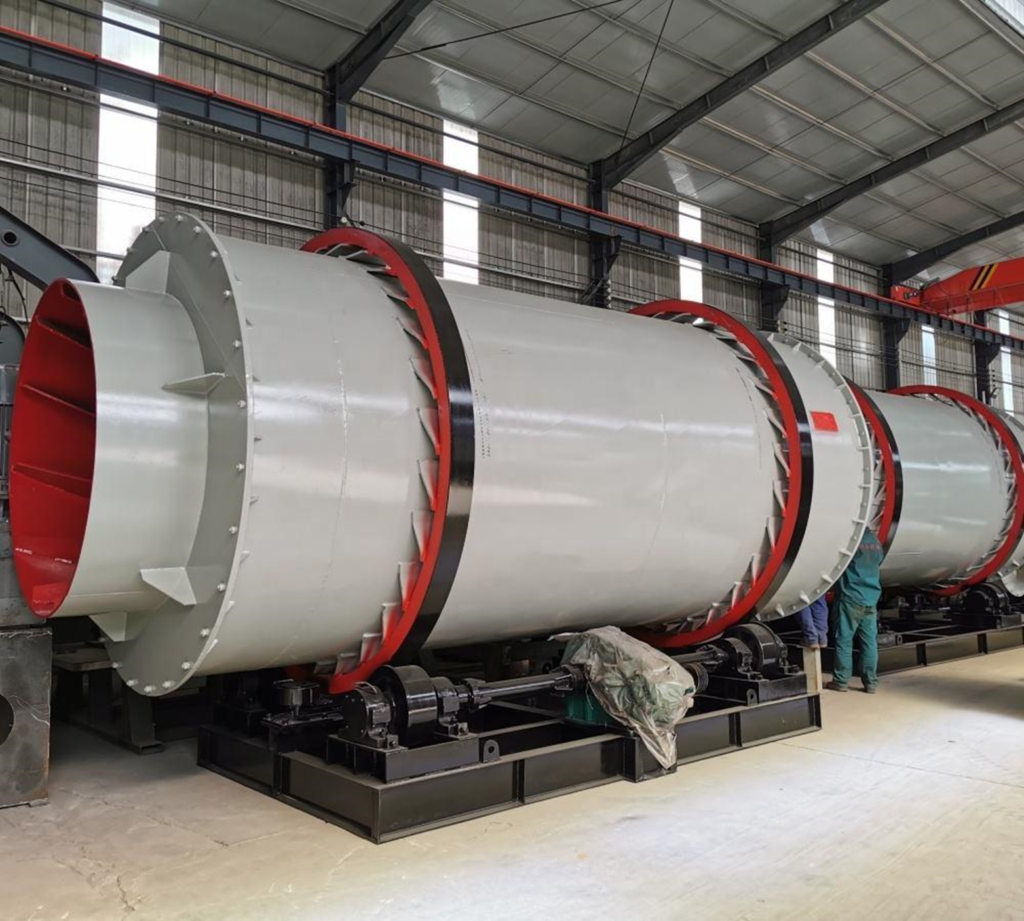
1. Rotary Dryers & Rotary Drum Dryers
Rotary Dryer Africa | Rotary Drum Dryer Africa | Sécheur Rotatif
Rotary dryers are heavy-duty continuous systems for bulk materials.
Applications
- Minerals
- Mining concentrates
- Sand
- Fertilizers
- Biomass
- Agricultural residues
- Bulk chemicals
Key Benefits
- High throughput
- Continuous operation
- Robust construction
- Suitable for bulk solids
- Flexible heating systems
2. Spray Dryers
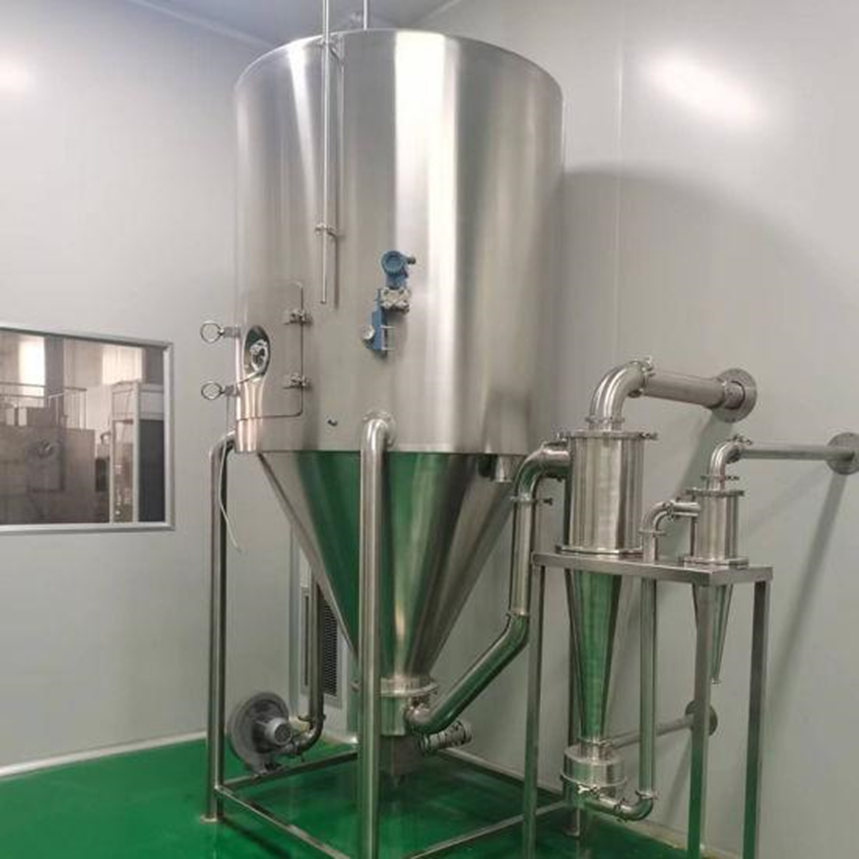
SEO terms: Spray Dryer Africa | Sécheur par Atomisation
Spray drying converts liquid feed into dry powder.
Applications
- Dairy powders
- Food ingredients
- Fruit products
- Pharmaceutical formulations
- Chemical solutions
- Botanical extracts
Key Benefits
- Liquid-to-powder conversion
- Continuous operation
- Rapid moisture removal
- Controlled powder formation
- High production capacity
3. Flash Dryers & Spin Flash Dryers
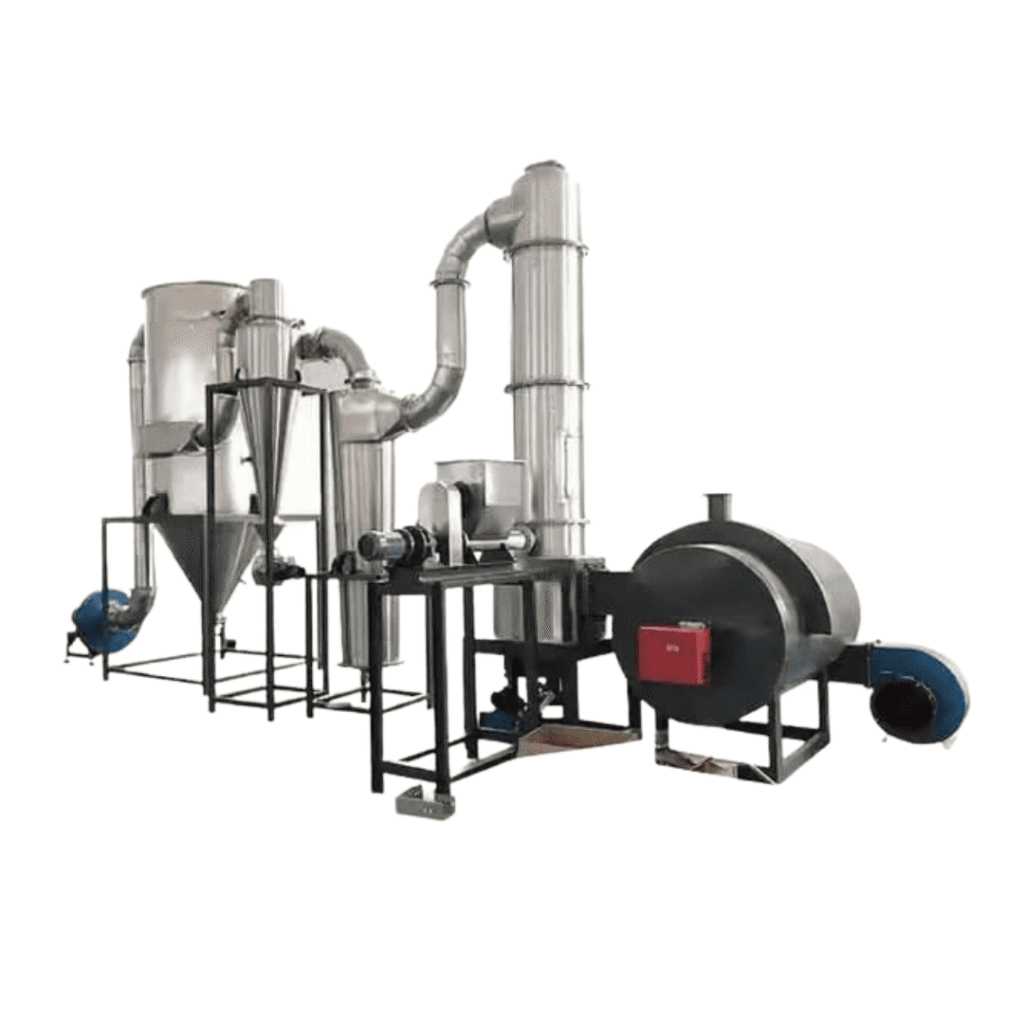
Flash Dryer Africa | Spin Flash Dryer Africa
Flash drying provides rapid moisture removal from suitable wet fine materials.
Applications
- Starches
- Cassava products
- Wet filter cakes
- Chemical pastes
- Fine wet solids
Benefits
- Rapid drying
- High heat and mass transfer
- Continuous operation
- Compact process arrangement
4. Band, Mesh Belt & Conveyor Dryers
Band Dryer Africa | Mesh Belt Dryer Africa | Sécheur à Bande
Band dryers provide continuous drying with controlled airflow and temperature zones.
Applications
- Cocoa
- Coffee
- Tea
- Herbs
- Fruits
- Vegetables
- Agricultural products
- Food ingredients
Benefits
- Continuous production
- Multi-zone temperature control
- Adjustable residence time
- Gentle material handling
- Flexible heating options
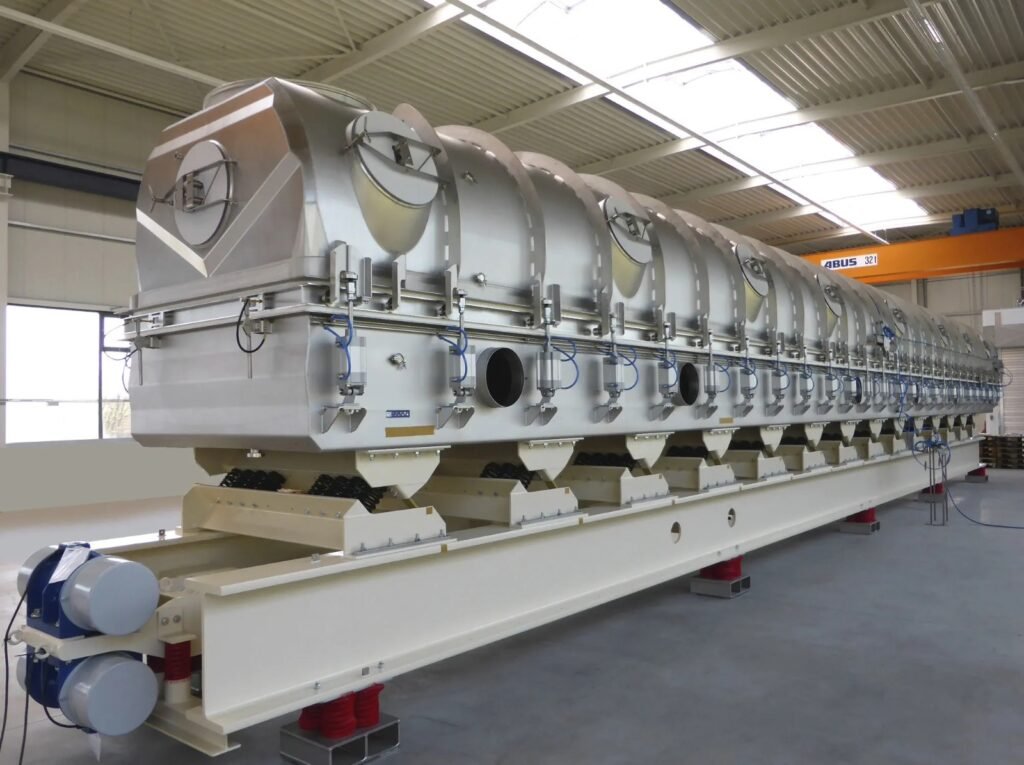
5. Fluid Bed & Vibratory Fluid Bed Dryers
Fluid Bed Dryer Africa | Vibratory Fluid Bed Dryer Africa
Fluid bed technology can be considered for free-flowing granular materials.
Applications
- Fertilizers
- Chemical granules
- Crystals
- Tea
- Food ingredients
- Agricultural products
- Pharmaceutical granules
Benefits
- Efficient heat transfer
- Uniform drying
- Controlled residence time
- Continuous processing
- Good product movement
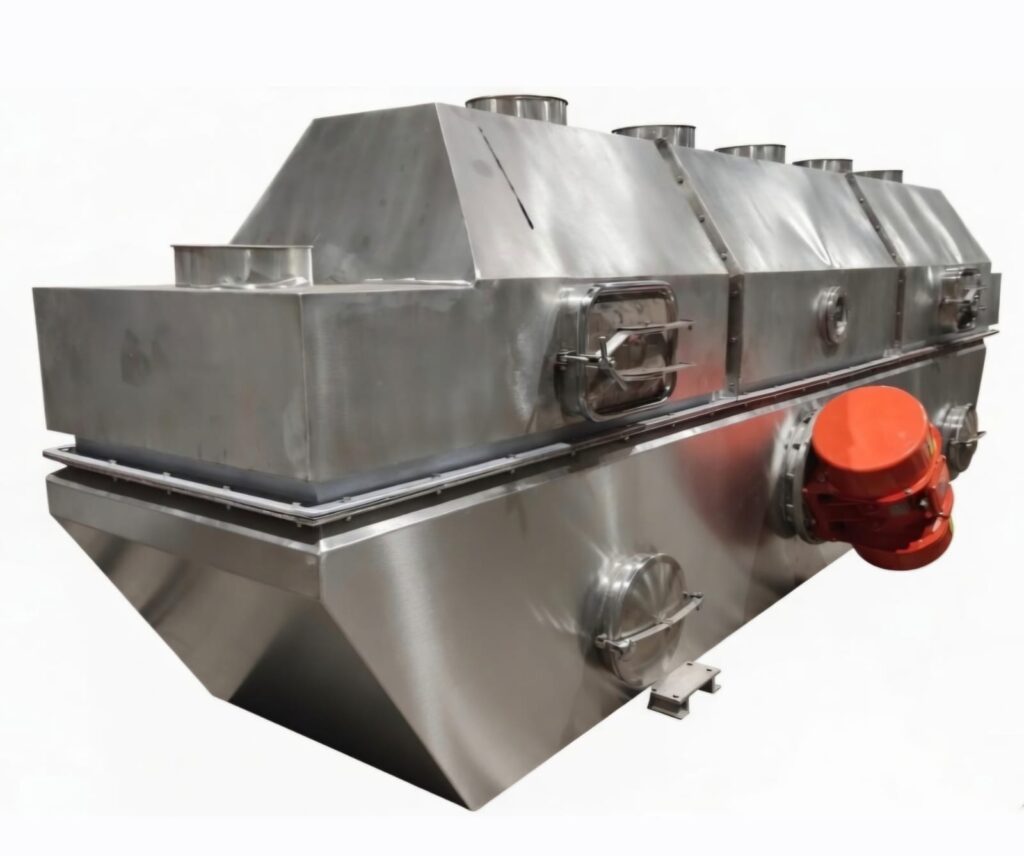
6. Vacuum Dryers
Vacuum drying can be considered for materials requiring lower-temperature drying or controlled oxygen exposure.
Potential applications include:
- Pharmaceuticals
- Nutraceuticals
- Botanicals
- Heat-sensitive materials
- Specialty chemicals
7. Tray & Tunnel Dryers
Tray and tunnel drying systems can be evaluated for batch or continuous drying of agricultural and food products.
Potential applications include:
- Fruits
- Vegetables
- Herbs
- Tea
- Agricultural products
- Food ingredients
8. Industrial Sludge Dryers
Sludge drying systems are designed to remove moisture from dewatered sludge and other wet residues.
Potential applications include:
- Municipal sludge
- ETP sludge
- Industrial wastewater sludge
- Food-processing sludge
- Organic residues
Industrial Dryer Selection Guide for Africa
| Application | Dryer Technology to Consider |
| Minerals | Rotary Dryer |
| Sand | Rotary / Sand Dryer |
| Copper & mineral concentrates | Rotary Dryer |
| Cobalt-related materials | Rotary Dryer |
| Lithium-related materials | Rotary Dryer |
| Gold-processing residues | Rotary / Indirect Dryer |
| Cocoa | Band / Mesh Belt Dryer |
| Coffee | Band / Rotary Dryer |
| Tea | Band / Fluid Bed Dryer |
| Cassava starch | Flash Dryer |
| Cassava flour | Flash / Band Dryer |
| Maize & grains | Band / Grain Dryer |
| Fruits & vegetables | Band / Tray Dryer |
| Fertilizers | Fluid Bed / Rotary Dryer |
| Chemical granules | Fluid Bed Dryer |
| Pharmaceutical powders | Spray / Vacuum / Fluid Bed Dryer |
| Botanical products | Band / Vacuum / Spray Dryer |
| Wastewater sludge | Paddle / Belt / Rotary Dryer |
Important: The table is a technology-selection guide, not a universal specification. Final dryer selection should be based on product testing and process calculations.
How to Select the Right Industrial Dryer in Africa
Before purchasing an industrial dryer, manufacturers should evaluate the complete process.
1. Raw Material
Determine whether the feed is:
- Liquid
- Slurry
- Wet cake
- Powder
- Granule
- Leaf
- Fruit
- Bulk solid
- Sludge
2. Initial Moisture
Measure the moisture content entering the dryer.
3. Target Final Moisture
Define the required moisture content after drying.
4. Production Capacity
Specify:
- kg/hour
- tons/hour
- tons/day
5. Product Temperature
Determine the maximum allowable product temperature, particularly for food, pharmaceutical and botanical products.
6. Available Energy Source
Possible heating sources include:
- Natural gas
- LPG
- Steam
- Thermal oil
- Hot water
- Electricity
- Biomass
- Waste heat
7. Site Conditions
African industrial projects may involve:
- Remote mining sites
- Dusty environments
- Variable ambient conditions
- Limited infrastructure
- Different power availability
The dryer design should therefore be matched to the actual plant environment.
Energy-Efficient Industrial Drying for African Processing Plants
Energy consumption can be one of the largest operating considerations in thermal drying.
Modern industrial dryer systems can incorporate:
- Heat recovery
- Efficient air circulation
- Thermal insulation
- Variable-speed drives
- Optimized airflow
- Multi-zone drying
- Heat pump technology
- Waste-heat recovery
The actual energy performance depends on:
- Feed moisture
- Final moisture
- Evaporation load
- Ambient temperature
- Ambient humidity
- Heating source
- Dryer configuration
- Operating hours
Therefore, energy savings and ROI should be calculated for each individual project rather than assumed as a fixed percentage.
Industrial Dryer ROI & Payback Calculation for Africa
For African manufacturers, the financial performance of a dryer is just as important as its technical performance.
A project evaluation can consider:
Production Capacity + Moisture Evaporation + Energy Consumption + Energy Cost + Operating Hours + Product Value
A drying calculation can help estimate:
- Water evaporation rate
- Thermal energy requirement
- Fuel consumption
- Electricity consumption
- Production cost
- Cost per kg of water removed
- Cost per ton of dried product
- Potential operating savings
- Estimated payback period
Information Required for a Project-Specific ROI Calculation
Send:
Raw Material + Feed Rate + Initial Moisture + Target Moisture + Operating Hours + Heating Source + Local Energy Cost
With these inputs, the engineering team can develop a more meaningful project-level evaluation.
Pilot Testing Before Purchasing an Industrial Dryer
Pilot testing can be especially valuable when processing:
- New materials
- High-value products
- Heat-sensitive products
- Sticky materials
- Difficult-to-dry materials
- Specialty agricultural products
- Minerals with unusual drying characteristics
A pilot test can help evaluate:
- Drying behavior
- Moisture removal
- Final moisture
- Product quality
- Residence time
- Product temperature
- Energy requirements
- Material handling
- Approximate throughput
Why Pilot Testing Matters
Instead of relying entirely on theoretical assumptions, manufacturers can obtain process data before committing to a full-scale drying system.
This can help reduce technical uncertainty and support more informed capital-investment decisions.
Drying Calculations for African Industrial Projects
GTI can evaluate drying requirements using project-specific information such as:
- Feed moisture
- Final moisture
- Feed rate
- Required evaporation
- Heating source
- Operating hours
- Ambient conditions
- Product temperature
- Dryer configuration
The calculation can then be used to support:
Dryer Selection → Capacity → Heating Requirement → Energy Evaluation → Operating Cost → ROI / Payback Assessment
Actual payback depends on the customer’s production economics, energy costs and operating conditions.
Why Choose GTI Dryers for African Industrial Projects?
1. Application-Focused Engineering
The dryer is selected according to the material and process requirements rather than simply using a generic machine configuration.
2. Multiple Drying Technologies
GTI’s industrial dryer portfolio includes:
- Rotary Dryers
- Rotary Drum Dryers
- Spray Dryers
- Flash Dryers
- Spin Flash Dryers
- Band Dryers
- Mesh Belt Dryers
- Conveyor Dryers
- Fluid Bed Dryers
- Vibratory Fluid Bed Dryers
- Vacuum Dryers
- Tray Dryers
- Sludge Dryers
3. Suitable for Diverse Industries
Technologies can be evaluated for:
- Mining
- Minerals
- Chemicals
- Fertilizers
- Food
- Cocoa
- Coffee
- Tea
- Cassava
- Pharmaceuticals
- Nutraceuticals
- Sludge
- Biomass
4. Engineering for Challenging Operating Conditions
Industrial projects may operate in:
- Remote mining locations
- Dusty environments
- Agricultural regions
- Variable power conditions
- High-temperature climates
- Humid tropical regions
Equipment design should therefore be adapted to the project’s actual site conditions.
Turnkey Industrial Dryer Support for Africa
For international projects, a complete dryer project can involve more than equipment manufacturing.
Project support can include:
Process Evaluation → Drying Calculation → Pilot Testing → Equipment Design → Manufacturing → Export Packaging → Shipping → Installation → Commissioning
Depending on the project location, logistics may involve major African ports such as:
- Durban
- Lagos
- Mombasa
- Casablanca
- Tema
The exact shipping route depends on the destination country, project location and logistics requirements.
Industrial Dryer Markets Across Africa
South Africa
Johannesburg | Durban | Cape Town
Keywords:
- industrial dryer South Africa
- rotary dryer South Africa
- mineral dryer South Africa
- industrial drying equipment South Africa
Nigeria
Lagos | Abuja | Port Harcourt
Keywords:
- industrial dryer Nigeria
- industrial dryer suppliers Nigeria
- spray dryer Nigeria
- cassava dryer Nigeria
Kenya
Nairobi
Keywords:
- industrial dryer Kenya
- food dryer Kenya
- tea dryer Kenya
- industrial drying equipment Kenya
Ghana
Accra
Keywords:
- industrial dryer Ghana
- cocoa dryer Ghana
- mineral dryer Ghana
- industrial drying equipment Ghana
Egypt
Keywords:
- industrial dryer Egypt
- industrial drying equipment Egypt
- spray dryer Egypt
- rotary dryer Egypt
Morocco
Keywords:
- industrial dryer Morocco
- turnkey industrial dryer Morocco
- rotary dryer Morocco
- industrial drying equipment Morocco
Algeria, Tunisia, Senegal, Ivory Coast & Cameroon
French-language industrial search terms can be particularly relevant for these markets.
Angola & Mozambique
Portuguese-language optimization can support industrial searches for:
- Secador industrial África
- Secador industrial Angola
- Secador industrial Moçambique
- Equipamentos de secagem industrial
High-Intent Industrial Dryer Keywords for Africa
Commercial Keywords
- industrial dryer Africa
- industrial dryer manufacturer Africa
- industrial dryer suppliers Africa
- industrial drying equipment Africa
- industrial dryer South Africa
- industrial dryer Nigeria
- industrial dryer Kenya
- industrial dryer Egypt
- industrial dryer Ghana
- industrial dryer Morocco
Product Keywords
- rotary dryer Africa
- rotary drum dryer Africa
- spray dryer Africa
- flash dryer Africa
- spin flash dryer Africa
- band dryer Africa
- mesh belt dryer Africa
- fluid bed dryer Africa
- vibratory fluid bed dryer Africa
- sludge dryer Africa
- vacuum dryer Africa
Application Keywords
- rotary dryer mining Africa
- mineral dryer South Africa
- sand dryer Africa
- spray dryer food processing Nigeria
- flash dryer starch processing
- band dryer cocoa Africa
- coffee dryer Africa
- cassava dryer Africa
- industrial fertilizer dryer Africa
- pharmaceutical dryer Africa
- sludge dryer Africa
Buyer-Intent Keywords
- energy efficient industrial dryer Africa
- industrial dryer ROI Africa
- industrial dryer payback period
- industrial dryer pilot testing
- industrial drying calculation
- custom industrial drying system Africa
- turnkey industrial dryer Africa
Frequently Asked Questions About Industrial Dryers in Africa
Which industrial dryer is best for mining in Africa?
For many bulk mineral and mining applications, a rotary dryer can be considered because of its robust continuous operation and ability to handle bulk solids. Final selection depends on the mineral, moisture, throughput and drying conditions.
Which dryer is suitable for cocoa processing?
A band dryer or mesh belt dryer can be evaluated for suitable cocoa-processing applications where controlled continuous drying is required.
Which dryer is suitable for cassava?
The appropriate technology depends on whether the cassava is being processed as chips, flour or starch. Band, rotary and flash dryers may be considered for different stages and product forms.
Which dryer is suitable for pharmaceutical products?
Depending on the product, spray dryers, vacuum dryers, tray dryers and fluid bed dryers may be considered. Pharmaceutical equipment should be designed according to the project’s GMP and hygienic requirements.
What dryer is used for chemical fertilizers?
Fluid bed dryers, vibratory fluid bed dryers and rotary dryers can be evaluated depending on the fertilizer’s physical form and process requirements.
What is a Flash Dryer?
A Flash Dryer is a rapid continuous drying system that uses a high-velocity heated air stream to remove moisture from suitable fine wet materials.
What is a Band Dryer?
A Band Dryer is a continuous conveyor-type drying system that transports products through controlled drying zones while heated air removes moisture.
What is a Fluid Bed Dryer?
A Fluid Bed Dryer uses upward-flowing air to suspend and dry suitable free-flowing particles, providing efficient heat and mass transfer.
Can GTI conduct pilot testing?
Pilot testing can be considered for suitable projects to evaluate drying behavior, product quality, moisture removal, capacity and energy requirements before final equipment design.
Can GTI calculate industrial dryer ROI and payback?
Project-specific drying calculations can be developed using information such as feed moisture, final moisture, production capacity, heating source, operating hours and energy costs. Actual ROI and payback depend on the individual project’s economics.
Conclusion: Industrial Drying Technology for Africa’s Growing Processing Industries
Africa’s expanding mining, mineral-processing, agro-food, chemical, fertilizer, pharmaceutical and environmental sectors are creating increasing demand for reliable industrial drying technologies.
From rotary dryers for minerals and mining, to spray dryers for food and pharmaceutical powders, flash dryers for starches and fine wet solids, band dryers for cocoa, coffee and agricultural products, and fluid bed dryers for granules and crystals, each application requires a different approach.
The right industrial dryer should be selected based on:
Material + Moisture + Capacity + Temperature + Energy Source + Final Product Requirements
GTI Dryers provides industrial drying technologies that can be evaluated and customized for processing requirements across South Africa, Nigeria, Kenya, Ghana, Egypt, Morocco and other African markets.
Planning an Industrial Drying Project in Africa?
Share your:
Raw Material + Initial Moisture + Final Moisture + Production Capacity + Heating Source + Operating Hours + Location
with GTI to begin an initial drying calculation, dryer technology evaluation and pilot-testing discussion.
Whether your project involves minerals, mining concentrates, cocoa, coffee, cassava, maize, tea, chemicals, fertilizers, pharmaceuticals or wastewater sludge, application-specific industrial drying technology can help improve moisture control, production consistency and overall process efficiency.
GTI Dryers — Industrial Drying Solutions for Africa and Global Processing Industries.