
Selecting an industrial dryer is one of the highest-impact equipment decisions a process plant makes. The wrong choice does not merely cost more money — it creates ongoing operational problems: blockages, re-slurrying, product degradation, high energy use, dust issues or inability to meet residual-moisture specifications.
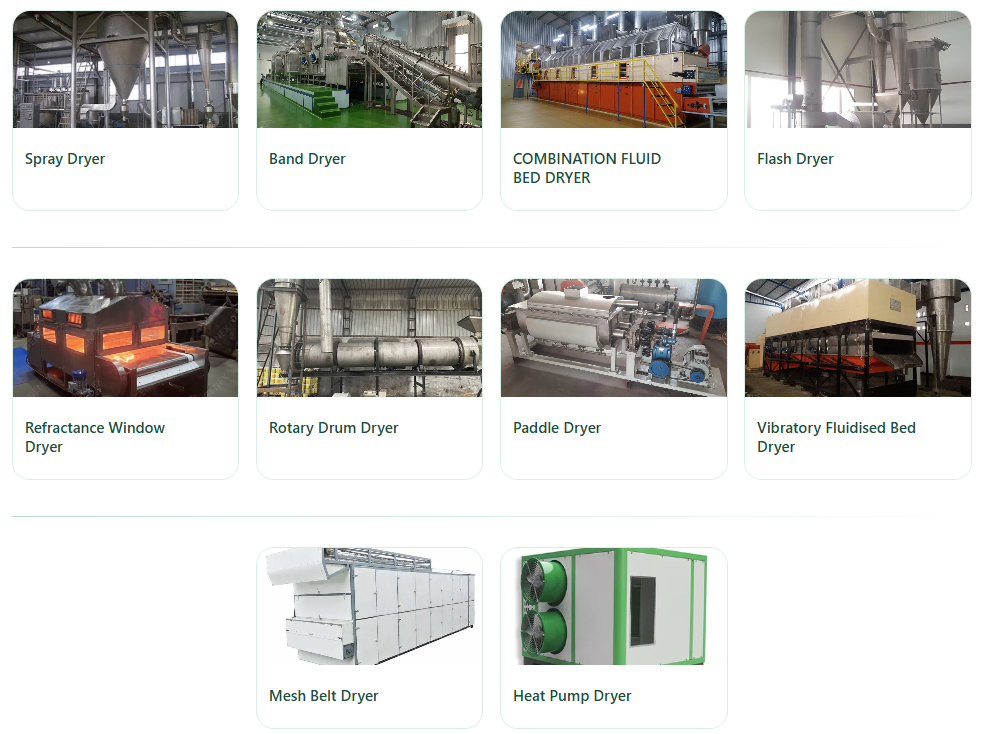
The single most reliable way to avoid these problems is to begin with the physical state of the material as it enters the dryer, not with the name of the machine.
This guide provides a practical, feed-first decision framework used by process engineers and plant teams to narrow the correct technology family before detailed sizing or quotation.
1. The Core Principle: Match Technology to Feed Form
Different dryers are engineered around fundamentally different ways of contacting the material with heat and moving it through the system.
| Feed form entering the dryer | Primary technology families to evaluate first |
| Pumpable liquid, solution, slurry or emulsion | Spray dryer (sometimes multi-stage with fluid bed) |
| Sticky filter cake, paste or cohesive wet solid | Spin-flash / flash dryer, paddle / indirect dryer |
| Free-flowing granules, crystals or particles that can be fluidised | Fluid-bed or vibratory fluid-bed dryer |
| Slices, flakes, pieces or permeable layers | Band / mesh-belt dryer |
| Robust bulk solids, minerals, sand, coarse biomass | Rotary dryer |
| Very heat-sensitive or solvent-containing materials | Vacuum, low-temperature or specialised systems |
Starting with capacity or price before answering the feed-form question is the most common and costly mistake.
2. Decision Tree – Start Here
Step 1: Is the feed a pumpable liquid or slurry?
→ Yes → Evaluate spray drying.
→ No → Go to Step 2.
Step 2: Is the feed a sticky, cohesive filter cake or paste?
→ Yes → Evaluate spin-flash / flash or paddle / indirect systems.
→ No → Go to Step 3.
Step 3: Is the feed free-flowing granules or crystals that can be fluidised?
→ Yes → Evaluate fluid-bed or vibratory fluid-bed dryer.
→ No → Go to Step 4.
Step 4: Is the feed sliced, diced, flaked or forms a stable layer?
→ Yes → Evaluate band / mesh-belt dryer.
→ No → Go to Step 5.
Step 5: Is the feed a robust bulk solid, mineral or coarse material that can tolerate tumbling?
→ Yes → Evaluate rotary dryer.
→ No → Consider pre-conditioning, specialised contact dryers or laboratory/pilot evaluation.
This sequence eliminates the majority of unsuitable technologies in the first few minutes of review.
3. Detailed Guidance by Feed Type
A. Liquid, Solution, Slurry or Emulsion
Best starting technology: Spray dryer
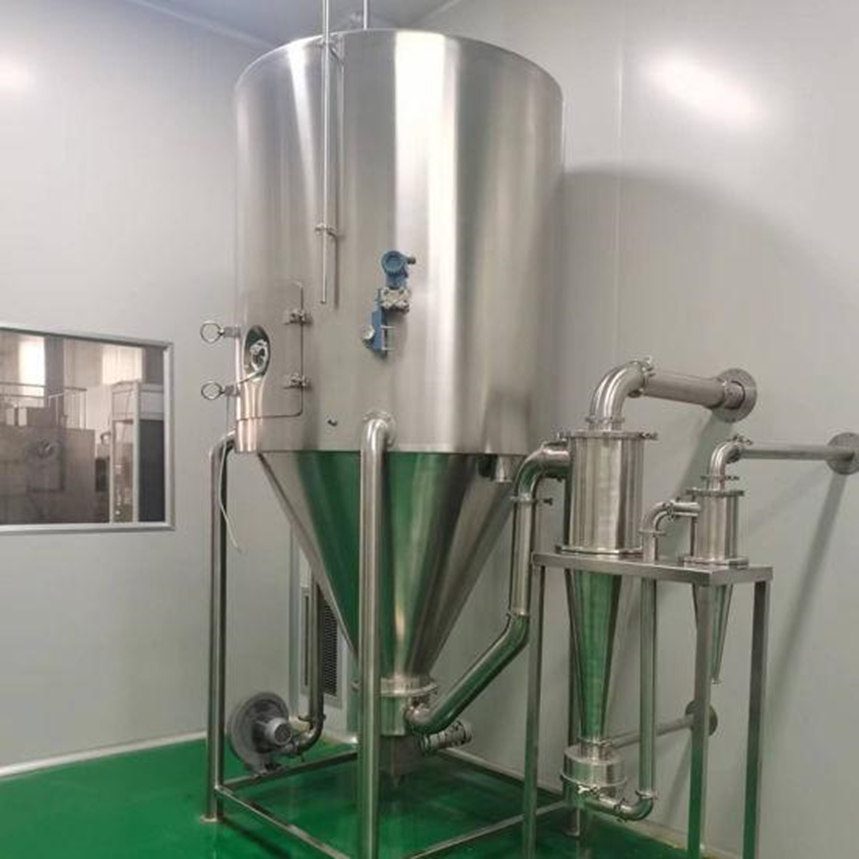
Why: Atomisation creates a large surface area for rapid evaporation and direct conversion to powder.
Watch for: Stickiness, solids content, atomiser type, wall deposits, need for agglomeration or secondary fluid-bed finishing.
Common Indian applications: Instant coffee/tea, dairy and plant-protein powders, dyes from slurry, herbal extracts, ceramic slips.
B. Sticky Filter Cake, Paste or Cohesive Wet Solid
Best starting technologies: Spin-flash dryer or paddle / indirect dryer
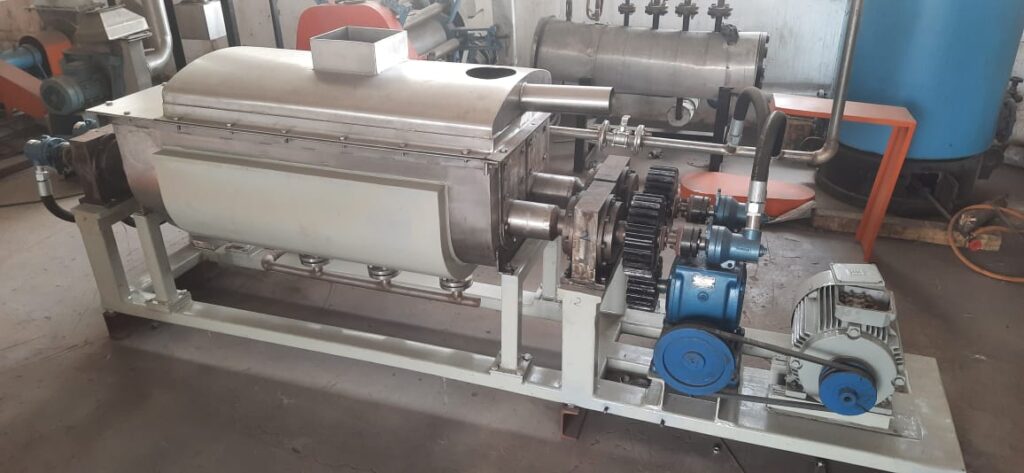
Why: Mechanical dispersion (spin-flash) or conductive agitation (paddle) handles material that cannot be atomised or fluidised.
Watch for: Cake consistency variation, residual-moisture target, product temperature limits, dust collection.
Common Indian applications: Pigment and dye cakes, precipitated silica, TiO₂, calcium carbonate, many fine chemical intermediates.
Critical note: Re-slurrying a filter cake solely to feed a spray dryer is usually an energy and process penalty. Avoid it unless particle morphology from atomisation is essential.
C. Free-Flowing Granules, Crystals or Particles
Best starting technology: Fluid-bed or vibratory fluid-bed dryer
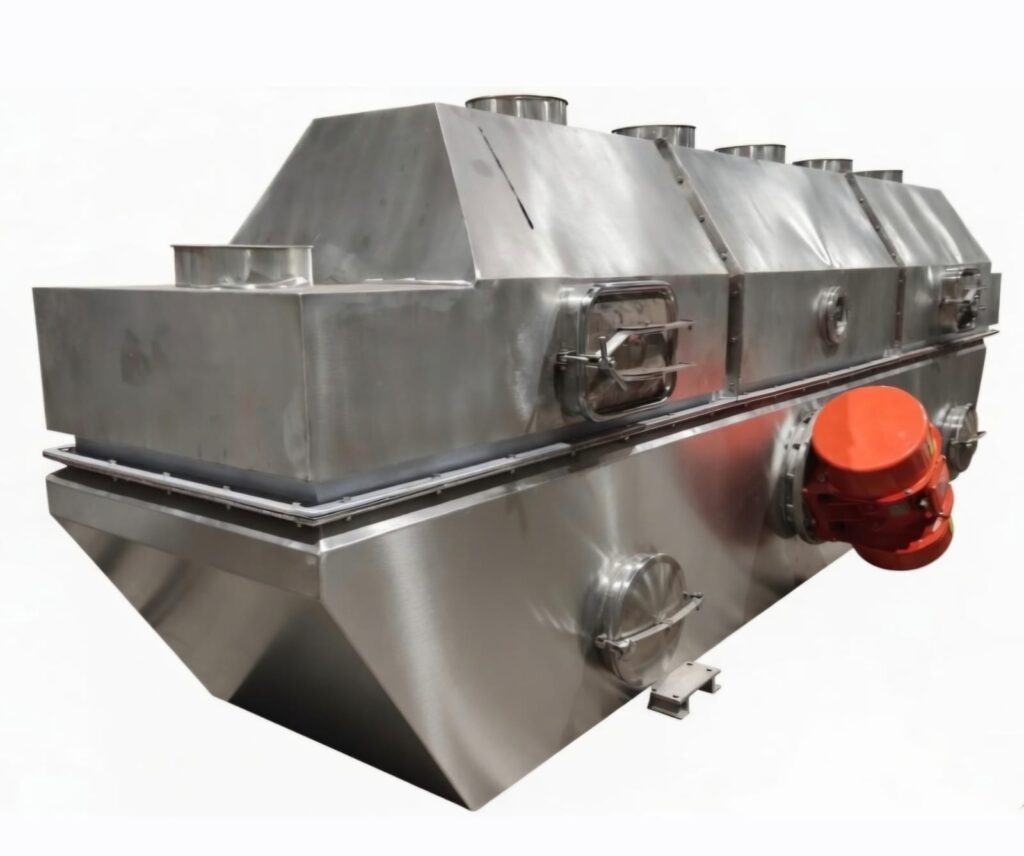
Why: Excellent gas–solid contact, uniform moisture, possibility of integrated cooling, gentle handling.
Watch for: Ability to fluidise, fines generation, need for vibration with broader size distribution or moderate stickiness.
Common applications: Salts, sugar, starch, pharmaceutical granules, food granules, catalyst particles.
D. Slices, Flakes, Pieces or Layered Products
Best starting technology: Band / mesh-belt dryer
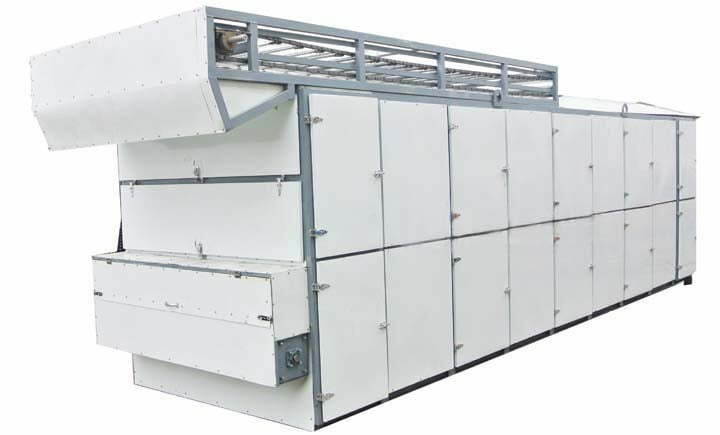
Why: Gentle conveying, precise residence-time control, excellent multi-zone temperature profiling for colour and flavour protection.
Watch for: Uniform bed loading, case-hardening, residual moisture before milling.
Common applications: Onion, garlic, spices, herbs, fruits, vegetables, coconut products, certain pet-food and biomass pieces.
E. Robust Bulk Solids, Minerals, Sand, Coarse Biomass
Best starting technology: Rotary dryer
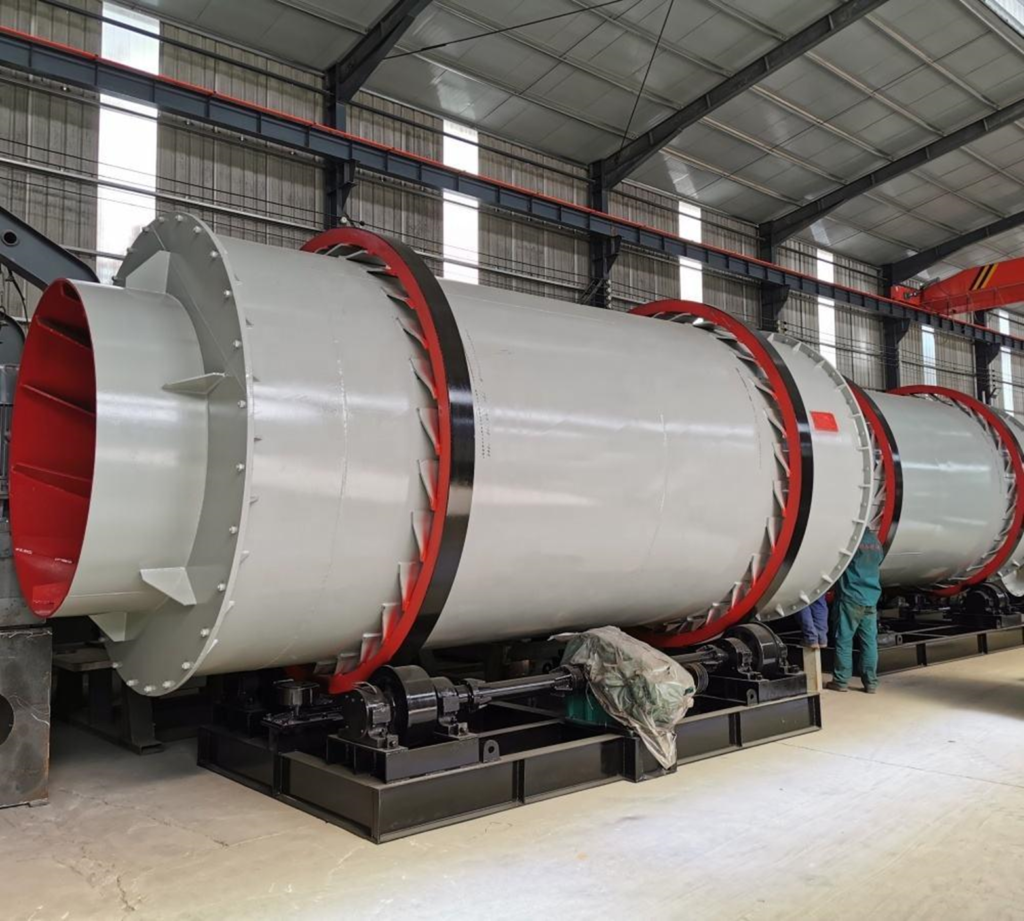
Why: High continuous throughput, robust mechanical design, proven on abrasive or variable bulk materials.
Watch for: Attrition of fragile particles, product-temperature control, dust and emission management.
Common applications: Minerals, aggregates, sand, certain fertilizers, high-volume biomass, many inorganic bulk solids.
4. Secondary Decision Factors (After Feed Form)
Once the technology family is narrowed, refine the choice with:
- Target residual moisture and how it will be measured
- Maximum allowable product temperature (not just inlet gas temperature)
- Particle-size or morphology requirements
- Need for cooling, agglomeration or classification
- Available heat source and energy cost
- Dust, odour, solvent or emission constraints
- Hygiene or cleanability requirements
- Continuous vs batch preference and capacity range
- Total installed cost and operating cost, not just equipment price
5. Common Selection Mistakes
- Choosing a spray dryer for non-pumpable filter cake and then adding water to make it “work”.
- Expecting a fluid-bed dryer to accept sticky cakes that never fluidise.
- Installing a rotary dryer for delicate food slices or spice pieces and then fighting attrition and quality loss.
- Comparing only evaporation capacity (kg water/h) without checking feed form and product integrity.
- Ignoring the need for pilot or representative-feed testing when material behaviour is uncertain.
- Selecting on the lowest quoted price without evaluating total cost of ownership and process risk.
6. When Combinations Are the Right Answer
Many successful plants use more than one technology:
- Spray dryer + fluid-bed (primary drying + finishing/agglomeration/cooling)
- Spin-flash + fluid-bed (cake to powder + final moisture adjustment)
- Band dryer + milling line (slices to flakes to powder)
- Rotary or flash primary stage followed by fluid-bed conditioning
The decision guide above still applies: each stage must match the feed it actually receives.
7. Data Checklist for a Reliable Recommendation
Provide as much of the following as possible:
- Exact material and grade
- Physical form as it will enter the dryer (liquid / slurry / cake / paste / granules / slices / bulk solid)
- Inlet moisture (% wet basis)
- Target residual moisture
- Required throughput (dry basis preferred)
- Maximum product temperature
- Particle-size or morphology targets
- Available utilities and heat source
- Downstream process (milling, packaging, storage, further reaction)
- Any dust, solvent, hygiene or emission constraints
Geographic Note
The engineering logic is universal. In Indian plants the same feed-form rules apply, with additional practical attention to local utility costs, emission norms (CPCB/SPCB), variable agricultural or filter-cake quality, and the need for robust, serviceable continuous systems. Export-oriented units may face tighter residual-moisture or documentation requirements, but the technology choice still begins with the feed.
How GTI Dryers Supports the Selection Process
GTI Dryers designs and manufactures spray, spin-flash/flash, fluid-bed, vibratory fluid-bed, band/mesh-belt, rotary and related industrial drying systems. The company’s approach is:
- Begin every discussion with the actual feed form and product requirements
- Narrow the technology family before discussing capacity or price
- Compare options openly, including combinations where they add value
- Support process-data review and, where appropriate, representative-feed evaluation
The goal is not to sell a particular machine. It is to select the drying route that reliably converts the given feed into the required product at acceptable risk and operating cost.
Frequently Asked Questions
What is the single most important factor in dryer selection?
The physical state of the material as it enters the dryer (liquid, cake, granules, slices or bulk solid).
Can one dryer type handle every feed?
No. Each major technology family is optimised for different feed behaviour and movement requirements.
When should I consider pilot testing?
Whenever the material is sticky, heat-sensitive, variable in consistency, or the product specification is tight. Representative-feed trials remain the most reliable confirmation method.
Is the cheapest dryer usually the best choice?
Rarely. The lowest equipment price often becomes the highest total cost when the technology is mismatched to the feed.
How do I start the conversation with a supplier?
Provide the feed form, moisture figures, capacity and target product properties. A competent supplier will first confirm the technology family before quoting a specific machine.
Next Step
If you are selecting or replacing an industrial dryer, share your feed form, moisture data, capacity and product requirements. GTI can review the information and recommend the most appropriate technology family and configuration for technical discussion.
Request a feed-based dryer selection assessment with your process data.
Contact the GTI Technical Team:
Website: gtidryers.com
Email: mktg@gtidryers.com
Phone / WhatsApp: +91 9330077417