
High initial moisture is one of the most common reasons industrial dryers clog, stick or lose capacity. Wet filter cakes, pastes, centrifuged solids and high-moisture slurries pass through a sticky intermediate phase during drying. If the dryer cannot keep material moving and dispersing through that phase, the result is wall buildup, blocked feed zones, channeling and unplanned shutdowns.
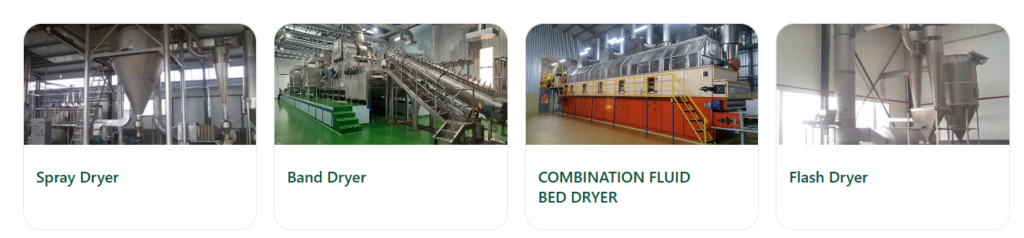
This guide is written for process engineers and buyers who need to keep high-moisture feeds running without constant manual cleaning.
1. Why High-Moisture Feeds Clog Dryers
Clogging is rarely caused by “too much water” alone. It occurs when the feed passes through a cohesive, adhesive state and the equipment cannot:
- Disperse or break the wet mass
- Prevent adhesion to walls, flights or distributor plates
- Maintain movement while surface moisture is removed
| Feed behaviour | Typical clogging symptom |
|---|---|
| Sticky filter cake / paste | Feed chute bridging, rotor or screw buildup, wall deposits |
| High-moisture slurry forced into wrong dryer | Nozzle or atomiser issues, chamber wall coating (spray); or bed collapse (fluid bed) |
| Wet granules or crystals | Agglomeration, distributor plate blinding, channeling |
| Fibrous or layered high-moisture material | Belt blinding or uneven loading if drainage is poor |
The critical zone is usually the transition from free surface water to a plastic or sticky intermediate moisture — not the final dry product.
2. First Principle: Do Not Fight the Feed Form
Cake or paste
Trying to re-slurry a filter cake only to spray-dry it adds water that must be evaporated again, increases energy use and often creates a more difficult feed. Prefer technologies that accept and disperse wet cake directly (spin-flash, certain paddle/contact systems, or carefully designed back-mix systems).
Pumpable slurry
If the feed is already a stable, pumpable liquid or slurry, spray drying or other atomising routes may be appropriate — provided wall deposition is controlled.
Free-flowing but very wet granules
Fluid-bed or vibratory fluid-bed systems can work if fluidization is maintained and the distributor does not blind; otherwise pre-conditioning or a different first stage is needed.
Matching dryer type to the as-produced feed form is the single largest lever against clogging.
3. Practical Strategies to Avoid Clogging
A. Maximise mechanical dewatering before the dryer
Every reduction in inlet moisture shrinks the sticky zone and the evaporation load.
- Optimise filter, centrifuge or press operation
- Check cloth condition, cycle time and feed consistency
- Avoid diluting the cake after dewatering
B. Condition the feed so it can be handled
Depending on the product:
- Back-mixing a controlled fraction of dry product into the wet feed to pass through the sticky moisture range more quickly
- Pre-breaking or pre-dispersing lumps before the dryer
- Mild temperature or additive adjustments only where product quality and regulation allow
Back-mixing is common in spin-flash and some rotary/contact systems; it must be engineered, not improvised, to avoid recycling wet material indefinitely.
C. Choose a dryer that actively disperses wet feed
| Feed form | Dryer approaches that reduce clogging risk | Approaches that often increase risk |
|---|---|---|
| Sticky filter cake / paste | Spin-flash (mechanical rotor dispersion), certain paddle/contact dryers, designed back-mix systems | Standard flash without dispersion, static fluid bed, simple belt without pre-conditioning |
| Pumpable slurry | Spray dryer (with proper chamber and air pattern), some thin-film systems | Forcing slurry into cake dryers without atomisation |
| Wet but permeable layer (slices, flakes) | Multi-zone belt/band with controlled loading | Overloading belt or using velocities that drive fines into mesh |
| Cohesive granules | VFBD with correct vibration and air velocity; or staged drying | Under-fluidised static bed |
D. Control the temperature and moisture profile
Rapid surface drying can create a hard shell (case-hardening) that traps moisture and promotes sticking later. Progressive removal of surface moisture while keeping the mass movable is usually safer than a single extreme temperature shock — unless the technology (e.g. well-designed spin-flash) is specifically built for fast dispersion and evaporation.
E. Keep surfaces and air paths clean by design
- Adequate access for inspection and cleaning
- Surface finishes and materials that reduce adhesion where possible
- Air distributor and exhaust design that tolerate some fines without immediate blinding
- Planned cleaning intervals based on real buildup rate, not only on a calendar
4. Technology Notes for High-Moisture Feeds
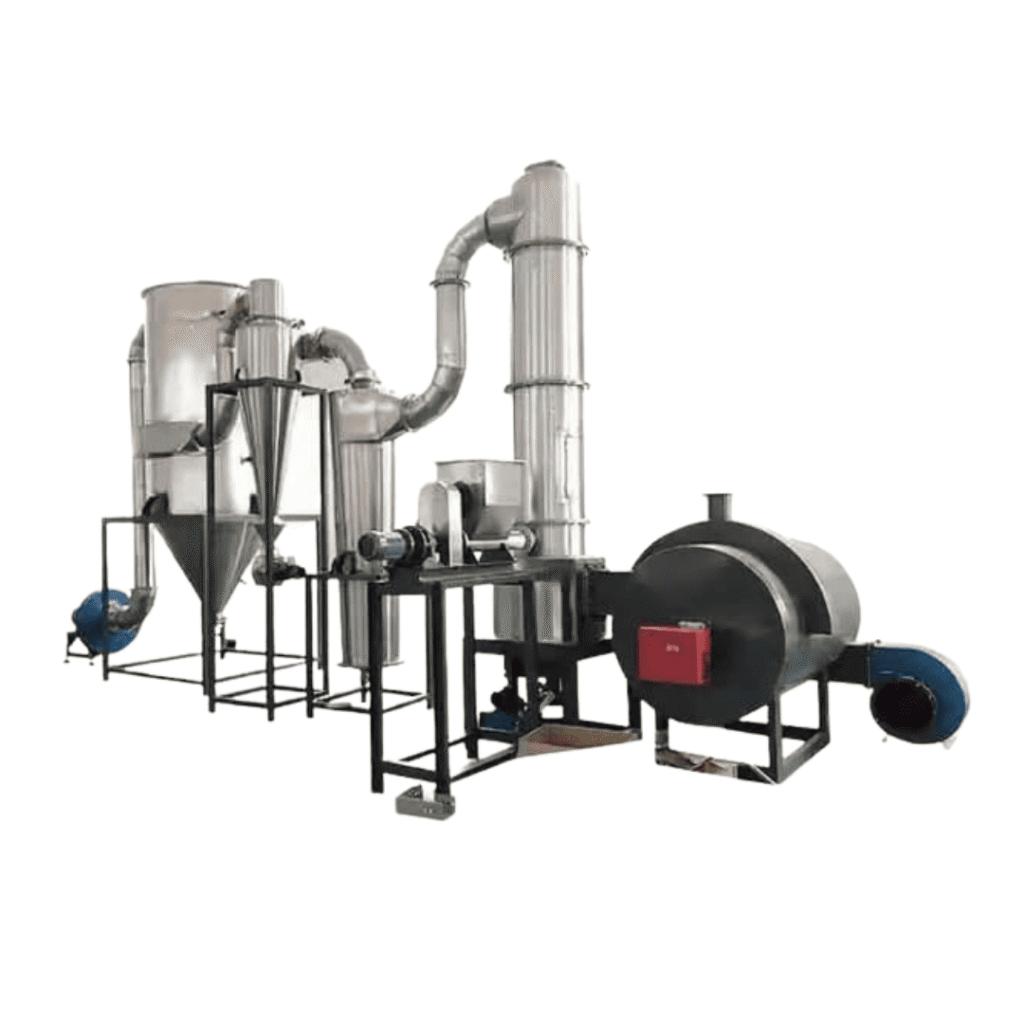
Spin-flash / mechanical dispersion dryers
Wet cake is fed into a chamber with a high-speed rotor that disperses the material into the hot gas stream. Correctly applied, this reduces the time spent in the sticky state and limits wall buildup. Feed rate, rotor condition and gas temperature must stay within the design window.
Paddle / contact dryers
Indirect heating and mechanical agitation can handle pastes and sticky phases if torque, fill level and jacket temperature are controlled. Not every paste is suitable; pilot testing is important.

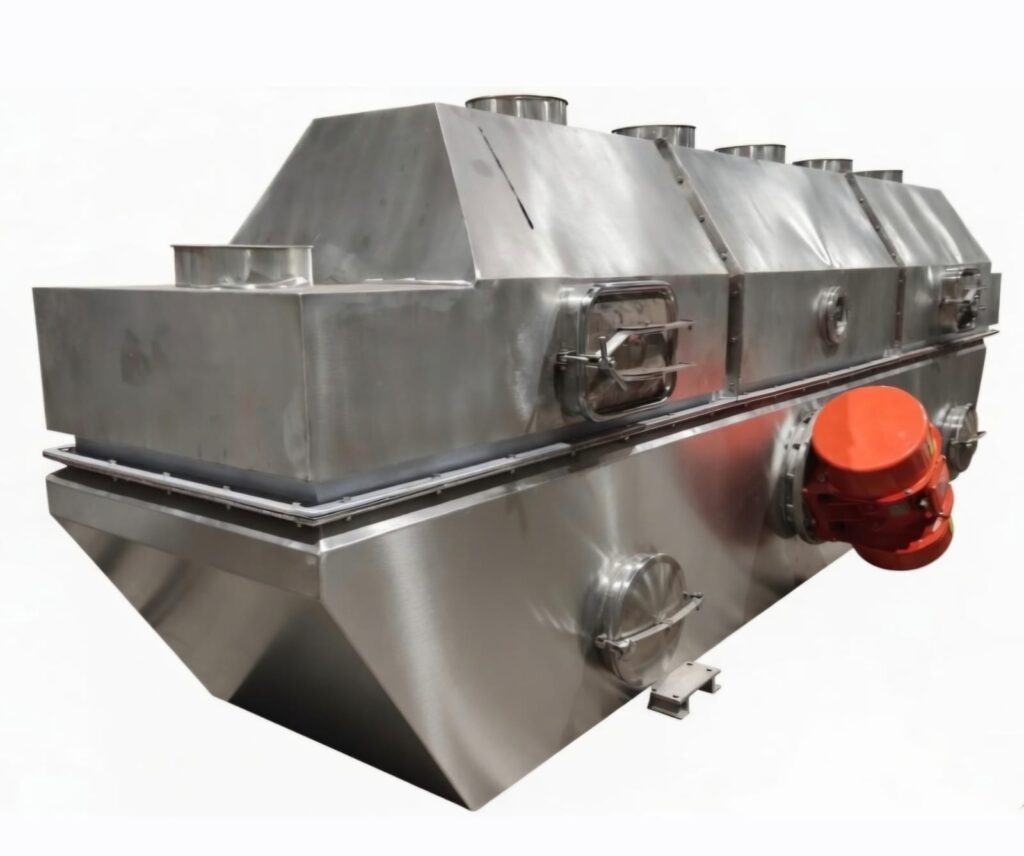
Fluid bed / VFBD
Possible when the feed can be fluidised or made mobile with vibration. High moisture and cohesion often cause defluidization and plate blinding — treat as a risk unless proven with the actual feed.
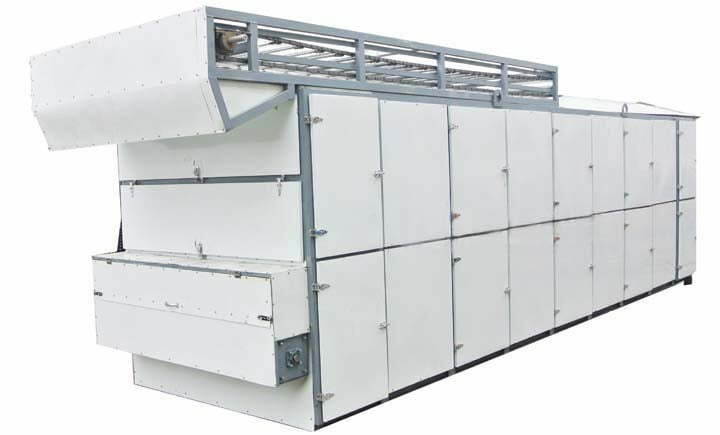
Belt / mesh-belt
Works for products that form a permeable layer (many vegetable and spice slices). High free moisture can still cause drainage or sticking on the mesh if loading and zone design are wrong.
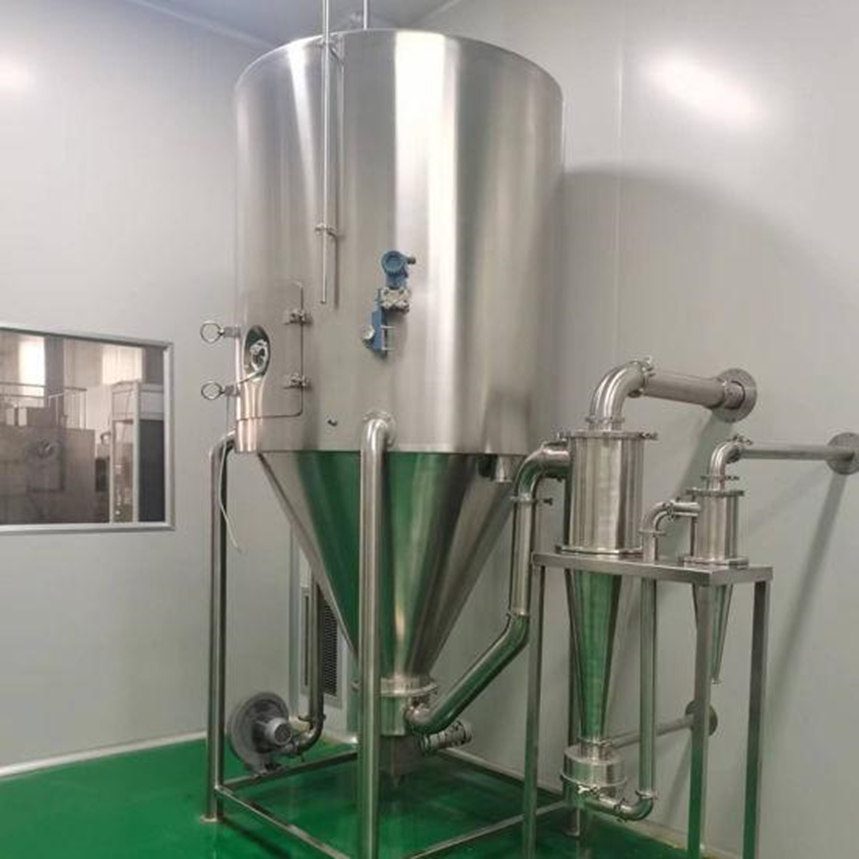
Spray dryers
For true pumpable feeds. High solids and correct atomisation reduce the sticky droplet phase; wrong inlet/outlet conditions or chamber design produce wall deposits.
5. Operating Discipline That Prevents Recurring Clogs
- Do not exceed the proven feed rate or inlet moisture for the installed system.
- Keep upstream dewatering consistent; a sudden wetter cake is a common trigger for blockage.
- Monitor motor load, pressure drop and exhaust temperature — rising load or falling pressure drop often precede a visible clog.
- Establish a cleaning standard based on observed buildup, not only on shift handover.
- When product or filter performance changes, re-validate the dryer window instead of forcing the old set points.
6. When Clogging Means the Wrong Dryer Was Chosen
Re-evaluate technology if:
- The feed is a sticky cake and the dryer has no mechanical dispersion or back-mix provision
- Fluidization cannot be maintained even after velocity and vibration adjustments
- Wall deposits reappear within hours despite cleaning and temperature changes
- Capacity can only be held by continuous manual intervention
In these cases, changing feed conditioning or moving to a dryer family designed for wet cake is more effective than repeated operational workarounds.
7. Buyer Checklist — What to Specify or Ask
- Exact feed form (filter cake, paste, slurry, wet granules) and how it is produced
- Inlet moisture range (and how much it varies)
- Sticky or cohesive behaviour observed in the plant
- Current dryer type and where clogging occurs (feed, chamber, distributor, belt, discharge)
- Target residual moisture and any temperature limits
- Willingness to use back-mixing or upstream conditioning
- Cleaning access and downtime constraints
Manufacturers who ask for these details and discuss dispersion and sticky-phase behaviour are more likely to propose a workable solution than those who only quote a standard model.
8. How GTI Dryers Approaches High-Moisture Feeds
GTI Dryers evaluates high-moisture and sticky feeds on the basis of physical form first. Depending on the material, options can include:
- Spin-flash / mechanical dispersion systems for wet cakes and pastes
- Fluid-bed or vibratory fluid-bed systems where fluidization can be sustained
- Belt/band systems for layered, permeable products
- Combination or staged approaches when a single stage is not stable
The aim is to keep material moving through the sticky moisture range without chronic clogging, using process data and, where needed, trials rather than generic capacity claims.
Geographic Note
High-moisture filter cakes and pastes appear in chemical, pigment, mineral, food, sludge and battery-material plants worldwide. Local differences in filtration practice and climate affect inlet moisture variability, but the same principles — match dryer to feed form, minimise the sticky phase, and maintain movement — apply in every region.
Frequently Asked Questions
Can I dry a sticky filter cake in a standard fluid bed?
Often no. Cohesive wet cakes tend to defluidise and blind the plate. Spin-flash or contact systems are usually evaluated first.
Is back-mixing always required?
No. It is a tool when the product passes through a difficult sticky range. It must be controlled so that the recycle does not undermine capacity or moisture targets.
Why does clogging get worse after a filter change or seasonal shift?
Inlet moisture or cake consistency changed. The dryer set points may no longer match the feed.
Should I re-slurry the cake and spray-dry it?
Only if the product and economics justify the extra water evaporation. Many cakes are better dried as cake with a suitable dispersion dryer.
What data should I send for an assessment?
Feed form, inlet moisture range, description of clogging location and frequency, target residual moisture, and current dryer type if any.
Next Step
If high initial moisture is causing clogging, sticking or frequent cleaning stops, share your feed form, moisture range and observed symptoms. GTI can review whether conditioning, operating changes or a different dryer configuration is the practical path.
Request a high-moisture feed / anti-clogging drying assessment with your process data.
Contact the GTI Technical Team:
Website: gtidryers.com
Email: mktg@gtidryers.com
Phone / WhatsApp: +91 9330077417