
Premium and export orthodox tea is judged on appearance, liquor, aroma and keeping quality. The dryer is where fermented leaf becomes a stable, shippable product. If residual moisture is uneven, if tips dull, or if case-hardening hides a wet core, the best withering and rolling work is wasted at the point of sale.
This guide shows how to choose an orthodox tea dryer with quality as the primary filter — moisture, colour and aroma — then capacity, energy and operability.
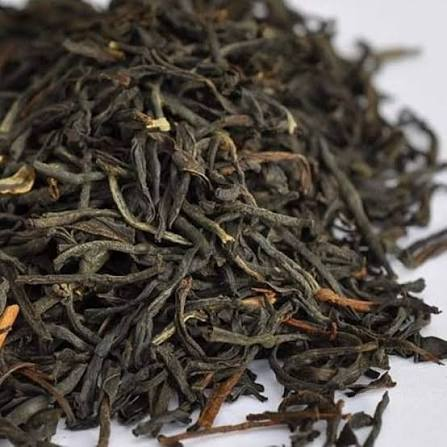
Quick answer: Choose an orthodox tea dryer that can apply a controlled temperature profile, handle leaf gently, hit a tight residual-moisture band suitable for export storage, and match your peak made-tea rate. Multi-zone or multi-pass control and disciplined operation matter more than the machine name alone.
1. What Export and Premium Buyers Actually Check
| Attribute | Why the dryer matters |
|---|---|
| Residual moisture | Too high → mould and claims in transit; too low → brittle leaf, flat liquor, weight loss |
| Moisture uniformity | Variation between grades or batches causes mixed keeping quality |
| Colour and bloom | Overheating dulls appearance and tips |
| Aroma / character | Excessive temperature or long hold at high heat drives off volatile notes |
| Leaf style | Harsh mechanical action breaks whole leaf into unwanted dust and fibre |
| Consistency | Export contracts expect repeatable results across flush and weather |
A dryer that only “makes the leaf dry” is not enough for premium markets.
2. Residual Moisture: Define the Target Before You Buy
Industry practice for black tea often aims at a low residual moisture suitable for storage and shipment (commonly discussed in a tight band around the low single digits, e.g. targets frequently cited near 2–3% depending on grade, market and packing).
Do not treat any single number as universal. Use:
- Your buyer’s specification
- Your packing and storage conditions
- Your own lab method (and stick to it)
Buyer rule: Write the target residual moisture and allowed variation into the dryer RFQ. Capacity claims without a moisture basis are not comparable.
Also specify inlet moisture after fermentation (range, not one optimistic value). Evaporation load — and dryer size — scale with the difference between inlet and target moisture.
3. Colour and Aroma: Temperature Profile Beats Peak Temperature Alone
Colour and aroma damage usually come from:
- Too high product temperature in the late stage (when leaf is already dry)
- Case-hardening early (hot surface, wet core) followed by harsh finish
- Uneven spread or feed so some leaf overheats while other leaf stays wet
What to demand from the dryer design:
- Staged drying — stronger driving force while leaf is wet; cooler, controlled finish
- Independent or multi-pass zone control where the technology allows
- Even leaf distribution (tray discipline on ECP; controlled feed on continuous systems)
- Ability to set recipes by grade or leaf type
Gentle handling protects style (whole and broken leaf proportions) that export buyers pay for.
4. Dryer Types Orthodox Factories Compare
| System | Quality-relevant traits | Typical buyer consideration |
|---|---|---|
| ECP (Endless Chain Pressure) | Multi-pass, familiar, tray-based | Proven if spreading and chamber balance are excellent; labour and uniformity risk if not |
| Combination / multi-stage continuous | Staged air contact, continuous feed | Strong option when tighter moisture control and less tray labour are priorities |
| Fluid-bed type stages | High heat transfer for suitable particles | Must be configured for orthodox leaf — avoid treating leaf like CTC granules |
| Hybrid / upgraded lines | ECP retained with better controls or partial continuous finish | Useful when capital or building limits full replacement |
For premium orthodox, score each option on moisture uniformity, tip appearance, aroma retention and breakage — not only on catalogue kg/h.
5. Case-Hardening: Quality Checkpoint
Case-hardening = dry, hard surface with moisture trapped inside.
Export impact: Leaf may feel dry yet fail storage or cup tests later; re-firing damages aroma further.
Dryer-related causes: Excessive early heat, uneven bed depth, insufficient finish time, pushing capacity above design.
Selection implication: Prefer systems (and operating regimes) that allow a milder finish stage and verifiable core dryness, not only surface feel.
6. Capacity Matching for Flush — Without Sacrificing Quality
Oversized temperature to “catch up” in peak flush is a common quality killer.
Calculate from process data:
- Green leaf → made tea recovery you actually achieve
- Inlet moisture after fermentation (peak season)
- Target residual moisture
- Required made-tea kg/h at peak
Size evaporation capacity for peak credible load, then operate with profile discipline. A dryer that only meets average flush will force quality shortcuts in the rush period.
7. Practical Selection Checklist (Premium / Export Focus)
| Checkpoint | What “good” looks like |
|---|---|
| Moisture target | Written target + variation band in the contract basis |
| Inlet moisture basis | Stated range after fermentation |
| Temperature profiling | Multi-pass or multi-zone control; cooler finish possible |
| Leaf handling | Minimal breakage of whole leaf; controlled feed/spread |
| Measurement | Plan for residual moisture testing (method and frequency) |
| Fuel & energy | Heat source defined; specific energy discussed with conditions |
| Cleaning & fire safety | Access, housekeeping, monitoring appropriate to tea dust |
| Commissioning | Trials on your leaf grades, not only nameplate runs |
| Training | Operators understand profile vs “more heat = better” |
| References | Similar orthodox / export-oriented installations |
8. Quality Checkpoints After Commissioning
- Residual moisture average and spread across samples
- Appearance of tips and whole leaf vs control lots
- Aroma and liquor comments from tasting
- Stability after packing (sample retain programme)
- Behaviour in monsoon vs dry months
If moisture is on target but liquor is harsh, review temperature history and upstream wither/fermentation — not only dryer speed.
9. Upstream Dependency (Do Not Skip)
No dryer can repair:
- Incomplete or uneven wither (chemical and physical)
- Poor fermentation control
- Contaminated or damaged green leaf
For continuous withering context, factories often evaluate CCW (continuous chemical withering) and CPW (continuous physical withering) alongside dryer upgrades. Dryer selection should assume defined inlet leaf condition.
10. How GTI Dryers Supports Orthodox Tea Drying Choices
GTI Dryers designs continuous drying systems used in tea and agro processing, including vibratory fluid-bed and combination-style approaches suited to staged moisture removal.
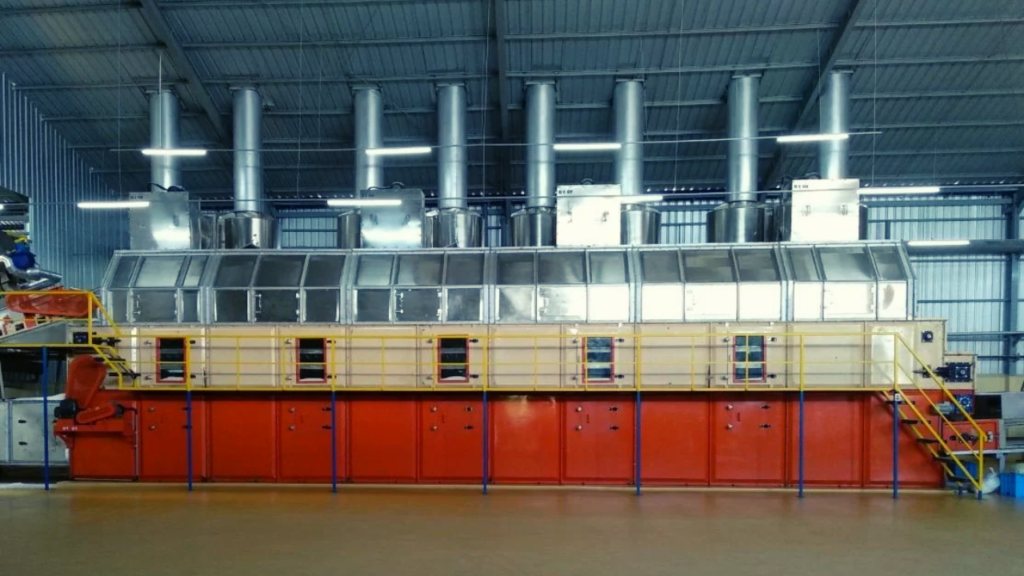
For premium and export-oriented orthodox projects we emphasise:
- Moisture targets and capacity on a stated basis
- Temperature profiling for colour and aroma protection
- Honest comparison between improving an existing ECP line and adopting staged continuous drying
- Commissioning support oriented to quality metrics, not only throughput
Geographic Note
Export orthodox from India (Darjeeling, Nilgiris, Assam orthodox, Kangra and others) and from other origins faces strict buyer expectations on moisture and appearance. Ambient humidity and flush intensity vary by region; dryer recipes must be validated locally. Energy cost and fuel type (coal, gas, biomass, electricity) affect operating profile but must not override quality limits.
Frequently Asked Questions
What residual moisture should export orthodox tea have?
Follow the buyer contract and your validated lab method. Many markets work to a tight low residual-moisture band (often discussed around 2–3% depending on grade and packing). Confirm the number that applies to you.
Is an ECP dryer good enough for premium markets?
Yes, when spreading, chamber balance and moisture measurement are excellent. Many fine teas are still ECP-dried. Chronic uneven moisture or case-hardening is a reason to audit process or evaluate staged continuous systems.
How do I protect aroma during drying?
Avoid excessive finish temperatures, prevent case-hardening, and do not hold dry leaf in hot chambers longer than necessary.
What capacity figure should I put on the RFQ?
Peak made-tea rate at stated inlet and outlet moisture — not a single “kg/h” without moisture basis.
What should I send GTI for a recommendation?
Made-tea capacity, inlet moisture after fermentation, target residual moisture, grade mix, current dryer type and main quality issues (colour, tips, moisture variation, aroma).
Next Step
If you are selecting or upgrading an orthodox tea dryer for premium or export markets, define moisture, colour and aroma priorities first, then capacity. Share your process data with GTI for a practical assessment of staged drying options and quality-focused operating windows.
Request an orthodox tea dryer selection assessment with your quality and capacity data.
Contact the GTI Technical Team:
Website: gtidryers.com
Email: mktg@gtidryers.com
Phone / WhatsApp: +91 9330077417