
Industrial buyers searching for ginger, garlic or onion dehydration solutions face a clear production problem: how to convert high-moisture fresh produce into stable, export-grade slices, flakes or powder without destroying colour, flavour or active compounds, while achieving continuous capacity that sun drying and small tray systems cannot deliver.
Ginger, garlic and onion are widely used in food processing, seasoning blends, ready-to-cook products, sauces, soups, nutraceutical ingredients and spice powders. Their commercial value, however, depends on much more than the quality of the fresh crop. The dehydration process has a direct influence on final moisture, colour, aroma, flavour, texture, rehydration behaviour and storage stability.
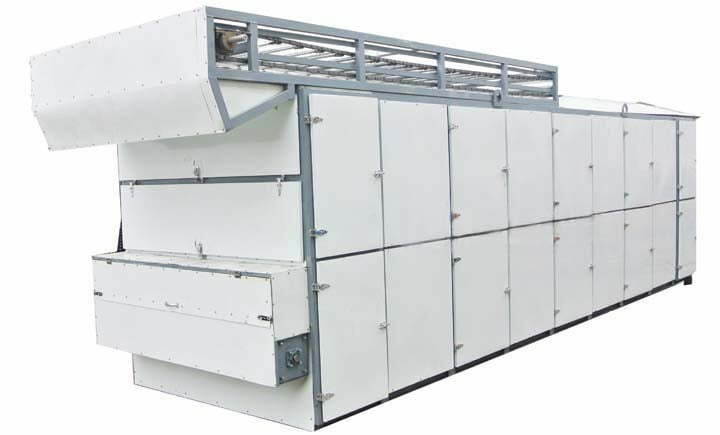
For industrial processors, this creates a difficult production challenge: how can large quantities of ginger, garlic and onion be dried consistently without excessive heat exposure, uneven moisture, discolouration or unnecessary energy consumption?
Traditional sun drying and small batch tray systems may be suitable for limited production, but they can become difficult to manage when a plant needs predictable output, controlled drying conditions and continuous operation. Weather changes, manual handling, inconsistent layer thickness and variations in airflow can lead to differences between batches.
A continuous belt dryer, also known as a band dryer, conveyor dryer or mesh belt dryer, offers another approach. It moves prepared products through a controlled drying chamber, where airflow, temperature, belt speed and residence time can be adjusted to suit the material.
1. The Production Problem Continuous Belt Dryers Solve
Fresh ginger, garlic and onion typically enter processing at high moisture (often 70–85 % depending on crop and season). Traditional sun drying or static tray drying creates:
- Uneven residual moisture and risk of mould
- Colour darkening and loss of volatile flavour compounds
- High labour and large floor-space requirements
- Limited, weather-dependent capacity
- Difficulty meeting consistent export or industrial-buyer specifications
A continuous multi-zone belt dryer addresses these issues by carrying a controlled layer of sliced product through successive temperature and airflow zones on a moving perforated or mesh belt. Residence time, temperature profile and air distribution can be engineered for each crop.
2. Why Sun Drying and Batch Tray Drying Can Become Production Bottlenecks
Sun drying remains an accessible method for small-scale agricultural processing. However, industrial processors may face limitations when they depend on weather-sensitive outdoor drying.
| Production challenge | Sun drying | Batch tray drying | Continuous belt drying |
|---|---|---|---|
| Weather dependence | High | Low | Low |
| Continuous feed and discharge | No | No | Yes, when designed for continuous operation |
| Process automation | Limited | Variable | Can be integrated |
| Residence-time adjustment | Limited | Batch-based | Belt-speed controlled |
| Multi-zone drying | No | Depends on design | Can be configured |
| Large-scale production | Difficult to standardise | Requires multiple batches | Suitable for continuous production |
| Manual material handling | High | Often significant | Can be reduced through automation |
A continuous belt dryer is not automatically the best choice for every factory. Batch tray dryers may be more practical for smaller plants, seasonal production or frequent product changeovers.
However, when a processor handles substantial daily quantities of prepared ginger, garlic or onion and requires a steady production flow, continuous belt drying deserves serious evaluation.
3. Typical Industrial Process Flow
Fresh crop → Cleaning / peeling → Slicing (commonly 2–5 mm) → (Optional surface dewatering or pre-treatment) → Multi-zone continuous belt drying → Cooling → Milling / sieving (if powder is required) → Packaging
The drying step is the quality bottleneck. Slice thickness, belt loading, zone temperatures and final cooling determine whether the dried product retains acceptable colour, flavour and residual moisture for flakes or subsequent powder production.
4. Why Continuous Belt Dryers Are Preferred for These Crops
| Requirement | How a multi-zone belt dryer responds |
| Sliced / flaked form | Product travels as a permeable layer; no aggressive tumbling |
| Colour & flavour retention | Independent temperature zones allow high initial evaporation followed by gentler final drying |
| Uniform residual moisture | Controlled residence time and even air distribution across the belt width |
| Continuous capacity | Designed for industrial daily tonnage rather than batch tray loading |
| Integration with powder lines | Dried slices/flakes discharge to cooling and milling in a continuous flow |
Rotary dryers risk higher attrition and less precise temperature control for delicate slices. Fluid-bed systems are better suited to free-flowing granules than to large onion or garlic slices. Belt dryers match the physical form of the prepared feed.
5. How a Multi-Zone Continuous Belt Dryer Works
The main advantage of a multi-zone belt dryer is the ability to manage different stages of moisture removal rather than exposing the product to one fixed drying condition throughout the process.
Stage 1: Feeding and uniform spreading
Prepared ginger slices, garlic flakes or onion pieces are transferred to the feeding system.
A controlled spreader distributes the material across the belt. Consistent layer thickness is important because an excessively deep or uneven bed can restrict airflow and create wet spots.
Stage 2: Initial moisture removal
The wet product enters the first drying zone. This stage is designed to remove a substantial portion of the readily available moisture.
Air temperature, humidity, velocity and exhaust rate must be selected according to the material and its condition. For onion and other high-moisture materials, the early stage needs sufficient moisture-removal capacity without creating undesirable surface damage.
Stage 3: Main drying
The product moves through the main drying zones. Moisture continues to migrate from the interior of the pieces to the surface and evaporate into the drying air.
The required conditions depend on slice thickness, feed moisture, product loading and the desired final quality.
Stage 4: Final moisture control
As the product becomes drier, the remaining moisture becomes more difficult to remove. The final zone must provide enough drying time to meet the required specification without unnecessary thermal exposure.
A moisture target should be verified through representative product sampling and a suitable laboratory or validated online measurement method.
Stage 5: Cooling and discharge
Dried material should be cooled under controlled, hygienic conditions before further processing or packaging.
Packing hot product can create condensation or moisture-related problems if temperature and ambient humidity are not managed. Cooling arrangements should therefore be considered as part of the complete dehydration line, not as an afterthought.
Why Ginger, Garlic and Onion Dehydration Is Difficult at Industrial Scale
Although ginger, garlic and onion are all agricultural products, they do not behave identically during drying. Their moisture content, structure, sugar content, volatile compounds and final product requirements differ.
A dryer designed around one product cannot automatically be assumed to deliver the same results with another.
Ginger: retaining colour, pungency and aroma
Ginger is processed into dried slices, flakes, granules, powder and ingredients for further extraction. Its quality is associated with pungent compounds such as gingerols and with its volatile aroma profile.
Excessive or poorly controlled heat exposure can change colour, flavour and the retention of important compounds. Slice thickness and loading density also influence moisture movement and drying time.
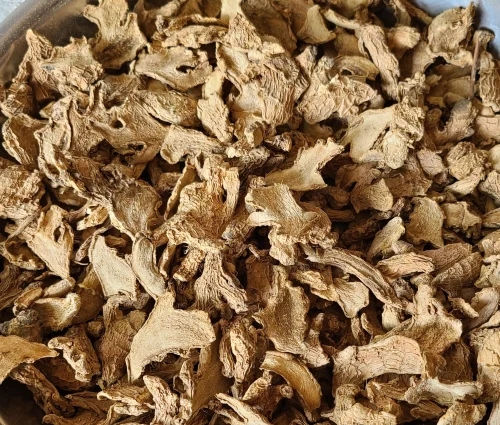
A 2023 study on hot-air drying of ginger slices found that temperature, slice thickness and loading density affected drying behaviour and quality. The study identified an optimised condition of approximately 66.4°C, 2 mm slice thickness and 5 kg/m² loading density for its specific experimental setup. These are research findings, not universal industrial operating settings.
Typical processor problems:
- Uneven moisture between thick and thin slices
- Darkening or browning during drying
- Loss or alteration of characteristic aroma
- Excessive breakage during conveying
- Inconsistent rehydration and final texture
Garlic: controlling heat exposure and final moisture
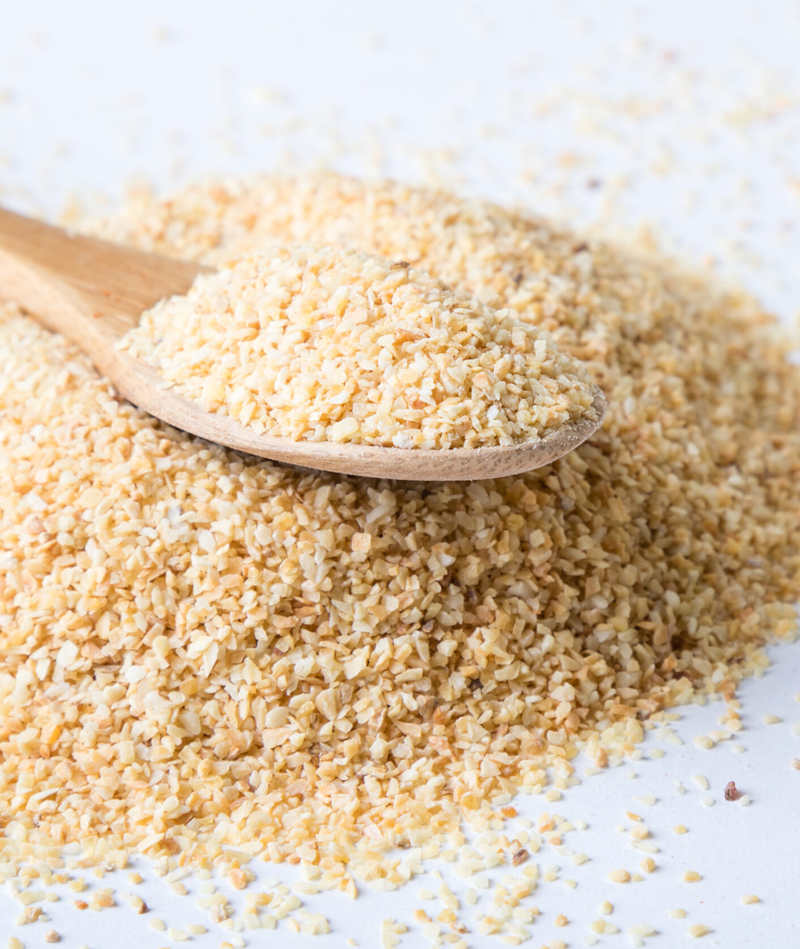
Garlic is commercially dehydrated into slices, flakes, granules and powder. It is used in seasoning blends, instant foods, sauces, spice mixes and food ingredients.
Garlic presents a particular challenge because the processor must remove moisture while managing heat exposure, colour and characteristic flavour. Excessive drying intensity can cause undesirable yellowing or browning, while insufficient drying can create storage and milling problems.
Typical processor problems:
- Yellowing or browning of garlic flakes
- Uneven drying between pieces
- Excessive fines caused by brittle product handling
- Moisture variation after grinding
- Poor storage stability due to residual moisture
The final moisture target should be based on the product form, buyer specification, packaging and storage conditions. A target suitable for garlic slices should not automatically be applied to garlic powder.
Onion: managing high moisture and natural sugars
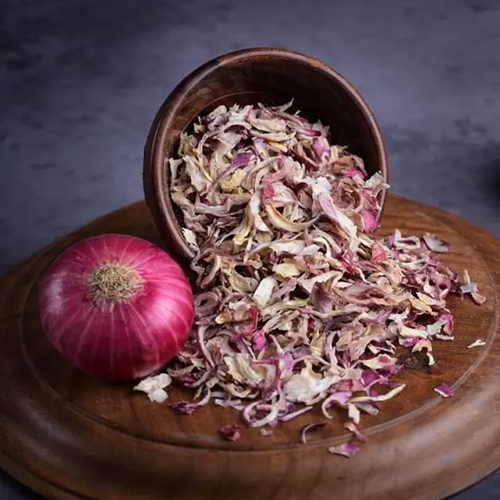
Onion is processed into flakes, rings, kibbles, granules and powder. Its high initial moisture creates a substantial evaporation load, while its natural sugars make thermal management important.
If drying conditions are poorly controlled, onion may develop unwanted browning, sticking, uneven texture or inconsistent colour. Excessive product loading can also restrict airflow through the material layer.
Typical processor problems:
- Dark or caramelised-looking pieces
- Sticky product during early drying
- Uneven moisture across the belt
- Clumping and poor separation
- High energy demand due to large water-removal requirements
The solution is not simply to increase inlet-air temperature. The process must manage the relationship between product loading, airflow, humidity removal, residence time and product temperature.
6. How Belt Dryers Help Solve Common Ginger, Garlic and Onion Drying Problems
A properly designed continuous belt dryer can address several recurring production issues.
| Buyer problem | Possible process cause | Belt-dryer design or operating response |
|---|---|---|
| Wet spots in dried slices | Uneven feeding, deep product bed or poor airflow | Improve spreading, bed-depth control and air distribution |
| Darkened ginger slices | Excessive thermal exposure or unsuitable drying profile | Review product temperature, zone settings and residence time |
| Yellow or brown garlic flakes | Excessive heat exposure or inconsistent moisture removal | Validate a gentler product-specific drying profile |
| Onion sticking or clumping | High surface moisture, excessive loading or poor separation | Review feed preparation, loading and early-zone airflow |
| High final moisture | Insufficient residence time or inadequate evaporation capacity | Adjust belt speed, drying area or process conditions |
| Brittle product and excessive breakage | Over-drying or aggressive mechanical handling | Review final moisture, transfer points and conveying design |
| Different moisture levels across the belt | Uneven layer thickness or air distribution | Improve feeding, airflow balancing and monitoring |
| High energy consumption | Excessive exhaust losses, poor insulation or unsuitable operating conditions | Evaluate heat recovery, recirculation and zone control |
These are diagnostic starting points, not guaranteed remedies. A plant should identify the actual cause through moisture measurements, airflow checks, product sampling and operating data before changing set-points.
5. Key Design and Operating Parameters Buyers Should Specify
- Slice thickness range and target residual moisture
- Belt type (mesh or perforated) and material of construction (typically food-grade stainless steel)
- Number of drying zones and independent temperature/airflow control
- Belt loading (kg/m²) and residence time range
- Heat source (steam, thermic fluid, gas, biomass, etc.) and energy-recovery options
- Cooling zone or separate cooler after drying
- Hygiene design: cleanability, access, and food-grade contact surfaces
- Capacity on a fresh or dry-product basis, including seasonal peak loads
6. Common Problems and How Continuous Belt Systems Address Them
| Buyer problem | Typical cause in older methods | How a well-designed continuous belt dryer helps |
| Uneven moisture / mould risk | Static layers, sun dependence | Controlled multi-zone drying and consistent residence time |
| Colour darkening | Excessive temperature or long exposure | Progressive temperature profiling |
| Low capacity | Manual tray handling | Continuous conveying and higher daily throughput |
| High labour | Spreading, turning, collecting trays | Automated feed and discharge |
| Inconsistent powder quality | Variable dried-feed moisture to the mill | Stable residual moisture into cooling and milling |
7. Benefits Summary for Buyers
- Continuous, weather-independent production
- Better retention of colour and characteristic flavour compared with uncontrolled high-temperature drying
- Uniform residual moisture suitable for packaging or milling
- Lower labour intensity and more predictable operating cost
- Scalable capacity matched to industrial and export volumes
- Integration into complete slice-to-powder lines
8. What Leading Manufacturers (Including GTI) Should Demonstrate
Buyers evaluating continuous belt dryers for ginger, garlic and onion should look for:
- Proven application experience with sliced vegetables and spices
- Ability to engineer multi-zone temperature and airflow profiles
- Food-grade construction and cleanability
- Clear data requirements and willingness to review slice thickness, moisture targets and capacity together
- Support for cooling, milling and packaging integration when a powder line is required
- Realistic discussion of residual-moisture and quality outcomes rather than generic capacity claims
GTI Dryers designs and manufactures continuous band / mesh-belt drying systems for food and spice applications, including onion, garlic and ginger. Systems are engineered around the prepared feed form, target residual moisture and required continuous capacity, with multi-zone control to protect product quality.
9. Data Required for a Practical Quotation or Assessment
- Crop (onion, garlic, ginger or combination)
- Intended product form (slices, flakes, powder)
- Slice thickness and approximate inlet moisture
- Target residual moisture
- Required throughput (fresh or dry basis)
- Available heat source and utilities
- Hygiene / food-grade requirements
- Preference for single-crop or multi-crop operation
Geographic Note
India, China, Nigeria, Sri Lanka, Nepal and other major producing regions process large volumes of ginger, garlic and onion into dehydrated forms for domestic food industry and export. Continuous multi-zone belt dryers are widely evaluated because they combine gentle handling of slices with the capacity and process control needed for industrial and export-grade product. Local differences appear in energy cost, seasonal harvest patterns and export moisture specifications; the core engineering logic remains the same.
Frequently Asked Questions
Is a continuous belt dryer suitable for all three crops?
Yes, when engineered with adjustable zone temperatures and belt speeds. Many plants run onion, garlic and ginger on the same line with appropriate changeover and cleaning.
What residual moisture should dried onion, garlic or ginger reach?
It depends on whether the product is sold as slices/flakes or milled to powder, and on customer specifications. The dryer must be capable of consistently reaching the target set by the buyer’s quality standard.
Can the same dryer feed a powder line?
Yes. Continuous belt drying followed by cooling and milling is the standard industrial route for onion and garlic powder.
How is this different from a tray dryer?
Tray dryers are batch systems with higher labour and less precise multi-zone control at industrial scale. Continuous belt dryers are designed for higher daily throughput and more consistent process conditions.
What is the most important information for sizing?
Slice thickness, inlet moisture range, target residual moisture and required continuous capacity.
Next Step
If you are planning or upgrading a ginger, garlic or onion dehydration line and need a continuous belt dryer matched to your product and capacity, share the crop details, slice form, residual-moisture target and throughput requirements. GTI can review the data and recommend a suitable multi-zone belt drying configuration.
Request a continuous belt dryer assessment for ginger, garlic or onion dehydration.GTI Dryers — Engineered Drying Solutions from India for Global Industries.
Contact the GTI Technical Team:
Website: gtidryers.com
Email: mktg@gtidryers.com
Phone / WhatsApp: +91 9330077417