
1. What Are We Actually Drying?
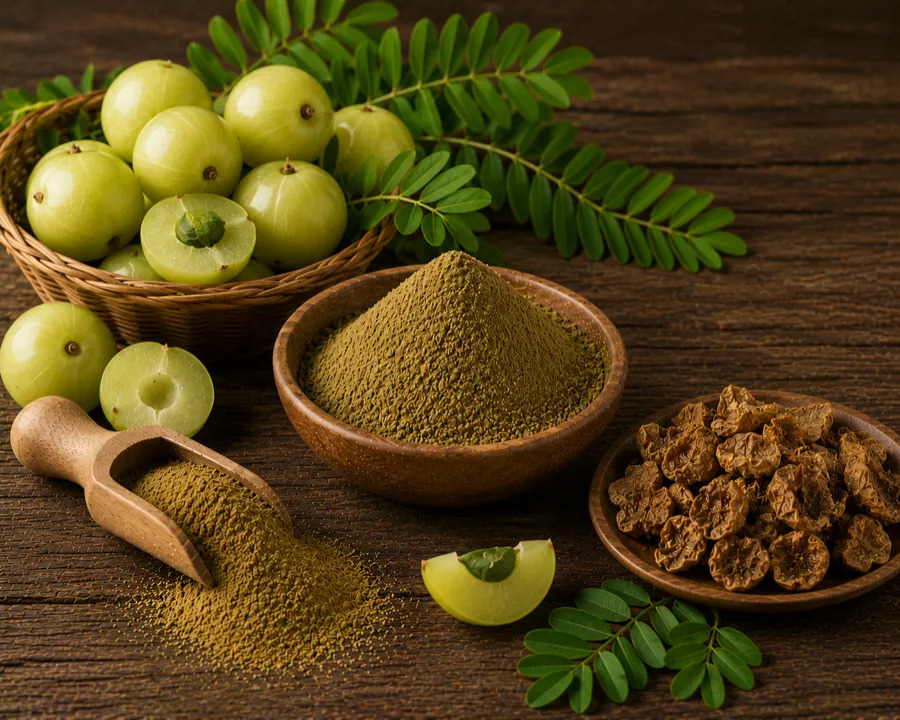
“Herbal drying” can describe several very different process streams.
A plant manufacturer may be handling:
A. Whole or Cut Herbal Material
Examples:
- Leaves
- Roots
- Seeds
- Flowers
- Bark
- Fruits
- Medicinal herbs
The objective is primarily stabilization and moisture reduction.
B. Herbal Powder
Already-milled botanical material may require controlled drying before blending, extraction or formulation.
C. Liquid Plant Extract
Extraction using water, ethanol or another approved solvent can produce a liquid extract requiring concentration and subsequent drying.
D. Concentrated Herbal Extract
The concentrated liquid may be converted into a dry extract powder using a suitable drying technology.
E. Standardized Botanical Extract
The product may require controlled drying while maintaining a specified marker-compound or active-constituent profile.
F. Nutraceutical Ingredient
Examples can include botanical ingredients intended for:
- Capsules
- Tablets
- Powders
- Functional foods
- Beverages
- Premixes
- Supplements
G. Phytochemical / Botanical Active
High-value plant-derived compounds may require particularly controlled temperature and residence time.
This difference in feed form is one of the first questions GTI considers when selecting the dryer.
2. The Botanical Drying Chain
A typical herbal-extract manufacturing process can be visualized as:
Cultivation / Collection
↓
Cleaning & Sorting
↓
Size Reduction
↓
Extraction
↓
Filtration / Separation
↓
Concentration
↓
Drying
↓
Milling / Sieving
↓
Standardization / Blending
↓
Packaging
The drying system sits directly between concentration and the final dry ingredient.
That means a poorly selected dryer can affect the economics of the entire upstream extraction process.
3. Why Drying Herbal Extracts Is Different From Drying Ordinary Powders
Many botanical compounds are sensitive to processing conditions.
The drying process can influence:
- Polyphenols
- Flavonoids
- Alkaloids
- Terpenoids
- Glycosides
- Essential-oil components
- Pigments
- Antioxidant compounds
- Other marker constituents
The exact sensitivity varies considerably from plant to plant and from compound to compound.
Research reviews on medicinal-plant drying report that drying conditions can influence bioactive compounds, antioxidant activity, essential-oil yield, colour and aroma.
Therefore:
High temperature ≠ automatically faster and better.
For some extracts, excessive thermal exposure can result in undesirable changes.
For others, higher-temperature drying may be acceptable.
The correct drying window must be established for the specific product.
4. The Most Important Process Question: What Happens Before the Dryer?
This is where herbal-extract drying differs from simply buying a “herbal powder dryer.”
Suppose a manufacturer starts with 1,000 kg of botanical raw material.
After extraction, filtration and concentration, the material entering the dryer may be only a fraction of the original mass — but with a much higher concentration of valuable constituents.
The dryer therefore handles a higher-value process stream.
The process may look like:
1,000 kg botanical raw material
→ Extraction
→ Filtration
→ Concentration
→ Concentrated botanical liquid
→ Drying
→ High-value extract powder
The economic objective is therefore not maximum evaporation alone.
It is:
Maximum useful product recovery + controlled quality + manageable energy consumption.
5. Where GTI Dryer Selection Begins
GTI Dryers recommends starting with the feed, not the dryer name.
Before selecting a technology, evaluate:
Feed Type
Liquid, concentrated extract, slurry, paste, wet powder or dry botanical.
Solvent
Water, ethanol or another process-specific solvent.
Solids Content
Low-solids extract and highly concentrated extract behave very differently.
Heat Sensitivity
Some botanical actives may require lower-temperature processing.
Product Form
Powder, granule, flakes or another final form.
Target Moisture
The final moisture specification should be product-specific.
Hygroscopicity
Some herbal extracts readily absorb moisture from the atmosphere.
Bulk Density
Important for packaging, storage and downstream formulation.
Flowability
Critical for automated handling and capsule/tablet manufacturing.
Active Constituents
Marker compounds or standardized actives may need to be protected.
Production Capacity
Laboratory, pilot, small commercial or high-volume production.
6. Which Dryer Should Be Used for Herbal Extracts?
There is no universal “best herbal dryer.”
GTI typically evaluates several technology routes depending on the product.
| Dryer Technology | Typical Feed | Potential Herbal Application |
| Vacuum Dryer | Wet mass, concentrated/pasty material | Heat-sensitive extracts and specialty botanical products |
| Spray Dryer | Liquid extract / concentrated liquid | Extract powders and standardized botanical ingredients |
| Fluid Bed Dryer | Wet granules / particles | Granulated nutraceutical or herbal products |
| Belt Dryer | Solid, sliced or particulate material | Botanicals and low-temperature continuous drying |
| Vacuum Paddle Dryer | Wet/sticky material | Concentrated, sticky or difficult-to-handle products |
| Tray/Vacuum Tray Dryer | Batch wet material | Specialty and lower-volume products |
The final choice depends on the actual feed and required product properties.
7. Spray Dryer for Herbal Extracts
When the feed is a liquid botanical extract or concentrated extract, spray drying can be an attractive process route.
The basic principle is:
Liquid extract → Atomization → Hot drying gas → Rapid moisture removal → Powder collection
The liquid is atomized into fine droplets.
Because the droplets have a high surface-area-to-volume ratio, moisture can be removed rapidly.
The final powder can then be separated through:
- Cyclone
- Bag filter
- Product collection system
- Multi-stage collection arrangement
Why spray drying can be attractive
It can provide:
- Continuous operation
- Powder production directly from liquid feed
- Controlled particle formation
- Scalable production
- Short particle residence times
- Integration with extract-concentration processes
However, the inlet/outlet conditions must be selected according to the thermal sensitivity and formulation of the extract.
A higher inlet air temperature does not necessarily mean the product experiences the same temperature for the entire drying period; actual product temperature and residence time depend on the drying process.
8. Vacuum Drying for Heat-Sensitive Botanical Extracts
For products where thermal exposure needs to be minimized, vacuum drying can be considered.
Under reduced pressure, evaporation can occur at lower temperatures than under atmospheric conditions.
WHO’s herbal-processing guidance specifically states that for organic solvents, evaporation under reduced pressure at a temperature below 40°C is preferred in the relevant concentration context, emphasizing control of thermal decomposition and oxidation.
Vacuum drying can therefore be relevant for selected:
- Heat-sensitive botanical extracts
- High-value phytochemicals
- Concentrated herbal materials
- Sticky botanical products
- Solvent-containing extracts
- Specialty nutraceutical ingredients
The exact operating temperature must be established from the product’s characteristics rather than applying a universal low-temperature specification.
9. Vacuum Paddle Dryer for Sticky Botanical Materials
Some concentrated herbal extracts become:
- Sticky
- Pasty
- Cohesive
- Difficult to discharge
- Difficult to fluidize
This is where a vacuum paddle dryer can be considered.
The paddles continuously move and expose the material to the heated surfaces.
The process can combine:
Mixing + heat transfer + vacuum evaporation
Potential benefits include:
- Good contact between material and heated surfaces
- Controlled vacuum operation
- Handling of cohesive material
- Reduced exposure temperature for suitable products
- Potential solvent recovery integration
This can be particularly relevant when a concentrated extract cannot be efficiently processed through a conventional fluidized bed.
10. Low-Temperature Fluid Bed Drying
Fluid bed drying can be considered when the material is already in a suitable particulate or granulated form.
Air passes through the product bed and fluidizes the particles.
This can provide:
- Good contact between drying air and particles
- Uniform drying
- Controlled residence time
- Efficient heat and mass transfer
- Suitable continuous or batch configurations
For herbal and nutraceutical applications, fluid-bed conditions should be selected carefully because botanical powders can vary significantly in:
- Particle size
- Density
- Stickiness
- Hygroscopicity
- Flowability
A fluid bed should therefore not be selected merely because the product is called a “powder.”
11. Low-Temperature Belt Drying for Botanicals
Belt dryers can be useful when the feed is:
- Whole plant material
- Sliced botanicals
- Leaves
- Roots
- Fibrous material
- Granular botanical material
The product moves continuously through controlled drying zones.
The process can be configured around:
- Air temperature
- Air velocity
- Residence time
- Layer thickness
- Recirculation
- Multi-zone drying
This makes belt drying attractive for manufacturers requiring continuous processing of larger quantities of botanical raw materials.
12. The Difference Between Herbal Raw Material and Herbal Extract
This distinction is extremely important for SEO and for equipment sales.
Herbal Raw Material
Example:
Fresh turmeric → sliced turmeric → dried turmeric
The dryer handles a relatively solid plant material.
Herbal Extract
Example:
Turmeric → extraction → filtration → concentration → drying → curcumin-rich extract powder
The dryer may handle a concentrated liquid, paste or sticky extract.
These are completely different drying applications.
Therefore, a manufacturer searching for:
“Herbal Extract Dryer”
may require a very different system from someone searching for:
“Herbal Plant Dryer.”
GTI can address both applications through process-specific dryer selection.
13. Botanical Extracts Commonly Processed Into Dry Ingredients
Depending on the product and extraction process, botanical drying applications can include extracts derived from:
- Ashwagandha
- Turmeric
- Amla
- Tulsi
- Ginger
- Licorice
- Neem
- Green tea
- Aloe vera
- Gymnema
- Boswellia
- Ginseng
- Milk thistle
- Fenugreek
- Ginkgo
- Garlic
- Shatavari
- Brahmi
- Moringa
- Spirulina and other botanical/biological ingredients
These are examples of botanical materials and ingredient categories, not a claim that every product requires the same drying technology.
The Ministry of AYUSH’s E-Charak database lists numerous medicinal plants and plant parts used in Indian traditional medicine, including Ashwagandha-related botanicals, Gudmar, Tulsi, Amla, licorice and many others.
14. Phytochemicals: When the Product Becomes More Valuable
Phytochemicals are naturally occurring chemical constituents found in plants.
Depending on the application, manufacturers may produce standardized botanical ingredients containing selected marker compounds or active constituents.
Examples can include extracts associated with:
- Curcuminoids
- Polyphenols
- Flavonoids
- Alkaloids
- Saponins
- Terpenes
- Glycosides
- Phenolic compounds
At this stage, drying becomes increasingly important because the material being processed may have a much higher commercial value than the original plant material.
This changes the dryer-selection philosophy.
For bulk botanical material:
Throughput may dominate.
For concentrated phytochemical extracts:
Product recovery + thermal control + powder properties may dominate.
15. Nutraceutical Ingredients: Drying for the Final Powder
Nutraceutical manufacturers often require ingredients that can be incorporated into:
- Capsules
- Tablets
- Sachets
- Powder blends
- Functional beverages
- Nutrition mixes
- Gummies
- Premixes
- Fortified foods
The dry ingredient may need specific:
- Moisture
- Particle size
- Flowability
- Bulk density
- Solubility
- Dispersibility
- Hygroscopicity
Therefore, the drying process can affect downstream manufacturing.
A powder that looks “dry” may still be unsuitable if it:
- Cakes during storage
- Picks up moisture rapidly
- Has poor flow
- Has inconsistent particle size
- Has poor dispersibility
- Shows unacceptable active variation
16. Carrier-Based Spray Drying of Herbal Extracts
Many botanical extracts can be difficult to spray dry because concentrated extracts may be:
- Sticky
- Hygroscopic
- Thermoplastic
- Difficult to collect
In such cases, a carrier such as a suitable carbohydrate or other formulation aid may be used depending on the product and formulation.
WHO’s herbal-processing guidance notes that dry herbal extract powders are often produced by drying extracts onto an inert carrier such as methyl cellulose, maltodextrin or another suitable excipient.
The exact carrier, concentration and formulation must be determined by the product developer.
This can significantly influence:
- Powder yield
- Stickiness
- Bulk density
- Flowability
- Solubility
- Reconstitution
- Hygroscopicity
Therefore, the spray dryer and formulation should be considered together.
17. Drying Is Also a Quality-Control Decision
For botanical products, quality cannot be judged only by final moisture.
A manufacturer may also monitor:
Physical Parameters
- Moisture
- Particle size
- Bulk density
- Flowability
- Colour
- Solubility
- Dispersibility
Chemical Parameters
- Marker compounds
- Active constituents
- Assay
- Degradation products
- Residual solvents, where applicable
Microbiological Parameters
- Total microbial count
- Yeast and mould
- Pathogen-related requirements
Contaminant Parameters
Depending on the product and applicable regulations:
- Heavy metals
- Pesticide residues
- Mycotoxins
- Other contaminants
WHO provides dedicated guidance covering quality control of medicinal plant materials and herbal medicines, including contaminants and residues.
18. Why Low-Temperature Processing Matters
A common mistake is to ask:
“What is the highest temperature this dryer can reach?”
For botanical products, a better question is:
“What product temperature and residence time can the formulation tolerate?”
That distinction matters.
Two dryers can have the same nominal air temperature but produce very different product outcomes because of:
- Residence time
- Heat-transfer mechanism
- Moisture content
- Particle size
- Air velocity
- Vacuum
- Product concentration
- Formulation
- Evaporation rate
GTI therefore recommends designing the process around product temperature and product quality, not simply heater temperature.
19. Where Are Herbal Extracts & Nutraceuticals Used Most?
This is one of the most important GEO opportunities for GTI.
Herbal extracts and botanical ingredients sit at the intersection of several industries:
Ayurveda & Traditional Medicine
- Herbal medicines
- Ayurvedic formulations
- Botanical powders
- Standardized extracts
Nutraceuticals
- Dietary supplements
- Functional ingredients
- Botanical capsules
- Nutritional powders
Food & Beverage
- Botanical ingredients
- Functional beverages
- Natural colours/flavours
- Plant-based ingredients
Cosmetics
- Botanical actives
- Plant extracts
- Natural personal-care ingredients
Pharmaceuticals
- Plant-derived active ingredients
- Herbal preparations
- Standardized botanical extracts
Animal Nutrition
- Botanical feed ingredients
- Plant-derived functional additives
Contract Manufacturing
- Botanical extract manufacturers
- Nutraceutical CDMOs
- Herbal ingredient processors
20. India: The Core Market for Herbal Extract Dryers
India is a particularly relevant market because the country’s medicinal-plant ecosystem connects cultivation, traditional medicine, herbal manufacturing, nutraceuticals and exports.
The National Medicinal Plants Board states that medicinal plants form an important resource base for India’s traditional medicine and herbal industry and coordinates policies and programmes relating to medicinal plants, including trade, exports, conservation and cultivation.
Current industry data also shows substantial Indian exports of AYUSH and herbal products, with FY26 exports reported at 126.27 million kg valued at ₹5,644.62 crore (US$638.71 million).
This makes India one of GTI’s most commercially relevant GEO markets for herbal and botanical drying equipment.
21. Indian Hotspots for Herbal Extract & Nutraceutical Dryers
Gujarat
Gujarat is especially relevant for export-oriented herbal and AYUSH products.
Earlier industry data identified Gujarat and Maharashtra as major contributors to India’s AYUSH and herbal-product exports.
Potential target locations include:
- Ahmedabad
- Vadodara
- Surat
- Rajkot
- Jamnagar
High-intent keywords
- Herbal Extract Dryer Manufacturer Gujarat
- Herbal Spray Dryer Ahmedabad
- Nutraceutical Dryer Manufacturer Gujarat
- Botanical Extract Dryer Vadodara
- Ayurvedic Dryer Manufacturer Gujarat
22. Maharashtra
Maharashtra combines medicinal-plant cultivation, pharmaceutical manufacturing, food processing and nutraceutical activity.
Relevant industrial locations can include:
- Mumbai
- Pune
- Nashik
- Nagpur
- Aurangabad / Chhatrapati Sambhajinagar
The Ministry of AYUSH’s cultivation data includes numerous districts across Maharashtra, showing the breadth of medicinal-plant activity in the state.
keywords
- Herbal Extract Dryer Manufacturer Maharashtra
- Nutraceutical Dryer Pune
- Botanical Spray Dryer Mumbai
- Herbal Powder Dryer Nashik
- Phytochemical Dryer Maharashtra
23. Kerala
Kerala is particularly relevant to the herbal and Ayurveda ecosystem.
Medicinal-plant cultivation has been documented across districts including:
- Wayanad
- Kozhikode
- Kannur
- Thiruvananthapuram
- Thrissur
- Ernakulam
- Idukki
- Palakkad
Kerala therefore represents a strong GEO opportunity for:
- Ayurveda manufacturers
- Herbal extract processors
- Botanical ingredient companies
- Nutraceutical manufacturers
Target keywords
- Herbal Extract Dryer Manufacturer Kerala
- Ayurveda Dryer Manufacturer Kerala
- Herbal Spray Dryer Kochi
- Botanical Dryer Wayanad
- Nutraceutical Dryer Thiruvananthapuram
24. Karnataka
Karnataka has extensive medicinal-plant cultivation across districts including Mysuru, Bengaluru-region districts, Uttara Kannada, Kodagu, Hassan and others.
The state can be targeted for:
- Herbal extracts
- Nutraceutical ingredients
- Botanical processing
- Ayurveda products
- Plant-derived functional ingredients
keywords
- Herbal Extract Dryer Manufacturer Karnataka
- Herbal Dryer Bengaluru
- Nutraceutical Spray Dryer Mysuru
- Botanical Extract Dryer Karnataka
25. Madhya Pradesh & Rajasthan
Madhya Pradesh and Rajasthan are important medicinal-plant regions.
Government-linked sector analysis identifies Uttar Pradesh, Madhya Pradesh, Karnataka, Chhattisgarh and Tamil Nadu among significant contributors to medicinal-plant cultivated area and volume, while Rajasthan is also an important medicinal-plant cultivation and trading region.
Potential targets include:
- Neemuch
- Indore
- Ujjain
- Bhopal
- Jaipur
- Jodhpur
- Kota
Commercial keywords
- Herbal Extract Dryer Manufacturer Madhya Pradesh
- Botanical Dryer Neemuch
- Herbal Powder Dryer Indore
- Nutraceutical Dryer Rajasthan
- Herbal Extract Dryer Jaipur
26. Hyderabad & Telangana
Hyderabad is important because the wider Telangana life-sciences ecosystem includes pharmaceutical, biotechnology and nutraceutical manufacturing.
Government investment material has identified Hyderabad/Telangana as a major life-sciences cluster and specifically lists nutraceuticals and herbal products among the industries targeted within the ecosystem.
Target keywords
- Herbal Extract Dryer Hyderabad
- Nutraceutical Dryer Manufacturer Telangana
- Botanical Spray Dryer Hyderabad
- Phytochemical Dryer Hyderabad
- Herbal Powder Dryer Telangana
27. Uttar Pradesh
Uttar Pradesh is relevant both for medicinal-plant cultivation and the broader AYUSH manufacturing ecosystem.
Government-linked analysis identifies Uttar Pradesh as one of the significant states for medicinal-plant cultivation and post-harvest activity.
Potential GEO targets include:
- Lucknow
- Kanpur
- Varanasi
- Noida
- Ghaziabad
28. Tamil Nadu & Andhra Pradesh
Tamil Nadu and Andhra Pradesh are also relevant to medicinal-plant cultivation and processing.
The AYUSH sector analysis identifies Andhra Pradesh and Tamil Nadu among states supporting medicinal-plant cultivation, with examples including Ashwagandha cultivation in Andhra Pradesh and Senna cultivation in Tamil Nadu.
Potential target locations include:
- Chennai
- Coimbatore
- Madurai
- Tiruppur
- Hyderabad-region supply chains
- Vijayawada
- Visakhapatnam
29. Global Markets for Botanical Drying Equipment
India is the natural primary market, but botanical extracts and nutraceutical ingredients are global products.
Important international markets include:
United States
Large dietary-supplement, nutraceutical, functional-food and botanical-ingredient market.
Europe
Particularly relevant for standardized botanical ingredients, nutraceuticals, herbal products and natural personal-care ingredients.
China
Large herbal medicine, botanical ingredient and traditional-medicine ecosystem.
Japan
Strong market for functional foods, botanical ingredients and nutraceutical products.
South Korea
Relevant to functional foods, botanical ingredients and natural health products.
Southeast Asia
Indonesia, Malaysia, Thailand and Vietnam have significant traditional medicine, herbal and botanical ingredient ecosystems.
Middle East
Growing demand for nutraceuticals, herbal products and imported botanical ingredients.
Africa
Growing interest in natural health products and traditional medicine, with opportunities varying by country and regulatory framework.
For export-oriented equipment sales, GTI can target combinations such as:
Country + Herbal Extract + Spray Dryer
or
Country + Botanical Extract + Vacuum Dryer
rather than generic “industrial dryer” keywords.
30. The Commercial Opportunity: From Herbal Powder to Standardized Extract
The value chain can be viewed as:
Raw Plant
↓
Dried Botanical
↓
Milled Powder
↓
Extraction
↓
Concentration
↓
Dry Extract
↓
Standardized Botanical Ingredient
↓
Nutraceutical / Pharmaceutical / Food / Cosmetic Product
The further the product moves along this value chain, the more important controlled processing can become.
That is why the drying equipment opportunity exists at several levels:
Level 1
Raw herbal material drying
Level 2
Herbal powder drying
Level 3
Liquid extract spray drying
Level 4
Concentrated extract vacuum drying
Level 5
High-value phytochemical drying
Level 6
Nutraceutical ingredient drying
This creates multiple GTI sales opportunities from the same industry.
31. Why Buyers Should Not Choose a Dryer by Product Name Alone
A customer may say:
“I need a turmeric dryer.”
But that could mean:
A. Fresh turmeric rhizomes
or
B. Turmeric powder
or
C. Turmeric extract
or
D. Concentrated curcuminoid extract
or
E. Standardized botanical ingredient
These five products may require completely different process conditions.
Therefore, GTI asks:
What exactly enters the dryer?
That single question can dramatically change the equipment recommendation.
32. GTI Dryer Selection Matrix
| Customer Feed | GTI Technology to Evaluate | Main Objective |
| Fresh herbs / leaves | Belt / tray / specialized low-temp dryer | Controlled stabilization |
| Roots / slices | Belt / tray / rotary depending on material | Moisture reduction |
| Herbal powder | Fluid bed / vacuum / other suitable system | Controlled moisture |
| Liquid extract | Spray dryer | Direct powder production |
| Concentrated extract | Spray / vacuum / paddle | Powder or dry extract |
| Sticky extract | Vacuum paddle / spray with formulation | Controlled drying |
| Heat-sensitive botanical | Vacuum / low-temperature system | Thermal protection |
| Nutraceutical granules | Fluid bed | Uniform drying |
| High-value phytochemical | Vacuum / spray depending on feed | Product recovery & quality |
This is why GTI Dryers does not sell one “herbal dryer.”
GTI engineers the drying technology around the feed and final product.
33. What GTI Can Help You Engineer
Depending on the application, GTI can evaluate:
Vacuum Drying Systems
For selected heat-sensitive or concentrated botanical products.
For liquid herbal extracts and nutraceutical formulations.
For suitable particulate and granulated products.
For continuous low-temperature drying of botanical solids.
Vacuum Paddle Dryers
For sticky, pasty or difficult-to-handle concentrated products.
Integrated Drying Systems
Including appropriate feeding, drying, separation, collection and product-handling systems.
34. Energy Efficiency: Where the Economics Matter
Drying can be one of the energy-intensive stages of extract manufacturing.
GTI therefore considers:
- Feed solids concentration
- Evaporation load
- Heat recovery opportunities
- Air recirculation
- Dryer loading
- Residence time
- Exhaust management
- Thermal insulation
- Heat-source selection
- Condensation requirements
- Solvent recovery where applicable
A higher solids concentration entering the dryer can significantly reduce the amount of water that needs to be evaporated.
Therefore:
Extraction and concentration efficiency directly affect dryer economics.
The dryer should be designed as part of the process rather than treated as an isolated machine.
35. Solvent-Based Botanical Extraction
Some botanical extraction processes use solvents such as ethanol.
When solvent-containing material enters a dryer, the project may require additional engineering considerations.
These can include:
- Vacuum operation
- Condensation
- Solvent recovery
- Inerting
- Explosion-protection requirements
- Hazardous-area classification
- Appropriate instrumentation
- Ventilation
- Material compatibility
These requirements are project-specific and should be established during process engineering.
For such applications, GTI can evaluate drying together with the required solvent-handling system.
36. From Laboratory Sample to Commercial Dryer
Many botanical companies begin with:
100 g → 1 kg → 10 kg → pilot → commercial production
A dryer that works well at laboratory scale does not automatically translate directly to industrial production.
Scale-up can involve:
- Heat-transfer differences
- Drying-rate changes
- Feed behaviour
- Atomization
- Residence time
- Powder recovery
- Wall deposition
- Vacuum response
- Product temperature
- Batch uniformity
GTI can use process information and, where available, laboratory/pilot drying data to support equipment sizing and configuration.
37. What Information Should You Send GTI?
For a preliminary quotation or technical evaluation, provide:
| Project Information | Example |
| Product | Herbal extract / botanical / nutraceutical |
| Botanical source | Turmeric / Ashwagandha / Amla etc. |
| Feed form | Liquid / paste / wet powder / solid |
| Extraction solvent | Water / ethanol / other |
| Feed quantity | kg/h or kg/batch |
| Feed solids | % |
| Initial moisture | % |
| Target moisture | % |
| Product temperature limit | °C |
| Active/marker compound | If applicable |
| Final product form | Powder / granule / dried botanical |
| Bulk density | If known |
| Hygroscopicity | Low / medium / high |
| Required production | kg/day or kg/year |
| Operating hours | h/day |
| Installation location | City / country |
| Utility availability | Steam / electricity / thermal oil / gas etc. |
The more information you provide, the more accurately GTI can engineer the system.
38. Why Choose GTI Dryers for Herbal & Nutraceutical Drying?
Process-First Engineering
GTI evaluates the feed, product and process before recommending a dryer.
Multiple Drying Technologies
Vacuum, spray, fluid-bed, belt and specialized drying systems can be considered according to the application.
Low-Temperature Processing Options
Suitable systems can be evaluated when botanical actives require controlled thermal exposure.
Customized Capacity
From pilot and smaller production requirements to larger industrial systems.
Powder-Focused Engineering
Particle properties, powder recovery, flowability and hygroscopicity can be considered alongside moisture removal.
Integrated Process Thinking
Extraction, concentration, drying and product collection can be evaluated as connected process steps.
India-Based Manufacturing
GTI combines Indian engineering and manufacturing capability with export-oriented project execution.
Global Market Orientation
Systems can be engineered around customer-specific process, documentation, utility and installation requirements.
39. Engineered in India. Designed for the World.
The herbal and nutraceutical industry is no longer limited to traditional herbal medicine.
Today’s botanical ingredient supply chain connects:
Farmers → Extractors → Ingredient Manufacturers → Nutraceutical Companies → Pharmaceutical Companies → Food & Beverage Manufacturers → Cosmetic Companies → Global Markets
GTI Dryers can participate at the drying and process-engineering stage of this value chain.
The objective is not simply to supply a dryer.
It is to help transform:
Botanical raw material
into
A stable, processable and commercially useful dry ingredient.
GTI Dryers
Engineered Drying Solutions from India for Global Herbal, Nutraceutical, Pharmaceutical and Food Industries.
40. Frequently Asked Questions
Which dryer is used for herbal extracts?
The appropriate dryer depends on the feed. Spray dryers are commonly evaluated for liquid extracts, while vacuum dryers can be considered for selected heat-sensitive or concentrated materials. Fluid-bed and belt dryers may be suitable for particulate botanical materials.
Which dryer is best for herbal extracts?
There is no universal best dryer. Spray, vacuum, fluid-bed or belt drying may be appropriate depending on feed form, thermal sensitivity, solids concentration, final product properties and production capacity.
Can a spray dryer dry herbal extracts?
Yes. Spray drying can convert suitable liquid botanical extracts into powders. The formulation, atomization and drying conditions need to be developed around the product.
Can heat-sensitive herbal extracts be vacuum dried?
Selected heat-sensitive extracts can be processed using vacuum drying because reduced pressure can allow evaporation at lower temperatures. Product-specific validation is required.
Is spray drying suitable for nutraceutical ingredients?
Yes, spray drying is widely considered for suitable liquid nutraceutical and botanical formulations where a dry powder is required.
What is the difference between an herbal dryer and an herbal extract dryer?
An herbal dryer may handle solid plant material such as leaves, roots or slices. An herbal extract dryer generally handles liquid or concentrated extract after extraction and filtration.
Can GTI manufacture a low-temperature herbal dryer?
GTI can evaluate vacuum, belt, fluid-bed and other drying configurations according to the product’s temperature sensitivity and process requirement.
Can herbal extracts be dried with ethanol as the extraction solvent?
Selected solvent-containing extracts can be dried, but solvent handling introduces additional engineering requirements such as condensation, recovery, inerting and appropriate safety/hazard-area provisions.
What information is required for selecting a herbal extract dryer?
The most useful information includes feed form, solids content, extraction solvent, feed rate, product temperature limit, target moisture, final powder characteristics and required production capacity.
41. Final Buyer Checklist
Before purchasing a herbal-extract dryer, ask:
Product
- What botanical material are we processing?
- Is it raw herb, powder, extract or concentrated extract?
Process
- Is extraction water-based or solvent-based?
- What is the feed solids concentration?
- Is concentration performed before drying?
Quality
- Which active or marker compounds need protection?
- What is the target residual moisture?
- Is the product hygroscopic?
- What powder properties are required?
Equipment
- Spray dryer?
- Vacuum dryer?
- Fluid bed?
- Belt dryer?
- Paddle dryer?
Commercial
- What is the required kg/h?
- What is the annual production?
- What utilities are available?
- Is the plant designed for domestic or export production?
These answers can determine the dryer configuration far more accurately than simply searching for a generic “herbal dryer machine.”
42. Talk to GTI About Your Herbal Extract Drying Project
If your process involves:
Herbal Extracts | Botanical Actives | Phytochemicals | Ayurvedic Ingredients | Nutraceuticals | Herbal Powders | Plant-Based Ingredients
GTI Dryers can evaluate the appropriate drying route based on your actual process.
Send:
Product + Feed Form + Solids % + Feed Rate + Target Moisture + Temperature Limit + Final Product Requirement + Plant Location
and the GTI engineering team can evaluate a suitable drying-system configuration.
GTI Dryers
Herbal Extract Dryer Manufacturer | Botanical & Phytochemical Drying Systems | Nutraceutical Dryers
Engineered in India. Designed for the World.