
Buyers searching for a heat pump dryer manufacturer in India usually want two outcomes at once: lower energy cost and better protection of colour, aroma and nutrients. Heat pump drying can deliver both — but only inside a defined temperature and capacity window, and only when the system is engineered for the product.
This page explains how heat pump dryers work, when they are the right choice, what to check before buying, and how GTI Dryers approaches low-temperature drying projects in India.
Quick answer: A heat pump dryer recovers heat from the moist exhaust air and reuses it to heat the drying air, so less new energy is needed compared with once-through hot-air systems. It suits heat-sensitive products that must dry at moderate temperatures. It is not a universal replacement for high-temperature or very high-tonnage dryers.
1. What Is a Heat Pump Dryer?
A heat pump dryer uses a refrigeration cycle to:
- Cool moist exhaust air so water condenses and is removed as liquid
- Capture the latent and sensible heat released during condensation
- Pump that heat back to warm the air entering the drying chamber
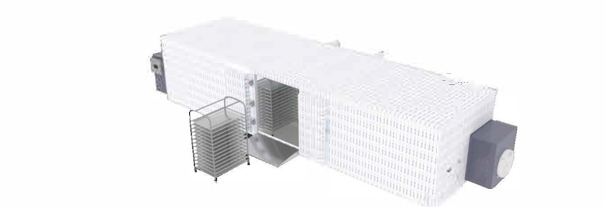
The product is dried in closed or semi-closed air loops at relatively low temperature. Energy input is mainly the electricity to drive the compressor and fans — not continuous burning of large amounts of fuel to heat fresh air that is then thrown away.
Heat pump drying can be applied to:
- Cabinet / tray-style batch dryers
- Continuous belt (band) dryers with low-temperature zones
- Purpose-built heat pump drying chambers
2. How a Heat Pump Dryer Works (Simple Principle)
text
[Drying chamber – product]
        ↓ moist warm air
[Evaporator] → moisture condenses → water drained
        ↓ cooled air + recovered heat
[Compressor] → heat upgraded
        ↓
[Condenser] → air reheated
        ↓
[Back to drying chamber]- Evaporator: Extracts heat from humid air; moisture becomes liquid condensate
- Compressor: Raises the pressure/temperature of the refrigerant
- Condenser: Delivers recovered heat to the drying air
- Expansion device: Completes the refrigeration cycle
Because moisture leaves as condensate rather than only as humid exhaust to atmosphere, specific energy consumption can be much lower than conventional open hot-air drying for the same water removed — under suitable conditions.
3. Why Buyers Look for Heat Pump Dryers in India
| Driver | Practical meaning |
|---|---|
| Energy cost | Electricity-driven recovery can cut energy per kg water vs open gas/steam systems for low-temperature duties |
| Product quality | Lower drying temperatures protect colour, aroma and heat-sensitive compounds in foods, herbs and some chemicals |
| Closed-loop drying | Less exchange with ambient humidity; useful in humid climates |
| Condensate handling | Water is collected rather than only vented as vapour |
| Sustainability pressure | Lower primary energy use for the same evaporation load when the design is appropriate |
India’s mix of high ambient humidity in many regions and rising energy awareness makes correctly applied heat pump drying attractive for premium and heat-sensitive lines.
4. Ideal Applications
Heat pump dryers are typically shortlisted for:
- Heat-sensitive foods and agro products (selected fruits, vegetables, herbs, spices) where colour and aroma matter
- Herbal and botanical materials that degrade at high temperature
- Seeds, nuts and specialty ingredients needing gentle drying
- Products already suited to tray or belt drying at moderate temperature
- Duties where electricity is reliable and fuel for high-temperature air is costly or restricted
Often not first choice when:
- Very high product temperature is required for the process (not just drying)
- Extremely high continuous tonnage of robust bulk solids (rotary or high-temp belt may win on ₹/ton)
- Feed is a pumpable liquid → spray drying evaluation
- Feed is a sticky filter cake → spin-flash or contact drying evaluation
- Site power is severely limited or unreliable without backup planning
5. Heat Pump Dryer vs Conventional Hot-Air Dryer
| Aspect | Heat pump dryer | Conventional hot-air dryer |
|---|---|---|
| Energy path | Recovers heat from exhaust; mainly compressor power | Continuously heats fresh or recirculated air with fuel/steam |
| Typical temperature range | Moderate (product-side often in lower ranges suited to sensitive foods) | Can go much higher |
| Moisture removal | Condensation in the evaporator | Exhaust as humid air (unless separate recovery) |
| Best for | Quality + energy at low/moderate temperature | High temperature, high tonnage, robust products |
| Complexity | Refrigeration circuit + controls | Simpler thermal circuit; different maintenance skills |
| Climate effect | Performance depends on design and ambient; closed loop helps | Strongly affected by ambient humidity if open |
Neither is universally “better.” Temperature limit and evaporation load decide.
6. Batch vs Continuous Heat Pump Drying
| Mode | Typical use | Buyer note |
|---|---|---|
| Batch (tray/cabinet) | Multi-product, smaller rates, R&D-to-production | Flexible; labour for loading; cycle time matters |
| Continuous (e.g. band + heat pump) | Steady industrial output of pieces/flakes | Matches GTI band dryer strengths; zone design still critical |
GTI’s continuous band / mesh-belt platforms can be paired with low-temperature heat sources, including heat pump systems, when product quality requires it.
7. What to Check Before Buying from a Heat Pump Dryer Manufacturer in India
| Check | Why it matters |
|---|---|
| States product temperature and air temperature ranges clearly | Heat pumps are not high-temp dryers |
| Gives capacity as kg water evaporated /h at stated moistures | Avoid vague “kg/h product” claims |
| Explains COP / specific energy with test conditions | Energy claims must be comparable |
| Defines batch vs continuous and loading method | Labour and throughput |
| Covers condensate drainage and hygiene | Food plants |
| Lists refrigerant type and service access | Maintenance and regulations |
| Scope: chamber, heat pump skid, controls, ducting, installation | Comparable quotes |
| After-sales: spares for both dryer and refrigeration side | Uptime |
Red flags: guaranteed savings % without baseline data; no moisture basis; no discussion of temperature limits; no plan for compressor service.
8. Energy Savings — How to Think About Them
Published claims of large percentage savings appear frequently. Real savings depend on:
- Your current specific energy (kJ or kWh per kg water)
- Required product temperature
- Ambient conditions and airtightness of the loop
- How much you currently over-dry
- Electricity vs fuel price at your site
Demand a comparison on the same evaporation load and final moisture. GTI does not publish universal savings percentages; any estimate should use your process data.
9. Integration Options GTI Can Discuss
Depending on duty, options may include:
- Heat pump + tray/cabinet style systems for batch sensitive products
- Heat pump assisted band / mesh-belt dryers for continuous gentle drying of pieces and flakes
- Conventional heating (steam, thermic fluid, gas) where higher temperature or different economics win
- Hybrid approaches (heat pump for finish drying; other heat for early moisture removal) where justified
Technology choice remains feed-form and temperature-led.
10. Buyer Data Checklist (Send This for a Proposal)
- Product name and form (pieces, herbs, powder, paste, etc.)
- Inlet and target residual moisture
- Maximum allowable product temperature
- Required capacity (batch size or continuous kg/h)
- Current dryer type and energy use if known
- Available power (kVA, voltage)
- Hygiene / food-grade requirements
- Site ambient conditions if extreme
11. How GTI Dryers Supports Heat Pump & Low-Temperature Projects
GTI Dryers is an India-based manufacturer of industrial drying systems with strong capability in continuous band/mesh-belt dryers and related engineered solutions. For heat pump and low-temperature enquiries we:
- Review whether low-temperature / heat pump drying fits your product and capacity
- Compare with multi-zone band drying on conventional heat where that is more practical
- Engineer zone control and residual-moisture discipline that protect quality
- Provide clear assumptions on capacity and utilities
- Support installation and commissioning as agreed
GTI is not positioned as a catalogue seller of a single heat pump box. We engineer the drying solution around your duty.
Geographic Note
Heat pump drying interest in India is rising where electricity is stable and product quality commands a premium — spices, herbs, fruits, nutraceuticals and export-oriented foods. In regions with very low-cost biomass or waste heat, conventional heating may still win on operating cost even if heat pump efficiency is high. Always calculate with local energy prices.
Frequently Asked Questions
What is a heat pump dryer?
A dryer that uses a refrigeration cycle to condense moisture from the air and reuse the recovered heat to warm the drying air, enabling efficient low-temperature drying.
Is a heat pump dryer always more efficient?
It is often more efficient for low-to-moderate temperature duties compared with open hot-air systems. At high required temperatures or with poor design, advantages shrink.
Can heat pumps work with continuous belt dryers?
Yes. Heat pump systems can supply low-temperature air to continuous band dryers when product quality requires gentle drying.
What products are ideal?
Heat-sensitive foods, herbs, spices and similar materials that must not see high product temperatures.
Do you manufacture heat pump dryers in India?
GTI designs and manufactures industrial drying systems in India and integrates low-temperature / heat pump heating where the process requires it. Share your duty for a specific configuration.
How do I request a quote?
Send product form, moisture in/out, max temperature, capacity and power availability to mktg@gtidryers.com or call +91-9330077417.
Next Step
If you are evaluating a heat pump dryer manufacturer in India for energy reduction and quality retention, share your product temperature limit, moisture targets and capacity. GTI will assess whether heat pump drying, a multi-zone band dryer, or a hybrid approach is the practical route — with assumptions stated clearly.
Request a heat pump / low-temperature drying assessment with your process data.
GTI Dryers — Engineered Drying Solutions from India for Global Industries.
Call +91-9330077417
Email-mktg@gtidryers.com
WhatsApp-919330077417