
Garlic Dryer Machine Manufacturer in India | Industrial Garlic Drying Systems
Garlic is an important agricultural and food-processing raw material used across the spice, seasoning, food ingredient, ready-to-eat, snack, sauce, nutraceutical and processed-food industries.
Commercial garlic processing can convert fresh bulbs into a range of value-added products, including:
Fresh Garlic → Garlic Cloves → Garlic Slices → Garlic Flakes → Garlic Granules → Garlic Powder → Seasoning Ingredients
The drying stage is critical because moisture reduction influences storage stability, grinding performance, product consistency and downstream processing.
For industrial processors, garlic drying is therefore not simply about removing water.
The drying system needs to balance:
Moisture Removal + Product Quality + Aroma + Colour + Hygiene + Energy Efficiency + Throughput + Final Moisture
GTI Dryers designs customized industrial drying systems according to product characteristics, feed form, moisture requirement, capacity and process conditions.
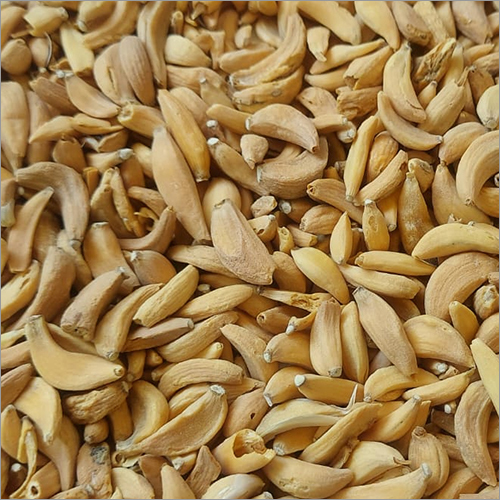
Why Is Industrial Garlic Drying Important?
Fresh garlic contains substantial moisture and is highly perishable compared with dehydrated garlic products.
Industrial dehydration can convert prepared garlic into more stable ingredients suitable for:
- Long-term storage
- Transportation
- Grinding
- Flaking
- Granulation
- Powder production
- Seasoning manufacture
- Food manufacturing
- Export
- Ingredient blending
Controlled drying can also reduce dependence on uncontrolled environmental drying conditions.
For commercial processors, the key objective is to achieve uniform moisture reduction without unnecessarily affecting the desired product characteristics.
India’s Garlic Processing and Dehydration Opportunity
India has a substantial spice-processing ecosystem, and garlic forms part of the country’s spice export industry.
Spices Board data for 2024–25 records garlic exports of approximately 35,562 tonnes, valued at about US$53.39 million for April–February 2024–25. The annual report for 2024–25 records garlic export value at approximately ₹633.20 crore.
More importantly for industrial dehydration, the Spices Board has established dedicated garlic-processing infrastructure.
The Spice Park at Chhindwara, Madhya Pradesh, includes a garlic dehydration plant with a stated capacity of 6 tonnes/day. Its process includes garlic bulb breaking and skin removal, grading, flaking, continuous belt drying, moisture equalization, sorting, magnetic separation and packing. The continuous belt dryer is described as a five-belt hot-air dryer with different temperature zones and a stated capacity of 3 tonnes/day.
This provides a useful real-world example of how industrial garlic dehydration can be integrated into a complete processing line.
Garlic Processing Regions and India GEO Opportunities
India’s garlic-processing opportunity can be targeted geographically through both industrial and agricultural search intent.
Madhya Pradesh
Madhya Pradesh is particularly important for garlic processing and dehydration. Chhindwara is an especially relevant location because the Spices Board’s Spice Park includes dedicated garlic dehydration infrastructure.
Potential searches:
- Garlic dryer machine in Madhya Pradesh
- Garlic dehydration plant in Chhindwara
- Garlic processing machine Madhya Pradesh
- Industrial garlic dryer MP
Rajasthan
Rajasthan is another important agricultural and spice-processing market.
Gujarat
Gujarat provides opportunities for agricultural processing, food ingredients and spice-related manufacturing.
Maharashtra
Maharashtra is relevant to garlic cultivation, food processing and agricultural dehydration.
Uttar Pradesh
Large agricultural and food-processing markets create opportunities for garlic dehydration equipment.
Punjab and Haryana
These regions can be targeted for agricultural processing and food-ingredient applications.
Karnataka
Karnataka provides opportunities for food processing, spice processing and dehydrated agricultural products.
Tamil Nadu
Food-processing and seasoning manufacturers can form an important buyer segment.
West Bengal and Eastern India
Eastern India provides opportunities for garlic processing, food ingredients and industrial dehydration.
A broader India GEO structure can therefore target:
Madhya Pradesh → Rajasthan → Gujarat → Maharashtra → Uttar Pradesh → Punjab → Haryana → Karnataka → Tamil Nadu → West Bengal → India
What Is an Industrial Garlic Dryer?
An industrial garlic dryer is a controlled dehydration system designed to remove moisture from prepared garlic while achieving a specified final moisture and product quality.
Garlic may enter the dryer as:
- Whole cloves
- Peeled cloves
- Garlic slices
- Garlic flakes
- Garlic pieces
- Garlic granules
- Other suitable processed forms
The dryer should be selected according to the physical characteristics of the feed.
For example, garlic slices and flakes are suitable candidates for continuous conveying and hot-air drying systems, while different technologies may be appropriate for other particle forms.
Garlic Drying Process: From Fresh Bulb to Dehydrated Garlic
A typical industrial garlic dehydration process can include:
Fresh Garlic Bulbs
↓
Receiving
↓
Cleaning
↓
Bulb Breaking
↓
Clove Separation
↓
Skin Removal
↓
Grading
↓
Slicing / Flaking
↓
Industrial Drying
↓
Cooling
↓
Moisture Equalization
↓
Sorting
↓
Grinding / Granulation
↓
Sieving
↓
Packaging
The exact process depends on whether the final product is:
- Dried garlic slices
- Garlic flakes
- Garlic granules
- Garlic powder
- Garlic seasoning
- Another value-added garlic ingredient
The Chhindwara Spice Park example demonstrates an industrial sequence incorporating clove separation, grading, flaking, continuous belt drying, moisture equalization, sorting and packing.
Major Problems in Conventional Garlic Drying
Garlic processors may encounter several challenges when drying is not properly controlled.
Uneven Moisture
Different slice thicknesses and loading densities can cause uneven drying.
Long Drying Time
High initial moisture and poor airflow can increase drying time.
Excessive Thermal Exposure
Improper thermal conditions can affect product characteristics.
Aroma Loss
Garlic contains characteristic volatile compounds, making process conditions important when aroma retention is part of the product specification.
Colour Changes
Poorly controlled drying can affect appearance.
Product Shrinkage
Moisture removal naturally changes product structure, but process conditions influence the extent and uniformity.
Weather Dependence
Open-air drying is dependent on environmental conditions.
Contamination Risk
Uncontrolled drying exposes products to dust, insects and other environmental contaminants.
Inconsistent Final Moisture
Uneven moisture can cause difficulties during storage, grinding and packaging.
Industrial drying addresses these issues through controlled airflow, heating, residence time and product handling.
Garlic Dryer Machine: Which Dryer Is Suitable?
There is no single dryer that is suitable for every garlic-processing application.
The selection depends on:
Product Form → Initial Moisture → Final Moisture → Capacity → Slice Thickness → Product Quality → Residence Time → Heat Source
For prepared garlic slices and flakes, continuous belt/band drying is an important technology to evaluate.
Other options can include:
- Tray Dryer
- Cabinet Dryer
- Continuous Belt Dryer
- Band Dryer
- Mesh Belt Dryer
- Hot-Air Dryer
- Heat Pump Dryer
- Customized Multi-Zone Drying System
For suitable free-flowing particulate materials, other drying technologies may also be considered.
Dedicated Garlic Dryer Machine Page
Industrial Garlic Dryer Machine | Continuous Garlic Dehydration System
GTI Dryers designs customized industrial drying systems for garlic and other food and spice applications.
For garlic slices and flakes, a continuous belt or band drying system can provide controlled product movement through multiple drying zones.
The system can be engineered around:
- Garlic feed form
- Slice thickness
- Initial moisture
- Final moisture
- Production capacity
- Drying time
- Airflow
- Heating source
- Product loading
- Cooling requirements
- Plant layout
GTI’s existing food-drying portfolio includes garlic among its vegetable-dehydration applications, while its band-dryer technology specifically lists onion, garlic, ginger, turmeric and chilli among food-processing applications.
Continuous Belt Dryer for Garlic
A continuous belt dryer is particularly relevant to large-scale garlic dehydration.
The prepared garlic is distributed over a moving belt and transported through controlled drying zones.
A typical concept is:
Garlic Feeding
↓
Product Distribution
↓
Pre-Drying
↓
Main Drying
↓
Final Drying
↓
Moisture Equalization
↓
Cooling
↓
Dried Garlic
The Chhindwara Spice Park provides a documented example of a five-belt continuous hot-air dryer used in garlic dehydration, with different temperature zones.
This makes continuous belt drying particularly relevant when the objective is industrial-scale garlic dehydration rather than small-batch drying.
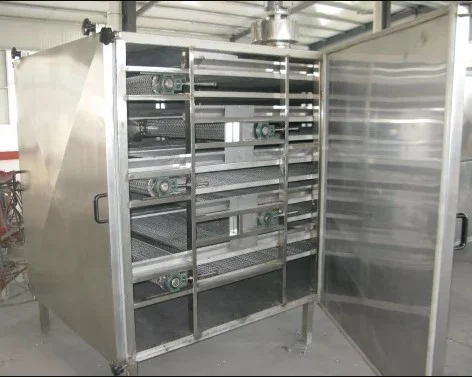
Band Dryer for Garlic
A band dryer is a continuous conveyor-based drying system that can be configured for garlic slices, flakes and other prepared food products.
The material moves through controlled drying zones while heated air is circulated across or through the product.
Potential advantages include:
- Continuous processing
- Controlled residence time
- Multi-zone drying
- Adjustable belt speed
- Controlled airflow
- Scalable production
- Automated feeding and discharge
- Suitable integration with upstream and downstream equipment
GTI’s band-dryer technology specifically identifies garlic among its food-processing applications.
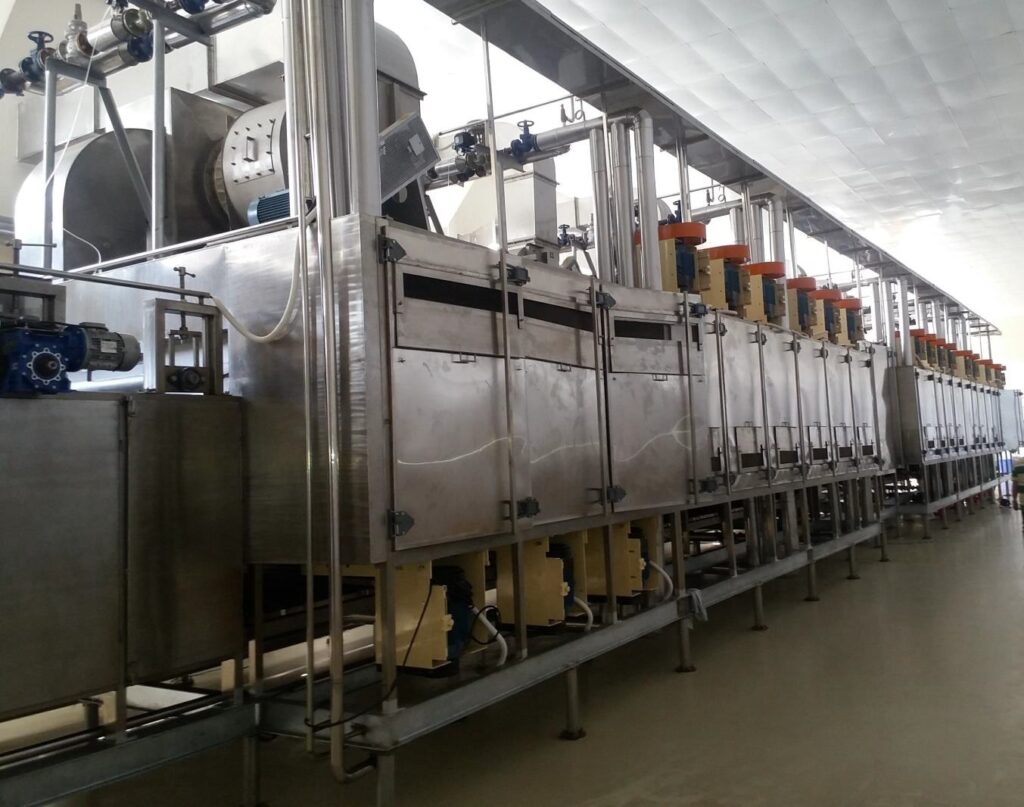
Garlic Flakes Dryer Machine
Garlic flakes are an important value-added product for the food and seasoning industry.
A typical process can be:
Fresh Garlic
→ Cleaning
→ Peeling
→ Slicing / Flaking
→ Drying
→ Cooling
→ Grading
→ Packaging
or:
Fresh Garlic
→ Cleaning
→ Peeling
→ Slicing
→ Continuous Drying
→ Grinding
→ Garlic Powder
The dryer must provide suitable product distribution and airflow because thin garlic slices can dry differently from thicker pieces.
Garlic Slice Dryer Machine
Garlic slice drying is a common industrial dehydration application.
The drying system needs to consider:
- Slice thickness
- Loading density
- Initial moisture
- Air velocity
- Temperature
- Residence time
- Final moisture
- Product temperature
A continuous belt/band system can be engineered with multiple zones to gradually reduce moisture.
The objective is not simply to use a high temperature.
The objective is:
Controlled Moisture Removal + Uniform Drying + Product Quality
Garlic Dehydration Plant
An industrial garlic dehydration plant may integrate several machines rather than using a dryer independently.
A complete processing line can include:
Raw Garlic Handling
Receiving and cleaning.
Garlic Bulb Breaking
Separating bulbs into cloves.
Skin Removal
Removing loose skin from cloves.
Grading
Separating cloves according to size.
Slicing / Flaking
Preparing the product for dehydration.
Drying
Controlled hot-air dehydration.
Moisture Equalization
Allowing moisture to become more uniform after drying.
Sorting
Removing impurities and unsuitable pieces.
Magnetic Separation
Removing metallic contaminants where applicable.
Grinding
Producing garlic powder.
Packaging
Packing the finished dehydrated product.
The Spices Board’s Chhindwara facility provides an example of this integrated approach.
Garlic Dryer for Powder Production
Garlic powder production generally involves drying before final grinding.
A typical process is:
Fresh Garlic → Cleaning → Peeling → Slicing → Drying → Cooling → Grinding → Sieving → Packaging
The dryer therefore becomes an important upstream component of the powder-production line.
The drying system should produce a stable feed suitable for grinding while maintaining the required final moisture and product specification.
A flash dryer is generally designed for powders, slurries, filter cakes and fibrous materials and should not automatically be treated as the default dryer for whole garlic or garlic slices.
Heat Pump Dryer for Garlic
A heat pump dryer can be considered when controlled lower-temperature drying and enclosed processing are important.
GTI’s heat pump drying systems are designed for food applications including onion and garlic and can provide controlled temperature, airflow and humidity management.
Potential applications include:
- Garlic slices
- Garlic flakes
- Other sensitive agricultural products
- Premium dehydration applications
Heat-pump suitability depends on:
- Required temperature
- Product sensitivity
- Throughput
- Ambient conditions
- Final moisture
- Operating hours
- Energy economics
Therefore, heat-pump drying should be evaluated on a project-specific basis.
Garlic Drying Temperature, Moisture and Residence Time
A common mistake in dryer selection is searching for one universal “garlic drying temperature.”
There is no single temperature that applies to every garlic product.
Drying conditions depend on:
- Garlic variety
- Clove size
- Slice thickness
- Initial moisture
- Final moisture
- Loading density
- Air velocity
- Relative humidity
- Dryer design
- Desired colour
- Aroma requirements
- Final application
Therefore, temperature, airflow and residence time should be established through product-specific drying calculations and, where appropriate, trials.
How to Calculate Garlic Dryer Capacity
Garlic dryer capacity should be calculated from the actual moisture load rather than only the fresh-feed weight.
Important inputs include:
Fresh Feed Rate
Initial Moisture
Required Final Moisture
Operating Hours
=
Water Evaporation Requirement
The resulting evaporation load is then used to determine:
- Thermal duty
- Air requirement
- Drying area
- Residence time
- Belt speed
- Heating-system requirement
- Dryer configuration
For a commercial project, GTI can evaluate these parameters before finalizing the dryer design.
Energy-Efficient Garlic Drying System
Energy consumption is an important consideration in continuous food dehydration.
A properly engineered system can evaluate:
- Air recirculation
- Heat recovery
- Insulation
- Multi-zone drying
- Variable-speed drives
- Controlled exhaust
- Airflow optimization
- Heating-source selection
- Product loading
- Residence-time optimization
However, energy consumption should be calculated for the actual project.
It depends on:
- Initial moisture
- Final moisture
- Feed rate
- Water evaporation
- Ambient conditions
- Heating source
- Product temperature
- Dryer efficiency
- Operating hours
GTI’s broader industrial drying approach includes heat recovery, optimized airflow, insulation and energy-oriented process design.
Hygienic Garlic Drying Equipment
Garlic dehydration equipment intended for food production should be designed with hygiene and cleanability in mind.
Depending on the project, considerations may include:
- Stainless-steel product-contact surfaces
- Accessible cleaning areas
- Suitable surface finishes
- Controlled air circulation
- Product isolation
- Appropriate filtration
- Dust management
- Hygienic feeding
- Hygienic discharge
- Inspection access
For export-oriented plants, the complete process should also be designed around the applicable food-safety and customer requirements.
Automation for Industrial Garlic Drying
Modern garlic dehydration systems can incorporate automation to improve repeatability.
Possible controls include:
- PLC
- HMI
- Temperature sensors
- Humidity monitoring
- Airflow control
- VFD-based conveyor control
- Fan control
- Heating control
- Alarm systems
- Data monitoring
Automation can help operators maintain consistent drying conditions while reducing manual intervention.
Garlic Dryer for Large-Scale Processing
For large-scale garlic processing, continuous drying becomes increasingly relevant.
A continuous system can integrate with:
Cleaning → Peeling → Grading → Slicing → Drying → Cooling → Equalization → Sorting → Packaging
This approach allows the dryer to operate as part of an integrated production line rather than as an isolated machine.
The Spices Board’s Chhindwara garlic dehydration plant demonstrates this integrated industrial approach, including a continuous belt dryer, bin dryer for moisture equalization and downstream sorting and packing.
Batch vs Continuous Garlic Dryer
| Factor | Batch Dryer | Continuous Dryer |
| Production scale | Small to medium | Medium to large |
| Flexibility | High | High for standardized products |
| Automation | Moderate to high | High |
| Throughput | Limited by batch cycle | Continuous |
| Product changeover | Easier | Requires planning |
| Drying zones | Usually limited | Multiple zones possible |
| Integration | Suitable for flexible plants | Ideal for integrated processing lines |
| Garlic slices/flakes | Suitable | Highly suitable for large-scale applications |
Neither system is universally better.
The correct selection depends on production capacity, product range, operating schedule and investment objectives.
Garlic Drying for Value-Added Products
Drying can be the foundation for several value-added garlic products.
Dried Garlic Slices
Used in food and ingredient applications.
Garlic Flakes
Used in seasoning and food manufacturing.
Garlic Granules
Used where controlled particle size is required.
Garlic Powder
Used extensively in seasoning, sauces, snacks and processed-food formulations.
Garlic Seasoning
Can be blended with salt, chilli, herbs and other ingredients.
This makes industrial garlic dehydration relevant to:
- Spice manufacturers
- Seasoning companies
- Food processors
- Snack manufacturers
- Sauce manufacturers
- Ingredient companies
- Exporters
- Private-label food brands
Garlic Dryer Applications Across Industries
Industrial garlic drying systems can support:
Spice Processing
Garlic flakes, slices, granules and powder.
Seasoning Manufacturing
Garlic-based seasoning blends.
Snack Manufacturing
Flavouring and seasoning ingredients.
Sauce and Condiment Manufacturing
Dried garlic ingredients for formulations.
Ready-to-Eat Food
Ingredient preparation for processed foods.
Food Ingredient Manufacturing
Standardized dehydrated garlic.
Export Processing
Dehydration before grading, packing and international shipment.
Nutraceutical and Specialty Applications
Where appropriately processed garlic ingredients are required.
Global Market for Industrial Garlic Drying Systems
Garlic dehydration is not limited to India.
Potential markets include:
China
Large-scale agricultural and food-processing industries.
Bangladesh
Strong food-processing and spice-processing demand.
Indonesia
Large food and seasoning sector.
Vietnam
Agricultural processing and food ingredients.
Sri Lanka
Spice processing and value-added food products.
Middle East
Demand for imported dehydrated spices and food ingredients.
Africa
Growing food-processing and agricultural value-addition opportunities.
Europe
Food ingredients, seasoning and processed-food industries.
North America
Large seasoning and food-ingredient markets.
- Garlic Dryer Machine Manufacturer in Bangladesh
- Industrial Garlic Dryer in Indonesia
- Garlic Dehydration Machine in Africa
- Garlic Dryer Manufacturer in Sri Lanka
- Garlic Drying System in UAE
- Industrial Garlic Dehydrator in Europe
Garlic Dryer for India
The main pillar should target the commercial keyword:
Garlic Dryer Machine Manufacturer India
Supporting keywords should be distributed naturally across dedicated sections.
Product Keywords
- Industrial Garlic Dryer
- Garlic Drying Machine
- Garlic Dehydration Machine
- Garlic Dehydrator
- Garlic Dryer Manufacturer
- Garlic Processing Machine
Product-Form Keywords
- Garlic Slice Dryer
- Garlic Flakes Dryer
- Garlic Granules Dryer
- Garlic Powder Processing
- Dehydrated Garlic Dryer
Technology Keywords
- Garlic Belt Dryer
- Garlic Band Dryer
- Continuous Garlic Dryer
- Hot Air Garlic Dryer
- Garlic Tray Dryer
- Garlic Heat Pump Dryer
Plant-Level Keywords
- Garlic Dehydration Plant
- Garlic Processing Plant
- Industrial Garlic Dehydration System
- Garlic Drying Plant Manufacturer
India Keywords
- Garlic Dryer Machine in Madhya Pradesh
- Garlic Dryer Machine in Chhindwara
- Garlic Dryer Machine in Rajasthan
- Garlic Dryer Machine in Gujarat
- Garlic Dryer Machine in Maharashtra
- Garlic Dryer Machine in Uttar Pradesh
- Garlic Dryer Machine in Karnataka
- Garlic Dryer Machine in Tamil Nadu
- Garlic Dryer Machine in West Bengal
Indian Language SEO for Garlic Dryer
India’s multilingual search behaviour can be addressed through separate regional landing pages.
Useful Hindi terminology includes:
- लहसुन सुखाने की मशीन — Garlic drying machine
- लहसुन ड्रायर मशीन — Garlic dryer machine
- लहसुन डिहाइड्रेशन मशीन — Garlic dehydration machine
- लहसुन फ्लेक्स ड्रायर — Garlic flakes dryer
- औद्योगिक लहसुन ड्रायर — Industrial garlic dryer
- लहसुन प्रसंस्करण मशीन — Garlic processing machine
These terms can support Hindi-language or state-specific pages without overloading the main English pillar page.
Common Garlic Drying Problems and Solutions
| Problem | Possible Cause | Engineering Approach |
| Uneven moisture | Uneven slice thickness/loading | Improve product distribution |
| Long drying time | High moisture load | Recalculate evaporation duty |
| Over-drying | Excessive residence time | Adjust belt speed/profile |
| Colour change | Unsuitable thermal exposure | Optimize drying conditions |
| Aroma loss | Excessive thermal exposure | Evaluate lower-temperature profile |
| Uneven final product | Poor airflow distribution | Improve air circulation |
| High energy consumption | Heat loss/excess exhaust | Evaluate insulation and heat recovery |
| Low throughput | Insufficient drying area | Recalculate dryer sizing |
| Product sticking | Feed characteristics | Optimize preparation/loading |
| Batch variation | Inconsistent process control | Automate temperature/airflow/residence time |
The correct solution depends on actual product and operating conditions.
How Much Does a Garlic Dryer Machine Cost?
There is no meaningful universal price for an industrial garlic dryer.
The investment depends on:
- Dryer technology
- Production capacity
- Water evaporation requirement
- Initial moisture
- Final moisture
- Slice thickness
- Drying area
- Material of construction
- Heating source
- Automation
- Number of zones
- Feeding system
- Cooling system
- Exhaust system
- Dust-control requirements
- Installation
- Plant layout
A project-specific technical quotation is therefore more useful than a generic machine price.
Why Choose GTI Dryers for Garlic Drying Systems?
GTI Dryers approaches garlic dehydration as a process-engineering project.
The basic design logic is:
Product → Feed Form → Initial Moisture → Final Moisture → Capacity → Drying Profile → Residence Time → Heat Source → Plant Layout
GTI’s food-drying portfolio covers garlic dehydration, and its band-dryer technology lists garlic among its food-processing applications.
Depending on the application, GTI can evaluate:
- Band Dryer
- Belt Dryer
- Mesh Belt Dryer
- Tray-Type Belt Dryer
- Tray Dryer
- Heat Pump Dryer
- Customized Continuous Drying Systems
- Other application-specific technologies
GTI’s broader industrial dryer range also includes rotary, flash, spray and vibratory fluidised-bed technologies for applications where their process characteristics are appropriate.
Garlic Dryer Project Enquiry Checklist
For a preliminary engineering evaluation, provide:
Product Details
- Garlic variety
- Whole bulb/clove/slice/flakes/granules
- Fresh or partially processed
- Slice thickness
- Desired final product
Moisture Details
- Initial moisture %
- Required final moisture %
Capacity
- kg/hour
- tonnes/day
- Operating hours/day
- Batch or continuous
Product Quality
- Colour requirement
- Aroma requirement
- Final product application
- Storage requirement
Energy
- Steam
- Gas
- LPG
- Electricity
- Biomass
- Thermal oil
- Heat pump
- Other available heat source
Plant
- Location
- Available floor space
- Existing equipment
- Feeding system
- Downstream equipment
Providing these details allows the dryer manufacturer to calculate the evaporation load and evaluate an appropriate drying configuration.
Frequently Asked Questions About Garlic Drying Systems
Which dryer is commonly used for industrial garlic drying?
For sliced and flaked garlic, continuous belt or band drying systems are important industrial options. The Spices Board’s Chhindwara garlic dehydration facility uses a continuous five-belt hot-air dryer as part of its garlic processing line.
Can a belt dryer dry garlic?
Yes. A properly designed continuous belt dryer can be used for garlic slices, flakes and other suitable prepared garlic products.
What is a garlic dehydration plant?
A garlic dehydration plant is an integrated processing facility that can include cleaning, bulb breaking, peeling, grading, slicing/flaking, drying, moisture equalization, sorting and packaging.
Can garlic flakes be dried in a band dryer?
Yes. A band dryer can be engineered for suitable garlic flakes and slices, with airflow, loading and residence time designed around the product.
Can garlic be dried using a heat pump?
Yes. Heat pump drying can be evaluated for garlic when controlled lower-temperature drying and enclosed processing are desired. Suitability depends on capacity, product properties and energy economics.
What is the best temperature for garlic drying?
There is no single universal temperature. The drying profile depends on garlic variety, slice thickness, moisture content, airflow, residence time and product-quality requirements.
How is garlic dryer capacity calculated?
Capacity is calculated from feed rate, initial moisture, target final moisture, operating hours and water evaporation requirements, followed by thermal and airflow calculations.
Can one dryer process garlic, onion and chilli?
A multi-product drying system may be designed for several suitable agricultural products, but each product can require different drying profiles and operating conditions.
Can GTI manufacture a customized garlic dryer?
Yes. GTI Dryers designs customized industrial drying systems based on product characteristics, capacity, moisture requirements, energy source and plant conditions.
Build a Customized Garlic Drying System With GTI Dryers
Industrial garlic dehydration is increasingly connected with value addition, controlled moisture, hygienic processing, consistent quality and export-oriented food manufacturing.
The objective is not simply to dry garlic.
The objective is to develop a system that provides the required:
Production Capacity + Moisture Reduction + Product Quality + Energy Performance + Hygiene + Process Consistency
GTI Dryers can evaluate the appropriate drying technology for garlic slices, flakes and other suitable garlic products based on actual process requirements.
Whether you are:
- Starting a garlic dehydration plant
- Expanding an existing facility
- Replacing open-air drying
- Automating a batch process
- Manufacturing garlic flakes
- Producing garlic powder
- Developing an export-oriented garlic-processing line
the first step is to establish the product and process parameters.
Send Your Garlic Drying Requirement to GTI Dryers
Provide:
Garlic Form + Feed Rate + Initial Moisture + Final Moisture + Slice Thickness + Heat Source + Operating Hours + Plant Location
GTI Dryers can then evaluate the appropriate industrial garlic drying configuration.
GTI Dryers — Engineered Drying Solutions from India for Global Industries.