
Fish meal and animal by-product meals (meat-and-bone meal, poultry meal, feather meal, blood meal, etc.) are produced in rendering plants by cooking, pressing and drying protein-rich residues. After mechanical dewatering the press cake or solids still typically contain 40–60 % moisture. This must be reduced to a stable residual moisture (commonly 8–12 % depending on the meal type) so the product can be milled, stored and sold as a high-protein feed ingredient.
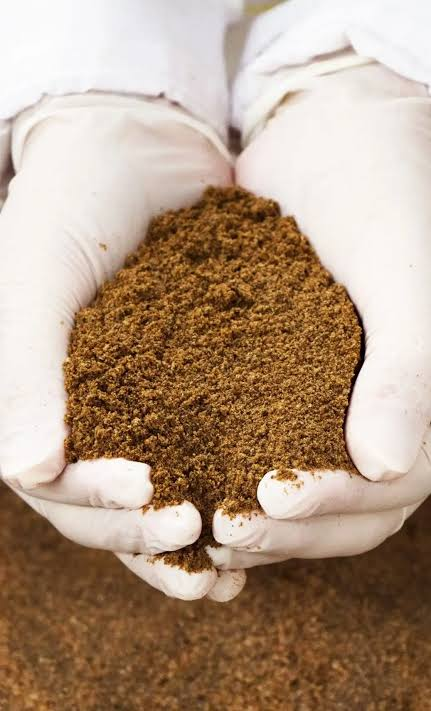
Drying is the most energy-intensive and quality-critical step in the rendering line. Excess temperature damages protein digestibility; insufficient drying leaves the meal vulnerable to microbial growth and rancidity; poor odour control creates environmental and community problems. This page focuses on the engineering decisions for continuous rotary and fluid-bed dryers used in modern fish-meal and animal-by-product plants.
The Real Production Problem
Rendering plants face a consistent set of drying challenges:
- High residual moisture after pressing that creates a large evaporation load
- Sensitivity of protein and fat to high product temperatures (oxidation, reduced digestibility)
- Strong odours that must be captured and treated
- Risk of spontaneous heating or fire with high-fat materials if residual moisture and temperature are poorly controlled
- Need for continuous, reliable operation matched to upstream cooker and press capacity
- Dust and vapour handling that meets environmental regulations
Selecting a dryer only by nominal capacity without calculating the actual evaporation duty and product-temperature limits frequently leads to quality or energy problems.
Typical Process Position of the Dryer
Raw material (fish offal, animal by-products) → Cooking → Pressing / centrifugation → Press cake / solids → Thermal drying → Cooling → Milling / screening → Storage / packing
Stickwater is often concentrated separately and may be returned to the dryer or handled in a dedicated system. The dryer must accept the moist solids continuously and deliver a free-flowing meal ready for milling.
Primary Dryer Technologies: Rotary and Fluid Bed
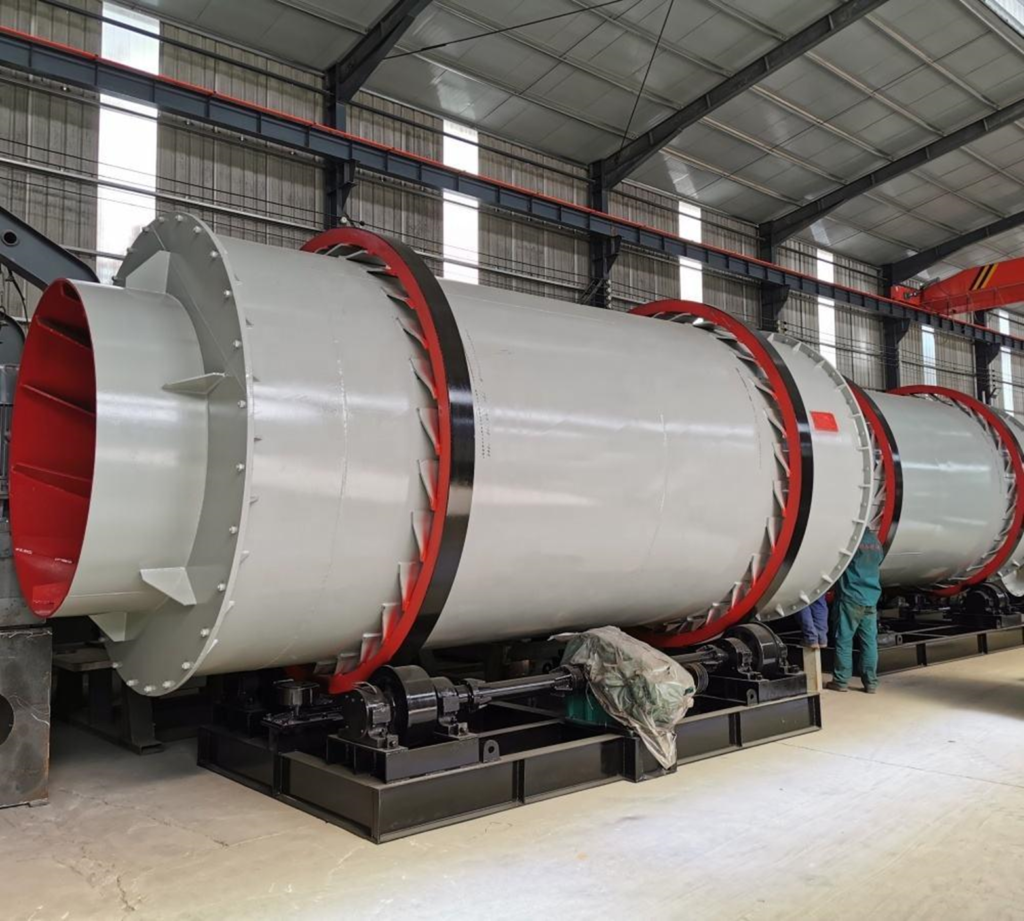
1. Rotary Dryer (Direct or Indirect)
A rotating cylindrical drum fitted with internal flights cascades the material through hot gas (direct) or over heated surfaces (indirect).
Strengths for fish meal and animal by-products
- High continuous throughput matched to large rendering lines
- Robust mechanical design for 24×7 operation
- Flexibility in co-current or counter-current gas flow
- Proven on a wide range of press-cake materials
Design considerations
- Product temperature must be controlled to protect protein quality
- Direct-fired systems require careful management of gas temperature and residence time
- Indirect or steam-heated variants reduce the risk of scorching and simplify odour handling
- Dust collection and vapour treatment are essential
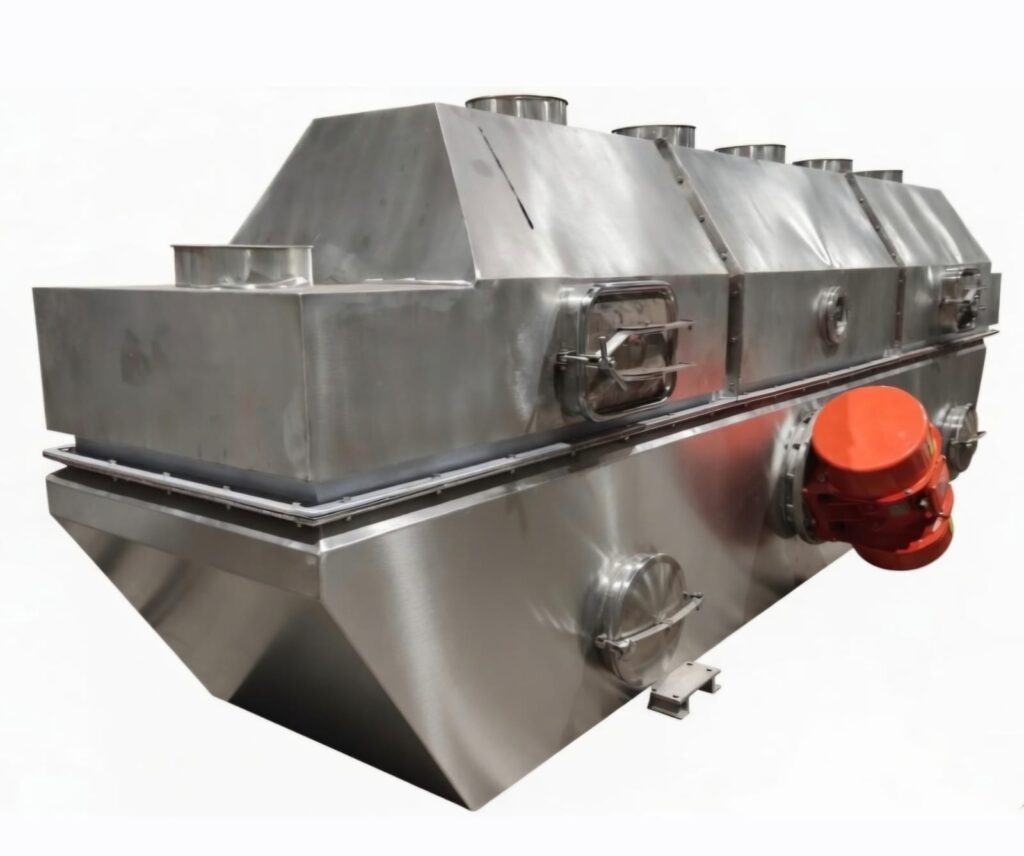
2. Fluid-Bed Dryer
Hot air passes upward through a bed of particles, fluidising them and providing intimate gas–solid contact. Vibration or mechanical assistance may be added for sticky or irregular materials.
Strengths
- Excellent moisture uniformity
- Relatively gentle particle handling
- Possibility of integrating a cooling zone
- Good for free-flowing or conditioned meals after partial drying
Limitations
- May require pre-conditioning if the feed is very sticky or high in fat
- Dust containment and explosion protection must be carefully engineered
Technology selection starting point
| Requirement | Rotary dryer | Fluid-bed dryer |
|---|---|---|
| High continuous capacity | Strong | Strong |
| Sticky or high-fat press cake | Strong (with proper flighting) | May need conditioning |
| Protein-quality preservation | Depends on temperature control | Good with moderate temperatures |
| Integrated cooling | Separate cooler usual | Often possible in same unit |
| Odour / vapour volume | Higher with direct systems | Manageable with proper design |
Indirect steam disc or coil dryers are also widely used in the industry; rotary and fluid-bed systems are evaluated when continuous high throughput, specific plant constraints or existing utilities favour them.
Critical Engineering Considerations
| Factor | Why it matters | Design implication |
|---|---|---|
| Product temperature | High temperature damages protein and promotes fat oxidation | Control inlet gas temperature and residence time; monitor actual product temperature |
| Residual moisture | Affects storage stability and microbial risk | Reliable final-moisture control (typically 8–12 % for many meals) |
| Fat content | High-fat materials increase fire risk and stickiness | Lower peak temperatures; good mixing; possible inerting or careful design |
| Odour | Strong organic vapours | Closed vapour collection, condensation or thermal/chemical treatment |
| Dust & fire risk | Fine, organic, potentially combustible meal | Robust dust collection, spark detection, explosion protection where required |
Common Problems and Engineering Responses
| Problem | Typical causes | Practical response |
|---|---|---|
| Residual moisture above target | Insufficient evaporation duty or residence time | Recalculate water load; verify gas temperature and airflow |
| Protein damage / reduced digestibility | Excessive product temperature | Lower gas temperature; switch to co-current or indirect heating; shorten residence time if possible |
| Rancidity / oxidation | High temperature + oxygen exposure of fats | Controlled temperature profile; rapid cooling after drying |
| Odour complaints | Inadequate vapour capture or treatment | Improve sealing, condensation and downstream odour-abatement system |
| Material buildup / sticking | High-fat intermediate phase | Flight design optimisation; possible recycle of dry product |
| Fire or spontaneous heating | Residual moisture + high fat + elevated temperature | Strict residual-moisture and product-temperature control; cooling; monitoring |
Key Data Required for Technical Assessment
- Raw-material type (fish species / animal by-product category)
- Press-cake or solids moisture after mechanical dewatering
- Fat / oil content
- Target residual moisture of finished meal
- Required throughput (raw material or dry meal basis)
- Maximum allowable product temperature
- Available heat source (steam, hot air, thermal oil, waste heat)
- Odour-treatment expectations and emission limits
- Space and layout constraints
Illustrative mass-balance example (not a design guarantee):
A press cake at 50 % moisture dried to 10 % residual moisture requires evaporation of approximately 444 kg of water per tonne of wet cake. Actual dryer size and energy demand depend on heat-transfer rate, residence time and system efficiency.
Geographic Considerations & Market Evaluation
- India — Growing fish-processing and rendering capacity along coastal and livestock regions; focus on robust continuous systems matched to local fuels, steam availability and CPCB odour/emission norms.
- Southeast Asia & Latin America — Large fish-meal industries; high-throughput rotary and specialised dryers are common.
- Europe & other regulated markets — Emphasis on protein quality, energy efficiency, closed vapour systems and documented process control.
GTI evaluates projects from the actual press-cake characteristics, protein-quality targets and site constraints rather than applying a single standard machine.
How GTI Dryers Approaches Fish Meal and Animal By-Product Drying
GTI Dryers designs industrial rotary and fluid-bed drying systems for bulk organic solids, including applications relevant to rendering and protein-meal production. The engineering approach is:
- Calculate the true evaporation load from press-cake moisture and target residual moisture
- Select rotary or fluid-bed configuration according to material behaviour and capacity
- Control product temperature to protect protein quality
- Integrate vapour collection, dust recovery, cooling and odour-treatment interfaces
- Support process-data review and, where appropriate, representative-feed evaluation
The dryer is treated as part of the complete rendering line, not an isolated machine.
Frequently Asked Questions
What residual moisture is typically required for fish meal or animal meal?
Many commercial meals target 8–12 % residual moisture, depending on the product specification and storage conditions. The exact target should be confirmed for each grade.
Why is product temperature so important?
Excessive temperature reduces protein digestibility and accelerates fat oxidation. Controlled drying temperatures help preserve nutritional value.
Is a rotary dryer suitable for high-fat materials?
Yes, provided the temperature profile, flight design and residual-moisture control are correctly engineered. Indirect or carefully controlled direct systems are often preferred.
Can fluid-bed dryers handle sticky press cake?
Very sticky or high-fat feeds may require pre-conditioning or partial drying before fluidisation. Free-flowing or conditioned meals are more suitable.
What information does GTI need for a quotation?
Raw-material type, press-cake moisture, fat content, target residual moisture, required capacity and available heat source.
Contact the GTI Technical Team:
Website: gtidryers.com
Email: mktg@gtidryers.com
Phone / WhatsApp: +91 9330077417