
Pharmaceutical Excipients Are More Than Fillers — They Are Engineered Powder Systems
In a modern tablet manufacturing plant, the API is only one part of the formulation.
The excipient can determine how effectively that formulation behaves during:
Blending → Feeding → Compression → Tablet Formation → Disintegration → Dissolution
For direct-compression manufacturing in particular, the powder needs suitable flow and compaction characteristics. Direct compression eliminates wet or dry granulation steps, so the properties of the API–excipient blend become especially important.
This is why pharmaceutical manufacturers use specially engineered excipient grades such as:
- Spray-dried lactose
- Microcrystalline cellulose (MCC)
- Starch
- Mannitol
- Sorbitol
- Calcium phosphate and other calcium salts
- Co-processed excipients
- Other functional fillers and binders
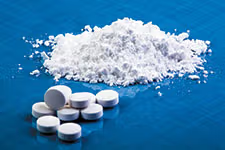
And this is where industrial drying technology becomes part of powder engineering.
GTI Dryers designs pharmaceutical drying systems including spray dryers, fluidized-bed dryers, vacuum dryers, tray dryers and other customized systems for pharmaceutical powders, granules and related materials.
The Real Question: What Should the Excipient Do After Drying?
For an excipient manufacturer, the target is not simply:
“Reduce moisture.”
The more useful question is:
“What powder properties must the excipient have after drying?”
Depending on the product, the process may need to control:
Moisture
↓
Particle size
↓
Particle morphology
↓
Bulk density
↓
Flowability
↓
Compressibility
↓
Compactability
↓
Downstream tablet performance
This makes excipient drying different from conventional bulk-material drying.
A change in drying conditions can influence particle structure and therefore the way the excipient behaves during subsequent formulation and compression.
Where Are These Drying Systems Used?
Pharmaceutical excipient drying systems are mainly relevant to manufacturers producing materials for:
Direct-Compression Tablets
Excipients are engineered to provide suitable flow and compaction properties for direct compression.
Tablet Granulation
Certain excipients are processed or dried as part of granulation and formulation operations.
Oral Solid Dosage Manufacturing
Lactose, MCC, starches, polyols and mineral-based excipients are widely used in tablets and other oral dosage forms.
Orally Disintegrating Tablets
Mannitol and specially engineered excipient systems may be processed to achieve suitable powder and sensory characteristics.
Nutraceutical Formulations
Similar powder-engineering requirements occur in nutritional and nutraceutical products.
Pharmaceutical Ingredient Manufacturing
Excipient producers themselves require industrial drying systems to manufacture consistent commercial grades.
The Excipient Dryer Selection Map
Instead of presenting every excipient as requiring the same dryer, GTI recommends starting with the physical form of the feed.
| Feed / Product Situation | Dryer Technology to Evaluate |
| Lactose solution/slurry | Spray Dryer |
| Spray-dried lactose production | Spray Dryer |
| MCC slurry | Spray Dryer |
| Free-flowing MCC granules | Fluid Bed / Specialized Dryer |
| Starch granules | Fluid Bed / Other suitable dryer |
| Mannitol solution | Spray Dryer |
| Mannitol crystals/granules | Fluid Bed / Vacuum depending on process |
| Sorbitol solution | Spray Dryer |
| Calcium phosphate particulate material | Fluid Bed / Other suitable dryer |
| Pharmaceutical excipient granules | Fluid Bed Dryer |
| Heat-sensitive excipient | Vacuum / Controlled-temperature system |
| Co-processed liquid/slurry feed | Spray Dryer |
| Free-flowing particulate excipient | Fluid Bed Dryer |
The final technology should always be established from feed properties, required particle characteristics, moisture specification, throughput and process testing.
1. Spray-Dried Lactose: A High-Value Excipient Drying Application
Spray-dried lactose deserves special attention because it is one of the classic examples of how drying can be used to engineer an excipient for direct compression.
Research on spray-dried excipients describes spray-dried lactose as an agglomerated material containing crystalline lactose together with an amorphous fraction, with the resulting structure contributing to flowability and compressibility.
This means the spray dryer is not simply producing a dry powder.
It is helping create a particular particle architecture.
Typical process concept:
Lactose Feed Preparation
↓
Concentration / Slurry Preparation
↓
Atomization
↓
Spray Drying
↓
Particle Formation
↓
Powder Separation
↓
Optional Fluid-Bed Drying/Cooling
↓
Screening / Classification
↓
Packaging
This is precisely why spray-dryer design becomes important for excipient manufacturers.
Why Spray-Dried Lactose Is Important for Direct Compression
Direct compression requires powders that can:
- Flow consistently
- Mix uniformly
- Resist excessive segregation
- Feed reliably into the tablet press
- Compact under pressure
- Produce acceptable tablet properties
Spray-dried lactose was developed specifically to improve the suitability of lactose for direct compression. Literature reports enhanced flowability and compressibility associated with the structure of spray-dried lactose agglomerates.
Therefore, the spray-drying process itself becomes part of excipient performance engineering.
For an excipient manufacturer, this creates a much stronger reason to invest in a properly engineered spray drying system rather than treating drying as a simple downstream utility.
GTI Perspective: Spray Drying Should Be Designed Around the Powder You Want
A spray dryer can influence:
- Droplet size
- Particle size
- Particle morphology
- Bulk density
- Moisture
- Agglomeration
- Flow characteristics
- Powder recovery
- Wall deposition
- Thermal exposure
GTI’s spray dryer systems are designed around parameters such as feed characteristics, atomization, airflow, residence time and required powder properties.
For pharmaceutical excipients, the objective should therefore be:
Feed → Droplet → Particle → Powder
rather than simply:
Wet feed → Dry feed
2. Microcrystalline Cellulose (MCC)
Microcrystalline cellulose is another major pharmaceutical excipient used as a filler and binder.
It is particularly important in solid dosage formulations and direct compression.
Published literature describes MCC as another widely used spray-dried excipient, with spray-drying conditions helping control particle characteristics and moisture-related properties.
Why MCC needs controlled drying
MCC manufacturers may need to manage:
- Particle size distribution
- Bulk density
- Moisture
- Agglomeration
- Flowability
- Compressibility
- Powder handling
This makes spray drying or other carefully controlled drying systems relevant depending on the manufacturing route and final grade.
GTI opportunity
For MCC manufacturers, GTI can evaluate:
Spray Dryer → Fluid Bed Dryer → Cooling → Classification → Powder Handling
as an integrated powder-processing concept where applicable.
3. Starch-Based Pharmaceutical Excipients
Starch is used across pharmaceutical formulations as a:
- Filler
- Binder
- Disintegrant
- Processing aid
Different starch sources and grades have different physical characteristics.
The drying system therefore needs to be selected based on whether the feed is:
Slurry → Spray Drying
or
Granular / Particulate → Fluid Bed Drying
For suitable free-flowing particulate products, fluidized-bed drying provides strong gas-solid contact and controlled moisture removal. GTI’s VFBD systems are designed for powders, granules, crystals and other particulate products requiring controlled drying.
4. Mannitol
Mannitol is widely used as a pharmaceutical excipient, including in formulations where properties such as mouthfeel, compressibility and rapid disintegration are important.
Depending on the manufacturing route, mannitol can be produced or processed through crystallization, drying, granulation or spray-drying-related technologies.
For a spray-dried mannitol product, the spray dryer can become a particle-engineering system, while crystallized or particulate mannitol may require another drying approach.
Potential GTI technologies:
Spray Dryer
for suitable liquid feeds and particle engineering.
Fluid Bed Dryer
for suitable particulate material.
Vacuum Dryer
where lower-temperature drying is required by the product or process.
The correct selection depends on the manufacturing route rather than simply the product name.
5. Sorbitol
Sorbitol is another polyol used in pharmaceutical and healthcare formulations.
Depending on the application, it may be processed as:
- Crystals
- Granules
- Powder
- Solution-derived product
For liquid feeds where a dry powder must be generated, spray drying can be evaluated.
For suitable particulate material, fluid-bed drying may be considered.
The dryer must be designed around the desired:
Moisture + Particle Size + Bulk Density + Flowability + Thermal Exposure
6. Calcium Salts and Mineral-Based Excipients
Pharmaceutical formulations also use mineral-based excipients such as calcium phosphate grades.
These materials can behave very differently from lactose, MCC or polyols.
The important parameters may include:
- Particle size
- Moisture
- Bulk density
- Flow
- Agglomeration
- Powder handling
- Thermal stability
Depending on the feed form, a fluid-bed or other particulate drying system may be more appropriate than spray drying.
This is an important GTI principle:
The material name does not select the dryer. The material form and required product properties do.
Excipient Drying Is Really Powder Engineering
For excipient manufacturers, the dryer should be considered as one part of a broader powder-production line.
A modern excipient production line may involve:
Feed Preparation
↓
Concentration
↓
Spray Drying / Fluid Bed Drying
↓
Secondary Drying
↓
Cooling
↓
Agglomeration
↓
Screening
↓
Classification
↓
Blending
↓
Packing
Not every product requires every stage.
But the important point is that dryer selection should be integrated with the final powder specification.
Spray Dryer vs Fluid Bed Dryer for Excipients
This is one of the most important technology decisions for an excipient manufacturer.
| Parameter | Spray Dryer | Fluid Bed Dryer |
| Typical feed | Liquid/slurry | Particles/granules |
| Powder formation | Yes | Usually no |
| Particle engineering | Strong | Limited/depends on design |
| Continuous operation | Yes | Yes, depending on system |
| Typical residence time | Short | Longer |
| Lactose slurry | Highly relevant | Not primary |
| MCC slurry | Potentially relevant | Not primary |
| Excipient granules | Not primary | Highly relevant |
| Secondary drying | Possible | Highly relevant |
| Cooling | Integrated options | Common |
| Final powder properties | Strongly influenced by atomization/drying | Strongly influenced by fluidization |
GTI’s spray drying systems are designed for liquid, slurry, suspension and emulsion feeds, while its fluid-bed/VFBD systems are intended for particulate materials including pharmaceutical granules, powders and excipients.
The GTI Approach: Design the Dryer Backwards From the Final Excipient
This is where GTI’s approach can become commercially valuable.
Instead of:
“We need a 500 kg/hr dryer.”
GTI recommends starting with:
What grade are you producing?
↓
What particle size do you need?
↓
What bulk density is required?
↓
What moisture specification is required?
↓
What flowability is required?
↓
What compression behavior is expected?
↓
Is the feed liquid, slurry, paste, powder or granule?
↓
Which drying technology can produce those characteristics?
This approach helps prevent over-sizing or selecting a standard dryer that does not match the intended excipient grade.
Where Is Pharmaceutical Excipient Manufacturing Concentrated?
Excipient + Dryer + Application + Location
For example:
Spray Dryer for Pharmaceutical Excipients Gujarat
or
Pharmaceutical Excipient Dryer Manufacturer Hyderabad
This creates much stronger local commercial intent.
India: A Major Market for Pharmaceutical Drying Equipment
India has a broad pharmaceutical manufacturing ecosystem spanning bulk drugs, formulations, APIs, intermediates and related materials.
A government-supported pharmaceutical-sector report identifies established and emerging clusters including Ahmedabad, Ankleshwar, Vadodara, Vapi, Mumbai, Pune, Aurangabad, Hyderabad/Medak, Visakhapatnam, Bengaluru, Mysuru, Chennai, Pondicherry, Baddi and Pantnagar/Haridwar. It also identifies Gujarat, Karnataka, Telangana and Maharashtra among the states with high concentrations of pharmaceutical manufacturing facilities.
1: Gujarat
Key pharmaceutical/chemical locations:
- Ahmedabad
- Vadodara
- Ankleshwar
- Bharuch
- Vapi
- Dahej
The government pharma-cluster survey documents multiple pharmaceutical companies and clusters in Gujarat, including Ankleshwar.
High-intent opportunities:
Pharmaceutical Excipient Dryer Manufacturer Gujarat
Excipient Spray Dryer Manufacturer Ahmedabad
Pharmaceutical Spray Dryer Vadodara
Fluid Bed Dryer Manufacturer Ankleshwar
MCC Dryer Manufacturer Gujarat
Lactose Spray Dryer Gujarat
Gujarat is especially valuable because pharmaceutical and chemical manufacturing overlap strongly, creating opportunities beyond conventional tablet-formulation plants.
2: Hyderabad & Telangana
Hyderabad is one of India’s major pharmaceutical manufacturing ecosystems.
Important industrial areas include:
- Hyderabad
- Jeedimetla
- Medchal
- Sangareddy
- Medak
- Genome Valley region
The government pharma-cluster survey specifically documents the Jeedimetla Pharma Cluster in Hyderabad/Telangana, while national sector reports identify Hyderabad/Medak among established bulk-drug and pharmaceutical clusters.
High-intent keywords:
Pharmaceutical Excipient Dryer Manufacturer Hyderabad
Pharma Spray Dryer Telangana
Fluid Bed Dryer Hyderabad
Excipient Drying System Telangana
MCC Dryer Manufacturer Hyderabad
Pharmaceutical Powder Dryer Hyderabad
3: Maharashtra
Maharashtra represents another major pharmaceutical manufacturing market.
Key locations include:
- Mumbai
- Pune
- Aurangabad/Chhatrapati Sambhajinagar
- Tarapur
- Other MIDC pharmaceutical and chemical clusters
Maharashtra’s industrial-development agency currently describes pharmaceuticals as a major state sector and reports a large pharmaceutical manufacturing ecosystem, including numerous regulated manufacturing facilities and pharma clusters.
opportunities:
Pharmaceutical Excipient Dryer Manufacturer Maharashtra
Spray Dryer Manufacturer Pune Pharma
Pharmaceutical Fluid Bed Dryer Mumbai
Excipient Drying System Maharashtra
GEO Market 4: Karnataka
Important pharmaceutical and life-science locations include:
- Bengaluru
- Mysuru
The national pharmaceutical-sector report identifies Bengaluru and Mysuru among India’s pharmaceutical manufacturing clusters.
Potential search terms:
Excipient Dryer Manufacturer Bengaluru
Pharmaceutical Spray Dryer Karnataka
Fluid Bed Dryer Manufacturer Bengaluru
5: Tamil Nadu
Important pharmaceutical and industrial locations include:
- Chennai
- Puducherry
These are also identified in India’s pharmaceutical cluster mapping.
Potential opportunities include:
Pharmaceutical Excipient Dryer Manufacturer Chennai
Spray Dryer for Pharma Tamil Nadu
Fluid Bed Dryer Chennai
6: Himachal Pradesh
Baddi / Solan
Baddi is one of India’s best-known pharmaceutical manufacturing clusters and is specifically identified in government pharmaceutical cluster information.
High-intent searches:
Pharmaceutical Dryer Manufacturer Baddi
Excipient Dryer Himachal Pradesh
Fluid Bed Dryer Baddi
7: Andhra Pradesh
Visakhapatnam
Visakhapatnam is another established pharmaceutical and bulk-drug manufacturing location identified in national pharma-cluster mapping.
Potential keywords:
Pharmaceutical Excipient Dryer Manufacturer Visakhapatnam
Pharma Spray Dryer Andhra Pradesh
Fluid Bed Dryer Andhra Pradesh
Global Opportunity for Excipient Dryers
The market opportunity is not limited to India.
Excipient manufacturers and pharmaceutical formulation industries are also present across:
United States
Large pharmaceutical and contract manufacturing ecosystem.
Germany
Strong pharmaceutical and specialty-chemical manufacturing base.
Switzerland
High-value pharmaceutical and specialty manufacturing.
United Kingdom
Established pharmaceutical and formulation sector.
France
Pharmaceutical and chemical manufacturing.
Italy
Pharmaceutical, chemical and excipient production.
China
Large pharmaceutical and chemical manufacturing ecosystem.
Japan
Advanced pharmaceutical and formulation manufacturing.
South Korea
Pharmaceutical and high-value chemical production.
Singapore
Regional pharmaceutical manufacturing and life-science hub.
Southeast Asia
Growing pharmaceutical manufacturing across Malaysia, Indonesia, Thailand and the Philippines.
GTI already positions its spray drying technology for pharmaceutical excipients and related pharmaceutical materials, including overseas applications.
What Should an Excipient Manufacturer Ask a Dryer Manufacturer?
Before purchasing equipment, the following information should be defined.
| Parameter | Why It Matters |
| Excipient type | Determines process route |
| Feed form | Liquid / slurry / powder / granule |
| Feed solids | Determines evaporation load |
| Initial moisture | Determines drying duty |
| Target moisture | Defines endpoint |
| Production capacity | Determines dryer size |
| Particle size | Influences atomization/fluidization |
| Bulk density | Important for powder handling |
| Desired morphology | Critical for some spray-dried grades |
| Flowability target | Important for direct compression |
| Compressibility | Important for tablet performance |
| Heat sensitivity | Determines temperature strategy |
| Hygroscopicity | Influences drying and handling |
| Downstream process | Tablet compression / blending / packing |
| Cleaning requirements | Important for pharmaceutical applications |
| Containment requirements | Project-specific |
| Automation | Controls repeatability |
| Energy source | Steam / gas / electric / thermal fluid |
GTI Dryers: From Dryer Manufacturer to Powder-Process Partner
GTI’s pharmaceutical drying portfolio includes:
Spray Dryers
Fluidized Bed Dryers
Vibratory Fluidized Bed Dryers
Vacuum Dryers
Tray Dryers
The company’s pharmaceutical drying systems are designed for controlled moisture removal, product quality and application-specific process requirements.
For excipient applications, GTI can evaluate whether the project requires:
Spray Drying
For liquid/slurry-to-powder conversion and particle engineering.
Fluid Bed Drying
For suitable particulate excipients and granules.
Secondary Fluid-Bed Drying/Cooling
For integrated powder-processing lines where applicable.
Vacuum Drying
For materials where lower-temperature processing is required.
Why Choose GTI for Pharmaceutical Excipient Drying?
Product-Specific Engineering
The dryer is designed around the actual excipient rather than just nominal capacity.
Powder-Quality Focus
The design considers moisture, particle characteristics and downstream handling requirements.
Spray-Drying Expertise
GTI manufactures spray dryers for pharmaceutical, food, dairy, chemical and specialty powder applications.
Fluid-Bed Technology
GTI’s fluid-bed systems are designed for controlled drying of pharmaceutical granules, powders, excipients and other particulate materials.
Integrated Process Design
The drying system can be considered alongside:
Feed Preparation → Drying → Cooling → Separation → Powder Handling → Packing
Energy Optimization
Spray-drying energy consumption can be significant, making airflow, heat recovery, insulation, fan selection and process optimization important design considerations. GTI highlights these engineering factors in its spray-dryer systems.
Global Manufacturing Capability
GTI positions itself as an Indian engineering and manufacturing company serving pharmaceutical, food, dairy and chemical industries in India and international markets.
A Commercial Example: Why Excipient Drying Can Become a High-Value Project
Consider an excipient manufacturer producing a specialty direct-compression grade.
The customer does not necessarily want:
“A 1,000 kg/hr dryer.”
They want:
Consistent powder → Controlled moisture → Stable bulk density → Good flow → Reliable compression → Repeatable tablet performance
The dryer is therefore one component of the overall product-quality strategy.
That is the commercial opportunity for GTI:
Don’t sell the customer only drying capacity. Sell a powder-engineering solution.
Excipient Dryer Project? Give GTI the Product Data
For a technical evaluation, send:
Excipient Name
Feed Form
Feed Rate
Initial Moisture / Solids
Required Final Moisture
Particle Size
Target Bulk Density
Desired Flowability
Desired Compressibility / Compactability
Product Temperature Limit
Production Hours
Heating Source
Installation Location
Downstream Application
With this information, GTI can evaluate whether a spray dryer, fluid-bed dryer, VFBD, vacuum dryer or integrated drying system is appropriate.
Frequently Asked Questions
What is an excipient dryer?
An excipient dryer is an industrial drying system used to remove moisture or solvent from pharmaceutical excipients while helping achieve the required physical properties of the finished powder.
Which excipients are commonly spray dried?
Spray-drying is used for suitable excipient formulations including lactose and MCC, among others. Spray-dried lactose is a well-established direct-compression excipient, while MCC can also be produced in spray-dried grades.
Is spray drying suitable for lactose?
Yes. Spray drying is widely used to produce specialized lactose grades, particularly grades intended for direct compression. The process can influence particle morphology, flowability and compressibility.
Can MCC be spray dried?
Yes. Published literature identifies MCC as a widely used spray-dried excipient, with process conditions influencing particle characteristics and moisture.
When should a fluid bed dryer be used for excipients?
A fluid-bed dryer can be considered when the excipient is in a suitable particulate or granular form and controlled moisture removal is required. GTI’s fluid-bed systems are designed for pharmaceutical powders, granules and excipients.
Is spray drying or fluid-bed drying better for excipients?
Neither is universally better. Spray drying is particularly relevant when converting a suitable liquid or slurry into powder and when particle engineering is important. Fluid-bed drying is generally evaluated for suitable particulate or granular feeds.
Can GTI manufacture a spray dryer for pharmaceutical excipients?
Yes. GTI manufactures customized spray-drying systems for pharmaceutical applications, including excipients, with process design based on feed properties, capacity and required powder characteristics.
Does GTI manufacture fluid-bed dryers for excipients?
Yes. GTI manufactures fluidized and vibratory fluidized-bed drying systems for pharmaceutical granules, powders, excipients and other particulate materials.
Turn Your Excipient Into a Consistent, Process-Ready Powder
For excipient manufacturers, drying is not simply the final step after production.
It can be part of particle engineering.
Whether you manufacture:
Spray-Dried Lactose
Microcrystalline Cellulose
Starch
Mannitol
Sorbitol
Calcium Phosphate
Other Pharmaceutical Fillers & Binders
GTI Dryers can evaluate the appropriate drying technology based on your feed, target powder characteristics and production requirements.
Talk to GTI Dryers about:
Spray Dryer for Pharmaceutical Excipients
Fluid Bed Dryer for Excipients
Lactose Spray Dryer
MCC Drying System
Pharmaceutical Powder Dryer
Direct Compression Excipient Drying System
GTI Dryers — Engineered Drying Solutions from India for Global Pharmaceutical Industries.
Core Pillar
Excipients Dryer Manufacturer
↓
Technology Pages
- Spray Dryer
- Fluid Bed Dryer
- Vibratory Fluidized Bed Dryer
- Vacuum Dryer
↓
Excipient Application Pages
- Lactose Drying
- Spray-Dried Lactose
- MCC Drying
- Pharmaceutical Powder Drying
- Pharmaceutical Granule Drying
↓
Pharmaceutical Applications
- API Dryer
- Pharmaceutical Intermediate Dryer
- Wet Granule Dryer
- Tablet Granule Dryer