
ETP Sludge Dryer Machine Manufacturer for USA Industrial Applications
Industrial wastewater treatment generates sludge that can be difficult and expensive to handle because of its high moisture content, variable composition and disposal requirements.
A properly engineered ETP sludge dryer can thermally remove residual moisture after mechanical dewatering, reducing sludge mass and volume and improving handling, transportation, storage and downstream processing.
GTI Dryers designs and manufactures customized industrial sludge drying systems for wastewater treatment and industrial applications, with dryer selection based on sludge characteristics, required capacity, moisture reduction, available utilities and the intended final use or disposal route. GTI’s waste-drying portfolio includes belt, rotary, fluidized-bed, paddle and other industrial drying technologies.
For U.S. customers, the objective is not simply to purchase a “sludge dryer machine.” The dryer should be engineered as part of the complete wastewater-sludge handling system.
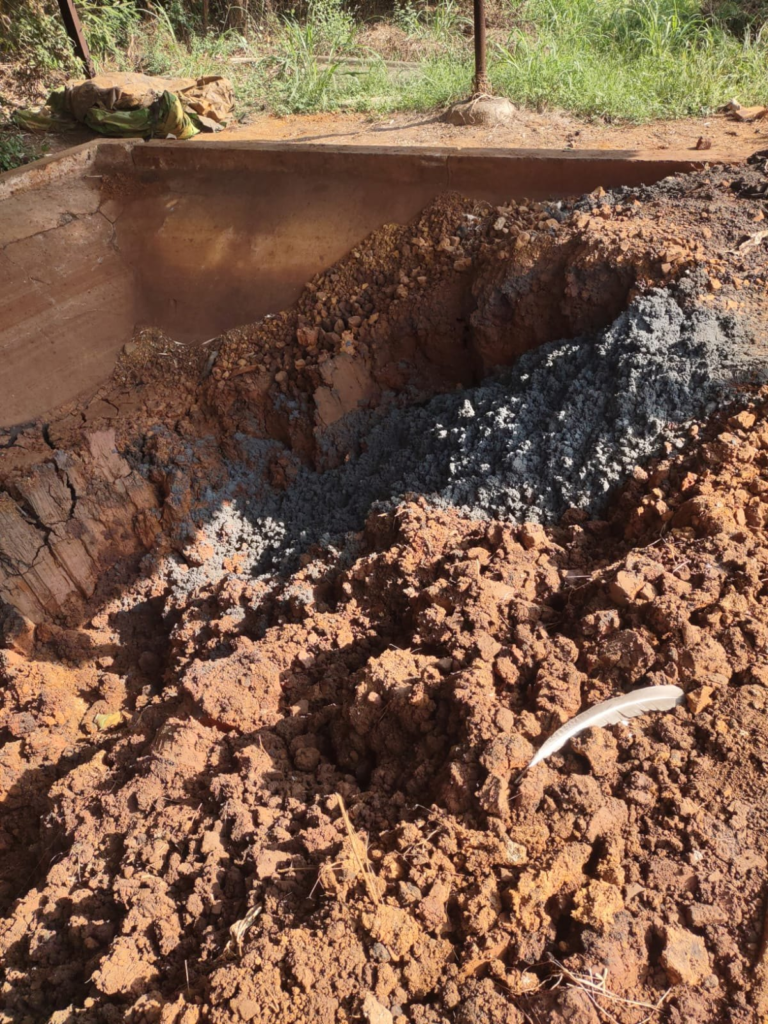
What Is an ETP Sludge Dryer?
An ETP sludge dryer is an industrial thermal drying system designed to remove water from sludge generated by an Effluent Treatment Plant (ETP) or industrial wastewater treatment process.
Depending on the industry, ETP sludge may contain organic solids, inorganic materials, process residues, salts, chemicals, fibers, minerals or other contaminants.
A typical process can be:
Industrial Wastewater → ETP → Sludge Separation → Mechanical Dewatering → ETP Sludge Dryer → Cooling/Handling → Storage, Disposal or Further Processing
Mechanical dewatering using equipment such as filter presses, belt presses, screw presses or centrifuges can substantially reduce free water, but thermal drying may be required when additional moisture reduction is needed.
Why Industrial ETP Sludge Drying Is Important in the USA
High-moisture sludge can create several operational challenges:
- High transportation weight
- Increased disposal volume
- Difficult handling and storage
- Sticky or pasty material characteristics
- Odor and microbial-management challenges
- Variable moisture content
- Limited options for beneficial reuse or energy recovery
- Higher downstream processing requirements
Thermal drying can reduce the water load and produce a more stable, easier-to-handle material.
For wastewater solids, the U.S. EPA identifies heat drying as a technology that can reduce volume and improve the quality of wastewater solids. However, the applicable regulatory requirements depend on the specific sludge stream and its intended management route.
Important: Industrial ETP sludge should not automatically be treated as municipal biosolids. Its chemical composition and regulatory classification must be evaluated for the specific facility and application.
Industrial Sludge Dryer Technologies Offered by GTI Dryers
Different sludge streams require different dryer configurations. There is no single dryer that is optimal for every ETP application.
1. Paddle Dryer for ETP Sludge
An indirect paddle dryer can be considered for sticky, pasty or difficult-to-handle sludge.
Heat is transferred indirectly through heated surfaces while the paddles continuously mix and transport the material.
Potential advantages:
- Indirect heating
- Compact design
- Good heat transfer
- Reduced exhaust-air volume
- Suitable for sticky materials
- Enclosed processing
This technology can be particularly interesting when odor control, enclosed operation or limited exhaust volume is important.

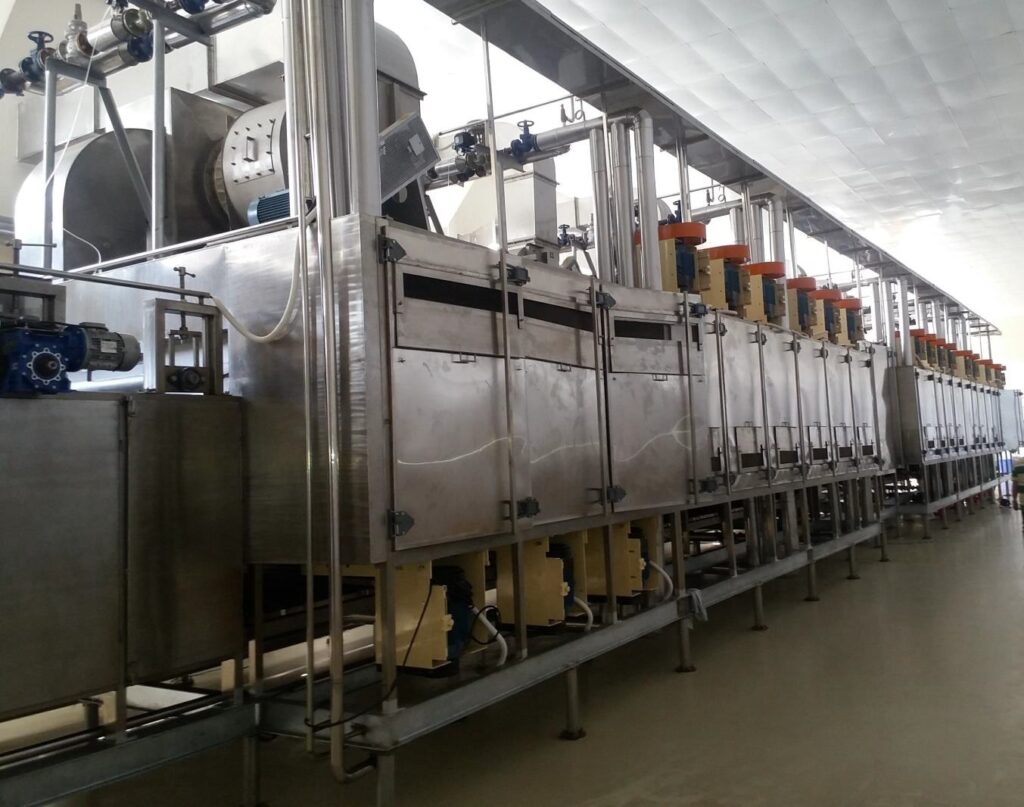
2. Belt / Band Dryer
A continuous belt or band dryer can be used where the sludge can be prepared and distributed consistently across the drying surface.
Controlled air temperature, airflow and residence time allow continuous moisture reduction.
Suitable considerations include:
- Continuous operation
- Large processing capacity
- Multi-zone drying
- Controlled moisture profile
- Integration with feeding and discharge systems
3. Rotary Drum Dryer
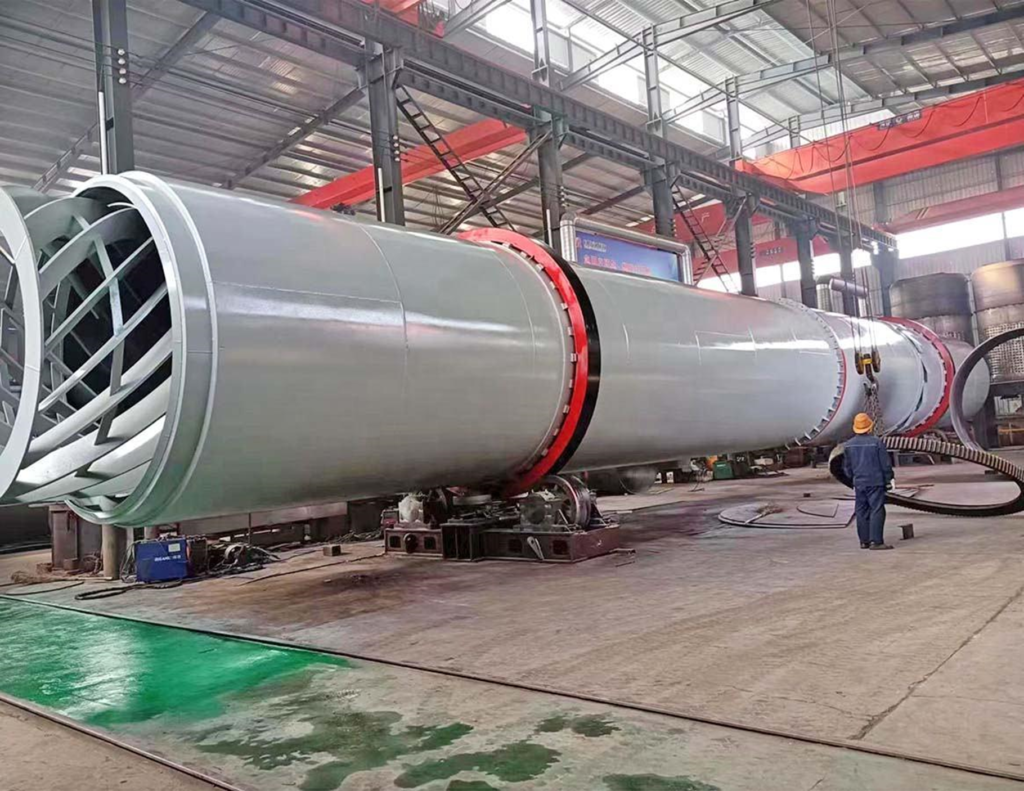
A rotary dryer can be considered for robust, high-throughput sludge applications where the material can be effectively conveyed through a rotating drum.
The final design depends on sludge moisture, stickiness, particle characteristics, evaporation duty and environmental controls. GTI also identifies industrial sludge and ETP sludge among potential rotary-dryer applications.
4. Fluidized Bed Dryer
Fluidized-bed drying may be suitable for sludge that has been conditioned or converted into particles with appropriate flow characteristics.
It can provide:
- High heat-transfer rates
- Uniform drying
- Controlled final moisture
- Continuous operation
However, highly sticky or pasty sludge is generally not automatically suitable for direct fluidized-bed processing.
How Does an ETP Sludge Dryer Work?
A typical industrial system consists of:
Dewatered Sludge → Controlled Feeding → Drying Chamber → Moisture Evaporation → Exhaust/Vapour Treatment → Dried Sludge → Cooling → Storage/Disposal/Reuse
Step 1: Sludge Dewatering
The sludge is mechanically dewatered before entering the thermal dryer.
Step 2: Controlled Feeding
A screw feeder, conveyor, pump or other suitable feeding system transfers sludge into the dryer.
Step 3: Thermal Drying
Heat is transferred to the sludge either directly or indirectly, depending on the selected technology.
Step 4: Moisture Removal
Water is evaporated under controlled process conditions.
Step 5: Vapour and Exhaust Management
The drying system may require appropriate condensation, filtration, scrubbing, odor control or other exhaust-treatment equipment depending on the sludge characteristics and process design.
Step 6: Dried Sludge Handling
The dried material can be cooled and transferred for the applicable disposal, reuse, recovery or downstream process.
What Factors Determine ETP Sludge Dryer Size?
A professional sludge dryer manufacturer should not size equipment using only tonnes/day.
GTI evaluates parameters such as:
| Design Parameter | Why It Matters |
| Wet sludge capacity | Determines dryer throughput |
| Initial moisture | Determines water evaporation load |
| Target final moisture | Determines drying duty |
| Sludge composition | Affects drying behaviour |
| Organic/inorganic content | Influences thermal characteristics |
| Stickiness | Determines dryer technology |
| Particle characteristics | Affects material handling |
| Available heat source | Determines system configuration |
| Operating hours | Determines required capacity |
| Exhaust characteristics | Influences environmental equipment |
| End use/disposal | Determines target moisture and process requirements |
| Plant layout | Affects equipment arrangement |
There is no universal ETP sludge drying temperature, residence time or final moisture specification. These should be established through process evaluation and, where appropriate, testing with the actual sludge.
ETP Sludge Drying for Different U.S. Industries
GTI’s industrial drying approach can be evaluated for sludge generated by sectors such as:
- Chemical manufacturing
- Pharmaceutical manufacturing
- Food processing
- Textile manufacturing
- Pulp and paper
- Petrochemical and chemical processing
- Metal processing
- Mining and mineral processing
- Specialty chemical production
- Industrial wastewater treatment facilities
Each sludge stream should be evaluated individually because wastewater chemistry and solids composition can significantly affect dryer selection.
Energy Efficiency in Industrial Sludge Drying
Thermal drying can require significant energy because the primary duty is evaporating water.
Therefore, an efficient ETP sludge dryer should be designed around the complete thermal balance rather than simply maximizing dryer temperature.
GTI can engineer systems considering:
- Heat recovery
- Optimized airflow
- Controlled residence time
- Indirect heating where appropriate
- Insulated drying equipment
- Multi-stage drying
- Heat-source integration
- Automated temperature control
- Moisture monitoring
- Process optimization
The goal is to achieve the required moisture reduction while avoiding unnecessary thermal energy consumption.
U.S. Regulatory and Environmental Considerations
For U.S. projects, dryer selection should be coordinated with the facility’s environmental and regulatory requirements.
Municipal sewage sludge and biosolids are subject to specific federal requirements under 40 CFR Part 503, including provisions relating to pollutant limits, pathogen and vector-attraction reduction, management practices, monitoring and reporting.
Industrial ETP sludge may follow a different regulatory pathway depending on its composition, source and management method.
Therefore, a U.S. ETP sludge drying project should consider:
- Applicable federal requirements
- State and local environmental requirements
- Sludge classification
- Air-emission requirements
- Odor control
- Dust control
- Worker safety
- Final disposal or reuse route
- Required monitoring and documentation
Dryer equipment design should be developed together with the project’s environmental engineering and permitting requirements.
Why Choose GTI Dryers for an ETP Sludge Dryer Project?
GTI Dryers approaches sludge drying as an application-engineering project, rather than simply supplying a standard machine.
Our capabilities include:
- Customized industrial sludge dryer design
- Paddle, belt, band and rotary drying technologies
- Process engineering
- Dryer sizing and selection
- Heat and mass-balance evaluation
- Feeding and discharge integration
- Automation and process control
- Plant layout support
- Installation and commissioning support
- Technical assistance for international projects
GTI’s waste and environmental drying portfolio is designed for applications involving industrial sludge, sewage sludge and other high-moisture waste streams.
GTI Dryers — Engineered Drying Solutions from India for Global Industries.
ETP Sludge Dryer Manufacturer USA – What Should You Send for a Quote?
To receive a technically meaningful dryer recommendation, provide:
- Wet sludge capacity — kg/hr or tons/day
- Initial moisture content — %
- Required final moisture — %
- Sludge type and industry
- Sludge composition, if available
- Sludge temperature at dryer inlet
- Available heat source
- Operating hours/day
- Required dryer location
- Final disposal, reuse or recovery route
- Required automation level
- Available plant space
A laboratory or pilot drying test can also be useful when sludge behaviour is uncertain.
Request an ETP Sludge Dryer Proposal from GTI Dryers
If you are planning a new industrial wastewater treatment sludge drying system in the USA, upgrading an existing ETP, or looking for a dryer for sludge volume and moisture reduction, GTI Dryers can evaluate your process data and recommend an appropriate drying configuration.
Send your sludge moisture, capacity and target final moisture to GTI Dryers for a customized technical evaluation and quotation.
Frequently Asked Questions
What is an ETP sludge dryer?
An ETP sludge dryer is an industrial thermal drying system used to remove residual moisture from sludge generated during industrial wastewater treatment.
Which dryer is suitable for ETP sludge?
The appropriate technology depends on sludge moisture, composition, stickiness, capacity and final moisture requirement. Paddle, belt/band and rotary dryers can all be considered for different applications.
Can GTI Dryers supply ETP sludge dryers for USA projects?
Yes. GTI Dryers designs and manufactures customized industrial drying systems for international applications and can support U.S. project requirements through application-specific engineering.
Can ETP sludge be dried after filter-press dewatering?
Yes. Thermal drying can be integrated after mechanical dewatering when additional moisture reduction is required. The dryer should be designed according to the actual filter-cake properties and target moisture.
How do I select an industrial sludge dryer?
Start with the sludge type, wet-feed capacity, initial moisture, target final moisture, physical characteristics, available heat source and intended final disposal or reuse route.
Does GTI provide complete sludge drying systems?
GTI can provide process engineering, dryer selection, equipment manufacturing, plant integration, automation and commissioning support depending on project requirements.
Recommended Internal Links for GTI Dryers
For stronger topical authority, link this article to relevant GTI pages such as:
- Waste & Environmental Drying
- Sewage Sludge Drying
- Municipal Sludge Dryers
- Paddle Dryer
- Rotary Dryer
- Belt/ Band Dryer
- Paper Mill Sludge Dryer
This creates a useful topic cluster around industrial sludge drying → ETP sludge → wastewater sludge → specific dryer technologies → application pages.