
When an enzyme powder loses activity during processing, the cost goes beyond rejected material. Manufacturers may face inconsistent product performance, lower active-enzyme recovery, poor powder flow, dust generation and reduced shelf stability.
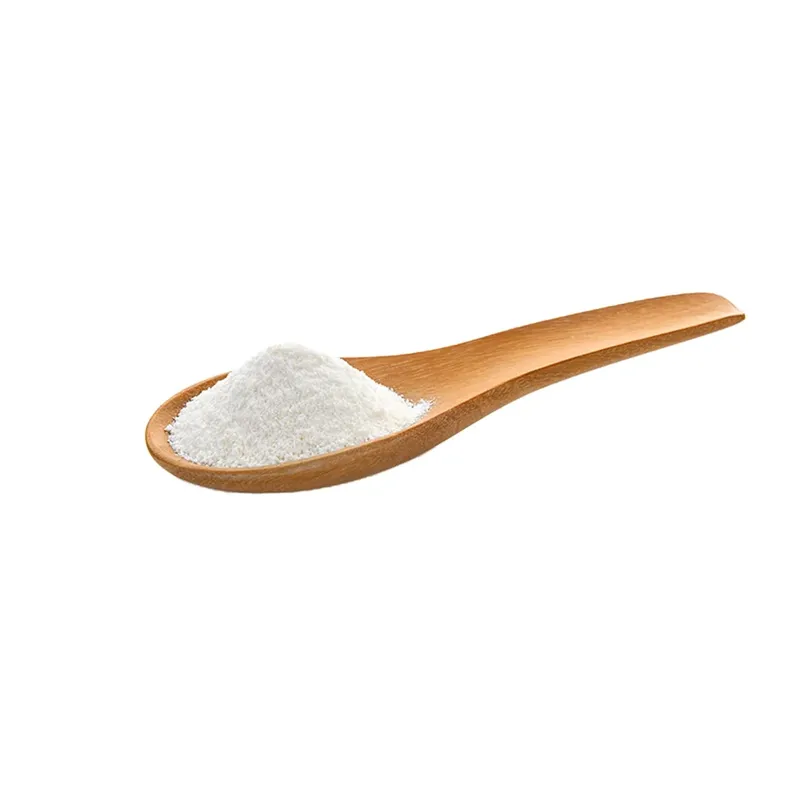
The challenge is that enzyme drying is not simply about removing moisture — it is about preserving biological activity while achieving the required particle properties and storage performance.
For enzyme manufacturers supplying food processing, detergents, animal nutrition, biotechnology and pharmaceutical applications, fluid-bed granulation and drying can be important options to evaluate. A well-designed process may combine controlled liquid spraying, particle growth, drying, coating and cooling, depending on the formulation.
GTI Dryers can assess industrial drying requirements based on material properties and process data. This guide explains how to diagnose enzyme-processing problems, when to consider low-temperature fluid-bed systems, how granulation differs from drying, and what to specify before requesting equipment.
The enzyme manufacturer’s real challenge: Three results from one process
A successful enzyme granulation and drying process must balance three outcomes.
<box gap={2}> <row align=”start” gap={3}> <AsyncImage query=”fine enzyme powder white industrial ingredient in laboratory sample dish” aspectRatio=”4:5″ maxWidth=”104px”/> <box flex=”1″ gap={1}> **1. Preserve enzyme activity**
The dried product must retain the specified catalytic activity. Moisture removal, temperature exposure, formulation and storage conditions can all influence the result.</box></row> <divider color=”subtle”/> <row align=”start” gap={3}> <AsyncImage query=”fluid bed granulation white spherical powder granules close up pharmaceutical food ingredient” aspectRatio=”4:5″ maxWidth=”104px”/> <box flex=”1″ gap={1}> **2. Achieve the required particle properties**
Granulation may improve flowability, reduce dust and make dosing easier, but excessive growth can cause oversized granules or uneven product composition.</box></row> <divider color=”subtle”/> <row align=”start” gap={3}> <AsyncImage query=”industrial fluid bed processor stainless steel pharmaceutical powder processing equipment” aspectRatio=”4:5″ maxWidth=”104px”/> <box flex=”1″ gap={1}> **3. Deliver a stable, usable product**
The powder must meet its moisture, particle-size, handling and shelf-life specifications. A good result immediately after drying does not automatically guarantee stability during storage.</box></row> </box>
Research on enzyme drying shows that residual activity can depend on drying conditions, formulation and exposure history. Fluid-bed granulation research also shows that granule size and flow behaviour respond to process variables. This is why activity retention and physical powder quality should be measured separately.
1. First identify which enzyme process you actually need
The term “enzyme dryer” can describe several different duties. Choosing equipment before identifying the duty can lead to an unsuitable process design.
| Your starting material | Your target product | Process route to evaluate |
| Enzyme solution or liquid concentrate | Dry enzyme powder | Spray drying or another validated liquid-drying route |
| Fine enzyme powder | Larger, more free-flowing granules | Fluid-bed granulation using a suitable binder or liquid |
| Enzyme solution applied to carrier particles | Coated enzyme granules | Fluid-bed layering or coating, followed by controlled drying |
| Wet granules containing enzyme | Granules at specified final moisture | Fluid-bed drying under a validated temperature-time profile |
| Dried enzyme granules | Stable, packable product | Controlled final drying or conditioning, cooling and suitable packaging |
| Highly sensitive enzyme formulation | Product with strict activity-retention requirements | Formulation screening, pilot testing and selection of a validated drying method |
Important distinction: fluid-bed granulation and fluid-bed drying are related but different operations. Granulation builds or enlarges particles; drying removes moisture. A fluid-bed processor may perform both operations in one unit, but the process sequence and operating conditions must be designed for the product.
Spray drying can be appropriate for some liquid enzyme formulations. However, it should not be confused with fluid-bed granulation of an existing powder.
2. Why enzyme activity can fall during drying
Enzymes are proteins whose functional structure is essential to their catalytic performance. Heat, dehydration, interfaces, formulation chemistry and storage conditions can influence enzyme stability.
A process that removes moisture quickly may still produce an unacceptable enzyme if the residual activity falls below specification.
Problem A: The enzyme meets moisture specifications but fails the activity test
What may be happening
The moisture target has been achieved, but the enzyme has experienced excessive thermal or other process stress. The measured activity may also be affected by differences in feed formulation, sampling, assay method or storage before testing.
What to investigate
- Enzyme activity before and after drying
- Product temperature and exposure time
- Feed composition and protective excipients
- Residual moisture and water activity, where relevant
- Activity-assay consistency and sampling procedure
- Product stability after packaging
Practical next step
Compare activity recovery across representative trials. Do not use moisture content alone as evidence that the drying process is successful.
Problem B: The powder is active but difficult to handle
What may be happening
The powder may contain very fine particles, have poor flowability, generate dust or resist uniform dosing. These are physical-handling problems rather than necessarily enzyme-inactivation problems.
What to investigate
- Particle-size distribution
- Bulk and tapped density, where relevant
- Flowability and dust generation
- Particle strength and attrition
- Rehydration or dissolution behaviour
- Whether agglomeration or carrier-based granulation is appropriate
Practical next step
Evaluate fluid-bed granulation or coating if larger, more manageable particles are required. Validate the effect on both activity and handling properties.
Problem C: The granules are too large or irregular
What may be happening
The liquid spray rate, droplet size, binder concentration, fluidisation and drying capacity may be out of balance. Particles can grow unevenly, form lumps or become excessively wet.
What to investigate
- Binder or liquid-feed properties
- Spray rate and droplet distribution
- Fluidising airflow and bed behaviour
- Temperature and drying capacity
- Initial particle-size distribution
- Final granule size, strength and fines content
Practical next step
Review the relationship between wetting, particle growth and drying. Adjustments should be based on trials and measured product properties, not a universal set of operating temperatures.
Problem D: The product performs well initially but deteriorates in storage
What may be happening
The enzyme may be sensitive to moisture, temperature, oxygen, packaging conditions or formulation interactions. A low moisture result at the dryer outlet does not by itself establish long-term stability.
What to investigate
- Residual moisture and water activity
- Packaging barrier properties
- Storage temperature and humidity
- Product activity over time
- Formulation and protective excipients
- Handling and transport conditions
Practical next step
Define a stability-testing programme under the intended packaging and storage conditions. The target should be an acceptable shelf-life performance, not merely a low outlet moisture.
3. Low-temperature fluid-bed processing: What it means in practice
A fluid-bed processor passes air through a bed of particles, causing them to move and mix. Depending on the configuration, liquid can be sprayed onto the particles to build granules or apply a coating. Heated air then removes moisture, while airflow and temperature are controlled to achieve the required process endpoint.
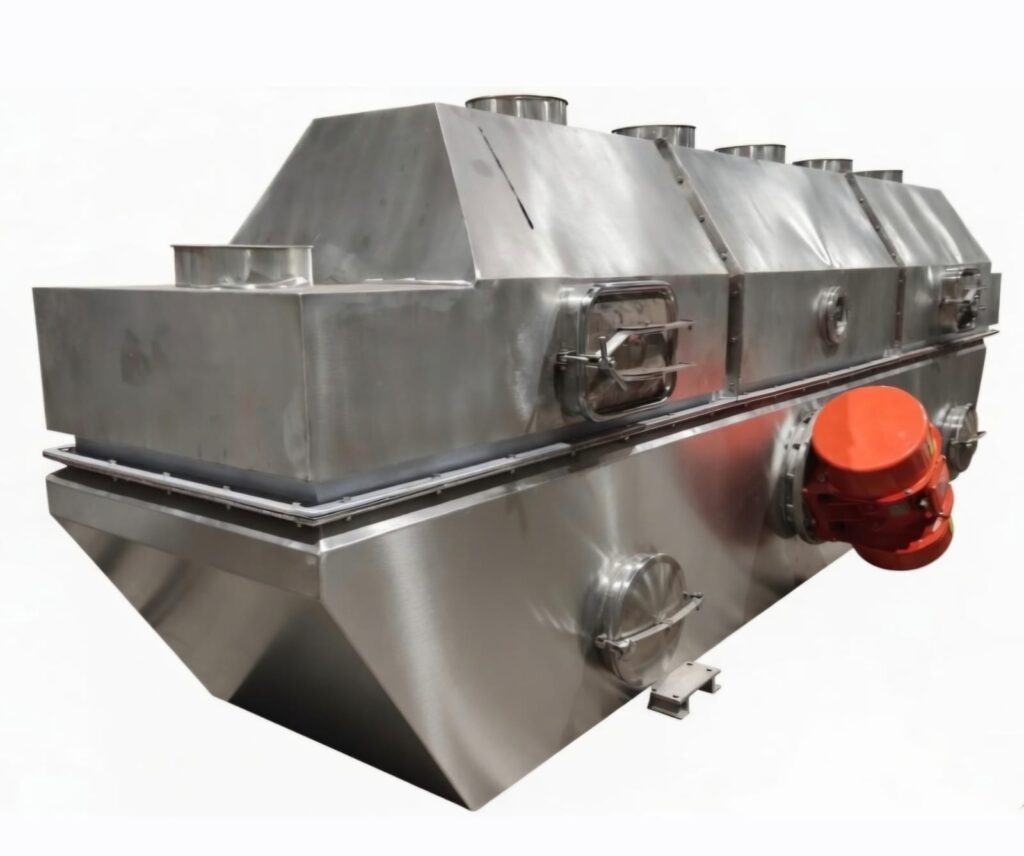
For enzyme applications, the term low-temperature fluid bed should mean a process specifically designed and validated to protect the enzyme — not simply a machine operated at an arbitrarily low air temperature.
The appropriate operating window depends on the enzyme, formulation, particle size, liquid content, air conditions and required production rate.
What a fluid-bed granulation and drying system may include
- A product chamber designed for the required powder or granule behaviour
- Controlled fluidising-air supply
- Appropriate air heating and temperature monitoring
- Spray system for binder, enzyme solution or coating liquid, where required
- Exhaust filtration and suitable powder-retention arrangements
- Process monitoring and control
- Product sampling and discharge provisions
- Cleaning and containment provisions appropriate to the application
The exact configuration should be selected according to the process duty and the relevant food, feed, chemical or pharmaceutical requirements. Pharmaceutical fluid-bed systems, for example, may require specific documentation, cleanability and containment features that should not be assumed for every industrial unit.
4. Fluid-bed granulation vs spray drying vs freeze drying
There is no single best drying technology for all enzymes. The right comparison begins with the feed form and the required finished product.
| Decision factor | Fluid-bed granulation/drying | Spray drying | Freeze drying |
| Typical starting material | Powder, particles, wet granules or a suitable carrier bed | Pumpable solution or suspension | Suitable liquid or formulated product |
| Primary purpose | Granule formation, coating, drying or cooling | Liquid-to-powder conversion | Sublimation-based drying under vacuum |
| Particle control | Granule size and coating can be developed through process control | Particle properties depend on atomisation, feed and drying conditions | Product often forms a porous dried structure requiring further handling |
| Enzyme activity | Depends on formulation and validated process conditions | Can be affected by heat, dehydration and interfaces | May benefit certain sensitive products but is not universally superior |
| Main design challenge | Balancing wetting, granule growth, airflow and drying | Balancing atomisation, evaporation, powder recovery and activity | Cycle time, freezing behaviour, product structure and operating cost |
| Suitable role | Granulation, carrier coating, or drying suitable particles | Drying suitable liquid enzyme formulations | Selected high-value or highly sensitive formulations where justified |
Published research demonstrates that spray drying can be viable for certain enzyme formulations, but activity retention depends on the specific enzyme and process. Fluid-bed granulation has also been studied for improving enzyme powder handling. These technologies should be compared through application-specific testing rather than a blanket claim that one is always gentler.
5. How to choose a fluid-bed granulation route
Use this decision sequence to identify the right starting point for an engineering discussion.
Route 1: You have fine enzyme powder and need better flowability.
Evaluate fluid-bed granulation using a suitable binder or liquid, with attention to granule size, strength, dust reduction and activity retention.
Route 2: You need to distribute an enzyme over a carrier.
Evaluate fluid-bed layering or coating. The process should deliver the required enzyme distribution while controlling wetting, drying and particle integrity.
Route 3: You have a liquid enzyme formulation and need powder.
Compare spray drying with other suitable liquid-drying routes first. A fluid-bed granulator is not automatically a direct replacement for a spray dryer, although downstream fluid-bed finishing or agglomeration may be relevant.
Route 4: You have wet granules and need final moisture control.
Evaluate fluid-bed drying if the granules can be fluidised without unacceptable attrition, entrainment or damage. Define both the moisture endpoint and the activity requirement.
Route 5: The enzyme has a very narrow stability window.
Begin with formulation characterisation and small-scale trials. Compare activity recovery, particle properties and storage performance before selecting an industrial route.
6. Process variables that need to be controlled
The following factors should be considered together. Changing one variable may improve one outcome while worsening another.
| Process variable | Why it matters | What to measure |
| Inlet-air temperature | Influences drying force and thermal exposure | Air temperature, product temperature where feasible, activity retention |
| Airflow | Affects fluidisation, heat transfer and entrainment | Airflow, pressure drop, bed behaviour, exhaust solids |
| Liquid spray rate | Affects wetting and granule growth | Feed rate, droplet characteristics, agglomeration |
| Binder or formulation | Influences granule strength and enzyme stability | Composition, viscosity, compatibility and activity |
| Drying endpoint | Affects residual moisture and potentially stability | Moisture, water activity where relevant, product temperature |
| Process time | Determines total exposure and drying completion | Cycle time, temperature history and final product tests |
| Cooling and discharge | Can affect post-drying handling and product stability | Product temperature, fines, moisture and packaging conditions |
| Storage and packaging | Influence shelf-life performance | Stability, humidity exposure, package barrier properties and activity over time |
A critical principle is that inlet-air temperature is not identical to product temperature. Evaporative cooling and changing moisture levels can affect the temperature experienced by the material. Nonetheless, the actual product’s thermal exposure must be validated.
7. How to measure the success of an enzyme drying process
A dryer should be evaluated against measurable acceptance criteria. A useful trial plan separates biological performance from powder handling.
Biological and chemical quality
- Enzyme activity before and after processing
- Activity recovery using a defined assay
- Residual moisture and water activity, where relevant
- Product composition and excipient compatibility
- Stability over the intended storage period
Physical product quality
- Particle-size distribution
- Bulk density and flowability
- Granule strength and attrition
- Dust generation and fines
- Dispersion, dissolution or rehydration behaviour, where relevant
- Product yield and recovery
Process performance
- Batch or continuous throughput
- Drying time and operating consistency
- Air and energy requirements
- Product losses and cleaning requirements
- Repeatability between batches
- Compliance with application-specific safety and quality requirements
A process that achieves high product recovery but loses too much enzyme activity may not be commercially acceptable. Equally, excellent activity retention may not be sufficient if the resulting powder cannot be packed, transported or dosed reliably.
8. The buyer’s technical checklist for an enzyme dryer
Before asking for a quotation, prepare a process brief with the following details.
Material and activity
- Enzyme name and application
- Liquid, powder, carrier or wet-granule feed form
- Feed concentration and incoming moisture
- Required enzyme activity and assay method
- Maximum acceptable activity loss, if specified
- Heat and moisture sensitivity
- Existing formulation or protective excipients
Granule and powder requirements
- Target particle-size range
- Desired flowability and bulk density
- Granule strength and acceptable fines
- Moisture and water-activity specifications, where relevant
- Coating or carrier requirements
- Rehydration, dissolution or dispersion requirements
Plant and process requirements
- Production rate and operating schedule
- Batch or continuous operation
- Available utilities and heat source
- Cleaning, containment and cross-contamination requirements
- Dust collection and safety provisions
- Automation, data recording and process monitoring
- Required product-contact materials and applicable quality standards
Validation requirements
- Representative feed samples
- Laboratory activity and moisture data
- Pilot-trial requirements
- Product acceptance criteria
- Stability-testing plan
- Documentation required for the target industry
This information makes it easier to distinguish a generic dryer quotation from a process-specific equipment proposal.
9. How GTI Dryers can approach your enzyme project
GTI Dryers — Genex Tech Industries — provides industrial drying engineering for process applications. For an enzyme granulation and drying project, the first step is to understand whether the actual requirement is liquid-to-powder drying, granulation of an existing powder, coating of a carrier or final drying of wet granules.
A suitable technical assessment should establish:
- The feed form, composition and moisture condition.
- The activity-retention and final powder specifications.
- Whether fluid-bed granulation, fluid-bed drying, spray drying or a combined route merits evaluation.
- The process controls, sampling and testing needed to validate the product.
- Whether pilot trials are required before final equipment sizing.
For a high-value enzyme, the supplier should not promise a specific activity recovery, drying temperature or shelf life without supporting product data. Where the material is sensitive or the process is new, representative testing is a sensible part of process development.
Explore the relevant equipment range and contact the GTI Dryers team through the GTI Dryers website.
Frequently asked questions
What is an enzyme granulation and drying system?
It is a process system designed to form or condition enzyme-containing particles and remove moisture while meeting specified activity, particle and stability requirements. Depending on the feed, it may use fluid-bed granulation, fluid-bed drying, coating or another suitable drying method.
Why is a low-temperature fluid bed used for enzymes?
A controlled fluid-bed process can support drying or granulation of suitable particles with managed airflow and temperature. Whether it preserves a particular enzyme depends on its formulation and validated thermal and moisture exposure. “Low temperature” alone does not guarantee activity retention.
Can a fluid-bed dryer preserve enzyme activity?
It may be suitable for specific enzyme formulations, but activity retention must be measured and validated. The enzyme, carrier, formulation, product temperature, drying time and storage conditions can all influence the result.
What is the difference between enzyme granulation and enzyme drying?
Granulation builds larger particles or agglomerates to improve selected handling properties. Drying removes moisture. A fluid-bed processor can perform both in one process when the equipment configuration and operating sequence are appropriate.
Can spray drying be used for heat-sensitive enzymes?
It can be used for selected enzyme formulations, but the process must be optimised for the enzyme’s stability. Studies show that formulation and drying conditions affect residual activity. Pilot trials and activity assays help determine suitability.
How can enzyme powder dust be reduced?
Granulation, agglomeration or carrier-based processing may improve handling for suitable products. The resulting granules must be assessed for strength, fines, flowability, rehydration and activity to ensure that dust reduction does not compromise other requirements.
How do you determine the right dryer capacity?
Capacity depends on feed rate, incoming moisture, target moisture, formulation, drying kinetics and the required process time. For enzyme products, the activity specification and acceptable temperature-time profile must also be included in the engineering assessment.
What information should I send to an enzyme dryer manufacturer?
Share the enzyme and its intended application, feed form, feed rate, incoming moisture, target moisture, required activity retention, desired particle size, formulation details, available utilities and applicable quality requirements. Representative samples and activity data can substantially improve the assessment.
Request a technical assessment for your enzyme process
If your enzyme powder has poor flowability, excessive dust, inconsistent granule size, high moisture or activity loss after processing, start with the data that defines success.
Contact GTI Dryers to discuss your enzyme granulation and drying requirements.
Include your enzyme type, feed form, production rate, target moisture, required activity retention, particle-size specification and application. This information will help determine whether a fluid-bed granulation and drying system, a spray dryer or another process route should be evaluated.
GTI Dryers — Engineered Drying Solutions from India for Global Industries.