
Fuel for tea dryers is one of the largest controllable costs in an orthodox factory. At the same time, export and premium buyers reject leaf that is dull, case-hardened or uneven in residual moisture. The challenge is clear: use less energy per kilogram of made tea without sacrificing leaf integrity.
This guide sets out practical levers — process first, then system design — so estate managers can cut dryer energy cost while protecting colour, aroma and style.
Quick answer: The lowest-cost energy saving is often not over-drying and not overheating dry leaf. Add staged temperature control, balanced airflow, tight residual-moisture targets and, where viable, heat recovery. Measure fuel or heat per kg made tea before and after changes so results are real.
1. Where Energy Goes in Orthodox Tea Drying
Energy is consumed to:
- Evaporate water from fermented leaf (useful load)
- Heat air, metal and leaf (sensible heat)
- Overcome leakage, poor insulation and excess exhaust losses
Waste increases when:
- Leaf enters wetter or more variable than design
- Residual moisture is driven far below the real specification
- Early chambers or zones run hotter than needed
- Airflow is excessive or poorly distributed
- Dry leaf sits in hot chambers longer than necessary
Useful metric: heat or fuel energy per kg water evaporated, and per kg made tea, under stated inlet/outlet moisture. Percentage claims without a baseline are not actionable.
2. Energy Hierarchy for Orthodox Dryers (Protect Quality First)
| Priority | Lever | Effect on fuel | Effect on leaf |
|---|---|---|---|
| 1 | Enforce target residual moisture (no “extra dry”) | High | Protects aroma and reduces brittleness |
| 2 | Even wither & fermentation → steady dryer feed | High | Improves uniformity |
| 3 | Staged temperatures (stronger while wet, cooler finish) | Medium–high | Reduces case-hardening and tip dulling |
| 4 | Balanced airflow and correct spread/feed depth | Medium | Even moisture; less local scorch |
| 5 | Insulation, seals, clean radiators/heaters | Medium | Less wasted heat |
| 6 | Heat recovery from exhaust (if temperature & fouling allow) | Medium | Lower net fuel |
| 7 | Heat source efficiency (furnace, boiler, biomass system) | Variable | Indirect — must not force unsafe leaf temperatures |
Raising temperature to chase capacity is the opposite of this hierarchy and often increases both fuel use and quality rejects.
3. Residual Moisture Discipline (Largest Free Saving)
Many factories dry “a bit more” for safety. That extra water removed is pure fuel cost and often harms liquor and style.
Action:
- Agree a target residual moisture aligned with buyer/export needs (often a tight low band; use your contract value)
- Measure with a consistent method
- Control dryer exit on data, not only hand feel
- Track variation between samples — averages hide wet cores
Uniform leaf at the correct moisture almost always uses less energy than mixed wet/dry leaf that is re-fired later.
4. Multi-Stage / Multi-Pass Temperature Control
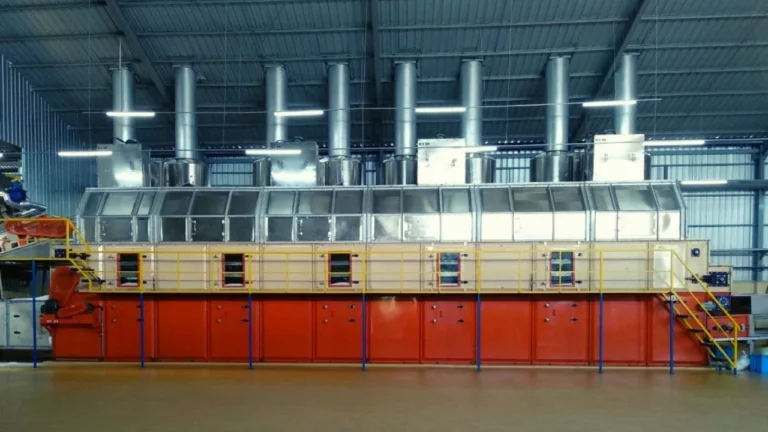
Whether you run an ECP (Endless Chain Pressure) dryer or a combination / multi-stage continuous system, the energy-and-quality logic is the same:
- Early stage: Remove bulk surface moisture with adequate driving force while evaporative cooling still protects the leaf
- Finish stage: Lower temperature, enough time to equalise core moisture without baking the surface
Benefits:
- Less case-hardening → less hidden moisture → less re-drying
- Better colour and tip appearance
- Often lower total fuel than a single aggressive profile
If your current dryer has chambers or zones, calibrate and use them. If it cannot profile, that limitation belongs on the upgrade justification list.
5. Airflow Optimisation
Excess air carries heat out of the dryer and does not always improve moisture removal.
Check:
- Fan dampers and speeds against design
- Blocked ducts, dirty radiators, uneven tray or bed loading
- Exhaust temperature and humidity (qualitative monitoring helps operators)
For continuous systems, stable feed rate is as important as fan settings. Surges force operators to run “rich” on heat.
6. Heat Recovery — When It Helps
Recovering heat from dryer exhaust can preheat incoming air and cut fuel use when:
- Exhaust is still usefully hot
- Fouling from tea dust is manageable with cleaning access
- Hygiene and fire-safety design are respected
Recovery is not automatic savings. Ask for the recovery concept, expected duty conditions and maintenance needs. Combine recovery with moisture discipline — recovery does not fix chronic over-drying.
7. Heat Source Choices and Leaf Safety
| Heat source | Efficiency note | Quality note |
|---|---|---|
| Coal / solid fuel furnaces | Common; depends on combustion control | Stable air temperature critical |
| Biomass / briquettes | Can lower fuel cost if supply is reliable | Same temperature discipline as any furnace |
| Gas | Clean control, often higher fuel price | Good modulation for profiles |
| Steam / indirect | Clean air path | Boiler efficiency becomes part of the system |
| Hybrid / waste heat | Site-specific | Only if continuous and controllable |
Leaf integrity rule: The heat source must serve the leaf temperature profile, not the other way around. Cheaper fuel that forces hot, uncontrolled air is not an energy win if rejects rise.
8. ECP vs Combination Systems — Energy Angle
| Aspect | Well-run ECP | Well-run combination / multi-stage |
|---|---|---|
| Energy potential | Good if chambers balanced and moisture on target | Strong if stages allow cooler finish and steady feed |
| Typical waste modes | Uneven spread, over-hot early passes, leakage | Over-capacity pushing, wrong stage temperatures |
| Labour link | Spreading skill affects both quality and energy | Continuous feed can stabilise load |
Upgrading equipment without fixing wither, spread and moisture targets rarely delivers the expected fuel reduction.
9. How to Measure Improvement
- Baseline: fuel or steam per day vs made tea (kg) and vs water removed (if moisture data exist)
- Record inlet moisture, outlet moisture, production hours
- Implement one change at a time (e.g. moisture target control, then profile)
- Re-measure over comparable flush conditions
- Include quality: tasting notes, tip appearance, moisture variation, reject/re-fire rate
If “energy saving” coincides with more re-firing, the factory did not save — it deferred cost.
10. Buyer Checklist — Energy-Efficient Orthodox Drying
| Item | Specify / ask |
|---|---|
| Target residual moisture + variation | In RFQ and SOP |
| Inlet moisture range after fermentation | Peak and normal |
| Temperature profile by pass/zone | Including finish limits |
| Capacity at stated moistures | Peak flush |
| Specific energy discussion | With conditions, not bare % |
| Heat recovery option | Fouling, access, expected duty |
| Furnace/heater control | Stability of air temperature |
| Monitoring | Moisture meters, temperature logging |
| Training | Profile operation, not only “more heat” |
11. How GTI Dryers Supports Efficient Orthodox Drying
GTI Dryers supplies continuous drying systems used in tea processing, including combination / vibratory fluid-bed style approaches designed for staged moisture removal.
For energy-focused orthodox projects we emphasise:
- Moisture targets and capacity on a clear basis
- Profiles that protect leaf integrity while controlling fuel use
- Assessment of whether process discipline, ECP optimisation or a staged continuous dryer is the rational path
- No universal fuel-saving percentage — estimates follow your baseline data
Geographic Note
Fuel type and price vary across Indian tea regions and export origins. Biomass, coal and gas economics differ, but the same hierarchy applies: moisture discipline and staged temperatures protect both the leaf and the fuel bill. Monsoon humidity and peak flush intensity should be built into any energy baseline.
Frequently Asked Questions
How can I reduce tea dryer fuel cost without hurting quality?
Stop over-drying, stabilise wither/fermentation feed, use cooler finish temperatures, balance airflow, and maintain heaters and seals. Measure results.
Does heat recovery always pay back?
Only when exhaust heat is useful, fouling is controlled and the dryer already runs at sensible moisture targets.
Is a new combination dryer always more efficient than ECP?
Not automatically. A well-operated ECP can be efficient; a mis-set continuous dryer can waste fuel. Compare on specific energy and quality metrics.
What residual moisture should we target?
Use your export/buyer specification and a consistent test method. Avoid drying “extra hard” as a habit.
What data should I send GTI?
Dryer type, made-tea rate, inlet and target moisture, fuel type and approximate consumption, and main quality constraints (tips, aroma, case-hardening).
Next Step
If fuel cost is rising but you cannot risk leaf quality, share your current dryer setup and moisture targets. GTI can help identify practical efficiency measures — from operating discipline to staged drying system design — that protect orthodox leaf integrity.
Request an energy-efficient orthodox tea drying assessment with your process data.
Contact the GTI Technical Team:
Website: gtidryers.com
Email: mktg@gtidryers.com
Phone / WhatsApp: +91 9330077417