
Orthodox tea factories still rely heavily on ECP (Endless Chain Pressure) dryers, while many upgrades evaluate combination fluid-bed / multi-stage dryers. The question is not which name is newer — it is which system protects leaf style, limits case-hardening and delivers uniform residual moisture for your grade mix and climate.
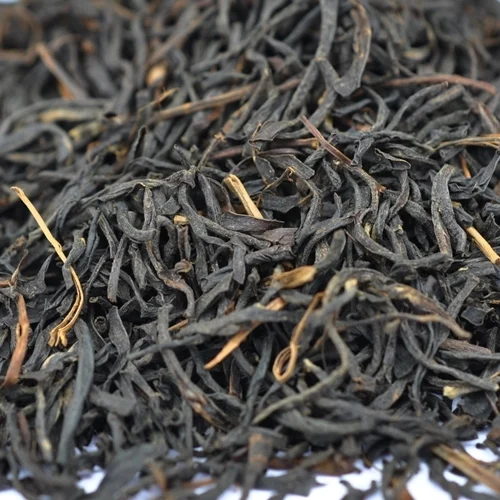
This guide compares the two approaches on the criteria orthodox buyers care about and gives a practical decision framework.
Quick answer: ECP dryers are proven multi-pass chain-and-tray systems widely used for orthodox teas. Combination fluid-bed / multi-stage systems aim for more flexible temperature profiling and moisture control, with different particle handling. Better leaf quality comes from matching dryer design and operation to fermented leaf condition — not from the label alone.
1. What Each Dryer Is
ECP dryer (Endless Chain Pressure dryer)
A traditional tea dryer in which trays or perforated carriers move on an endless chain through successive heated chambers (passes). Fermented leaf is spread on trays; hot air flows through the bed over a relatively long path. Operators control spread thickness, chain speed and chamber temperatures.
Typical strengths: Familiar to many estates, multi-pass drying, large installed base in orthodox factories.
Typical stresses: Uniformity depends heavily on spreading skill; limited independent zoning compared with modern designs; risk of surface over-drying (case-hardening) if early chambers run too hot or wet leaf is uneven.
Combination / fluid-bed multi-stage dryer
A modern continuous system that combines stages — often including fluidisation or intense air contact in part of the path and controlled finish drying — to remove moisture in steps with more independent control of temperature and airflow. In tea service these are frequently described as combination or multi-stage dryers rather than a single static fluid bed for whole leaf.
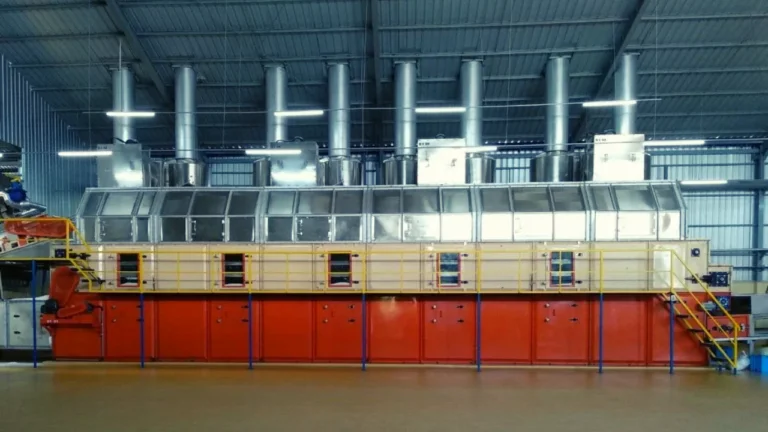
Typical strengths: Staged moisture removal, potential for tighter residual-moisture control, continuous handling with less tray labour.
Typical stresses: Must be set up for orthodox leaf (not only CTC granules); wrong velocities or temperatures can increase breakage or tip burning; operators need training on a different control philosophy.
2. What Orthodox Buyers Optimise For
| Quality / process goal | Why it matters |
|---|---|
| Whole and broken leaf appearance | Style and price realisation |
| Avoid case-hardening | Hard surface, wet core → uneven liquor and storage risk |
| Uniform residual moisture | Storage stability, consistent cup, fewer re-fire issues |
| Controlled tip and colour | Market grade expectations |
| Capacity in flush | Peak leaf must not force unsafe shortcuts |
Any comparison of ECP vs combination systems should be scored against these outcomes on your leaf, not generic brochure claims.
3. Side-by-Side Comparison
| Criterion | ECP dryer | Combination / multi-stage fluid-bed type |
|---|---|---|
| Leaf handling | Tray/chain — leaf relatively static on trays | Continuous air-assisted movement; design must limit attrition |
| Temperature profiling | Multi-chamber, but often coarser control | Designed for staged profiles (bulk water then finish) |
| Case-hardening risk | Higher if early passes are too hot or spread is uneven | Lower when early stage is controlled and finish is cooler — if operated correctly |
| Moisture uniformity | Strongly dependent on spreading and chamber balance | Can be very good with stable feed and zone control |
| Labour | Spreading and tray discipline required | Generally less manual spreading labour |
| Familiarity | High in traditional orthodox factories | Requires training and process discipline |
| Footprint & layout | Established building designs | May need layout change for feed/discharge |
| Best fit | Factories with skilled withering/spreading and stable ECP practice | Factories prioritising staged control, uniformity and upgrade path |
Neither system automatically “wins.” Operation and leaf condition dominate.
4. Case-Hardening: The Shared Enemy
Case-hardening occurs when the leaf surface dries too fast and forms a barrier while the core remains wet. Results include:
- Misleading surface dryness
- High residual moisture in the core
- Quality and storage problems
ECP contribution to the problem: Thick or uneven spread, excessive early-chamber temperature, insufficient time in later passes.
Combination-system contribution if mis-set: Excessive air temperature or velocity early in the path, or pushing capacity beyond design.
Prevention (both technologies):
- Correct wither and fermentation moisture into the dryer
- Controlled early driving force; cooler, longer finish
- Even feed depth / distribution
- Verified residual moisture (not only dryer outlet feel)
5. Moisture Control: What “Better” Means
Better moisture control means:
- Average residual moisture on target for the grade
- Narrow spread between samples (trays, times, grades)
- Stable results across weather and flush intensity
ECP: Achievable with disciplined spreading, calibrated instruments and chamber balancing — many fine orthodox teas are still produced this way.
Combination multi-stage: Often easier to automate staged setpoints and continuous feed rate, which can tighten variation if the machine is sized for orthodox leaf and operators follow the process window.
Ask suppliers for how residual moisture is measured during commissioning and what variation was achieved on similar leaf — not only a single average number.
6. Decision Guide: Keep, Upgrade or Replace ECP?
| Situation | Practical direction |
|---|---|
| ECP delivers target moisture and style with trained staff | Maintain; invest in instruments, seals, and chamber control |
| Chronic case-hardening or wide moisture scatter | Audit wither + spread + temperatures first; then consider combination multi-stage |
| Capacity short in peak flush | Check true evaporation load; adding a poorly controlled dryer rarely fixes root cause |
| Labour shortage for spreading | Continuous combination systems reduce tray labour |
| Export buyers demand tighter moisture specs | Staged control systems often easier to document and repeat |
| Building and capital constrained | Optimise existing ECP before full replacement |
7. What to Compare When You Request Quotations
- Capacity at stated inlet moisture (after fermentation) and target residual moisture
- Temperature profile by stage/pass and maximum product temperature philosophy
- How leaf is fed and discharged (breakage, tip damage)
- Residual moisture variation achieved on orthodox leaf (references)
- Fuel type, specific energy discussion with conditions
- Cleaning access and fire-safety features
- Scope: furnace/heat exchanger, cyclones, ducts, controls, installation
- Training and process support during commissioning
8. How GTI Dryers Approaches Orthodox Tea Drying
GTI Dryers supplies continuous drying systems used in agro and tea-related processing, including vibratory fluid-bed and combination-style drying approaches suited to staged moisture removal.
For orthodox tea projects we focus on:
- Inlet moisture and capacity after fermentation
- Leaf quality priorities (style, tips, residual moisture band)
- Whether process improvement on the existing ECP, a combination dryer, or a hybrid path is the rational step
- Clear assumptions — no claim that one name fits every estate
Factories still running ECP well should not replace equipment only for novelty. Factories fighting case-hardening and moisture scatter should evaluate staged continuous systems on process data.
Geographic Note
ECP dryers remain common across orthodox-producing regions in India (Darjeeling, Assam orthodox pockets, Nilgiris, etc.) and other origins. Combination and fluid-bed type dryers have expanded where factories modernise for labour, uniformity and export specifications. Climate and leaf standard vary; commissioning must use local fermented leaf, not only nameplate capacity.
Frequently Asked Questions
What is an ECP dryer in tea?
Endless Chain Pressure dryer — a multi-pass chain-and-tray dryer long used for orthodox (and some other) teas.
What is a combination fluid bed dryer for tea?
A continuous multi-stage dryer that uses staged air contact (including fluidisation principles in part of the design) to remove moisture with more flexible temperature and airflow control than a classic single-profile dryer.
Which is better for leaf quality?
The system that maintains controlled driving force, avoids case-hardening and limits mechanical damage on your leaf. Many quality teas still come from well-run ECPs; many modern plants improve uniformity with staged continuous dryers.
Will a combination dryer fix poor withering?
No. Dryer upgrades cannot compensate for uncontrolled wither or fermentation. Fix upstream first.
What data should I send for an assessment?
Made-tea capacity, inlet moisture after fermentation, target residual moisture, grade mix, current dryer type and main quality complaints (case-hardening, uneven moisture, tips, etc.).
Next Step
If you are comparing ECP vs combination fluid-bed / multi-stage drying for orthodox tea, share your capacity, moisture targets and quality issues. GTI can help review whether process optimisation, a staged continuous dryer, or a phased upgrade is the practical path for leaf quality and moisture control.
Request an orthodox tea drying assessment with your process data.
Contact the GTI Technical Team:
Website: gtidryers.com
Email: mktg@gtidryers.com
Phone / WhatsApp: +91 9330077417