
Industrial drying solutions for detergent powders, surfactants, LABSA-neutralized products, sodium sulfate-based formulations and specialty cleaning powders
When a detergent manufacturer plans to increase powder production, the first question is often:
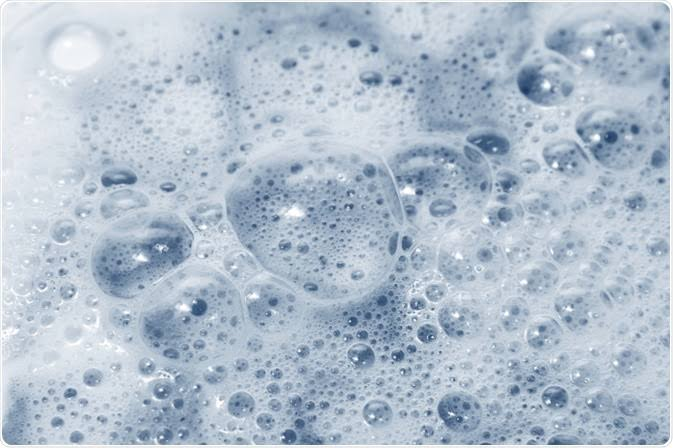
“How much can the spray dryer produce?”
But production capacity is only one part of the problem.
A detergent powder plant must simultaneously control:
- Slurry consistency
- Atomization
- Moisture
- Particle size
- Bulk density
- Powder flowability
- Granule strength
- Dust generation
- Product temperature
- Solubility
- Caking tendency
- Exhaust emissions
- Recycle load
- Post-dosing quality
A spray dryer that achieves evaporation capacity but produces the wrong powder characteristics is not a successful detergent drying system.
For this reason, detergent and surfactant drying should be approached as a powder-engineering and process-integration problem.
GTI Dryers designs industrial drying solutions for chemical and powder-processing applications, with technology selected around the actual feed, formulation, capacity and final-product requirements.
The Detergent Drying Problem: Turning Slurry into a Marketable Powder
Traditional spray-dried detergent production can involve preparing an aqueous slurry from ingredients such as surfactants, builders and inorganic salts, followed by atomization and drying in a spray tower. The resulting base powder can then be cooled, screened and blended with ingredients that are better added downstream.
A simplified route is:
Raw Material Dosing
↓
Slurry Preparation / Neutralization
↓
Slurry Aging / Conditioning
↓
Homogenization / Pumping
↓
Spray Drying
↓
Base Powder
↓
Cooling
↓
Screening / Classification
↓
Post-Dosing / Blending
↓
Final Detergent Powder
↓
Packing
The drying tower therefore sits at the heart of the process, but its performance is strongly influenced by everything happening before and after it.
What Products Can Be Produced Using Industrial Detergent Drying?
Detergent and surfactant drying applications can include:
Powder Detergents
- Laundry detergent powders
- Household cleaning powders
- Institutional and commercial cleaning powders
- Industrial cleaning formulations
- Low-, medium- and higher-density powder products
Surfactant-Based Powders
- Anionic surfactant powders
- LABSA/LAS-based formulations
- Surfactant-builder mixtures
- Specialty cleaning powders
Chemical & Cleaning Powder Products
- Sodium sulfate-containing powders
- Sodium carbonate-based formulations
- Silicate-containing cleaning products
- Builder-containing detergent powders
- Specialty formulated cleaning powders
The actual formulation and process route determine whether spray drying, fluid-bed finishing, agglomeration, dry mixing or a combination is appropriate.
Why Spray Drying Is So Important for Detergent Powder
Spray drying is fundamentally different from simply drying a wet solid.
The feed enters as a liquid or pumpable slurry.
The dryer then performs several functions:
Atomization → Droplet Formation → Rapid Moisture Evaporation → Particle Formation → Powder Recovery
This allows the process to transform a formulated slurry into particulate material.
The particle properties can be influenced by factors including:
- Feed solids
- Slurry viscosity
- Atomization method
- Droplet size
- Drying-air conditions
- Airflow pattern
- Residence time
- Product temperature
- Formulation
- Downstream cooling
Patent literature on spray-dried detergent compositions also illustrates how slurry composition, atomization and tower conditions can influence the resulting detergent powder.
The First Design Question: What Powder Do You Actually Want?
Before selecting the spray dryer, define the target powder.
A detergent manufacturer may want:
Low Bulk Density Powder
Typical objectives may include:
- Larger porous particles
- Good flowability
- Fast dissolution
- Controlled particle size
- Consumer-friendly handling
Medium Bulk Density Powder
A compromise between:
- Powder volume
- Active concentration
- Flowability
- Packaging efficiency
Higher Bulk Density Powder
May require additional:
- Post-dosing
- Agglomeration
- Compaction
- Controlled blending
- Densification
The dryer should therefore be designed around the target powder characteristics—not just around tonnes per hour.
Problem-Solving View: Why Is Your Detergent Powder Not Performing?
This is where many detergent projects become difficult.
The plant may have sufficient production capacity but still experience:
“The powder is not coming out the way we need.”
Let’s break down the common problems.
Problem 1: Powder Is Too Dense
Possible causes include:
- Droplet characteristics
- Slurry solids
- Atomization conditions
- Drying profile
- Particle collapse
- Formulation
- Excessive internal moisture removal
- Downstream handling
Spray drying can create porous or hollow particles under suitable conditions, and detergent spray-drying processes are specifically used to produce free-flowing spray-dried base powders.
Engineering response
Review the entire particle-formation process:
Slurry → Atomization → Droplet Drying → Particle Structure → Cooling → Screening
Do not treat bulk density as an independent dryer setting.
Problem 2: Powder Is Too Light / Too Low in Bulk Density
An extremely low-density powder may create:
- Larger packaging volume
- Poor conveying behavior
- Dusting
- Storage challenges
- Inconsistent filling
Potential variables include:
- Atomization
- Slurry concentration
- Droplet size
- Drying profile
- Particle structure
- Airflow
The appropriate target should be defined by the final product specification.
Problem 3: Powder Is Caking During Storage
Caking can result from several interacting factors:
- Residual moisture
- Hygroscopic ingredients
- Product temperature
- Humidity
- Particle morphology
- Fine-particle content
- Storage conditions
- Formulation
Important point
A dryer cannot always solve a storage caking problem by simply producing a drier powder.
The complete solution may require:
Drying + Cooling + Moisture Control + Particle Engineering + Packaging + Storage Management
Problem 4: Powder Contains Too Many Fines
Excessive fines can create:
- Dust
- Product loss
- Poor handling
- Increased filter loading
- Lower product recovery
- Unstable bulk density
Potential causes include:
- Atomization conditions
- Weak particles
- Excessive mechanical handling
- Attrition downstream
- Poor particle classification
- Formulation effects
The dryer, cyclone/bag filter and downstream handling system should therefore be considered together.
Problem 5: Poor Powder Dissolution
Detergent powder must perform after leaving the factory—not simply inside the dryer.
Poor dissolution may be influenced by:
- Particle structure
- Ingredient distribution
- Insoluble components
- Particle size
- Excessive agglomeration
- Formulation
- Drying conditions
Spray-dried detergent compositions are specifically engineered around properties such as particle structure and dissolution behavior.
Engineering response
Review:
Slurry formulation → Particle formation → Drying → Cooling → Post-dosing → Final blending
rather than blaming the dryer alone.
Problem 6: Slurry Is Difficult to Pump or Atomize
This is one of the most important problems in detergent spray drying.
A slurry may become difficult to process because of:
- High viscosity
- Poor dispersion
- Settling
- Inadequate mixing
- Particle-size distribution
- Temperature variation
- Incorrect solids concentration
What happens?
Poor slurry handling can lead to:
- Nozzle blockage
- Unstable spray pattern
- Uneven particle size
- Production interruptions
- Variable powder quality
Therefore:
Slurry preparation is part of spray-dryer engineering.
Problem 7: Spray Nozzles Keep Blocking
Possible contributors include:
- Oversized particles
- Poor slurry homogenization
- Settling
- Incorrect filtration
- High viscosity
- Poor feed preparation
- Inadequate nozzle selection
A reliable detergent spray-drying system should consider:
Slurry Preparation → Filtration → Pumping → Atomization → Tower
as one process chain.
Problem 8: Dryer Capacity Is Lower Than Expected
A spray dryer may be rated for a certain nominal evaporation capacity, but actual detergent production depends on:
- Feed solids
- Initial moisture
- Final moisture
- Slurry temperature
- Ambient air conditions
- Atomization
- Airflow
- Product formulation
- Heat-source capacity
- Exhaust limitations
This is why tonnes/hour of final powder cannot be evaluated without knowing the slurry composition and evaporation load.
Problem 9: High Dust Loss
Fine particles can leave the drying chamber with exhaust air.
A properly engineered system can therefore include:
Spray Tower → Cyclone / Separation → Bag Filter → Exhaust
Recovered powder may potentially be returned to the process when compatible with the formulation and quality requirements.
Detergent spray-drying processes commonly incorporate exhaust-air filtration and recovery of fine material.
Problem 10: Product Is Too Hot at Tower Exit
Excessive product temperature can affect downstream operations and potentially sensitive ingredients.
This is one reason detergent manufacturing often separates the spray-dried base powder from ingredients that are better incorporated later.
Heat-sensitive components such as certain enzymes, fragrances and other additives can be introduced downstream depending on formulation and process design.
Spray Dryer vs Fluid Bed Dryer vs Rotary Dryer
Not every detergent powder application should automatically use the same dryer.
| Application / Feed | Technology to Evaluate | Main Reason |
| Liquid detergent slurry | Spray Dryer | Converts liquid/slurry into powder |
| Surfactant slurry | Spray Dryer | Atomization + rapid drying |
| LABSA-neutralized slurry | Spray Dryer | Suitable for formulated pumpable feed |
| Spray-dried base powder finishing | Fluid Bed | Further drying/cooling/conditioning |
| Free-flowing chemical granules | Fluid Bed | Efficient gas-solid drying |
| Robust bulk chemical solids | Rotary Dryer | High-throughput continuous drying |
| Specialty wet cake | Spin Flash / Paddle | Mechanical dispersion or indirect drying |
| Final powder cooling | Fluid Bed / Air Cooling | Controlled product temperature |
The key distinction is:
Spray Dryer
Liquid / slurry → powder
Fluid Bed Dryer
Wet particulate solid → dry particulate solid
Rotary Dryer
Bulk wet solid → dry bulk solid
This distinction is extremely important when selecting equipment.
LABSA-Neutralized Products: Why Process Control Matters
LABSA-based detergent formulations often involve neutralization before or during slurry preparation.
A simplified conceptual route can be:
LABSA + Alkaline Neutralizing Agent → Neutralized Surfactant → Formulation / Slurry → Spray Drying
The actual chemistry, neutralization conditions and formulation depend on the product.
The spray dryer then has to handle the resulting slurry consistently.
Important engineering considerations include:
- Neutralization consistency
- Slurry viscosity
- Feed temperature
- Solids concentration
- Pumpability
- Atomization
- Product temperature
- Final moisture
- Powder structure
The dryer should not be sized without understanding the neutralized slurry properties.
Sodium Sulfate in Detergent Powder Drying
Sodium sulfate is widely used in detergent powder formulations and can be part of the spray-dried particle system or introduced through blending, depending on the formulation.
Its role in the drying process can affect:
- Slurry solids
- Particle formation
- Bulk density
- Powder composition
- Moisture behavior
- Dissolution characteristics
Patent examples demonstrate spray-dried detergent systems containing sodium sulfate together with surfactants and other formulation components.
This means sodium sulfate should not be considered merely a “filler” when evaluating the drying process.
Its physical and formulation role can influence the powder-production route.
What Happens Inside a Detergent Spray Dryer?
The process can be visualized in five stages.
Stage 1 — Feed Preparation
Raw materials are combined to create a controlled slurry.
Stage 2 — Pumping
The slurry is delivered to the atomization system.
Stage 3 — Atomization
The liquid feed is converted into droplets.
Stage 4 — Drying
Hot drying air contacts the droplets and removes water.
Stage 5 — Powder Recovery
The resulting particles are collected and transferred for:
Cooling → Screening → Post-Dosing → Blending
This is why spray-dryer performance depends on both heat transfer and particle formation.
Co-Current vs Counter-Current Spray Drying
Spray towers can use different airflow arrangements.
Co-Current
Feed droplets and drying air generally travel in the same direction.
Potential advantages include:
- Rapid initial drying
- Controlled product temperature during the later stage
- Suitability for some heat-sensitive products
Counter-Current
Air and droplets move in opposite directions.
This can provide different drying and particle-temperature characteristics.
The correct arrangement depends on:
- Formulation
- Product temperature
- Particle structure
- Moisture target
- Drying kinetics
- Tower configuration
Both co-current and counter-current spray-drying towers are documented for detergent powder applications.
Two-Stage Detergent Drying
Some detergent processes can use a combination of:
Spray Drying + Fluid Bed Drying
The spray tower performs the primary particle formation and moisture removal.
A downstream fluid bed can then provide:
- Additional drying
- Cooling
- Moisture equalization
- Controlled residence time
- Product conditioning
Historical detergent-process literature documents two-stage spray-drying/fluid-bed approaches for further drying of spray-dried granules.
This can be particularly useful when the manufacturer needs tighter control over final moisture and product temperature.
When a Fluid Bed Is Better Than a Spray Dryer
A fluid-bed dryer should be considered when the material is already a particulate solid.
For example:
Spray-Dried Base Powder → Fluid Bed → Final Moisture / Cooling
or:
Wet Granules → Fluid Bed → Dry Granules
A fluid bed does not replace the spray tower when the feed is a liquid slurry that must first be converted into particles.
When a Rotary Dryer Is Better
Rotary drying can be considered for robust granular or bulk chemical materials where:
- High throughput is required
- The feed is already a solid
- Mechanical handling is acceptable
- Tight particle-formation control is not the primary objective
For detergent manufacturing, it is therefore more relevant to solid/granular chemical or auxiliary-material drying than to the primary transformation of detergent slurry into powder.
A Better Way to Design a Detergent Drying Plant
Instead of buying a spray dryer first, map the process.
Feed Side
Raw Materials → Dosing → Neutralization → Slurry Preparation → Aging → Homogenization
Drying Side
Pump → Atomization → Spray Tower → Powder Recovery
Finishing Side
Cooling → Screening → Post-Dosing → Blending
Final Side
Storage → Packing → Dispatch
Then identify where the actual bottleneck exists.
It may not be the tower.
It could be:
- Slurry preparation
- Pumping
- Nozzles
- Heat generation
- Exhaust capacity
- Dust collection
- Cooling
- Screening
- Post-dosing
- Packing
Capacity Expansion: Should You Buy a Bigger Dryer?
Not necessarily.
Before replacing or adding equipment, investigate:
Current production
_____ tonnes/hour
Target production
_____ tonnes/hour
Current slurry solids
_____ %
Initial moisture
_____ %
Final moisture
_____ %
Current powder bulk density
_____ kg/m³
Target bulk density
_____ kg/m³
Current atomization system
Nozzle / rotary atomizer / other
Heat source
Gas / oil / steam / other
Current bottleneck
Tower / slurry / exhaust / cooling / screening / packing
This data can determine whether the plant needs:
- Larger tower
- Additional drying capacity
- Better atomization
- Slurry-system upgrade
- Fluid-bed finishing
- Exhaust upgrade
- Heat-system upgrade
- Cooling improvement
- Complete process redesign
Energy Efficiency in Detergent Spray Drying
Spray drying is energy-intensive because a significant amount of water may need to be evaporated from the slurry.
Energy optimization should therefore start with the evaporation load.
Potential approaches include:
Increase Feed Solids Where Formulation Permits
Higher feed solids can reduce the amount of water entering the dryer.
But this is constrained by slurry viscosity, formulation and atomization requirements.
Optimize Drying Air
Avoid excessive airflow and unnecessary exhaust heat loss.
Recover Heat
Where technically and economically feasible, heat recovery can reduce overall energy consumption.
Avoid Over-Drying
Drying below the required moisture specification wastes energy and can alter product characteristics.
Optimize Exhaust Handling
Exhaust losses can represent a significant part of spray-drying energy consumption.
Fuel and Heat-Source Selection
Depending on the project, industrial spray-drying systems can be engineered around different heat sources.
Possible options include:
- Natural gas
- LPG
- Thermal systems
- Steam-based heating
- Other plant-specific energy sources
The appropriate configuration depends on:
- Fuel availability
- Product requirements
- Combustion-gas contact
- Plant utilities
- Energy cost
- Environmental requirements
The heat-generation system should be designed together with the spray tower rather than selected independently.
Dust, Exhaust & Environmental Control
Detergent powders can generate fine particulate matter.
The exhaust system therefore deserves as much engineering attention as the tower.
A typical concept can include:
Tower Exhaust → Cyclone / Separator → Bag Filter → Induced-Draft System → Controlled Discharge
Depending on the formulation and process, additional emission-control measures may be required.
The system should consider:
- Fine-powder recovery
- Filter loading
- Pressure drop
- Exhaust temperature
- Product recovery
- Environmental regulations
Product Recovery: Don’t Lose Valuable Powder
Fine particles leaving the tower can represent:
Product loss + dust load + reduced yield
A properly engineered recovery system can capture suitable powder fractions.
Recovered material may potentially be recycled into the process subject to:
- Formulation
- Quality
- Contamination control
- Particle size
- Process design
The objective is to maximize:
Feed → Saleable Powder
rather than:
Feed → Powder + Dust Loss
Automation for Detergent Spray Drying
A modern detergent drying system can monitor and control:
- Slurry flow
- Slurry temperature
- Feed pressure
- Atomization conditions
- Inlet air temperature
- Outlet air temperature
- Exhaust pressure
- Airflow
- Product temperature
- Final moisture
- Dust-collection pressure drop
- Heat-source operation
PLC/SCADA integration can support recipe management and repeatable operation.
For plants producing multiple detergent formulations, recipe-based automation can also help reduce operator variability.
Hygiene, Cleaning & Maintenance
Detergent manufacturing may involve multiple formulations.
The plant therefore needs to consider:
- Product changeover
- Build-up
- Cleaning access
- Nozzle maintenance
- Filter replacement
- Inspection access
- Corrosion
- Sealing
- Maintenance downtime
Equipment design should balance:
Production efficiency + accessibility + cleanability + maintenance
How GTI Dryers Approaches Detergent & Surfactant Drying
GTI’s approach is to select the drying technology according to the physical state of the feed and the required final product.
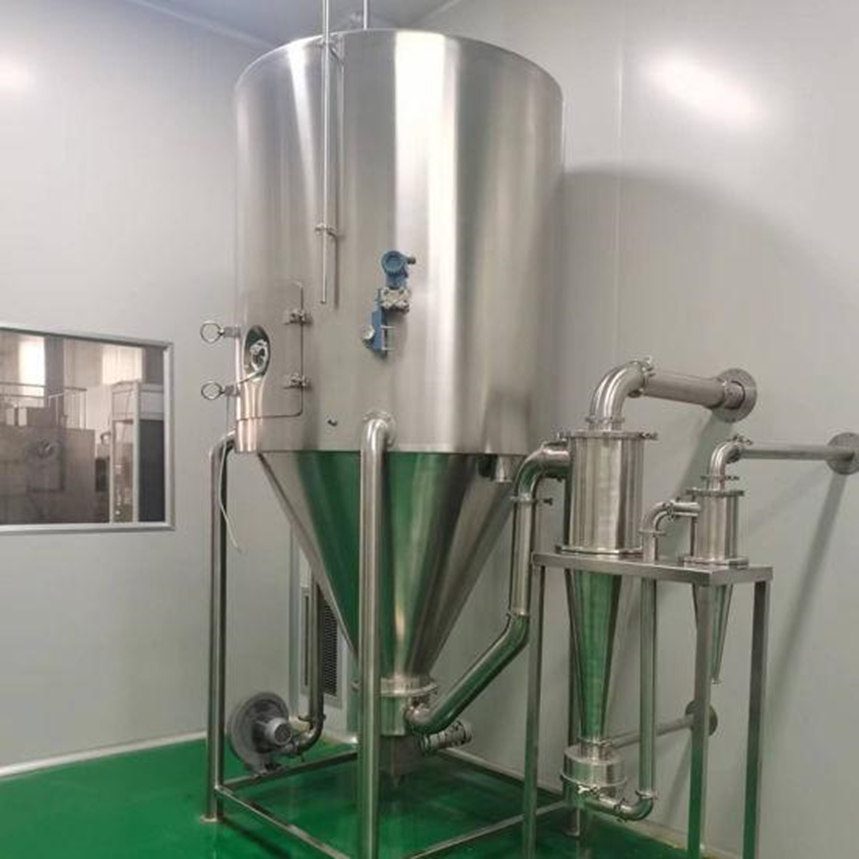
If the feed is a liquid/slurry:
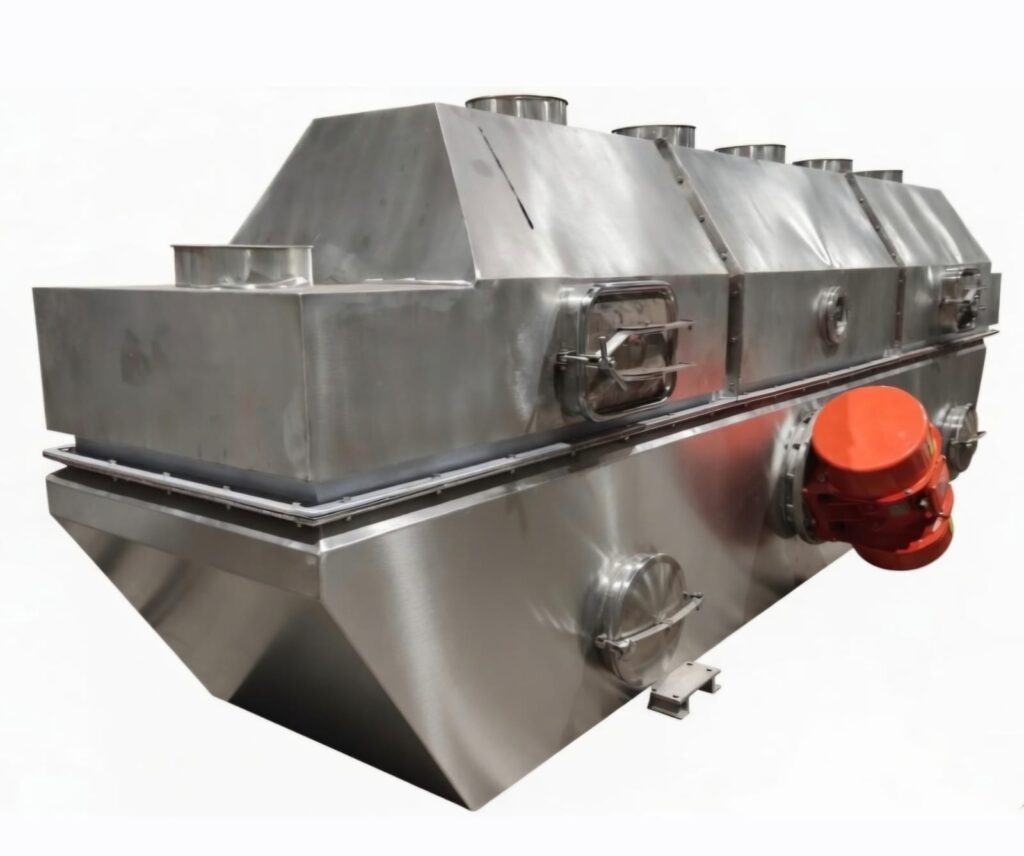
If the feed is a wet particulate:
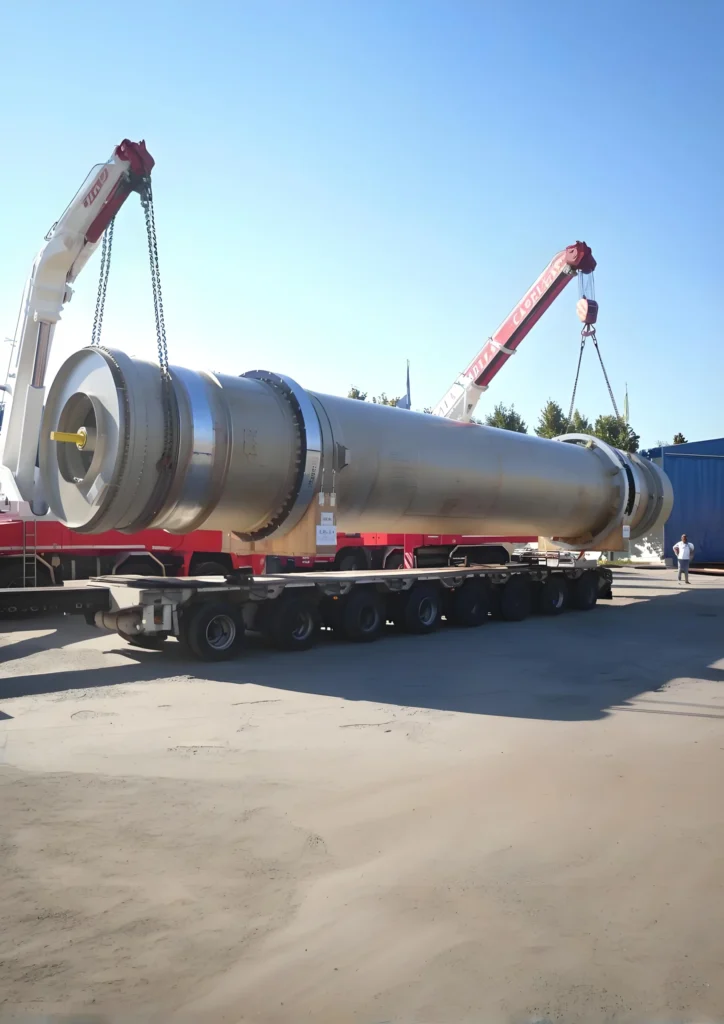
If the feed is a robust bulk solid:
If the feed is a difficult wet cake:
Spin Flash / Paddle / Other Process-Specific Technology
This prevents a common engineering mistake:
Trying to use one dryer technology for every material condition.
GTI’s Process-Engineering Approach
1. Understand the Formulation
GTI evaluates:
- Major ingredients
- Surfactant system
- Builders
- Sodium sulfate
- Sodium carbonate
- Silicates
- Water content
- Heat-sensitive components
- Desired final powder
2. Characterize the Slurry
Important parameters include:
- Solids concentration
- Viscosity
- Temperature
- Particle size
- Stability
- Pumpability
- Settling tendency
3. Define the Powder
The target should include:
- Moisture
- Bulk density
- Particle size
- Flowability
- Dissolution
- Product temperature
- Fines
- Caking tendency
4. Select the Drying Technology
Possible technologies include:
- Spray Dryer
- Fluid Bed Dryer
- Vibratory Fluidised Bed Dryer
- Rotary Dryer
- Spin Flash Dryer
- Paddle Dryer
- Hybrid / multi-stage systems
5. Engineer the Complete Process
The dryer can be integrated with:
- Slurry preparation
- Pumps
- Atomization
- Heating system
- Cyclone
- Bag filter
- Cooling
- Screening
- Post-dosing
- Blending
- Conveying
- Automation
Why Choose GTI Dryers for Detergent Powder Drying?
For detergent and surfactant projects, the important question is not simply:
“Can you supply a spray dryer?”
It is:
“Can the complete drying system produce the powder characteristics required by our formulation and production process?”
GTI Dryers approaches industrial drying through:
- Application-specific technology selection
- Process-oriented engineering
- Continuous industrial operation
- Customized equipment design
- Integration with upstream and downstream equipment
- Dust and product-recovery consideration
- Energy-conscious design
- Automation options
- Material-of-construction selection
- Pilot or process evaluation where required
The objective is to help manufacturers achieve a balanced combination of:
Capacity + Powder Quality + Moisture Control + Bulk Density + Energy Performance + Reliable Operation
Is Spray Drying Right for Your Detergent Plant?
Use this quick decision guide.
Choose Spray Drying when:
Your feed is a pumpable liquid or slurry You need to convert the feed directly into powder Particle formation is part of the process Continuous high-throughput production is required
Consider Fluid Bed when:
Your feed is already particulate Further drying is required Cooling is required Moisture equalization is important
Consider Rotary Drying when:
The material is a robust bulk solid High throughput is required The feed does not require spray-based particle formation
Consider a Multi-Stage System when:
Spray drying alone does not achieve the final specification Additional drying/cooling is required Product temperature needs tighter control Different stages can improve overall energy or powder quality
What Information Should You Send a Dryer Manufacturer?
For a meaningful technical assessment, provide:
Product:
Detergent / Surfactant / LABSA-based / Other
Production capacity:
_____ kg/h or TPH
Feed form:
Slurry / Liquid / Wet Granules / Powder
Slurry solids:
_____ %
Initial moisture:
_____ %
Required final moisture:
_____ %
Slurry temperature:
_____ °C
Slurry viscosity:
_____ cP
Target bulk density:
_____ kg/m³
Particle size:
_____ mm / µm
Heat source:
Gas / LPG / Steam / Other
Existing equipment:
Spray Tower / Fluid Bed / Rotary / Other
Current bottleneck:
Capacity / Moisture / Bulk Density / Caking / Dust / Energy / Other
Plant location:
These parameters allow the dryer supplier to evaluate the process around the actual detergent formulation rather than a generic catalogue specification.
Frequently Asked Questions
What type of dryer is used for detergent powder?
A spray dryer is commonly used when a liquid or slurry feed must be converted into detergent powder. Fluid-bed systems can then be used for further drying, cooling or conditioning of suitable particulate material.
Which dryer is best for detergent powder?
There is no universal best dryer. For slurry-to-powder production, spray drying is the key technology to evaluate. Fluid-bed or other finishing systems may be added depending on the required moisture, cooling and powder characteristics.
Can LABSA be spray dried?
LABSA-based formulations can be incorporated into detergent slurry systems that are subsequently spray dried, but the actual neutralization chemistry, slurry properties and formulation must be established for the specific product. Published detergent processes describe LABSA/LAS-containing aqueous slurries being spray dried.
What is the role of sodium sulfate in detergent spray drying?
Sodium sulfate can form part of the spray-dried detergent formulation or be used in downstream blending, depending on the product formulation. Its concentration and physical characteristics can influence slurry and powder properties.
Why does detergent powder become too dense?
Bulk density can be influenced by slurry solids, atomization, droplet size, drying conditions, particle structure and downstream handling. The solution should therefore be evaluated across the complete particle-formation process.
Why does detergent powder cake?
Caking can result from residual moisture, hygroscopic ingredients, particle properties, product temperature, humidity and storage conditions. Optimizing only the dryer may not solve the complete problem.
Can spray drying and fluid-bed drying be combined?
Yes. A spray tower can produce the base powder while a downstream fluid bed can provide additional drying, cooling or conditioning where appropriate. Two-stage detergent drying processes have been documented.
What capacity can a detergent spray dryer handle?
There is no universal capacity. It depends on slurry solids, feed rate, evaporation duty, formulation, moisture targets, air conditions, tower design and heat-source capacity. The dryer should therefore be sized from actual process data.
Does GTI manufacture detergent spray dryers?
GTI Dryers develops industrial drying systems for chemical and powder-processing applications. For a detergent project, the appropriate configuration should be evaluated based on the slurry, formulation, production capacity and required powder properties.
Planning a Detergent Powder Manufacturing or Expansion Project?
The right starting point is not:
“Give me the price of a spray dryer.”
Start with:
“Here is my formulation, slurry, production capacity and target powder.”
From there, the drying system can be engineered around the actual process.
Send GTI Dryers:
Product + Capacity + Slurry Solids + Initial Moisture + Final Moisture + Viscosity + Target Bulk Density + Particle Size
GTI can then evaluate whether the application calls for:
Spray Dryer → Spray Dryer + Fluid Bed → Fluid Bed → Rotary Dryer → or another process-specific configuration.
GTI Dryers
Industrial Drying Solutions for Detergents, Surfactants, Chemicals & Process Powders
Engineered in India. Designed for the World.