Delhi Water Expo 2026: Where Water & Wastewater Innovation Meets Industrial Processing Technology
India’s water sector is undergoing a major transformation as industries, municipalities and infrastructure developers face increasing pressure to improve water conservation, wastewater treatment, recycling, resource recovery and energy efficiency.
Against this backdrop, the Delhi Water Expo 2026 is scheduled for 20–22 August 2026 at Hall 12A, ITPO, Pragati Maidan, New Delhi. The event is focused on emerging technologies in the water and wastewater sector and brings together technology providers, industry professionals and other stakeholders to explore solutions to technical, regulatory and sustainability challenges.
For companies involved in industrial processing, one important question is becoming increasingly relevant:
How can water and wastewater treatment be combined with efficient solids handling, sludge management and drying technologies?
This is where advanced industrial drying technologies can complement modern water and wastewater treatment systems.
Why Water & Wastewater Treatment Technology Matters
Water management is no longer limited to supplying fresh water and disposing of wastewater.
Modern industrial facilities increasingly need to consider:
- Water conservation
- Wastewater treatment
- Effluent recycling
- Sludge management
- Water reuse
- Resource recovery
- Energy consumption
- Zero Liquid Discharge (ZLD)
- Process automation
- Environmental compliance
Poorly managed wastewater can create operational, environmental and economic challenges. At the same time, wastewater treatment generates wet sludge, filter cake and other high-moisture solids that may require further processing before reuse, disposal or recovery.
Therefore, an efficient wastewater strategy often needs to address both liquid treatment and downstream solids management.
What Technologies Are Showcased at Delhi Water Expo 2026?
The Delhi Water Expo covers a broad range of technologies associated with the water and wastewater industry. The event’s official information highlights emerging technologies, collaboration between public and private sector stakeholders, and solutions addressing technical and sustainability challenges.
Key technology areas include:
Water Treatment
Modern water treatment systems can incorporate technologies for:
- Raw water treatment
- Industrial process-water treatment
- Filtration
- Purification
- Membrane systems
- Water softening
- Disinfection
- RO systems
- Demineralization
Wastewater Treatment
Industrial wastewater treatment can involve:
- Effluent Treatment Plants (ETP)
- Sewage Treatment Plants (STP)
- Biological treatment
- Chemical treatment
- Sludge separation
- Clarification
- Filtration
- Wastewater recycling
Water Recycling & Reuse
Industries are increasingly evaluating:
- Treated wastewater reuse
- Process-water recycling
- Industrial water recovery
- Closed-loop water systems
- Zero Liquid Discharge
- Resource recovery
Smart Water Management
Automation and digital technologies are also becoming increasingly important, including:
- PLC-based control
- SCADA systems
- Online monitoring
- Sensors
- Process instrumentation
- Automated dosing
- Remote monitoring
- Data-based process optimization
Where Industrial Dryers Fit into Wastewater Management
Water treatment removes contaminants from liquid streams, but many treatment processes generate wet solids.
Examples include:
- Sewage sludge
- Industrial sludge
- Filter cake
- Biomass residues
- Organic solids
- Mineral residues
- Concentrated treatment by-products
These materials may contain significant quantities of water.
Drying can therefore become an important downstream operation when the objective is to:
Reduce moisture → Reduce weight → Improve handling → Facilitate storage → Enable recovery or disposal
Depending on the material, different industrial dryer technologies may be evaluated.
Industrial Drying Technologies for Sludge & High-Moisture Materials
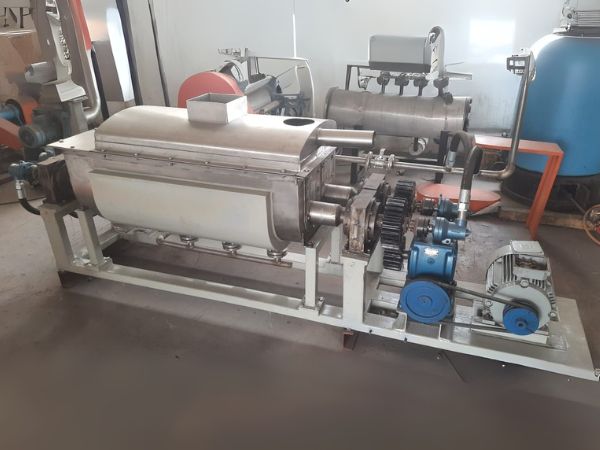
1. Paddle Dryer
Paddle dryers can be considered for certain sludge, filter cake, pasty and difficult-to-handle materials.
Their indirect heating configuration can be useful where controlled heat transfer and reduced direct contact with hot drying air are desirable.
Potential applications include:
- Industrial sludge
- Filter cake
- Chemical sludge
- Organic residues
- High-moisture process solids
- Wastewater-treatment by-products
The final design depends on moisture content, feed consistency, solids concentration, thermal sensitivity and required final moisture.
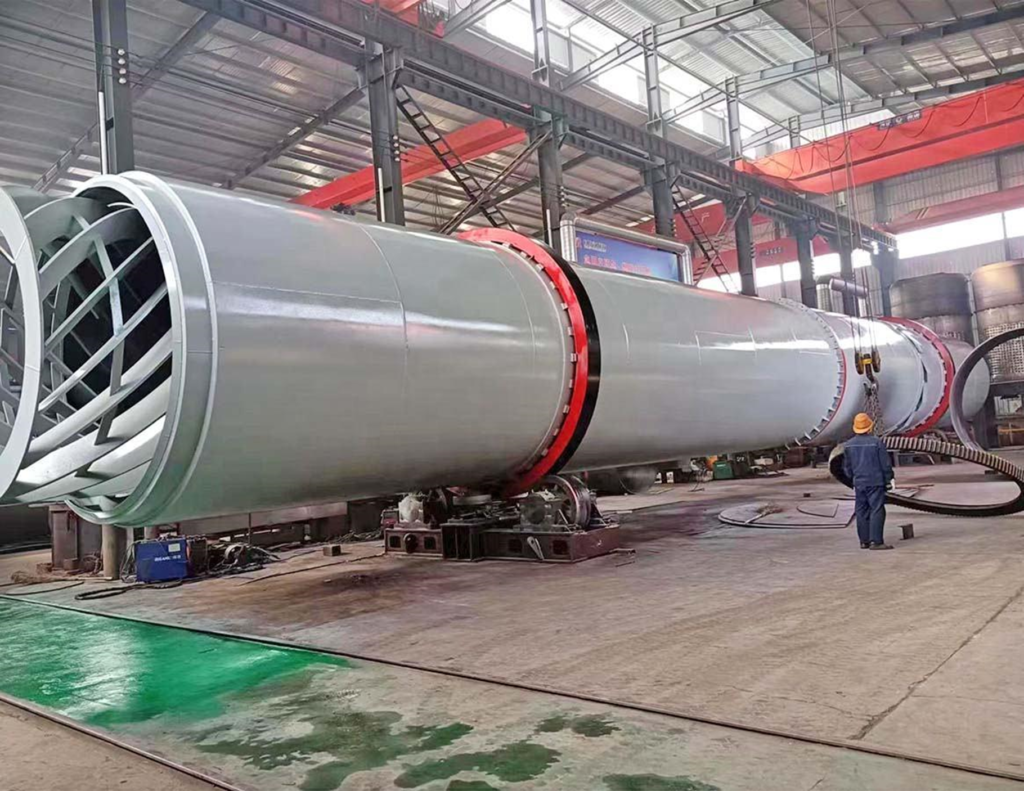
Rotary dryers are widely used for continuous industrial drying of bulk solids.
For suitable wastewater-related applications, rotary drum dryers may be evaluated for:
- Dried sludge
- Biomass residues
- Mineral solids
- Industrial by-products
- Organic materials
- High-moisture bulk solids
A rotary dryer can be designed around parameters such as:
Feed Rate → Initial Moisture → Final Moisture → Water Evaporation → Heat Requirement → Residence Time → Dryer Capacity
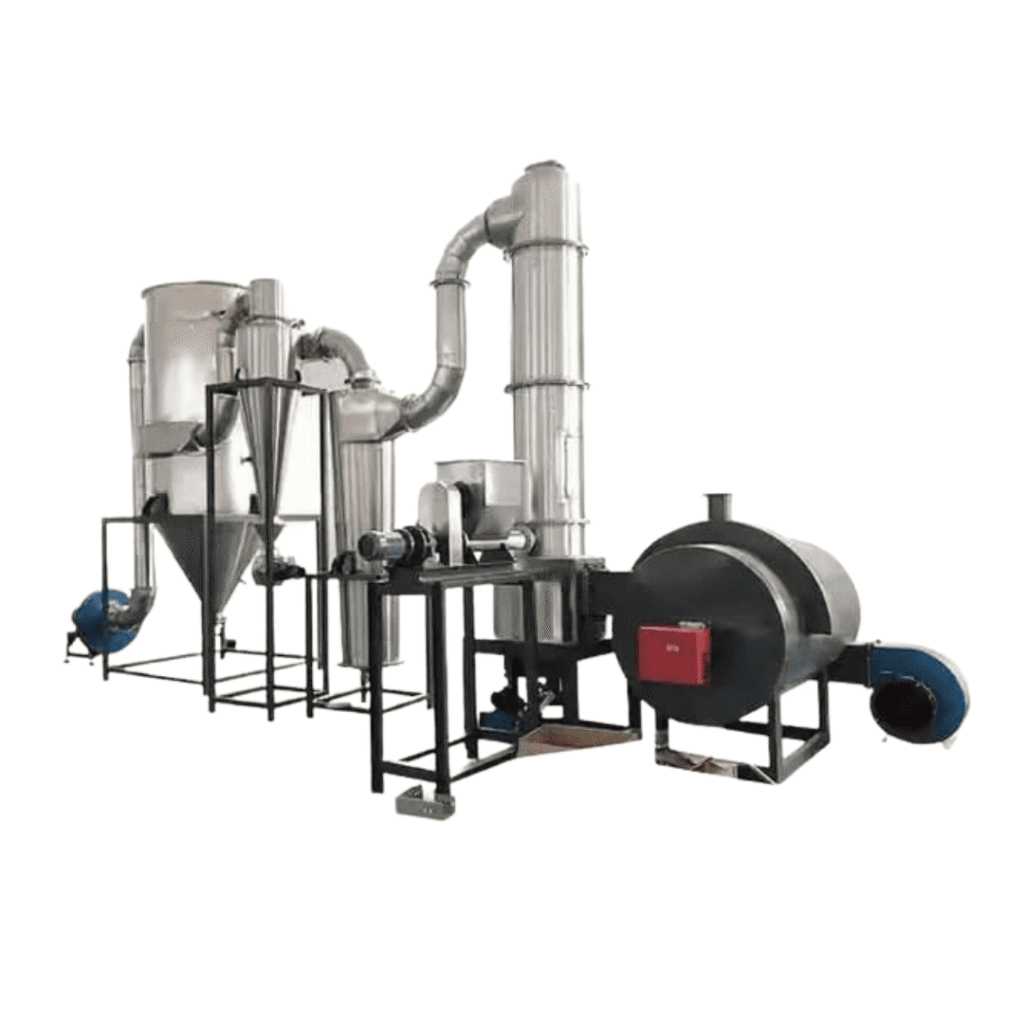
3. Flash Dryer
Flash drying can be considered where the feed can be dispersed into a hot air stream and rapid moisture removal is required.
Potential applications may include suitable:
- Fine wet solids
- Powder-like materials
- Chemical residues
- Biomass fines
- Industrial process solids
Particle characteristics and feedability are critical when evaluating flash drying.
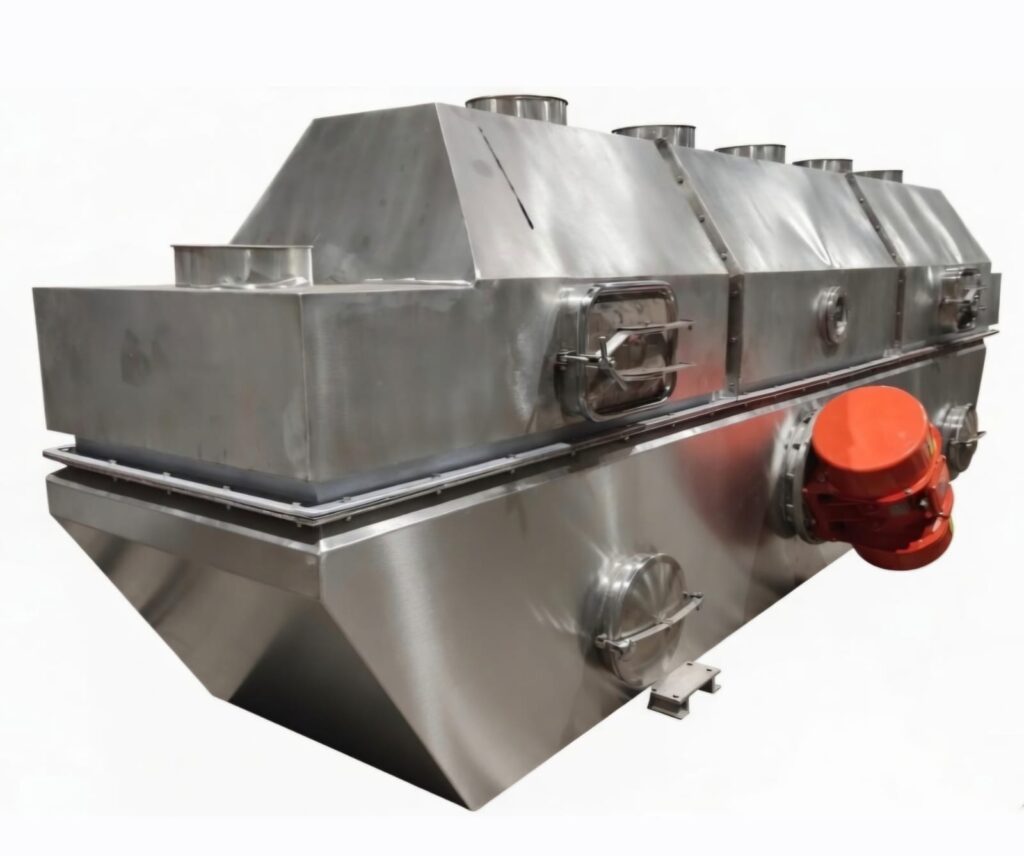
Fluid bed technology can provide intensive contact between heated air and suitable particulate materials.
Potential applications include:
- Granular solids
- Crystalline materials
- Filtered solids
- Process intermediates
- Certain dried wastewater-derived materials
Air velocity, particle size, density, moisture content and fluidization characteristics must be evaluated before selecting this technology.
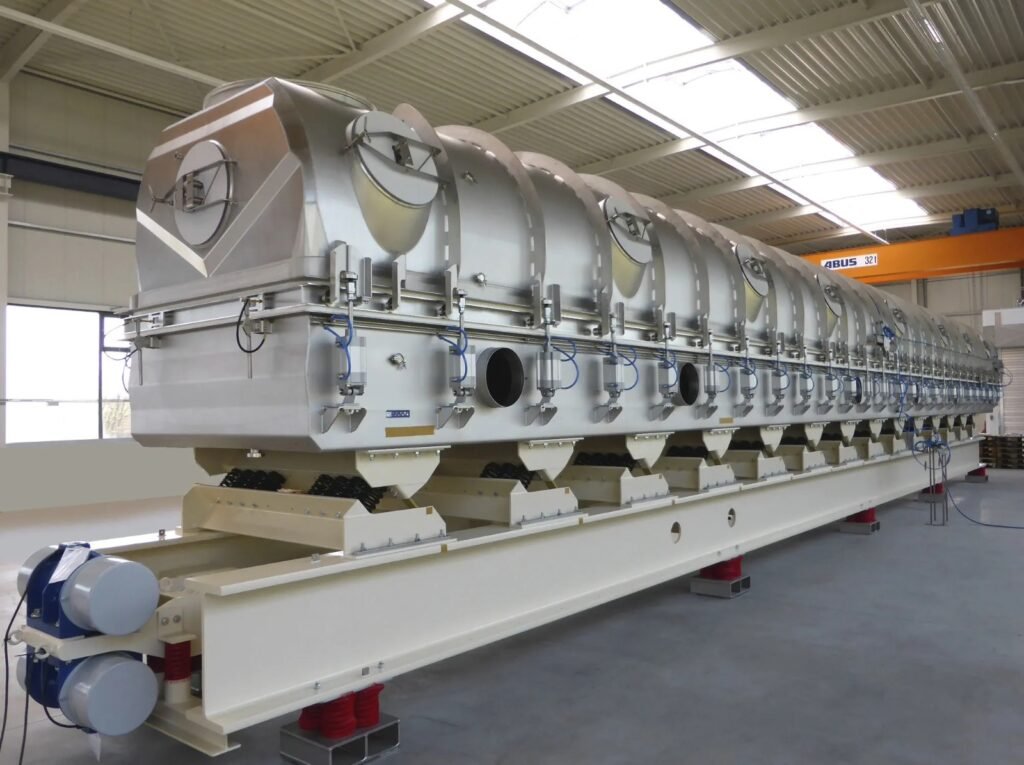
For materials requiring longer residence time and controlled continuous drying, band dryers and mesh belt dryers can be evaluated.
These systems may be suitable for:
- Biomass
- Organic residues
- Sludge-derived materials
- Agricultural residues
- Industrial by-products
Multi-zone temperature and airflow control can help engineers develop a drying profile suited to the material.
Water Treatment + Drying: An Integrated Industrial Approach
One of the important trends in modern industrial water management is the move toward resource recovery and circular processing.
Instead of viewing wastewater simply as waste, industries can evaluate the complete process:
Industrial Process
↓
Wastewater Generation
↓
ETP / Treatment System
↓
Water Recovery & Reuse
↓
Sludge / Wet Solids Generation
↓
Mechanical Dewatering
↓
Industrial Drying
↓
Dry Product / Resource Recovery / Controlled Disposal
This integrated approach can help reduce the amount of water and moisture carried into downstream waste-management processes.
How to Select the Right Industrial Dryer for Wastewater Solids
Selecting a dryer should begin with the material—not simply the required capacity.
Step 1 — Understand the Feed
Important parameters include:
- Initial moisture
- Solids concentration
- Particle size
- Bulk density
- Stickiness
- Flowability
- Organic content
- Mineral content
- Thermal sensitivity
Step 2 — Define the Final Product
Determine:
- Target moisture
- Required product temperature
- Particle characteristics
- Storage requirements
- Disposal requirements
- Reuse or recovery requirements
Step 3 — Calculate the Drying Requirement
A preliminary engineering calculation can follow:
Feed Rate → Moisture Removal → Water Evaporation → Heat Duty → Airflow → Residence Time → Dryer Capacity
Step 4 — Select the Technology
Depending on the material:
Paddle → Rotary → Flash → Fluid Bed → Band/Mesh Belt → Specialized Drying
Step 5 — Validate Through Testing
Pilot or laboratory testing can help determine whether the selected dryer can achieve the required moisture reduction, product characteristics and energy performance before commercial-scale implementation.
Energy Efficiency in Industrial Water & Wastewater Drying
Energy consumption is an important consideration when drying high-moisture materials because a large portion of the thermal load is associated with evaporating water.
Modern dryer systems can therefore be evaluated for:
Heat Recovery
Recovering usable heat from exhaust air wherever technically practical.
Airflow Optimization
Controlling airflow according to the actual moisture-removal requirement.
Multi-Zone Drying
Using different temperatures and airflow conditions through different drying zones.
Variable Frequency Drives
VFDs can help regulate:
- Fan speed
- Conveyor speed
- Feed systems
- Drive systems
Thermal Insulation
Proper insulation helps reduce unnecessary heat losses from:
- Drying chambers
- Hot-air ducts
- Heated surfaces
- Process piping
Heat Source Selection
Depending on plant infrastructure, drying systems may be engineered around:
- Steam
- Thermal oil
- Natural gas
- LPG
- Electric heating
- Biomass
- Waste heat
The optimum configuration depends on local energy availability, product requirements and overall plant economics.
The Role of Automation in Modern Water & Wastewater Processing
Automation is becoming increasingly important across water treatment and industrial drying operations.
A modern integrated system may incorporate:
PLC Control → Temperature Monitoring → Moisture Monitoring → VFD Control → Airflow Control → Alarm Management → SCADA Monitoring
This can help operators maintain more consistent process conditions while improving monitoring and operational visibility.
For industrial drying systems, important control parameters can include:
- Inlet temperature
- Outlet temperature
- Product temperature
- Airflow
- Conveyor speed
- Feed rate
- Residence time
- Exhaust conditions
- Moisture content
Delhi Water Expo 2026: A Platform for Water Industry Innovation
The 5th edition of Delhi Water Expo 2026 is positioned as a B2B platform for the water and wastewater industry, bringing together technology providers, manufacturers, consultants, utilities and industry stakeholders. The official event information lists 20–22 August 2026 at Hall 12A, ITPO, Pragati Maidan, New Delhi.
The event is particularly relevant for professionals working in:
Water Treatment | Wastewater Treatment | Industrial Water | ETP | STP | Water Recycling | Filtration | Pumps & Valves | Automation | Sludge Management | Sustainable Water Technologies
For businesses exploring complete industrial processing solutions, the intersection between water treatment, wastewater management and solids drying creates additional opportunities for process integration.
Why GTI Dryers Are Relevant to the Water & Wastewater Sector
GTI Dryers develops industrial drying solutions for different types of materials and process requirements.
Depending on feed characteristics and final product requirements, technologies that may be evaluated include:
Rotary Dryer | Paddle Dryer | Flash Dryer | Fluid Bed Dryer | Band Dryer | Mesh Belt Dryer | Vacuum Dryer | Spray Dryer | Refractance Window Dryer
The selection is not based simply on the name of the material.
It depends on:
What is the moisture content?
How much water must be removed?
What is the desired final moisture?
Is the material sticky, granular, fibrous or powdery?
What heat source is available?
What level of automation is required?
These engineering questions determine the most appropriate drying configuration.
Delhi Water Expo 2026 and the Future of Sustainable Water Management
The future of industrial water management is moving beyond conventional treatment toward water reuse, resource recovery, energy efficiency, digitalization and circular processing.
As industries seek to reduce freshwater consumption and wastewater generation, integrated solutions will become increasingly important.
The combination of:
Water Treatment + Wastewater Treatment + Water Recycling + Sludge Management + Industrial Drying
can form an important part of a more comprehensive approach to sustainable industrial processing.
Delhi Water Expo 2026 provides an opportunity for industry professionals to explore these developments, understand emerging technologies and identify potential solutions for India’s evolving water and wastewater requirements.
Final Takeaway
Delhi Water Expo 2026 represents an important meeting point for India’s water and wastewater ecosystem. From treatment and filtration to recycling, automation, resource recovery and industrial solids management, the sector is moving toward increasingly integrated and energy-conscious solutions.
For industries generating wet sludge, filter cake, biomass residues or other high-moisture solids, industrial drying can be an important downstream process for reducing moisture and improving material handling.
The right dryer, however, must always be selected through material characterization, drying calculations and, where appropriate, pilot testing.
Looking for an Industrial Dryer for Wet Sludge, Filter Cake or High-Moisture Industrial Solids?
GTI Dryers can evaluate suitable rotary, paddle, flash, fluid bed, band and other industrial drying technologies based on your material, moisture content, throughput and final-product requirements.
Discuss your drying requirement with GTI Dryers and develop a preliminary technical recommendation.