
Buyers evaluating continuous mesh-belt dryers for vegetable and spice lines typically face the same set of practical questions: continuous versus batch, single-layer versus multi-layer, which heat source, how temperature is controlled for quality retention, what throughput is realistic, and how to judge total cost of ownership and manufacturer capability.
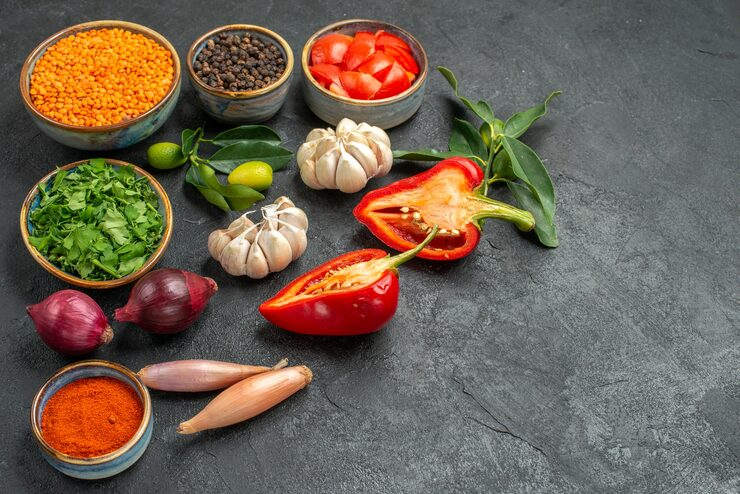
This guide answers those questions in the order buyers usually need them, with specific relevance to sliced and prepared vegetables and spices (including onion, garlic and ginger where the same principles apply).
1. When a Continuous Mesh Belt Dryer Is the Right Choice
A continuous mesh-belt (or band) dryer carries product as a permeable layer on a moving stainless-steel mesh or perforated belt through controlled temperature and airflow zones. Air passes through the bed; belt speed sets residence time.
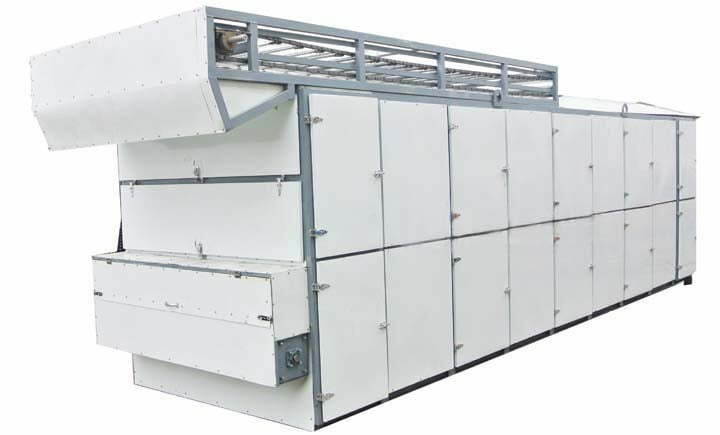
Strong fit when
- Feed is sliced, diced, flaked or forms a permeable layer (onion, garlic, ginger, other vegetables, many spices, herbs, coconut products)
- Gentle handling and multi-zone temperature control are required to protect colour and flavour
- Continuous industrial capacity is needed
Usually not the first choice when
- Feed is a sticky non-permeable cake or paste
- Product is a free-flowing fine powder that fluidises well
- Very high-throughput coarse bulk solids are the main duty (rotary may be more economical)
2. Continuous vs Batch — The First Decision
| Aspect | Continuous mesh-belt dryer | Batch tray / cabinet dryer |
|---|---|---|
| Capacity | Designed for steady industrial throughput | Limited by tray loading and labour |
| Labour | Low once running | High (loading, turning, unloading) |
| Moisture uniformity | Controlled by zones and residence time | Depends on operator and tray position |
| Temperature profiling | Multiple independent zones possible | Limited or manual |
| Floor space & automation | Higher capital, lower ongoing labour | Lower capital, higher labour and variability |
For commercial vegetable and spice dehydration aimed at consistent residual moisture and export or industrial buyers, continuous systems are the normal evaluation path once daily volumes justify the investment.
3. Single-Layer vs Multi-Layer (Multi-Pass) Design
Single-layer
Product travels on one belt through the dryer length. Simpler mechanically; residence time is set by belt length and speed. Suitable when capacity and drying time fit a single pass.
Multi-layer / multi-pass
Product is transferred across two or more belts (or levels) inside the same footprint. Effective drying length increases without extending the building length. Common in higher-capacity vegetable and spice lines where longer residence time is needed for gentle drying.
Buyer guidance
- Higher capacity or longer required residence time → evaluate multi-layer
- Limited building length → multi-layer often preferred
- Simpler maintenance preference and moderate capacity → single-layer may suffice
- Confirm transfer points are designed for food-grade cleanability and minimal product damage
4. Temperature Control and Quality Retention
Vegetable and spice quality (colour, flavour, active compounds) is highly sensitive to product temperature and time at temperature.
What good systems provide
- Independent temperature and airflow control in successive zones
- Ability to run higher driving force in early zones (surface moisture removal) and lower temperatures in final zones (finish drying without scorching)
- Stable belt loading and air distribution so every part of the bed sees similar conditions
- Rapid cooling after the dryer to stop residual drying and protect quality
What to specify
- Number of independently controlled zones
- Maximum product temperature limits for your crop (if known)
- Residual-moisture target and acceptable variation
Onion (high sugar), garlic (flavour compounds) and ginger (volatile oils) all benefit from progressive temperature profiles rather than a single high temperature throughout.
5. Energy Efficiency and Heat Sources
Energy is usually the largest operating cost. Efficiency depends on:
- How well inlet air temperature and airflow match the actual evaporation load
- Exhaust temperature and humidity (heat still available or already used)
- Insulation and leakage
- Possibility of heat recovery or use of waste heat
- Feed moisture consistency (high or variable inlet moisture increases energy per kg of dry product)
Common heat sources
- Steam
- Thermic fluid
- Direct or indirect gas
- Biomass / agro-waste (where fuel logistics and emissions allow)
- Waste heat from other process streams (where temperature and cleanliness permit)
Ask manufacturers for estimated specific energy consumption based on your inlet/outlet moisture and capacity, not generic percentage claims. Multi-zone design and good air recirculation (where product quality allows) improve utilisation.
6. Throughput and Sizing Reality
Catalogue “capacity” figures are only meaningful when tied to:
- Product type and slice thickness
- Inlet moisture range
- Target residual moisture
- Belt loading (kg/m²) and bed depth
- Temperature profile
Under-loading or over-loading the belt both reduce uniformity. Seasonal peaks in vegetable and spice harvests should be stated explicitly so the dryer is not sized only on average daily volume.
7. Total Cost of Ownership (TCO) Factors
Beyond capital cost, evaluate:
- Fuel or energy cost per kg of water evaporated
- Labour for operation and cleaning
- Spare parts (belts, bearings, seals, fans) and lead times
- Cleaning time and hygiene design (especially for multi-product plants)
- Expected availability and maintenance intervals
- Impact of residual-moisture variation on downstream milling, packaging or customer rejects
A lower purchase price with poor zone control or difficult cleaning often raises TCO.
8. What to Evaluate When Contacting Manufacturers
Use this checklist when shortlisting or requesting quotations:
Process data you should provide
- Crop(s) and prepared form (slice/flake thickness)
- Inlet moisture range and target residual moisture
- Required continuous throughput (and peak)
- Available heat source and utilities
- Hygiene / food-grade requirements
- Preference for single- or multi-layer
- Space constraints
Questions to ask the manufacturer
- How many independent temperature/airflow zones are proposed and why?
- What material of construction is used for product-contact parts?
- How is belt loading and air distribution controlled for uniform drying?
- Is cooling included or designed as a separate stage?
- What energy estimate is offered for our moisture and capacity data?
- What after-sales, commissioning and spare-parts support is available in our region?
- Can the same line run more than one crop with defined changeover procedures?
Manufacturers who request detailed process data and discuss temperature profiles and residual-moisture uniformity are usually stronger partners than those who only quote a standard model and a generic capacity.
9. How GTI Dryers Approaches Mesh-Belt Systems for Vegetables & Spices
GTI Dryers designs and manufactures continuous mesh-belt / band dryers for vegetable and spice applications, including onion, garlic, ginger and related products. The approach is:
- Engineer from slice form, moisture targets and capacity
- Provide multi-zone temperature and airflow control for quality retention
- Offer food-grade construction options
- Support single- or multi-layer configurations according to residence time and footprint
- Review energy source and process data before final sizing
There is no universal “best” mesh-belt dryer. The right system matches the product’s thermal sensitivity, the required residual moisture and the plant’s continuous capacity.
10. Quick Decision Summary
| Decision | Prefer continuous mesh-belt when… |
|---|---|
| Continuous vs batch | Industrial volumes and consistent residual moisture are required |
| Single vs multi-layer | Longer residence time or limited building length is needed |
| Temperature control | Colour and flavour must be protected (multi-zone essential) |
| Energy | Heat source and zone design are matched to actual evaporation load |
| Manufacturer | Supplier engineers from your process data and supports food-grade duty |
Geographic Note
Vegetable and spice dehydration using continuous mesh-belt dryers is established in India, China, Southeast Asia, Africa and other producing regions. Local differences appear mainly in energy cost, fuel availability, seasonal harvest patterns and export moisture specifications. The core buying criteria — multi-zone control, food-grade construction, realistic sizing and manufacturer process support — remain the same.
Frequently Asked Questions
Is a multi-layer belt dryer always better?
Not always. It is advantageous when residence time or capacity requires more effective length without extending the building. For moderate duties a well-designed single-layer system can be sufficient and simpler.
How important is the number of temperature zones?
Very important for onion, garlic, ginger and similar products. Progressive temperature reduction protects colour and flavour better than a single high-temperature zone.
Can one dryer handle onion, garlic and ginger?
Often yes, with adjustable zone temperatures, belt speed and proper cleaning/changeover procedures. Confirm with the manufacturer using your specific products.
What residual moisture should I target?
It depends on whether the product is sold as slices/flakes or milled to powder, and on customer specifications. State the target clearly when requesting quotations.
What information do manufacturers need for an accurate quote?
Product form and thickness, inlet and target moisture, continuous capacity, heat source and hygiene requirements.
Next Step
If you are buying or upgrading a continuous mesh-belt dryer for vegetable or spice dehydration, share your product form, capacity and residual-moisture targets. GTI can review the data and recommend a suitable single- or multi-layer configuration with appropriate zone control and energy options.
Request a continuous mesh-belt dryer buying assessment with your process data.
Contact the GTI Technical Team:
Website: gtidryers.com
Email: mktg@gtidryers.com
Phone / WhatsApp: +91 9330077417