
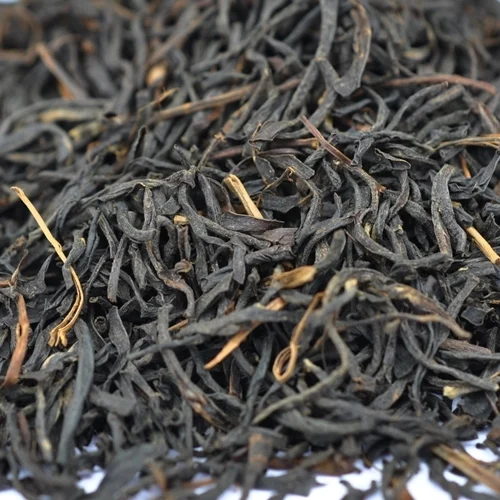
Orthodox tea is manufactured by rolling or twisting the leaf rather than the intensive cutting, tearing and curling of CTC. The resulting made tea contains whole leaves, broken leaves and tips of varying size and shape. Premium liquor character, leaf appearance and grade mix depend on every stage of the line — from withering through drying and sorting.
Buyers and estate owners evaluating orthodox machinery need a clear process map, an essential equipment list, and practical criteria for capacity, quality preservation and manufacturer selection. This guide provides that framework.
1. Orthodox vs CTC — Why the Machinery Differs
| Aspect | Orthodox | CTC |
|---|---|---|
| Leaf treatment | Rolling / twisting | Crush, tear, curl |
| Particle form | Whole, twisted, broken leaf | Small, relatively uniform granules |
| Fermentation handling | Often continuous fermenting machines (CFM) or floor/drum systems | Continuous systems suited to granules |
| Drying priority | Protect leaf structure; staged temperature control | Rapid, uniform moisture removal |
| Sorting | Gentle stalk extraction and size classification (Myddleton, Arnott, etc.) | High-throughput grading for granular grades |
Selecting CTC-style high-velocity equipment for orthodox leaf frequently damages appearance and reduces the value of premium grades.
2. Orthodox Tea Process Flow
Fresh green leaf → Withering → Rolling → Roll breaking & green-leaf sifting → Fermentation (oxidation) → Drying → Cooling → Sorting / grading → Packing
Each stage has a specific process objective and corresponding machinery.
Stage 1 — Withering
Objective: Reduce leaf moisture and prepare the leaf chemically and physically for rolling.
Essential equipment: Withering troughs (open or enclosed) with controlled airflow. Fan capacity and trough loading determine withering uniformity and time.
Buyer notes: Adequate air volume per unit trough area and even leaf spreading are critical. Under-withered or over-withered leaf affects rolling and final liquor.
Stage 2 — Rolling
Objective: Twist and bruise the leaf to initiate oxidation and develop the characteristic orthodox leaf style.
Essential equipment: Orthodox tea rollers (rolling tables) — single- or double-action, various table diameters (commonly 36″, 46″ and larger). Capacity is expressed in kg of withered leaf per batch or per hour.
Buyer notes: Robust drive, pressure control and table surface quality affect leaf style and machine life. Match roller capacity to withering output.
Stage 3 — Roll Breaking & Green-Leaf Sifting
Objective: Break lumps from the roller and separate fine and coarse fractions for controlled fermentation and further rolling if required.
Essential equipment: Roll breakers and green-leaf sifters (including rotary or vibratory designs).
Buyer notes: Efficient lump breaking and sifting improve fermentation uniformity and reduce the load of unprocessed lumps into the fermenter.
Stage 4 — Fermentation (Oxidation)
Objective: Controlled enzymatic oxidation to develop colour, briskness and flavour.
Essential equipment: Continuous Fermenting Machines (CFM) — belt or tray type, single- or multi-stage — with humidified air supply and adjustable residence time. Traditional floor or drum systems are still used in some factories.
Buyer notes: Uniform bed depth, controlled humidity and temperature, and adjustable fermenting time (often in the range of tens of minutes to a few hours depending on leaf and style) are essential. CFM systems improve consistency and hygiene compared with open-floor methods.
Stage 5 — Drying
Objective: Arrest oxidation, reduce moisture to a stable level (commonly targeted near 2–3 % for made tea, subject to factory specification), and preserve leaf appearance and liquor character.
Essential equipment:
- Endless Chain Pressure (ECP) multi-pass dryers
- Combination / multi-stage dryers (fluid-bed + conveyor or multi-zone designs)
- Other controlled continuous dryers suited to whole and broken leaf
Why dryer selection is critical for orthodox
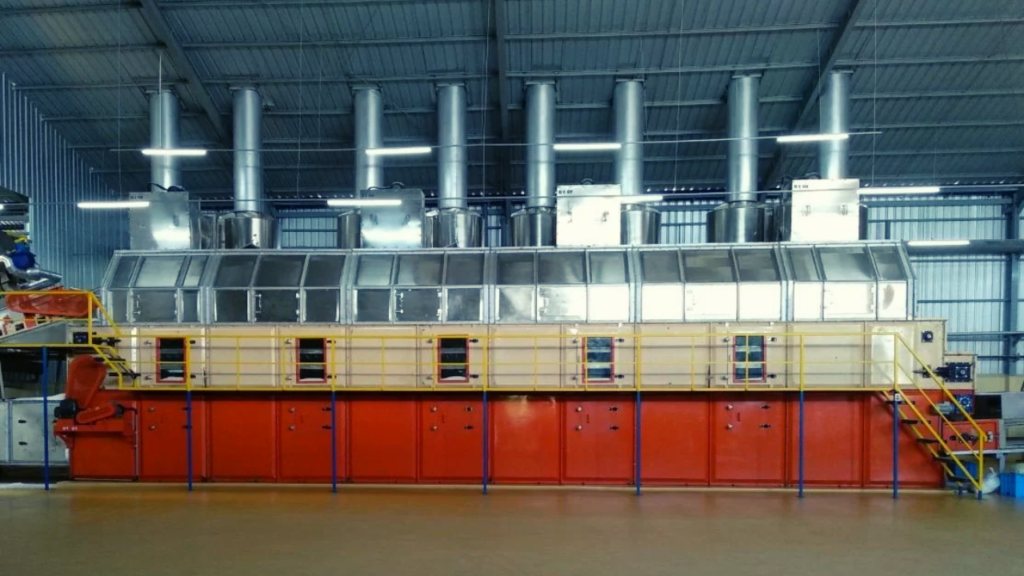
Orthodox leaf is more fragile and variable in size than CTC granules. High-velocity or single-condition drying can break leaf, create uneven moisture or damage aroma. Multi-stage or combination systems that allow temperature and airflow profiling are widely evaluated for orthodox lines.
GTI position: GTI Dryers supplies combination and multi-stage drying systems engineered for orthodox and specialty tea, with controlled temperature zones and gentler product movement aimed at protecting leaf structure while reaching the required residual moisture.
Stage 6 — Cooling
Objective: Stop residual drying and stabilise the tea before sorting.
Essential equipment: Cooling conveyors or dedicated coolers integrated after the dryer.
Stage 7 — Sorting & Grading
Objective: Remove fibre and stalk, then classify made tea into commercial grades (whole leaf, broken, fannings, dust, etc.) while preserving leaf integrity.
Essential equipment (typical orthodox toolkit):
- Fibre extractors / electrostatic fibre removers
- Myddleton-type stalk extractors
- Arnott or similar gentle sorters
- Multi-deck sifters and specialised graders (Trinick, Michi, etc. depending on factory practice)
Buyer notes: Aggressive high-frequency screens designed for CTC can damage orthodox leaf. Gentle stalk extraction and size classification protect the value of premium grades.
3. Essential Equipment List (Summary)
| Process stage | Core machines |
|---|---|
| Withering | Withering troughs with fans |
| Rolling | Orthodox rollers (rolling tables) |
| Post-roll | Roll breakers, green-leaf sifters |
| Fermentation | Continuous Fermenting Machine (CFM) or equivalent |
| Drying | ECP, combination or multi-stage dryer suited to orthodox leaf |
| Cooling | Cooling conveyor / cooler |
| Sorting | Fibre extractor, Myddleton-type stalk extractor, Arnott or equivalent sorters, grading sifters |
| Packing | Bins, cleaners, packing line as required |
4. Capacity Planning Logic
- Start from green-leaf intake (kg/hour or kg/day) and expected withering loss.
- Size rollers and CFM to the withered-leaf rate.
- Size the dryer on fermented leaf (dhool) rate and target residual moisture, not only on green-leaf input.
- Allow for peak seasonal flush; undersized drying is a common bottleneck.
- Sorting capacity must match dryer output to avoid storage of unsorted made tea under uncontrolled conditions.
5. How to Select the Right Machines for Premium Quality
Quality-preservation priorities
- Gentle mechanical treatment of leaf at every stage after withering
- Uniform withering and fermentation
- Dryer temperature and residence-time control that protect appearance and aroma
- Sorting equipment designed for orthodox leaf rather than CTC granules
Practical selection criteria
- Match each machine’s capacity to the previous stage’s output.
- Prefer multi-zone or combination dryers when leaf appearance and liquor quality are commercial priorities.
- Confirm materials of construction, cleanability and spare-parts availability.
- Evaluate automation level against labour cost and consistency requirements.
- Request process data review (leaf type, target grades, residual moisture, throughput) before finalising dryer and major equipment sizing.
6. Common Problems and Machinery-Related Causes
| Problem | Typical machinery / process link |
|---|---|
| Uneven wither | Insufficient or uneven airflow in troughs |
| Poor leaf style | Inadequate roller pressure control or worn table surfaces |
| Uneven fermentation | Variable bed depth or humidity in CFM / floor systems |
| Broken leaf / high fibre | Over-aggressive drying or sorting equipment |
| High residual moisture variation | Dryer lacking zone control or incorrect loading |
| Grade mix not meeting market | Sorting line not matched to orthodox leaf characteristics |
7. Data to Provide When Enquiring for Machinery or a Dryer
- Green-leaf capacity (peak and average)
- Target orthodox grades and quality priorities
- Current or planned withering, rolling and fermentation methods
- Required residual moisture after drying
- Available heat source and utilities
- Preference for ECP, combination or multi-stage drying
- Space and layout constraints
- Automation and hygiene expectations
Geographic Note
Orthodox tea machinery is specified for estates and factories in India, Sri Lanka, Kenya, Rwanda, Malawi, Ethiopia, Zimbabwe, China and other regions developing or expanding orthodox and specialty production. CTC remains dominant in volume in many African origins, but orthodox and specialty lines are increasingly added for value addition. Dryer and handling technology must still be chosen for leaf form — whole/broken leaf versus granules — regardless of country.
How GTI Dryers Supports Orthodox Lines
GTI Dryers focuses on the drying stage of orthodox (and green/specialty) tea lines. Combination and multi-stage drying systems are engineered to:
- Provide controlled temperature and airflow profiles
- Handle whole and broken leaf with reduced mechanical stress compared with high-velocity CTC-oriented dryers
- Integrate with upstream fermentation discharge and downstream cooling/sorting
- Support residual-moisture targets required for grading and packing
GTI does not supply the full orthodox machinery set (rollers, CFM, sorters). It partners with buyers on the dryer specification that protects the quality built in the preceding stages.
Frequently Asked Questions
What is the essential equipment list for an orthodox tea factory?
Withering troughs, orthodox rollers, roll breakers and green-leaf sifters, continuous fermenting machine (or equivalent), dryer suited to orthodox leaf, cooling, and gentle sorting/grading equipment (Myddleton-type, Arnott-type, etc.).
Which dryer is preferred for orthodox tea?
Multi-stage or combination dryers that allow temperature profiling and gentler handling are widely evaluated. ECP multi-pass dryers are also established. The choice depends on capacity, leaf style and quality targets.
Can CTC dryers be used for orthodox tea?
High-velocity CTC-oriented dryers can damage whole and twisted leaf. Dedicated or carefully configured multi-stage systems are usually preferred for premium orthodox production.
How is capacity planned?
From green-leaf intake through withering loss to withered-leaf and fermented-leaf rates, then to dryer and sorter capacity. Peak flush must be considered.
What information does GTI need for a dryer assessment?
Fermented-leaf rate, target residual moisture, leaf characteristics, heat source and quality priorities (appearance, liquor, grade mix).
Next Step
If you are planning a new orthodox line, expanding specialty production or replacing an ageing dryer, share your green-leaf capacity, target grades and drying requirements. GTI can assess the drying stage and recommend a suitable combination or multi-stage configuration that protects leaf quality.
Request an orthodox tea dryer / process assessment with your capacity and quality data.
Contact the GTI Technical Team:
Website: gtidryers.com
Email: mktg@gtidryers.com
Phone / WhatsApp: +91 9330077417