
Industrial Clay Drying Systems for Cement, Kaolin, Bentonite, Ceramics & Minerals
Clay is one of the most versatile industrial mineral groups, with applications ranging from cement and construction materials to ceramics, refractories, paper, paints, drilling fluids, foundry applications, pelletizing and specialty mineral products.
Different clay types have very different physical and processing characteristics. Common clay and shale can contribute to Portland cement clinker production, ball clay is important in ceramics, bentonite is widely used in drilling fluids and pelletizing, while kaolin has major applications in ceramics, paper, refractories, paints, plastics and other industries.
Moisture is a major processing consideration. Clay may be received directly from mining, washing, beneficiation or filtration with substantial water content. GTI Dryers’ existing clay-drying systems are designed for raw clay, processed clay, filter cakes and slurry-derived clay materials, with moisture reduction tailored to the downstream process.
GTI Dryers manufactures customized industrial clay drying systems for mineral-processing, cement, ceramic, refractory and other industrial applications.
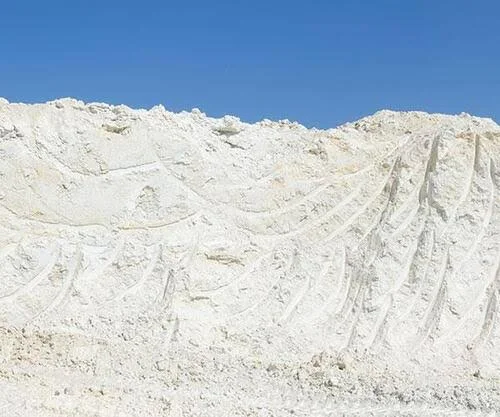
Why Does Clay Need Industrial Drying?
Clay is often naturally fine, plastic and moisture-sensitive. Depending on the deposit and processing route, wet clay can become sticky and difficult to convey, crush, grind, screen or feed consistently.
Industrial drying can help:
- Reduce excess moisture
- Improve material handling
- Improve flow and feeding
- Prepare clay for grinding and pulverizing
- Improve consistency before downstream processing
- Reduce transportation weight
- Improve storage characteristics
- Prepare material for extrusion or shaping
- Meet customer-specific product moisture specifications
GTI’s clay-drying information notes that wet clay can contain substantially more moisture after mining, washing or processing, and that drying requirements depend on the material and intended application.
The target moisture should always be determined from the customer’s actual process rather than applying one universal moisture specification to every clay.
Which Types of Clay Can Be Dried?
GTI Dryers can evaluate different clay materials for industrial drying applications, including:
Kaolin / China Clay
Kaolin is a fine, generally light-coloured clay mineral widely used in ceramics, paper, refractories, paints, plastics, rubber and other industrial applications.
Bentonite
Bentonite is a highly absorbent and swelling clay with applications in drilling fluids, foundry sand, iron-ore pelletizing, absorbents, agriculture and environmental containment, among others.
Ball Clay
Ball clay is an important ceramic raw material, particularly for sanitaryware, ceramic tiles and other ceramic products.
Common Clay & Shale
Common clay and shale can be used in brick, lightweight aggregate and Portland cement clinker production.
Fire Clay
Fire clay is primarily associated with refractory and heavy-clay applications.
Fuller’s Earth & Other Industrial Clays
These materials can have applications in absorbents, filtration, agriculture and other specialty mineral markets.
Clay Drying for Cement Manufacturing
Clay-containing raw materials can form an important part of the raw-material mix used for cement clinker production.
In cement manufacturing, the raw mix generally requires controlled proportions of calcium-, silica-, alumina- and iron-bearing materials. Limestone supplies most of the calcium component, while clay and shale can contribute silica, alumina and iron-bearing components.
A simplified cement raw-material route is:
Quarrying → Crushing → Raw Material Proportioning → Drying if Required → Raw Grinding → Homogenization → Preheating → Clinker Production → Cement Grinding
When clay-containing feed has excessive moisture, drying may be integrated into the raw-material preparation process.
Why Is Clay Drying Important in Cement Plants?
Excessive moisture can create:
- Feeding difficulties
- Material sticking
- Reduced grinding efficiency
- Higher thermal demand
- Reduced mill throughput
- Moisture fluctuations in the raw mix
- Material-handling problems
For high-throughput cement plants, the drying system must therefore be designed around continuous operation, high feed rates, stable outlet moisture and integration with the raw-material grinding system.
Rotary Dryer for Clay
For large-scale bulk clay drying, a rotary dryer can be an effective solution when the material characteristics are suitable.
GTI Dryers identifies rotary dryers for large-scale clay drying applications because of their robust construction and ability to process bulk mineral materials continuously.
How a Clay Rotary Dryer Works
Wet Clay → Controlled Feeding → Rotary Drum → Hot Gas Contact → Moisture Evaporation → Dust Separation → Dried Clay
Inside the rotating drum, lifting flights distribute the clay through the drying gas stream.
The design must account for the tendency of some clays to become plastic, sticky or prone to agglomeration.
Therefore, a clay rotary dryer should not simply be designed as a generic mineral dryer.
Important design factors include:
- Clay type
- Feed moisture
- Particle size
- Stickiness
- Plasticity
- Feed rate
- Outlet moisture
- Drying temperature
- Residence time
- Gas velocity
- Flight design
- Drum diameter and length
- Dust loading
- Heating source
Co-Current Drying for Sticky & Plastic Clay
Some clay materials become particularly difficult to handle during the early stage of drying because they remain sticky while their moisture content is high.
For suitable applications, a co-current drying arrangement can help manage the initial high-moisture stage by bringing the wet feed into contact with the hottest drying gas at the dryer inlet.
However, the final configuration should be established through material testing and process engineering, because clay behaviour differs significantly between kaolin, bentonite, ball clay, common clay and other mineral feeds.
GTI Dryers can evaluate:
- Co-current rotary drying
- Counter-current arrangements where appropriate
- Flash drying
- Fluidized-bed drying for suitable particles
- Customized drying systems
Kaolin Drying System
Kaolin is a particularly important industrial clay because of its use across multiple high-value industries.
Major applications include:
- Ceramics
- Paper
- Refractories
- Paints and coatings
- Plastics
- Rubber
- Fiberglass
- Cement
- Specialty mineral products
The Essential Minerals Association identifies paper coating and high-grade ceramic products among the largest applications for kaolin, while USGS also identifies ceramics and refractory materials as important uses.
Kaolin Drying Challenges
Kaolin may be processed through washing, classification, filtration and other beneficiation steps before drying.
This can result in a feed that is:
- Fine
- Moist
- Filter-cake-like
- Cohesive
- Sensitive to drying conditions
The dryer therefore needs to be selected according to the physical form of the kaolin, not simply the chemical composition.
Potential technologies include:
- Rotary dryer
- Flash dryer
- Spray dryer for suitable slurry applications
- Fluidized-bed dryer for suitable granular material
- Customized drying systems
Bentonite Drying System
Bentonite has substantially different characteristics from kaolin.
It is highly absorbent and can swell significantly when exposed to water. Its industrial applications include drilling mud, foundry sand bonding, iron-ore pelletizing, absorbents, agriculture and environmental applications.
Bentonite Drying Applications
Industrial bentonite drying may be required after:
- Mining
- Washing
- Beneficiation
- Size reduction
- Processing
- Pelletizing-related preparation
The dryer must account for:
- High moisture
- Fine particle size
- Dust generation
- Agglomeration
- Required final moisture
- Product specification
- Thermal sensitivity
For suitable bulk bentonite applications, rotary drying is one potential solution.
Clay Drying for Ceramics
Ceramic manufacturing is one of the most important markets for several clay types, particularly ball clay, kaolin and other plastic clays.
Clay is used in:
- Floor tiles
- Wall tiles
- Sanitaryware
- Tableware
- Refractories
- Ceramic bodies
- Glazes and ceramic formulations
USGS identifies sanitaryware and ceramic tile as major markets for ball clay, while kaolin is an important ceramic and refractory raw material.
Why Moisture Control Matters in Ceramics
Controlled moisture can influence:
- Mixing
- Grinding
- Powder preparation
- Granulation
- Extrusion
- Pressing
- Green-body formation
- Storage and handling
GTI Dryers can design drying systems around the specific ceramic feedstock and downstream forming process.
Clay Drying for Refractory Materials
Refractory manufacturers use several clay and mineral materials to produce products capable of operating at high temperatures.
Applications can include:
- Refractory bricks
- Monolithic refractories
- Furnace linings
- Ceramic refractory products
- High-temperature industrial components
Kaolin and fire clay have established refractory applications.
Drying may be required to control moisture before grinding, mixing, forming or thermal treatment.
Clay Drying for Iron-Ore Pelletizing
Bentonite is used as a binder in iron-ore pelletizing.
This creates another industrial opportunity for controlled bentonite processing.
For pelletizing applications, the required product characteristics may include:
- Controlled moisture
- Consistent particle size
- Stable flowability
- Controlled bulk density
- Reliable feeding
GTI Dryers can evaluate the drying requirements of bentonite and other mineral additives used in pelletizing operations.
Clay Drying for Drilling Fluids
Bentonite is widely used in oil and water well drilling fluids, where it contributes to borehole-wall sealing, cuttings removal and lubrication.
For bentonite producers supplying drilling-fluid manufacturers, drying is an important part of producing a consistent commercial mineral product.
Potential target customers include:
- Bentonite mining companies
- Mineral processors
- Drilling-fluid manufacturers
- Oilfield chemical suppliers
- Industrial mineral exporters
Where Is Clay Used Most? — GEO Market Analysis
Clay is a particularly strong opportunity because demand is concentrated around specific mineral deposits and manufacturing clusters.
The best market is therefore not simply “the clay industry.” GTI Dryers should target clay-producing regions + end-use industries + dryer intent.
India: A Major Market for Clay Drying Systems
India is particularly attractive for GTI Dryers because of its combination of cement, ceramics, refractories and industrial-mineral production.
USGS’s latest India minerals profile estimates that in 2024 India was the second-ranked producer of bentonite, with an estimated 19% of world production, and produced an estimated 17% of world kaolin production. India was also the second-ranked producer of cement at an estimated 11% of world production.
This creates a strong potential market for industrial clay drying systems.
Important Indian Markets
Rajasthan
Important for:
- Ball clay
- Bentonite
- Cement
- Ceramics
- Mineral processing
Indian Bureau of Mines data shows Rajasthan as a significant ball-clay producing state, with substantial production reported in the cited period.
Potential SEO searches:
- Clay dryer manufacturer Rajasthan
- Ball clay dryer Rajasthan
- Bentonite dryer Rajasthan
- Rotary dryer for clay Rajasthan
- Ceramic clay dryer India
Gujarat
Gujarat is an important industrial-mineral and ceramic-processing region, with significant historical kaolin production and strong ceramic manufacturing activity.
The Morbi ceramic cluster is particularly valuable from a commercial GEO perspective because of its concentration of tile and ceramic manufacturers.
Potential searches:
- Kaolin dryer manufacturer Gujarat
- Clay dryer manufacturer Gujarat
- Ceramic dryer Morbi
- Bentonite dryer Gujarat
- Industrial mineral dryer Gujarat
Kerala
Kerala is an important kaolin-producing region and has a long-established china-clay processing industry.
Potential searches:
- Kaolin dryer Kerala
- China clay dryer Kerala
- Kaolin drying system India
- Industrial clay dryer Kerala
Andhra Pradesh
Andhra Pradesh is relevant for:
- Kaolin
- Ball clay
- Cement
- Ceramics
- Industrial minerals
Potential searches:
- Clay dryer manufacturer Andhra Pradesh
- Kaolin dryer Andhra Pradesh
- Cement raw material dryer Andhra Pradesh
West Bengal
West Bengal is relevant to GTI Dryers geographically as an eastern India industrial market and has clay/kaolin resources and ceramic-related industries.
Potential searches:
- Kaolin dryer West Bengal
- Clay dryer manufacturer Kolkata
- Industrial mineral dryer West Bengal
- Clay drying system Eastern India
Jharkhand & Odisha
Eastern India’s mineral-processing ecosystem creates opportunities for:
- Industrial minerals
- Refractories
- Ceramics
- Mining-related processing
- Cement raw materials
GTI Dryers can target industrial procurement and EPC searches across these regions.
China: One of the Key Global Clay Markets
China is a major global market for industrial minerals and has substantial ceramic, refractory, chemical and construction-material industries.
For GTI Dryers, the commercial opportunity is strongest around industrial clay processing rather than generic clay searches.
Potential applications include:
- Kaolin processing
- Ceramic clay
- Refractory minerals
- Bentonite
- Cement raw materials
- Industrial mineral powders
Potential SEO targets:
Clay Dryer Manufacturer China
Kaolin Dryer China
Bentonite Dryer China
Rotary Dryer for Ceramic Clay China
Industrial Mineral Dryer China
Southeast Asia: Indonesia, Thailand & Vietnam
Southeast Asia is another important GEO region for clay-processing equipment.
Indonesia
Relevant industries include:
- Ceramics
- Construction materials
- Kaolin
- Industrial minerals
- Cement
Thailand
Thailand has important ceramic and industrial-mineral industries, making it relevant for:
- Kaolin dryers
- Ball-clay dryers
- Ceramic clay drying
- Industrial mineral drying
Vietnam
Vietnam’s ceramics, construction-material and cement industries create potential demand for clay and mineral processing systems.
GTI should target searches such as:
- Clay dryer manufacturer Indonesia
- Kaolin dryer Thailand
- Ceramic clay dryer Vietnam
- Industrial dryer for clay Southeast Asia
Middle East: Bentonite, Cement & Mineral Processing
The Middle East offers a different opportunity, particularly around bentonite, drilling fluids, cement and industrial minerals.
Important target markets include:
- Saudi Arabia
- UAE
- Oman
- Jordan
- Türkiye
- Egypt
Bentonite’s use in drilling fluids makes oilfield-related markets especially relevant.
Potential searches include:
- Bentonite dryer Saudi Arabia
- Bentonite drying system UAE
- Clay dryer Oman
- Industrial mineral dryer Türkiye
- Cement clay dryer Egypt
United States: Kaolin, Bentonite, Ceramics & Industrial Minerals
The United States has established markets for several clay types.
USGS identifies:
- Ball clay → sanitaryware and ceramic tile
- Bentonite → absorbents, drilling mud, foundry bonding and iron-ore pelletizing
- Common clay → brick, lightweight aggregate and Portland cement clinker
- Fire clay → refractories
- Kaolin → paper and refractory markets
This diversity makes the US an important target market for specialized clay drying equipment.
Potential GTI SEO targets include:
- Clay dryer manufacturer USA
- Kaolin dryer USA
- Bentonite dryer USA
- Rotary clay dryer
- Industrial mineral drying system USA
Europe: Ceramics, Refractories & Specialty Minerals
European clay markets are particularly relevant to:
- Advanced ceramics
- Traditional ceramics
- Refractories
- Specialty mineral products
- Industrial minerals
- Construction materials
Countries such as Germany, Italy, Spain, Türkiye, Poland and the UK can be targeted according to specific clay-processing clusters.
For European buyers, GTI’s positioning should emphasize:
Process engineering + customized design + automation + energy efficiency + appropriate materials of construction + international project capability.
Africa: Emerging Clay & Cement Processing Opportunities
Potential African markets include:
- Egypt
- Morocco
- Algeria
- Nigeria
- South Africa
- Kenya
- Tanzania
- Ethiopia
The strongest applications are likely to be associated with:
- Cement
- Ceramics
- Construction materials
- Bentonite
- Drilling-related minerals
- Industrial mineral processing
For GTI Dryers, country-specific landing pages can target searches such as “clay dryer Egypt,” “bentonite dryer Nigeria,” “kaolin dryer South Africa,” and “cement clay dryer Morocco.”
Choosing the Right Clay Dryer
There is no universal clay dryer.
The appropriate technology depends on the material’s physical form and downstream requirements.
| Clay Material / Condition | Potential Dryer Technology |
|---|---|
| Bulk common clay | Rotary dryer |
| Bulk bentonite | Rotary dryer |
| Coarse clay minerals | Rotary dryer |
| Fine clay particles | Flash dryer |
| Suitable clay granules | Fluidized-bed dryer |
| Clay slurry | Spray/flash or specialized system |
| Filter-cake clay | Rotary/specialized dryer |
| High-value processed kaolin | Application-specific drying |
| Ceramic clay feed | Application-specific rotary/specialized dryer |
Final selection requires actual material and process data.
GTI Dryers: Customized Clay Drying Solutions
GTI Dryers designs and manufactures industrial drying systems for kaolin, bentonite, ball clay, fire clay, common clay and other industrial mineral materials.
Our systems can be engineered around:
- Feed moisture
- Final moisture
- Production capacity
- Clay type
- Particle size
- Stickiness
- Plasticity
- Residence time
- Drying temperature
- Heating source
- Dust loading
- Product quality
- Material of construction
- Plant layout
- Automation requirements
Potential technologies include:
Rotary Dryers
For high-throughput bulk clay and mineral applications.
Flash Dryers
For suitable fine clay particles requiring rapid drying.
Fluidized-Bed Dryers
For suitable processed clay particles and granules.
Specialized Drying Systems
For challenging feed forms such as filter cakes, slurries or application-specific clay products.
GTI Dryers’ clay-drying portfolio specifically covers kaolin, bentonite, ball clay, china clay, fire clay and industrial mineral slurries.
Why Choose GTI Dryers for Clay Drying?
Process-Based Engineering
We design around the actual clay, moisture and production requirement, rather than supplying a generic dryer.
Customized Rotary Dryers
Drum dimensions, flights, airflow and thermal configuration can be engineered according to the application.
Handling Difficult Clay
Sticky and plastic materials require careful process design. GTI evaluates feed characteristics before selecting the drying configuration.
Energy-Conscious Design
Potential integration of waste heat and appropriate heating systems can be evaluated for suitable plants.
Automation
PLC, HMI, VFDs, temperature monitoring and other instrumentation can be integrated according to the project.
Dust-Control Integration
Clay and mineral drying systems can be integrated with suitable cyclone, bag-filter and exhaust arrangements.
Global Supply Capability
GTI Dryers combines engineering and manufacturing in India with solutions intended for domestic and international industrial applications.
How to Request a Clay Dryer Proposal from GTI Dryers
To recommend a suitable clay drying system, send GTI Dryers:
Material: Kaolin / Bentonite / Ball Clay / Common Clay / Other
Feed Moisture: ___ %
Required Outlet Moisture: ___ %
Capacity: ___ kg/h or TPH
Feed Particle Size: ___ mm
Feed Temperature: ___ °C
Required Outlet Temperature: ___ °C
Heating Source: Gas / Steam / Biomass / Thermal Oil / Electric / Waste Heat
Operating Hours: ___ hours/day
Application: Cement / Ceramic / Refractory / Mineral / Drilling / Other
Where required, sample testing and process evaluation can be considered before final dryer sizing.
Frequently Asked Questions About Clay Dryers
What is a clay dryer?
A clay dryer is an industrial drying system designed to reduce moisture from clay materials before grinding, processing, shaping, storage or other downstream operations.
Which dryer is best for clay?
There is no single best dryer for every clay. Rotary dryers are commonly considered for high-volume bulk clay, while flash, fluidized-bed or specialized systems may be more appropriate for fine particles, granules, slurries or specific processed clay products.
Can a rotary dryer dry bentonite?
Yes. Rotary dryers can be considered for suitable bulk bentonite applications, provided the system is designed around the bentonite’s moisture, particle characteristics, capacity and required final moisture.
Can clay be used in cement manufacturing?
Yes. Common clay and shale can be used as raw materials for Portland cement clinker production.
What is the difference between kaolin and bentonite?
Kaolin and bentonite are different clay materials with different mineralogical and physical characteristics. Kaolin is widely used in ceramics, paper, refractories and coatings, while bentonite is known for its high absorbency and swelling behaviour and is widely used in drilling, foundry, pelletizing and absorbent applications.
Can GTI Dryers dry wet clay filter cake?
Yes. GTI’s clay-drying systems can be evaluated for processed clay and filter-cake-type materials, subject to material characteristics and process requirements.
Does GTI Dryers manufacture clay dryers in India?
Yes. GTI Dryers designs and manufactures industrial drying systems in India for clay and other mineral-processing applications.
Does GTI Dryers export clay drying systems?
GTI Dryers can develop industrial drying solutions for international projects, with configuration determined by the customer’s material, capacity, technical specifications and project requirements.
Get a Customized Clay Drying Solution from GTI Dryers
Whether you process kaolin in Gujarat, bentonite in Rajasthan, ceramic clay in Morbi, cement raw materials in Andhra Pradesh, refractory minerals in eastern India, or industrial clay anywhere in the world, the dryer must be designed around the actual material and process.
GTI Dryers can help evaluate:
Material → Moisture → Capacity → Drying Technology → Heat Source → Dust Control → Automation → Complete Drying System
If your plant is facing high clay moisture, sticky material, inconsistent feeding, low throughput or excessive drying energy consumption, talk to GTI Dryers about a customized industrial clay drying system.
Request a Clay Dryer Consultation
Send your clay type, feed moisture, required final moisture and production capacity to GTI Dryers for an initial process evaluation.
GTI Dryers — Engineered Clay Drying Solutions from India for Cement, Ceramics, Refractories & Global Mineral Industries.