
Whey, pea and nutritional protein powders are sold on protein content, solubility, flavour, residual moisture and bulk handling. Those attributes are created or destroyed in drying. The right dryer configuration protects functional quality while hitting capacity and storage moisture — the wrong profile creates scorched notes, insoluble particles and caking.
This guide helps buyers choose between core options (primarily spray drying, often with fluid bed after-dry/cool) and specify a system that fits dairy and plant-protein duties.
Quick answer: Most whey and protein isolate/concentrate powders are produced by spray drying of concentrated liquid protein. A fluid bed stage frequently follows for finish drying, cooling or agglomeration. Selection is driven by feed solids, maximum product temperature, stickiness and whether instantised agglomerates are required — not by brand names alone.
1. What Buyers Must Protect in Protein Drying
| Quality attribute | Drying influence |
|---|---|
| Protein functionality (solubility, emulsification) | Excess heat → denaturation and insolubles |
| Flavour / colour | Overheating → cooked notes, darkening |
| Residual moisture | Storage stability vs over-dry brittleness |
| Bulk density & particle size | Atomisation, chamber conditions, agglomeration |
| Dispersibility / instant properties | Fluid bed agglomeration and lecithination (process-specific) |
| Microbiology | Hygienic design and moisture control |
2. Protein Families — Same Dryer Family, Different Sensitivities
Whey proteins (WPC / WPI and related)
- Usually spray-dried from concentrate after filtration/evaporation
- Heat and pH history affect solubility and flavour
- Often use multi-stage spray + integrated or external fluid bed
Pea and other plant proteins
- Different composition (starches, fibres, anti-nutritional residuals if poorly processed upstream)
- Can be sticky or thermally sensitive depending on process path
- Spray drying common for isolates/concentrates; some products use alternative dry routes after precipitation/cake handling

Nutritional / specialty protein blends
- May include dairy, plant, collagen or functional mixes
- Carrier and formulation strategy affects glass transition and stickiness
- Cleaning between products may be a major design driver
Rule: Upstream concentration, pH and purity define drying difficulty more than the dryer brochure.
3. Core Technology: Spray Drying
Why spray drying dominates protein powders
- Converts pumpable concentrate to powder continuously
- Short particle residence time when properly designed
- Scalable to industrial nutritional volumes
- Compatible with multi-stage and agglomerating designs
Critical spray-drying controls for proteins
| Parameter | Why it matters |
|---|---|
| Feed solids % | Energy use, particle formation, stickiness |
| Inlet / outlet temperature | Residual moisture vs denaturation risk |
| Atomiser type (nozzle / rotary) | PSD, fines, chamber deposits |
| Chamber design & air distribution | Residence, deposits, thermal uniformity |
| Powder separation | Yield, hygiene, fines handling |
| Cleaning philosophy | Allergen and product changeover (dairy vs plant) |
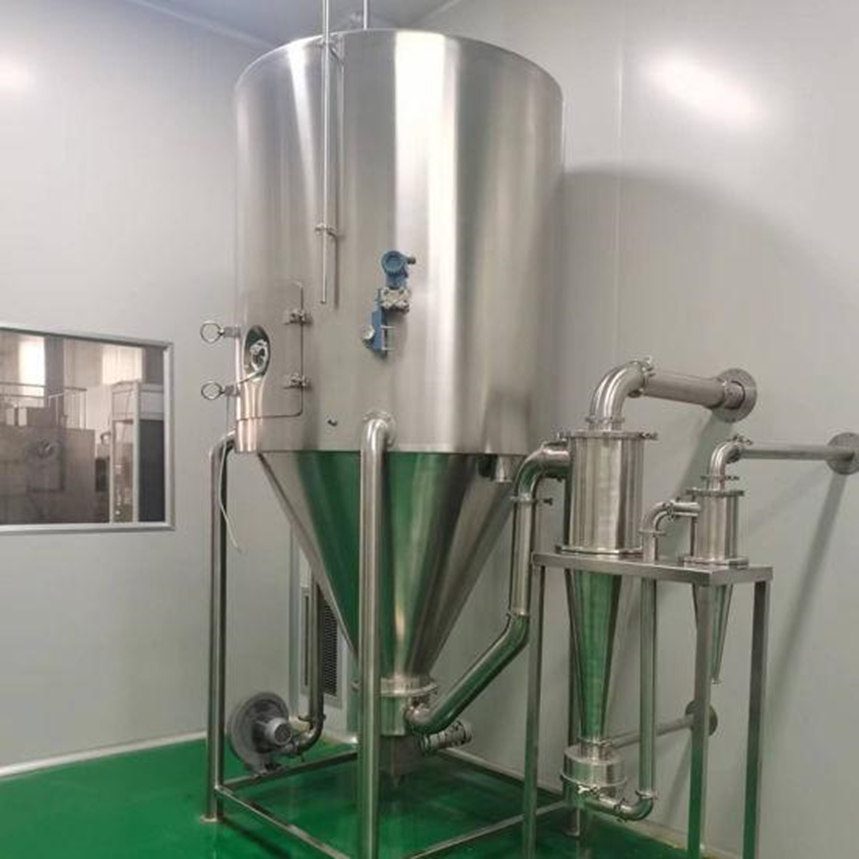
Multi-stage spray concepts
Many protein lines use:
- Primary spray chamber — bulk moisture removal and particle formation
- Integrated or external fluid bed — finish moisture, cooling, agglomeration
This split improves solubility appearance and reduces the need to run the chamber outlet excessively hot.
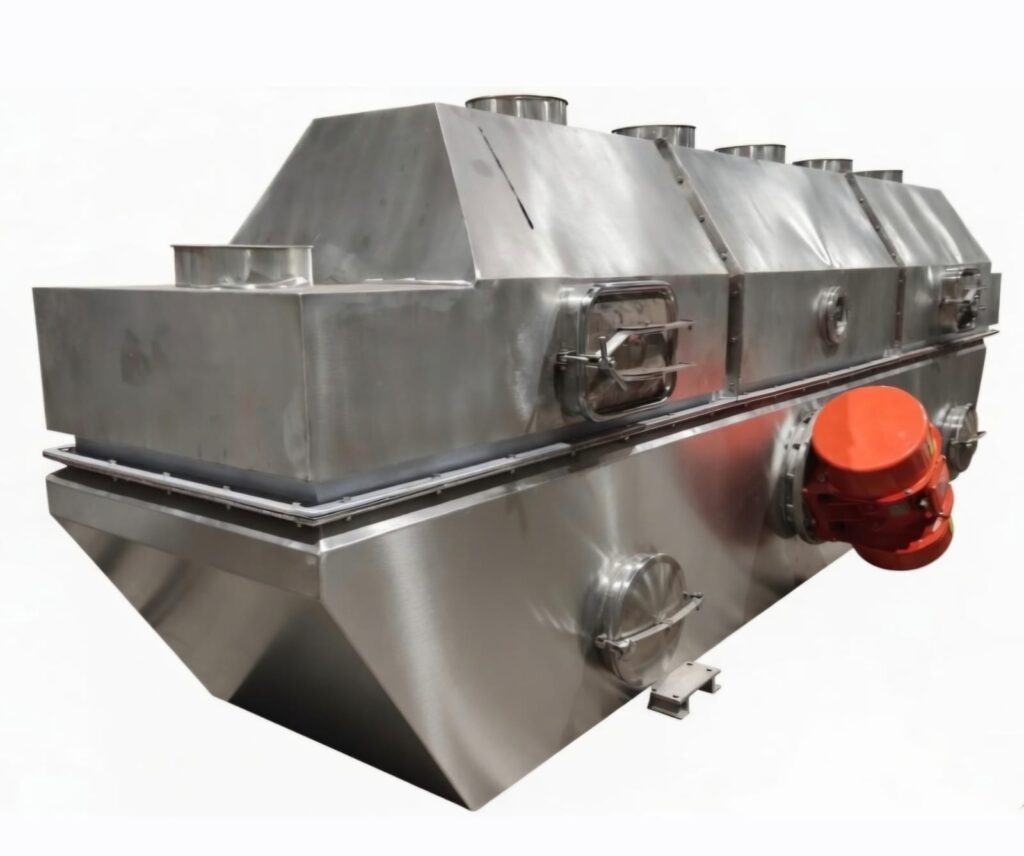
4. Fluid Bed After-Dry, Cool and Agglomeration
| Fluid bed role | Quality benefit |
|---|---|
| After-drying | Reach final moisture without overheating in the main chamber |
| Cooling | Safe packing temperature; less caking |
| Agglomeration | Larger granules, better dispersibility for “instant” proteins |
| Fines return | Yield and particle build-up control |
For nutritional brands selling mixability, the fluid bed stage is often as commercially important as the spray chamber.
5. When Other Dryers Appear
| Technology | When it may be considered |
|---|---|
| Belt / band dryers | Not primary for true protein concentrates; sometimes for particulate plant materials before milling |
| Spin-flash / contact dryers | Protein filter cakes or precipitates that should not be fully re-slurried — only if product form allows |
| Freeze drying | Very high-value, extreme quality niches — high cost |
| Vacuum contact dryers | Special solvent or low-temp batch duties — not standard bulk whey/pea powder |
For mainstream whey and pea powders from liquid concentrates, spray ± fluid bed remains the default shortlist.
6. Decision Guide
| Situation | Lean toward |
|---|---|
| Liquid whey/pea concentrate to powder | Spray dryer (± fluid bed) |
| Instantised / agglomerated nutritional powder | Spray + fluid bed agglomeration |
| Strict solubility & low scorched particles | Multi-stage with controlled outlet T |
| Filter cake from precipitation, no slurry wanted | Evaluate spin-flash / contact only after product trials |
| Multi-product dairy + plant allergens | Hygienic design + cleaning validation emphasis |
| Very small R&D batches | Pilot spray or batch options |
7. Problem–Solution Map
| Problem | Likely cause | Direction |
|---|---|---|
| Insoluble / denatured protein | Product temperature too high | Lower outlet T; multi-stage finish dry |
| Cooked flavour | Local overheating, deposits | Chamber hygiene; temperature profile |
| Caking in bags | Residual moisture high; hot packing | After-dry + cool; barrier packaging |
| Poor mixability | Too many fines; no agglomeration | Fluid bed agglomeration strategy |
| High energy cost | Low feed solids | Concentrate upstream |
| Cross-contamination | Shared line, weak cleaning | Design for CIP/access; scheduling |
8. Stickiness and Glass Transition (Buyer Awareness)
Protein–carbohydrate systems can pass through sticky zones during drying. Practical responses include:
- Higher feed solids within process limits
- Controlled humidity in the chamber
- Chamber wall cooling or air broom systems (design-specific)
- Formulation carriers only when product labelling allows
- Multi-stage drying so final moisture is removed under milder conditions
Ask manufacturers how sticky protein feeds are handled — not only for water evaporation rate.
9. Hygienic Design Requirements
Nutritional proteins demand:
- Food-grade contact materials (typically stainless steel grades suited to dairy/plant duty)
- Cleanable ducts, cyclones and fluid beds
- Drainage and dead-leg minimisation
- Documented cleaning procedures between allergen classes when applicable
- Environmental powder control for operator safety
10. RFQ Checklist for Protein Powder Dryers
- Protein type — whey (WPC/WPI), pea isolate/concentrate, blend
- Feed solids % and viscosity/stability notes
- Target residual moisture
- Solubility / dispersibility targets
- Max product temperature or denaturation constraints
- Capacity kg powder/h (peak)
- Need for agglomeration / instantising
- Allergen and cleaning requirements
- Utilities (steam, gas, power)
- Scope: spray only vs spray + fluid bed + powder handling
11. How GTI Dryers Supports Protein Powder Projects
GTI Dryers designs continuous drying systems including spray-related and fluid bed / VFBD configurations used in food and nutritional solids processing.
For whey, pea and nutritional protein projects we:
- Start from concentrate solids, moisture targets and thermal limits
- Evaluate single-stage vs spray + fluid bed finish/cool
- Address stickiness, powder recovery and hygienic access in system discussions
- Recommend pilot trials when solubility and flavour are specification-critical
- Document capacity on a clear moisture and solids basis
Geographic Note
Dairy protein and plant-protein plants operate across India, Europe, North America, China and other nutrition-manufacturing regions. Export specifications on solubility and microbiology raise the value of controlled multi-stage drying. Local engineering support helps continuous powder plants maintain cleaning and capacity discipline.
Frequently Asked Questions
What is the best dryer for whey protein powder?
Industrial spray drying, typically with a fluid bed after-dry/cool or agglomeration stage, is the standard route for concentrates to powder.
Can pea protein use the same dryer as whey?
Often the same technology family (spray ± fluid bed), but recipes, stickiness, cleaning and thermal limits differ — do not assume identical setpoints.
Why add a fluid bed after a protein spray dryer?
To finish moisture, cool powder and optionally agglomerate for better dispersibility without overheating the main chamber.
Does higher inlet temperature always damage protein?
Damage tracks product temperature and time, not inlet air alone. Design must keep particle thermal history within limits while evaporating water.
What should I send GTI?
Protein type, feed solids, target moisture, capacity, solubility goals and whether agglomeration is required.
Next Step
If you are selecting a dryer for whey, pea or nutritional protein powders, share your concentrate data and quality specifications. GTI will help map a spray and fluid bed configuration that balances capacity, solubility and storage moisture.
Request a protein powder drying assessment with your process data.
Contact the GTI Technical Team:
Website: gtidryers.com
Email: mktg@gtidryers.com
Phone / WhatsApp: +91 9330077417