
When a catalyst loses activity or an adsorbent fails to achieve its expected capacity, the problem may begin long before the material enters service. During manufacturing, uncontrolled drying can influence moisture content, active-component distribution, pore characteristics and the physical quality of the finished material.
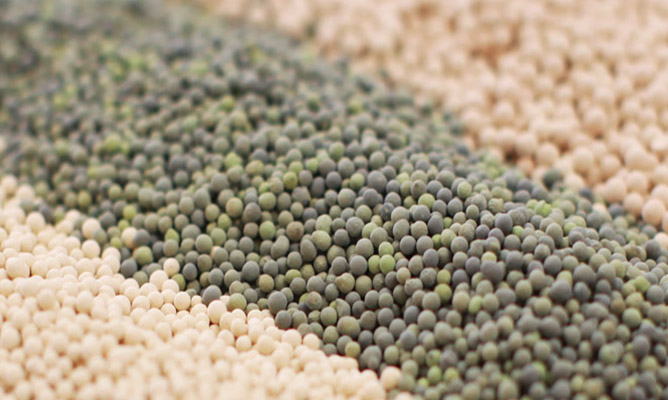
For manufacturers of metal-oxide catalysts, supported catalysts, zeolites, activated carbon, molecular sieves and silica gel, drying is not simply a final moisture-removal step. It is a process operation that must protect the properties required for the material to perform its intended function.
Research on supported catalysts shows that drying conditions can affect the distribution of active components and, consequently, catalyst performance. Fluidized-bed drying is also an established unit operation in supported-catalyst manufacturing, although its suitability depends on the material and process.
GTI Dryers provides industrial catalyst-drying solutions for chemical and process applications. Its Catalyst Drying page provides a relevant starting point for manufacturers evaluating equipment for catalyst powders, granules, pellets and intermediates.
This guide takes a performance-first approach: identify what the material must retain, understand the drying-related risks, compare suitable technologies and establish the information needed for a technically sound equipment enquiry.
1. The First Question Is Not “Which Dryer?”—It Is “What Must the Material Retain?”
Catalysts and adsorbents are designed around specific chemical and physical properties. Moisture removal must support those properties rather than compromise them.
The relevant requirements differ by material:
- Catalysts: Preserve the required active-component distribution, chemical state, pore structure and physical integrity.
- Zeolites and molecular sieves: Control moisture and protect the intended adsorption or separation characteristics.
- Activated carbon: Remove appropriate moisture without compromising the required pore structure or creating oxidation risks.
- Silica gel: Achieve the specified moisture condition while preserving the material’s required adsorption properties and particle integrity.
- Supported catalysts: Remove impregnation liquid or other process moisture while managing the possibility of active-species migration.
- Metal-oxide catalysts: Control the drying process according to the precursor chemistry, support properties and subsequent treatment steps.
These requirements cannot be reduced to a single temperature or final-moisture target. The acceptable process conditions depend on the specific formulation, precursor, support, adsorbent grade and intended application.
For example, the drying behaviour of an impregnated catalyst can influence how a dissolved active component redistributes within a porous support. The extent of this effect depends on the material and the drying conditions.
The practical takeaway is simple: the drying system should be selected against the required material performance—not merely the quantity of water to remove.
2. Which Material Are You Manufacturing?
Start with the material family, its physical form and the stage at which drying occurs.
| Material | Typical manufacturing or processing duty | Key drying consideration |
| Supported metal catalysts | Remove impregnation solvent or process moisture | Active-component distribution and support properties |
| Metal-oxide catalysts | Dry precipitated, formed or otherwise processed intermediates | Precursor chemistry, thermal behaviour and downstream processing |
| Zeolite-based catalysts | Remove process moisture from suitable powders, granules or formed particles | Required pore characteristics, structure and material integrity |
| Molecular sieves | Remove manufacturing moisture or prepare material for its intended adsorption duty | Adsorption performance and compatibility with the required activation procedure |
| Silica gel | Dry suitable gel-derived particles or intermediates | Pore structure, residual moisture and mechanical strength |
| Activated carbon | Dry suitable carbon granules, powders or wet intermediates | Pore properties, contamination and control of oxidation hazards |
| Catalyst pellets and granules | Reduce moisture before further treatment, packaging or use | Uniformity, breakage, fines and discharge behaviour |
| Spent adsorbents or catalysts | Prepare material for a separate regeneration or reactivation process | Contaminant identity, hazards and the full regeneration route |
The table is an initial screening guide. Not every material requires a separate drying stage, and not every dryer is appropriate for every form of a material.
A further distinction matters: manufacturing-stage drying, adsorbent activation, catalyst calcination and spent-material regeneration are different operations. They may appear in the same process flow, but their objectives and operating conditions should not be treated as interchangeable.
3. Fluid-Bed Dryers for Suitable Catalysts and Adsorbents
A fluid-bed dryer passes a controlled gas stream through a bed of particles. Under suitable conditions, the particles become fluidized, improving contact between the gas and the material.
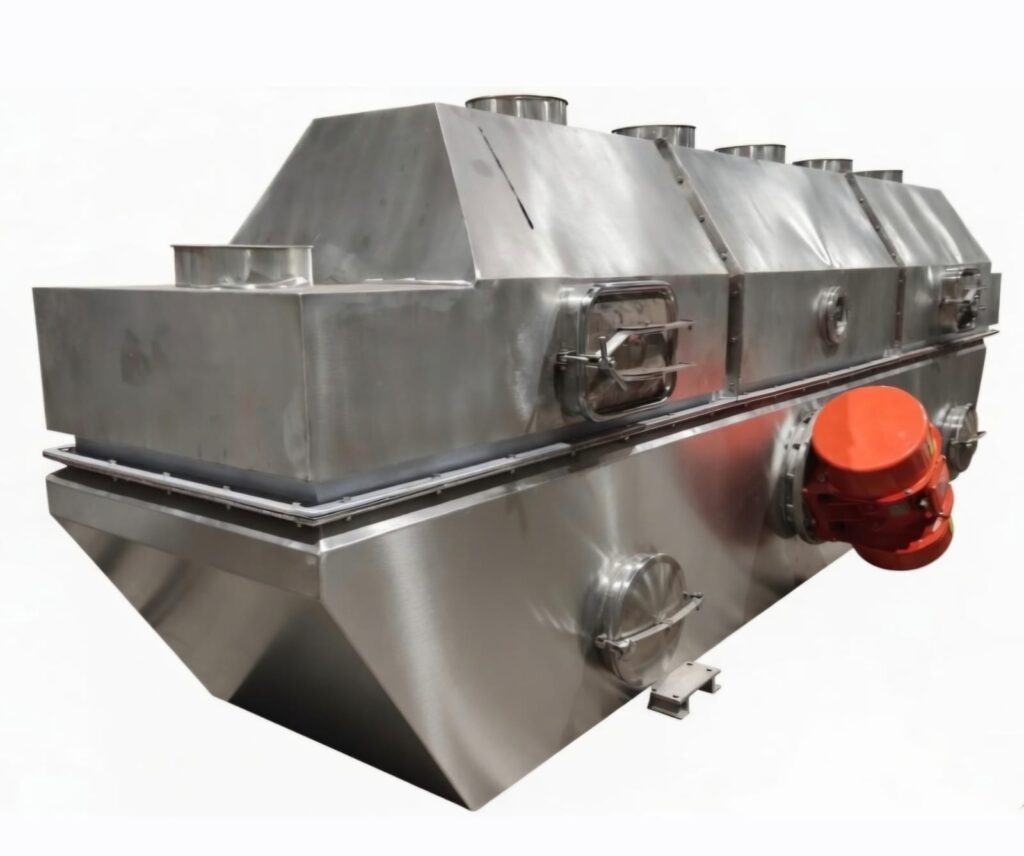
Fluidized-bed drying has been studied and used for supported-catalyst manufacturing, but performance depends on the particle properties, bed loading, airflow, inlet conditions and moisture content.
When should a fluid-bed dryer be evaluated?
- The material consists of particles that can be fluidized without unacceptable damage.
- The feed requires controlled moisture reduction.
- The process benefits from consistent gas distribution and temperature monitoring.
- Particle movement can be managed without excessive attrition.
- The required throughput and residence time can be achieved with the proposed configuration.
Problem 1: Uneven moisture across the batch or product stream
Uneven moisture may arise from inconsistent feed conditions, poor distribution, unsuitable bed loading or changing airflow.
What to investigate: Feed moisture, particle-size distribution, bed depth, air distribution, temperature profile and discharge conditions.
Potential engineering response: Improve feed preparation, distribution and process monitoring. The required changes should be established through material testing and process evaluation.
Problem 2: Excessive fines or particle breakage
Some catalysts and adsorbents are mechanically fragile. Fluidization and subsequent conveying can generate fines if the particle strength and operating conditions are not compatible.
What to investigate: Particle strength, particle size, gas velocity, attrition during transfer and the condition of the finished material.
Potential engineering response: Evaluate an appropriate fluidization regime, feed handling and discharge design—or consider another dryer if particle damage cannot be controlled adequately.
Problem 3: Drying rate varies from one production run to another
Changes in initial moisture, feed temperature, loading or particle properties may alter drying behaviour.
What to investigate: The actual feed specification, operating data, temperature trends and the consistency of the process cycle.
Potential engineering response: Establish a controlled operating window based on representative material and measured drying behaviour.
When fluid-bed drying may not be suitable
Very fine cohesive powders, sticky wet feeds and fragile particles may not fluidize effectively under conventional conditions. Alternative equipment or a specifically engineered arrangement may be necessary.
The right choice should be supported by the material’s physical characteristics and, where appropriate, pilot testing.
4. Specialized Drying for Supported and Porous Catalysts
Supported catalysts require particular attention because the active component is distributed on or within a porous support. During impregnation, a liquid containing the active-component precursor enters the support. The subsequent drying stage removes the liquid, but the movement of liquid through the pores can also influence where the precursor ultimately remains.
Research on supported catalysts has documented the potential for active-component redistribution during drying, with the effect depending on adsorption behaviour, pore structure, solution properties and drying conditions.
The problem: Moisture is removed, but the catalyst profile changes
A batch may reach its target moisture specification while its active-component distribution differs from the intended profile.
This can matter because catalyst activity and selectivity depend partly on the structure and distribution of the active material.
Engineering considerations include:
- Impregnation method and initial liquid distribution.
- Support porosity and pore-size distribution.
- Precursor concentration and solution properties.
- Drying rate and internal moisture transport.
- Temperature history and the subsequent calcination or activation steps.
- Required active-component distribution and final performance tests.
What should a manufacturer do?
Begin with the material’s process history and performance requirements. Determine whether the observed problem originates during impregnation, drying, calcination or another manufacturing stage.
A specialized tray, belt, vacuum, contact or fluid-bed arrangement may be worth evaluating depending on the material form and process. No single alternative should be assumed to be superior without application-specific evidence.
The objective is to define a drying profile that removes the required liquid while maintaining the desired catalyst characteristics.
5. Molecular Sieves and Zeolites: Drying Is Not the Same as Regeneration
Molecular sieves and zeolites are porous materials used in adsorption, separation and catalytic applications. Their intended performance depends on the specific grade, pore structure, chemical composition and preparation history.
A critical purchasing distinction is whether the project concerns:
- Drying a wet molecular-sieve or zeolite material during manufacture.
- Activating material to prepare it for its intended application.
- Regenerating an adsorbent that has already captured water or other components during service.
- Drying a catalyst that contains a zeolite component.
These duties may use related thermal or gas-handling equipment, but they do not necessarily have the same process requirements.
Common problems
The material reaches a low moisture content but performs poorly in adsorption.
Investigate whether the material experienced unsuitable thermal conditions, contamination, incomplete preparation or a change in its required pore properties.
The finished particles contain excessive fines.
Review material strength, feed handling, bed movement and discharge equipment.
Moisture returns during storage.
Molecular sieves can adsorb water from the surrounding environment. Product cooling, transfer, packaging and storage conditions therefore need to be considered alongside drying.
The material fails after regeneration.
Determine whether the issue is related to the regeneration procedure, contaminant loading, adsorbent condition or an unsuitable return-to-service criterion.
For molecular-sieve products, the required activation or regeneration procedure must be based on the specific material and supplier guidance. Avoid assuming that all grades can tolerate the same temperature, atmosphere or cycle.
6. Silica Gel and Activated Carbon: Protect the Properties That Matter
Silica gel and activated carbon are both porous materials, but their chemistry, surface properties and processing requirements differ.
Silica gel
Silica gel is used for moisture adsorption and other applications that depend on its porous structure. During manufacturing or subsequent processing, the required moisture condition must be achieved without compromising the properties specified for the final material.
The engineering assessment should consider:
- Feed form and moisture content.
- Particle-size distribution and mechanical strength.
- Required moisture specification.
- Sensitivity to process conditions.
- Product cooling, transfer and storage.
- Any downstream activation or quality-control step.
Activated carbon
Activated carbon is used in adsorption and purification applications. The appropriate drying conditions depend on whether the material is freshly manufactured, wet after washing, or has been used in a process.
For wet activated-carbon granules, a drying step may be required to reduce moisture before subsequent processing or handling. However, drying should not be confused with thermal reactivation, which may involve a different process designed to remove adsorbed contaminants and restore adsorption performance.
The risk of oxidation is especially important when handling carbon at elevated temperatures. Activated-carbon regeneration literature describes the need to manage the atmosphere and oxidation behaviour carefully during thermal treatment.
Selection principle: Evaluate the required moisture specification, material properties and intended downstream use before deciding on a dryer and its operating conditions.
7. Fluid-Bed vs Specialized Drying Systems: How to Choose
The decision should begin with the feed’s physical form and the product’s required properties.
| Selection factor | Fluid-bed dryer | Specialized or alternative dryer |
| Feed form | Suitable particles, granules or pellets | Depends on the selected technology; may accommodate other solids or more sensitive materials |
| Heat and mass transfer | Gas-to-particle contact | May use convective, contact, vacuum or another suitable heat-transfer approach |
| Particle movement | Material moves within the fluidized bed | Depends on design; may reduce or alter particle movement |
| Moisture uniformity | Depends on bed distribution, feed consistency and operating conditions | Depends on heat transfer, feed distribution and process configuration |
| Fragile material | Requires assessment of attrition and particle strength | An alternative may be considered if fluidization causes unacceptable damage |
| Sticky feed | May be difficult without conditioning or a specialized design | Contact, paddle or another suitable system may be evaluated |
| Process objective | Drying and potentially cooling of suitable particles | Selected according to the specific material and process duty |
A practical selection pathway
<list marker=”number” gap={2}> <list-item>**Define the material:** Identify the catalyst or adsorbent grade, particle form, support material and relevant chemical properties.</list-item> <list-item>**Define the process stage:** Establish whether the material is wet after impregnation, washing, precipitation, forming or another operation.</list-item> <list-item>**Define the product specification:** Specify moisture, active-component distribution, particle strength, adsorption performance or other required properties.</list-item> <list-item>**Screen the technologies:** Compare fluid-bed and other suitable systems against the feed condition, throughput and product-quality requirements.</list-item> <list-item>**Verify the process:** Use representative material data and appropriate trials or calculations before finalizing equipment design.</list-item> </list>
This approach is more reliable than choosing a dryer based solely on capacity or the broad label “catalyst dryer.”
8. How to Troubleshoot Catalyst and Adsorbent Drying Problems
Use the following table to organize a technical investigation.
| Observed problem | Possible causes to investigate | Recommended first step |
| Final moisture is inconsistent | Feed variation, poor distribution or unsuitable cycle settings | Compare feed and product moisture with operating data |
| Catalyst activity changes after drying | Active-component redistribution, unsuitable thermal history or changes in subsequent processing | Review the complete manufacturing sequence and relevant performance tests |
| Adsorption capacity is lower than expected | Incomplete preparation, contamination, structural changes or unsuitable test conditions | Verify material identity, preparation history and adsorption testing |
| Particle breakage or excess fines | Fragile particles, excessive movement or handling impacts | Review particle strength, dryer conditions and conveying |
| Drying takes longer than expected | Higher moisture load, internal diffusion limitations, bed loading or inadequate heat transfer | Establish the actual drying curve and heat-transfer conditions |
| Material cakes during storage | Residual moisture, hygroscopicity, cooling, packaging or ambient humidity | Assess the product after cooling and under storage conditions |
| Pressure drop or airflow changes | Bed packing, fines, blockage or distribution problems | Inspect pressure trends, filtration and material condition |
| Product becomes contaminated | Incompatible materials, cleaning issues, dust carryover or contact with unwanted substances | Review material compatibility, cleaning and containment |
These are possible causes, not universal diagnoses. A change in catalyst activity or adsorption capacity may arise from a different process stage, so the investigation should cover the full manufacturing or regeneration sequence.
9. How to Improve Energy Efficiency Without Compromising Material Performance
Energy optimization for catalyst and adsorbent drying must account for the material’s quality requirements. A faster process is not automatically better if it causes unwanted redistribution, particle damage or changes in material properties.
Match the drying profile to the feed
Initial moisture, particle size, pore structure, liquid properties and bed loading can influence the drying curve. A realistic process basis helps avoid oversized or poorly matched equipment.
Avoid unnecessary thermal exposure
Use a verified product specification and process window rather than attempting to minimize moisture without limit. The appropriate endpoint depends on the material and intended use.
Improve feed consistency
Variations in moisture, solids content or particle size can affect drying performance. Consistent upstream processing can help reduce process variability.
Review heat-transfer and airflow requirements
Appropriate insulation, airflow control, heat recovery and monitoring may reduce energy losses. The potential benefit depends on the specific dryer and duty.
Protect material yield
Fines, dust carryover, particle breakage and off-spec batches can increase the effective cost per tonne of usable product. Material handling and product recovery should be considered part of the overall drying design.
Include downstream requirements
Cooling, packaging, activation, calcination or regeneration may affect the complete process. Equipment selection should consider the wider production line rather than the dryer in isolation.
Any claimed energy or yield improvement should be supported by actual process calculations or validated operating data.
10. Safety, Containment and Material Compatibility
Catalysts and adsorbents can present different hazards depending on their composition and use. Certain materials may contain hazardous metal compounds, fine combustible powders, reactive components or contaminants from previous service.
Before finalizing a drying system, assess:
- Chemical compatibility of product-contact surfaces.
- Dust generation and suitable collection arrangements.
- Combustible-dust hazards, where applicable.
- Worker exposure and containment requirements.
- Safe handling of metal-containing or otherwise hazardous materials.
- Temperature limits and possible unwanted reactions.
- Cleaning and cross-contamination control.
- Exhaust-gas handling and environmental requirements.
- Special requirements for spent catalysts or adsorbents containing process contaminants.
- Applicable plant, occupational and environmental safety standards.
Spent materials require particular care. Their hazards may differ from those of the fresh product because they can contain adsorbed chemicals, reaction residues or other contaminants.
A standard dryer should not be assumed suitable for hazardous or spent material without a product-specific engineering assessment.
11. How to Select a Catalyst and Adsorbent Dryer Manufacturer in India
For procurement teams, the best supplier is one who understands the material and the manufacturing objective—not simply the equipment name.
Use this checklist when evaluating a catalyst or adsorbent drying project.
| Evaluation area | Questions to ask |
| Material identification | What is the exact catalyst, adsorbent, support or precursor? |
| Feed characteristics | What are the particle form, size distribution, moisture and relevant chemical properties? |
| Process stage | Is the duty manufacturing-stage drying, activation, regeneration or another treatment? |
| Product specification | Which moisture, structural, mechanical or performance parameters must be achieved? |
| Thermal sensitivity | What operating limits are supported by material data? |
| Technology selection | Why is fluid-bed or the proposed alternative appropriate for the material? |
| Product recovery | How will fines, dust and material losses be managed? |
| Materials of construction | Are product-contact surfaces compatible with the material and required purity? |
| Controls | Which temperatures, pressures, flows and other process variables require monitoring? |
| Cleaning and containment | How will cross-contamination and worker exposure be controlled? |
| Performance verification | How will moisture and the relevant catalyst or adsorbent properties be tested? |
| Lifecycle costs | What are the utility, maintenance, cleaning and product-loss implications? |
A technically sound proposal should document the design basis, assumptions, operating limits, supply scope and acceptance criteria.
12. GTI Dryers: Catalyst Drying Equipment and Engineering Evaluation
GTI Dryers, from Genex Tech Industries LLP, has a dedicated Catalyst Drying page covering industrial drying systems for catalyst powders, granules, pellets and intermediates.
For manufacturers evaluating a new installation or upgrading an existing line, the engineering discussion should begin with the material and the intended process stage.
The assessment should establish:
- The material identity and feed condition.
- The moisture-removal requirement.
- The properties that must be preserved.
- The required throughput and operating schedule.
- The appropriate dryer technology and process configuration.
- Dust collection, containment, utilities and control requirements.
- The product-quality tests needed to verify the result.
This application-led approach helps buyers compare technologies on process suitability, product performance and lifecycle cost.
Important scope distinction: Catalyst drying, adsorbent activation, molecular-sieve regeneration and spent-catalyst reactivation are not identical services. Buyers should confirm the exact process duty and required equipment scope directly with GTI before treating a particular system as a standard offering.
13. Request a Technical Evaluation for Your Catalyst or Adsorbent Drying Project
If your plant is experiencing inconsistent moisture, reduced catalyst activity, poor adsorption capacity, particle breakage or unstable drying performance, prepare a structured technical enquiry.
Share the following information:
- Material name: Catalyst, zeolite, molecular sieve, silica gel, activated carbon or another material.
- Material form: Powder, granules, pellets, beads, wet cake or slurry.
- Process stage: Manufacturing, impregnation, washing, activation, regeneration or another duty.
- Feed capacity: Kilograms per hour or tonnes per day.
- Initial moisture: Measured value and reporting basis.
- Required final condition: Target moisture or other applicable specification.
- Material properties: Particle size, strength, pore characteristics and thermal sensitivity, where known.
- Performance requirements: Activity, adsorption capacity, active-component distribution or other critical parameters.
- Existing equipment: Current dryer, upstream process and downstream operations.
- Current challenge: Uneven moisture, long drying time, fines, caking, reduced performance or another issue.
- Utilities: Available heating, cooling, electricity and exhaust arrangements.
- Safety requirements: Material hazards, containment, dust and cleaning requirements.
- Project scope: New installation, replacement, capacity expansion or troubleshooting.
- Installation location: Country and plant site.
These details provide a starting point for evaluating the process and defining the appropriate equipment scope.
Planning a catalyst or adsorbent drying project?
Contact GTI Dryers to discuss your material, process requirements and drying challenges.
- Website: https://gtidryers.com/catalyst-drying/
- Email: mktg@gtidryers.com
- Phone: +91-9330077417
GTI Dryers — Engineered Drying Solutions from India for Global Industries.
14. Frequently Asked Questions
Which dryer is suitable for catalyst manufacturing?
The choice depends on the material form, moisture load and required product properties. Fluid-bed drying may be suitable for compatible particles, while tray, belt, vacuum, contact or other specialized systems may be considered for particular catalyst formulations and process requirements.
Why is controlled drying important for supported catalysts?
During drying, liquid transport and evaporation can influence how active-component precursors are distributed within a porous support. The effect depends on the material and operating conditions, which is why the drying process should be evaluated as part of the catalyst manufacturing route.
Can a fluid-bed dryer be used for zeolite-based catalysts?
A fluid-bed dryer may be suitable for compatible zeolite-based particles. The assessment must consider particle size, mechanical strength, moisture, thermal behaviour and the required final properties.
Are molecular-sieve drying and molecular-sieve regeneration the same?
No. Drying during manufacture removes process moisture, while regeneration generally removes material adsorbed during service to restore adsorption capacity. Activation may also be required to prepare a material for its intended application. The exact duty must be established before selecting equipment.
Can activated carbon be dried in an industrial dryer?
Suitable activated-carbon materials can undergo drying, but the process depends on their condition, particle properties and intended use. Drying wet carbon should not be confused with thermal reactivation, which has different objectives and safety requirements.
How can a manufacturer prevent loss of catalyst activity during drying?
First identify the relevant activity requirement and the cause of the observed performance change. Review the feed, drying conditions, active-component distribution, support properties and subsequent processing. The suitable process window must be established for the specific catalyst.
What causes reduced adsorption capacity after drying?
Potential causes include contamination, incomplete preparation, unsuitable thermal conditions, changes in material structure or an issue with the performance test. The cause should be verified rather than assuming that moisture alone explains the result.
How can drying time be reduced?
Review feed moisture, particle properties, heat and mass transfer, bed loading, airflow and the measured drying curve. Any change must be checked against the material’s quality requirements.
What information is needed to select a catalyst dryer?
The main inputs are material identity, feed form, capacity, initial and final moisture, thermal sensitivity, particle properties, required performance, utilities, safety requirements and downstream process conditions.
Does GTI Dryers offer catalyst drying solutions?
GTI publishes a dedicated Catalyst Drying page and industrial drying equipment information. Buyers should discuss their specific material, process requirements and intended duty directly with GTI to confirm the appropriate technology and supply scope.
Conclusion: Protect Material Performance While Removing Moisture
Catalysts and adsorbents are performance-critical materials. Their drying requirements depend on more than moisture content: pore structure, active-component distribution, mechanical strength, chemical compatibility and intended use may all influence equipment selection.
Fluid-bed drying can be suitable for compatible particles, while specialized drying methods may be appropriate for particular catalysts, adsorbents and intermediates. Manufacturing-stage drying must also be distinguished from activation, calcination and regeneration.
For manufacturers planning a new system or troubleshooting an existing process, the strongest starting point is to define the material, identify the property that must be protected and establish the required final specification.
GTI Dryers can be approached to discuss catalyst-drying requirements and confirm the appropriate equipment and engineering scope for your application.