
Buyers searching for a calcium chloride dryer manufacturer or a dicalcium phosphate dryer manufacturer are usually solving different process problems with the same question: which continuous dryer will hit moisture specification without destroying product quality or creating chronic downtime?
This page separates the two materials, explains the main drying risks, and gives a practical checklist for evaluating manufacturers — including GTI Dryers.
Quick answer:
- Calcium chloride (CaCl₂) is strongly hygroscopic and often dried as hydrates; temperature and humidity control are critical to avoid melting, caking and corrosion.
- Dicalcium phosphate (DCP) is commonly a wet precipitated filter cake for feed or fertilizer grades; cake-capable dryers (spin-flash, rotary, or conditioned fluid bed) are selected from moisture and particle targets.
Do not use one generic dryer specification for both.
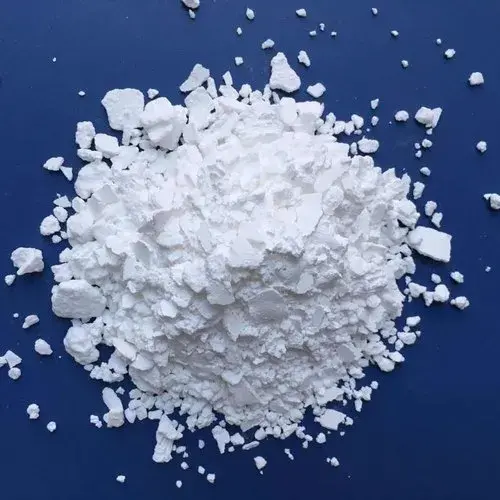
Part A — Calcium Chloride (CaCl₂) Drying
A1. Why CaCl₂ drying is difficult
| Challenge | Practical impact |
|---|---|
| Strong hygroscopicity | Product re-wets in air; storage and packaging must be integrated with drying |
| Hydrate forms | Flake/prill hydrates (e.g. dihydrate routes) behave differently from anhydrous goals |
| Softening / local melt | Sticky phases foul flights, beds and conveyors |
| Corrosion | Moist chloride service attacks inadequate materials |
| Dust and deposits | Fine, wettable salts load exhaust systems |
A2. Define the product goal first
- Surface-dry hydrate flakes/prills for sale as hydrate?
- Partial dehydration to a specified water content?
- Approach toward anhydrous CaCl₂ (more severe duty)?
Each goal changes temperature profile, residence time and gas handling. State the target assay / residual water method in the RFQ.
A3. Technology directions for CaCl₂
| Technology | Typical role | Watch-outs |
|---|---|---|
| Fluid bed / multi-stage | Particulate hydrates, staged temperature | Agglomeration if particles soften |
| Rotary | Higher tonnage bulk solids | Stickiness, seals, corrosion, dust |
| Spray | From concentrated liquor to solid particles | Energy cost; downstream conditioning often needed |
| Flash / spin-flash | Moist dispersible solids | Temperature control; wear |
| Contact systems | Sticky intermediates, lower gas volume | Torque, materials, vapour handling |
Materials of construction and closed handling after the dryer are as important as the dryer body.
A4. CaCl₂ problem map
| Problem | Direction |
|---|---|
| Product cakes hours after drying | Residual moisture + ambient humidity — tighten moisture; improve packaging/dry air |
| Dryer internal buildup | Temperature through sticky region; improve agitation/dispersion |
| Rapid corrosion | Upgrade MOC; manage wet vapour condensate |
| High energy | Over-drying; wetter feed than design; leakage |
Part B — Dicalcium Phosphate (DCP) Drying
B1. What DCP dryers usually process
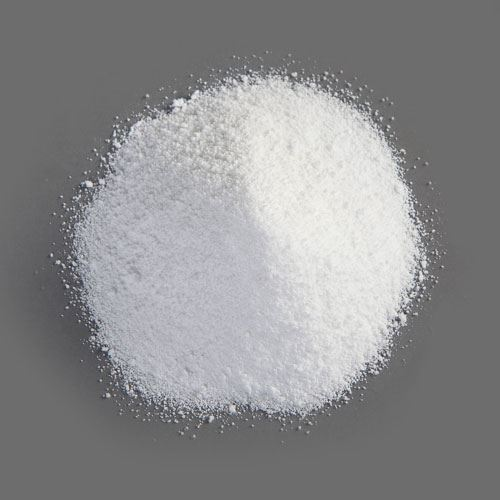
Dicalcium phosphate for animal feed or fertilizer is typically produced by reaction and precipitation, then dewatered on filters or centrifuges. The dryer removes free moisture from a cake or damp granules to a residual moisture suitable for milling, bagging or granulation.
B2. Main process challenges
| Challenge | Impact |
|---|---|
| High cake moisture | Large evaporation load; sticky feed |
| Variable filter performance | Dryer sees wide moisture swings |
| Fine dust when over-dried | Losses and emission load |
| Particle size for feed grades | Breakage or over-dispersion may affect handling |
| Throughput campaigns | Peak production must be in the design basis |
B3. Technology directions for DCP
| Technology | Typical fit |
|---|---|
| Spin-flash / mechanical dispersion | Sticky filter cake to powder without re-slurry |
| Rotary dryer | Higher tonnage robust cake/granules |
| Fluid bed / VFBD | After conditioning/granulation when particles fluidise |
| Band dryer | Pre-formed extrudates or permeable beds |
| Spray dryer | Only if process intentionally starts from slurry and spray morphology is required |
Avoid automatic re-slurry of filter cake for spray drying unless the product form requires it — you evaporate water already removed by filtration.
B4. DCP problem map
| Problem | Direction |
|---|---|
| Cake clogs dryer | Wrong technology for sticky high moisture — evaluate spin-flash/contact |
| Residual moisture variation | Unstable feed rate/moisture; poor mixing — stabilise filter; review zone control |
| Excess fines | Over-aggressive dispersion or over-drying |
| Capacity shortfall | Sized on average cake moisture, not peak |
Shared Buyer Framework (Both Products)
1. Always specify
- Product identity — CaCl₂ (which hydrate/assay) or DCP (feed/fertilizer grade)
- Feed form — slurry, cake, prills, powder
- Inlet moisture range and target residual moisture
- Maximum product temperature
- Capacity continuous and peak
- Particle size / bulk density targets
- Heat source
- Materials of construction expectations
- Dust and emission limits
- Packaging / storage humidity constraints (especially CaCl₂)
2. Evaporation load (sizing basis)
W=F×100−MfMi−Mf
Use peak F and peak Mi. State wet-feed vs dry-product basis on every quote.
3. How to evaluate manufacturers
| Check | Good signal |
|---|---|
| Treats CaCl₂ and DCP as different duties | Chemical process understanding |
| Asks hydrate/assay or cake moisture range | Not a generic “chemical dryer” quote |
| Addresses corrosion (CaCl₂) or cake stickiness (DCP) | Realistic design |
| Includes powder separation in scope | Operable plant |
| Documents assumptions | Comparable bids |
| Offers trial path when needed | Lower scale-up risk |
Red flags: One standard rotary for both products with no temperature or hydrate discussion; capacity without moisture basis; carbon steel assumed for wet chloride service.
How GTI Dryers Supports These Duties
GTI Dryers designs continuous industrial dryers — spin-flash/flash, fluid bed/VFBD, rotary, band and related systems — for inorganic chemicals and mineral salts.
For calcium chloride and dicalcium phosphate projects we:
- Separate hygroscopic hydrate duties from precipitated cake duties
- Match technology to feed form and temperature limits
- Address dust recovery, materials and residual-moisture targets
- Provide process-data-based proposals without one-size claims
Geographic Note
CaCl₂ is linked to chlor-alkali and brine chemistries worldwide; DCP is widely produced for feed phosphate markets in Asia and elsewhere. Indian manufacturers can supply dryers for domestic plants and export projects. Ambient humidity is especially critical for CaCl₂ storage design after drying.
Frequently Asked Questions
Can the same dryer design be used for CaCl₂ and DCP?
Rarely optimal. CaCl₂ is dominated by hygroscopicity and hydrate behaviour; DCP is usually a high-moisture precipitated cake. Technology and materials differ.
What dryer is common for DCP filter cake?
Spin-flash / dispersion dryers and rotary dryers are frequently evaluated; fluid bed after the solid is made free-flowing.
What is the biggest risk drying calcium chloride?
Re-moistening and caking after the dryer, plus corrosion and sticky intermediate phases if temperature is poorly controlled.
What residual moisture should we target?
Use the commercial specification for your grade. Put the number and test method in the RFQ.
What should I send GTI?
Which product (CaCl₂ or DCP), feed form, moisture in/out, capacity, max product temperature and heat source.
Next Step
If you need a calcium chloride dryer manufacturer or a dicalcium phosphate dryer manufacturer, share your product identity and feed data. GTI will recommend a suitable continuous drying approach for that duty and outline a clear proposal basis.
Request a CaCl₂ or DCP drying assessment with your process data.
Contact the GTI Technical Team:
Website: gtidryers.com
Email: mktg@gtidryers.com
Phone / WhatsApp: +91 9330077417